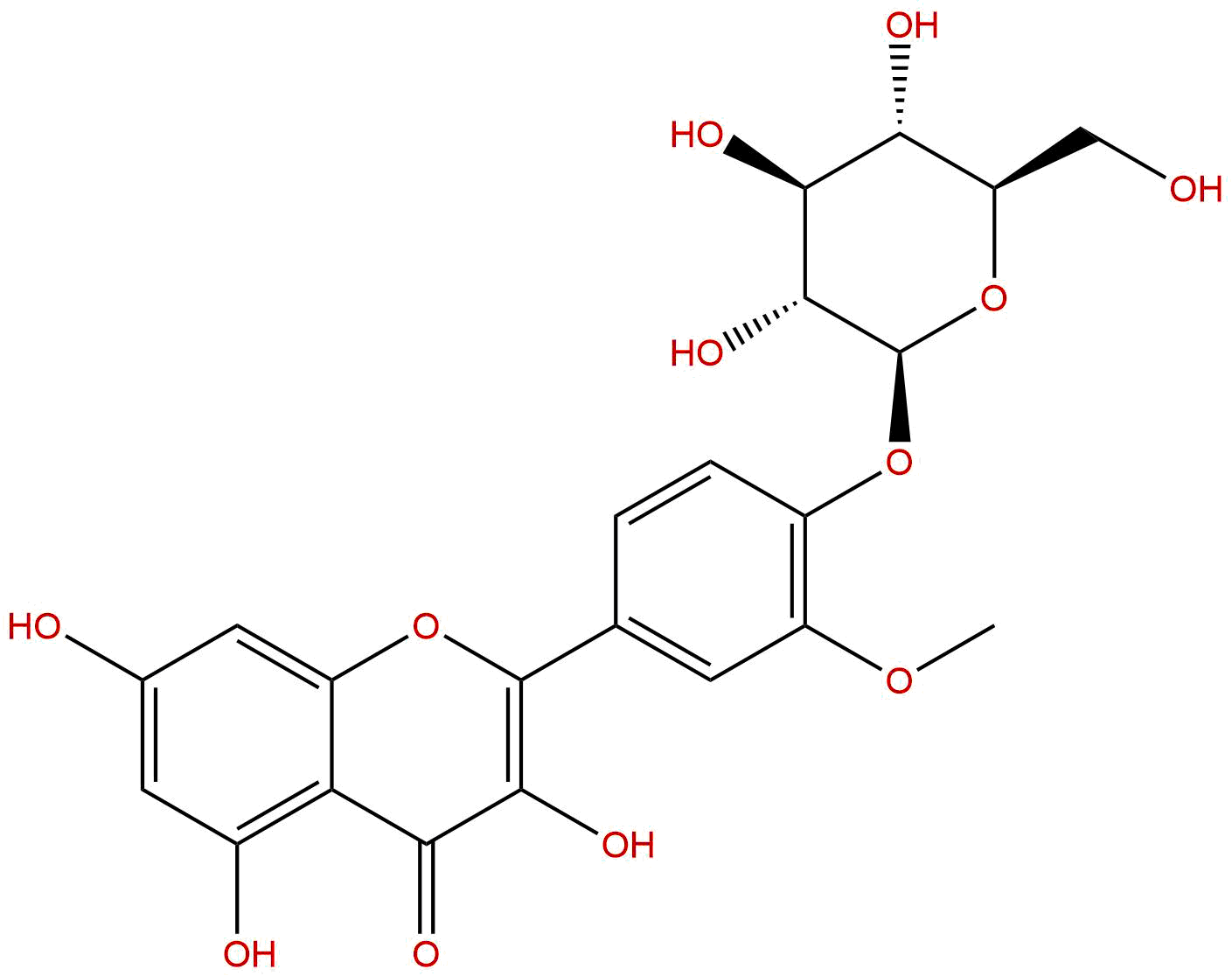


Product name: Isorhamnetin 4'-glucoside
Synonym name: Isorhamnetin-4'-O-β-glucoside
Catalogue No.: BP2389
Cas No.: 58902-89-9
Formula: C22H22O12
Mol Weight: 478.406
Botanical Source:
Type of Compound: Flavonoids
Purity: 95%~99%
Analysis Method: HPLC-DAD or/and HPLC-ELSD
Identification Method: Mass, NMR
Packing: Brown vial or HDPE plastic bottle
Storage: Store in a well closed container, protected from air and light. Put into refrigerate or freeze for long term storage.
Whenever possible, you should prepare and use solutions on the same day. However, if you need to make up stock solutions in advance, we recommend that you store the solution as aliquots in tightly sealed vials at -20℃. Generally, these will be useable for up to two weeks.
The product could be supplied from milligrams to grams
Inquire for bulk scale.
For Reference Standard and R&D, Not for Human Use Directly.
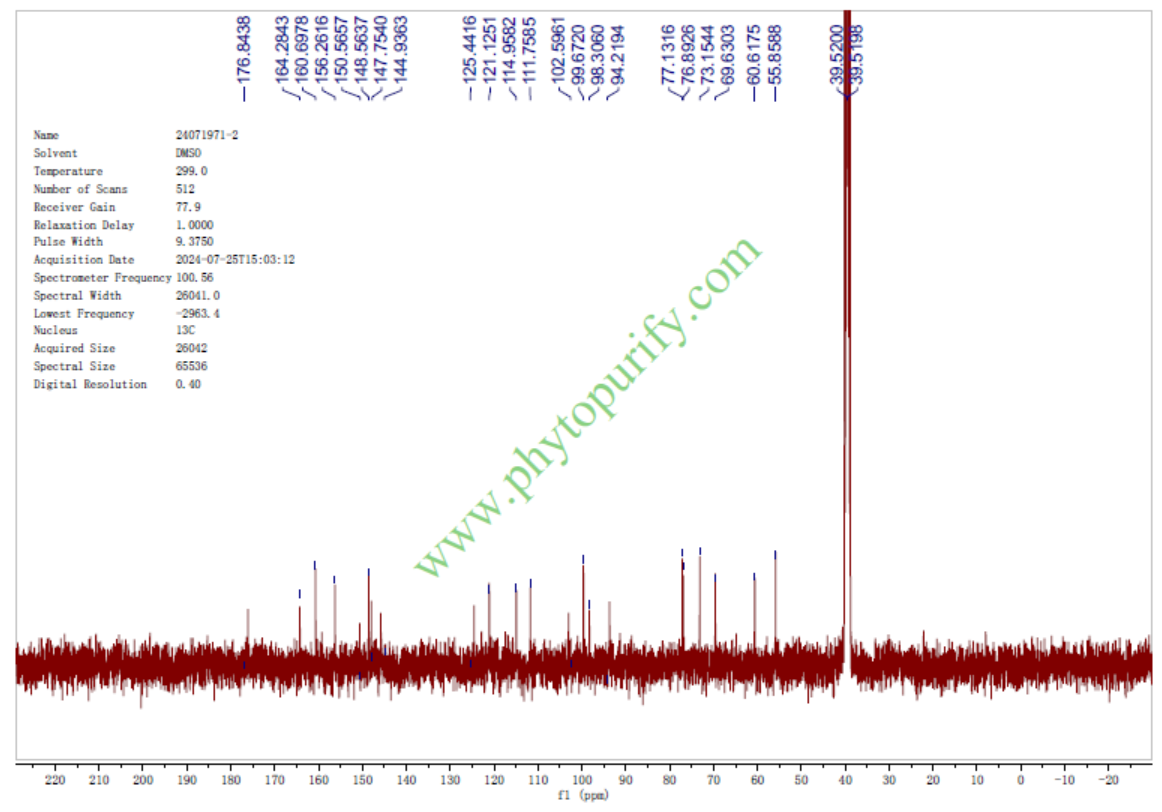
NMR of Isorhamnetin 4'-glucoside
Storage conditions:Short-term storage at 2~8℃, long-term storage at -20 ~ -80℃
199.5100
.0926
-.1850
1.6444
.5349
.0975
Low
79.6883
3.9488
Yes
No
Yes
No
Yes
No
0.6
Yes
No
Yes
No
Natural products, as an important source of drug discovery, play an irreplaceable role in maintaining human health and preventing diseases. Flavonoids, as important components of plant secondary metabolites, have attracted much attention due to their wide range of biological activities and low toxicity. Among numerous flavonoids, Isorhamnetin-4 '- glucoside, as a flavonol glycoside with unique structural characteristics, has gradually become a hot molecule in natural product pharmacology research in recent years.
Isorhamnetin-4 '- glucoside was originally derived from seabuckthorn(Hippophae rhamnoides L. As a traditional medicinal and edible plant, seabuckthorn has been widely used in folk medicine in Asia and Europe for hundreds of years. It is commonly used to treat skin injuries, digestive system diseases, and cardiovascular diseases. With the development of modern separation and analysis techniques, researchers have found that seabuckthorn is rich in various flavonoids, among which isorhamnetin-4 '- glucoside stands out due to its unique pharmacological activity.
As the largest organ in the human body, the skin is directly exposed to various environmental stress factors, among which ultraviolet radiation is the main exogenous factor causing skin damage. Long term exposure to ultraviolet radiation can cause skin photoaging, manifested as clinical symptoms such as skin sagging, wrinkle formation, and abnormal pigmentation. At the molecular level, skin photoaging involves abnormal activation of multiple signaling pathways, including upregulation of matrix metalloproteinases (MMPs), overexpression of melanin synthase, release of inflammatory factors, and exacerbation of oxidative stress response. In this complex pathological process, searching for natural active molecules that can regulate the above-mentioned pathways with multiple targets has become an important direction in skin pharmacology research.
Isorhamnetin-4 '- glucoside has shown significant potential in the field of skin protection due to its unique chemical structure and multi-target properties. Research has shown that this compound can intervene in skin cancer and photoaging by directly inhibiting the activity of MEK1 and PI3K kinases, thereby regulating downstream MAPK and PI3K/Akt signaling pathways. This article will systematically review the research progress of isorhamnetin-4 '- glucoside from multiple dimensions such as chemical structure, plant origin, pharmacological activity, molecular mechanism, and pharmacological evaluation, in order to provide theoretical basis for the in-depth development and clinical application of this natural product.
The chemical name of isorhamnetin-4 '- glucoside is 3,5,7-trihydroxy-2- (4-hydroxy-3-methoxyphenyl) -4H-1-benzopyran-4-one-4' - β - D-glucopyranoside, with a molecular formula of C ₂ ₂ H ₂ O ₁ ₂ and a molecular weight of 478.4060 g/mol. From a structural classification perspective, this compound belongs to flavonol glycosides, with isorhamnetin as the aglycone and β - D-glucose as the sugar moiety. It is connected to the 4 '- hydroxyl position of isorhamnetin through glycosidic bonds.
Isorhamnetin itself is a 3 '- methoxy derivative of quercetin, with structural features including 5,7-dihydroxy substitution in the A ring, 3-hydroxy substitution in the C ring, and 3' - methoxy-4 '- hydroxy substitution in the B ring. When the glucose group is attached to the 4 '- hydroxyl group, isorhamnetin-4' - glucoside is formed, and this glycosylation modification significantly changes the physicochemical properties and biological activity of the parent compound.
According to computer-aided drug design (CADD) prediction and experimental measurement data, isorhamnetin-4 '- glucoside has the following key physicochemical parameters:
Lipid water partition coefficient (LogP)0.0926 indicates that the compound has lower lipid solubility and is more likely to be distributed in aqueous environments. This characteristic is closely related to the presence of multiple hydroxyl and sugar groups in the molecule, and the introduction of sugar groups significantly increases the hydrophilicity of the molecule.
Topological Polarity Surface Area (TPSA)199.51 Å ², much higher than the recommended upper limit of 140 Å ² for oral medications. A higher TPSA value suggests that the compound may have lower membrane permeability and may face absorption barriers when administered orally.
Water solubility:1.6444 mg/mL, It exhibits good water solubility, which is consistent with its polyhydroxy structure and glycosylation modification. Good water solubility is beneficial for formulation development and topical administration.
Blood-brain barrier penetrability Predicted as low penetration, which is consistent with high TPSA values and low LogP values. Low blood-brain barrier penetration may be a beneficial characteristic for topical medication on the skin, reducing adverse reactions related to the central nervous system.
HERG inhibition risk The prediction result is negative, indicating that the compound has a low risk of causing QT interval prolongation in the heart and has good cardiac safety.
Ames test The predicted value is 0.6, indicating that the compound may have a low genetic toxicity risk, but further experimental verification is needed.
Based on the above physical and chemical properties, isorhamnetin-4 '- glucoside exhibits typical polar natural product characteristics. Its good water solubility, low lipid solubility, and poor membrane permeability determine that it is more suitable for local topical or injection administration rather than traditional oral administration.
The distribution of isorhamnetin-4 '- glucoside in nature is relatively limited, and the main confirmed sources from plants currently include:
Sea buckthorn(Hippophae rhamnoides L.)As the main source of this compound, seabuckthorn fruits, leaves, and seeds all contain isorhamnetin-4 '- glucoside. Sea buckthorn belongs to the family Elapidae and the genus Hippophae, widely distributed in temperate and cold temperate regions of Eurasia. In China, it is mainly distributed in the northwest, north, and northeast regions. The fruit of seabuckthorn is rich in flavonoids, among which isorhamnetin-4 '- glucoside is one of the main flavonoid glycosides.
Other potential sources In addition to seabuckthorn, trace amounts of isorhamnetin-4 '- glucoside have also been detected in some Rosaceae plants (such as apple and pear) and Asteraceae plants, but the content is much lower than seabuckthorn. Therefore, seabuckthorn is still the most economical and sustainable natural source of this compound at present.
Solvent extraction method Based on the polarity characteristics of isorhamnetin-4 '- glucoside, polar solvents are often used for extraction. Methanol water (70:30, v/v) or ethanol water (60:40, v/v) mixed solvents are the most commonly used extraction systems. The extraction conditions are usually: a solid-liquid ratio of 1:10-1:20 (w/v), a temperature of 60-80 ° C, an extraction time of 1-2 hours, and repeated extraction 2-3 times. This method is easy to operate and cost-effective, but the selectivity is poor and the extract contains a large amount of impurities.
Ultrasonic assisted extraction By utilizing the cavitation and mechanical effects of ultrasound, extraction efficiency can be significantly improved and extraction time can be shortened. The optimization conditions are: ultrasound power of 200-400 W, frequency of 40-60 kHz, temperature of 50-60 ° C, and extraction time of 30-60 minutes. Compared with traditional solvent extraction, ultrasound assisted extraction can increase the extraction rate of isorhamnetin-4 '- glucoside by 20-30%.
Macroporous adsorption resin chromatography The most commonly used method for separating and purifying isorhamnetin-4 '- glucoside. The commonly used resin types include non-polar or weakly polar resins such as HPD-100, AB-8, and D101. After loading, the target compound was eluted in a gradient of deionized water, 10-30% ethanol, and 50-70% ethanol. The target compound was mainly enriched in the 50-70% ethanol eluted component. This method has a large processing capacity, reusable resin, and is suitable for industrial production.
Preparation type high performance liquid chromatography (Prep HPLC)For scientific research purposes that require high-purity products, preparative HPLC can be used for refining. The commonly used chromatographic conditions are: C18 reverse phase column (such as YMC Pack ODS-A, 250 × 20 mm, 5 μ m), mobile phase acetonitrile water (20:80, v/v, containing 0.1% formic acid), flow rate 10-20 mL/min, detection wavelength 254 nm or 360 nm. This method can obtain isorhamnetin-4 '- glucoside monomer with a purity of>98%.
High Speed Counter Current Chromatography (HSCCC)As a liquid-liquid distribution chromatography technique, HSCCC has unique advantages in separating flavonoid glycosides. By using a two-phase solvent system of n-butanol ethyl acetate water (3:1:4, v/v/v), high-purity products can be obtained in a relatively short period of time, while avoiding irreversible adsorption problems that may arise from solid phase carriers.
High performance liquid chromatography (HPLC): is the most commonly used method for quantitative analysis of isorhamnetin-4 '- glucoside. Using a C18 reverse phase column (such as Agilent Zorbax SB-C18, 250 × 4.6 mm, 5 μ m), the mobile phase is a methanol-0.1% phosphoric acid aqueous solution (45:55, v/v), the flow rate is 1.0 mL/min, the detection wavelength is 360 nm, and the column temperature is 30 ° C. This method has a good linear relationship (r ²>0.999), precision (RSD<2%), and recovery rate (98-102%).
Liquid chromatography-mass spectrometry (LC-MS/MS)LC-MS/MS provides higher sensitivity and selectivity for the detection of trace amounts of isorhamnetin-4 '- glucoside in complex matrices. The negative ion mode of the electric spray ion source (ESI) and the multi reaction monitoring (MRM) mode are used for detection. The parent ion m/z 477.1 → the sub ion m/z 314.0 (quantitative ion) and m/z 271.0 (qualitative ion). This method has a detection limit of up to 0.1 ng/mL and is suitable for pharmacokinetic studies and biological sample analysis.
Skin photoaging is a premature aging phenomenon of the skin caused by ultraviolet radiation, and its pathological features include skin elastic fiber degeneration, collagen degradation, abnormal pigmentation, and inflammatory reactions. Isorhamnetin-4 '- glucoside exhibits various pharmacological activities in anti skin photoaging.
Inhibit melanin synthesis Excessive synthesis of melanin is the main cause of abnormal skin pigmentation. Tyrosinase (TYR) is a key rate limiting enzyme in the melanin synthesis pathway. Research has shown that isorhamnetin-4 '- glucoside can concentration dependently inhibit tyrosinase activity, with an inhibition rate of over 60% at a concentration of 50 μ M. At the same time, the compound can downregulate the expression of transcription factors associated with microphthalmia (MITF), thereby reducing the transcription levels of tyrosinase, tyrosinase related protein 1 (TRP-1), and TRP-2, and inhibiting melanin synthesis at multiple levels.
Inhibit collagen degradation The excessive activation of matrix metalloproteinases (MMPs) is the main cause of UV induced degradation of skin collagen. Isorhamnetin-4 '- glucoside can significantly inhibit the expression and activity of MMP1 and MMP9. In a human skin fibroblast model irradiated with UVB, pre-treatment with this compound (10-40 μ M) can reduce the expression level of MMP1 protein by 40-70% and increase the synthesis of type I procollagen. This effect is closely related to the inhibition of the MAPK signaling pathway and the activation of AP-1 transcription factors.
anti-oxidative stress Ultraviolet radiation can induce skin cells to produce a large amount of reactive oxygen species (ROS), leading to oxidative stress damage. Isorhamnetin-4 '- glucoside has direct free radical scavenging activity, and the ortho dihydroxy groups (B-ring 3' - OH and 4 '- OH) in its molecular structure are key functional groups that exert antioxidant effects. In addition, the compound can activate the nuclear factor E2 related factor 2 (NFE2L2/Nrf2) signaling pathway, upregulate the expression of downstream antioxidant enzymes such as heme oxygenase-1 (HO-1), quinone oxidoreductase 1 (NQO1), and glutathione S-transferase (GST), and enhance the endogenous antioxidant defense ability of cells.
anti-inflammatory activity UV induced skin inflammation plays an important role in the process of photoaging. Isorhamnetin-4 '- glucoside can inhibit the expression of inflammatory factors induced by UVB irradiation, including tumor necrosis factor - α (TNF - α), interleukin-6 (IL-6), and interleukin-1 β (IL-1 β). Mechanism studies have shown that this compound downregulates the expression of cyclooxygenase-2 (PTGS2/COX-2) and inducible nitric oxide synthase (iNOS) by inhibiting the activation of the nuclear factor kappa B (NF - κ B) signaling pathway, reducing the nuclear translocation of the p65 (RELA) subunit.
Skin cancer is one of the most common types of malignant tumors, including basal cell carcinoma, squamous cell carcinoma, and melanoma. Isorhamnetin-4 '- glucoside has shown significant potential in the prevention and treatment of skin cancer.
Inhibit the proliferation of skin cancer cells In various skin cancer cell lines, such as A431 squamous cell carcinoma cells and B16 melanoma cells, isorhamnetin-4 '- glucoside can inhibit cell proliferation in a concentration - and time-dependent manner. The IC ₅₀ value is in the range of 20-50 μ M and has low toxicity to normal skin fibroblasts, showing a certain degree of selectivity.
Inducing cell apoptosis Flow cytometry analysis showed that treatment with isorhamnetin-4 '- glucoside can induce apoptosis in skin cancer cells, manifested by an increase in the proportion of Annexin V positive cells, a decrease in mitochondrial membrane potential, and activation of caspase-3/9. Further research has found that this compound activates the mitochondrial apoptosis pathway by inhibiting the PI3K/Akt signaling pathway, downregulating the expression of anti apoptotic protein Bcl-2, and upregulating the expression of pro apoptotic protein Bax.
Inhibit cell migration and invasion Scratch and Transwell experiments have shown that isorhamnetin-4 '- glucoside can significantly inhibit the migration and invasion ability of skin cancer cells. This effect is related to the inhibition of MMP2 and MMP9 expression, as well as the reduction of epithelial mesenchymal transition (EMT) related markers such as upregulation of E-cadherin and downregulation of N-cadherin and vimentin.
In addition to its skin protective effect, isorhamnetin-4 '- glucoside also exhibits other biological activities:
Cardiovascular protection In the human umbilical vein endothelial cell injury model induced by oxidized low-density lipoprotein (ox LDL), this compound can reduce cell apoptosis, inhibit inflammatory cytokine expression, and improve endothelial function. In addition, in animal models, isorhamnetin-4 '- glucoside can reduce blood lipid levels and inhibit the formation of atherosclerotic plaque.
Liver protection In the liver injury model induced by carbon tetrachloride (CCl ₄) and acetaminophen, isorhamnetin-4 '- glucoside can reduce serum transaminase levels, alleviate liver tissue pathological damage, inhibit liver cell apoptosis, and oxidative stress response.
neuroprotection In the neuronal cytotoxicity model induced by β - amyloid protein (A β), this compound can reduce cell apoptosis, inhibit tau protein hyperphosphorylation, and improve mitochondrial function, indicating its potential application value in the prevention and treatment of Alzheimer's disease.
The most prominent molecular mechanism feature of isorhamnetin-4 '- glucoside is its direct inhibitory effect on MEK1 and PI3K. MEK1 (MAPK/ERK kinase 1) is a key kinase in the MAPK signaling pathway, responsible for phosphorylation and activation of ERK1/2; PI3K (phosphatidylinositol 3-kinase) is the initiating kinase of the PI3K/Akt signaling pathway. These two signaling pathways play a central regulatory role in cell proliferation, survival, differentiation, and migration, and exhibit abnormal activation in various cancers.
MEK1 inhibition Molecular docking and kinase activity assays showed that isorhamnetin-4 '- glucoside can directly bind to the ATP binding pocket of MEK1, competitively inhibiting the binding of ATP to MEK1. The binding constant (Kd) is approximately 0.5-1.0 μ M, and the IC ₅₀ value is in the range of 1-5 μ M. The interaction with MEK1 is mainly achieved through hydrogen bonding and hydrophobic interactions, where the A and C rings of isorhamnetin glycosides form key hydrogen bonds with residues such as Val127, Ser212, and Lys97 of MEK1, while the 4 '- glucose group forms an additional hydrogen bond network with the protein surface, enhancing binding stability.
PI3K inhibition Isorhamnetin-4 '- glucoside can also directly inhibit the activity of PI3K α, with an IC ₅₀ value of about 2-8 μ M. Molecular simulations show that the compound can occupy the ATP binding site of PI3K and interact with key residues such as Lys802, Val851, and Asp933. It is worth noting that this compound has better selectivity for PI3K than other lipid kinases, but there is little difference in selectivity for different PI3K subtypes (α, β, δ, γ).
By inhibiting MEK1 and PI3K, isorhamnetin-4 '- glucoside can effectively regulate multiple downstream signaling pathways:
MAPK/ERK pathway Inhibition of MEK1 leads to a decrease in downstream ERK1/2 phosphorylation levels, thereby reducing the activation of transcription factor AP-1 (composed of c-Jun and c-Fos). AP-1 is a key transcription factor that regulates the expression of MMPs, cell cycle proteins, and inflammatory factors. Its reduced activity can explain the molecular basis of the compound's inhibition of MMP1/9 expression, anti proliferative, and anti-inflammatory effects.
PI3K/Akt pathway Inhibition of PI3K leads to a decrease in Akt phosphorylation levels, which in turn affects multiple downstream effector molecules. The decrease in Akt activity can lead to: ① a decrease in mTORC1 activity, which inhibits protein synthesis and cell growth; ② GSK-3 β activity increases, promoting the activation of pro apoptotic protein Bax; ③ FOXO transcription factor activity increases, upregulating the expression of pro apoptotic genes such as Bim and FasL; ④ Reduced MDM2 activity increases the stability and transcriptional activity of p53 protein.
NF - κ B pathway Isorhamnetin-4 '- glucoside can also indirectly inhibit the activation of I κ B kinase (IKK) by suppressing Akt and ERK signals, reducing the phosphorylation and degradation of I κ B α, thereby inhibiting the nuclear translocation and transcriptional activity of NF - κ B (p65/p50). This explains the mechanism by which the compound inhibits the expression of inflammatory factors such as TNF - α, IL-6, COX-2, and iNOS.
Nrf2/ARE pathway This compound can activate signaling molecules upstream of the PI3K/Akt and MAPK pathways, promote the dissociation and translocation of Nrf2 from Keap1 to the nucleus, bind to antioxidant response elements (ARE), and upregulate the expression of antioxidant enzymes such as HO-1, NQO1, and GST. This mechanism plays an important role in protecting skin cells from oxidative stress damage.
The pharmacological effects of isorhamnetin-4 '- glucoside cannot be explained by a single target, but are achieved through network regulation of multiple targets and pathways. Based on system pharmacology analysis, this compound can act on at least 10 key targets associated with skin photoaging, including TYR, MMP1, NFE2L2, RELA, TNF, MAPK8 (JNK1), PPARG, JUN, MMP9, and PTGS2. These targets involve multiple biological processes such as melanin synthesis, collagen metabolism, oxidative stress, inflammatory response, and cell proliferation, forming a complex network of interactions.
This multi-target mode of action endows isorhamnetin-4 '- glucoside with unique therapeutic advantages: ① It can simultaneously intervene in multiple pathological processes of skin photoaging, achieving comprehensive treatment; ② By acting on multiple targets, drug resistance that may be caused by single target inhibition can be reduced; ③ The synergistic effect between various targets can produce a synergistic effect, which can exert significant pharmacological activity at lower concentrations.
Based on Lipinski's Five Rules and Veber's Rules, a systematic evaluation was conducted on the pharmacological properties of isorhamnetin-4 '- glucoside
Lipinski's Five Rules The molecular weight of the compound (478.4 Da) is slightly higher than the threshold of 500 Da; The LogP value (0.09) is much lower than 5; The number of hydrogen bond donors (7 hydroxyl groups) exceeds 5; The number of hydrogen bond acceptors (12 oxygen atoms) exceeds 10. Therefore, the compound violates three of Lipinski's five rules (molecular weight, number of hydrogen bond donors, and number of hydrogen bond acceptors), suggesting that its oral bioavailability may be low.
Veber rules The TPSA (199.5 Å ²) of this compound is much higher than the threshold of 140 Å ²; The number of rotatable keys (5) is less than 10. According to the Veber rule, a high TPSA value suggests that the compound may have lower membrane permeability and oral absorption rate.
Comprehensive Assessment The physicochemical properties of isorhamnetin-4 '- glucoside indicate that it does not belong to typical "drug like" molecules, and oral administration may face absorption barriers. However, this does not negate its development value as a drug, but rather suggests the selection of appropriate routes and dosage forms for administration. For the indication of skin protection, topical administration can effectively avoid oral absorption problems, directly act on target organs, and reduce the risk of systemic exposure and adverse reactions.
absorb Due to its high polarity and hydrophilicity, isorhamnetin-4 '- glucoside has poor passive diffusion absorption in the gastrointestinal tract. After oral administration, its absolute bioavailability is expected to be less than 5%. However, glycosidases in the intestine may hydrolyze it into glycoside isorhamnetin, which has higher lipid solubility and membrane permeability. Therefore, after oral administration of isorhamnetin-4 '- glucoside, the main metabolites detected in plasma may be isorhamnetin-4' - glucoside and its phase II metabolites (sulfate and glucuronic acid conjugates).
distribution After intravenous administration, the compound is mainly distributed in the extracellular fluid, with a smaller tissue distribution volume. Due to its low fat solubility and high polarity, it is difficult to penetrate the cell membrane and enter the cell, as well as to pass through the blood-brain barrier. After local administration to the skin, the drug can penetrate into the epidermis and dermis, reaching an effective therapeutic concentration in the skin tissue.
Metabolism The metabolism of isorhamnetin-4 '- glucoside mainly involves two pathways: ① Glycoside bond hydrolysis: under the action of gut microbiota and liver β - glucosidase, it is hydrolyzed into glycoside isorhamnetin-4' - glucoside and glucose; ② II binding reaction: Glycoside isorhamnetin undergoes sulfation and glucuronidation metabolism in the liver and intestine, generating corresponding complexes that are excreted from urine and bile.
excretion After oral administration, most of the isorhamnetin-4 '- glucoside is excreted in its original form or as a metabolite through feces (about 60-70%), and a small portion is excreted through urine (about 10-20%). After intravenous administration, it is mainly excreted through bile into the intestine, with a certain degree of enterohepatic circulation.
The following formulation strategies can be adopted to improve the pharmacological properties and pharmacokinetic characteristics of isorhamnetin-4 '- glucoside:
Topical preparations for local use: Develop external dosage forms such as cream, gel or patch for direct application to skin. The penetration and retention of drugs in the skin can be improved by adding transdermal absorption enhancers such as azone and menthol, or using new carriers such as liposomes and nanoemulsions.
Nano carrier system Using nanocarriers such as nanoparticles, liposomes, and polymer micelles to encapsulate isorhamnetin-4 '- glucoside can improve its stability, enhance membrane permeability, and achieve targeted delivery and sustained release effects.
Prodrug design Esterification or etherification modification of hydroxyl groups in molecules can improve lipid solubility and membrane permeability. The prodrug releases its original drug after enzymatic or chemical hydrolysis in the body, exerting pharmacological activity.
Based on the multiple skin protective activities of isorhamnetin-4 '- glucoside, it has broad application prospects in functional cosmetics and skin care products. This compound can simultaneously exert whitening (inhibiting TYR), anti wrinkle (inhibiting MMP1/9), anti-inflammatory (inhibiting NF - κ B), and antioxidant (activating Nrf2) effects, which is in line with the development trend of modern skincare products pursuing multifunctionality and natural safety.
Compared with commonly used whitening ingredients (such as arbutin and quercetin) and anti-aging ingredients (such as retinol and vitamin C) in the current market, isorhamnetin-4 '- glucoside has the following advantages: ① natural source, high safety, and low irritation; ② Multi targeted action, comprehensive improvement of skin condition; ③ Good stability, not easily oxidized or discolored; ④ Good water solubility, convenient for formulation development.
In addition to daily skincare, isorhamnetin-4 '- glucoside also has potential application value in the treatment of skin diseases:
Pigmentation related diseases For pigmentary diseases such as melasma, freckles, and post inflammatory pigmentation, this compound can exert whitening and spot removing effects by inhibiting tyrosinase activity and melanin synthesis. Compared with traditional whitening drugs such as hydroquinone, its cytotoxicity is lower and its safety is higher.
Photoaging skin disease For photoaging related skin diseases such as photokeratosis and actinic cheilitis, this compound can delay disease progression and improve skin appearance by inhibiting MMPs, anti-inflammatory and antioxidant effects.
Non melanoma skin cancer For basal cell carcinoma and squamous cell carcinoma, this compound can exert anti proliferative and pro apoptotic effects by inhibiting the MEK1 and PI3K signaling pathways, and can be used as a chemopreventive or adjuvant therapy drug.
The combined use of isorhamnetin-4 '- glucoside and other drugs may produce synergistic effects:
Used in combination with sunscreen When used in combination with physical or chemical sunscreen agents, it can provide additional light protection on top of sun protection and repair UV damage that has already occurred.
Combined use with retinoids The combination application with retinoids may produce synergistic anti photoaging effects, while retinoids can promote skin penetration of isorhamnose-4 '- glucoside and improve bioavailability.
Combined with antioxidants Combined with antioxidants such as vitamin C, vitamin E, and coenzyme Q10, it can form an antioxidant network and enhance overall antioxidant defense capabilities.
Although isorhamnetin-4 '- glucoside has shown significant potential in skin protection, there are still many challenges from basic research to clinical application:
In depth elucidation of the mechanism of action At present, the understanding of the molecular mechanism of this compound is still incomplete, and further research is needed on its interaction with other signaling pathways, epigenetic regulation, and the impact of gut microbiota on its metabolism and activity.
Preclinical safety evaluation Systematic toxicology studies are required, including acute toxicity, chronic toxicity, reproductive toxicity, and carcinogenicity evaluations, to provide safety data support for clinical trials.
Clinical efficacy verification A rigorous randomized controlled clinical trial needs to be designed to verify the clinical efficacy and safety of the compound in skin photoaging and related diseases, and to determine the optimal dosage and administration regimen.
Optimization of Industrial Production We need to develop efficient, economical, and environmentally friendly extraction and purification processes to increase the yield and purity of isorhamnetin-4 '- glucoside, reduce production costs, and meet commercial needs.
Structural modification and structure-activity relationship Through chemical synthesis or biotransformation methods, the structure of isorhamnetin-4 '- glucoside is modified, and its structure-activity relationship is studied to search for derivatives with stronger activity and better drug properties.
Isorhamnetin-4 '- glucoside, as a natural flavonol glycoside isolated from seabuckthorn, has shown significant development value in the field of skin protection due to its unique chemical structure and multi-target properties. This compound directly inhibits the activity of MEK1 and PI3K kinases, regulates multiple signaling pathways such as MAPK/ERK, PI3K/Akt, NF - κ B, and Nrf2, and achieves comprehensive regulation of melanin synthesis, collagen metabolism, oxidative stress, and inflammatory response, thereby exerting pharmacological effects on anti skin photoaging and anti skin cancer.
Although the compound has limited bioavailability in oral administration, its good water solubility, low toxicity, and multi-target properties give it unique advantages in the development of topical formulations. With the advancement of formulation technology and a deeper understanding of the pharmacological mechanism of this compound, isorhamnetin-4 '- glucoside is expected to be developed into a new functional cosmetic raw material or skin disease treatment drug, providing a new option for skin health maintenance and disease prevention and treatment.
From a broader perspective, the study of isorhamnetin-4 '- glucoside also provides important references for the development of other natural flavonoid glycosides. Although these compounds are often considered as "non drug like" molecules in traditional medicinal chemistry evaluations, their unique pharmacological activity and safety advantages suggest that we should break through the constraints of traditional drug formulation rules in the development of natural product drugs, choose appropriate administration routes and formulation strategies based on specific indications, and fully tap into the therapeutic potential of natural products.
In the future, with the integration and development of interdisciplinary fields such as systems pharmacology, chemical biology, and nanomedicine delivery systems, research on isorhamnetin-4 '- glucoside and its derivatives will continue to deepen, and it is expected to play a greater role in the fields of dermatology and beauty skincare, contributing to human health.
