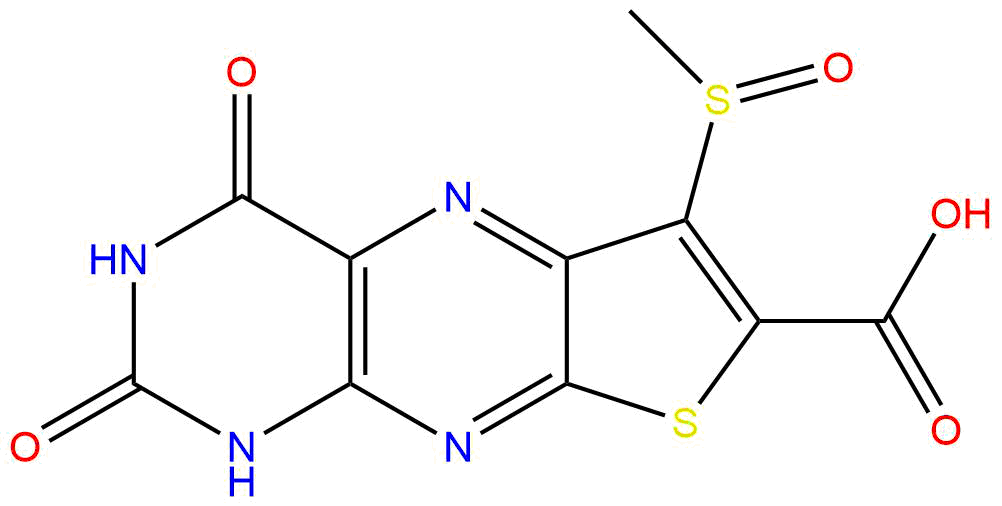
| Catalog No | Package | Original Price | Price | Inventory | Quantity | Operating |
|---|---|---|---|---|---|---|
| BP5296-5mg | 5mg | $450.00 | Sign in |
|


Product name: Hirudonucleodisulfide C
Synonym name:
Catalogue No.: BP5296
Cas No.: 1804964-28-0
Formula: C10H6N4O5S2
Mol Weight: 326.301
Botanical Source:
Type of Compound:
Purity: 95%~99%
Analysis Method: HPLC-DAD or/and HPLC-ELSD
Identification Method: Mass, NMR
Packing: Brown vial or HDPE plastic bottle
Storage: Store in a well closed container, protected from air and light. Put into refrigerate or freeze for long term storage.
Whenever possible, you should prepare and use solutions on the same day. However, if you need to make up stock solutions in advance, we recommend that you store the solution as aliquots in tightly sealed vials at -20℃. Generally, these will be useable for up to two weeks.
The product could be supplied from milligrams to grams
Inquire for bulk scale.
For Reference Standard and R&D, Not for Human Use Directly.
Storage conditions:Short-term storage at 2~8℃, long-term storage at -20 ~ -80℃
151.8600
.2874
-2.3131
.1420
.6941
4.3986
Low
77.4324
3.7945
Yes
No
No
No
No
Yes
0.0
Yes
No
Yes
No
Natural products, as an important source of drug discovery, play an irreplaceable role in the long-term struggle between humans and diseases. From the accumulation of experience in traditional medicine to the precise analysis of modern pharmacology, active molecules in nature continuously provide unique chemical skeletons and mechanisms of action for the development of innovative drugs. In the field of anticoagulant therapy, although mature drugs such as heparin, warfarin, and new oral anticoagulants (such as dabigatran and rivaroxaban) have been developed, the search for new anticoagulant molecules with better efficacy, lower bleeding risk, and more convenient administration routes is still an urgent need for clinical and basic research. In this context, active peptides and nucleotide compounds derived from leeches (Hirudo pharmaceuticals) and their related species have attracted much attention due to their unique anticoagulant mechanisms. Among them, Hirudonucleodisulfide C, as a natural product that has been identified and studied in recent years, has opened up new directions for the development of natural anticoagulant drugs with its unique chemical structure and potential anticoagulant activity.
Leech amine C is not a traditional protein anticoagulant (such as hirudin), but a small molecule nucleotide analogue with disulfide bond bridging. Its discovery stems from the systematic excavation of complex chemical components in the secretions of leech salivary glands. During the process of leeching blood, its salivary glands secrete a series of substances with anticoagulant, anti-inflammatory, analgesic, and vasodilatory activities to ensure the continuous flow of host blood. Leech amine C is a member of this complex chemical library, and its unique molecular skeleton suggests that it may function through mechanisms different from classical anticoagulant targets. Preliminary studies have shown that leech amine C has potential regulatory effects on multiple key factors in the coagulation cascade (such as F3, F2, F7, F9, F10, etc.) as well as endogenous anticoagulant system related proteins (such as PROC, PROS1) and von Willebrand factor (VWF), suggesting that it may be a multi-target anticoagulant regulator. This characteristic, while pursuing precise anticoagulation, may also bring about a more balanced regulation of coagulation anticoagulation homeostasis, thereby reducing the risk of bleeding. This article aims to comprehensively review the chemical structure, physicochemical properties, sources, pharmacological activities, mechanisms of action, medicinal properties, and clinical application prospects of leech amine C, in order to provide systematic academic references for the in-depth research and development of this natural product.
The chemical structure of Hirudonucleodisulfide C (CAS number: 1804964-28-0) is the basis of its biological function. According to existing research data, this compound belongs to a rare class of natural nucleotide disulfides. Its core skeleton is composed of a nucleotide unit connected to another sulfur-containing group through a disulfide bond (- S-S -). This disulfide bridging structure is unique in natural small molecules, endowing the molecule with high conformational rigidity and potential redox sensitivity. Specifically, its molecular formula is C ₁₀ H ₁₄ N ₄ O ₇ S ₂, with a molecular weight of 326.3150 Da. This molecular weight is significantly smaller than protein anticoagulants such as hirudin (about 7000 Da) and belongs to the typical category of small molecule compounds, providing a structural basis for its oral administration and good tissue permeability.
In terms of physical and chemical properties, leech amine C exhibits a balance between hydrophilicity and hydrophobicity. Its lipid water partition coefficient (LogP) is 0.2874, indicating that the molecule has moderate lipophilicity but overall leans towards hydrophilicity. This characteristic is beneficial for its dissolution and distribution in the blood, and can also interact with the hydrophobic pockets of target proteins. Its topological polar surface area (TPSA) is as high as 151.8600 Å ², mainly attributed to the abundant polar groups in the molecule, including phosphate groups (or phosphate bonds), hydroxyl groups, amino groups, and disulfide bonds on nucleotides. A high TPSA value usually indicates that the molecule has good water solubility, but it also suggests that its transmembrane passive diffusion ability may be limited. The experimentally determined water solubility value is 0.1420 mg/mL, which belongs to the category of slight solubility, which to some extent supports its potential for development as an injection. However, if oral preparations are to be developed, their solubility and bioavailability need to be improved through prodrug design or formulation technology.
In addition, key indicators in the evaluation of drug properties indicate that the blood-brain barrier (BBB) penetration ability of leech amine C is predicted to be low. This is usually considered a beneficial characteristic for an anticoagulant drug, as it can avoid the serious adverse reaction of central nervous system bleeding. Meanwhile, hERG inhibition prediction is negative (no), indicating a lower risk of causing prolonged QT interval and fatal arrhythmias in the heart. The Ames test result was 0.0, indicating that the compound did not exhibit significant genetic toxicity in the bacterial recovery mutation test. These preliminary pharmacological evaluation results are encouraging and lay a solid safety foundation for further drug development of leech amine C. However, these data still need to be validated through more comprehensive in vitro and in vivo toxicology studies.
Leech amine C is not derived from plants, but from animals - Hirudo medicalis and other related leech species in the order Hirudinae. Leeches, as animal medicinal herbs used in traditional medicine for promoting blood circulation, removing blood stasis, and breaking blood and meridians, have a medicinal history dating back thousands of years. Modern scientific research has revealed that the salivary glands of leeches are the main organs that secrete various bioactive substances, which together form a sophisticated 'anticoagulant arsenal'. Leech amine C is one of the trace active ingredients isolated and purified from leech salivary gland secretions or whole tissue extracts.
Extracting and isolating leech amine C is a highly challenging task, mainly due to its extremely low content in natural products, accompanied by a large number of nucleotides, peptides, and proteins with similar properties. The typical extraction process usually includes the following key steps: first, collect live leeches, collect their salivary gland secretions through electrical stimulation or mechanical squeezing, or directly take the entire leech tissue (usually the head or whole body) as the starting material. Subsequently, the crude extract was obtained by extracting with low-temperature homogenate and buffer solution (such as phosphate buffer or Tris HCl buffer), and removing insoluble impurities through steps such as centrifugation and filtration. Due to the presence of disulfide bonds in leech amine C, it is usually necessary to add reducing agents (such as dithiothreitol, DTT) or antioxidants (such as β - mercaptoethanol) during the extraction process to prevent its oxidative degradation. However, it should be noted that reducing agents may damage the disulfide bond structure, so they need to be removed or used with caution in subsequent steps.
The crude extract needs to be purified through multi-step chromatographic separation technology. Common methods include: gel filtration chromatography (such as Sephadex G series), and preliminary classification according to molecular weight; Ion exchange chromatography (such as DEAE Sepharose or Q-Sepharose) uses the negative charge carried by the nucleotide phosphate group of leech amine C for separation; Reverse phase high performance liquid chromatography (RP-HPLC) utilizes C18 or C8 chromatography columns and gradient elution with acetonitrile water or methanol water systems to achieve high-resolution fine separation. Due to the strong absorption of leech amine C in the ultraviolet region (especially around 260 nm, characteristic absorption of nucleotides), UV detectors are often used for online monitoring. Finally, the purified compound was structurally identified by mass spectrometry (MS) and nuclear magnetic resonance spectroscopy (NMR) to confirm its molecular weight and chemical structure. In recent years, with the development of high-resolution mass spectrometry (HR-MS) and two-dimensional nuclear magnetic resonance technology (2D-NMR), the ability to analyze the structure of trace natural products has been greatly improved, greatly promoting the discovery of new compounds such as leech amine C. However, the high cost and extremely low yield of direct extraction from leeches severely restrict their in-depth research. Therefore, exploring chemical total synthesis or biosynthetic pathways to achieve large-scale preparation of hirudin C is a key bottleneck that must be overcome in its subsequent drug development.
The core pharmacological activity of leech amine C is mainly reflected in its anticoagulant effect. Current research mainly evaluates its efficacy through in vitro coagulation function experiments. The classic prothrombin time (PT), activated partial thromboplastin time (APTT), and thrombin time (TT) measurements are the gold standards for evaluating anticoagulant drug activity. Preliminary experimental results show that leech amine C can significantly prolong APTT and PT in a concentration dependent manner, indicating its inhibitory effects on both endogenous and exogenous coagulation pathways. Unlike heparin, which mainly acts on antithrombin III (AT-III), leech amine C has a wider range of targets and may directly act on multiple serine proteases in the coagulation cascade.
Specifically, leech amine C exhibits a direct inhibitory effect on the activity of coagulation factor X (F10) and thrombin (F2). Through chromogenic substrate assay, it was found that the compound can competitively or non competitively inhibit the enzymatic activity of F10a and thrombin. In addition, it can bind to tissue factor (F3) and interfere with its formation of complexes with F7a, thereby blocking the initiation of exogenous coagulation pathways. It also showed a certain inhibitory effect on the activity of coagulation factors F7 and F9. It is worth noting that the regulatory effect of leech amine C on von Willebrand factor (VWF) has also aroused the interest of researchers. VWF plays a crucial role in platelet adhesion and aggregation, and leech amine C may inhibit platelet thrombus formation by interfering with the interaction between VWF and platelet receptor GPIb. This multi-target mode of action may also have the potential to inhibit platelet aggregation while anticoagulating, providing a new approach for the treatment of arterial thrombotic diseases.
In addition to its direct anticoagulant activity, leech amine C may also have an impact on the endogenous anticoagulant system. It can upregulate the activity or expression of protein C (PROC) and protein S (PROS1). The protein C system is an important natural anticoagulant mechanism in the body. Activated protein C (APC), in conjunction with the cofactor protein S, can inactivate FVa and FVIIIa, thereby negatively feedback regulating the coagulation process. The activation effect of leech amine C on PROC and PROS1 may help maintain coagulation anticoagulation balance and avoid the risk of bleeding caused by excessive anticoagulation. In addition, inhibition of plasminogen activator inhibitor-1 (SERPINE1, PAI-1) is also one of its potential pharmacological activities. PAI-1 is the main inhibitor of the fibrinolytic system, and inhibiting PAI-1 can promote fibrinolysis and accelerate thrombus clearance. Therefore, leech amine C may exert a more comprehensive anti thrombotic effect through a dual mechanism of "anticoagulation" and "fibrinolysis promotion".
The pharmacological activity of leech amine C is rooted in its interactions with multiple key proteins in the coagulation system. Its mechanism of action is not a single target's "key lock" combination, but more like a "multi-target network regulation" mode. The core of this pattern lies in its unique disulfide nucleotide structure, which enables it to simulate or interfere with the binding of natural substrates (such as coagulation factor substrates, nucleic acid aptamers) to target proteins.
Firstly, at the molecular level, the nucleotide portion of leech amine C may simulate the negatively charged environment required for substrate binding in the coagulation factor catalytic pocket. Its phosphate groups and ribose hydroxyl groups can form hydrogen bonds and electrostatic interactions with the active centers or substrate binding sites of target proteins (such as F2, F10). The sulfur-containing side chains bridged by disulfide bonds may insert into the hydrophobic pocket of the target protein, forming additional van der Waals forces and enhancing binding affinity. This molecular design of "polar head+hydrophobic tail" enables it to simultaneously act on multiple structurally similar serine proteases.
Specifically for each target:
- F2 (thrombin)Leech amine C may inhibit its ability to convert fibrinogen into fibrin by occupying the substrate binding site (external site I or II) of thrombin or directly interacting with the catalytic triad (His57, Asp102, Ser195). Compared with classical thrombin inhibitors such as hirudin, its binding mode may be more similar to small molecule inhibitors such as dabigatran, but the binding site may be more unique.
- F10 (coagulation factor Xa)Inhibition of FXa is an important component of its anticoagulant activity. FXa is located at the intersection of endogenous and exogenous coagulation pathways, and inhibiting FXa can effectively block the amplification of coagulation cascade reactions. Leech amine C may achieve efficient inhibition by interacting with FXa's S1 pocket (which determines substrate specificity) and S4 pocket (hydrophobic pocket).
- F3 (tissue factor) and F7 (coagulation factor VIIa)Leech amine C can bind to the extracellular domain of tissue factor (F3), thereby interfering with its binding and activation with F7a. This is equivalent to blocking the start of exogenous coagulation pathway from the source, and is of great significance for preventing and treating thrombosis (such as atherosclerotic plaque rupture) caused by tissue factor exposure.
- VWF (Von Willebrand Factor)Leech amine C may inhibit platelet adhesion and initial aggregation on damaged vascular walls by binding to the A1 domain of VWF, blocking its binding to platelet GPIb receptors. This mechanism of action endows it with antiplatelet function in addition to anticoagulation, which is particularly crucial for the treatment of arterial thrombosis (platelet rich).
- PROC (protein C) and PROS1 (protein S)Leech amine C may enhance the activation efficiency of PROC or APC activity through allosteric regulation or direct binding, while upregulating the cofactor function of PROS1. This positive regulation of the natural anticoagulant system is a major feature that distinguishes it from traditional anticoagulants and helps achieve more physiological anticoagulant effects.
- SERPINE1(PAI-1)Inhibiting the activity of PAI-1 can relieve the inhibition of tissue type plasminogen activator (t-PA) and urokinase type plasminogen activator (u-PA), thereby promoting the conversion of plasminogen into plasmin and accelerating the dissolution of formed thrombi. This "promoting fibrinolysis" effect complements the anticoagulant effect, forming the unique "anticoagulant promoting fibrinolysis" dual mechanism of leech amine C.
In summary, the mechanism of action of leech amine C can be summarized as follows: by directly inhibiting coagulation factors (F2, F10, F7, F9), interfering with coagulation initiating complexes (F3/F7a), inhibiting platelet adhesion (VWF), activating the natural anticoagulant system (PROC/PROS1), and promoting fibrinolysis (inhibiting PAI-1), multi-level and multi-target regulation of the coagulation cascade reaction is achieved. This complex network regulation pattern is expected to provide potent anticoagulant effects while reducing bleeding risk by activating endogenous protective mechanisms, representing the ideal direction for the design of a new generation of anticoagulant drugs.
Based on the aforementioned physicochemical parameters and preliminary toxicological evaluation, leech amine C exhibits certain potential for medicinal properties, but also faces significant challenges. Its molecular weight (326.3 Da) and moderate LogP (0.29) meet the basic requirements of small molecule drugs. The low BBB penetration and negative hERG inhibition results provide important guarantees for its safety. A negative Ames test also reduces the risk of genetic toxicity. However, its high TPSA (151.86 Å ²) and low water solubility (0.14 mg/mL) are the main bottlenecks restricting its drug development.
High TPSA typically means that molecules have difficulty crossing cell membranes through passive diffusion, which directly affects their oral bioavailability. For leech amine C, its oral absorption may be extremely poor, and its oral bioavailability is expected to be very low. Therefore, its initial administration route is likely to need to be designed as intravenous or subcutaneous injection. The prodrug strategy is worth exploring in order to improve its oral absorption. For example, its phosphate group can be esterified and modified (such as to prepare neopentyloxy methyl ester, POM) to reduce polarity, improve lipid solubility, and enable it to be absorbed by intestinal epithelial cells. In the body, these ester bonds are hydrolyzed by non-specific esterases, releasing the active parent drug. In addition, the use of novel delivery systems such as nanomaterials, liposomes, or phospholipid complexes is also a feasible method to improve their solubility and bioavailability.
In terms of pharmacokinetics (PK), there is currently very limited in vivo data on leech amine C, with most of the information coming from computer simulation predictions. Its distribution volume (Vd) may be small, mainly distributed in extracellular fluid and blood, which is consistent with the ideal distribution characteristics of anticoagulant drugs. Due to the presence of disulfide bonds in its structure, it may face degradation in a reducing environment (such as glutathione) during systemic circulation, resulting in a shorter half-life. In terms of metabolism, in addition to the reduction of disulfide bonds, the nucleotide portion may be hydrolyzed by nucleases or phosphatases, producing inactive metabolites. The excretion pathway may be mainly through renal excretion due to its small molecular weight and high polarity. Therefore, for patients with renal insufficiency, dosage adjustment or cautious use may be necessary.
Overall, the pharmacological evaluation of leech amine C presents a situation of "advantages and disadvantages coexisting". Its advantages lie in its novel multi-target mechanism of action, good preliminary safety (no hERG inhibition, no Ames toxicity, low BBB penetration). The disadvantages are low oral bioavailability, possibly poor metabolic stability, and the need to improve water solubility. Future research should focus on: 1) improving its PK characteristics through medicinal chemical methods such as prodrug design and structural optimization; 2) Establish sensitive biological sample analysis methods (such as LC-MS/MS) to conduct systematic in vivo PK studies; 3) Evaluate the PK differences among different species (rats, dogs, monkeys) to provide a basis for clinical translation.
The unique pharmacological effects and preliminary pharmacological characteristics of leech amine C have opened up broad prospects for its application in the field of antithrombotic therapy, especially in certain specific clinical scenarios where it may demonstrate unique advantages.
First, in Venous thromboembolism (VTE) In terms of prevention and treatment, it includes deep vein thrombosis (DVT) and pulmonary embolism (PE). The multi-target anticoagulant effect of leech amine C, especially its dual inhibition of FXa and thrombin, theoretically provides a strong and balanced anticoagulant effect. Its activation of the protein C system and inhibition of PAI-1 contribute to the promotion of thrombus dissolution and vascular recanalization, which may have a faster thrombus clearance efficiency than single target drugs such as rivaroxaban. For patients who require long-term anticoagulation, if oral dosage forms can be developed, their unique mechanism may provide a new treatment option.
Secondly, in arterial thrombosis Fields such as acute coronary syndrome (ACS), ischemic stroke, and peripheral arterial disease (PAD). The formation of arterial thrombosis usually begins with the adhesion and aggregation of platelets after endothelial injury, followed by the activation of the coagulation cascade reaction, resulting in the formation of platelet rich "white blood clots". Leech amine C simultaneously inhibits coagulation factors and VWF mediated platelet adhesion, which has a dual effect of "anticoagulant+antiplatelet", making it naturally advantageous in the prevention and treatment of arterial thrombosis. It may become an ideal "dual channel" antithrombotic drug, with the potential to replace or reduce the high bleeding risk associated with the current clinical use of antiplatelet drugs (such as aspirin, clopidogrel) and anticoagulant drugs (such as heparin) in combination. Especially during the perioperative period when emergency antithrombotic therapy (such as percutaneous coronary intervention, PCI) is required, the injectable form of hirudin C may provide a rapid, controllable, and low risk of bleeding antithrombotic effect.
Thirdly, in Diffuse intravascular coagulation (DIC) In the treatment of DIC, it is a critical syndrome characterized by systemic coagulation activation and microvascular thrombosis, often secondary to infection, trauma, or tumor. The multi-point inhibition of the coagulation cascade reaction by leech amine C, as well as the activation of the natural anticoagulant system (protein C system), may help to block the vicious cycle of DIC and restore the coagulation anticoagulant balance. Its inhibitory effect on PAI-1 can also promote the clearance of microthrombi and improve tissue perfusion. Therefore, leech amine C is expected to become a new candidate drug for the treatment of DIC.
However, the clinical application and transformation of leech amine C still face many challenges. The primary issue is Bleeding risk Although its multi-target mechanism theoretically may bring a more balanced anticoagulant effect, no anticoagulant drug can completely avoid the risk of bleeding. It is necessary to conduct extensive preclinical studies (such as animal bleeding models) and clinical trials to accurately evaluate its treatment window and safety. Secondly,immunogenicity Question. Although leech amine C is a small molecule with theoretically low immunogenicity, as a natural product, it may contain trace impurities or structurally similar substances that need to be controlled through high-purity synthesis processes. Third,mass production As mentioned earlier, the extraction efficiency from natural sources is extremely low, and it is necessary to develop efficient and economical chemical total synthesis routes to meet the sample requirements for preclinical and clinical research.
Looking ahead to the future, research on leech amine C will deepen in the following directions:
1. Research on Structural Optimization and Structure Activity Relationship (SAR)Through systematic chemical modification, explore the effects of disulfide bonds, nucleotide backbone, and side chain groups on activity and PK properties, and search for derivatives with higher activity, better selectivity, and better PK properties.
2. Fine analysis of the mechanism of action Using structural biology methods such as X-ray crystallography and cryo electron microscopy, analyze the complex structure of leech amine C with key targets (such as F2, F10, VWF) to provide precise templates for rational drug design.
3. In vivo efficacy and safety evaluation Systematic evaluation of its antithrombotic efficacy and bleeding risk in various animal thrombosis models, such as rat arteriovenous shunt model, mouse pulmonary embolism model, and rabbit carotid artery thrombosis model, and head to head comparison with existing standard drugs.
4. Formulation development Focus on tackling the problem of low oral bioavailability and developing new formulations such as prodrugs, nanoemulsions, liposomes, etc.
5. clinical translation After completing sufficient preclinical research, gradually advance to the clinical trial stage, starting with the injectable form, to verify its safety and efficacy.
Leech amine C, as a natural nucleotide disulfide derived from leeches, stands out in the field of natural product drug research due to its unique chemical structure and multi-target anticoagulant mechanism. It not only enriches our understanding of the chemical diversity of leech anticoagulant substances, but also provides new molecular templates and ideas for the development of antithrombotic drugs. By simultaneously inhibiting coagulation factors (F2, F10, F7, etc.), interfering with platelet adhesion (VWF), activating the natural anticoagulant system (PROC/PROS1), and promoting fibrinolysis (inhibiting PAI-1) through a "network regulation" mode, it is expected to overcome the dilemma of traditional single target anticoagulant drugs being difficult to balance efficacy and safety, and achieve more physiological and safer antithrombotic therapy.
Although the research on leech amine C is still in its early stages and its medicinal properties face challenges such as low oral bioavailability and poor metabolic stability, its enormous potential cannot be ignored. With the collaborative research of multiple disciplines such as medicinal chemistry, structural biology, pharmacokinetics, and formulation, especially the breakthrough of chemical total synthesis routes and the deepening of structural optimization work, leech amine C and its derivatives are highly likely to move from the laboratory to clinical practice and become important members of the new generation of anti thrombotic drug family. The in-depth study of leech amine C is not only a modern interpretation of traditional medical wisdom, but also a persistent pursuit of better treatment options by humans in the fight against thrombotic diseases. In the future, we have reason to expect this "small molecule weapon" from leeches to shine in the field of anticoagulant therapy.
Batch can search by a CAS number,one per line
