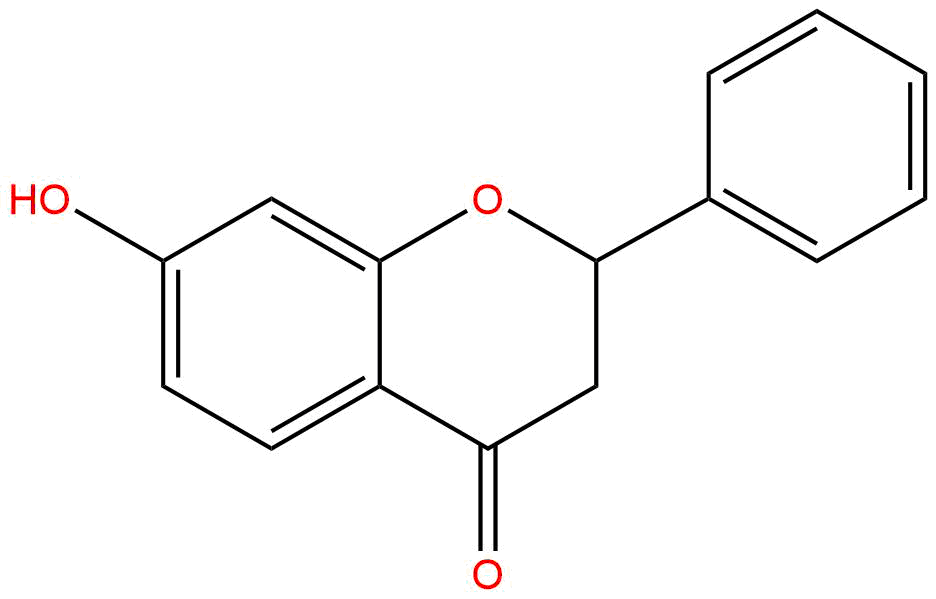


Product name: 7-Hydroxyflavanone
Synonym name:
Catalogue No.: BP4558
Cas No.: 6515-36-2
Formula: C15H12O3
Mol Weight: 240.258
Botanical Source:
Type of Compound: Flavonoids
Purity: 95%~99%
Analysis Method: HPLC-DAD or/and HPLC-ELSD
Identification Method: Mass, NMR
Packing: Brown vial or HDPE plastic bottle
Storage: Store in a well closed container, protected from air and light. Put into refrigerate or freeze for long term storage.
Whenever possible, you should prepare and use solutions on the same day. However, if you need to make up stock solutions in advance, we recommend that you store the solution as aliquots in tightly sealed vials at -20℃. Generally, these will be useable for up to two weeks.
The product could be supplied from milligrams to grams
Inquire for bulk scale.
For Reference Standard and R&D, Not for Human Use Directly.
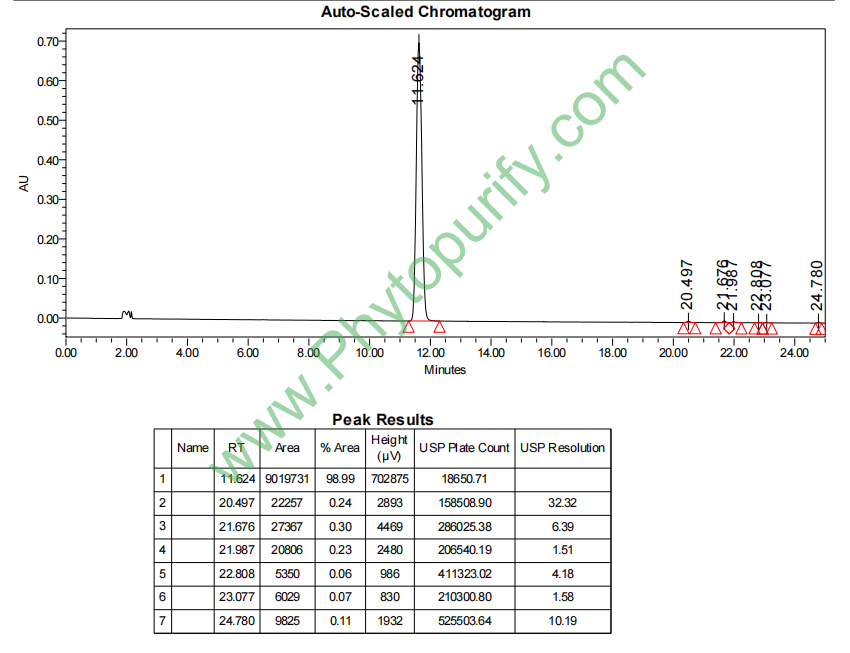
HPLC of 7-Hydroxyflavanone
Storage conditions:Short-term storage at 2~8℃, long-term storage at -20 ~ -80℃
46.5300
2.8113
2.7851
.1078
4.3077
24.5099
High
88.9452
2.4988
No
No
Yes
No
Yes
No
0.0
Yes
Yes
Yes
Yes
Aromatase (CYP19) is a key rate limiting enzyme that catalyzes the conversion of androgen into estrogen in vivo. Its abnormal activity is closely related to the occurrence and development of estrogen dependent tumors such as breast cancer and endometrial cancer. Therefore, finding efficient and low toxicity aromatase inhibitors has become an important strategy for the development of anti estrogen therapeutic drugs. Among the candidate molecules from various natural product sources, 7-Hydroxyflavanone (CAS: 6515-36-2) has attracted much attention due to its specific inhibitory activity against aromatase (IC50=65 μ M). As a typical flavanone compound, 7-hydroxyflavanone not only exhibits direct anti estrogenic effects, but its pharmacological activity spectrum also covers multiple dimensions such as anti-cancer, antioxidant, and anti-inflammatory, indicating its potential for multi-target and multi pathway regulation of hormone homeostasis and intervention in related diseases. In recent years, with the in-depth exploration of its mechanism of action, especially its regulatory role in inflammation related signaling pathways, the research value of 7-hydroxyflavanone has surpassed single aromatase inhibition and become a bridge molecule connecting hormone metabolism and inflammation microenvironment regulation. This article aims to systematically review the chemical properties, plant sources, pharmacological activities, molecular mechanisms of action, medicinal properties, and clinical application prospects of 7-hydroxyflavanone, in order to provide comprehensive academic references for the in-depth development and transformation research of this natural product.
7-Hydroxyflavanone, chemical name 2,3-dihydro-7-hydroxy-2-phenyl-4H-1-benzopyran-4-one, molecular formula C15H12O3, molecular weight 240.2580. Its core structure is the flavanone skeleton, which is the basic parent nucleus of dihydroflavones. Its characteristic is the chiral carbon atom at C-2 position (usually in racemic form), and the C ring (pyran ring) is partially saturated. Compared with flavonoids, the C2-C3 single bond of flavanones makes their conformation more flexible, but the non planarity of the C-ring also affects their binding mode with certain targets. The specificity of 7-hydroxyflavanone lies in the presence of a free phenolic hydroxyl group at the C-7 position of its A ring, which is a key pharmacophore for its antioxidant activity and participation in hydrogen bonding interactions.
From the analysis of physical and chemical properties, the calculated lipid water partition coefficient (LogP) of this compound is 2.8113, indicating that it has moderate lipophilicity, which is beneficial for transmembrane transport and bioavailability. The topologically polar surface area (TPSA) is 46.53 Å ², which is relatively small and further supports its good membrane permeability. The predicted value of its water solubility is 0.1078 mg/mL, which belongs to the category of slightly soluble to poorly soluble. This suggests that solubilization strategies may need to be considered in formulation development. It is worth noting that based on its physicochemical parameters, 7-hydroxyflavanone has a high blood-brain barrier permeability, which provides the possibility for its potential applications in the central nervous system, such as neuroinflammation regulation. In addition, preliminary pharmacological risk assessment showed that it has no inhibitory activity on hERG potassium channels (hERG inhibition: no), and the Ames test predicted a negative result (Ames test: 0.0), indicating that its cardiac toxicity risk and genetic toxicity risk are low, and it has a preliminary safety basis for further development.
7-Hydroxyflavones are widely present in various plants, especially in Fabaceae, Asteraceae, and Rutaceae, where they are abundant. Common plant sources include the skin and flowers of plants in the Glycyrrhiza and Citrus genera, as well as certain medicinal plants such as Psoralea corylifolia. In these plants, 7-hydroxyflavanones often coexist with other flavonoids and flavanone compounds, and are an important component of their secondary metabolites, which may participate in plant defense responses and signal regulation.
The extraction and separation method follows the conventional process of natural product chemistry. Firstly, organic solvents such as methanol, ethanol, acetone, or their aqueous solutions are used to extract or reflux the dried and crushed plant materials to obtain crude extracts rich in flavonoids. Subsequently, liquid-liquid extraction (commonly using ethyl acetate or n-butanol extraction) was used to preliminarily enrich the concentrated equipolar flavanone components. Further purification relies on various chromatographic techniques. Silica gel column chromatography is a commonly used separation method, which uses eluents of different polarities (such as petroleum ether ethyl acetate gradient system) for separation. High performance liquid chromatography (HPLC), especially preparative HPLC, has become a key technology for obtaining high-purity 7-hydroxyflavanones due to its high resolution. C18 reverse phase chromatography columns are often used, with methanol water or acetonitrile water (pH adjusted with a small amount of formic acid or acetic acid) as the mobile phase for elution. Structural identification involves the comprehensive use of ultraviolet spectroscopy (UV, characteristic absorption of flavanones), mass spectrometry (MS, providing molecular weight and fragment information), and nuclear magnetic resonance spectroscopy (NMR, especially 1H NMR and 13C NMR) to determine its planar and stereo structures. In recent years, green extraction techniques such as supercritical fluid extraction and microwave-assisted extraction have also been explored to improve extraction efficiency and selectivity.
7-Hydroxyflavones exhibit diverse pharmacological activities, and their research has expanded from initial aromatase inhibition to multiple disease fields.
Anti estrogen and anticancer activity As an effective inhibitor of aromatase, 7-hydroxyflavanone can directly reduce the biosynthesis of estrogen, thereby inhibiting the proliferation of estrogen dependent tumor cells. Studies have shown that it can inhibit the growth of breast cancer cells (such as MCF-7), and can induce cell cycle arrest and apoptosis. Its anti-cancer effect is not limited to hormone dependent tumors, but may also exert broad-spectrum anti-tumor effects through other pathways such as inducing oxidative stress and inhibiting metastasis related proteins.
antioxidant activity The phenolic hydroxyl group at position 7 of the A ring is a potent hydrogen donor that can scavenge free radicals (such as DPPH free radicals, ABTS free radical cations) and inhibit lipid peroxidation. This antioxidant capacity not only helps protect normal cells from oxidative damage, but may also indirectly affect their biological behavior by regulating the redox state within tumor or inflammatory cells.
anti-inflammatory activity This is an increasingly important aspect of pharmacological research on 7-hydroxyflavone ketone. In various in vitro inflammatory models (such as macrophages stimulated by lipopolysaccharide LPS) and in vivo models (such as carrageenan induced paw swelling in rats and acetic acid-induced increased peritoneal capillary permeability in mice), 7-hydroxyflavanone has shown significant anti-inflammatory effects. It can effectively inhibit the excessive production and release of inflammatory mediators, reduce tissue edema and inflammatory cell infiltration.
Other potential activities Based on its structural similarity, 7-hydroxyflavanone may also have antibacterial, antiviral, neuroprotective and other activities, but more experimental data is needed to support these aspects.
The multiple pharmacological activities of 7-hydroxyflavanone stem from its regulation of multiple key molecular targets and signaling pathways, and its mechanism of action is complex and synergistic.
Core target: Aromatase (CYP19)7-Hydroxyflavanone binds to the active site of aromatase through competitive or non competitive means, interfering with its binding to substrates such as androstenedione or testosterone, thereby directly inhibiting estrogen synthesis, which is the cornerstone of its anti estrogenic effect.
The core network of anti-inflammatory effects Its anti-inflammatory mechanism involves the regulation of multiple key inflammatory targets, forming a multi-target inhibition network
Antioxidant and Cellular Protection Mechanisms In addition to directly scavenging free radicals, 7-hydroxyflavanone can also upregulate the expression of endogenous antioxidant systems in cells, such as HO-1 and NQO1 enzymes downstream of the Nrf2/ARE pathway, enhancing the cell's antioxidant defense ability.
These mechanisms do not exist in isolation. For example, its antioxidant effect can alleviate the activation of the NF - κ B pathway by oxidative stress; The microenvironment created by anti-inflammatory effects may indirectly affect the survival and hormone sensitivity of tumor cells. This multi-target characteristic gives 7-hydroxyflavanone a unique advantage in intervening in complex diseases such as chronic inflammation related cancers.
Although 7-hydroxyflavanone has shown good biological activity in vitro, its pharmacological properties still require systematic evaluation.
Absorption, distribution, metabolism, excretion (ADME):
Challenges and optimization strategies for drug development:
At present, there is still a lack of publicly available data on the pharmacokinetics of the 7-hydroxyflavanone system, which is a key information gap that must be filled before it can be applied clinically.
The multi-target pharmacological properties of 7-hydroxyflavanone provide broad prospects for its application in multiple disease fields, but also face many challenges.
Potential application directions:
challenges faced:
Future research directions:
7-Hydroxyflavones, as a naturally occurring flavonoid compound, have gradually demonstrated rich pharmacological activities including anti-tumor, antioxidant, and especially multi-target anti-inflammatory effects, starting from their clear aromatase inhibitory activity. It forms a synergistic network at the molecular level by regulating multiple key inflammation related targets such as NF - κ B, STAT3, PTGS2, NOS2, etc., which makes it unique in intervening in estrogen related diseases and chronic inflammatory diseases. Although there are still shortcomings in terms of efficacy, pharmacokinetics, and systematic research data, it is expected to overcome these limitations through the cross fusion of modern medicinal chemistry, pharmacy, and pharmacology methods for structural optimization, dosage form improvement, and mechanism deepening. In the future, with the continuous deepening of basic research and the promotion of translational medicine, 7-hydroxyflavanone and its derivatives are expected to develop from potential lead compounds into new drug candidates for tumor adjuvant therapy, chronic inflammation management, and other fields, providing a beneficial example for the modern development of natural products.
