Methyl Ophiopogon Flavonoids B: A Systematic Review from Natural Isoflavones to Cardiovascular Protective Candidate Molecules
Introduction/Overview
Natural products, as an important source of drug discovery, play an irreplaceable role in human health maintenance and disease treatment. Among numerous natural compounds with biological activity, isoflavone compounds have attracted much attention due to their diverse pharmacological activities and relatively low toxicity. Methylophopogone B (MOB), a special flavonoid isolated from plants of the Ophiopogon genus, has shown unique potential in cardiovascular protection in recent years.
Ophiopogon japonicus(Ophiopogon japonicus)As an important component of traditional Chinese medicine, it is widely used in clinical practice to treat conditions such as yin deficiency, lung dryness, restlessness, insomnia, and thirst. It is also commonly used as an adjuvant therapy for cardiovascular diseases. Modern pharmacological research has revealed that various active ingredients in Ophiopogon japonicus, including steroidal saponins, high isoflavones, etc., are the main material basis for its pharmacological effects. Methyl Ophiopogon flavanone B is one of the representative high isoflavones, and its unique chemical structure endows it with biologically active characteristics different from classical isoflavones.
The discovery of methyl Ophiopogon flavanone B can be traced back to the 1980s, when Japanese scholars first isolated the compound from the rhizome of Ophiopogon japonicus. Subsequent studies gradually revealed its multiple pharmacological activities such as antioxidant, anti-inflammatory, and cardiovascular protection. Especially in recent years, with a deeper understanding of the molecular mechanisms of arrhythmia, the role of methyl Ophiopogon B in regulating cardiac ion channels has attracted widespread interest among researchers. This article will provide a systematic review of the research progress of methyl Ophiopogon flavonoids B from multiple dimensions, including chemical structure, plant origin, pharmacological activity, mechanism of action, pharmacological evaluation, and clinical application prospects, in order to provide reference for the in-depth research and development of this natural product.
Chemical structure and physicochemical properties
Chemical structural characteristics
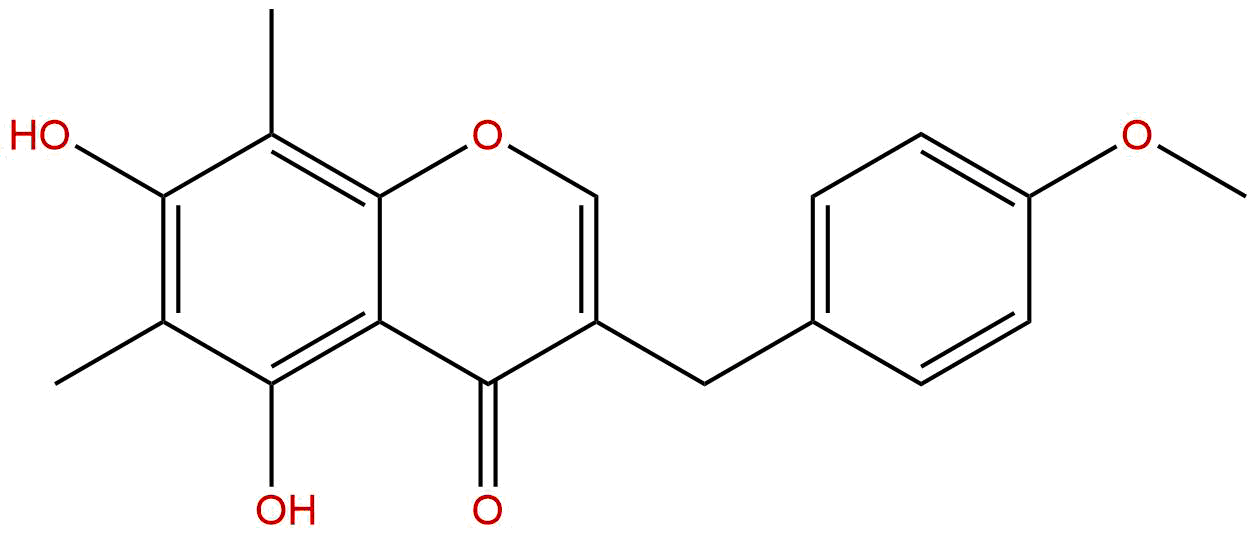
The chemical name of Methyl Ophiopogon Flavonoids B is 5,7-dihydroxy-6,8-dimethyl-3- (4-methoxybenzyl) -4H-1-benzopyran-4-one, with a CAS registration number of 74805-89-3. From a chemical classification perspective, this compound belongs to the class of homoisoflavones, which is a special subclass of the isoflavone family. Its structural feature is that the connection position between the B and C rings is different from that of classical isoflavones.
Specifically, the parent nucleus structure of methyl Ophiopogon flavonoids B is 4H-1-benzopyran-4-one (i.e. chromone skeleton), with one hydroxyl substituent at positions 5 and 7 of the A ring, and methyl substituents at positions 6 and 8. This highly substituted A-ring pattern is relatively rare in natural isoflavones, especially the structural feature of 6,8-dimethyl substitution, which endows the compound with unique chemical properties and biological activity. The 3rd position of the C ring is connected to a 4-methoxybenzyl side chain, which is a typical structural feature of high isoflavones, in sharp contrast to the structure of classical isoflavones where the B ring is connected to the 2nd position of the C ring.
From the perspective of molecular topology, the molecular formula of methyl Ophiopogon flavanone B is C19H18O5, with a molecular weight of 326.3480 g/mol. This molecule consists of a planar chromone nucleus and a rotatable benzyl side chain, and its flexible and rigid molecular configuration facilitates its interaction with various biological targets.
Physical and chemical property parameters
The physicochemical properties of methyl Ophiopogon flavanone B provide important reference for its drug development. According to the results of computational chemistry and experimental measurements, the oil-water partition coefficient (LogP) of the compound is 3.2422, indicating that it has moderate lipophilicity and can maintain a certain solubility in a lipid environment without excessive lipophilicity leading to poor water solubility. The topological polar surface area (TPSA) is 79.9000 Å ², which is within the acceptable range for oral medication (TPSA<140 Å ² is generally considered beneficial for oral absorption).
However, the water solubility of methyl Ophiopogon flavonoids B is relatively poor, with a calculated water solubility value of 0.0258 mg/mL, which to some extent limits its bioavailability. It is worth noting that the blood-brain barrier permeability of this compound has been evaluated as' low ', which may be advantageous for drugs targeting peripheral tissues such as the heart, as it can reduce adverse reactions in the central nervous system.
In terms of predictive parameters related to drug safety, the hERG inhibition risk assessment of methyl Ophiopogon B was negative, which is an important safety indicator because the inhibition of hERG channels is closely related to drug-induced QT interval prolongation and fatal arrhythmias. In addition, the Ames test result was 0.6, indicating that the compound may not have a significant genetic toxicity risk. These preliminary safety evaluation results provide positive signals for the further development of methyl Ophiopogon flavonoids B.
Plant sources and extraction methods
Plant-based
Methyl Ophiopogon Flavonoids B mainly come from the Liliaceae family, the genus Ranunculus(Ophiopogon)Plants, the main source of which is Ophiopogon japonicus(Ophiopogon japonicus(L.f.) Ker Gawl. Ophiopogon japonicus is native to East Asian regions such as China, Japan, and South Korea, and is mainly distributed in provinces such as Zhejiang, Sichuan, Hubei, and Fujian in China. Among them, Cixi in Zhejiang and Santai in Sichuan are famous real estate areas.
Except for Ophiopogon japonicus, other herbaceous plants such as broad-leaved Ophiopogon japonicus(Ophiopogon platyphyllus)Interstitial terraced grass(Ophiopogon intermedius)It may also contain methyl Ophiopogon flavanone B or its structural analogues. It is worth noting that the content of methyl Ophiopogon flavonoids B in Ophiopogon japonicus is usually low and is influenced by various factors such as origin, harvest season, and processing methods. Research has shown that the accumulation of high isoflavones in Ophiopogon japonicus tubers is closely related to the plant's growth period and harvesting time, with active ingredient content typically higher in Ophiopogon japonicus tubers grown for 2-3 years.
Extraction and Separation Purification
The extraction of methyl Ophiopogon flavonoids B is usually carried out using organic solvent extraction combined with modern chromatographic separation techniques. The classic extraction process includes the following steps:
Firstly, the dried Ophiopogon japonicus roots are crushed to an appropriate particle size, and ethanol or methanol is used as the extraction solvent to obtain the crude extract through reflux extraction or ultrasound assisted extraction. The optimization of extraction conditions (such as solvent concentration, temperature, time, solid-liquid ratio, etc.) is crucial for improving the extraction efficiency of the target compound. Research has shown that a 70% -80% ethanol aqueous solution can achieve a high total flavonoid extraction rate by refluxing and extracting 2-3 times at 60-70 ° C for 1-2 hours each time.
After vacuum concentration, the crude extract was subjected to liquid-liquid extraction and classification using solvents such as petroleum ether, ethyl acetate, and n-butanol in sequence. Methyl Ophiopogon flavonoids B are mainly enriched in the ethyl acetate extraction site. Subsequently, silica gel column chromatography, ODS reverse phase column chromatography, Sephadex LH-20 gel column chromatography and other classic chromatographic methods were used for separation and purification. In silica gel column chromatography, gradient elution is usually performed using solvent systems such as chloroform methanol or petroleum ether acetone. For isomers with similar structures, high-performance liquid chromatography (HPLC) or preparative high-performance liquid chromatography (pre HPLC) are effective means to obtain high-purity methyl Ophiopogon flavonoids B.
In recent years, new separation methods such as high-speed countercurrent chromatography (HSCCC) and molecular imprinting technology have also been applied to the separation and purification of methyl Ophiopogon flavonoids B. These methods have the advantages of easy operation, high recovery rate, and low solvent consumption. In addition, supercritical fluid extraction (SFE), as a green extraction technology, has also shown good application prospects in the extraction of active ingredients from Ophiopogon japonicus.
Pharmacological activity research
antioxidant activity
The antioxidant activity of methyl Ophiopogon flavonoids B is one of its earliest discovered pharmacological effects. Research has shown that this compound has significant scavenging effects on hydroxyl radicals (• OH) and hydrogen peroxide (H2O2). This antioxidant activity is closely related to the phenolic hydroxyl groups in its molecular structure, especially the hydroxyl groups at positions 5 and 7, which can neutralize free radicals through hydrogen atom transfer (HAT) or single electron transfer (SET) mechanisms, thereby blocking oxidative chain reactions.
At the cellular level, methyl Ophiopogon flavonoids B can alleviate oxidative stress-induced cell damage. For example, in a myocardial cell model treated with H2O2, pretreatment with methyl Ophiopogon flavonoids B can significantly reduce intracellular reactive oxygen species (ROS) levels, increase the activity of antioxidant enzymes such as superoxide dismutase (SOD) and glutathione peroxidase (GSH Px), and reduce the generation of lipid peroxidation products such as malondialdehyde (MDA). These results indicate that methyl Ophiopogon flavanone B not only has direct free radical scavenging ability, but also exerts indirect antioxidant effects by regulating the endogenous antioxidant defense system.
Cardiovascular protective effect
Cardiovascular protection is the most concentrated area of research on methyl Ophiopogon flavonoids B. Multiple studies have confirmed that this compound has a protective effect on myocardial ischemia-reperfusion injury. In the ex vivo cardiac perfusion model, treatment with methyl Ophiopogon flavonoids B can significantly improve cardiac contractile function after ischemia-reperfusion, reduce myocardial infarction area, and decrease the release of myocardial enzymes such as lactate dehydrogenase (LDH) and creatine kinase (CK). Its protective mechanism involves multiple aspects such as antioxidant, anti apoptotic, and improving mitochondrial function.
Of particular note is the potential application of methyl Ophiopogon flavonoids B in antiarrhythmic effects. Arrhythmia is a common condition in cardiovascular disease, which can lead to sudden cardiac death in severe cases. Although traditional antiarrhythmic drugs are effective, they are often accompanied by serious adverse reactions such as arrhythmia. Therefore, the development of new and safe antiarrhythmic drugs has important clinical significance. Preliminary studies have shown that methyl Ophiopogon flavonoids B can regulate the electrophysiological properties of myocardial cells, prolong action potential duration, inhibit early and delayed depolarization, and thus exert antiarrhythmic effects.
anti-inflammatory activity
Inflammatory response plays an important role in the occurrence and development of cardiovascular diseases. Methyl Ophiopogon flavonoids B also exhibit certain anti-inflammatory activities. Research has found that this compound can inhibit the production of nitric oxide (NO) and prostaglandin E2 (PGE2) in macrophages induced by lipopolysaccharide (LPS), and downregulate the expression of inducible nitric oxide synthase (iNOS) and cyclooxygenase-2 (COX-2). In addition, methyl Ophiopogon flavonoids B can also inhibit the release of pro-inflammatory cytokines such as tumor necrosis factor - α (TNF - α), interleukin-6 (IL-6), and interleukin-1 β (IL-1 β).
At the molecular level, the anti-inflammatory effect of methyl Ophiopogon flavonoids B is related to the regulation of nuclear factor kappa B (NF - κ B) and mitogen activated protein kinase (MAPK) signaling pathways. This compound can inhibit the phosphorylation and degradation of I κ B α, thereby preventing nuclear translocation and transcriptional activation of NF - κ B. Meanwhile, methyl Ophiopogon flavonoids B can also inhibit the phosphorylation of p38 MAPK and JNK, further weakening the transmission of inflammatory signals.
Other pharmacological activities
In addition to the main activities mentioned above, methyl Ophiopogon flavanone B has also been reported to have other pharmacological effects. For example, this compound has a certain inhibitory effect on the proliferation of some tumor cell lines (such as human breast cancer MCF-7 cells and human hepatoma HepG2 cells), but its anti-tumor activity is relatively weak, and its selectivity needs to be improved. In addition, methyl Ophiopogon flavonoids B also showed slight antibacterial activity and had a certain inhibitory effect on Gram positive bacteria such as Staphylococcus aureus and Staphylococcus epidermidis.
Mechanism of action and molecular targets
Regulation of cardiac ion channels
The core mechanism of the antiarrhythmic effect of methyl Ophiopogon flavonoids B lies in its regulation of cardiac ion channels. The generation and conduction of cardiac action potentials depend on the coordinated activity of multiple ion channels, including sodium channels (Nav1.5 encoded by SCN5A), potassium channels (hERG/Kv11.1 encoded by KCNH2, IKs channels encoded by KCNQ1 and KCNE1, MiRP1 encoded by KCNE2), and calcium channels (Cav1.2 encoded by CACNA1C). The abnormal function of these channels is an important molecular basis for the occurrence of arrhythmia.
Research has shown that methyl Ophiopogon flavonoids B can inhibit various potassium channel currents in a concentration dependent manner. Especially the inhibitory effect on fast delayed rectified potassium currents (IKr, mediated by hERG channels) and slow delayed rectified potassium currents (IKs, mediated by KCNQ1/KCNE1 channels) can prolong the action potential duration and effective refractory period of myocardial cells, thereby reducing the occurrence of reentrant arrhythmias. However, unlike classical class III antiarrhythmic drugs, the inhibition of hERG channels by methyl Ophiopogon flavanone B has the characteristics of "reversibility" and "frequency dependence", which may be one of the reasons for its lower risk of arrhythmia.
In addition, methyl Ophiopogon flavonoids B also have a certain regulatory effect on sodium channels (Nav1.5) and L-type calcium channels (Cav1.2). This compound can inhibit the peak current of sodium channels and delay their dynamic recovery from inactive state. This "use dependent" sodium channel blocking effect is beneficial for suppressing abnormal electrical activity under high-frequency excitation. Mild inhibition of calcium channels can reduce calcium overload and lower the risk of triggering activity.
Calcium homeostasis regulation
The calcium homeostasis within myocardial cells is crucial for maintaining normal excitation contraction coupling. The effect of methyl Ophiopogon flavonoids B on calcium regulatory proteins is also an important component of its anti arrhythmic mechanism. Research has found that this compound can inhibit the excessive opening of the sarcoplasmic reticulum calcium release channel (RYR2), reduce diastolic calcium leakage, and thus lower the probability of delayed depolarization. Meanwhile, methyl Ophiopogon flavonoids B can also regulate the activity of sarcoplasmic reticulum calcium pump (SERCA2a), promote the reuptake of calcium ions, and improve the calcium circulation efficiency of myocardial cells.
Signal pathway regulation
In addition to directly acting on ion channels, methyl Ophiopogon B also exerts cardioprotective effects by regulating various intracellular signaling pathways. This compound can activate the PI3K/Akt signaling pathway, promote cell survival, and inhibit apoptosis. Meanwhile, methyl Ophiopogon flavonoids B can also activate the Nrf2/ARE pathway, upregulate the expression of antioxidant enzymes, and enhance the antioxidant defense ability of cells. In addition, activation of the AMPK signaling pathway helps improve energy metabolism in cardiomyocytes and maintain mitochondrial function.
Multi target action characteristics
From the perspective of drug action mode, methyl Ophiopogon flavanone B exhibits typical "multi-target" action characteristics. This compound can simultaneously act on multiple molecular targets associated with arrhythmia, including KCNH2, KCNQ1, SCN5A, CACNA1C, KCNE1, RYR2, and KCNE2. This multi-target mode of action is in stark contrast to the "single target" strategy of traditional antiarrhythmic drugs, and may lead to a better balance between efficacy and safety. For example, although simple hERG channel blockers can effectively prolong action potential duration, excessive prolongation of QT interval increases the risk of apical torsion ventricular tachycardia. Methyl Ophiopogon flavanone B not only inhibits potassium channels, but also moderately inhibits sodium and calcium channels. This "multi-channel balance" mode of action may help reduce the risk of arrhythmia.
Evaluation of drug properties and pharmacokinetics
Analysis of drug properties
Based on the Lipinski Rule of Five, the drug properties of methyl Ophiopogon flavanone B were evaluated: its molecular weight (326.35 Da) is less than 500 Da, LogP value (3.24) is less than 5, hydrogen bond donor number (2 phenolic hydroxyl groups) is less than 5, and hydrogen bond acceptor number (5 oxygen atoms) is less than 10, meeting the basic requirements for oral administration of drugs. In addition, the number of rotatable bonds is 3, indicating that the molecule has a certain degree of conformational flexibility, which is conducive to binding to the target.
However, the water solubility of methyl Ophiopogon flavonoids B is poor (0.0258 mg/mL), which may be the main factor limiting its oral bioavailability. The strategies to improve water solubility include preparing prodrugs, forming salts, and using nanoformulation technology. For example, phosphorylation modification of phenolic hydroxyl groups can significantly improve water solubility while maintaining or enhancing biological activity.
Pharmacokinetic characteristics
At present, the systematic study on the pharmacokinetics of methyl Ophiopogon flavonoids B is not sufficient, but based on its physicochemical properties and preliminary experimental data, some basic characteristics can be inferred. The oral absorption of this compound may be limited by poor water solubility and first pass effects, resulting in lower absolute bioavailability. In terms of distribution in the body, due to its moderate lipid solubility and low protein binding rate, methyl Ophiopogon flavanone B may be widely distributed in various tissues and organs, but its low blood-brain barrier permeability limits its distribution in the central nervous system.
In terms of metabolism, the phenolic hydroxyl and methoxy groups of methyl Ophiopogon flavonoids B are the main metabolic sites. Phase II metabolic enzymes in the liver, such as UDP glucuronosyltransferase and sulfotransferase, may catalyze their glucuronidation and sulfation binding reactions, generating more water-soluble metabolites and promoting excretion. In addition, the cytochrome P450 enzyme system (especially CYP3A4 and CYP2C9) may be involved in its oxidative metabolism, leading to demethylation of methoxy groups or hydroxylation of benzene rings.
In terms of excretion pathways, methyl Ophiopogon flavonoids B and its metabolites are mainly excreted through bile and urine. Due to its moderate molecular weight, some prototype drugs may be excreted through glomerular filtration, while bound metabolites are mainly excreted into the intestine through bile and may undergo enterohepatic circulation.
safety evaluation
As mentioned earlier, Methyl Ophiopogon Flavonoids B performed well in the preliminary safety evaluation. The risk assessment of hERG inhibition is negative, indicating a low risk of inducing QT interval prolongation. The Ames test result was 0.6, indicating that no significant mutagenicity was observed within the tested concentration range. However, these results are mainly based on computational predictions and limited in vitro experiments, and systematic in vivo toxicology studies (including acute toxicity, chronic toxicity, reproductive toxicity, carcinogenicity, etc.) are still needed.
It is worth noting that the safety of methyl Ophiopogon flavonoids B, as a natural product, may be affected by various factors such as source, purity, and dosage. In traditional Chinese medicine applications, Ophiopogon japonicus, as a dual-use substance for medicine and food, has high safety, but the toxicological characteristics of a single active ingredient may differ from those of crude extracts. Therefore, strict safety evaluation is required in the development of methyl Ophiopogon flavanone B as a candidate drug.
Clinical application prospects and prospects
Potential for the treatment of cardiovascular diseases
Based on the pharmacological activity and mechanism of action of methyl Ophiopogon flavonoids B, it has broad application prospects in the field of cardiovascular disease treatment. Especially for the treatment of arrhythmia, this compound exhibits unique characteristics of action compared to existing drugs. Traditional antiarrhythmic drugs are classified into four categories according to Vaughan Williams classification, but each category has certain limitations: Class I sodium channel blockers may increase mortality after myocardial infarction, Class III potassium channel blockers have the risk of causing arrhythmia, and Class IV calcium channel blockers have negative inotropic effects that limit their use in heart failure patients.
Methyl Ophiopogon flavonoids B, as a natural compound with multi-channel regulatory effects, may provide a new option for the treatment of arrhythmia. The moderate potassium channel blocking effect can prolong the duration of action potential, while the simultaneous inhibition of sodium and calcium channels helps to suppress abnormal electrical activity. This "multi-target balance" mode of action is expected to maintain therapeutic efficacy while reducing adverse reactions. In addition, the antioxidant and anti-inflammatory activities of this compound also contribute to improving the myocardial microenvironment in which arrhythmia occurs, exerting therapeutic effects from the perspective of etiology.
Comparison with other drugs
Compared with existing antiarrhythmic drugs, methyl Ophiopogon flavanone B has some unique advantages. For example, compared to amiodarone, the molecular structure of methyl Ophiopogon flavonoids B is simpler and may have lower organ toxicity (such as pulmonary fibrosis, thyroid dysfunction, etc.). Compared with pure class III antiarrhythmic drugs such as sotalol, the multi-channel mode of action of methyl Ophiopogon B may reduce the risk of arrhythmia. Of course, these advantages still need to be validated through systematic preclinical and clinical studies.
Development Strategy and Challenges
The development of methyl Ophiopogon flavanone B as a clinical drug still faces many challenges. Firstly, the problem of poor water solubility needs to be solved through formulation technology. New drug delivery systems such as liposomes, nanoparticles, and cyclodextrin inclusion complexes may enhance their bioavailability. Secondly, it is necessary to establish efficient and controllable synthesis or semi synthesis methods to meet the needs of large-scale production. At present, methyl Ophiopogon flavonoids B mainly rely on extraction and separation from natural products, with low yield and high cost, which is difficult to meet clinical needs. The development of chemical total synthesis or biosynthetic pathways will help solve this bottleneck.
In addition, systematic pharmacokinetic and toxicological studies are needed to clarify the absorption, distribution, metabolism, excretion characteristics, and long-term safety of the compound in vivo. Research on biomarkers based on their mechanisms of action can also help guide clinical medication and efficacy evaluation.
Future research directions
Looking ahead to the future, research on methyl Ophiopogon flavonoids B can be further explored in the following directions: firstly, utilizing structural biology and computer-aided drug design techniques to optimize its molecular structure, enhance its activity and selectivity; The second is to explore its synergistic effect with other antiarrhythmic drugs and develop a combination therapy plan; The third is to expand its indications and study its potential application in other cardiovascular diseases such as heart failure and cardiomyopathy; The fourth is to conduct clinical translational research to evaluate its safety and effectiveness in the human body.
Conclusion
Methyl Ophiopogon flavanone B, as a highly isoflavonoid compound isolated from traditional Chinese medicine Ophiopogon japonicus, has attracted widespread attention from researchers due to its unique chemical structure and diverse pharmacological activities. This compound not only exhibits significant antioxidant activity, but also shows promising application prospects in cardiovascular protection, especially in anti arrhythmic effects. Its multi-target regulation of cardiac ion channels provides a new approach for the development of novel and safe antiarrhythmic drugs.
Although the research on methyl Ophiopogon flavonoids B is still in its early stages and there is still a long way to go from basic research to clinical application, existing research results have revealed the enormous potential of this natural product. With a deeper understanding of its pharmacological mechanisms, improvements in chemical synthesis methods, and innovations in formulation technology, methyl Ophiopogon flavanone B is expected to become an important candidate drug in the field of cardiovascular disease treatment. In the context of "returning to nature" and "searching for new drugs from natural products", the research on methyl Ophiopogon flavonoids B not only has important scientific significance, but also contains broad application prospects. We look forward to the near future when this active molecule from traditional Chinese medicine can bring new treatment options for cardiovascular disease patients.