Introduction/Overview
Allergic diseases, such as allergic rhinitis, asthma and atopic dermatitis, have become a global public health problem. Their incidence rate is increasing year by year, which seriously affects the quality of life of patients. Traditional anti allergic drugs such as antihistamines, leukotriene receptor antagonists, and glucocorticoids are effective, but long-term use often accompanies side effects such as drowsiness, drug resistance, and endocrine disorders. Therefore, searching for efficient and low toxicity new anti allergic lead compounds from natural products has always been an important direction for drug development. Flavonoids are widely present in the plant kingdom and have attracted attention for their diverse chemical structures and extensive biological activities. Apigenin, as a common flavonoid glycoside, has been proven to have various pharmacological activities such as anti-inflammatory, antioxidant, and anti allergic effects. However, its low water solubility and bioavailability limit its application. Glycosylation modification is a common strategy in nature to improve the water solubility and biological activity of flavonoids. Apigenin 7-O - (6 '' - O-malonyl) - β - D-glucoside (hereinafter referred to as malonylated apigenin glucoside) is an important glycoside derivative of apigenin. The malonyl group in its structure further enhances the polarity and potential biological activity of the molecule. This article aims to systematically review the chemical properties, plant sources, extraction methods, anti allergic pharmacological activities, mechanisms of action, drug evaluation, and clinical application prospects of this compound, in order to provide comprehensive scientific references for the in-depth research and development of this natural product.
Chemical structure and physicochemical properties
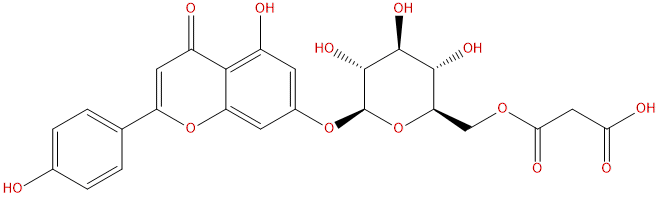
The chemical structure of apigenin 7-O - (6 '' - O-malonyl) - β - D-glucoside is based on the apigenin (5,7,4 '- trihydroxyflavone) skeleton. The 7th hydroxyl group of its parent nucleus A ring is connected to the β - D-glucose group through a glycosidic bond, and the 6 '' hydroxyl group of the glucose group further forms a monoester bond with a malonic acid molecule, namely the malonic acid monoacyl group (- O-CO-CH2-COOH). This structural feature distinguishes it from ordinary apigenin 7-O-glucoside.
The CAS number of this compound is 86546-87-4, the molecular formula is C24H22O14, and the molecular weight is 518.4270. The introduction of monoacyl malonate significantly altered its physicochemical properties. The calculated lipid water partition coefficient (LogP) is 0.3227, indicating that the molecule has good hydrophilicity, between lipophilicity and hydrophilicity, but tends to be in the aqueous phase. Its topological polar surface area (TPSA) is as high as 213.4200 Å ², mainly attributed to the presence of multiple hydroxyl groups, glycosidic oxygen atoms, and carboxyl groups on the malonic acid monoacyl group in the structure, which give it excellent water solubility (calculated value of approximately 1.6956 mg/mL). High TPSA and hydrophilicity also indicate a lower ability to cross the blood-brain barrier, which to some extent limits its potential impact on central nervous system related diseases, but may also reduce the risk of central nervous system side effects. Preliminary pharmacological risk assessment shows that the compound has no significant inhibitory effect on hERG potassium channels (hERG inhibition: No), indicating a low potential risk of arrhythmia. The Ames test result is 0.6, indicating a low risk of mutagenicity in this experimental system, but further in vitro and in vivo experiments are needed to confirm. Overall, the modification of malonic acid monoacyl group endows the compound with water solubility superior to apigenin and more favorable preliminary safety characteristics, laying the foundation for its development as a water-soluble formulation.
Plant sources and extraction methods
Acetylated apigenin glucoside is not widely distributed in all plants, but mainly exists in certain specific species of Asteraceae and Apiaceae, often as a secondary metabolite of plants. In Asteraceae plants,Matricaria recutita (German chamomile) The flower is one of its important sources, and this compound is considered as its characteristic flavonoid component, contributing to its anti-inflammatory and anti allergic pharmacological activity. In addition, in some Aster spp It has also been detected in plants. In the Umbelliferae family, this compound exists together with other glycosides of apigenin Celery (Apium graveolens) In the leaves and stems, although the content is relatively low.
Extracting malonylated apigenin glucoside from plant materials requires special consideration of the sensitivity of the malonic acid monoacyl group in its structure to acidity, alkalinity, and heat. The ester bond is prone to hydrolysis under high temperature, strong alkaline or long-term acidic conditions, removing the malonic acid group and generating ordinary apigenin 7-O-glucoside, and even further hydrolyzed into apigenin aglycone. Therefore, the extraction process needs to be as gentle as possible.
- extraction solvent Typically, solvents or solvent mixtures with moderate polarity are used, such as methanol water, ethanol water, or acetone water systems. Among them, ethanol containing a certain proportion of water (such as 70% -80% ethanol) is a commonly used and environmentally friendly choice, which can effectively extract flavonoid glycosides and is relatively friendly to thermally unstable malonyl groups.
- extraction method:
- Room temperature extraction or ultrasound assisted extraction (UAE)These two methods can effectively avoid high temperatures and are the first choice for protecting the malonyl group. The cavitation effect generated by ultrasound can accelerate the fragmentation of plant cell walls, improve extraction efficiency, and shorten extraction time.
- Microwave assisted extraction (MAE)Under strict temperature and time control conditions (such as short-term low temperature), MAE can also be used for rapid extraction, but careful optimization of parameters is necessary to prevent degradation.
- Traditional hot reflux extraction If used, the extraction temperature (recommended to be below 60 ℃) and time must be strictly controlled.
- Purification and identification After filtration and concentration, the crude extract can be preliminarily enriched using macroporous adsorption resins (such as AB-8, D101), followed by gradient elution with water and different concentrations of ethanol. The target compound is usually eluted in the low to medium concentration ethanol elution fraction. Further purification can be achieved through preparative high-performance liquid chromatography (Prep HPLC) using a C18 reverse phase chromatography column and a mobile phase of methanol water or acetonitrile water (usually with a small amount of formic acid or acetic acid added to inhibit carboxyl ionization and improve peak shape) for separation. The identification of this compound mainly relies on mass spectrometry (MS, especially ESI-MS negative ion mode, where [M-H] - ion peaks and characteristic malonyl loss fragments can be observed) and nuclear magnetic resonance spectroscopy (NMR, especially 1H NMR and 13C NMR, which can clarify the glycosidic bond connection position and the substitution point of malonyl).
Pharmacological activity research
Existing research, especially based on network pharmacology prediction and partial experimental verification, strongly suggests that malonylated apigenin glucoside has multi-target and multi pathway anti allergic potential, and its core pharmacological activity focuses on inhibiting multiple key links of allergic reactions.
1. Inhibit the release of allergic mediators and antagonize their receptors:
This compound may directly or indirectly affect the synthesis and action of key allergenic mediators. Predict its ability to suppress 5-Lipoxygenase (ALOX5) The activity reduces the production of potent inflammatory mediators leukotrienes (LTs, such as LTB4, LTC4, LTD4). Leukotriene is an important driving factor for bronchial constriction and inflammation in diseases such as asthma. Meanwhile, it may antagonize Histamine H1 receptor (HRH1) and Thromboxane A2 receptor (TBXA2R)Directly blocking the symptoms of vascular dilation, increased permeability, and isokinetic allergic reactions caused by histamine and thromboxane A2.
2. Regulating Th2 type immune response:
The core immunological feature of allergic diseases is the overactivation of Th2 type immune response. This compound is predicted to intervene in the Th2 cytokine network. It may downregulate key Th2 cytokines IL-4, IL-5, and IL-13 Expression or signal transduction. IL-4 is an essential factor for inducing B cells to produce IgE (the core antibody of allergies); IL-5 is a key factor in the activation, proliferation, and survival of eosinophils; IL-13 directly acts on airway and skin epithelial cells, promoting mucus secretion and fibrosis. By inhibiting these cytokines, the compound can upstream suppress IgE production, eosinophil infiltration, and tissue remodeling.
3. Inhibition of IgE mediated sensitization and effector phase:
Compounds may affect High affinity IgE receptor (Fc ε RI α, encoded by FCER1A gene) The expression or signal transduction of IgE weakens the sensitization process of mast cells and eosinophils (i.e. the binding of IgE to Fc ε RI α). When allergens re-enter the body, the ability of suppressed effector cells to release mediators such as histamine and leukotrienes also decreases.
4. Intervention in key signaling pathways:
Signal Transduction and Transcription Activation Factor 6 (STAT6) It is a downstream key molecule for IL-4 and IL-13 signaling, which phosphorylates and enters the nucleus, initiating the transcription of a series of Th2 related genes (such as eotaxin, IgE, etc.). This compound may inhibit the activation of STAT6, thereby extensively suppressing Th2 responses at the transcriptional level. In addition, it may also inhibit Thymic stromal lymphopoietin (TSLP) The expression. TSLP is an epithelial cell-derived alarm cytokine that plays a "master switch" role in allergy initiation, strongly activating dendritic cells and driving initial T cells to differentiate into Th2 cells.
In summary, malonylated apigenin glucoside exhibits a comprehensive anti allergic pharmacological activity profile, from inhibiting mediator release, antagonizing receptors, regulating cytokines to intervening in key signaling pathways. Its multi-target properties may bring synergistic therapeutic effects.
Mechanism of action and molecular targets
Based on the aforementioned pharmacological activity, the anti allergic mechanism of malonylated apigenin glucoside can be integrated into a multi-target synergistic network model. Its core mechanism does not act on a single target, but rather exerts inhibitory effects at multiple nodes by intervening in the cascade amplification process of allergic reactions.
1. Targeting membrane receptors and enzymes to block acute inflammatory signals:
Compounds may interact with flavonoids through their flavonoid structure HRH1 and TBXA2R Competitive binding occurs in the ligand binding domain, directly blocking the signal transduction of histamine and thromboxane A2, rapidly relieving symptoms such as itching, erythema, and bronchospasm. At the same time, as a potential inhibitor of ALOX5, it reduces the de novo synthesis of leukotrienes, a series of potent pro-inflammatory mediators, by chelating the iron ions required by the enzyme active center or occupying the substrate binding pocket, thereby alleviating chronic inflammation and bronchial hyperresponsiveness at the root.
2. Regulating intracellular signal transduction and reshaping immune balance:
Within immune cells, the effect of this compound is more profound. Regarding STAT6 Pathway, which may inhibit the activity of upstream kinases (such as JAK1/JAK3), prevent STAT6 phosphorylation and dimerization triggered by IL-4/IL-13 receptor activation, thereby blocking its nuclear translocation and binding to DNA. This suppresses the transcription of numerous Th2 response related genes, including MHC class II molecules, CD23, eotaxin, and others. Regarding TSLP Compounds may intervene from the initial stage of allergic reactions by inhibiting upstream signaling pathways such as NF - κ B or MAPK, reducing the excessive production of TSLP in epithelial cells under injury or inflammatory stimulation.
3. Affects gene expression and cellular function:
By intervening in the above signaling pathways, it ultimately manifests as targeting key cytokines(IL-4, IL-5, IL-13)Inhibition of gene expression. This leads to a positive feedback inhibition cycle: a decrease in IL-4 → a decrease in IgE production by B cells → a decrease in Fc ε RI α receptor loading(FCER1A Downregulation of related functions → Decreased sensitization of mast cells/eosinophils → Reduced release of degranulation mediators upon re exposure to allergens. Meanwhile, the reduction of IL-5 directly leads to a decrease in the number and activity of eosinophils in the blood and tissues, while the reduction of IL-13 alleviates airway mucus hypersecretion and tissue fibrosis.
The mechanism of action of this "multi-point intervention" enables the rapid relief of acute allergic symptoms (through receptor antagonism and mediator inhibition) and long-term control of allergic processes from an immunomodulatory perspective (through inhibition of Th2 differentiation and related cytokines), demonstrating great potential as a novel multi-target anti allergic drug.
Evaluation of drug properties and pharmacokinetics
Although succinylated apigenin glucoside has shown good anti allergic potential and preliminary safety in vitro and computer simulations, its potential as a drug still depends on the systematic drug efficacy evaluation and pharmacokinetic characteristics.
1. Pharmaceutical advantages:
* Solubility and formulation potential High water solubility is its most prominent advantage, which solves the key bottleneck of most flavonoid glycosides being difficult to dissolve in water and having low oral bioavailability. This makes it possible to develop oral solutions, injections, sprays, eye drops and other dosage forms, especially suitable for allergic diseases requiring rapid onset or local administration (such as allergic conjunctivitis, rhinitis spray).
* Preliminary safety Non hERG inhibitors and lower Ames test risk provide a good starting point for their safety assessment.
2. Challenges in drug development and pharmacokinetic (PK) prediction:
* absorb High hydrophilicity and high molecular weight (>500) may limit its passive diffusion across intestinal epithelial cell membranes. Its absorption may depend on active transporters on the intestinal mucosa (such as similarity recognition of glucose transporter SGLT1), but the efficiency needs to be verified. The malonyl group may partially ionize at the physiological pH of the gastrointestinal tract, further affecting its lipophilic absorption.
* distribution High TPSA and hydrophilicity indicate that the plasma protein binding rate may not be high, with a small distribution volume and mainly distributed in the extracellular fluid. The characteristic of being difficult to penetrate the blood-brain barrier (low BBB permeability) can be seen as an advantage in anti allergic contexts, avoiding central side effects.
* Metabolism This compound undergoes extensive metabolic transformation in the body.hydrolysis It is its main metabolic pathway: intestinal microbiota and esterases in blood/tissues may rapidly hydrolyze it into apigenin 7-O-glucoside, which may be further hydrolyzed by β - glucosidase into apigenin.II combined reaction(such as glucuronidation and sulfation) can also occur in the liver and intestinal mucosa, producing more polar metabolites that are easier to excrete. Therefore, the concentration of its prototype drug in the blood may be low and short-lived.
* excretion Metabolites are mainly excreted through the kidneys and urine.
* Oral bioavailability The combination of limited absorption and strong first pass metabolism (intestinal hydrolysis and liver binding) suggests that its oral absolute bioavailability may be low. This prompt,This compound may be more suitable for development as a non oral formulation (such as nasal, inhalation, or injection), or its pharmacological activity partially depends on its metabolites (such as apigenin)。
3. Future research focus:
It is urgent to conduct systematic preclinical pharmacokinetic studies to clarify its absorption, distribution, metabolism, and excretion (ADME) characteristics under different administration routes, determine its true active form (prototype drug or metabolite), and evaluate its in vivo efficacy and toxicity. Structural optimization, such as preparing prodrugs or structural analogues, to improve metabolic stability and oral bioavailability, is also an important research direction.
Clinical application prospects and prospects
Acetylated apigenin glucoside, as a natural multi-target anti allergic candidate, has broad clinical application prospects, but it still needs to go through a series of research and development stages to enter the market.
1. Potential application areas:
* Respiratory allergic diseases Such as allergic rhinitis and asthma. It can be developed as nasal spray or inhaler, directly acting on target organs, with high local concentration, less system exposure and reduced systemic side effects. Its multiple effects of inhibiting leukotrienes, Th2 cytokines, and airway remodeling (by inhibiting IL-13) make it particularly suitable for adjuvant therapy of moderate to severe or hormone resistant asthma.
* Allergic skin diseases Such as atopic dermatitis and urticaria. It can be made into cream, gel or lotion for external use, and its antihistamine, anti-inflammatory and immunomodulatory properties can be used to relieve itching, redness and swelling, and repair the skin barrier.
* Allergic conjunctivitis Developed as eye drops, it has local anti allergic properties and is expected to be safer than some existing drugs.
* Food and Health Products As a functional food ingredient or dietary supplement, it is used for the prevention of mild allergic symptoms and regulation of immune balance, but its low oral bioavailability is the main obstacle to this application direction.
2. R&D challenges and prospects:
* Confirmation of active forms It is necessary to conduct in vivo pharmacological experiments combined with pharmacokinetic studies to clarify the main forms of substances that exert therapeutic effects (prototype, hydrolyzed glycosides, or aglycones). This will determine the direction of subsequent drug design and formulation development.
* Formulation innovation Due to its PK characteristics, priority should be given to layout Local administration and novel drug delivery systems For example, carriers such as nanoliposomes and polymer nanoparticles can protect them from premature hydrolysis, improve stability, enhance mucosal permeability, and even achieve targeted delivery.
* Structural modification and optimization Based on its parent nucleus structure, reasonable chemical modifications can be carried out, such as esterification or amidation of malonyl groups to improve metabolic stability, or optimization of the sugar moiety to improve transporter mediated absorption, in order to obtain derivatives with better drug properties.
* clinical validation Ultimately, strict randomized controlled clinical trials are required to validate its effectiveness, safety, and optimal dosing regimen in humans.
* Multi component collaborative research In natural plant extracts, this compound often coexists with other flavonoids, volatile oils, and other components. Studying its synergistic anti allergic effects with these natural ingredients and developing standardized herbal formulas is also a valuable path.
Conclusion
Celery extract 7-O - (6 '' - O-malonyl) - β - D-glucoside, as a unique malonylated flavonoid glycoside, has shown remarkable potential in the development of natural product anti allergic drugs due to its excellent hydrophilicity, multi-target anti allergic mechanism, and good preliminary safety characteristics. It constructs a comprehensive anti allergic network from inhibiting acute mediator release to regulating chronic immune imbalance by intervening in ALOX5, HRH1, Th2 cytokine networks and key targets such as STAT6 and TSLP. Although it faces challenges such as low oral bioavailability and complex metabolism in vivo, these challenges precisely point to future research and development directions: focusing on local drug delivery formulations, innovative drug delivery systems, and rational optimization based on structure. With the in-depth elucidation of its mechanism of action (especially its active form in vivo) and comprehensive analysis of its pharmacokinetic properties, this compound is expected to develop from a potential natural ingredient into an innovative drug or lead compound for treating allergic diseases, providing billions of allergic patients worldwide with a new option that originates from nature, has diverse effects, and may be safer. The research on it not only has scientific value, but also conforms to the current global health trend of returning to nature and seeking green drugs.