Introduction/Overview
Arrhythmia is a common type of cardiovascular disease, with a complex pathogenesis involving multiple aspects such as abnormal ion channel function and disrupted electrical activity of myocardial cells. Although existing antiarrhythmic drugs have achieved certain results in clinical application, their common problems such as arrhythmia risk, insufficient target selectivity, and side effects have prompted researchers to continuously search for candidate compounds with novel structures, unique mechanisms of action, and higher safety from natural products. Neokurarinol (CAS number: 52483-00-8), as an isoprenyl flavonoid compound isolated from traditional medicinal plants, has attracted much attention in recent years due to its potential antiarrhythmic activity. Early research mainly focused on other flavonoids derived from plants, and as one of the structurally modified components, the unique chemical structure of Sophora flavescens suggests that it may have pharmacological properties different from conventional flavonoids. With the development of molecular pharmacology and electrophysiological techniques, the regulatory effects of new sophocarpine on various cardiac ion channels have gradually been revealed, making it a promising research object in the field of antiarrhythmic drug development. This article aims to systematically review the chemical structure, plant origin, pharmacological activity, mechanism of action, pharmacological evaluation, and clinical application prospects of the new sophora flavescens compound, in order to provide comprehensive scientific references for the in-depth research and development of this compound.
Chemical structure and physicochemical properties
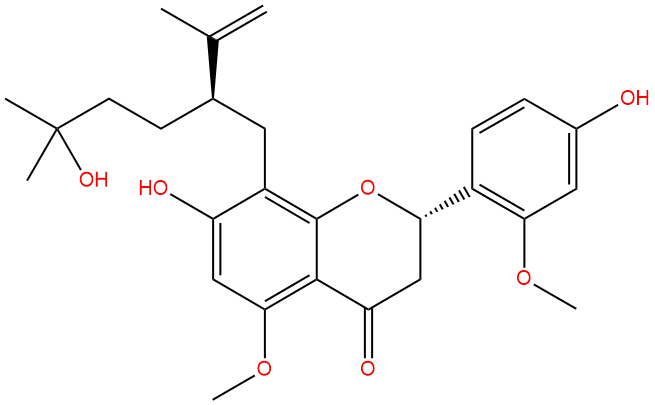
The chemical name of New Sophora flavescens is (2S) -5,7-dihydroxy-2- (4-hydroxyphenyl) -8- (3-methylbut-2-en-1-yl) -6- (3-methylbut-2-en-1-yl) -2,3-dihydro-4H-chromene-4-one, with a molecular formula of C ₂₅ H ∝₄ O ₆ and a molecular weight of 470.5620. Its core structure is a dihydroflavonoid skeleton, with isopentenyl (3-methylbut-2-en-1-yl) substituents attached to the 6th and 8th positions of the parent nucleus, respectively. This isopentenyl modification is relatively unique in flavonoids and is considered a key structural feature that distinguishes its biological activity from simple flavonoids. This structure enhances the hydrophobicity of the molecule and may affect its binding mode with the target protein.
From the analysis of physical and chemical properties, the lipid water partition coefficient (LogP) of New Sophora flavescens is 4.1387, indicating that it has a moderately high lipophilicity, which is conducive to its penetration of cell membranes and interaction with membrane proteins (such as ion channels). Its topological polar surface area (TPSA) is 105.4500 Å ², reflecting the presence of multiple polar groups (such as hydroxyl groups) in the molecule. The water solubility value is 0.1220 mg/mL, which belongs to the category of slightly soluble to poorly soluble, indicating that solubilization strategies may need to be considered in formulation development. Preliminary pharmacological predictions indicate that its blood-brain barrier permeability is low and it mainly acts on the peripheral system. This may help reduce central nervous system side effects for drugs that primarily act on the heart. The key hERG inhibition prediction is' no ', which is a positive signal because inhibition of the hERG channel (encoded by the KCNH2 gene) is the main cause of many drug-induced acquired long QT syndrome and fatal arrhythmias, and the negative prediction of neosophorol in this regard reduces its potential risk of arrhythmia. In addition, the Ames test predicted a value of 0.0, indicating that it may not have direct genetic toxicity, providing preliminary favorable evidence for safety evaluation.
Plant sources and extraction methods
New Sophora flavescens Ait is mainly derived from the dried roots of Sophora flavescens Ait, a plant in the Fabaceae family. Sophora flavescens, as a traditional Chinese medicine, has the effects of clearing heat and dampness, insecticidal and diuretic. Modern research has shown that it is rich in various alkaloids and flavonoids, and is an important treasure trove of active natural products. New Sophora flavescens alcohol coexists with other flavonoids in Sophora flavescens, such as Kurarinone and Norkurarinone, and belongs to the characteristic isopentenyl flavonoid group in Sophora flavescens.
Its extraction and separation usually follow the conventional process of natural product chemistry. Firstly, the roots of Sophora flavescens are dried and crushed, and then subjected to reflux extraction or ultrasound assisted extraction using alcohol solvents (such as methanol, ethanol) or alcohol water mixed solvents to fully extract flavonoids. After vacuum concentration, the crude extract obtained was subjected to liquid-liquid distribution extraction using organic solvents such as ethyl acetate and n-butanol to preliminarily enrich the equipolar flavonoid fractions. Further purification often relies on column chromatography techniques, often using silica gel column chromatography with different ratios of petroleum ether ethyl acetate or chloroform methanol gradient elution, and preliminary separation is carried out based on polarity differences. Then, fine separation and purification were carried out in combination with modern chromatographic methods such as reverse phase silica gel column chromatography (such as ODS-C18), dextran gel column chromatography (such as Sephadex LH-20) and high performance liquid chromatography (HPLC), and finally a new high-purity matrinol monomer was obtained. Structural identification involves the comprehensive use of nuclear magnetic resonance (NMR, including ¹ H-NMR, ¹ ³ C-NMR, 2D-NMR), mass spectrometry (MS), ultraviolet spectroscopy (UV), and optical rotation measurement techniques. In recent years, green and efficient technologies such as supercritical fluid extraction and high-speed countercurrent chromatography have gradually been applied in the extraction and separation of such compounds to improve yield and purity.
Pharmacological activity research
The pharmacological activity research of New Sophora flavescens mainly focuses on its cardiovascular system effects, especially its anti arrhythmic effect. Multiple in vivo experiments based on animal models have shown that neosophorol can effectively counteract arrhythmia models induced by various chemicals (such as barium chloride, aconitine, adrenaline) or electrical stimulation. For example, in the rat arrhythmia model induced by barium chloride, pretreatment with neosophorol can significantly delay the onset time of arrhythmia, shorten its duration, and improve the recovery rate of sinus rhythm. Its effect is concentration dependent within a certain dose range. In the ischemia reperfusion induced arrhythmia model that is closer to the clinical pathological state, neosophorol also showed a certain protective effect, suggesting that it may have a positive significance for the stability of myocardial electrical activity under pathological conditions.
In vitro electrophysiological studies are the core of its activity evaluation. Using patch clamp technology to study isolated single myocardial cells or cell lines expressing specific ion channels, it was confirmed that neosophorol has a regulatory effect on multiple key ion channels that maintain normal cardiac electrical activity. It can inhibit fast sodium channels in the heart (mainly affecting depolarization of action potential phase 0), L-type calcium channels (affecting the plateau phase of action potential phase 2 and intracellular calcium concentration), and also regulate various potassium channels (such as delayed rectifier potassium channels, transient outward potassium channels, etc., affecting the repolarization process of action potential). This multi-target and comprehensive ion channel regulation characteristic enables it to intervene in abnormal electrical activity from multiple links, which may have a broader spectrum of antiarrhythmic potential than single target inhibitors, and theoretically is less likely to cause new electrical disorders due to excessive blocking of a single channel.
In addition to its direct anti arrhythmic effect, some studies also suggest that neosophorol may have antioxidant and anti-inflammatory activities. Pathological processes such as myocardial ischemia and heart failure are often accompanied by oxidative stress and inflammatory reactions, which further deteriorate myocardial electrical stability. Therefore, these auxiliary activities of New Sophora flavescens may synergize with its core anti arrhythmic effect, contributing to its cardioprotective effect, but further research is needed in this area.
Mechanism of action and molecular targets
The molecular mechanism of the antiarrhythmic effect of New Sophora flavescens is rooted in its precise regulation of key ion channels involved in the generation and conduction of cardiac action potentials. According to its related disease target information, its target network is clear:
- Voltage gated sodium channel (SCN5A encoding)The inhibition of SCN5A channel by neosophorol can reduce the maximum rise rate (Vmax) of myocardial cell depolarization in phase 0 and slow down the conduction velocity of action potential in the cardiac conduction system, especially in Purkinje fibers and ventricular myocardium. This helps to interrupt the return loop, which is of great significance for the treatment of rapid arrhythmias such as ventricular tachycardia.
- Voltage gated calcium channel (CACNA1C encoding)Inhibition of L-type calcium channels (CACNA1C) can reduce the influx of calcium ions during the plateau phase, shorten the duration of action potentials (especially phase 2), reduce intracellular calcium concentration, weaken myocardial contractility (which may have negative inotropic effects, need to be balanced), and reduce calcium overload induced arrhythmias (such as delayed depolarization).
- voltage-gated potassium channel:
- Fast Delay Rectified Potassium Channel (KCNH2/hERG Encoding)Although the predictive model shows that neosophorol does not inhibit hERG, experimental studies need to confirm its specific effects on KCNH2 channels. Moderate regulation (rather than strong blockade) may help safely prolong the effective refractory period.
- Slowly delayed rectifier potassium channel (KCNQ1 and KCNE1 subunit complex)Regulating this channel can affect the three-phase repolarization of action potentials, which is another key target for controlling the duration and effective refractory period of action potentials.
- Other potassium channel subunits (KCNE2, etc.)KCNE2 is an auxiliary subunit of multiple potassium channels, which affects the gating and pharmacological properties of the channels. New Sophora flavescens may indirectly regulate potassium channel function by acting on such auxiliary subunits.
- Lanine receptor 2 (RYR2)RYR2 is a channel responsible for calcium ion release on the sarcoplasmic reticulum of the myocardium. Abnormal function, such as leakage, can lead to diastolic calcium release, causing delayed depolarization and triggering activity, which is a key mechanism for certain inherited and acquired arrhythmias. If new Sophora flavescens alcohol can stabilize RYR2 and reduce abnormal calcium release, it can exert anti arrhythmic effects from the perspective of intracellular calcium homeostasis.
In summary, the mechanism of action of new Sophora flavescens alcohol exhibits the characteristic of "multi-target synergistic regulation". It does not completely block a certain channel, but may simultaneously affect multiple ion flows such as sodium, calcium, and potassium in a moderate intensity and differentiated manner, thereby comprehensively prolonging the effective refractory period, slowing down conduction, inhibiting abnormal autonomy, and triggering activity, ultimately restoring the normal rhythm of cardiac electrical activity. This cocktail style multi-target mode of action may provide a more balanced electrophysiological effect compared to classic single channel blockers such as sodium channel blockers and potassium channel blockers, and is expected to reduce the risk of arrhythmia caused by excessive action on a single target. However, the specific intensity, selective sequence, and dynamic changes of its effects on various targets under different pathological states still need to be elucidated through more systematic quantitative electrophysiological studies.
Evaluation of drug properties and pharmacokinetics
Based on its physical and chemical parameters and preliminary predictions, the pharmacological characteristics of the new Sophora flavescens alcohol present both opportunities and challenges.
Advantage aspects Moderate molecular weight, in accordance with the rules of drug likeness. The low risk of hERG inhibition is its most prominent potential safety advantage, clearing a major obstacle for the development of antiarrhythmic drugs. The absence of genetic toxicity warning (Ames test prediction negative) is also a positive starting point. Low blood-brain barrier permeability can limit central side effects.
Challenge aspect The main problem lies in its low solubility and high LogP value. Low water solubility (0.1220 mg/mL) may lead to poor oral absorption, low bioavailability, and is not conducive to making injectable formulations. Although high LogP values are beneficial for membrane permeation, they may also lead to higher plasma protein binding rates, widespread tissue distribution, and potential metabolic and accumulation issues. The TPSA value (105.45 Å ²) is within an acceptable range, but combined with LogP, its oral absorption may belong to Class II (low solubility and high permeability) or Class IV (low solubility and low permeability) in the Biopharmaceutical Classification System (BCS), which requires experimental verification.
There are currently few publicly reported studies on the pharmacokinetics of neosophorol, which is a key gap in future research. Based on its structural features, it can be inferred that its possible ADME (absorption, distribution, metabolism, excretion) characteristics are:
* absorb After oral administration, its absorption may be limited by solubility and first pass effects. The presence of isopentenyl may make it more easily metabolized by intestinal cytochrome P450 enzymes (such as CYP3A4) and/or intestinal binding enzymes (such as UGT).
* distribution Moderate lipid solubility may result in a larger distribution volume, making it easier to distribute to adipose tissue and organs such as the heart that are rich in membrane structures. The plasma protein binding rate may be high, affecting the concentration of free drugs.
* Metabolism As flavonoids, their metabolic pathways may include II combination reactions such as hydroxylation, demethylation, glucuronidation, and sulfation. Isopentenyl is a sensitive metabolic site that may undergo phase I metabolic reactions such as epoxidation and hydroxylation. It is necessary to clarify its main metabolic enzymes, active metabolites, and potential drug drug interaction risks.
* excretion Metabolites may be mainly excreted through bile and kidneys.
In order to improve its drug properties, it may be necessary to optimize the molecular structure in the future (such as preparing water-soluble prodrugs, modifying structures to balance lipid water distribution), or develop new drug delivery systems such as nanocrystals, liposomes, solid dispersions, self microemulsions, etc., to enhance its solubility and oral bioavailability.
Clinical application prospects and prospects
As a natural lead compound with multiple targets for anti arrhythmic effects, the clinical application prospects of new Sophora flavescens alcohol depend on the results of further in-depth research.
potential advantages:
1. Multi target effects and safety potential Its unique multi ion channel regulation spectrum may bring a broader spectrum of antiarrhythmic efficacy and lower risk of arrhythmia, especially suitable for complex and multifactorial arrhythmias.
2. Originating from nature, with a novel structure The isopentenyl flavonoid skeleton provides a new chemical starting point for new drug design, which helps to develop new structural drugs with independent intellectual property rights.
3. Possible comprehensive benefits In addition to direct anti arrhythmic effects, potential antioxidant and anti-inflammatory activities may bring additional benefits to patients with underlying heart diseases such as myocardial ischemia and heart failure.
Challenges faced and future research directions:
1. Optimization of drug properties As mentioned earlier, solving its water solubility and bioavailability issues is the primary task in promoting its clinical application. Systematic pharmaceutical research is needed.
2. In depth pharmacological and mechanistic research It is necessary to validate its efficacy in animal models that are closer to human diseases, such as genetic arrhythmia animal models and chronic heart failure models. By utilizing techniques such as molecular docking and site directed mutagenesis, the binding sites and patterns with various target proteins can be accurately elucidated, providing a basis for rational drug design based on structure.
3. Comprehensive pharmacokinetic and safety evaluation Standardized preclinical pharmacokinetic studies must be completed to clarify the in vivo processes, absolute bioavailability, major metabolic pathways, tissue distribution, and accumulation. Conduct a systematic toxicological evaluation, including acute toxicity, long-term toxicity, reproductive toxicity, etc., to comprehensively assess its safety.
4. Clinical development strategy Given its multi-target nature, it is possible to explore the use of traditional single target drugs for the treatment of arrhythmia types that have poor efficacy or are prone to inducing side effects. Low dose combination with other antiarrhythmic drugs with different mechanisms of action can also be considered to enhance efficacy, reduce dosage and side effects.
5. From the perspective of modernization of traditional Chinese medicine The study of new Sophora flavescens alcohol is also an important component of the modernization research of Sophora flavescens medicinal materials. Elucidating its role as one of the material foundations for the antiarrhythmic effect of Sophora flavescens can help improve the quality standards and clinical value of Sophora flavescens and related compound preparations.
Conclusion
New Sophora flavescens is a structurally unique isopentenyl flavonoid compound isolated from traditional Chinese medicine Sophora flavescens. Existing studies have shown that it exhibits significant antiarrhythmic pharmacological activity through multi-target synergistic effects on cardiac sodium, calcium, potassium ion channels and intracellular calcium release channels. The preliminary prediction shows low hERG inhibition risk and no genetic toxicity warning, providing favorable preliminary signals for its safety. However, the low solubility and unclear pharmacokinetic properties are the bottlenecks that urgently need to be overcome in its drug conversion process. Future research needs to focus on improving its drug properties through formulation techniques or structural modifications, and utilizing modern pharmacology and molecular biology techniques to deeply reveal its precise mechanism of action and target interaction network, while completing systematic preclinical safety and pharmacokinetic evaluations. The research on new Sophora flavescens not only provides promising natural lead compounds for the development of new and safe antiarrhythmic drugs, but also provides a scientific example for a deeper understanding of the traditional pharmacological material basis of Sophora flavescens and promoting the modernization of traditional Chinese medicine. With the continuous deepening of research, the new Sophora flavescens alcohol is expected to demonstrate unique value in the field of cardiovascular drugs.