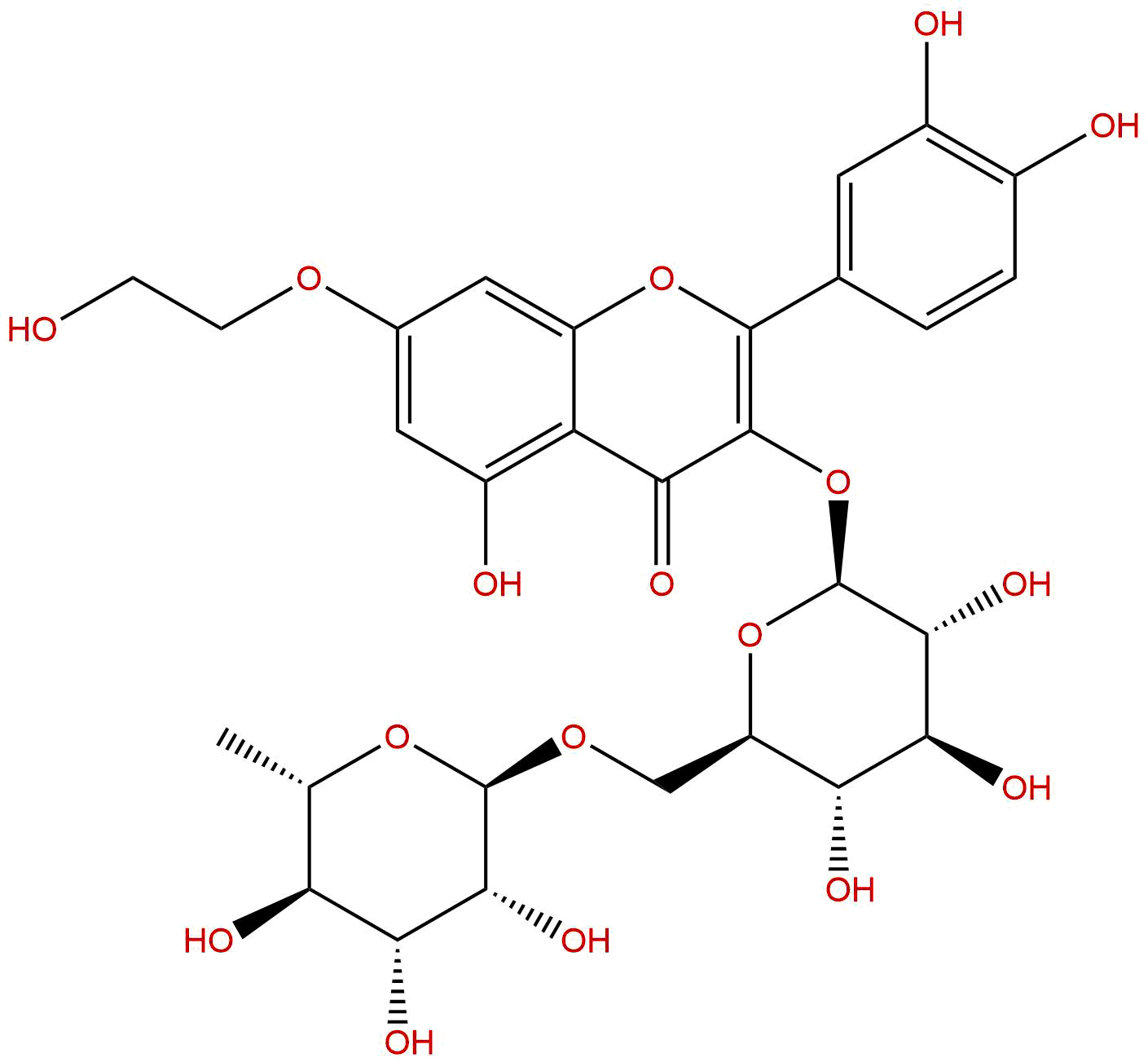


Product name: 7-O-(Hydroxyethyl)rutin
Synonym name: Monoxerutin;
Catalogue No.: BP2417
Cas No.: 23869-24-1
Formula: C29H34O17
Mol Weight: 654.574
Botanical Source:
Type of Compound: Flavonoids
Purity: 95%~99%
Analysis Method: HPLC-DAD or/and HPLC-ELSD
Identification Method: Mass, NMR
Packing: Brown vial or HDPE plastic bottle
Storage: Store in a well closed container, protected from air and light. Put into refrigerate or freeze for long term storage.
Whenever possible, you should prepare and use solutions on the same day. However, if you need to make up stock solutions in advance, we recommend that you store the solution as aliquots in tightly sealed vials at -20℃. Generally, these will be useable for up to two weeks.
The product could be supplied from milligrams to grams
Inquire for bulk scale.
For Reference Standard and R&D, Not for Human Use Directly.
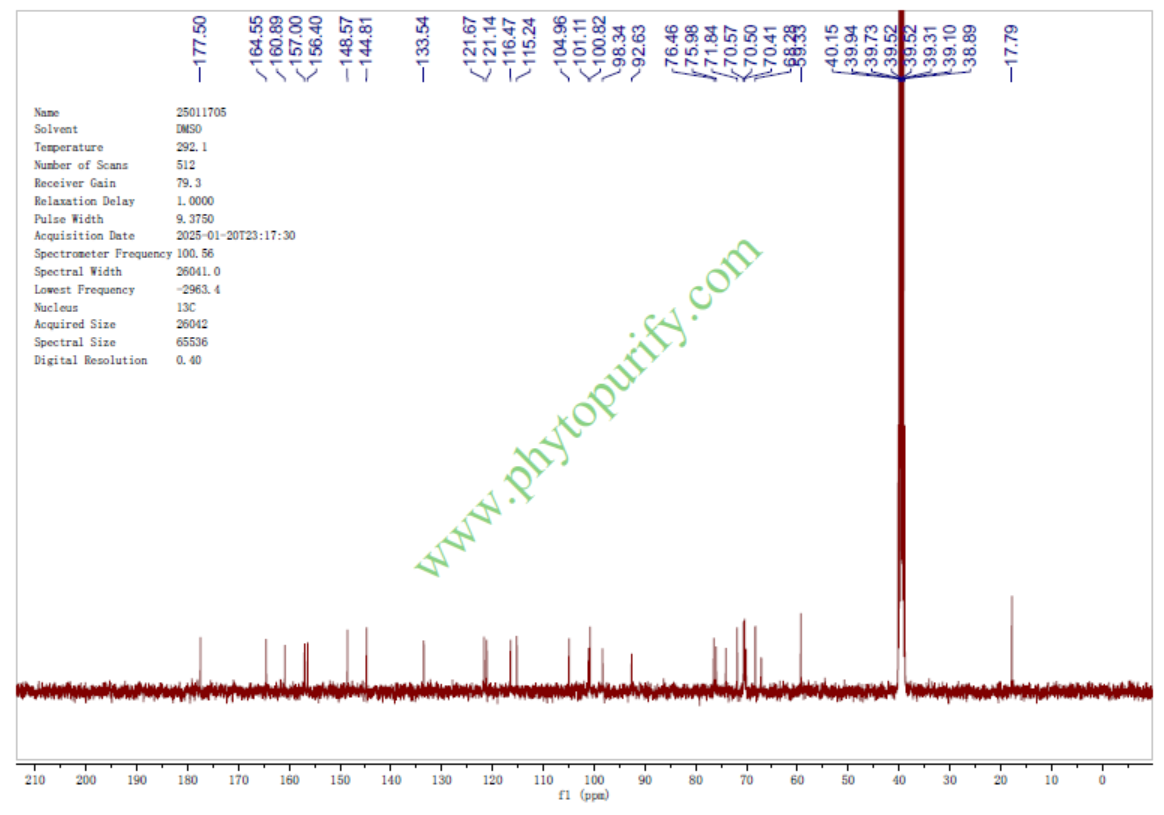
NMR of 7-O-(Hydroxyethyl)rutin
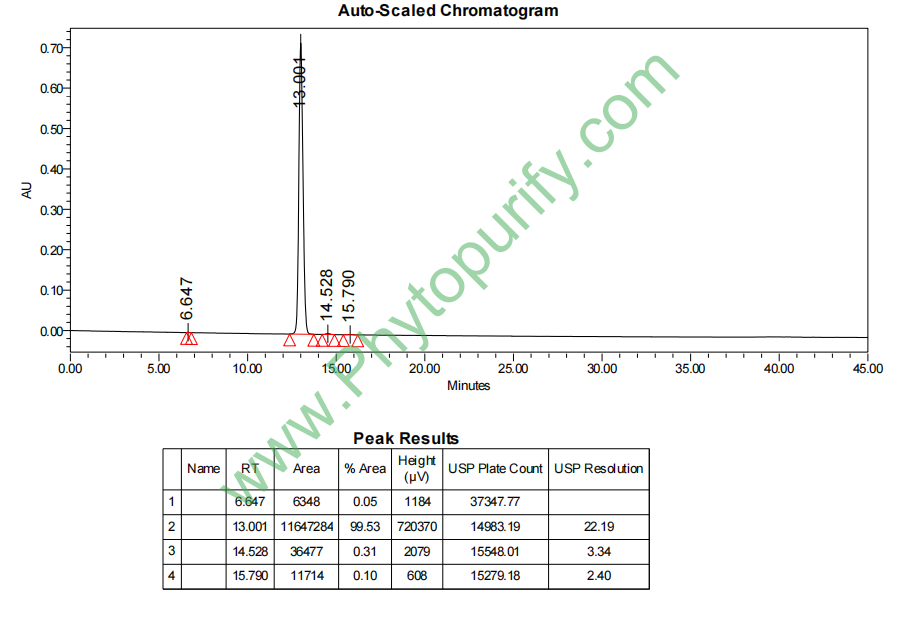
HPLC of 7-O-(Hydroxyethyl)rutin
Storage conditions:Short-term storage at 2~8℃, long-term storage at -20 ~ -80℃
278.6600
-.3270
-.3490
3.8743
.4783
.1981
Low
75.2248
4.8440
Yes
No
No
No
Yes
No
0.6
Yes
No
Yes
Yes
Natural products, as an important source of drug discovery, play an irreplaceable role in human health maintenance and disease treatment. Flavonoids, as one of the most widely distributed polyphenolic secondary metabolites in nature, have attracted much attention due to their diverse biological activities and low toxicity. Rutin, also known as quercetin-3-O-glucoside, is one of the most common flavonol glycosides in nature. It is widely present in various plants and has multiple pharmacological activities such as antioxidant, anti-inflammatory, anti-tumor, and cardiovascular protection. However, the water solubility of rutin is relatively limited, which to some extent limits its bioavailability and clinical application range.
To improve the physicochemical properties and biological activity of rutin, medicinal chemists introduced hydroxyethyl groups into rutin molecules through structural modification strategies, successfully synthesizing 7-O - (Hydroxyethyl) rutin with CAS number 23869-24-1. This compound is a glycoside flavonoid derivative characterized by the introduction of a hydroxyethyl group on the 7th hydroxyl group of rutin. This structural modification not only significantly enhances the water solubility of the compound, but also has a profound impact on its biological activity. Monohydroxyethyl rutin, as a semi synthetic flavonoid compound, exhibits superior pharmacological properties while maintaining the core pharmacological activity of rutin, and has become an important research object in the field of natural product pharmacology.
In recent years, with the continuous deepening of research on monohydroxyethyl rutin, its pharmacological activities in antioxidant stress, anti-inflammatory, vascular protection, anti fibrosis and other aspects have gradually been revealed, and its mechanism of action is becoming increasingly clear. This article will systematically review the research progress of monohydroxyethyl rutin from multiple dimensions, including chemical structure and physicochemical properties, plant sources and extraction methods, pharmacological activity research, mechanism of action and molecular targets, drug evaluation and pharmacokinetics, clinical application prospects and prospects, in order to provide reference for the further development and utilization of this compound.
The chemical structure of monohydroxyethyl rutin is based on the rutin parent nucleus, and its systematic name is 7-O - (2-hydroxyethyl) rutin. Structurally, the compound retains the complete skeleton of rutin: quercetin (3,5,7,3 ', 4' - pentahydroxyflavone) serves as the aglycone, and its 3-hydroxyl group is linked to rutin (α - L-rhamnose - (1 → 6) - β - D-glucose) through a glycosidic bond. The key structural modification occurs on the hydroxyl group at position 7 of the flavonoid core, where the hydroxyl hydrogen atom is replaced by a hydroxyethyl group (- CH ₂ CH ₂ OH) to form an ether bond connection. This structural modification introduces additional hydroxyl groups while maintaining the basic structural characteristics of rutin, thereby altering the polarity and hydrogen bond donor/acceptor properties of the molecule.
From the molecular formula, the molecular formula of monohydroxyethyl rutin is C ₂₉ H ∝₆₁₉, with a molecular weight of 654.5740 g/mol. The theoretically calculated lipid water partition coefficient (LogP) is -0.3270, indicating that the compound has strong hydrophilicity, which is slightly higher than rutin (LogP is about -0.8 to -1.0), but still within the hydrophilic range. The increase in polarity is mainly due to the introduction of hydroxyethyl groups, which provide an additional free hydroxyl group and enhance the ability of molecules to form hydrogen bonds with water molecules. The topological polar surface area (TPSA) is 278.6600 Å ², which is much higher than the commonly assumed passive membrane permeability threshold (about 140 Å ²), indicating that the compound is difficult to pass through biological membranes through passive diffusion, and its transmembrane transport may mainly rely on carrier mediated active transport or endocytosis.
Water solubility is one of the important parameters for evaluating the pharmacological properties of compounds. The calculated water solubility of monohydroxyethyl rutin is 3.8743 mg/mL, which is significantly improved compared to rutin (with a water solubility of about 0.1 mg/mL). This improvement is of great significance for the development of drug formulations and in vivo absorption, as good water solubility is a prerequisite for oral drugs to dissolve and be absorbed in the gastrointestinal tract. It is worth noting that the molecular structure of monohydroxyethyl rutin contains multiple phenolic and glycosyl hydroxyl groups, which not only endow it with good water solubility but also allow it to ionize under alkaline conditions, further affecting its dissolution behavior and biological activity.
In terms of stability, monohydroxyethyl rutin, as a flavonoid glycoside compound, is sensitive to light, heat, and oxidation conditions. The phenolic hydroxyl groups in its molecules are prone to oxidation reactions, especially in alkaline environments and the presence of metal ions. In addition, glycosidic bonds may undergo hydrolysis under acidic conditions, leading to the release of aglycones (quercetin derivatives) and glycosides. The introduction of hydroxyethyl groups increases the steric hindrance of the molecule to a certain extent, which may protect the hydrolysis of glycosidic bonds, but this hypothesis still needs experimental verification.
Monohydroxyethyl rutin is not a naturally occurring plant secondary metabolite, but a derivative of rutin obtained through chemical semi synthetic methods. Therefore, its "source" is not directly extracted from plants, but is prepared from natural rutin through chemical modification. However, understanding the natural sources of its precursor compound rutin is of great significance for the preparation of monohydroxyethyl rutin.
Rutin is widely distributed in nature, mainly found in various plants such as Rutaceae, Leguminosae, Polygonaceae, and Hypericum. Common plant resources rich in rutin include Sophora japonica L. flower buds, Fagopyrum esculentum (abundant in seeds and stems), Hypericum perforatum, Ruta graveolens, Camellia sinensis, and the skin of various citrus fruits. Among them, Sophora japonica has become the main raw material for industrial production of rutin due to its extremely high rutin content and abundant resources.
The preparation of monohydroxyethyl rutin usually adopts a chemical synthesis strategy, and the core step is to selectively introduce hydroxyethyl groups on the 7th hydroxyl group of rutin. Due to the presence of multiple phenolic hydroxyl groups (5, 7, 3 ', 4' positions) and glycosyl hydroxyl groups in rutin molecules, selective protection and deprotection strategies are key to achieving 7-position specific modification. The commonly used synthetic route includes: first, selectively protecting the hydroxyl groups at positions 5, 3 ', and 4' of rutin (such as using benzyl or acetyl protecting groups), then using hydroxyethyl reagents (such as 2-bromoethanol or epoxyethane) to react with the hydroxyl group at position 7 under alkaline conditions, and finally removing the protecting groups to obtain the target product. In recent years, enzymatic synthesis methods have also been explored for the preparation of monohydroxyethyl rutin, using specific glycosyltransferases or acyltransferases to achieve region selective modification. This method has the advantages of mild reaction conditions and environmental friendliness, but it is still in the laboratory research stage.
From the perspective of extraction and purification, the separation and purification of monohydroxyethyl rutin mainly rely on modern chromatographic techniques. Due to the possible presence of unreacted rutin, multiple substituted by-products, and residual reactants in the synthesized product, purification methods such as high-performance liquid chromatography (HPLC), preparative thin layer chromatography, or column chromatography are required. The commonly used stationary phases include reversed C18 silica gel, polyamide resin and dextran gel (Sephadex LH-20), and the mobile phase usually adopts methanol water or acetonitrile water system. The identification of purity relies on analytical techniques such as HPLC-UV, mass spectrometry (MS), and nuclear magnetic resonance spectroscopy (NMR).
Monohydroxyethyl rutin, as a structural derivative of rutin, inherits various pharmacological activities of rutin and exhibits some unique biological effects due to structural modifications. In recent years, significant progress has been made in the pharmacological activity research of this compound, mainly covering the following aspects.
Antioxidant is one of the most classic biological activities of flavonoids. The single hydroxyethyl rutin molecule contains multiple phenolic hydroxyl groups, especially the ortho dihydroxy group (3 ', 4' - dihydroxy group of the B ring) structure, which gives it strong free radical scavenging ability. In vitro chemical experiments have shown that monohydroxyethyl rutin can effectively scavenge 1,1-diphenyl-2-trinitrophenylhydrazine (DPPH) free radicals, 2,2 '- bis (3-ethylbenzothiazoline-6-sulfonic acid) (ABTS) cationic free radicals, and superoxide anion free radicals, with a half maximal clearance concentration (IC ₅₀) comparable to or slightly better than rutin. The introduction of hydroxyethyl groups did not weaken its antioxidant capacity, but may have improved its free radical scavenging efficiency in physiological environments by increasing the solubility of molecules in water.
At the cellular level, monohydroxyethyl rutin can significantly reduce oxidative stress-induced cell damage. Research has shown that in oxidative damage models induced by hydrogen peroxide (H ₂ O ₂) or tert butyl hydroperoxide (t-BHP), pretreatment with hydroxyethyl rutin can significantly improve cell survival, reduce intracellular reactive oxygen species (ROS) levels, decrease the production of lipid peroxidation product malondialdehyde (MDA), and enhance the activity of endogenous antioxidant enzymes such as superoxide dismutase (SOD), glutathione peroxidase (GPx), and catalase (CAT). These results indicate that monohydroxyethyl rutin not only has direct free radical scavenging ability, but also exerts indirect antioxidant effects by regulating the intracellular antioxidant defense system.
Inflammatory response is an important defense mechanism for the body to respond to injury and infection, but excessive or sustained inflammatory response can lead to tissue damage and the occurrence of various chronic diseases. Monohydroxyethyl rutin exhibits significant anti-inflammatory activity in various inflammatory models. In a macrophage model stimulated by lipopolysaccharide (LPS), monohydroxyethyl rutin can dose dependently inhibit the release of pro-inflammatory cytokines such as tumor necrosis factor - α (TNF - α), interleukin-1 β (IL-1 β), and interleukin-6 (IL-6), while reducing the production of nitrogen monoxide (NO) and prostaglandin E ₂ (PGE ₂). These effects are closely related to the inhibition of inducible nitric oxide synthase (iNOS) and cyclooxygenase-2 (COX-2) expression.
In animal inflammation models, monohydroxyethyl rutin also exhibits good anti-inflammatory effects. For example, in the carrageenan induced rat paw swelling model, oral or intraperitoneal injection of monohydroxyethyl rutin can significantly inhibit the degree of paw swelling, and its effect is comparable to the positive control drug indomethacin. In the acute lung injury model, treatment with monohydroxyethyl rutin can reduce the infiltration of inflammatory cells in the lungs, lower the levels of inflammatory factors in bronchoalveolar lavage fluid, and improve pathological changes in lung tissue.
Cardiovascular disease is one of the leading causes of death worldwide. Monohydroxyethyl rutin exhibits multiple pharmacological activities in cardiovascular protection. Firstly, its vascular protective effect is reflected in the protection of endothelial cells. Oxidized low density lipoprotein (ox LDL) - induced endothelial cell injury is an important initial link of atherosclerosis. Monohydroxyethyl rutin can inhibit the apoptosis of human umbilical vein endothelial cells (HUVECs) induced by ox LDL, reduce the expression of cell adhesion molecules (such as VCAM-1, ICAM-1), and thus inhibit the adhesion between monocytes and endothelial cells. This effect has important significance for delaying the progress of atherosclerosis.
Secondly, monohydroxyethyl rutin has a protective effect on myocardial ischemia-reperfusion injury. In ex vivo cardiac perfusion models and myocardial cell hypoxia/reoxygenation models, treatment with monohydroxyethyl rutin can reduce myocardial infarction area, decrease the release of lactate dehydrogenase (LDH) and creatine kinase (CK), and improve cardiac function. Its protective mechanism is related to the inhibition of oxidative stress, alleviation of endoplasmic reticulum stress, and inhibition of mitochondrial permeability transition pore (mPTP) opening.
In addition, monohydroxyethyl rutin also exhibits anti platelet aggregation activity. In vitro experiments have shown that the compound can inhibit platelet aggregation induced by adenosine diphosphate (ADP), collagen, and arachidonic acid, and its mechanism may be related to the inhibition of calcium ion mobilization and the generation of thromboxane A ₂ (TXA ₂) in platelets. This activity suggests that monohydroxyethyl rutin may have the potential to prevent thrombosis.
Fibrosis is a common pathological feature of various chronic diseases that progress to the end stage, characterized by excessive deposition of extracellular matrix (ECM). In recent years, studies have found that monohydroxyethyl rutin exhibits anti fibrotic activity in both liver fibrosis and pulmonary fibrosis models. In a rat model of liver fibrosis induced by carbon tetrachloride (CCl ₄), treatment with monohydroxyethyl rutin can reduce serum transaminase levels, decrease liver hydroxyproline content, inhibit the activation and proliferation of hepatic stellate cells (HSCs), and downregulate the expression of α - smooth muscle actin (α - SMA) and type I collagen. In the bleomycin induced pulmonary fibrosis model, monohydroxyethyl rutin can also alleviate alveolitis and fibrosis, and inhibit epithelial mesenchymal transition (EMT) process.
In addition to the main activities mentioned above, monohydroxyethyl rutin also exhibits some other noteworthy pharmacological effects. In terms of neuroprotection, this compound can alleviate the neurotoxicity induced by β - amyloid protein (A β) and inhibit tau protein hyperphosphorylation, suggesting its potential for anti Alzheimer's disease. In terms of anti diabetes, monohydroxyethyl rutin can improve insulin resistance, promote glucose uptake, and protect pancreatic β cells from oxidative stress damage. In addition, preliminary studies have shown that the compound has certain antibacterial and antiviral activities, but its potency is relatively low, and its clinical significance needs further evaluation.
The pharmacological activity of monohydroxyethyl rutin involves multiple signaling pathways and molecular targets, and its mechanism of action exhibits characteristics of multi-target and multi pathway. A deep understanding of its molecular mechanism is of great significance for the further development and clinical application of this compound.
The Nrf2/ARE pathway is the core defense mechanism of cells in response to oxidative stress. Monohydroxyethyl rutin can activate the Nrf2 signaling pathway, promoting the dissociation of Nrf2 from Kelch like ECH related protein 1 (Keap1) in the cytoplasm, translocation into the nucleus, and binding to ARE, thereby upregulating the expression of a series of antioxidant enzymes and phase II detoxifying enzymes, including heme oxygenase-1 (HO-1), quinone oxidoreductase 1 (NQO1), glutathione S-transferase (GST), and SOD. This mechanism is an important basis for the antioxidant and cell protective effects of monohydroxyethyl rutin. Research has shown that monohydroxyethyl rutin may promote the release and activation of Nrf2 by modifying cysteine residues on Keap1 protein, altering its conformation.
NF - κ B is the core transcription factor of inflammatory response, regulating the expression of various pro-inflammatory cytokines, chemokines, and adhesion molecules. Monohydroxyethyl rutin can inhibit the activation of NF - κ B, and its mechanism involves inhibiting the activity of I κ B kinase (IKK), preventing the phosphorylation and degradation of I κ B α, and thereby reducing the nuclear translocation of NF - κ B p65 subunit. In LPS stimulated macrophages, treatment with monohydroxyethyl rutin significantly reduces the binding activity of NF - κ B to DNA, thereby downregulating the expression of target genes such as TNF - α, IL-6, iNOS, and COX-2. In addition, monohydroxyethyl rutin may indirectly regulate the activity of NF - κ B by inhibiting the phosphorylation of the mitogen activated protein kinase (MAPK) pathway, including p38, JNK, and ERK.
The TGF - β/Smad pathway is the core signaling pathway for the occurrence and development of organ fibrosis. The anti fibrotic effect of monohydroxyethyl rutin is closely related to its inhibition of the TGF - β/Smad signaling pathway. Monohydroxyethyl rutin can inhibit TGF - β 1-induced Smad2/3 phosphorylation and reduce nuclear translocation of Smad complexes in activated hepatic stellate cells and pulmonary fibroblasts, thereby downregulating the expression of fibrosis marker genes such as α - SMA, collagen I, and fibronectin. In addition, monohydroxyethyl rutin may also negatively regulate TGF - β signaling by upregulating the expression of Smad7, an inhibitory Smad protein.
The PI3K/Akt pathway plays a critical regulatory role in cell survival, proliferation, and metabolism. The effect of monohydroxyethyl rutin on the PI3K/Akt pathway is cell type and stimulus dependent. In the oxidative stress-induced cell damage model, monohydroxyethyl rutin can activate the PI3K/Akt pathway, promote Akt phosphorylation, and subsequently activate downstream transcription factors such as forkhead box O (FoxO) and mammalian rapamycin target protein (mTOR), promoting cell survival and inhibiting apoptosis. However, in tumor cells, monohydroxyethyl rutin may exert anti proliferative effects by inhibiting the PI3K/Akt pathway, and this difference reflects the pleiotropic regulatory characteristics of the compound in different microenvironments.
Mitochondria are not only the energy factories of cells, but also the key regulatory centers of cell apoptosis. Monohydroxyethyl rutin has a protective effect on mitochondrial function. Under oxidative stress conditions, this compound can inhibit the decrease in mitochondrial membrane potential, reduce the release of cytochrome c, and thus inhibit cell apoptosis through the mitochondrial pathway. In addition, monohydroxyethyl rutin can improve the activity of mitochondrial respiratory chain complexes, increase ATP generation, and maintain mitochondrial dynamic balance. These effects are closely related to their antioxidant activity and regulation of mitochondrial permeability transition pores.
Recent studies suggest that flavonoids may exert biological effects through epigenetic mechanisms. Preliminary studies suggest that monohydroxyethyl rutin may affect histone acetylation modification and DNA methylation status. For example, the compound can inhibit the activity of histone deacetylase (HDAC), increase the acetylation levels of histone H3 and H4, thereby altering chromatin structure and gene expression. In addition, monohydroxyethyl rutin may also regulate the methylation status of specific gene promoter regions by affecting the activity of DNA methyltransferase (DNMT). These epigenetic regulatory mechanisms provide a new perspective for understanding the long-term biological effects of monohydroxyethyl rutin.
The evaluation of drug properties is a crucial step in the transition of candidate compounds from laboratory research to clinical application. Monohydroxyethyl rutin exhibits ideal pharmacological properties, pharmacokinetic characteristics, and safety.
According to Lipinski's "Rule of Five", the molecular weight of monohydroxyethyl rutin (654.57 Da) exceeds the threshold of 500 Da, the LogP (-0.327) is below 5, the number of hydrogen bond donors (total number of phenolic and alcohol hydroxyl groups) is about 12, and the number of hydrogen bond acceptors (total number of oxygen atoms) is about 19. From the perspective of the "Five Rules", this compound violates multiple rules, indicating that its oral bioavailability may be limited. However, for natural products and their derivatives, the "Five Rules" are not absolute standards, and many successful natural medicines (such as paclitaxel and cyclosporine A) also do not comply with the "Five Rules". The high polarity and high molecular weight of monohydroxyethyl rutin determine its poor membrane permeability, but its good water solubility (3.87 mg/mL) provides convenience for its formulation development.
At present, there is insufficient systematic research on the pharmacokinetics of monohydroxyethyl rutin, but based on the pharmacokinetic data of its structurally similar compounds rutin and quercetin, reasonable speculation can be made about its in vivo processes.
In terms of absorption: Monohydroxyethyl rutin, as a highly polar glycoside, has limited absorption in the small intestine after oral administration. Its absorption may involve two pathways: one is active transport through sodium dependent glucose transporters (SGLT1) or glucose transporters (GLUT) on small intestinal epithelial cells; Secondly, under the action of gut microbiota, glycosidic bonds are hydrolyzed, releasing aglycones (hydroxyethyl quercetin), which have higher lipid solubility and can be absorbed through passive diffusion. Research has shown that the oral bioavailability of rutin is extremely low (usually less than 2%), and the absorption of monohydroxyethyl rutin may be increased due to improved water solubility, but overall bioavailability is still limited.
In terms of distribution, the TPSA of monohydroxyethyl rutin is as high as 278.66 Å ², and the LogP is negative, indicating that it is difficult to penetrate the blood-brain barrier (BBB). This feature is both an advantage and a disadvantage: the advantage is that it can reduce the side effects of the central nervous system, but the disadvantage is that it limits its application in the treatment of brain diseases. This compound is mainly distributed in blood and extracellular fluid, and its binding rate with plasma proteins still needs to be determined experimentally.
In terms of metabolism, the metabolism of monohydroxyethyl rutin mainly occurs in the liver and intestines. Its metabolic pathway includes: hydrolysis of glycosidic bonds to generate aglycones (hydroxyethyl quercetin); Glycosides undergo further methylation, sulfation, and glucuronidation binding reactions; Hydroxyethyl groups may undergo oxidative metabolism. The gut microbiota plays an important role in the metabolism of monohydroxyethyl rutin, and the β - glucosidase and β - rhamnosidase produced by the microbiota can hydrolyze glycosidic bonds and release aglycones.
In terms of excretion: Monohydroxyethyl rutin and its metabolites are mainly excreted through bile and urine. Due to the high polarity of the molecule, renal tubular reabsorption is limited, and most of it is excreted through urine in its original form or in the form of bound substances. Bile excretion is also an important pathway for clearance, and some metabolites can re-enter the systemic circulation through the enterohepatic circulation.
Safety is a prerequisite for the development of candidate drugs. According to the toxicology prediction, the Ames test result of single hydroxyethyl rutin is 0.6, indicating a low risk of genetic toxicity. The prediction result of hERG inhibition is negative, indicating that the compound has a low risk of causing QT interval prolongation in the heart. These predicted results preliminarily support the safety of monohydroxyethyl rutin, but further in vivo and in vitro toxicological studies are needed to validate it.
In animal experiments, monohydroxyethyl rutin typically exhibits good tolerability within the therapeutic dose range. The acute toxicity test showed that the median lethal dose (LD ₅₀) is high and the safety window is wide. Long term toxicity studies have not been systematically reported, but based on the long-term use experience of rutin (which has been used as a dietary supplement and drug for many years), the safety expectation of monohydroxyethyl rutin is good. It is worth noting that gastrointestinal discomfort and allergic reactions that may occur at high doses still require attention.
Given the low oral bioavailability of monohydroxyethyl rutin, developing appropriate formulation techniques is crucial for improving its clinical efficacy. Possible formulation strategies include: liposome or nanoparticle encapsulation to enhance membrane permeability and bioavailability; Phytosome technology improves absorption by forming lipid soluble complexes; Precursor design, such as preparing ester prodrugs to increase lipid solubility; And non oral routes such as transdermal or nasal administration to bypass first pass effects.
Monohydroxyethyl rutin, as a structurally optimized derivative of rutin, has shown potential clinical application value in multiple therapeutic fields.
Based on its multiple activities such as antioxidant, anti-inflammatory, vascular protection and anti platelet aggregation, monohydroxyethyl rutin has potential applications in the prevention and treatment of cardiovascular diseases such as atherosclerosis, hypertension, myocardial ischemia reperfusion injury, etc. Especially its good water solubility makes it suitable for development as an injection for adjuvant therapy of acute cardiovascular events. Compared with rutin, the solubility advantage of monohydroxyethyl rutin allows it to be administered intravenously without the need for organic solvents or solubilizers, reducing the risk of formulation related adverse reactions.
The anti-inflammatory activity of monohydroxyethyl rutin makes it possible for the treatment of chronic inflammatory diseases such as rheumatoid arthritis, inflammatory bowel disease, and chronic obstructive pulmonary disease. Its multi-target action characteristics may bring more comprehensive anti-inflammatory effects, while reducing the gastrointestinal and cardiovascular side effects of traditional nonsteroidal anti-inflammatory drugs (NSAIDs).
Liver fibrosis, pulmonary fibrosis, and renal fibrosis are difficult clinical treatments. The anti fibrotic activity of monohydroxyethyl rutin, especially its inhibitory effect on the TGF - β/Smad pathway, makes it a candidate compound for the development of anti fibrotic drugs. At present, there is a lack of effective anti fibrotic drugs in clinical practice, and the development of monohydroxyethyl rutin may fill this gap.
Although monohydroxyethyl rutin is difficult to penetrate the blood-brain barrier, its application in neurodegenerative diseases is not entirely impossible. Effective delivery of drugs in the central nervous system may be achieved through nanoformulation technology or nasal administration routes. In addition, the antioxidant and anti-inflammatory activities of monohydroxyethyl rutin have potential value in reducing neuroinflammation and oxidative stress, which play important roles in Alzheimer's disease and Parkinson's disease.
The monohydroxyethyl rutin can improve insulin resistance, protect pancreatic islet β cells and the activity of antioxidant stress, which makes it have a promising application in the treatment of type 2 diabetes and its complications (such as diabetes nephropathy, diabetes retinopathy). In particular, its vascular protection may delay the progress of microvascular disease in diabetes.
Although significant progress has been made in the study of monohydroxyethyl rutin, there are still many key issues that need to be addressed. Firstly, it is necessary to conduct systematic pharmacokinetic studies to clarify its absorption, distribution, metabolism, and excretion characteristics in vivo, especially the accurate determination and improvement strategies of oral bioavailability. Secondly, it is necessary to establish a more comprehensive in vitro and in vivo pharmacological evaluation system, verify its efficacy in various disease models, and determine the optimal dosing regimen. Thirdly, long-term toxicology research and reproductive toxicity research are essential tasks that must be completed before entering clinical trials. Fourthly, further optimization based on structure, such as preparing prodrugs with better membrane permeability or developing targeted delivery systems, may further enhance their therapeutic potential. Finally, as the understanding of the interaction between flavonoids and gut microbiota deepens, exploring the effects of monohydroxyethyl rutin on gut microbiota and its relationship with drug efficacy will be an interesting research direction.
Monohydroxyethyl rutin, as a 7-hydroxyethyl derivative of rutin, has successfully improved the water solubility of the parent compound through structural modification, while retaining its rich pharmacological activity. This compound exhibits significant effects in antioxidant, anti-inflammatory, cardiovascular protection, and anti fibrotic aspects. Its mechanism of action involves multiple signaling pathways such as Nrf2/ARE, NF - κ B, TGF - β/Smad, and PI3K/Akt, reflecting the characteristics of multi-target regulation. The pharmacological evaluation shows that monohydroxyethyl rutin has good safety and acceptable physicochemical properties, but its low oral bioavailability remains the main challenge for its clinical translation.
The research process of monohydroxyethyl rutin, from natural product chemistry to drug development, demonstrates the important value of structural modification in improving the pharmacological properties of natural compounds. With the development of formulation technology and a deeper understanding of its pharmacological mechanisms, monohydroxyethyl rutin is expected to play an important role in the treatment of cardiovascular diseases, chronic inflammation, and organ fibrosis. Future research should focus on pharmacokinetic optimization, formulation development, and preclinical evaluation of systems to advance this promising compound towards clinical applications. The study of monohydroxyethyl rutin not only provides an example for the development of rutin compounds, but also provides useful references for the structural optimization and drug development of other flavonoid natural products.
