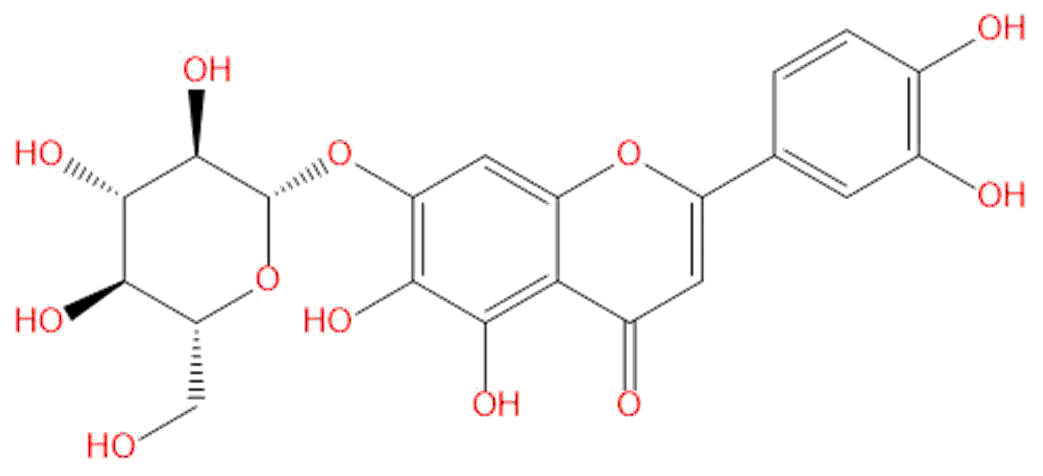


Product name: 6-hydroxyl luteolin-7-O-glucoside
Synonym name: 6-Hydroxyluteolin 7-O-β-D-glucopyranoside; 6-Hydroxyluteolin 7-O-β-glucoside
Catalogue No.: BP4279
Cas No.: 54300-65-1
Formula: C21H20O12
Mol Weight: 464.379
Botanical Source:
Type of Compound: Flavonoids
Purity: 95%~99%
Analysis Method: HPLC-DAD or/and HPLC-ELSD
Identification Method: Mass, NMR
Packing: Brown vial or HDPE plastic bottle
Storage: Store in a well closed container, protected from air and light. Put into refrigerate or freeze for long term storage.
Whenever possible, you should prepare and use solutions on the same day. However, if you need to make up stock solutions in advance, we recommend that you store the solution as aliquots in tightly sealed vials at -20℃. Generally, these will be useable for up to two weeks.
The product could be supplied from milligrams to grams
Inquire for bulk scale.
For Reference Standard and R&D, Not for Human Use Directly.
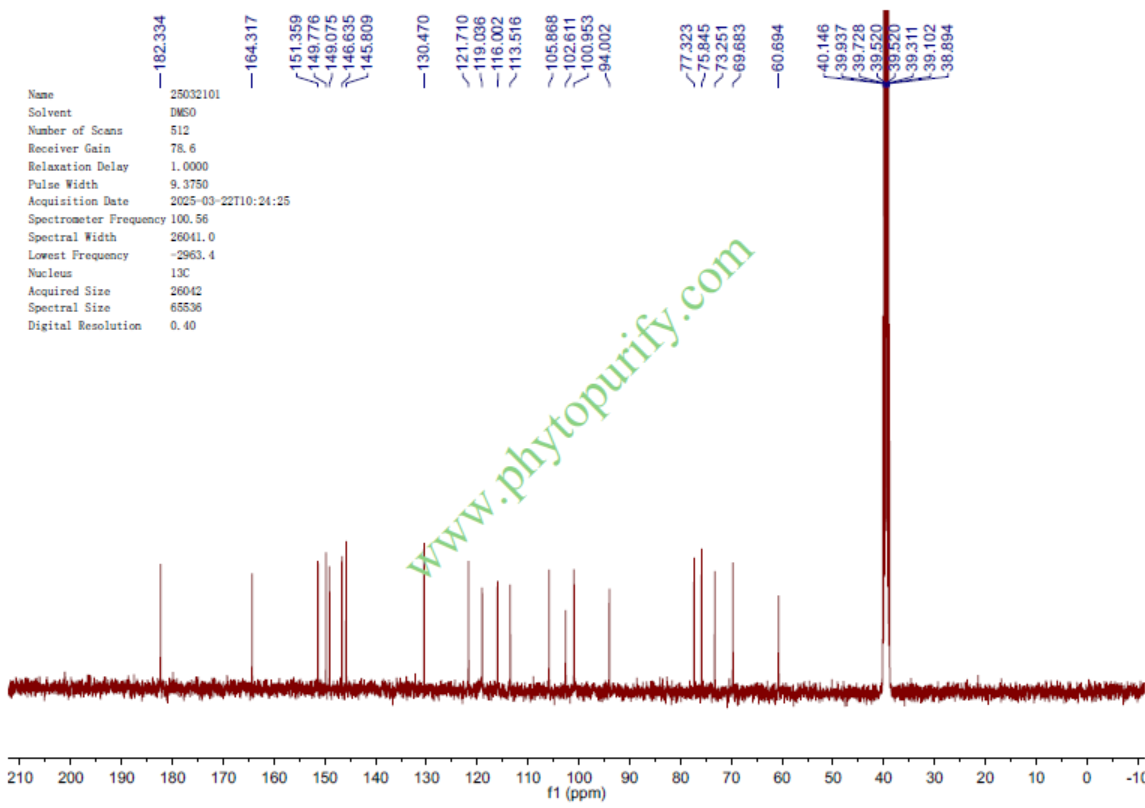
NMR of 6-hydroxyl luteolin-7-O-glucoside
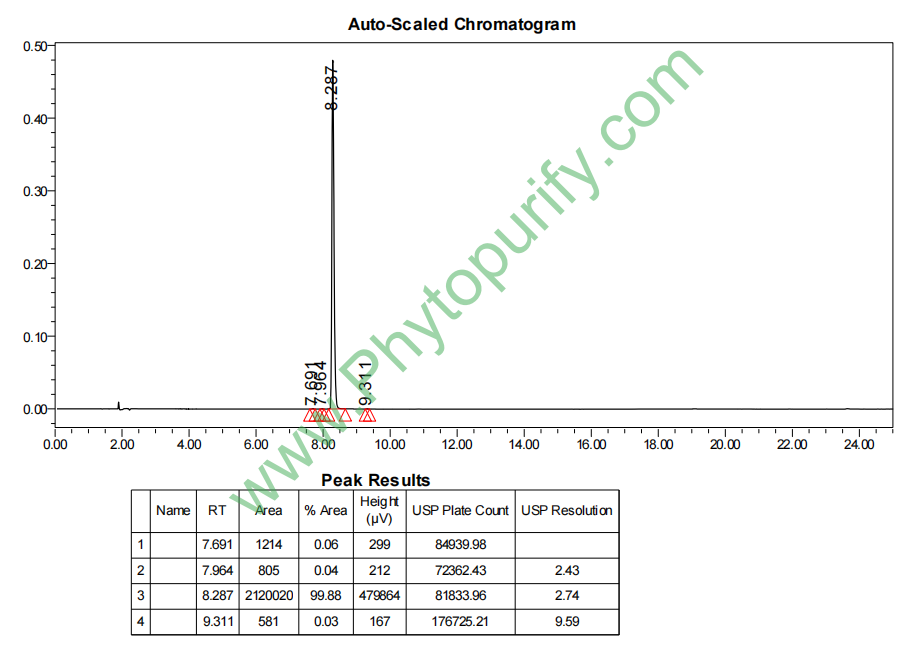
HPLC of 6-hydroxyl luteolin-7-O-glucoside
Storage conditions:Short-term storage at 2~8℃, long-term storage at -20 ~ -80℃
210.5100
-.2363
-.4305
.9622
.5761
.1452
Low
79.4750
4.0456
Yes
No
No
No
Yes
No
1.2
Yes
No
Yes
No
6-Hydroxyluteolin-7-O-glucoside (CAS number: 54300-65-1) is a natural flavonoid glycoside compound widely present in various traditional Chinese medicine plants. As a hydroxyl derivative of verbascoside, 6-hydroxyverbascoside exhibits significant biological activity due to its unique chemical structure, especially in the field of liver protection, demonstrating good pharmacological potential. In recent years, with the deepening development of natural product pharmacology, 6-hydroxyluteolin has become one of the hot molecules in the research of liver disease prevention and treatment due to its antioxidant, anti-inflammatory, and regulation of cellular signaling pathways abilities. This article will provide a systematic review of the chemical structure and physicochemical properties, plant sources and extraction methods, pharmacological activity and mechanism of action, pharmacological evaluation and pharmacokinetic characteristics of 6-hydroxyverbascoside, and explore its clinical application prospects in depth. The aim is to provide theoretical basis and research direction for further drug development of this compound.
6-Hydroxyluteolin is a flavonoid compound, specifically formed by the glycosidic bond between 6-hydroxyluteolin and glucose via the 7-O site. Its molecular formula is C21H20O12 and its molecular weight is 464.3790. Structurally, 6-hydroxyverbascoside introduces a hydroxyl group at the 6th position of the flavonoid A ring based on verbascoside, enhancing its polarity and hydrogen bond donor ability, affecting its biological activity and pharmacokinetic properties.
In terms of physical and chemical properties, the LogP value of this compound is -0.2363, indicating its strong hydrophilicity, which is consistent with its high water solubility (0.9622), which is beneficial for its dissolution and absorption in aqueous environments. The polar surface area (TPSA) is 210.5100, and higher TPSA values are usually associated with poorer cell membrane permeability, which is consistent with its low blood-brain barrier permeability. In addition, 6-hydroxyverbascoside does not exhibit hERG channel inhibitory activity, indicating a low risk of cardiac toxicity. The Ames test result is 1.2, indicating that the compound has no significant mutagenicity and good safety.
6-Hydroxy verbascoside is mainly found in various traditional medicinal plants, especially in the Luteolin genus and related plants such as Scutellaria baicalensis and Sonchus oleraceus. Its content is greatly affected by plant species, growth environment, and harvesting time.
The extraction methods often use water extraction and alcohol precipitation or ultrasound assisted extraction techniques. The general process includes: crushing dry plants, extracting them with 70% -80% ethanol as a solvent, and using ultrasound assistance to improve extraction efficiency. After concentration, the extract is purified and analyzed qualitatively and quantitatively using liquid chromatography (HPLC) or high-performance liquid chromatography-mass spectrometry (HPLC-MS) techniques. In recent years, the application of supercritical fluid extraction (SFE) and membrane separation technology has gradually increased, aiming to improve extraction purity and yield while reducing the use of organic solvents, in line with the principles of green chemistry.
6-Hydroxyverbascoside has shown significant biological activity in various in vitro and in vivo models, especially in the field of liver protection, which has been extensively studied.
This compound effectively scavenges free radicals and reduces oxidative stress damage to liver cells by enhancing endogenous antioxidant enzyme activity (such as SOD1, SOD2, CAT, GPX1) and inducing antioxidant gene expression (NQO1, HMOX1). Multiple studies have shown that 6-hydroxyluteolin can activate the nuclear factor erythroid 2-related factor 2 (NRF2) signaling pathway, promote upregulation of the antioxidant defense system, reduce lipid peroxidation levels, and protect the integrity of liver cell membrane structure.
6-Hydroxyverbascoside alleviates liver inflammation by inhibiting the pro-inflammatory cytokine TGFB1 and related signaling pathways. Its inhibitory effect on the activation marker ACTA2 of hepatic stellate cells helps prevent the progression of liver fibrosis. In addition, the compound can regulate the expression of matrix metalloproteinase MMP9, affect the remodeling process of extracellular matrix, and slow down liver pathological changes.
In various liver injury models, such as alcoholic liver injury, drug-induced liver injury, and fatty liver model, 6-hydroxyluteolin has shown significant liver protective effects. Its mechanism involves multiple pathways such as antioxidant, anti-inflammatory, anti fibrotic, and cell apoptosis regulation. In vivo experiments have shown that administration of 6-hydroxy-glycoside significantly improves liver function indicators (such as ALT and AST) and reduces pathological damage to liver tissue, indicating its promising clinical application potential.
The pharmacological effects of 6-hydroxyiridoid glycoside are mainly achieved by regulating various key molecular targets:
NRF2 (nuclear factor erythroid 2 related factor 2)As the main regulator of cellular antioxidant stress, the activation of NRF2 promotes the expression of downstream antioxidant enzymes (NQO1, HMOX1, SOD1, SOD2, CAT, GPX1), enhances cellular antioxidant capacity, and reduces oxidative damage.
MMP9 (Matrix Metalloproteinase 9)Regulating extracellular matrix degradation and participating in the process of liver fibrosis. 6-Hydroxyverbascoside slows down fibrosis progression by inhibiting MMP9 expression.
TGFB1 (Transforming Growth Factor β 1)Key pro fibrotic factors regulate hepatic stellate cell activation and collagen deposition. The inhibition of TGFB1 signaling pathway by this compound helps prevent liver fibrosis.
ACTA2 (alpha smooth muscle actin)Hepatic stellate cell activation marker, involved in the formation of fibrotic cells. 6-Hydroxyverbascoside inhibits ACTA2 expression and blocks the activation of fibrotic cells.
In summary, 6-hydroxyverbascoside exerts its comprehensive pharmacological effects of liver protection and anti fibrosis through multi-target and multi pathway synergistic effects.
From the perspective of pharmacological parameters, 6-hydroxy-glucoside has certain advantages and challenges:
Water solubility (0.9622)Higher polarity (TPSA 210.5100) may limit its cell membrane penetration and affect bioavailability, which is beneficial for the preparation and absorption of oral formulations.
The LogP value is -0.2363 This indicates that it has strong hydrophilicity and may lead to slow oral absorption, which needs to be improved through pharmaceutical methods.
Low permeability of blood-brain barrier It is suggested that it mainly acts on peripheral tissues to reduce the risk of central nervous system side effects.
HERG channel inhibition negative Reducing the risk of cardiac toxicity is beneficial for safety evaluation.
The Ames test result is 1.2 No obvious mutagenicity, good safety.
At present, there is limited research on the pharmacokinetics of 6-hydroxyluteolin. Preliminary data indicate that its oral absorption is slow, and its metabolism in vivo is mainly carried out through the liver enzyme system. Metabolites may include deglycosylated and hydroxylated derivatives. Further systematic pharmacokinetic and metabolic studies are needed in the future to clarify its in vivo distribution, metabolic pathways, and excretion characteristics, providing a basis for clinical development.
Given the multiple pharmacological activities exhibited by 6-hydroxyluteolin in the field of liver protection, its application prospects in the prevention and treatment of liver diseases are broad. Especially in common liver diseases such as alcoholic liver disease, non-alcoholic fatty liver disease (NAFLD), drug-induced liver injury, and liver fibrosis, 6-hydroxyluteolin is expected to become a new natural liver protectant.
The key to future clinical applications lies in:
Formulation optimization Given its water solubility and polarity characteristics, it is necessary to develop suitable formulation forms (such as nanoparticles, liposomes, solid dispersions, etc.) to improve bioavailability and targeting.
safety evaluation The system conducts long-term toxicology and drug interaction research to ensure the safety of clinical medication.
Clinical trial design Based on existing pharmacological evidence, design a reasonable clinical trial plan to verify its efficacy and safety.
In depth study of mechanisms Further reveal its mechanism of action, especially new targets related to liver immune regulation and metabolic regulation, providing theoretical support for precision therapy.
In addition, the antioxidant and anti-inflammatory properties of 6-hydroxyluteolin also suggest its potential application value in other chronic diseases such as cardiovascular disease and neurodegenerative diseases, which is worthy of further research.
6-Hydroxyiridoid glycoside, as a natural flavonoid glycoside with a unique structure, has demonstrated broad prospects for drug development due to its significant liver protective effects and good safety. It exerts multiple pharmacological effects such as antioxidant, anti-inflammatory, and anti fibrotic effects by regulating multiple cellular signaling pathways, providing new ideas for the prevention and treatment of liver diseases. In the future, combined with advanced pharmaceutical formulation technology and systematic pharmacokinetic research, 6-hydroxyluteolin is expected to become an important member of the natural product drug field, promoting innovative development in the treatment of liver diseases. Researchers should continue to pay attention to its mechanism research and clinical translation, and promote its early clinical application.
