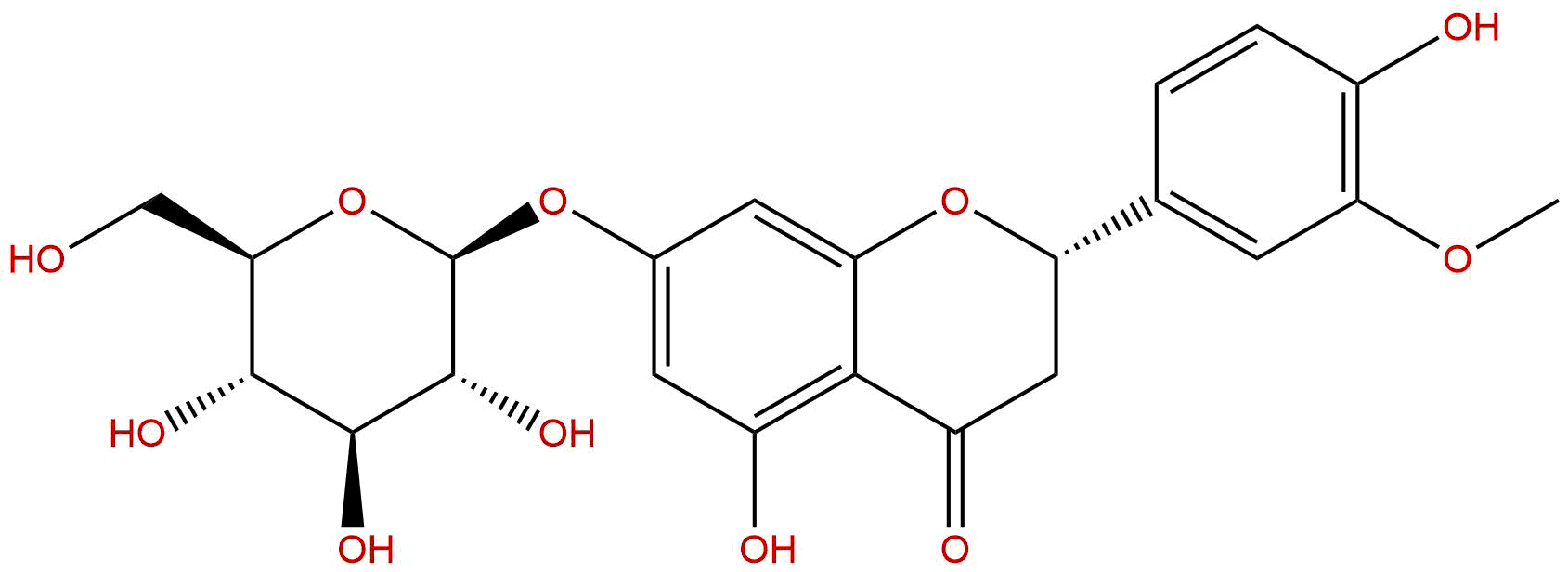


Product name: Homoeriodictyol 7-O-β-D-glucoside
Synonym name: Viscumside A;Homoeriodictyol 7-glucoside
Catalogue No.: BP4871
Cas No.: 14982-11-7
Formula: C22H24O11
Mol Weight: 464.423
Botanical Source:
Type of Compound: Flavonoids
Purity: 95%~99%
Analysis Method: HPLC-DAD or/and HPLC-ELSD
Identification Method: Mass, NMR
Packing: Brown vial or HDPE plastic bottle
Storage: Store in a well closed container, protected from air and light. Put into refrigerate or freeze for long term storage.
Whenever possible, you should prepare and use solutions on the same day. However, if you need to make up stock solutions in advance, we recommend that you store the solution as aliquots in tightly sealed vials at -20℃. Generally, these will be useable for up to two weeks.
The product could be supplied from milligrams to grams
Inquire for bulk scale.
For Reference Standard and R&D, Not for Human Use Directly.
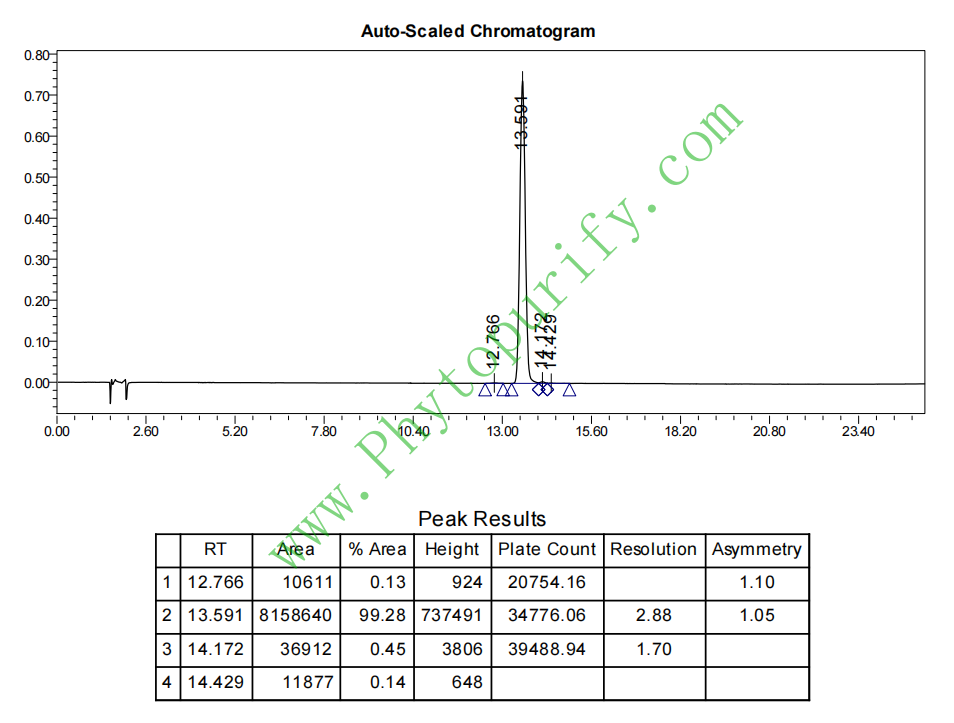
HPLC of Homoeriodictyol 7-O-β-D-glucoside
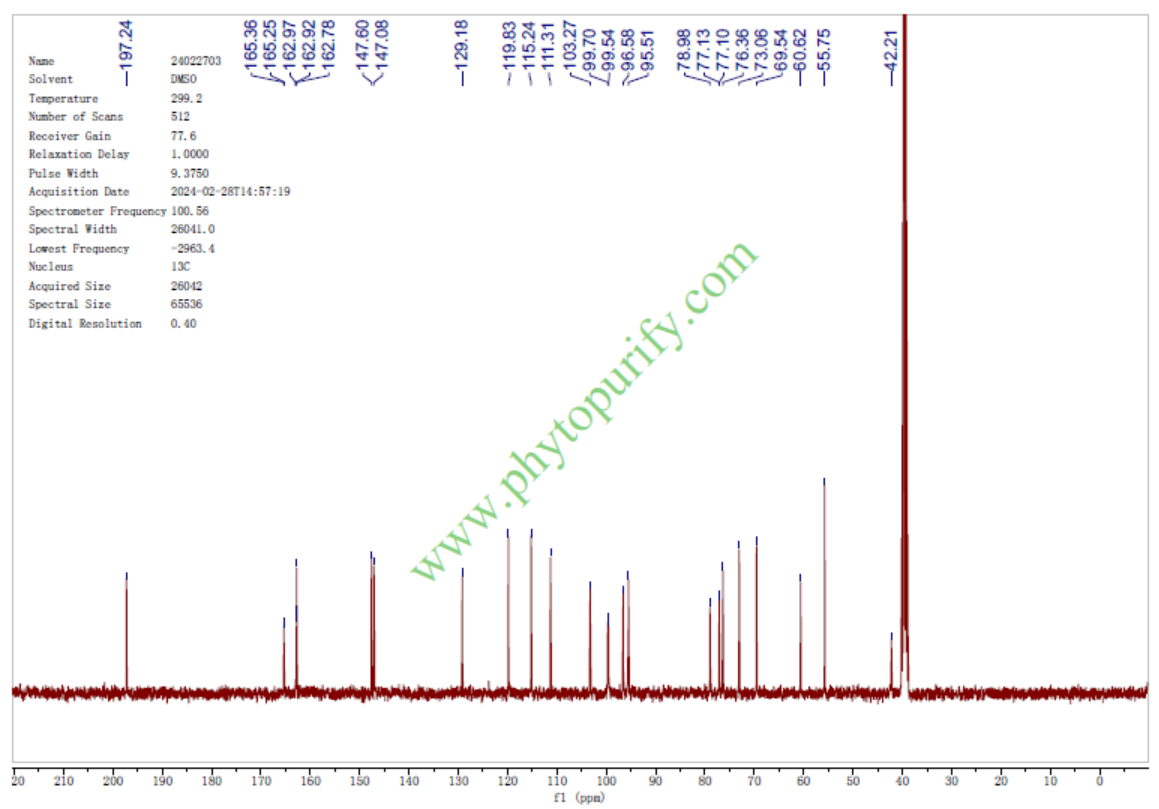
NMR of Homoeriodictyol 7-O-β-D-glucoside
Storage conditions:Short-term storage at 2~8℃, long-term storage at -20 ~ -80℃
175.3700
.2967
.2466
3.5627
.6270
.1791
Low
73.8735
4.0642
No
No
No
No
No
No
0.0
Yes
No
Yes
No
Natural products, as an important source of drug discovery, play an irreplaceable role in the long history of human struggle against diseases. Flavonoids, as the most widely distributed class of secondary metabolites in nature, have attracted much attention due to their structural diversity and extensive biological activity. Among them, dihydroflavonoids are an important branch of the flavonoid family, characterized by a single bond at the C2-C3 position, which gives the molecule a certain degree of flexibility and affects its interaction mode with biological targets. Homoeriodictyol 7-O - β - D-glucoside (HEDG-7-G) is a typical dihydroflavonoid glycoside, which is composed of the glycoside homoeriodictyol and a molecule of glucose connected by a β - glycosidic bond at the 7th hydroxyl group. This compound mainly exists in plants such as Asteraceae and Lamiaceae in nature, and is one of the active ingredients in various traditional medicinal plants.
In recent years, as the incidence rate of cardiovascular and cerebrovascular diseases continues to rise, the prevention and treatment of thrombotic diseases has become a major challenge in the field of global public health. Platelets play a central role in the pathological process of thrombotic diseases such as atherosclerosis, acute coronary syndrome, ischemic stroke, etc. Antiplatelet therapy is a key strategy for preventing and treating these diseases. Although classic antiplatelet drugs such as aspirin, clopidogrel, and ticagrelor have been developed in clinical practice, issues such as aspirin resistance, increased risk of bleeding, and drug interactions still exist, limiting their long-term use. Therefore, searching for novel structures, unique mechanisms of action, and higher safety candidate compounds for antiplatelet aggregation from natural products has become a hot topic in medicinal chemistry and pharmacology research. HEDG-7-G demonstrates its unique value in this context. Previous studies have shown that this compound exhibits significant anti platelet aggregation activity, and its mechanism of action may involve the synergistic regulation of multiple targets, including cyclooxygenase (COX), integrin receptor, P2Y12 receptor, and phosphodiesterase (PDE). This article aims to systematically review the chemical structure, plant origin, pharmacological activity, mechanism of action, medicinal characteristics, and clinical application prospects of HEDG-7-G, in order to provide comprehensive scientific basis for the in-depth development and transformation research of this natural product.
The chemical structure of HEDG-7-G belongs to the class of dihydroflavonoid glycosides. Its glycoside is Homoeriodictyol, with the chemical name 3 ', 4', 5,7-tetrahydroxydihydroflavone. Compared with the common sophocarpol (Eriodictyol), high sophocarpol is methoxylated at the 3 'position, meaning its substitution mode on the B ring is 3' - methoxy-4 '- hydroxyl, rather than the 3', 4 '- dihydroxy group of sophocarpol. This structural difference endows Gaoshengcao phenol with unique physicochemical properties and biological activity. The molecular formula of HEDG-7-G is C ₂₂ H ₂₄ O ₁₁, with a molecular weight of 464.4230 g/mol. Its structural feature is that the hydroxyl group at position 7 of ring A is connected to β - D-glucose through a glycosidic bond, forming a glycoside; The C ring is a dihydropyranone ring, with a single bond at the C2-C3 position and a chiral center at the C2 position. Naturally occurring (2S) - configurations are commonly used; The B ring is an ortho methoxyphenol structure (3-methoxy-4-hydroxyphenyl).
From the perspective of physicochemical properties, the lipid water partition coefficient (LogP) of HEDG-7-G is 0.2967, indicating its strong hydrophilicity, which is mainly attributed to the presence of multiple phenolic hydroxyl groups and glucose groups in the molecule. Its polar surface area (TPSA) is as high as 175.3700 Å ², far higher than the usual requirement of 140 Å ² for oral drugs, indicating that the compound may be difficult to passively diffuse through the cell membrane, and its transmembrane transport may depend on specific transport proteins. In terms of water solubility, the predicted value is 3.5627 mg/mL, which belongs to moderate water solubility, providing a basis for its dissolution and absorption in organisms. It is worth noting that its blood-brain barrier (BBB) penetration ability is predicted to be "low", which is consistent with its high polarity, high molecular weight, and high TPSA value. This characteristic may have a dual significance in the development of antiplatelet drugs: on the one hand, it reduces the risk of central nervous system toxicity; On the other hand, it also limits its application in central nervous system diseases. In addition, hERG inhibition was predicted as' no ', and the Ames test predicted a value of 0.0, indicating that the compound did not exhibit significant cardiotoxicity or genotoxicity risks in early assessment, providing preliminary positive signals for its safety evaluation.
The distribution of HEDG-7-G in nature has a certain selectivity, mainly existing in plant groups such as Asteraceae and Lamiaceae. Among them, Asteraceae plants such as Salvia genus Some types, especially Salvia miltiorrhiza And its close relatives have been reported to contain this compound. Danshen, as a traditional Chinese medicine for promoting blood circulation and removing blood stasis, has a wide range of pharmacological activities in both water-soluble and lipid soluble components. HEDG-7-G is considered one of its components with anti platelet aggregation activity. In addition, plants in the family Lamiaceae, such as Rosmarinus officinalis、Thymus vulgaris and Mosla genus HEDG-7-G was also isolated from plants. In Perilla frutescens In the leaves, this compound has also been identified as one of the main flavonoid components. In addition, some Fabaceae (Fabaceae) Plants such as Glycyrrhiza uralensis There are also trace reports in the roots and stems. Overall, HEDG-7-G is commonly found in medicinal plants rich in polyphenols and flavonoids, and its content is influenced by factors such as plant species, growth environment, harvest season, and processing methods.
The extraction method for HEDG-7-G usually follows the classic process of natural product chemistry. Due to the fact that the compound is a highly polar glycoside,Solvent extraction method This is the most commonly used initial step. Usually, methanol, ethanol, or aqueous ethanol (such as 50% -80% ethanol) is used as the extraction solvent, and extraction is carried out at room temperature or under heating reflux conditions. After the extraction solution is concentrated under reduced pressure, crude extract is obtained. Subsequently, utilizing Liquid-liquid extraction method For preliminary separation, commonly used solvent systems include petroleum ether, ethyl acetate, n-butanol, etc. Due to its moderate to high polarity, HEDG-7-G is usually enriched in the n-butanol extraction site or ethyl acetate extraction site.
Further purification and separation mainly rely on Chromatographic technique。Column chromatography method It is a core method, and commonly used stationary phases include silica gel, polyamide, Sephadex LH-20, ODS (C18) reverse phase silica gel, etc. Silica gel column chromatography is suitable for the separation of moderately polar compounds, often using solvent systems such as chloroform methanol water or ethyl acetate methanol water for gradient elution. Polyamide column chromatography has a special selectivity for flavonoids, achieved through hydrogen bonding for separation, commonly using ethanol water or methanol water systems. Sephadex LH-20 gel column chromatography is separated according to the molecular size, which is often used to remove pigment and further purify.High performance liquid chromatography (HPLC)Especially preparative HPLC is a key technology for obtaining high-purity HEDG-7-G. Usually, a C18 reverse phase column is used, with methanol water or acetonitrile water (often containing a small amount of formic acid or acetic acid) as the mobile phase, and monitored and collected by a UV detector (usually detecting the characteristic absorption of dihydroflavonoids at 280-290 nm). In addition,High Speed Counter Current Chromatography (HSCCC) As a liquid-liquid distribution chromatography technique, it has been successfully applied in the separation and purification of HEDG-7-G in recent years due to its advantages of irreversible adsorption and high sample recovery rate.
The pharmacological activity research of HEDG-7-G mainly focuses on its protective effect on the cardiovascular system, especially Antiplatelet aggregation Activity, which is also its most concerned pharmacological characteristic. In addition, the study also revealed its potential activities such as antioxidant, anti-inflammatory, and neuroprotective effects.
Antiplatelet aggregation activity It is the core pharmacological action of HEDG-7-G. Multiple in vitro experiments have shown that the compound can inhibit platelet aggregation induced by various inducers such as adenosine diphosphate (ADP), collagen, arachidonic acid (AA), thrombin, adrenaline, etc. in a concentration dependent manner. Its half maximal inhibitory concentration (IC ₅₀) is usually at the micromolar level, exhibiting strong activity. Compared with the classic antiplatelet drug aspirin (which mainly inhibits COX-1), HEDG-7-G has a wider spectrum of action and can inhibit aggregation induced by various agonists, suggesting that it may act on multiple key nodes in the platelet activation pathway. For example, in ADP induced aggregation models, the inhibitory effect of HEDG-7-G may be related to interference with the P2Y12 receptor signaling pathway; In the AA induced model, it may be related to the inhibition of COX-1/COX-2 activity and the reduction of thromboxane A ₂ (TXA ₂) production. In addition, the compound can also inhibit the adhesion and spreading of platelets on collagen or fibrinogen, as well as the release of platelet particles (such as ATP and serotonin), further confirming its comprehensive antiplatelet effect.
antioxidant activity It is a commonality of flavonoids. The HEDG-7-G molecule contains multiple phenolic hydroxyl groups, especially the ortho methoxyphenol structure of the B ring, which endows it with strong free radical scavenging ability. Research has shown that HEDG-7-G can effectively scavenge 1,1-diphenyl-2-trinitrophenylhydrazine (DPPH) free radicals, 2,2 '- diazo-bis-3-ethylbenzothiazoline-6-sulfonic acid (ABTS) cationic free radicals, as well as hydroxyl and superoxide anion free radicals. Meanwhile, it can also inhibit lipid peroxidation and protect cells from oxidative stress damage. This activity is particularly important for cardiovascular protection because oxidative stress is a key driver of platelet activation and atherosclerosis.
anti-inflammatory activity On the one hand, HEDG-7-G has been reported to inhibit the production of nitric oxide (NO) and prostaglandin E ₂ (PGE ₂) in macrophages stimulated by lipopolysaccharide (LPS), and its mechanism may be related to the downregulation of inducible nitric oxide synthase (iNOS) and cyclooxygenase-2 (COX-2) expression. In addition, it can also inhibit the release of pro-inflammatory cytokines such as tumor necrosis factor - α (TNF - α), interleukin-6 (IL-6), and interleukin-1 β (IL-1 β). These anti-inflammatory effects complement antiplatelet activity and together form the basis of their cardiovascular protective effects.
Other activities Preliminary studies also suggest that HEDG-7-G may have neuroprotective effects, such as reducing glutamate induced neuronal damage and inhibiting acetylcholinesterase activity, suggesting its potential value in neurodegenerative diseases such as Alzheimer's disease. In addition, there are reports indicating that it has mild vasodilatory activity.
The anti platelet aggregation effect of HEDG-7-G is not achieved through a single target, but rather exhibits Multi target, multi pathway The characteristics of collaborative regulation. According to existing research, the molecular targets involved mainly include the following aspects:
Cyclooxygenase (COX) pathway COX is a key enzyme involved in the metabolism of arachidonic acid into prostaglandins and thromboxanes. COX-1 is constitutively expressed in platelets, catalyzing the generation of TXA ₂, which is a potent inducer of platelet aggregation and vasoconstrictor. HEDG-7-G can inhibit the activity of COX-1 and COX-2, thereby reducing the generation of TXA ₂. This mechanism is similar to aspirin, but HEDG-7-G may have a stronger inhibitory effect on COX-2, which may be related to its anti-inflammatory activity. HEDG-7-G effectively blocked AA induced platelet aggregation by inhibiting the COX pathway.
P2Y12 receptor signaling pathway ADP is an important positive feedback agonist for platelet aggregation, mainly mediated by the P2Y1 and P2Y12 receptors on the surface of platelets. Among them, the P2Y12 receptor is a key target for antiplatelet drugs such as clopidogrel and ticagrelor. HEDG-7-G is predicted to bind to the P2Y12 receptor and may act as its antagonist, thereby inhibiting ADP induced Gi protein activation and subsequently suppressing downstream phosphatidylinositol 3-kinase (PI3K)/protein kinase B (Akt) signaling pathways, ultimately inhibiting platelet aggregation and granule release. This mechanism explains its potent inhibitory effect on ADP induced aggregation.
Integrin α IIb β 3 (GPIIb/IIIa) receptor Integrin α IIb β 3 is the most abundant receptor on the surface of platelets and the ultimate common pathway for platelet aggregation. Regardless of the type of agonist stimulation, it is ultimately necessary to activate α IIb β 3, causing its conformation to change and bind to fibrinogen, thereby mediating cross-linking aggregation between platelets. HEDG-7-G can inhibit the activation of α IIb β 3, reduce its binding to fibrinogen, and directly block the final step of platelet aggregation. This may be one of the key mechanisms underlying its broad-spectrum antiplatelet activity.
Thromboxane A ₂ receptor (TP receptor)TXA ₂ exerts its excitatory effect by acting on TP receptors on the surface of platelets. HEDG-7-G may act as an antagonist of TP receptors, directly blocking the binding of TXA ₂ to its receptor, thereby inhibiting TXA ₂ - induced platelet aggregation. This further enhances its inhibitory effect on the COX pathway.
Phosphodiesterase (PDE)PDE is an enzyme that hydrolyzes cyclic nucleotides (cAMP and cGMP). Elevated levels of cAMP and cGMP in platelets can inhibit platelet activation. PDE3A is the main subtype of PDE in platelets. HEDG-7-G is predicted to inhibit the activity of PDE3A, thereby increasing the level of cAMP in platelets, activating protein kinase A (PKA), phosphorylating downstream substrates, and inhibiting various platelet activation reactions, including calcium ion mobilization, granule release, and α IIb β 3 activation.
Other targets HEDG-7-G may also affect platelet adhesion to von Willebrand factor (vWF) by regulating the expression or function of GP1BA (GPIb α) receptors; By inhibiting the activation of protein kinase C (PKC), it interferes with platelet signal transduction; And through its antioxidant activity, it reduces the activation of platelets by reactive oxygen species (ROS).
In summary, HEDG-7-G forms a multi-layered antiplatelet network by simultaneously acting on multiple key targets such as COX, P2Y12, α IIb β 3, TP receptors, and PDE3A. This multi-target mode of action endows it with efficient and broad-spectrum antiplatelet activity, and may reduce common resistance issues of single target drugs.
Developing the natural product HEDG-7-G into a clinical drug requires a systematic evaluation of its pharmacological properties. Based on the provided parameters and existing knowledge, its pharmacological characteristics are as follows:
Analysis of drug properties The molecular weight of HEDG-7-G is 464.42 Da, slightly higher than the limit of molecular weight<500 in Lipinski's "Five Rules", but still within an acceptable range. Its LogP is 0.2967, much lower than 5, indicating strong hydrophilicity and complying with the "Five Rules". But the number of hydrogen bond donors (phenolic hydroxyl and sugar hydroxyl) and acceptors (oxygen atoms) is relatively large, which may exceed the limit of hydrogen bond donors<5 and acceptors<10 in the "Five Rules". In addition, TPSA is as high as 175.37 Å ², far exceeding the usual upper limit of 140 Å ² for oral medications. These characteristics indicate that HEDG-7-G may not be a typical "drug like" molecule, and its oral bioavailability may be low, mainly due to its high polarity and low membrane permeability caused by its large molecular weight.
Pharmacokinetic (ADME) prediction:
- absorb Due to its high polarity and high TPSA, HEDG-7-G has poor ability to passively diffuse through intestinal epithelial cells. Its oral absorption may mainly rely on active transport by intestinal transporters such as glucose transporters GLUTs or sodium glucose cotransporters SGLTs, as their structure contains glucose groups. In addition, the gut microbiota may hydrolyze its glycosidic bonds, releasing the aglycone resveratrol, which has lower polarity and is more easily absorbed. Therefore, after oral administration, HEDG-7-G may enter the systemic circulation in two forms: prototype and aglycone.
- distribution Due to its hydrophilicity, HEDG-7-G is mainly distributed in extracellular fluid and plasma, and its binding rate with plasma proteins may be high. Its low BBB penetration limits its central distribution.
- Metabolism HEDG-7-G may undergo extensive metabolism in the liver and intestines. The main metabolic pathways include II phase metabolic reactions such as glycosidic bond hydrolysis (to produce resveratrol), methylation, sulfation, and glucuronidation. Its glycoside, Gaoshengcao phenol, may also be further metabolized.
- excretion Metabolites and small amounts of prototype drugs are mainly excreted through bile and urine.
safety evaluation Preliminary computer simulation predictions show that HEDG-7-G has no hERG inhibitory activity (low risk of cardiac toxicity), and the Ames test is negative (no genetic toxicity). This provides a positive early signal for its safety. However, systematic in vivo toxicology studies are still needed, including acute toxicity, subchronic toxicity, reproductive toxicity, and carcinogenicity tests, to comprehensively evaluate its safety.
Challenges and Strategies in Drug Development The main challenge for the pharmacological development of HEDG-7-G lies in its Low oral bioavailability To overcome this obstacle, the following strategies can be considered:
1. Prodrug design Esterification or phosphorylation modification of phenolic hydroxyl groups in molecules to enhance their lipophilicity, and release the original drug after enzymatic hydrolysis in vivo.
2. Formulation optimization Adopting novel drug delivery systems such as nanoparticles, liposomes, and solid dispersions to enhance their solubility and oral absorption.
3. Simplified structure Using HEDG-7-G as the lead compound, a structure-activity relationship study was conducted to search for derivatives with simpler structures, stronger activity, and higher oral bioavailability. For example, retaining key pharmacophores (such as the ortho methoxyphenol in the B ring and the carbonyl group in the C ring) and removing or replacing the sugar moiety may result in molecules with better drug like properties.
4. Non oral administration route Consider developing it as an injection, transdermal patch, or inhalation formulation to bypass oral absorption barriers.
Based on the unique anti platelet aggregation mechanism and preliminary safety characteristics of HEDG-7-G, it shows potential clinical application prospects in the following fields:
Prevention and treatment of cardiovascular and cerebrovascular diseases As a multi target antiplatelet drug, HEDG-7-G is expected to be used to prevent and treat atherosclerosis, coronary heart disease, myocardial infarction, ischemic stroke and other thrombotic diseases. Its broad-spectrum antiplatelet effect may be superior to single target drugs, especially for patients who have poor response to aspirin or clopidogrel. In addition, its anti-inflammatory and antioxidant activities may have additional benefits for delaying the progression of atherosclerosis.
Antithrombotic adjuvant therapy Long term dual antiplatelet therapy (DAPT, usually aspirin+clopidogrel/ticagrelor) is required after percutaneous coronary intervention (PCI) or coronary artery bypass grafting (CABG). HEDG-7-G or its derivatives may serve as a supplement or alternative to DAPT to reduce bleeding risk or improve efficacy. Its multi-target mechanism may allow for the use of lower doses of existing drugs, thereby reducing side effects.
Peripheral arterial disease (PAD)PAD patients also face the risk of thrombosis and require antiplatelet therapy. HEDG-7-G may provide a new treatment option for such patients.
As a functional food or dietary supplement Given its presence in various edible plants, HEDG-7-G or its plant extracts rich in this compound may be developed as functional foods or dietary supplements with cardiovascular protection for primary prevention of thrombotic diseases.
Future research directions:
Gaoshengcao phenol-7-O - β - D-glucoside, as a natural dihydroflavonoid glycoside derived from traditional medicinal plants, has shown significant potential in the field of antiplatelet aggregation due to its unique chemical structure and multi-target mode of action. It can simultaneously act on multiple key targets such as COX, P2Y12, α IIb β 3, TP receptors, and PDE3A, thereby achieving broad inhibition of platelet activation pathways. This characteristic distinguishes it from existing single target antiplatelet drugs and is expected to provide new strategies for the prevention and treatment of thrombotic diseases. However, its high polarity and low oral bioavailability are the main bottlenecks restricting its clinical translation. Future research should focus on overcoming this obstacle through drug chemical modification, formulation optimization, and other means, and conduct in-depth in vivo pharmacological, pharmacokinetic, and toxicological evaluations. With the continuous deepening of research, HEDG-7-G and its derivatives are expected to become a new class of safe and effective antiplatelet candidate drugs, bringing new hope to patients with cardiovascular and cerebrovascular diseases. Meanwhile, in-depth analysis of its mechanism of action will also provide important scientific examples for understanding the multi-target regulation of complex disease networks by natural products.
