Introduction/Overview
Natural products, as an important source of drug discovery, play an irreplaceable role in the long history of human fight against diseases. Flavonoids, as the most widely distributed class of secondary metabolites in nature, have attracted much attention due to their structural diversity and extensive biological activity. Among them, Kaempferol is a typical flavonol compound widely present in various vegetables, fruits, and medicinal plants, with various pharmacological activities such as antioxidant, anti-inflammatory, anti-tumor, and cardiovascular protection. However, the metabolic process of natural flavonoids in the body is complex, and their methylated derivatives often exhibit different biological activities, metabolic stability, and targeting compared to their parent compounds, making them a hot topic in natural product chemistry and pharmacology research in recent years.
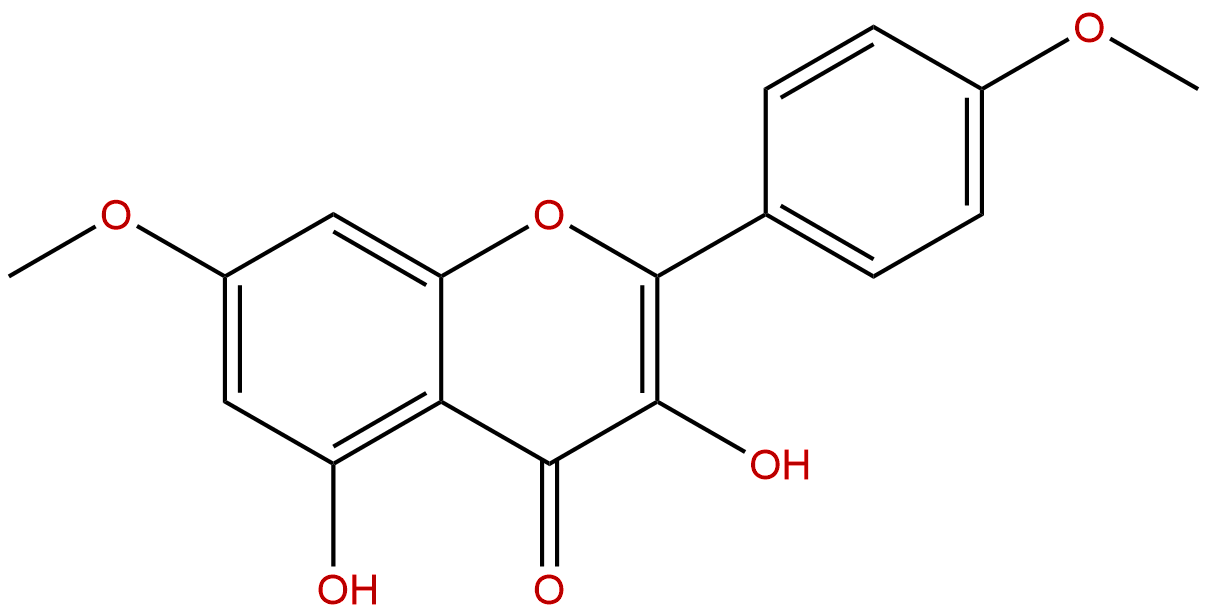
Kaempferol 7,4 '- dimethyl ether (CAS number: 15486-33-6) is a methylated derivative of kaempferol, characterized by the substitution of methoxy groups at the 7th and 4th hydroxyl positions of the flavonoid nucleus. This structural modification significantly alters the physicochemical properties and biological activity spectrum of the molecule. Compared with the parent compound kaempferol, kaempferol-7,4 '- dimethyl ether exhibits stronger lipophilicity and metabolic stability, while its pharmacological activity also shows unique differences. Existing studies have shown that this compound has significant anti proliferation and pro apoptosis effects in a variety of tumor models, especially in breast cancer, glioblastoma and lung cancer cells. Its mechanism of action involves the inhibition of estrogen receptor α (ER α) expression and the activation of MEK-MAPK signal pathway. In addition, the compound also exhibits certain antioxidant potential, participating in the regulation of cellular oxidative stress by regulating the expression of a series of antioxidant related genes and proteins such as NFE2L2/NRF2, SOD, CAT, GPX1, HMOX1, etc.
Although the research on kaempferol-7,4 '- dimethyl ether is still in its early stages, its unique chemical structure and multi-target pharmacological properties make it of significant research value in the development of anti-tumor drugs and antioxidant intervention strategies. This article will provide a systematic review of the research progress of this compound from the aspects of chemical structure and physicochemical properties, plant sources and extraction methods, pharmacological activity, mechanism of action and molecular targets, drug evaluation and pharmacokinetics, clinical application prospects, etc., in order to provide reference for further in-depth research and development.
Chemical structure and physicochemical properties
The chemical name of kaempferol-7,4 '- dimethyl ether is 3,5-dihydroxy-2- (4-methoxyphenyl) -7-methoxy-4H-chromene-4-one, with a molecular formula of C17H14O6 and a molecular weight of 314.2930 g/mol. Structurally, this compound belongs to flavonols, with a core skeleton of 2-phenyl-4-chromene-4-one (2-phenyl-4H-chromene-4-one). Two free hydroxyl groups are retained at positions 3 and 5, while methoxy groups (- OCH3) are substituted at positions 7 and 4 ', respectively. This substitution mode distinguishes kaempferol-7,4 '- dimethyl ether from other common kaempferol methylated derivatives, such as kaempferol-3,7-dimethyl ether or kaempferol-3,4' - dimethyl ether.
From the perspective of physicochemical properties, the lipid water partition coefficient (LogP) of this compound is 2.7243, indicating a moderate degree of lipophilicity, which is closely related to the introduction of two methoxy groups in its molecule. Methoxy, as a hydrophobic group, increases the lipophilicity of molecules, which facilitates their penetration through cell membranes and biological barriers. The topological polar surface area (TPSA) is 89.1300 Å ², which is at a moderate level, indicating that the compound may have some oral absorption potential, but may also be influenced by intestinal transporters and efflux mechanisms. The water solubility parameter is 0.0627 mg/mL, which belongs to poorly soluble compounds, which to some extent limits their bioavailability and is also a key focus for subsequent formulation design.
It is worth noting that the compound's blood-brain barrier (BBB) penetration ability has been evaluated as "low", which poses a challenge for its application in central nervous system tumors such as glioblastoma. However, low BBB penetration may also imply a lower risk of neurotoxicity, providing a safety advantage in the treatment of peripheral tumors. In addition, the negative evaluation result of hERG inhibition indicates that the compound has good prospects in terms of cardiac safety. The inhibition of hERG channels is one of the main causes of drug-induced QT interval prolongation and arrhythmia, and the negative result reduces the risk of cardiac toxicity. The Ames test result is 0.6, and typically an Ames test value below 2 is considered to have a low genetic toxicity risk, providing a safety basis for further development of the compound.
Overall, the chemical structure of kaempferol-7,4 '- dimethyl ether determines its unique physicochemical properties: moderate lipophilicity, low water solubility, low BBB penetration, and good safety indicators. These properties not only provide a structural basis for its biological activity, but also pose specific challenges for its drug development, such as improved solubility and oral absorption.
Plant sources and extraction methods
Kaempferol-7,4 '- dimethyl ether, as a naturally occurring flavonoid compound, is widely distributed in the plant kingdom, but its content is usually low. This compound mainly exists in multiple plant families and genera such as Asteraceae, Lamiaceae, Leguminosae, Rosaceae, etc. For example, it has been detected in Artemisia argyi, Salvia, Calendula officinalis, and certain ferns in the Asteraceae family. In addition, this compound has also been found in extracts of some traditional medicinal plants such as Ginkgo biloba and Scutellaria baicalensis, but usually appears as a minor component.
Due to the relatively low content of kaempferol-7,4 '- dimethyl ether in plants, efficient and specific methods are required for its extraction and purification. The traditional extraction methods include organic solvent extraction, and commonly used solvents include methanol, ethanol, ethyl acetate, or their mixed solvents. In order to improve extraction efficiency, heating reflux extraction or ultrasound assisted extraction techniques are usually used. Ultrasonic assisted extraction utilizes cavitation effect to destroy plant cell walls, accelerate solvent penetration and target compound dissolution, and can achieve high extraction rates in a short period of time. In recent years, modern extraction techniques such as microwave-assisted extraction and pressurized solvent extraction have gradually been applied to the extraction of flavonoids. These methods have the advantages of low solvent dosage, short extraction time, and high efficiency.
The crude extract after extraction usually contains a large amount of impurities, including chlorophyll, lipids, other flavonoids, and sugars, and therefore requires further separation and purification. Common separation methods include liquid-liquid extraction, column chromatography (such as silica gel column, polyamide column, Sephadex LH-20 gel column) and high performance liquid chromatography (HPLC) preparation. Among them, polyamide column chromatography has good selectivity for flavonoids, and by utilizing its ability to form hydrogen bonds with phenolic hydroxyl groups in flavonoid molecules, preliminary separation of different flavonoids can be achieved. Subsequently, by combining preparative HPLC and using a reverse phase C18 chromatography column with methanol water or acetonitrile water system as the mobile phase, high-purity kaempferol-7,4 '- dimethyl ether can be obtained.
It is worth noting that due to the usually low content of this compound in plants, direct extraction is often difficult to meet the needs of large-scale research or application. Therefore, chemical synthesis or biotransformation methods have also received attention. Chemical synthesis usually starts with kaempferol and introduces methoxy groups at positions 7 and 4 'through selective methylation reactions. However, due to the presence of multiple phenolic hydroxyl groups (3, 5, 7, 4 'positions) in kaempferol molecules, selective methylation requires the use of protective group strategies or the utilization of differences in the reactivity of different phenolic hydroxyl groups, making the synthesis route more complex. Biotransformation methods, such as enzymatic reactions catalyzed by methyltransferases, provide a greener and more efficient alternative pathway, but are still in the laboratory research stage.
Pharmacological activity research
Antitumor activity
The anti-tumor activity of kaempferol-7,4 '- dimethyl ether is one of its most concerned pharmacological effects. Existing studies have shown that this compound exhibits significant anti proliferative and pro apoptotic effects in various tumor cell lines.
In breast cancer studies, kaempferol-7,4 '- dimethyl ether showed an inhibitory effect on the expression of estrogen receptor α (ER α). ER α is a key driving factor in the occurrence and development of breast cancer. About 70% of breast cancer patients are ER α positive. Endocrine therapy is an important treatment method for these patients. Studies have found that this compound can significantly reduce the protein level of ER α in ER α positive breast cancer cells such as MCF-7, thereby inhibiting estrogen dependent cell proliferation signals. This mechanism of action is different from classical antiestrogenic drugs such as tamoxifen. It does not directly competitively antagonize the binding of estrogen to receptors, but works by downregulating the expression of receptor proteins. This provides a new idea for overcoming endocrine therapy resistance.
In glioblastoma research, kaempferol-7,4 '- dimethyl ether exhibits the ability to induce cell apoptosis by activating the MEK-MAPK signaling pathway. Glioblastoma is the most common and malignant primary brain tumor in adults, highly resistant to conventional radiotherapy and chemotherapy. Research has shown that the compound can significantly activate MEK1/2 and its downstream ERK1/2 phosphorylation after treating U87MG and other glioblastoma cells, thereby upregulating the expression of pro apoptotic protein Bax and downregulating the expression of anti apoptotic protein Bcl-2, ultimately activating the caspase cascade reaction and inducing cell apoptosis. This discovery suggests that the compound may exert anti-tumor effects by activating rather than inhibiting the MAPK pathway, which is completely different from the mode of action of most anti-tumor drugs targeting the MAPK pathway, such as MEK inhibitors, reflecting its unique mechanism of action.
In lung cancer cells, kaempferol-7,4 '- dimethyl ether also exhibits apoptosis inducing activity through the MEK-MAPK pathway. A549 and H1299 non-small cell lung cancer cell lines are sensitive to this compound treatment, exhibiting decreased cell viability, increased apoptosis rate, and cell cycle arrest. Mechanism studies have shown that this compound can upregulate p-ERK levels, activate downstream apoptotic signals, and inhibit the activity of the PI3K/AKT pathway, forming a synergistic anti-tumor effect.
antioxidant activity
In addition to its anti-tumor activity, kaempferol-7,4 '- dimethyl ether also exhibits certain antioxidant potential. Flavonoids themselves have the ability to scavenge free radicals, and the phenolic hydroxyl groups in their molecules can provide hydrogen atoms or electrons, neutralizing reactive oxygen species (ROS) and reactive nitrogen species (RNS). However, methylation modification usually reduces the direct free radical scavenging ability of flavonoids, as methoxy groups replace some phenolic hydroxyl groups, reducing the available oxidation sites.
However, the antioxidant activity of kaempferol-7,4 '- dimethyl ether is more reflected in its regulation of the cellular antioxidant defense system. Research has shown that this compound can activate the nuclear factor E2 related factor 2 (NRF2, encoded by the NFE2L2 gene) signaling pathway. NRF2 is a key transcription factor in cellular oxidative stress response, regulating the expression of a range of antioxidant and detoxifying enzymes, including superoxide dismutase (SOD1, SOD2), catalase (CAT), glutathione peroxidase 1 (GPX1), heme oxygenase 1 (HMOX1), etc. By upregulating the expression of these antioxidant enzymes, kaempferol-7,4 '- dimethyl ether can enhance the ability of cells to resist oxidative damage and alleviate the damage to cell structure and function caused by oxidative stress.
In addition, the compound also has a regulatory effect on the expression of matrix metalloproteinases (MMP1, MMP3). MMPs play an important role in extracellular matrix remodeling, inflammatory response, and tumor invasion and metastasis, and their expression and activity are regulated by oxidative stress. Kaempferol-7,4 '- dimethyl ether may be involved in intervening in oxidative stress-related pathological processes by regulating the expression of MMPs.
It is worth noting that this compound also affects the activity of tyrosinase (TYR). Tyrosinase is a key enzyme in melanin synthesis, and its abnormal activity is associated with pigmentation disorders. The regulatory effect of this compound on TYR suggests its potential application value in the fields of skin protection and whitening.
Mechanism of action and molecular targets
The pharmacological activity of kaempferol-7,4 '- dimethyl ether involves multiple molecular targets and signaling pathways, exhibiting characteristics of multi-target and multi pathway action. The following provides a systematic explanation of its main mechanism of action.
Regulation of estrogen receptor alpha
In breast cancer cells, the inhibitory effect of kaempferol-7,4 '- dimethyl ether on ER α is the core mechanism of its anti breast cancer activity. Research has found that this compound can significantly reduce the expression level of ER α protein, but does not affect the level of ER α mRNA, indicating that its effect occurs at the post-translational level. Further mechanistic studies suggest that the compound may downregulate the expression of ER α protein by promoting its ubiquitination proteasomal degradation. In addition, the compound may also affect the maturation and stability of ER α by interfering with the interaction between ER α and heat shock protein 90 (HSP90). This down regulation mechanism independent of ligand competition provides a new strategy for the treatment of tamoxifen resistant or ER α mutated breast cancer.
Activation of MEK-MAPK signaling pathway
Unlike most anti-tumor drugs that inhibit the MAPK pathway, kaempferol-7,4 '- dimethyl ether induces apoptosis in glioblastoma and lung cancer cells by activating the MEK-MAPK pathway. This seemingly contradictory phenomenon can be understood from the perspective of cell types and signal network complexity. In certain specific cellular contexts, sustained and high-intensity activation of MAPK signaling can lead to cell cycle arrest and apoptosis, a phenomenon known as "oncogene induced aging" or "MAPK overactivation induced apoptosis". This compound may activate the Ras Raf MEK ERK cascade reaction, leading to excessive phosphorylation of ERK and subsequently activating downstream pro apoptotic factors such as Bim and Bax, while inhibiting the expression of anti apoptotic protein Bcl-2, ultimately triggering mitochondrial pathway apoptosis.
NRF2/ARE antioxidant signaling pathway
The antioxidant activity of kaempferol-7,4 '- dimethyl ether is mainly achieved by activating the NRF2/ARE (antioxidant response element) signaling pathway. Under normal physiological conditions, NRF2 binds to Kelch like ECH related protein 1 (KEAP1) and is in an inhibited state. When cells are stimulated by oxidative stress or electrophilic compounds, NRF2 dissociates from KEAP1, translocates into the nucleus, forms heterodimers with small Maf proteins, binds to the ARE sequence of the target gene promoter region, and initiates the expression of a series of antioxidant and detoxifying enzymes. Research has shown that kaempferol-7,4 '- dimethyl ether can promote nuclear translocation of NRF2, upregulate the expression of genes such as SOD1, SOD2, CAT, GPX1, HMOX1, etc., thereby enhancing the antioxidant defense ability of cells. This mechanism not only helps to protect normal cells from oxidative damage, but may also have a dual effect of promoting apoptosis or anti apoptosis in tumor cells, depending on the cell type and microenvironment.
Regulation of matrix metalloproteinases and tyrosinase
Kaempferol-7,4 '- dimethyl ether has a regulatory effect on the expression of MMP1 and MMP3. MMPs play a crucial role in tumor invasion, metastasis, inflammatory response, and tissue remodeling. This compound may inhibit the activity of transcription factors such as NF - κ B or AP-1, downregulate the expression of MMPs, and thus suppress the invasion and metastasis ability of tumor cells. In addition, the regulation of tyrosinase activity suggests its potential applications in melanin metabolism and skin protection.
In summary, kaempferol-7,4 '- dimethyl ether exerts dual pharmacological activities of anti-tumor and antioxidant by regulating multiple signaling pathways such as ER α, MEK-MAPK, NRF2/ARE, and acting on multiple molecular targets such as SOD, CAT, GPX1, HMOX1, MMP1, MMP3, TYR, etc. This multi-target action characteristic is both its advantage and increases the complexity of a comprehensive understanding of its pharmacological mechanisms.
Evaluation of drug properties and pharmacokinetics
The evaluation of drug properties is a key link in whether natural products can move from laboratory research to clinical development. The pharmacological parameters of kaempferol-7,4 '- dimethyl ether have been partially clarified, but comprehensive pharmacokinetic studies are not yet sufficient.
From the perspective of physical and chemical properties, the molecular weight of this compound is 314.2930, which meets the requirement of molecular weight less than 500 in the "Lipinski Rule". The LogP is 2.7243, which is within the ideal range (-0.4 to 5.6), indicating its good membrane permeability potential. The TPSA is 89.1300 Å ², slightly higher than the recommended range of 60-70 Å ² for oral medications, but still within acceptable limits (<140 Å ²). The water solubility is 0.0627 mg/mL, which belongs to low solubility compounds, which may be the main challenge for their oral bioavailability. Low water solubility not only affects the dissolution and absorption of drugs, but may also lead to insufficient exposure in the body, affecting the efficacy of the drug.
In terms of safety, the hERG inhibition assessment was negative, reducing the risk of cardiac toxicity. The Ames test result is 0.6, indicating a low risk of genetic toxicity. These safety data provide favorable conditions for further development of the compound. However, the low permeability of the blood-brain barrier poses a barrier to its application in central nervous system tumors such as glioblastoma. In the future, it may be necessary to improve its brain delivery efficiency through strategies such as nanocarriers, liposomes, or prodrug design.
There is currently a lack of systematic in vivo research data on pharmacokinetics. Based on its physicochemical properties and structural characteristics, it can be inferred that the compound may partially dissolve in the gastrointestinal tract after oral administration, but due to its low water solubility, absorption may not be complete. After entering the systemic circulation, due to its lipophilicity, it may highly bind to plasma proteins (such as albumin) and have a large distribution volume. In terms of metabolism, this compound contains two free phenolic hydroxyl groups (at positions 3 and 5) and is a potential substrate for phase II metabolic enzymes such as UGT and SULT. It may undergo glucuronidation and sulfation binding reactions in the liver and intestine, generating more water-soluble metabolites that are subsequently excreted in urine or bile. In addition, methoxy may also be demethylated by cytochrome P450 enzymes (such as CYP1A2, CYP3A4) to produce kaempferol or other monomethylated products. These metabolic transformations will significantly affect their in vivo exposure levels and biological activity.
Overall, kaempferol-7,4 '- dimethyl ether has a certain pharmacological basis, but low water solubility and potential metabolic instability are the main challenges facing its development. Future research should focus on: 1) developing suitable dosage forms (such as solid dispersions, nanocrystals, phospholipid complexes) to improve their solubility and oral bioavailability; 2) Conduct systematic pharmacokinetic studies in vivo to clarify their absorption, distribution, metabolism, and excretion characteristics; 3) Evaluate the biological activity of its metabolites to comprehensively understand the material basis of its in vivo pharmacological effects.
Clinical application prospects and prospects
As a natural flavonoid compound with a unique mechanism of action, kaempferol-7,4 '- dimethyl ether has shown promising application prospects in the fields of anti-tumor and antioxidant. However, its transformation from laboratory research to clinical application still faces many challenges.
In the field of anti-tumor, the inhibitory effect of this compound on ER α expression provides a theoretical basis for its application in the treatment of ER α positive breast cancer. Especially for patients who develop resistance to traditional endocrine therapy drugs such as tamoxifen, this compound may provide a new treatment option. However, its in vivo anti-tumor activity, optimal dosing regimen, and combination strategies with existing chemotherapy or targeted drugs still need to be validated through in vivo animal models and clinical trials. In addition, the application prospects of this compound in glioblastoma are limited by its low BBB penetration, but its drug concentration at the brain tumor site is expected to be increased through nanocarrier systems such as liposomes or polymer nanoparticles targeting brain tumors, achieving effective treatment.
In the field of antioxidant and cell protection, this compound enhances the role of cell antioxidant defense by activating NRF2 signaling pathway, making it potentially valuable in oxidative stress related diseases (such as neurodegenerative diseases, cardiovascular diseases, diabetes complications, etc.). However, the activation of NRF2 may have a pro survival effect in tumor cells, so its use risk in tumor patients needs to be carefully evaluated. In non tumor diseases, the development of this compound as a dietary supplement or functional food ingredient may be more feasible.
From the perspective of drug development, the natural product properties of kaempferol-7,4 '- dimethyl ether provide a good safety basis, but low water solubility and potential metabolic instability are key issues that need to be addressed. Future research directions should include: 1) obtaining derivatives with better pharmacokinetic properties through structural modifications (such as prodrug design, introduction of water-soluble groups); 2) Develop efficient and controllable synthetic or biosynthetic methods to meet the needs of large-scale production and quality control; 3) By utilizing systems pharmacology and network pharmacology methods, we aim to deeply reveal its multi-target mechanism of action, clarify its core targets and key pathways; 4) Conduct systematic toxicology research, including long-term toxicity, reproductive toxicity, and immunotoxicity evaluations, to provide a basis for safe clinical drug use.
In addition, with the deepening development of precision medicine and personalized treatment concepts, patient stratification strategies based on biomarkers will help screen out the population most likely to benefit from the treatment with this compound. For example, for breast cancer patients with high expression of ER α and abnormal specific signal pathways, this compound may have better efficacy. At the same time, the exploration of combination therapy strategies is also worth paying attention to, such as the combined use with chemotherapy drugs, targeted drugs, or immune checkpoint inhibitors, which may produce synergistic or attenuated effects.
Conclusion
As an important methylated derivative of kaempferol, kaempferol-7,4 '- dimethyl ether occupies a place in the field of natural product pharmacology due to its unique chemical structure and multi-target pharmacological activity. This article systematically reviews the chemical structure and physicochemical properties, plant sources and extraction methods, pharmacological activity, mechanism of action and molecular targets, pharmacological evaluation and pharmacokinetics, as well as clinical application prospects of the compound. Current studies have shown that this compound has significant anti-tumor activity in breast cancer, glioblastoma and lung cancer cells, and its mechanism of action involves the inhibition of ER α expression and the activation of MEK-MAPK pathway; Meanwhile, by regulating the NRF2/ARE signaling pathway and antioxidant enzyme system, it exhibits antioxidant potential. Its pharmacological parameters show good safety and drug like properties, but low water solubility and low BBB penetration are the main bottlenecks in its development.
Although research on kaempferol-7,4 '- dimethyl ether is still in its early stages, its unique pharmacological characteristics and good safety foundation make it a promising lead compound for further investigation in the development of anti-tumor and antioxidant drugs. Future research should focus on improving pharmacokinetic properties, validating in vivo pharmacodynamics, and delving into the mechanism of action, in order to promote the translation of this compound from laboratory studies to clinical applications. With the continuous advancement of natural product chemistry, pharmacology, and drug delivery technology, kaempferol-7,4 '- dimethyl ether and its derivatives are expected to play a greater role in future drug development.