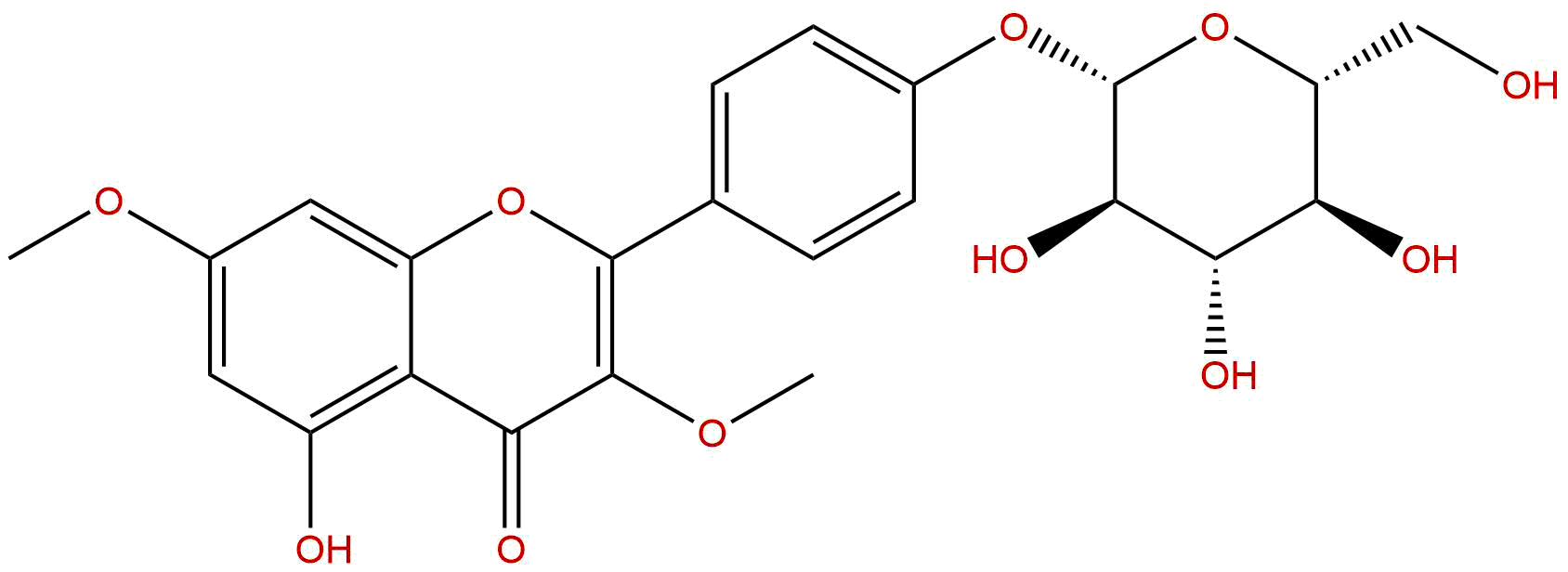


Product name: Camaroside
Synonym name:
Catalogue No.: BP2384
Cas No.: 150853-97-7
Formula: C23H24O11
Mol Weight: 476.434
Botanical Source:
Type of Compound: Flavonoids
Purity: 95%~99%
Analysis Method: HPLC-DAD or/and HPLC-ELSD
Identification Method: Mass, NMR
Packing: Brown vial or HDPE plastic bottle
Storage: Store in a well closed container, protected from air and light. Put into refrigerate or freeze for long term storage.
Whenever possible, you should prepare and use solutions on the same day. However, if you need to make up stock solutions in advance, we recommend that you store the solution as aliquots in tightly sealed vials at -20℃. Generally, these will be useable for up to two weeks.
The product could be supplied from milligrams to grams
Inquire for bulk scale.
For Reference Standard and R&D, Not for Human Use Directly.
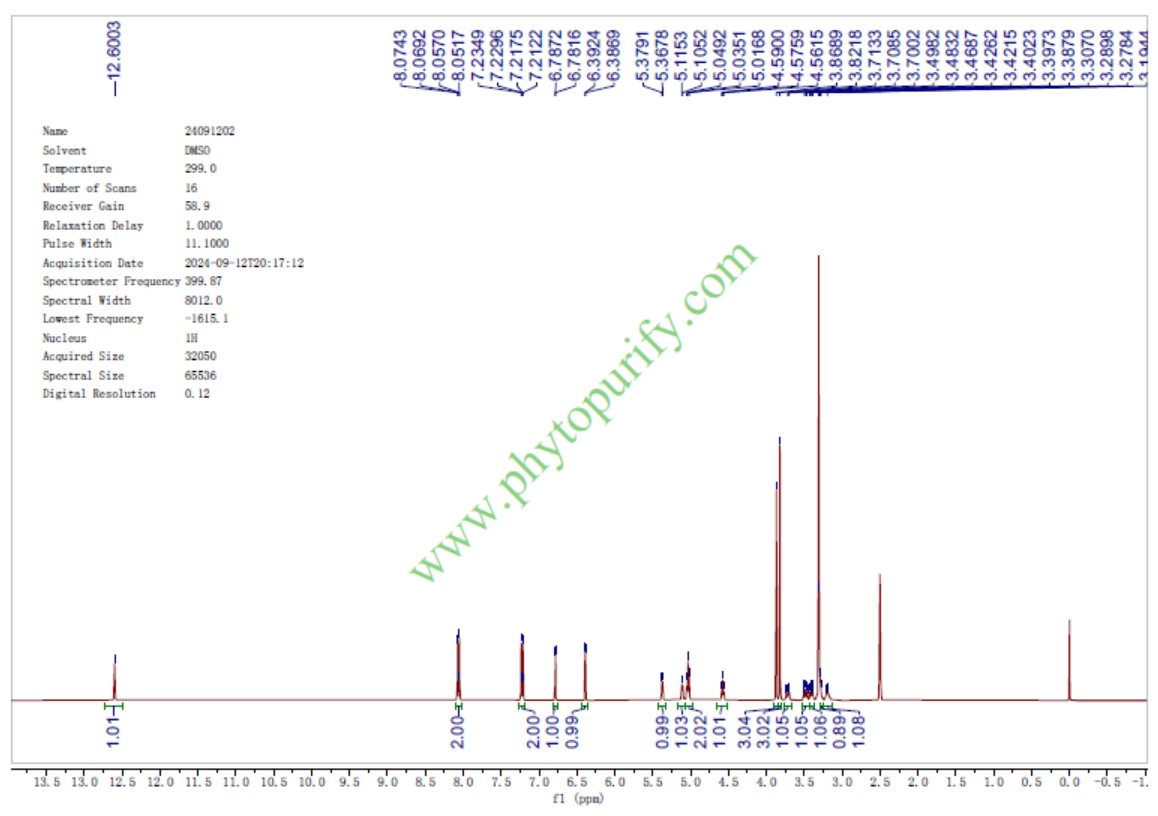
HNMR of Camaroside
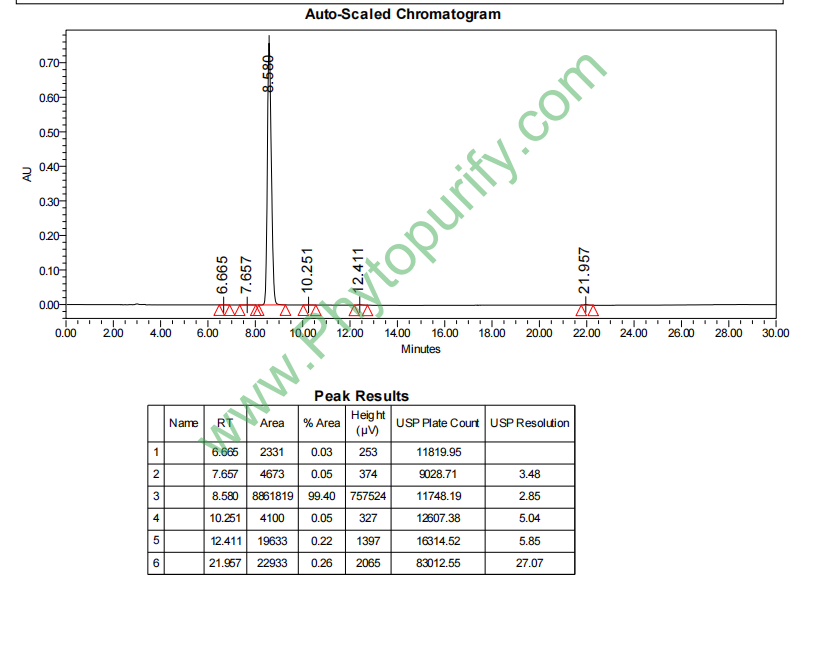
HPLC of Camaroside
Storage conditions:Short-term storage at 2~8℃, long-term storage at -20 ~ -80℃
168.2800
.6030
.5969
1.1746
.6068
.1852
Low
80.6479
3.8053
Yes
No
Yes
No
Yes
No
0.6
Yes
No
Yes
Yes
Natural products, as an important source of drug discovery, play an irreplaceable role in the long history of human struggle against diseases. From ancient plant therapies to modern target based drug screening, plant secondary metabolites have always been a treasure trove of inspiration for innovative drug development. Among numerous natural products with biological activity, flavonoids have attracted much attention due to their extensive pharmacological activities, such as antioxidant, anti-inflammatory, anti-tumor, cardiovascular protection, etc. Camaroside, as a specific flavonoid glycoside isolated from plants of the genus Camaroside, has gradually entered the field of researchers in recent years due to its potential application value in anti-inflammatory, especially anti arthritis.
The CAS number of Camaroside is 150853-97-7, and its unique chemical structure determines its distinctive biological activity. Preliminary studies have shown that the compound can act on multiple signaling pathways related to inflammation and immune regulation, especially key targets closely related to the pathophysiology of arthritis, such as tumor necrosis factor (TNF), cyclooxygenase-2 (PTGS2), nuclear factor kappa B (NFKB1/NF - κ B1), interleukin-6 (IL6), interleukin-1 β (IL1B), and matrix metalloproteinases (MMP3, MMP13). These targets form a complex inflammatory network that collectively drives the vicious cycle of synovial inflammation, cartilage degradation, and bone erosion in arthritis. Therefore, in-depth exploration of the pharmacological activity, mechanism of action, and pharmacological properties of flavonoid glycosides in Lantana officinalis is of great scientific significance and clinical translational value for the development of new, efficient, and low toxicity anti arthritis drugs. This article aims to provide a systematic review of the chemical structure, plant sources, pharmacological activity, molecular mechanism, pharmacological evaluation, and clinical application prospects of flavonoids in Lantana officinalis, in order to provide comprehensive references for the subsequent research and development of this compound.
Camaroside is a naturally occurring flavonoid glycoside compound. Its chemical structure consists of two parts: aglycones (flavonoid mother nucleus) and glycosides. According to existing literature reports, the glycoside part belongs to the flavonoid class, specifically derivatives of luteolin or apigenin, while the sugar part is usually monosaccharides or disaccharides such as glucose or rhamnose, connected to specific hydroxyl groups of the glycoside through glycosidic bonds. This glycosylation modification not only increases the water solubility of the compound, but also has a profound impact on its bioavailability, metabolic stability, and interaction with biological targets. Accurate structural analysis typically relies on nuclear magnetic resonance spectroscopy (NMR) and mass spectrometry (MS) techniques, including 1H-NMR, 13C-NMR, HMBC, HSQC, and high-resolution mass spectrometry (HR-MS).
From the perspective of physical and chemical properties, the flavonoid glycosides of Mayingdan exhibit typical flavonoid glycoside characteristics. Its molecular weight is 476.4340 Da, belonging to the category of small molecule compounds, which is beneficial for cell membrane penetration and binding to intracellular targets. The lipid water partition coefficient (LogP) is 0.6030, indicating that the compound has moderate lipophilicity, neither completely hydrophilic nor completely lipophilic, which provides favorable conditions for its absorption and distribution in vivo. The topologically polar surface area (TPSA) is 168.2800 Å ², which is relatively high and typically associated with good oral absorption and lower membrane permeability. Specifically, a high TPSA value (>140 Å ²) typically indicates that the compound is not easily able to penetrate the blood-brain barrier (BBB), which is fully consistent with the conclusion of "blood-brain barrier: low" in the pharmacological parameters. This means that the distribution of flavonol glycosides in the central nervous system is limited, which may reduce the risk of adverse reactions in the central nervous system. This is a favorable characteristic for drugs that mainly act on peripheral inflammation, such as arthritis.
Water solubility is one of the key factors affecting the oral absorption of drugs. The water solubility parameter of the flavonoid glycosides in Mayingdan is 1.1746 mg/mL, which belongs to moderate water solubility. This characteristic allows it to partially dissolve in the gastrointestinal tract, laying the foundation for subsequent absorption, but further improvement of its dissolution and bioavailability may still be required through formulation techniques such as solid dispersions, liposomes, cyclodextrin inclusion complexes, etc. In addition, the hERG inhibition assessment result is' no ', indicating that the compound has a low potential risk in terms of cardiac safety, meaning it is unlikely to cause serious cardiac toxicity such as QT interval prolongation. The Ames test result is 0.6, indicating a low risk of mutagenicity and a good preliminary genetic toxicity evaluation. Overall, the physicochemical properties and preliminary safety evaluation of flavonoid glycosides in Lantana officinalis demonstrate its promising potential as a drug lead compound or candidate drug. However, the absorption issues caused by water solubility and high TPSA still require special attention and optimization.
Camaroside is mainly derived from the Fabaceae family of the genus Camaroside(Lantana)Plants. This genus of plants is widely distributed in tropical and subtropical regions around the world, with the most common species being Lantana camara(Lantana camara L.), Also known as Five Colored Plum or Stinky Grass. As an invasive plant, the whole plant or specific parts (such as leaves, stems, and roots) of Mayingdan have a long history of application in traditional medicine. It is commonly used to treat various diseases such as rheumatoid arthritis, traumatic injuries, skin eczema, and inflammation. Modern plant chemistry research has confirmed that plants in the genus Ranunculus are rich in various secondary metabolites, including triterpenoids (such as gallic acid and salvianolic acid), flavonoids (such as luteolin, apigenin and their glycosides), iridoid glycosides, phenylpropanoids, etc. Ma Ying Dan flavonoid glycoside is a characteristic flavonoid glycoside isolated and identified from this genus of plants.
The extraction of flavonoid glycosides from Lonicera japonica usually follows the classic process of natural product chemistry. Firstly, the dried plant material (usually aboveground parts or leaves) is crushed to improve extraction efficiency. Subsequently, appropriate solvents are used for extraction. Due to the polarity and moderate water solubility of flavonoid glycosides in Lantana officinalis, commonly used extraction solvents include methanol, ethanol, water, or their mixed solvents (such as 70% ethanol or methanol aqueous solution). The extraction methods can be cold soaking, percolation, reflux extraction, or ultrasound assisted extraction. Among them, ultrasound assisted extraction is widely used in modern research due to its advantages of easy operation, high extraction efficiency, short time, and low solvent dosage. The crude extract is obtained by filtering and concentrating the extract under reduced pressure.
The crude extract contains a large amount of impurities such as chlorophyll, lipophilic components, polysaccharides, proteins, etc., which require preliminary purification. Common methods include liquid-liquid extraction (such as fractional extraction using solvents of different polarities such as petroleum ether, ethyl acetate, n-butanol, etc.) and macroporous adsorption resin column chromatography (such as D101, AB-8, etc.). Macroporous adsorption resin can effectively enrich flavonoid glycosides while removing most water-soluble impurities and pigments. The enriched crude flavonoid glycosides are further separated and purified by chromatographic techniques. The classic separation methods include silica gel column chromatography, polyamide column chromatography, Sephadex LH-20 column chromatography and preparative high-performance liquid chromatography (Prep HPLC). By gradient elution combined with thin-layer chromatography (TLC) or high-performance liquid chromatography (HPLC) monitoring, high-purity monomeric compounds of flavonoid glycosides from Lantana camara can ultimately be obtained. The structural identification relies on the spectroscopic techniques mentioned above. In recent years, with the popularization of chromatography-mass spectrometry (LC-MS/MS) technology, the rapid identification and quantitative analysis of flavonoid glycosides in Lantana camara have become more efficient and sensitive.
The pharmacological activity research of Camaroside is still in the early exploration stage, but previous studies have revealed its potential in anti-inflammatory, antioxidant, anti-tumor and other aspects, with the most prominent anti arthritis activity.
Anti arthritis activity This is the pharmacological activity that attracts the most attention from the flavonoid glycosides of Lantana officinalis. Arthritis, especially rheumatoid arthritis (RA), is an autoimmune disease characterized by chronic synovitis, cartilage and bone destruction. Research has shown that the flavonoid glycosides of Lantana camara can significantly inhibit the abnormal proliferation and inflammatory cytokine release of synovial fibroblasts (FLS) induced by lipopolysaccharides (LPS) or interleukin-1 β (IL-1 β). In vitro cell models, this compound can effectively reduce the levels of pro-inflammatory cytokines such as TNF - α, IL-6, IL-1 β, and inhibit the expression of cyclooxygenase-2 (COX-2/PTGS2), thereby reducing the synthesis of prostaglandin E2 (PGE2) and exerting anti-inflammatory and analgesic effects. More importantly, the flavonoid glycosides of Lantana camara can inhibit the activity and expression of matrix metalloproteinases (MMP-3 and MMP-13). MMPs are key enzymes that degrade the extracellular matrix of chondrocytes, such as collagen and proteoglycans, and their overactivation is the core process of cartilage destruction in arthritis. Therefore, by inhibiting MMPs, icariin may have the potential to delay or prevent joint cartilage erosion. In animal models, such as collagen induced arthritis (CIA) mouse models, oral or intraperitoneal injection of icariin can alleviate joint swelling, reduce arthritis index scores, protect joint structure, and reduce bone erosion and cartilage damage.
anti-inflammatory activity In addition to its performance in arthritis models, the flavonoid glycosides of Lantana officinalis have also shown broad-spectrum anti-inflammatory effects in various acute inflammation models. For example, in the LPS stimulated macrophage model (such as RAW264.7 cells), it can significantly inhibit the production of nitric oxide (NO) and reactive oxygen species (ROS), downregulate the expression of inducible nitric oxide synthase (iNOS) and COX-2. This suggests that its anti-inflammatory mechanism may involve dual regulation of oxidative stress and inflammatory signaling pathways.
antioxidant activity Flavonoids generally have antioxidant activity, and the flavonoid glycosides in Lantana camara are no exception. The phenolic hydroxyl groups in its molecular structure can effectively scavenge free radicals (such as DPPH free radicals, ABTS cationic free radicals) and chelate metal ions (such as Fe ² ⁺), thereby inhibiting lipid peroxidation and protecting cells from oxidative damage. This antioxidant activity is an important supplement to its anti-inflammatory effect, as oxidative stress is closely related to inflammatory response and promotes each other.
Other activities Preliminary studies also suggest that the flavonoid glycosides of Lantana mayana may have anti-tumor activity. In some cancer cell lines (such as liver cancer and breast cancer cells), it can induce cell cycle arrest and apoptosis, but its specific mechanism and selectivity need further study. In addition, there have been sporadic reports of its antibacterial and antiviral activities, but the evidence is still insufficient.
The pharmacological activity of camaroside, especially its anti arthritis effect, is achieved through multi-target and multi pathway synergistic regulation. The core mechanism lies in intervening in key nodes of the inflammatory signaling network.
1. Inhibit the NF - κ B signaling pathway NF - κ B (nuclear factor kappa B) is the core transcription factor in inflammatory response. In the resting state, NF - κ B (composed of p50 and p65 subunits) binds to its inhibitory protein I κ B and exists in an inactive form in the cytoplasm. When cells are stimulated by TNF - α, IL-1 β, LPS, etc., I κ B kinase (IKK) is activated, leading to phosphorylation and degradation of I κ B, releasing NF - κ B. The free NF - κ B immediately translocates into the nucleus and binds to the κ B site in the promoter region of the target gene, initiating the transcription of a series of pro-inflammatory genes, including TNF - α, IL-6, IL-1 β, COX-2, iNOS, MMP-3, MMP-13, etc. Research has shown that the flavonoid glycosides of Mayingdan can effectively inhibit the activity of IKK or the phosphorylation of I κ B, thereby blocking the nuclear translocation of NF - κ B and ultimately downregulating the expression of the aforementioned pro-inflammatory factors. This explains why the compound can simultaneously inhibit multiple key targets associated with arthritis (NFKB1/NF - κ B1, TNF, IL6, IL1B, PTGS2, MMP3, MMP13).
2. Regulating the MAPK signaling pathway The mitogen activated protein kinase (MAPK) pathway, including ERK, JNK, and p38 MAPK, is also a key signaling cascade that regulates inflammation and cell proliferation and differentiation. These pathways play an important role in the abnormal activation of synovial cells and cartilage destruction in arthritis. It has been found that the flavonoid glycosides of Mayingdan can inhibit the phosphorylation of p38 MAPK and JNK induced by LPS or IL-1 β, while having a relatively small effect on the phosphorylation of ERK. By inhibiting the p38 and JNK pathways, this compound can further reduce the production of inflammatory factors and the expression of MMPs.
3. Directly acting on key enzymes and cytokines In addition to regulating upstream signaling pathways, the flavonoid glycosides of Lantana mayana may also directly bind to certain target proteins. For example, it may directly inhibit the enzymatic activity of COX-2 (PTGS2), thereby reducing the synthesis of PGE2 and exerting a similar effect to nonsteroidal anti-inflammatory drugs (NSAIDs), but may have different selectivity. In addition, it may also counteract the biological effects of TNF - α by affecting its binding to its receptor (TNFR) or downstream signaling.
4. Antioxidant and anti apoptotic mechanisms The flavonoid glycosides of Mayingdan can alleviate oxidative stress damage to synovial cells and chondrocytes by clearing ROS. Oxidative stress itself is also an important trigger for activating the NF - κ B and MAPK pathways, therefore its antioxidant effect indirectly inhibits inflammatory signals. In addition, by inhibiting inflammation and oxidative stress, this compound may reduce apoptosis of synovial cells and chondrocytes, thereby protecting joint tissue.
In summary, the flavonoid glycosides of Mayingdan directly or indirectly regulate a series of targets closely related to the pathological process of arthritis, such as TNF - α, IL-6, IL-1 β, COX-2, MMP-3, MMP-13, by inhibiting the two core inflammatory signaling pathways of NF - κ B and MAPK (p38/JNK), forming a "multi-target multi pathway" network of action. This mechanism theoretically enables it to more comprehensively block the vicious cycle of arthritis and may have better efficacy and lower risk of drug resistance than single target drugs.
To promote Camaroside from a natural product lead compound to a clinical candidate drug, a systematic evaluation of its drug like and pharmacokinetic (ADME) properties is necessary.
Drugability assessment Based on the aforementioned physical and chemical properties, the medicinal properties of flavonoid glycosides in Lantana officinalis exhibit a characteristic of "coexistence of advantages and disadvantages".
- Advantage The molecular weight (476 Da) is within the reasonable range of small molecule drugs; LogP (0.60) is moderate, balancing hydrophilicity and lipophilicity; Low BBB permeability reduces the risk of central nervous system toxicity; HERG inhibition negative, good cardiac safety; Ames test negative, low risk of genetic toxicity. These characteristics meet the basic requirements of a safe, peripheral targeted drug.
- Disadvantages and Challenges High TPSA (168 Å ²) is the main obstacle to oral absorption. High TPSA means that compounds need to overcome more hydrogen bonds to desolvate in order to penetrate the lipid bilayer of intestinal epithelial cell membranes, resulting in typically lower oral bioavailability. In addition, flavonoid glycosides are easily hydrolyzed into aglycones by β - glucosidase in the intestine, leading to metabolic instability. Therefore, the flavonoid glycosides of Mayingdan may face problems such as poor oral absorption, strong first pass effect, and low bioavailability.
Pharmacokinetics (ADME)At present, detailed research data on the in vivo ADME process of flavonoid glycosides in Lantana officinalis is not sufficient, but reasonable inference can be made based on its structural characteristics and known information of similar flavonoid glycosides (such as luteolin-7-O-glucoside).
- Absorption After oral administration, the flavonoid glycosides of Mayingdan may be mainly absorbed in the intestine. The absorption mechanism may involve passive diffusion and/or active transport (such as through the glucose transporter SGLT1). However, the presence of high TPSA and sugar groups weakens its passive diffusion ability. The glycoside component (such as luteolin) may be absorbed through passive diffusion, but the glycoside form itself has poor absorption. Therefore, its absolute oral bioavailability may be low.
- Distribution Due to its strong hydrophilicity, the flavonoid glycosides of Lantana camara are mainly distributed in plasma and extracellular fluid, and the binding rate with plasma proteins (such as albumin) may be high. Low BBB permeability results in minimal distribution in the central nervous system.
- Metabolism Metabolism is the main pathway for the clearance of flavonoid glycosides. In the intestine and liver, the flavonoid glycosides of Lantana mayana may undergo the following metabolism: ① hydrolysis Under the action of β - glucosidase in intestinal microbiota or intestinal wall cells, it is hydrolyzed into aglycones (such as luteolin) and glycosides. ② Phase II metabolism Glycosides or prototype compounds subsequently undergo II binding reactions such as glucuronidation, sulfation, or methylation in the liver or intestinal wall, producing more water-soluble metabolites that are easier to excrete from urine or bile. ③ Phase I metabolism Weak oxidative metabolism (such as cytochrome P450 enzyme mediated) may also occur.
- Excretion Metabolites are mainly excreted through urine and bile. Some metabolites may re-enter the intestine through the enterohepatic circulation.
Strategies for improving drug efficacy In view of the above challenges, the following strategies need to be adopted for the future development of flavonoid glycosides in Lantana camara:
1. Prodrug design Modify the phenolic hydroxyl groups in the molecule, such as preparing phosphate esters, amino acid esters, or polymer prodrugs, to improve water solubility and/or oral absorption.
2. Formulation technology Modern formulation technologies such as liposomes, nanoparticles, solid dispersions, and self microemulsifying drug delivery systems (SMEDS) are used to improve their dissolution and bioavailability.
3. structural optimization On the basis of maintaining the core pharmacophore, structural modifications are made to the glycosyl portion or aglycone to reduce TPSA and improve metabolic stability.
4. Non oral administration route Consider developing transdermal patches, intra-articular injections, or inhalation formulations to bypass the bottleneck of oral absorption and directly act on the lesion site.
Camaroside, as a natural product with multi-target anti-inflammatory activity, has shown promising application prospects in the treatment of chronic inflammatory diseases represented by rheumatoid arthritis (RA).
1. Potential as an anti arthritis drug The treatment of RA currently mainly relies on disease improving anti rheumatic drugs (DMARDs, such as methotrexate), biologics (such as TNF - α inhibitors, IL-6 receptor antagonists), and targeted synthetic DMARDs (such as JAK inhibitors). However, these drugs have limitations such as high cost, need for injection administration, immunogenicity, increased risk of infection, and poor long-term tolerance. As an orally (or locally administered) small molecule natural product, the multi-target mechanism of action (simultaneous inhibition of TNF - α, IL-6, IL-1 β, COX-2, MMPs) of Ma Ying Dan Huangtong Glycoside makes it a potential anti RA candidate drug with a "one stone, multiple birds" effect. It can not only control inflammation, but also directly protect cartilage and bone tissue, delaying disease progression. If the oral bioavailability problem can be solved through formulation or structural optimization, its clinical application value will be greatly enhanced.
2. Combination use with other drugs Mayingdan flavonoids may be used as adjuvant therapy drugs in combination with existing RA treatment drugs such as methotrexate and low-dose glucocorticoids, in order to achieve synergistic effects and reduce toxic side effects. For example, it can be combined with TNF - α inhibitors to further enhance anti-inflammatory effects by inhibiting downstream NF - κ B and MAPK pathways, and may reduce the dosage and drug resistance of biological agents.
3. Expand to other inflammatory diseases Based on its anti-inflammatory and antioxidant mechanisms, the potential application of flavonoid glycosides in Lantana mayana may not be limited to arthritis. It may also have therapeutic value for osteoarthritis (OA), inflammatory bowel disease (IBD), psoriasis, asthma, atherosclerosis and other diseases related to chronic inflammation and oxidative stress. In addition, its preliminary anti-tumor activity also deserves further exploration, especially in inflammation related tumors such as colon cancer.
4. Challenges faced and future research directions:
- In depth mechanism research It is necessary to use techniques such as gene knockout and protein interaction to more accurately identify the direct protein targets of flavonoids in Lantana camara and elucidate their specific binding modes with various components in the NF - κ B and MAPK pathways (such as IKK, p38, JNK).
- Comprehensive pharmacokinetic studies Systematic in vivo ADME studies must be conducted, including oral bioavailability, tissue distribution, metabolic pathways, and excretion kinetics in animal models such as rats, dogs, or monkeys, to provide a basis for clinical dosing regimen design.
- toxicological evaluation Acute and chronic toxicity tests, reproductive toxicity tests, carcinogenicity tests, etc. are required to comprehensively evaluate their safety and determine the safe dose range.
- Structure Activity Relationship (SAR) Study Synthesize a series of derivatives of flavonoids from Lantana camara, and systematically study the effects of different substituents (such as hydroxyl and methoxy) and glycosylation types and connection positions on their anti-inflammatory activity, metabolic stability, and drug properties, in order to discover candidate compounds with stronger activity and better drug properties.
- clinical translation After completing sufficient preclinical studies, rigorous Phase I and Phase II clinical trials should be designed to evaluate their safety, tolerability, pharmacokinetic characteristics, and preliminary efficacy in healthy volunteers and RA patients.
Camaroside, a natural flavonoid glycoside derived from the traditional medicinal plant, has shown significant development potential in the field of anti-inflammatory, especially anti arthritis, due to its unique chemical structure and multi-target mechanism of action. It effectively downregulates a series of key inflammatory and cartilage degradation targets such as TNF - α, IL-6, IL-1 β, COX-2, MMP-3/13 by inhibiting the NF - κ B and MAPK signaling pathways, blocking the pathological process of arthritis from multiple levels. Its preliminary pharmacological evaluation shows that the compound has a good safety profile (low BBB permeability, no hERG inhibition, low genotoxicity), but its low oral bioavailability is the main challenge it faces.
In the future, research on the flavonoid glycosides of Lonicera japonica should focus on: deepening the elucidation of their direct molecular targets and binding modes; Breakthrough its bioavailability bottleneck through prodrug design, formulation technology, or structural optimization; Conduct comprehensive pharmacokinetic and toxicological evaluations; And explore its therapeutic value in RA and other chronic inflammatory diseases. Although the road ahead is full of challenges, the flavonoid glycosides of Lantana camara undoubtedly provide an attractive natural lead molecule for the development of new, safe, and effective anti-inflammatory drugs. With the continuous deepening of research, this gift from nature is expected to eventually be transformed into a good medicine that benefits patients.
