


Synonym name:
Catalogue No.: BP0831
Cas No.: 52659-56-0
Formula: C20H34O4
Mol Weight: 338.488
Botanical Source: Siegesbeckia pubescens and Siegesbeckia glabrescens
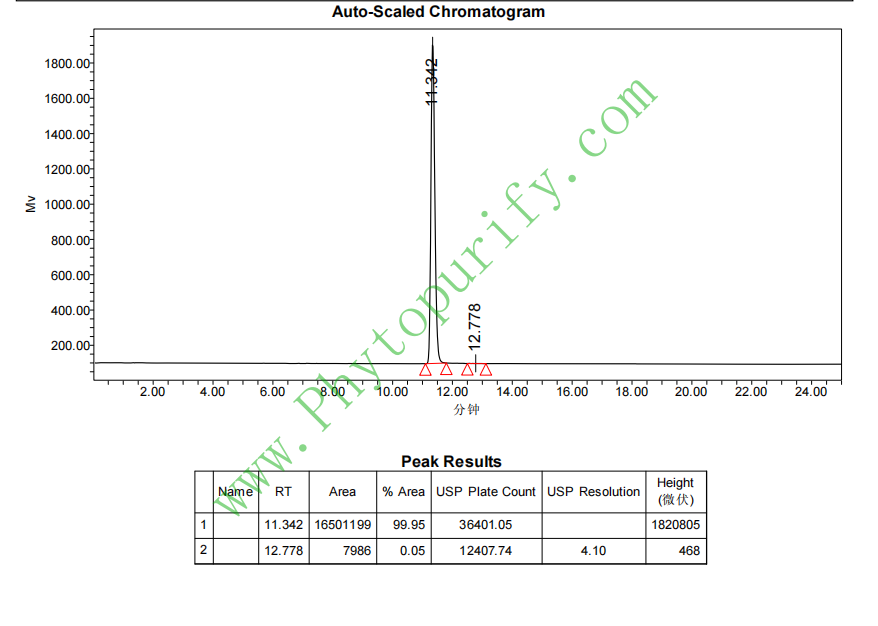
Purity: 95%~99%
Analysis Method: HPLC-DAD or/and HPLC-ELSD
Identification Method: Mass, NMR
Packing: Brown vial or HDPE plastic bottle
Can be supplied from milligrams to grams.
For Reference Standard and R&D, Not for Human Use Directly.
Inquire for bulk scale.
Description:
Kirenol possesses anti-bacteria, immunosuppression, anti-obesity, anti-oxidant, anti-inflammatory, anti-allergic, and anti-arthritic activities. Kirenol has significant potential for its discovery as a new lead compound for management of topical pain and inflammation; it can upregulate nuclear Annexin-1 which interacts with NF-κB to attenuate synovial inflammation of collagen-induced arthritis in rats. Kirenol can attenuate experimental autoimmune encephalomyelitis by inhibiting differentiation of Th1 and th17 cells and inducing apoptosis of effector T cells. Kirenol activates the BMP and Wnt/β-catenin signaling pathways.
References:
Sci Rep. 2015 Mar 12;5:9022.
Kirenol attenuates experimental autoimmune encephalomyelitis by inhibiting differentiation of Th1 and th17 cells and inducing apoptosis of effector T cells.
Experimental autoimmune encephalomyelitis (EAE), a model of multiple sclerosis (MS), is characterized by CNS demyelination mediated by autoreactive T cells. Kirenol, a biologically active substance isolated from Herba Siegesbeckiae, has potent anti-inflammatory activities.
METHODS AND RESULTS:
Here we investigated effects of Kirenol on EAE. Kirenol treatment markedly delayed onset of disease and reduced clinical scores in EAE mice. Kirenol treatment reduced expression of IFN-γ and IL-17A in the serum and proportion of Th1 and Th17 cells in draining lymph nodes. Priming of lymphocytes was reduced and apoptosis of MOG-activated CD4+ T cells was increased in Kirenoltreated EAE mice. Kirenol treatment of healthy animals did not affect the lymphocytes in these non-immunized mice. Further in vitro studies showed that Kirenol inhibited viability of MOG-specific lymphocytes and induced apoptosis of MOG-specific CD4+ T cells in a dose- and time-dependent manner. Kirenol treatment upregulated Bax,downregulated Bcl-2,and increased activation of caspase-3 and release of cytochrome c, indicating that a mitochondrial pathway was involved in Kirenol induced apoptosis. Moreover, pretreatment with either a pan-caspase inhibitor z-VAD-fmk or a more specific caspase 3 inhibitor Ac-DEVD-CHO in lymphocytes reduced Kirenol induced apoptosis.
CONCLUSIONS:
Our findings implicate Kirenol as a useful agent for the treatment of MS.
Pharmacogn Mag. 2012 Apr;8(30):149-55.
Kirenol production in hairy root culture of Siegesbeckea orientalis and its antimicrobial activity.
Despite the excellent anti-inflammatory and anti-rheumatic efficacy associated with Kirenol generation, the content of Kirenol in Siegesbeckea orientalis is quite low. This study was designed to establish a reliable Kirenol production protocol by transformed root cultures of S. orientalis and to investigate the antimicrobial activities of Kirenol, hairy root, and S. orientalis.
METHODS AND RESULTS:
Transformed root cultures of S. orientalis were established by the transformation of Agrobacterium rhizogenes A4. Transgenic status of the roots was confirmed by polymerase chain reaction (PCR) using rolB specific primers. The biomass and Kirenol accumulation of hairy root clones were assessed using four different culture media: MS, MS/2, B5, and white. The antimicrobial activities of Kirenol, hairy root, and S. orientalis were evaluated by the disc diffusion method. The optimum media for Kirenol synthesis was MS. The content of Kirenol in transformed hairy roots made up about 80% of that observed in natural leaves of S. orientalis (1.6 mg/g dry weight). All tested samples displayed antimicrobial activity against Gram-positive pathogens including Staphylococcus epidermidis, Staphylococcus aureus, and Acinetobacter baumannii, with MIC ranging from 78 to 625 μg/mL.
CONCLUSIONS:
The high level of Kirenol contents was obtained from hairy roots of S. orientalis. Kirenol was effective against gram-positive bacteria. Interestingly, the extract from hairy roots showed a diverse antimicrobial effect from that of Kirenol and S. orientalis.
J Ethnopharmacol. 2011 Oct 11;137(3):1089-94.
Topical anti-inflammatory and analgesic activity of kirenol isolated from Siegesbeckia orientalis.
Siegesbeckia orientalis has been traditionally used as a topical anti-inflammatory and analgesic agent. Current study was designed to explore the topical anti-inflammatory and analgesic effects of a constituent isolated from Siegesbeckia orientalis (Compositae), in order to validate its folk use.
METHODS AND RESULTS:
Kirenol was isolated from ethanolic extract of Siegesbeckia orientalis. Several topical formulations containing Kirenol were investigated for anti-inflammatory and analgesic activities in rat. The effects were studied using carrageenan-induced rat acute inflammation model, complete Freund's adjuvant (CFA)-induced chronic inflammation and formalin test in rats. Piroxicam gel and methyl salicylate ointment were studied as positive control for anti-inflammatory and analgesic activity, respectively. The anti-inflammatory effect of Kirenol 0.4-0.5% (w/w) was similar to the effect of piroxicam gel 4h after carrageenan injection. The analgesic activity of topical preparation with more than 0.4% (w/w) was observed in the late phase. These effects may be due, at least in part, to the pro-inflammatory cytokine production of IL-1β and TNF-α. The administration of Kirenol cream at the dose of 0.3, 0.4 and 0.5% (w/w) significantly inhibited the development of joint swelling induced by CFA, which was auxiliary supported by histopathological studies.
CONCLUSIONS:
Kirenol has demonstrated its significant potential to be further investigated for its discovery as a new lead compound for management of topical pain and inflammation, although further pharmacological research is necessary to fully understand its mechanism of action. It also supports the potential beneficial effect of topically administered Siegesbeckia orientalis in inflammatory diseases.
Phytomedicine. 2012 Jul 15;19(10):882-9.
Kirenol exerts a potent anti-arthritic effect in collagen-induced arthritis by modifying the T cells balance.
Rheumatoid arthritis is characterized by the imbalance of T cells, which leads to increased pro-inflammatory and reduced anti-inflammatory cytokines. Modulating the balance among T cells is crucial for the treatment of RA. Kirenol is a major diterpenoid components of Herba Siegesbeckiae, which has been applied for arthritic therapy for centuries. Since prior research showed Kirenolexhibited anti-inflammatory effect in rats, in this study we have evaluated the effect and mechanism of bioactive Kirenol in a rat model of collagen-induced arthritis (CIA) on modulation of T cells.
METHODS AND RESULTS:
After immunization with bovine type II collagen (CII), Wistar rats were orally administered saline (CIA group), 2 mg/kg Kirenol or 2 mg/kg prednisolone daily for 30 days. The severity of arthritis was clinically and histologically assessed. The numbers of CD4⁺CD25⁺Foxp3⁺ T regulatory cells (Tregs) and IFNγ⁺CD4⁺ and IL4⁺CD4⁺ T cells were determined by flow cytometry, the mRNA expression level of Foxp3 was quantified by RT-PCR, cytokine levels were measured by ELISA and CII-induced cell proliferation was quantified in vitro. Kirenol significantly delayed the occurrence and reduced the disease severity of CIA. Histological analysis confirmed Kirenol suppressed joint inflammation and inhibited cartilage and bone destruction, compared to the CIA group. Kirenol also upregulated the mRNA expression of Foxp3, increased the numbers of CD4⁺CD25⁺Foxp3⁺ and IL4⁺CD4⁺ T cells, and reduced the number of IFNγ⁺CD4⁺ T cells. Kirenol reduced the levels of TNF-α, IL-17A and IL-6 in synovial fluid and TNF-α, IL-17A and IFN-γ in serum, and increased the serum levels of IL-4, IL-10 and TGF-β1. In addition, Kirenol inhibited the ability of CII to induce splenocyte, PBMC and lymph node cell proliferation in vitro, compared to cells from CIA rats.
CONCLUSIONS:
In conclusion, these results suggest that Kirenol may be a potential immunosuppressant for the treatment for rheumatoid arthritis.
HPLC of Kirenol
Storage conditions:Short-term storage at 2~8℃, long-term storage at -20 ~ -80℃
Kirenol is a diterpenoid compound derived from natural plants, which has received widespread attention in recent years due to its multi-target and multi mechanism pharmacological activities. As an orally active inducer of cell apoptosis and regulator of signaling pathways, Qirenchun exhibits significant biological effects in anti-tumor, anti-inflammatory, anti fibrotic, and various chronic disease models. Its mechanism of action covers cell apoptosis, autophagy, oxidative stress regulation, and regulation of multiple cellular signaling pathways, especially targeting protein kinase CK2, providing an important molecular basis for the development of novel therapeutic drugs. This article will provide a systematic review of the chemical structure, sources, pharmacological activity, mechanism of action, drug properties, and clinical application prospects of Qiren alcohol, aiming to provide reference for the fields of natural product pharmacology and new drug development.
Qiren alcohol (CAS number: 52659-56-0) has a molecular formula of C20H30O4 and a molecular weight of 338.4880. Its structure belongs to the terpenoid class, with a typical terpenoid skeleton containing multiple hydroxyl groups and double bonds, endowing it with high biological activity. The LogP value of Qirenchun is 2.2332, indicating that it has moderate lipid solubility, which is beneficial for membrane penetration and in vivo distribution. The polar surface area (TPSA) is 80.92 Å ², indicating that it has certain polar groups that facilitate binding with biomolecules. Low water solubility (0.2383 mg/mL), but good oral bioavailability and high blood-brain barrier permeability, suitable for treatment research of central nervous system diseases. The hERG channel inhibition test was negative, indicating a low risk of cardiac toxicity; The Ames mutagenicity test result is 0.0, indicating a low risk of genetic toxicity.
Qirenchun is mainly found in various Chinese medicinal herbs and traditional medicinal plants, especially in the roots, stems, and leaves of certain Chinese herbs where it is enriched. Common sources of plants include certain leguminous and lip shaped plants, which are widely used in traditional medicine for anti-inflammatory, analgesic, and promoting bone health. The extraction methods often use organic solvent reflux or ultrasound assisted extraction, combined with separation and purification techniques such as silica gel column chromatography and reverse phase high-performance liquid chromatography (RP-HPLC), to obtain high-purity quercetin. In recent years, the application of supercritical CO ₂ extraction and membrane separation technology has improved extraction efficiency and purity, reduced solvent residue, and facilitated subsequent pharmacological research and formulation development.
Qirenchun exhibits a wide range of pharmacological activities, including anti-tumor, anti-inflammatory, anti fibrotic, antioxidant, neuroprotective, cardioprotective, renal protective, and analgesic effects.
Qirenchun exerts anti-tumor effects by inducing apoptosis and cell cycle arrest in cancer cells. The mechanism of inducing cell apoptosis includes promoting Bid cleavage into tBid, regulating the expression and phosphorylation status of Bax, Bcl-2, p53, and p21 proteins, leading to loss of mitochondrial membrane potential and accumulation of reactive oxygen species (ROS). In addition, the apoptosis induced by quercetin is partially independent of the caspase pathway, suggesting that it may exert anticancer effects through non classical pathways. Cell cycle analysis showed that quercetin can induce S phase arrest and inhibit cancer cell proliferation. Multiple tumor model studies have confirmed its potential inhibitory effect on malignant tumors such as chronic myeloid leukemia.
Qirenchun significantly inhibits various inflammatory signaling pathways, including NF - κ B, TGF - β/Smads, and NLRP3 inflammasome, reduces the expression of pro-inflammatory factors such as IL-6 and TNF - α, and alleviates inflammatory responses. It has regulatory effects on key inflammation related targets such as CASP1, STAT3, TRPV1, TRPA1, NOS2, PTGS1, and PTGS2, exhibiting good anti-inflammatory activity. In animal models, kirenol effectively alleviates inflammatory injury related to acute lung injury, diabetes nephropathy and heart failure, showing a good potential for immune regulation.
Qirenchun promotes mitochondrial fusion and autophagy, maintains mitochondrial functional stability, reduces excessive accumulation of ROS, and exerts antioxidant effects. It activates the AMPK-mTOR-ULK1 signaling pathway, induces autophagy, helps clear damaged organelles, and protects cells from oxidative stress damage. In the ischemic stroke model, Qirenchun significantly improves neurological deficits and exhibits neuroprotective effects by reducing oxidative stress and inflammatory responses.
Qirenchun can promote osteoblast differentiation, regulate BMP and Wnt/β - catenin signaling pathways, and promote bone formation and mineralization processes. It has shown good bone protective effects on osteoporosis models and has potential value in regulating bone metabolism.
The multi-target mechanism of action of Qirenchun is the basis for its significant pharmacological activity. Its main targets include protein kinase CK2 (Kd=5.47 μ M), which affects cell proliferation, apoptosis, and metabolic balance by regulating the CK2/AKT signaling pathway. In addition, quercetin activates the AMPK-mTOR-ULK1 pathway, promotes autophagy and mitochondrial autophagy, and protects cellular function. It inhibits NF - κ B, TGF - β/Smads, and NLRP3 inflammasome signaling, reducing inflammatory response. Qirenchun also regulates the GSK3 β, BMP, and Wnt/β - catenin pathways, participating in cell differentiation and tissue repair.
In terms of regulating cell apoptosis, Qirenchun promotes Bid cleavage into tBid, regulates Bax/Bcl-2 ratio, activates p53 and p21, induces cell cycle arrest and non caspase dependent apoptosis. The accumulation of ROS further promotes cell death signaling. The synergistic effect of the multiple signaling pathways mentioned above enables Qirenchun to exhibit composite therapeutic potential in various pathological states.
The physicochemical properties of Qiren alcohol meet the basic requirements for drug development. The moderate molecular weight and lipid solubility ensure its good cell membrane penetration and oral absorption. The high blood-brain barrier permeability makes it suitable for the treatment of neurological diseases. Although low water solubility may affect bioavailability, it can be effectively improved through formulation optimization (such as nanocarriers, liposomes, etc.).
In terms of safety, Qirenchun has no significant hERG channel inhibitory effect and a low risk of cardiac toxicity. A negative Ames test indicates a low risk of genetic toxicity and is suitable for long-term use. Current pharmacokinetic studies have shown that quercetin is widely distributed in the body, with stable metabolism and mainly excreted through liver metabolism. Its half-life is moderate and it is suitable for clinical administration.
Based on its multi-target and multi mechanism pharmacological properties, Qirenchun has shown broad application prospects in the treatment of various diseases. In the field of anti-tumor treatment, Qirenchun can be used as an adjuvant or combination therapy to enhance chemotherapy efficacy and reduce drug resistance. The anti-inflammatory and immunomodulatory effects make it potentially valuable in autoimmune diseases, chronic inflammation, and acute injury. The neuroprotective and cardioprotective effects provide new ideas for the treatment of diseases such as ischemic stroke and heart failure. The regulation of bone metabolism provides the possibility for the treatment of bone related diseases such as osteoporosis.
Future research should further clarify the pharmacokinetic characteristics and safety evaluation of quercetin, optimize the administration route and formulation form, conduct preclinical and clinical trials, and verify its efficacy and safety. In addition, based on its multi-target mechanism of action, combined with modern drug design technology, the development of derivatives or combination therapy of Qiren alcohol will help enhance its clinical application value.
As a natural diterpenoid compound with significant pharmacological activity, Qirenchun has demonstrated extensive therapeutic potential due to its multi-target regulatory ability and good drug properties. Its research achievements in multiple fields such as anti-tumor, anti-inflammatory, antioxidant, and tissue protection provide valuable resources for natural product pharmacology and new drug development. In the future, with the deepening of mechanism research and the advancement of clinical verification, Qirenchun is expected to become a new candidate drug for the treatment of various major diseases, promoting the process of natural product translation into clinical practice.
