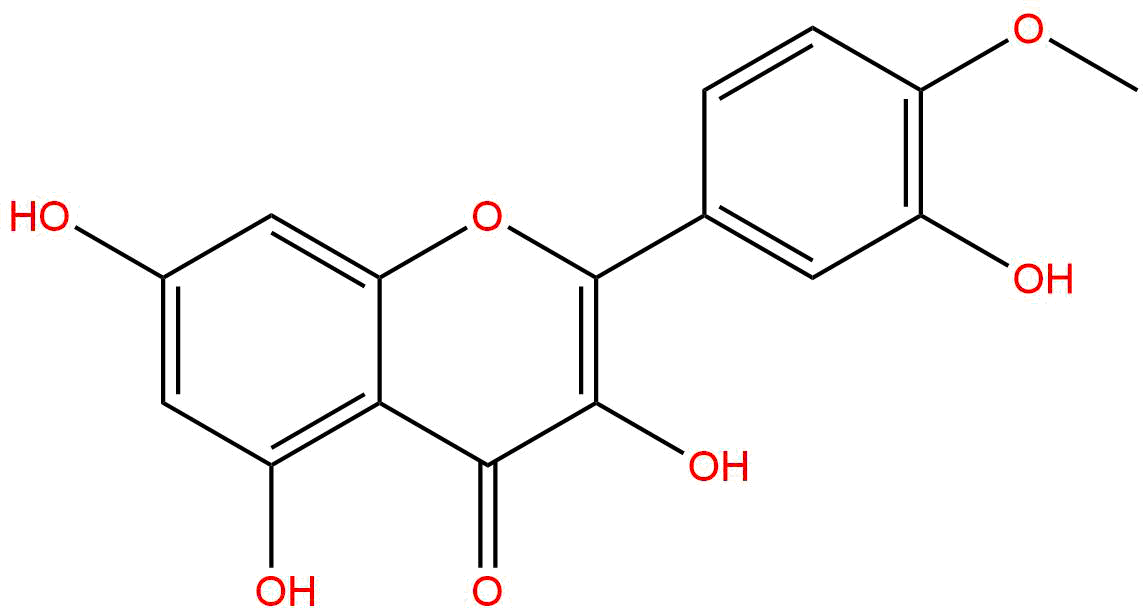


Product name: Tamarixetin
Synonym name: 4'-Methylquercetin;
Catalogue No.: BP4249
Cas No.: 603-61-2
Formula: C16H12O7
Mol Weight: 316.265
Botanical Source:
Type of Compound: Flavonoids
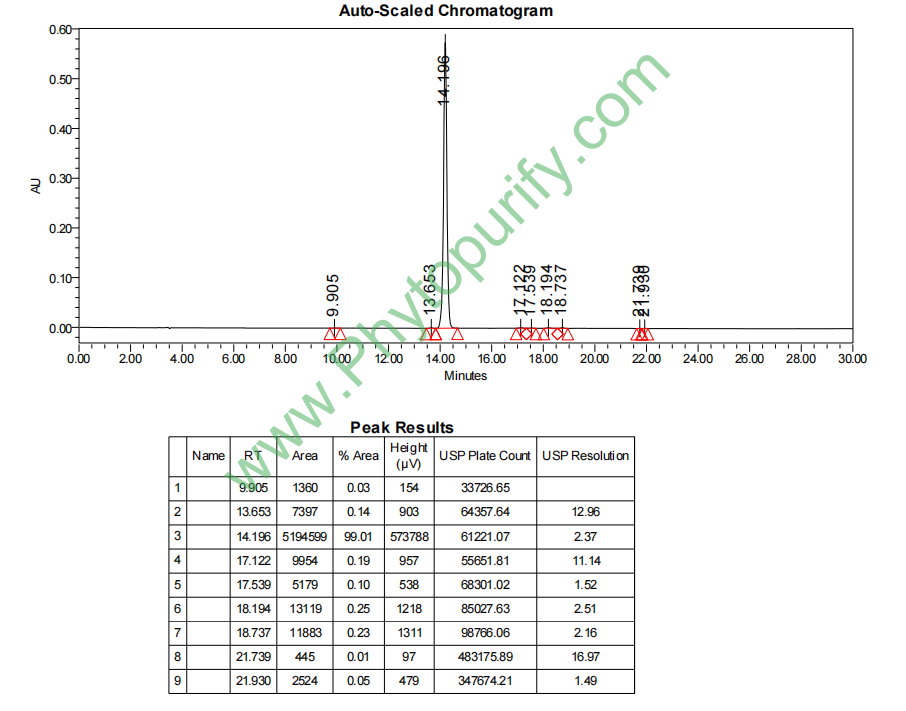
Purity: 95%~99%
Analysis Method: HPLC-DAD or/and HPLC-ELSD
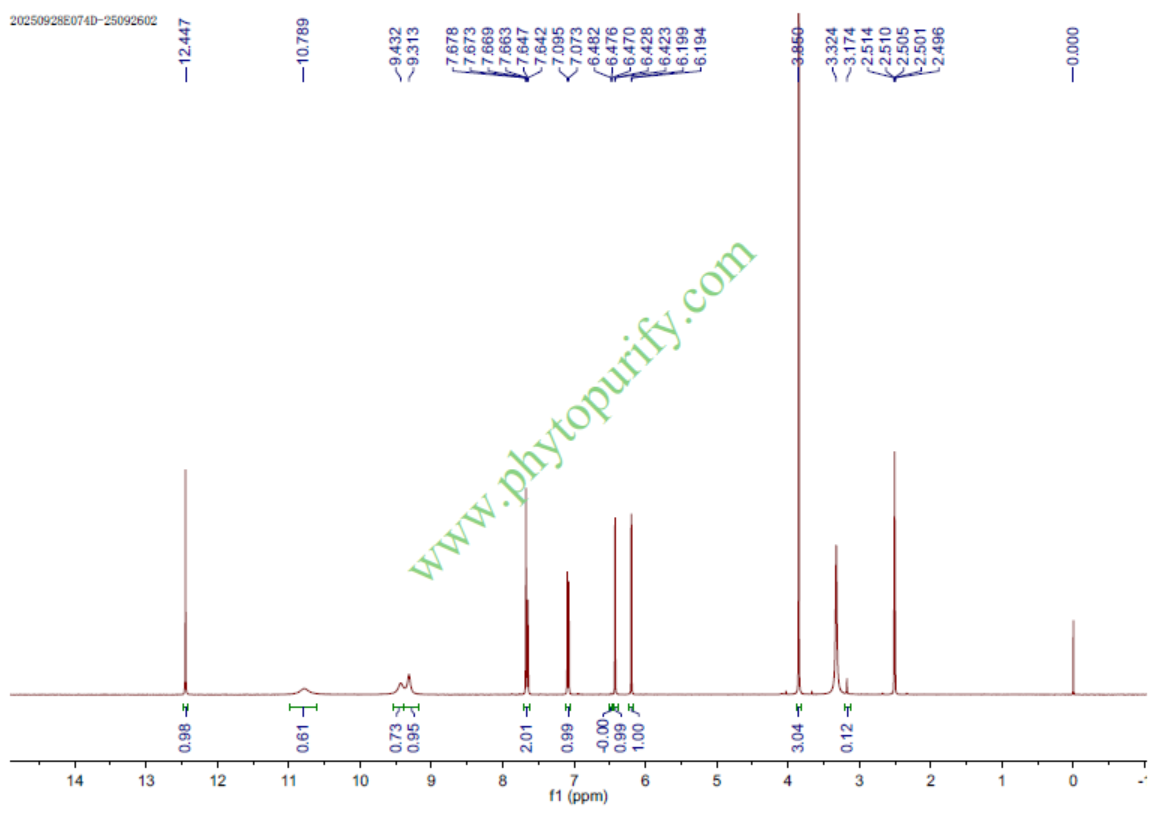
Identification Method: Mass, NMR
Packing: Brown vial or HDPE plastic bottle
Storage: Store in a well closed container, protected from air and light. Put into refrigerate or freeze for long term storage.
Whenever possible, you should prepare and use solutions on the same day. However, if you need to make up stock solutions in advance, we recommend that you store the solution as aliquots in tightly sealed vials at -20℃. Generally, these will be useable for up to two weeks.
The product could be supplied from milligrams to grams
Inquire for bulk scale.
For Reference Standard and R&D, Not for Human Use Directly.
HPLC of Tamarixetin
HNMR of Tamarixetin
Storage conditions:Short-term storage at 2~8℃, long-term storage at -20 ~ -80℃
120.3600
2.0921
1.5431
.0916
2.7943
18.1024
Low
88.9452
2.4697
Yes
No
Yes
No
Yes
No
0.6
Yes
No
Yes
No
Natural products have always been an important source of drug discovery, especially in the fields of anti-tumor, anti-inflammatory, and anti infection. Flavonoids, as a class of secondary metabolites widely present in the plant kingdom, have attracted much attention due to their diverse biological activities and low toxicity. Quercetin is one of the most extensively studied representatives, but its poor water solubility, rapid metabolism, and low bioavailability limit its clinical translation. Tamarixetin, also known as 4 '- O-MethylQuercetin, is one of the main metabolites formed by the methylation modification of quercetin in vitro and in vivo. Compared with quercetin, berberine exhibits better metabolic stability, stronger target selectivity, and lower toxicity while retaining its core pharmacological activity, making it a highly promising natural flavonoid lead compound.
Melastomatal flavonoids originated from plants in the family Melastomataceae, such as tamarisk Tamarix The name was derived from the isolation and identification of spp. In recent years, with the in-depth exploration of its pharmacological activity, berberine has shown significant effects in multiple fields such as anti-tumor, anti-inflammatory, antioxidant, cardiovascular protection, and anti infection. Of particular note is the discovery that tamarisk is a novel inhibitor of casein lytic protease (ClpP), which opens up new avenues for its use in antimicrobial drug development, particularly in the treatment of methicillin-resistant strains such as Staphylococcus aureus (MRSA). In addition, mangiferin exerts its pleiotropic pharmacological effects by regulating multiple key signaling pathways such as NFAT, AKT, AMPK, STAT3, etc., demonstrating its enormous potential as a multi-target natural medicine. This article will provide a systematic review of the research progress of tamarisk from the aspects of chemical structure, plant origin, pharmacological activity, molecular mechanism, medicinal properties, and clinical application prospects, in order to provide reference for the in-depth development and utilization of this compound.
The chemical name of mangiferin is 3,5,7-trihydroxy-2- (4-methoxy-3-hydroxyphenyl) -4H-1-benzopyran-4-one, with a molecular formula of C ₁₆ H ₁₂ O ₇ and a molecular weight of 316.2650 g/mol. Its structural feature is that the hydroxyl group at position 4 'of the B ring of the flavonoid mother nucleus is replaced by a methoxy group (- OCH ∝), while three hydroxyl groups are retained at positions 3', 5, and 7. This methylation modification is the key structural feature that distinguishes tamarisk from quercetin, and it is also the fundamental reason for the differences in its physicochemical properties and biological activity.
From the perspective of physical and chemical properties, tamarisk has typical flavonoid compound characteristics. Its lipid water partition coefficient (LogP) is 2.0921, indicating that it has a certain lipophilicity, which makes it easier to penetrate biological membranes than quercetin (LogP of about 1.5-1.8), which is beneficial for cell uptake and tissue distribution. The topological polar surface area (TPSA) is 120.36 Å ², which is within the conventional range for oral medication (<140 Å ²), indicating its good oral absorption potential. However, its water solubility (0.0916 mg/mL) is poor, making it a low water soluble compound, which to some extent limits its bioavailability. In terms of stability, methylation of the B ring protects the 4 '- hydroxyl group, making it less susceptible to rapid binding by glucosyltransferases or sulfotransferases, thereby significantly improving its metabolic stability in the liver and intestine. In addition, the compound has a low ability to penetrate the blood-brain barrier (BBB), indicating a lower risk of central nervous system side effects. In terms of safety prediction, the Ames test result is 0.6, indicating a low risk of genetic toxicity; Meanwhile, a negative hERG inhibition assessment indicates a lower risk of cardiac toxicity. These physical, chemical, and safety characteristics together form a solid foundation for the use of berberine as a candidate drug.
Emodin was originally derived from the genus Tamarix(Tamarix)Separation in plants, such as tamarisk(Tamarix chinensis)And hairy tamarisk(Tamarix hispida). In addition, the compound is also widely present in various other medicinal plants, including but not limited to: Artemisia argyi from the Asteraceae family(Artemisia argyi)Rosemary from the Lamiaceae family(Rosmarinus officinalis)Licorice in the legume family(Glycyrrhiza uralensis)Hooks of the Rosaceae family(Rubus Spp.) and certain ferns. It is worth noting that berberine is also the main methylated metabolite of quercetin in mammals (including humans) catalyzed by catechol-O-methyltransferase (COMT). Therefore, it is both a natural product and an important endogenous metabolite.
The extraction of mangiferin is usually carried out using classical phytochemical methods. Due to its relatively low content in plants and frequent coexistence with structurally similar compounds such as quercetin and isorhamnetin, the extraction and purification processes require precise design. The conventional process includes: drying plant materials, crushing them, and using methanol or ethanol water mixed solvents (such as 70% ethanol) for cold soaking or hot reflux extraction. After vacuum concentration of the extraction solution, liquid-liquid extraction was carried out using solvents such as petroleum ether, ethyl acetate, and n-butanol in sequence. Tamarix chinensis was mainly enriched in the ethyl acetate extraction site. Further separation and purification depend on column chromatography technologies, such as silica gel column chromatography, Sephadex LH-20 gel column chromatography and preparative high-performance liquid chromatography (Prep HPLC). In recent years, high-speed countercurrent chromatography (HSCCC) and molecular imprinting techniques have also been applied to the efficient separation of tamarisk flavonoids. Given its characteristic as a metabolite of quercetin, utilizing biotransformation methods (such as using COMT enzymes or specific microbial fermentation) to convert quercetin into berberine is also a green preparation strategy with industrial prospects.
Emodin has shown significant anti proliferative and pro apoptotic activities in various tumor models. Studies have shown that tamaricin can inhibit the growth of breast cancer, liver cancer, lung cancer, colorectal cancer, melanoma and other cancer cells. In the study of breast cancer, tamaricin inhibits downstream mTOR signal by activating AMPK signaling pathway, thus inducing autophagy and apoptosis of cells. At the same time, it can downregulate the expression of anti apoptotic proteins MCL1 and BCL2, and upregulate the levels of pro apoptotic proteins Bax and cleaved caspase-3. In addition, tamaricin can inhibit the activity of NOTCH1 and STAT3 signaling pathways, block the self-renewal ability of breast cancer stem cells, and reverse epithelial mesenchymal transformation (EMT), thereby inhibiting tumor invasion and metastasis. For estrogen receptor positive (ER+) breast cancer, tamaricin can also play an anti hormone dependent tumor inhibitory role by regulating the expression of ESR2 (ER β). In melanoma, berberine exhibits potential anti melanoma effects by inhibiting tyrosinase (TYR) activity.
Emodin has significant anti-inflammatory activity, and its mechanism involves inhibiting the production of various inflammatory mediators and cytokines. In a macrophage model stimulated by lipopolysaccharide (LPS), berberine can significantly reduce the levels of nitric oxide (NO), prostaglandin E2 (PGE2), as well as tumor necrosis factor - α (TNF - α), interleukin-6 (IL-6), and interleukin-1 β (IL-1 β). Its antioxidant activity originates from multiple phenolic hydroxyl groups in its molecular structure, which can effectively scavenge free radicals (such as DPPH, ABTS+·) and reactive oxygen species (ROS), and chelate transition metal ions (such as Fe ² ⁺, Cu ² ⁺), thereby inhibiting lipid peroxidation and DNA oxidative damage. Compared with quercetin, berberine exhibits stronger antioxidant stability in vivo, attributed to its methylation modification that reduces the rate of oxidative degradation.
Emodin has shown protective effects in cardiovascular disease models. Especially in the myocardial hypertrophy model, berberine can effectively inhibit myocardial cell hypertrophy induced by angiotensin II (Ang II) or phenylephrine (PE). The mechanism is mainly achieved by inhibiting the nuclear translocation of activated T cell nuclear factor (NFAT) and overactivation of protein kinase B (AKT) signaling pathway. In addition, berberine can improve myocardial fibrosis, inhibit myocardial cell apoptosis, and regulate myocardial energy metabolism. These findings suggest that berberine has potential value in the treatment of hypertensive heart disease and heart failure.
The most notable new discovery of mangiferin is its activity as an inhibitor of casein lytic protease (ClpP). ClpP is a highly conserved serine protease in bacteria, responsible for degrading misfolded proteins and regulating the expression of virulence factors. It has become a highly anticipated new target for antibacterial drugs in recent years. Tamarix yellow can directly bind to and inhibit the proteolytic activity of Staphylococcus aureus ClpP, with an IC ₅₀ of 49.73 μ M for the hydrolysis of the fluorescent substrate Suc LY AMC. By inhibiting ClpP, berberine leads to the accumulation of toxic proteins (such as alpha hemolysin) in bacteria, thereby weakening their pathogenicity. More importantly, ClpP inhibition does not directly kill bacteria, but rather "disarm them", making it less likely for bacteria to develop drug resistance. Therefore, as a new type of "antiviral" drug, berberine provides a new approach for the treatment of Staphylococcus aureus, especially MRSA infections.
The pharmacological effects of berberine have the characteristics of multi-target and multi pathway. Its core mechanism of action can be summarized as follows:
ClpP protease inhibition The berberine directly binds to the catalytic center of ClpP, occupying the substrate binding site, thereby blocking its protein hydrolysis function. This mechanism is the core of its resistance to Staphylococcus aureus infection.
Signal pathway regulation:
Apoptosis and Cell Cycle Regulation Emodin induces mitochondrial apoptosis by upregulating the Bax/Bcl-2 ratio, activating the caspase cascade reaction. Meanwhile, it can block the cell cycle in G1/S or G2/M phase by upregulating CDK inhibitors such as p21 and p27.
Multidrug resistance reversal Emodin can inhibit the activity of ABC transporters such as ABCB1 (P-gp) and ABCG2 (BCRP), thereby increasing the accumulation of chemotherapy drugs in drug-resistant tumor cells and reversing multidrug resistance (MDR). This effect is closely related to its 4 '- O-methylation structure, as methylation enhances its hydrophobic interaction with transport proteins.
Based on the aforementioned physicochemical properties, berberine exhibits a good medicinal basis. Its molecular weight (316.27 Da) conforms to the Lipinski Five Rules (<500 Da), with moderate LogP (2.09), reasonable TPSA (120.36 Å ²), and no significant hERG inhibition or Ames toxicity risk. However, its poor water solubility (0.0916 mg/mL) is the main bottleneck for drug development, which may lead to incomplete oral absorption.
In terms of pharmacokinetics, although the oral bioavailability of berberine is better than that of quercetin, it is still relatively low. Animal experiments have shown that after oral administration, berberine mainly exists in the form of glucuronic acid conjugates and sulfuric acid conjugates in plasma, with lower concentrations of free form. Its half-life (t ₁/₂) is about 2-4 hours, and its distribution volume is large, indicating its widespread distribution in tissues. The liver is its main metabolic organ, involved in II phase binding reactions (glucuronidation, sulfation) and a small amount of I phase oxidation reactions. The main excretion pathways are bile and urine. It is worth noting that the low penetration of berberine into the blood-brain barrier limits its application in brain diseases, but also reduces the risk of central nervous system toxicity.
To improve its pharmacological properties, current research strategies include preparing nano formulations (such as liposomes, polymer micelles), phospholipid complexes, cyclodextrin inclusion complexes, and prodrug design (such as phosphate prodrugs) to increase its water solubility and oral bioavailability. In addition, combining with P-glycoprotein inhibitors or designing them as sustained-release formulations is also a potential strategy to increase their in vivo exposure.
As a natural multi-target compound with anti-tumor, anti-inflammatory, cardiovascular protective, and antibacterial activities, berberine has broad clinical application prospects, but still faces many challenges.
1. Anti tumor applications In view of its inhibitory effect on breast cancer, melanoma and other tumors, as well as its ability to reverse MDR, tamaricin is expected to be used as a chemosensitizer or adjuvant therapy drug in combination with conventional chemotherapy drugs (such as doxorubicin and paclitaxel) to improve the efficacy and reduce drug resistance. More in vivo pharmacological studies and clinical trials are needed in the future to determine the optimal dosing regimen and dosage.
2. Anti infection application As a ClpP inhibitor, berberine represents a novel antibacterial strategy - "anti toxicity" therapy. Unlike traditional antibiotics, it does not directly kill bacteria, but weakens their pathogenicity, making it less likely to induce drug resistance. This characteristic gives it a unique advantage in the treatment of chronic and refractory Staphylococcus aureus infections, such as osteomyelitis and implant related infections. Future research directions include: optimizing its ClpP inhibitory activity (improving IC ≮₀ through structural modification), evaluating its synergy with existing antibiotics, and developing local drug delivery agents (such as gel and dressings) for skin and soft tissue infections.
3. Application of cardiovascular disease The anti myocardial hypertrophy and anti fibrosis effects of berberine make it a candidate drug for the treatment of hypertensive heart disease and heart failure. Its low BBB penetration becomes an advantage here, which can avoid central side effects. In the future, its efficacy and safety need to be validated through long-term animal models, and its combination application with ACEI/ARB drugs should be explored.
4. Other potential applications: Tamaricin has anti-inflammatory and antioxidant activities, which makes it have potential value in the treatment of non-alcoholic fatty liver disease (NAFLD), diabetes nephropathy, ulcerative colitis and other inflammatory related diseases. In addition, its inhibitory effect on tyrosinase suggests its potential application as a whitening agent in the cosmetics industry.
prospect Despite the promising prospects, the clinical translation of tamarisk still faces several key issues: firstly, the improvement of its water solubility and bioavailability; The second is the potential off target effect brought by its multi-target effect; Thirdly, it is necessary to establish a more comprehensive pharmacological evaluation system and biomarkers. In the future, combining computer-aided drug design (CADD) for structural optimization, utilizing nano delivery systems to enhance targeting, and conducting systematic pharmacology research based on metabolomics and proteomics will be key pathways to promote the clinical application of berberine.
As an important natural methylated derivative of quercetin, mangiferin, with its unique chemical structure, exhibits better metabolic stability, target selectivity, and safety while retaining the core pharmacological activity of flavonoids. From anti-tumor, anti-inflammatory, cardiovascular protection to novel antibacterial mechanisms (ClpP inhibition), the pleiotropic pharmacological effects of tamarisk make it a natural lead compound with great research value and development potential. Although there are still challenges such as poor water solubility in drug formulation, these issues are expected to be resolved through modern pharmaceutical chemical modifications and the application of new formulation technologies. With a deeper understanding of its molecular mechanism and further optimization of its pharmacokinetic properties, tamarisk and its derivatives are expected to play an important role in future cancer treatment, infection control, and cardiovascular disease prevention and treatment, providing a new paradigm for the clinical translation of natural product drugs.
