| Catalog No | Package | Original Price | Price | Inventory | Quantity | Operating |
|---|---|---|---|---|---|---|
| BP2031-5mg | 5mg | $260.00 | Sign in |
|


Storage conditions:Short-term storage at 2~8℃, long-term storage at -20 ~ -80℃
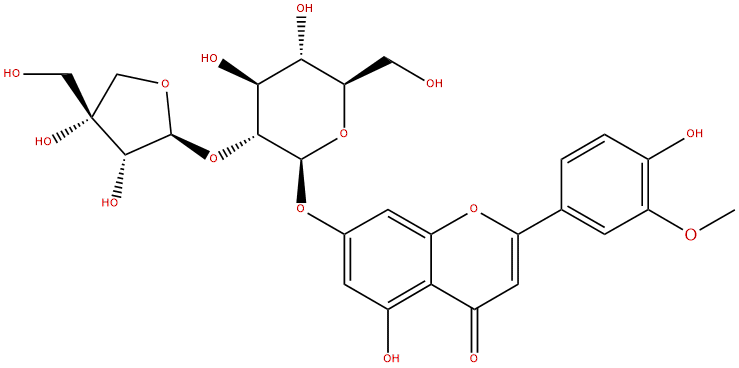
Graveobioside B, CAS number 33579-63-4, is a natural product derived from plants of the genus Graveobioside and belongs to the class of steroidal saponins. In recent years, with the rapid development of natural product pharmacology, medicinal celery glycoside B has attracted widespread attention due to its significant biological activity, especially its potential application in the field of hypertension. Hypertension, as one of the most common chronic cardiovascular diseases worldwide, is an important risk factor for cardiovascular and cerebrovascular events. Although there are many traditional drug treatments, there are still problems such as limited efficacy and obvious side effects, which have prompted researchers to continuously explore new safe and effective antihypertensive drugs. Medicinal celery glycoside B, with its unique chemical structure and multi-target regulatory ability, has demonstrated good pharmacological activity and superior safety, making it a powerful candidate molecule for the development of natural antihypertensive drugs.
This article will provide a systematic review of the chemical structure and physicochemical properties, plant sources and extraction methods, pharmacological activity and mechanism of action, pharmacological evaluation and pharmacokinetic characteristics of medicinal herb B, and explore its clinical application prospects and future research directions in combination with its molecular target effects in anti hypertensive diseases. The aim is to provide scientific basis and theoretical support for the drug development and clinical translation of this compound.
Medicinal celery glycoside B is a steroid saponin with a molecular weight of 594.5220, a complex molecular formula, and a steroid core structure containing multiple glycosyl linkages. Its LogP value is -0.5085, indicating that the molecule has strong hydrophilicity, with a water solubility index of 1.3805, indicating its good solubility in aqueous phase. The total polar surface area (TPSA) is 238.2 Å ², and a larger polar surface area suggests that the molecule has strong polar groups, which may affect its cell membrane permeability and bioavailability.
Structurally, Medicinal Celery Glycoside B contains multiple hydroxyl and glycosidic bonds, which contribute to its specific binding to biological targets and also affect its pharmacokinetic properties. Its blood-brain barrier penetration ability is relatively low, indicating that the compound mainly acts on peripheral tissues, reducing the risk of central nervous system side effects. The hERG channel inhibition test result was negative, indicating a low risk of cardiac toxicity. The Ames mutagenicity test score was 0.6, indicating that Medicinal Celery Glycoside B has good genetic toxicity safety.
Medicinal celery glycoside B is mainly found in plants of the Graveolae genus, especially in some traditional Chinese medicinal herbs such as Graveola officinalis, where its content is relatively abundant. Medicinal celery plants are widely distributed in temperate and subtropical regions and have always been used as diuretic, antihypertensive, and anti-inflammatory herbs.
In terms of extraction process, ethanol or methanol is usually used as solvents, and crude extracts are extracted from dried celery plant roots or whole plants through reflux extraction or ultrasound assisted extraction techniques. Subsequently, separation and purification techniques such as liquid-liquid distribution, silica gel column chromatography, and high-performance liquid chromatography (HPLC) were used to obtain high-purity medicinal celery glycoside B. In recent years, the application of supercritical CO ₂ extraction and molecular imprinting technology has further improved the extraction efficiency and purity, reduced solvent residue, and ensured the safety and stability of the product.
The pharmacological activity of Medicinal Celery Glycoside B mainly focuses on its anti hypertensive effect. Both in vitro and in vivo experiments have shown that the compound can significantly reduce blood pressure, improve vascular function, and has the characteristic of multi-target synergistic regulation.
in vitro experiment Medicinal celery glycoside B can inhibit the activity of angiotensin-converting enzyme (ACE), reduce the production of angiotensin II, and decrease vascular constriction response. Meanwhile, its regulatory effect on the calcium channel protein CACNA1C helps to inhibit the contraction of vascular smooth muscle cells and alleviate vascular tension. The effects on renin (REN) and sodium ion transporter SLC12A3 regulate fluid balance, promote sodium excretion, and reduce blood volume.
animal model In spontaneously hypertensive rats (SHR) and salt sensitive hypertension models, icariin B significantly reduces systolic and diastolic blood pressure, improves myocardial hypertrophy and vascular remodeling. Its antioxidant and anti-inflammatory effects have also been confirmed, helping to alleviate hypertension related endothelial damage.
safety assessment Long term medication experiments have shown that Medicinal Celery Glycoside B has no significant hepatorenal or cardiac toxicity, and does not affect central nervous system function, with high safety.
The antihypertensive effect of Medicinal Celery Glycoside B involves multiple molecular targets, reflecting its pharmacological characteristics of multi-target and multi pathway synergistic regulation:
ACE (angiotensin converting enzyme)Medicinal celery glycoside B reduces blood pressure by inhibiting ACE activity, decreasing angiotensin II production, lowering vascular constriction and aldosterone secretion.
ADRA1A (α 1A adrenergic receptor) and ADRB1/ADRB2 (β 1/β 2 adrenergic receptor)Regulating the excitability of the sympathetic nervous system, medicinal celery glycoside B reduces heart rate and myocardial contractility by modulating these receptors, thus alleviating the burden on the heart.
NOS3 (endothelial nitric oxide synthase)Promote NO production, dilate blood vessels, improve endothelial function, and inhibit vascular inflammatory response.
CACNA1C (L-type calcium channel)Inhibit calcium ion influx, reduce vascular smooth muscle cell contraction, and lower vascular tension.
AGTR1 (angiotensin II receptor type 1)Blocking the receptor binding of angiotensin II, reducing vascular constriction and remodeling.
EDN1 (endothelin-1)Inhibit the synthesis of potent vasoconstrictor peptide endothelin and regulate vascular tone.
REN (renin) and SLC12A3 (sodium chloride cotransporter)Regulating the renin-angiotensin system and renal sodium reabsorption to maintain fluid balance.
In summary, Medicinal Celery Glycoside B exerts a comprehensive anti hypertensive effect through multi-target synergistic effects, regulating vascular relaxation, fluid balance, and neuroendocrine system.
The pharmacological parameters of Medicinal Celery Glycoside B demonstrate its potential as an oral medication. The LogP value is -0.5085, indicating its strong hydrophilicity, which may affect its cell membrane permeability, but its high water solubility (1.3805) is beneficial for formulation development and absorption. The larger TPSA (238.2 Å ²) suggests a higher polarity, which may limit its oral bioavailability, but its pharmacokinetic properties can be improved through drug design optimization or nanocarrier systems.
The low penetration rate of the blood-brain barrier reduces the risk of central nervous system side effects and improves safety. The hERG channel inhibition test is negative, reducing the risk of arrhythmia. The Ames test results show that its genetic toxicity risk is low, supporting its long-term medication safety.
At present, the pharmacokinetic study of Medicinal Celery Glycoside B is still in its preliminary stage. Animal experiments have shown that its oral absorption is slow, the half-life is moderate, and it is mainly metabolized through the liver. The excretion pathway is mainly through the kidneys. In the future, further research on in vivo metabolic pathways, drug interactions, and dosage form optimization is needed to enhance its clinical application value.
Medicinal celery glycoside B, as a multi-target anti hypertensive natural product, has significant pharmacological activity and good safety, and has broad clinical application prospects. Its multi-target mechanism of action not only helps to lower blood pressure, but also improves hypertension related vascular dysfunction and cardiac pathological changes, making it suitable for comprehensive treatment in complex pathological states.
Future clinical research should focus on the following aspects:
Formulation development and optimization of administration routes Given its physicochemical properties, develop formulations suitable for oral absorption, or explore injectable and sustained-release formulations to improve bioavailability and treatment compliance.
Clinical safety and efficacy evaluation Conduct phase I to III clinical trials to evaluate its antihypertensive effect, cardiovascular protection, and long-term medication safety.
Potential for combination therapy Combining existing antihypertensive drugs, explore the synergistic effect of icarioside B, reduce monotherapy dosage, and minimize side effects.
Indications expansion In view of its anti-inflammatory, antioxidant and other multiple biological activities, explore its application value in metabolic syndrome, diabetes nephropathy and cardiovascular complications.
In depth study of molecular mechanisms Using modern omics techniques and molecular simulations to further reveal its functional network and target interactions, providing a basis for precision drug use.
As a natural steroidal saponin with significant antihypertensive activity, Medicinal Celery Glycoside B has shown great potential as a new type of antihypertensive drug due to its multi-target regulatory ability and good safety. Although there is currently insufficient research on its pharmacokinetics and clinical applications, with the continuous advancement of extraction and purification technologies and drug development strategies, Medicinal Celery Glycoside B is expected to play an important role in the future treatment of cardiovascular diseases. Further systematic pharmacological research and clinical trials will provide a solid scientific foundation for its drug development, promoting its transition from laboratory to clinical practice and benefiting a wide range of patients.
