Introduction/Overview
Chronic non communicable diseases, especially cardiovascular and metabolic diseases, have become a major burden on global public health. Among them, chronic venous insufficiency (CVI) and diabetes nephropathy (DN) are two kinds of diseases that seriously affect the quality of life of patients and have limited treatment methods. CVI is characterized by venous valve dysfunction, abnormal venous wall structure, and persistent inflammation, leading to lower limb swelling, pain, skin changes, and even ulcers; DN is one of the most serious microvascular complications of diabetes, and its pathological core involves oxidative stress induced by high glucose, chronic low-grade inflammation, abnormal deposition of extracellular matrix (ECM) and renal tubulointerstitial fibrosis. Although existing treatment strategies such as stress therapy, blood glucose control, and renin-angiotensin system (RAS) blockers have to some extent delayed disease progression, targeted drugs targeting its core pathological mechanisms are still insufficient.
In this context, natural flavonoids have become an important source of new drug development due to their multi-target and low toxicity characteristics. Diosmin, as a classic flavonoid vascular protector, has been widely used in clinical practice for the treatment of CVI and hemorrhoids. However, its poor water solubility and low oral bioavailability limit its full therapeutic effect. Hidrosmin, as a hydroxylated derivative of diosmin, significantly improves its physicochemical properties and exhibits superior pharmacological activity by introducing additional hydroxyl groups. In recent years, studies have revealed that hydroxydiosmin not only improves venous function by inhibiting matrix metalloproteinases (MMPs), regulating endothelin receptor (EDNRA) and adhesion molecules (ICAM-1/VCAM-1), but also plays a protective role in diabetes nephropathy through anti-inflammatory, antioxidant and anti-aging approaches. This article aims to systematically review the chemical properties, plant sources, pharmacological activities, molecular mechanisms, and pharmacological properties of hydroxydiosmin, and explore its potential as a multi-target therapeutic drug for venous diseases and metabolic nephropathy.
Chemical structure and physicochemical properties
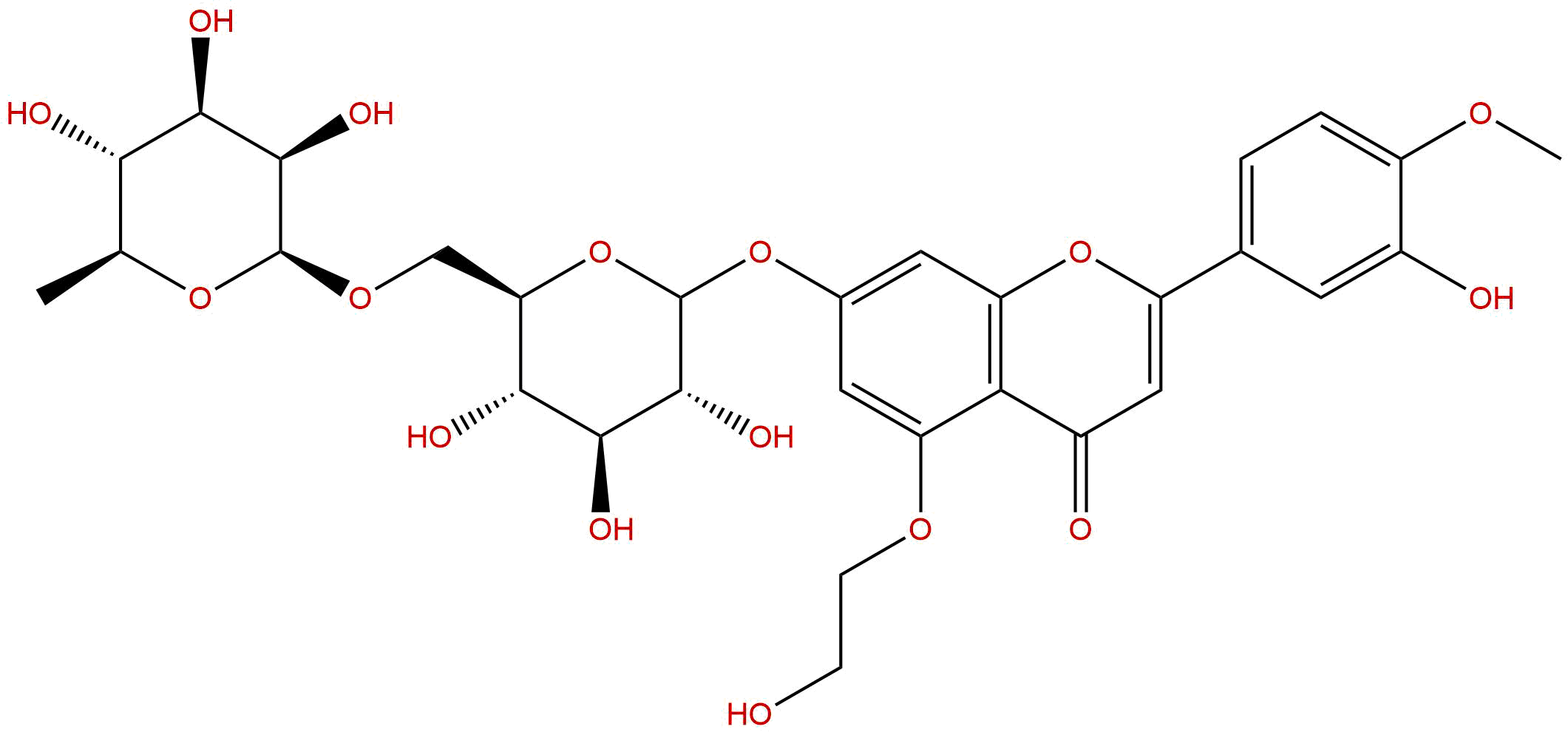
The chemical name of hydroxydiosmin is 3 ', 5,7-trihydroxy-4' - methoxyflavone-7-rhamnoside, and its parent nucleus structure is based on the flavonoid skeleton, consisting of two benzene rings (A and B) connected by an oxygen-containing heterocyclic ring (C ring). Compared with diosmin (5,7,3 '- trihydroxy-4' - methoxyflavone), hydroxydiosmin introduces an additional hydroxyl (- OH) group at the 5 'position of the B ring, resulting in a molecular formula of C28H32O15 and a molecular weight of 652.6020 g/mol. This structural modification not only increases the number of hydrogen bond donors and acceptors in the molecule, but also significantly alters its hydrophilic lipophilic balance.
From the perspective of physical and chemical properties, the oil-water partition coefficient (LogP) of hydroxydiosmin is -0.3250, showing a negative value, indicating its strong hydrophilicity. Compared with diosmin, the water solubility has been significantly improved (with a water solubility parameter of 2.1234). Its polar surface area (TPSA) is as high as 247.4300 Å ², much higher than traditional small molecule drugs (usually<140 Å ²), mainly due to the presence of multiple hydroxyl and glycosidic bonds in the molecule. A high TPSA value usually means that molecules are difficult to passively diffuse through the cell membrane, but at the same time, it also endows them with good aqueous dispersibility, which is beneficial for transport in the bloodstream. In addition, the compound contains multiple phenolic hydroxyl groups, endowing it with strong free radical scavenging ability and metal ion chelating ability, which are the chemical basis of its antioxidant activity.
In terms of stability, hydroxydiosmin is relatively stable in acidic environments, but it is prone to hydrolysis under strong alkaline conditions. The presence of glycosidic bonds allows it to be hydrolyzed by β - glucosidase in the gut microbiota, releasing Hidrosmetin, which may have higher biological activity. Overall, the chemical structure of hydroxydiosmin determines its dual hydrophilicity and antioxidant properties, providing a structural basis for its multi-target action in the inflammatory microenvironment.
Plant sources and extraction methods
Hydroxydiosmin is not a primary secondary metabolite abundant in natural plants, but a semi synthetic derivative of diosmin. However, its precursor diosmin is widely present in plants of the Rutaceae and Lamiaceae families, especially in citrus fruits. Common sources include the peel, flesh, and white layer of lemon (Citrus limon), sweet orange (Citrus sinensis), and grapefruit (Citrus paradisi). In addition, Barosma betulina and certain peppermint plants also contain high concentrations of diosmin.
In industry, the preparation of hydroxydiosmin is usually achieved through chemical synthesis. Firstly, Hesperidin is extracted from citrus peel, which is then converted to diosmin through oxidation or dehydrogenation reactions. Subsequently, a hydroxyl group was introduced into the 5 'position of the B ring of diosmin through selective hydroxylation reaction, thereby obtaining hydroxydiosmin. This process requires strict control of reaction conditions (such as temperature, pH, and catalyst) to avoid the occurrence of side reactions.
In terms of extraction process, citrus peel is dried and crushed, and then subjected to thermal reflux extraction using ethanol or methanol. After concentration and cooling of the extract, high-purity hesperidin can be obtained by purifying it using alkali soluble acid precipitation method or macroporous adsorption resin (such as HPD-100, AB-8). Subsequently, hesperidin undergoes dehydrogenation under the catalysis of iodine or pyridine to produce diosmin. Diostigmine further reacts with hydrogen peroxide or peracetic acid under alkaline conditions to achieve selective hydroxylation. The final product is purified by recrystallization or preparative high-performance liquid chromatography (Prep HPLC), with a purity of over 98%. In recent years, green extraction techniques such as microwave-assisted extraction (MAE) and supercritical fluid extraction (SFE) have also been attempted to improve extraction efficiency and reduce residual organic solvents.
Pharmacological activity research
The role of chronic venous insufficiency (CVI)
The action of hydroxydiosmin on the venous system is its most classic pharmacological activity. Multiple in vitro and in vivo experiments have confirmed that this compound can significantly enhance venous tone and improve venous compliance. In the ex vivo venous ring experiment, hydroxydiosmin can concentration dependently constrict venous smooth muscle, and its mechanism involves inhibiting catechol-O-methyltransferase (COMT) activity, thereby prolonging the half-life of endogenous norepinephrine and enhancing sympathetic mediated venous constriction. In addition, it can inhibit phosphodiesterase 5 (PDE5), increase cyclic guanosine monophosphate (cGMP) levels, and promote the balance between venous dilation and contraction.
At the microcirculation level, hydroxydiosmin reduces capillary permeability by inhibiting the adhesion between white blood cells and endothelial cells. Animal models have shown that this compound can significantly reduce vascular leakage induced by histamine or bradykinin. Preclinical studies have also found that hydroxydiosmin can inhibit the activity of matrix metalloproteinases (MMP-2 and MMP-9), which play a key role in venous wall remodeling and valve degeneration. Hydroxydiosmin helps maintain the integrity and elasticity of the venous wall by protecting its collagen and elastin structures.
Protective effect on diabetes nephropathy (DN)
In recent years, the research of hydroxydiosmin in the field of diabetes nephropathy has made breakthrough progress. Hydroxydeosmin showed multiple protective effects in the streptozotocin (STZ) - induced type 1 diabetes rat model and high glucose cultured renal tubular epithelial cells (HK-2).
Firstly, in terms of anti-inflammatory effects, hydroxydiosmin can significantly reduce the expression of pro-inflammatory cytokines such as tumor necrosis factor - α (TNF - α), interleukin-6 (IL-6), and monocyte chemoattractant protein-1 (MCP-1) in renal tissue. At the same time, it inhibits the activation of the nuclear factor kappa B (NF - κ B) pathway, reduces the upregulation of adhesion molecules ICAM-1 and VCAM-1, and thus alleviates macrophage infiltration in the renal interstitium.
Secondly, in terms of antioxidant stress, hydroxydiosmin upregulates the activity of antioxidant enzymes such as superoxide dismutase (SOD), catalase (CAT), and glutathione peroxidase (GPx) by activating the nuclear factor E2 related factor 2 (Nrf2) pathway, while reducing levels of malondialdehyde (MDA) and reactive oxygen species (ROS). Multiple phenolic hydroxyl groups in its molecule can directly scavenge free radicals and block oxidative chain reactions.
Thirdly, in terms of anti-aging and anti fibrosis, hydroxydiosmin has been shown to inhibit high glucose induced aging of renal tubular epithelial cells. It delays the process of cellular aging by downregulating the activity of p21, p53, and senescence associated β - galactosidase (SA - β - Gal). In addition, the compound can also inhibit the transforming growth factor - β 1 (TGF - β 1)/Smad signaling pathway, reduce the deposition of ECM components such as fibronectin and type IV collagen, thereby alleviating glomerulosclerosis and tubulointerstitial fibrosis.
Mechanism of action and molecular targets
The pharmacological effects of hydroxydiosmin are the result of multi-target and multi pathway synergy. Based on existing research, its core molecular mechanisms can be summarized as follows:
1. Venous activity related targets
- MMP-2/MMP-9 Hydroxydiosmin inhibits the activity of MMPs, reduces the degradation of elastin and collagen in the venous wall, and maintains the structural integrity of the venous wall. This is directly related to the improvement of venous dilation and valve dysfunction in CVI.
- EDNRA (endothelin receptor A)Endothelin-1 (ET-1) is a potent vasoconstrictor peptide that, when combined with EDNRA, can cause venous constriction. Hydroxydiosmin may balance venous tone by regulating the expression or signal transduction of EDNRA.
- ELANE (neutrophil elastase)This enzyme is released by activated neutrophils and can degrade ECM and promote inflammation. Hydroxydiosmin inhibits ELANE activity and helps alleviate inflammation and damage to the venous wall.
- ACE (angiotensin converting enzyme)By inhibiting ACE and reducing the production of angiotensin II, the levels of vasoconstriction and oxidative stress can be lowered.
- PDE5A Inhibition of PDE5A can increase cGMP levels, promote vasodilation, and improve microcirculation.
- HTR2A (5-hydroxytryptamine receptor 2A)5-HT is an important regulatory factor for venous constriction, and hydroxydiosmin may promote venous tone recovery by enhancing HTR2A signaling.
- NOS3 (endothelial nitric oxide synthase)Hydroxydiosmin can upregulate eNOS expression, increase NO production, and improve endothelial function.
- ICAM-1/VCAM-1 By inhibiting the NF - κ B pathway and reducing the expression of these adhesion molecules, the adhesion between white blood cells and endothelial cells is prevented, thereby alleviating the inflammatory response.
2. Related targets of diabetes nephropathy
- Nrf2/ARE pathway Hydroxydiosmin, as an electrophilic molecule, can activate Nrf2, promote its nuclear translocation, initiate the transcription of downstream antioxidant genes (such as HO-1 and NQO1), and counteract high glucose induced oxidative damage.
- TGF - β 1/Smad pathway By inhibiting the overexpression of TGF - β 1 and the phosphorylation of downstream Smad2/3, ECM synthesis is reduced and renal fibrosis is delayed.
- NF - κ B pathway Directly inhibit the phosphorylation of I κ B α, prevent nuclear translocation of NF - κ B p65 subunit, and thus reduce the transcription of inflammatory factors.
- Aging related pathways By inhibiting the p53/p21 axis, reducing cell cycle arrest and senescence associated secretory phenotype (SASP), the function of renal tubular epithelial cells is protected.
3. Multi target network collaboration
It is worth noting that these targets of hydroxydiosmin do not act in isolation. For example, oxidative stress can activate NF - κ B, which in turn promotes the expression of TGF - β 1, forming a vicious cycle. Hydroxydiosmin breaks this vicious cycle by simultaneously acting on Nrf2 and NF - κ B. In addition, its inhibition of MMPs not only protects the venous wall, but also reduces the damage to the glomerular basement membrane. This multi-target synergistic effect is its core advantage over single target drugs.
Evaluation of drug properties and pharmacokinetics
Analysis of drug properties parameters
The pharmacological parameters of hydroxydiosmin show that it has typical natural product characteristics. The molecular weight (652.60 Da) is slightly higher than the threshold of Lipinski's "Five Rules" (500 Da), but considering its characteristics as a prodrug or intestinal metabolite, this limitation is acceptable. LogP is -0.325, indicating its strong hydrophilicity, which is beneficial for dissolution in the blood, but may limit its transmembrane passive diffusion. The TPSA is as high as 247.43 Å ², far higher than the recommended 140 Å ² for oral medication, indicating that its oral absorption may mainly rely on active transport mediated by transporters or cellular bypass pathways.
In terms of safety, hERG inhibition is predicted as' no ', indicating a low risk of cardiac toxicity. The Ames test result is 0.6, indicating a low risk of mutagenicity, but further in vivo validation is needed. The blood-brain barrier penetration is "low", which is ideal for treating peripheral vascular and kidney diseases and can avoid central nervous system side effects.
Pharmacokinetic characteristics
After oral administration of hydroxydiosmin, it is mainly hydrolyzed by β - glucosidase in the gut to form Hidrosmetin, which is absorbed into the portal vein through the intestinal wall. Glycosides undergo extensive phase II metabolism in the liver, including glucuronidation and sulfation, forming bound metabolites that enter the systemic circulation. These complexes may release active aglycones through β - glucuronidase in target tissues, achieving local pharmacological effects. Its half-life is about 11-15 hours, supporting a twice daily dosing regimen. Due to improved water solubility, its oral bioavailability has increased compared to diosmin, but it is still limited by first pass effects. Intravenous or transdermal drug formulations are currently under research to improve bioavailability.
Clinical application prospects and prospects
Application in chronic venous insufficiency
Hydroxydiosmin has been approved for the treatment of CVI in multiple European countries, and clinical evidence shows that it can effectively reduce lower limb heaviness, pain, and edema. Compared with diosmin, it has a faster onset of action and better tolerance. In the future, combination therapy with pressure therapy or compound preparations with other vasoactive drugs (such as sodium aescinate) is expected to further enhance the efficacy. In addition, its application in the acute exacerbation of hemorrhoids also deserves further exploration.
Transforming potential in diabetes nephropathy
Although hydroxydiosmin has not yet been approved for use in DN, a large amount of preclinical evidence supports its potential as an adjuvant therapy. Considering that DN patients are often accompanied by cardiovascular disease and venous insufficiency, the multi-target nature of hydroxydiosmin makes it possible to simultaneously improve multiple complications. In the future, randomized controlled clinical trials are needed to evaluate their efficacy in reducing proteinuria and delaying eGFR decline in DN patients. In addition, based on its anti-aging mechanism, the application of this compound in age-related kidney diseases (such as age-related renal sclerosis) is also worthy of attention.
New dosage forms and combination therapy strategies
To overcome the problem of low oral bioavailability, nanoliposomes, phospholipid complexes, and self microemulsifying drug delivery systems (SMEDS) are currently under development. These new dosage forms can improve their solubility and intestinal permeability. In terms of combination therapy, the combination of hydroxydiosmin with ACE inhibitors (such as ramipril) or SGLT2 inhibitors (such as dapagliflozin) may produce a synergistic renal protective effect due to their complementary mechanisms of action.
Conclusion
Hydroxydiosmin, as a hydroxylated derivative of diosmin, has significantly improved its physicochemical properties and pharmacological activity through structural optimization. Its mechanism of action covers multiple dimensions such as anti-inflammatory, antioxidant, anti fibrotic, and anti-aging, involving key signaling nodes such as MMP-2/9, EDNRA, Nrf2, NF - κ B, and TGF - β 1/Smad. Its clinical value has been validated in the field of chronic venous insufficiency; In the field of diabetes nephropathy, its multi target protective effect shows a remarkable transformation prospect. However, the transition from laboratory to clinical still faces challenges, including further improvement in oral bioavailability, confirmation of large-scale clinical efficacy, and monitoring of long-term safety. With the cross fusion of medicinal chemistry, pharmacy, and systems pharmacology, hydroxydiosmin is expected to become a "multi-target weapon" for the treatment of venous and metabolic diseases, bringing more clinical benefits to patients.