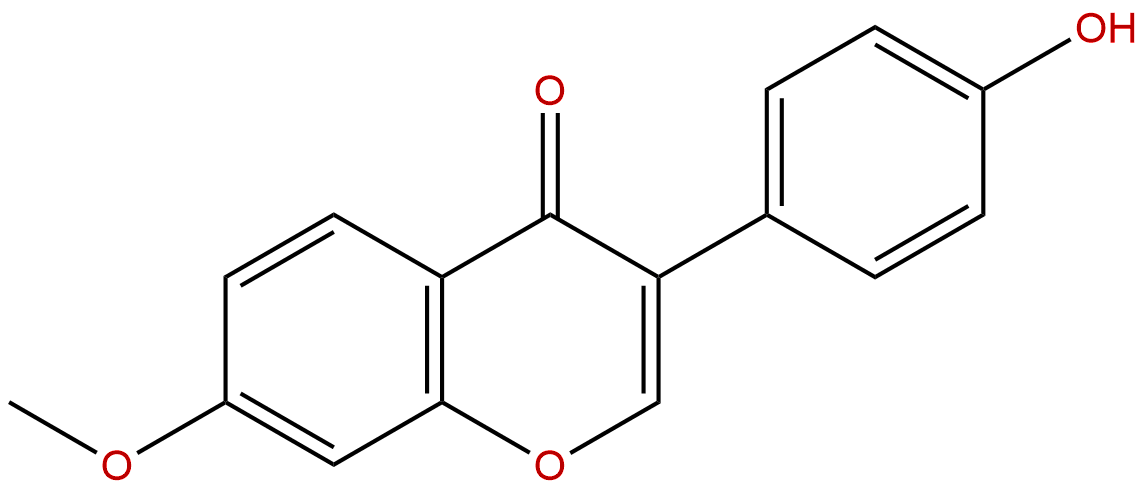


Product Name: Isoformononetin
Synonym name: 7-methoxy-4'-hydroxyisoflavone
Catalogue No.: BP3677
Cas No.: 486-63-5
Formula: C16H12O4
Mol Weight: 268.268
Botanical Source:
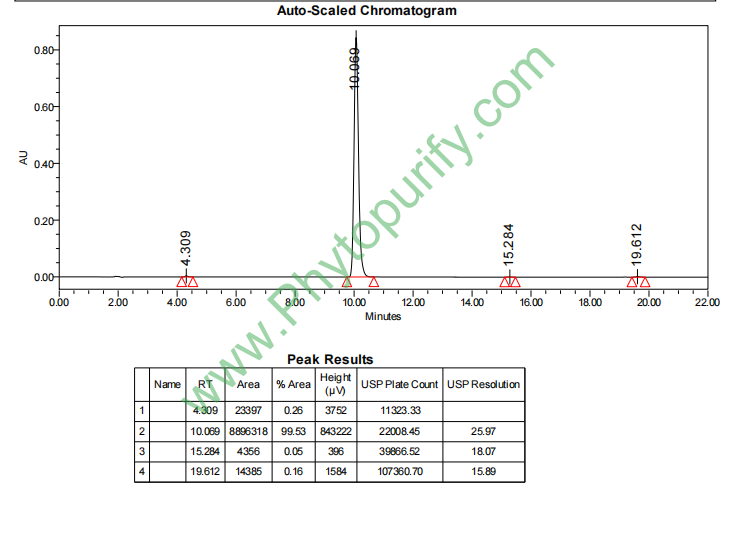
Purity: 95%~99%
Analysis Method: HPLC-DAD or/and HPLC-ELSD
Identification Method: Mass, NMR
Packing: Brown vial or HDPE plastic bottle
Can be supplied from milligrams to grams. Inquire for bulk scale.
For Reference Standard and R&D, Not for Human Use Directly.
HPLC of Isoformononetin
Storage conditions:Short-term storage at 2~8℃, long-term storage at -20 ~ -80℃
59.6700
2.5510
2.5472
.0366
3.1099
46.2218
High
91.8908
1.9570
Yes
No
Yes
No
Yes
Yes
2.4
No
Yes
No
No
Isoformononetin (CAS number: 486-63-5) is a naturally occurring flavonoid compound widely distributed in leguminous plants, especially in certain Chinese medicinal herbs such as Astragalus membranaceus and Medicago sativa, which are abundant in content. As a soy isoflavone substance structurally similar to genistein, isoquercetin has received widespread attention in recent years due to its significant immunomodulatory and bone protective effects. In the model of bone loss caused by estrogen deficiency, it can promote osteoblast activity and exert bone protective effects by inhibiting the differentiation of pro-inflammatory T helper 17 (Th17) cells and B lymphocytes.
With the incidence rate of immune related bone metabolic diseases such as osteoporosis and rheumatoid arthritis rising year by year, finding safe and effective natural drugs has become a research hotspot. Due to its unique immune regulatory mechanism and good medicinal properties, isomorphaceae has shown great potential for development. This article will provide a systematic review of the chemical structure and physicochemical properties, plant sources and extraction methods, pharmacological activity and mechanism of action, pharmacological evaluation and pharmacokinetic characteristics of isoquercetin, and explore its clinical application prospects and future research directions.
Isoquercetin belongs to the class of isoflavones, with the chemical name 7-methoxy-4 '- hydroxyflavone, molecular formula C16H12O4, and molecular weight of 268.2680. Its basic skeleton is a flavonoid tricyclic structure (C6-C3-C6), with a methoxy (- OCH3) substituent at position 7 and a hydroxyl (- OH) group at position 4 '. This structure endows it with certain biological activity and lipophilicity.
In terms of physical and chemical properties, the LogP value of isostigma is 2.5510, indicating moderate lipophilicity, which is beneficial for membrane penetration and in vivo distribution. The topological polar surface area (TPSA) is 59.67 Å ², indicating that it has moderate polarity and is conducive to binding with biomolecules. The low water solubility (0.0366 mg/mL) to some extent limits its oral bioavailability, but can be overcome through formulation improvement. The high permeability of the blood-brain barrier suggests its potential role in the central nervous system. The hERG channel inhibition experiment showed a negative result, indicating a low risk of cardiac toxicity. The Ames mutagenicity test value is 2.4, indicating a low risk of genotoxicity and good safety.
The chemical structural formula is as follows:
   O
  / \
 /   \
|     |--OCH3 (7位甲氧基)
 \   /
  \_/
   |
  OH (4'位羟基)
The methoxy and hydroxyl groups of this structure provide key hydrogen bonding and hydrophobic interaction sites for its binding with target proteins, which are the basis for its biological activity.
Heterophyllin is mainly found in leguminous plants, especially in traditional Chinese medicinal herbs and functional foods such as Astragalus membranaceus, alfalfa, and Trifolium pratense. Huangqi, as a commonly used Qi tonifying herb in traditional Chinese medicine, is rich in various isoflavone components in its roots, among which isomangiferin is relatively abundant.
The commonly used methods for extracting isostigma include:
Solvent extraction method
Using ethanol, methanol, or ethanol water mixture as solvents, isoflavones in plants can be effectively extracted through reflux extraction or ultrasound assisted extraction. Ultrasound assisted extraction is widely used due to its high extraction efficiency and short time.
Liquid liquid distribution and chromatographic separation
After liquid-liquid distribution to remove lipophilic impurities, the extraction solution is purified using silica gel column chromatography and reverse phase high performance liquid chromatography (RP-HPLC) to obtain high-purity isoquercetin.
Modern extraction techniques
Emerging technologies such as supercritical CO2 extraction and microwave-assisted extraction, due to their environmental friendliness and strong selectivity, are gradually being applied to optimize the extraction process of isomorphaceae.
The optimization of extraction process not only affects the yield and purity of isoquercetin, but also its biological activity and the accuracy of subsequent pharmacological research.
The pharmacological activity research of isoquercetin covers multiple aspects such as immune regulation, bone metabolism regulation, anti-inflammatory and antioxidant effects.
Heterophyllin can significantly regulate the function of immune cells, especially in regulating T cell subpopulation differentiation. Research has shown that in the estrogen deficiency induced bone loss model, isoquercetin inhibits the differentiation of pro-inflammatory Th17 cells, reduces the release of inflammatory factors such as IL-17, lowers bone resorption activity, and protects bone tissue integrity. In addition, it also has an inhibitory effect on the differentiation of B lymphocytes, reduces the production of autoantibodies, and alleviates immune-mediated bone destruction.
Heterophyllin can promote the proliferation and differentiation of osteoblasts, enhance the expression of bone matrix proteins such as osteocalcin and alkaline phosphatase (ALP), and promote the process of bone mineralization. Its osteogenic promoting effect has been validated in both in vitro bone cell lines and in vivo osteoporosis animal models.
Heterophyllin exerts anti-inflammatory effects by inhibiting the NF - κ B signaling pathway and reducing the expression of pro-inflammatory cytokines such as TNF - α and IL-6. Meanwhile, the hydroxyl groups in its structure endow it with excellent free radical scavenging ability, alleviate oxidative stress, and protect cells from oxidative damage.
Some studies suggest that isomorphaceae may have certain anti-tumor activity, inducing apoptosis and cell cycle arrest in tumor cells, but the relevant mechanisms still need to be further explored.
The biological activity of isoquercetin is mainly achieved by regulating immune cell signaling pathways and bone metabolism related pathways.
Th17 cells are a key pro-inflammatory subpopulation in osteoporosis and autoimmune diseases. Heterophyllin can inhibit Th17 differentiation induced by IL-6 and TGF - β, reduce the expression of transcription factor ROR γ t, decrease IL-17 secretion, and thus alleviate bone resorption and inflammatory response.
By regulating the signaling of B cell activating factor (BAFF) and its receptors, isoliquitin inhibits the differentiation of B cells into plasma cells, reduces the production of autoantibodies, and alleviates immune-mediated bone destruction.
Heterophyllin activates the Wnt/β - catenin signaling pathway, promoting the proliferation and differentiation of osteoblasts. Meanwhile, by upregulating bone morphogenetic protein (BMP) and its downstream Smad signaling, bone matrix protein synthesis is enhanced, promoting bone mineralization.
Heterophyllin inhibits the NF - κ B and MAPK signaling pathways, reduces the expression of pro-inflammatory factors, and alleviates the damage of inflammatory microenvironment to bone tissue.
Some studies have shown that isoquercetin may have a certain affinity for estrogen receptors (ER), exerting a plant estrogen like effect and regulating bone metabolism balance.
The pharmacological parameters of isomangiferin show that it has good potential for drug development:
In terms of pharmacokinetics, isoquercetin is absorbed quickly after oral administration, but its bioavailability is limited due to its low water solubility. Widely distributed in the body, especially enriched in bone tissue and immune organs. Metabolism is mainly carried out through the phase I and phase II enzyme systems of the liver, forming various metabolites, and some metabolites retain biological activity. The main excretion pathways are bile and urine.
At present, there is a lack of systematic pharmacokinetic studies on isoquercetin. In the future, further in vivo pharmacokinetic, metabolic pathway, and toxicological evaluations are needed to provide a basis for clinical development.
Due to its unique immune regulation and bone protection effects, isomorphaceae has shown broad clinical application prospects, especially in the following fields with potential:
Treatment of osteoporosis
Osteoporosis patients with estrogen deficiency as the main factor may find that isoquercetin can become a safe and effective natural bone protectant by inhibiting bone resorption and promoting osteogenesis.
Adjuvant therapy for autoimmune diseases
In diseases such as rheumatoid arthritis and systemic lupus erythematosus, abnormal activation of immune cells can lead to bone destruction, and the immunomodulatory effect of isoquercetin is expected to alleviate disease progression.
Development of anti-inflammatory and antioxidant health products
Its anti-inflammatory and antioxidant properties are suitable for development as functional health products to assist in the prevention of chronic inflammation related diseases.
Potential applications of central nervous system diseases
Due to its high blood-brain barrier permeability, its role in neurodegenerative diseases can be explored in the future.
However, the clinical application of isoquercetin still faces many challenges, including low bioavailability due to poor water solubility, insufficient systematic safety, and long-term toxicological data. Future research should focus on:
As a natural flavonoid compound with immune protection and bone metabolism regulation functions, isoquercetin has shown the potential to become a new type of therapeutic drug for osteoporosis and immune related diseases due to its unique mechanism of action and good pharmacological parameters. Although current research is mostly focused on in vitro and animal models, there is a need to strengthen preclinical and clinical studies in the future to systematically evaluate its efficacy, safety, and pharmacokinetic characteristics. Through interdisciplinary collaboration and technological innovation, isoquercetin is expected to become an important breakthrough in the field of natural product pharmacology, providing new ideas and choices for the prevention and treatment of related diseases.
