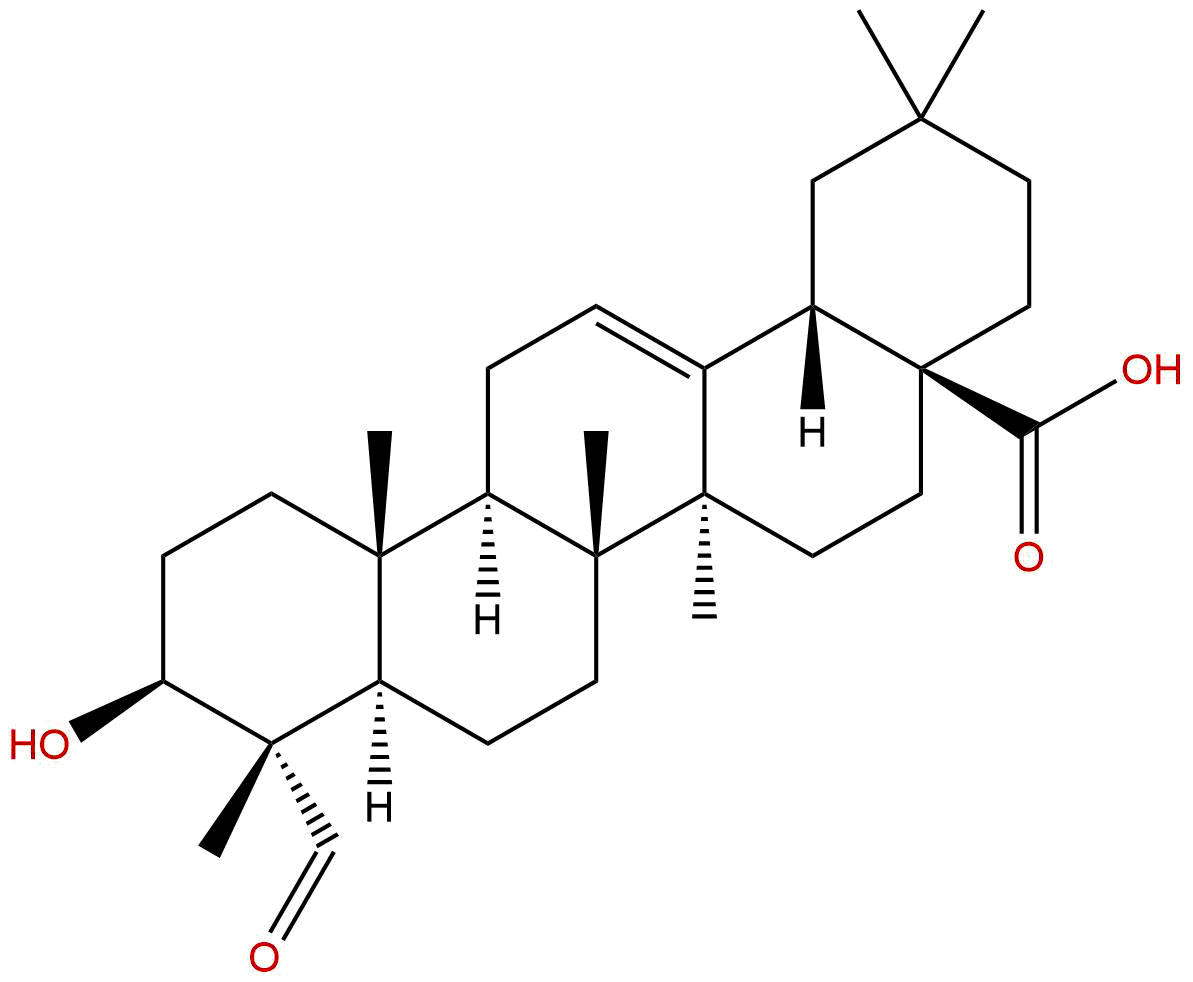


Product name: Gypsogenin
Synonym name: Astrantiagenin D; Githagenin;Gypsophilasapogenin
Catalogue No.: BP2413
Cas No.: 639-14-5
Formula: C30H46O4
Mol Weight: 470.694
Botanical Source:
Type of Compound: Triterpenoids
Purity: 95%~99%
Analysis Method: HPLC-DAD or/and HPLC-ELSD
Identification Method: Mass, NMR
Packing: Brown vial or HDPE plastic bottle
Storage: Store in a well closed container, protected from air and light. Put into refrigerate or freeze for long term storage.
Whenever possible, you should prepare and use solutions on the same day. However, if you need to make up stock solutions in advance, we recommend that you store the solution as aliquots in tightly sealed vials at -20℃. Generally, these will be useable for up to two weeks.
The product could be supplied from milligrams to grams
Inquire for bulk scale.
For Reference Standard and R&D, Not for Human Use Directly.
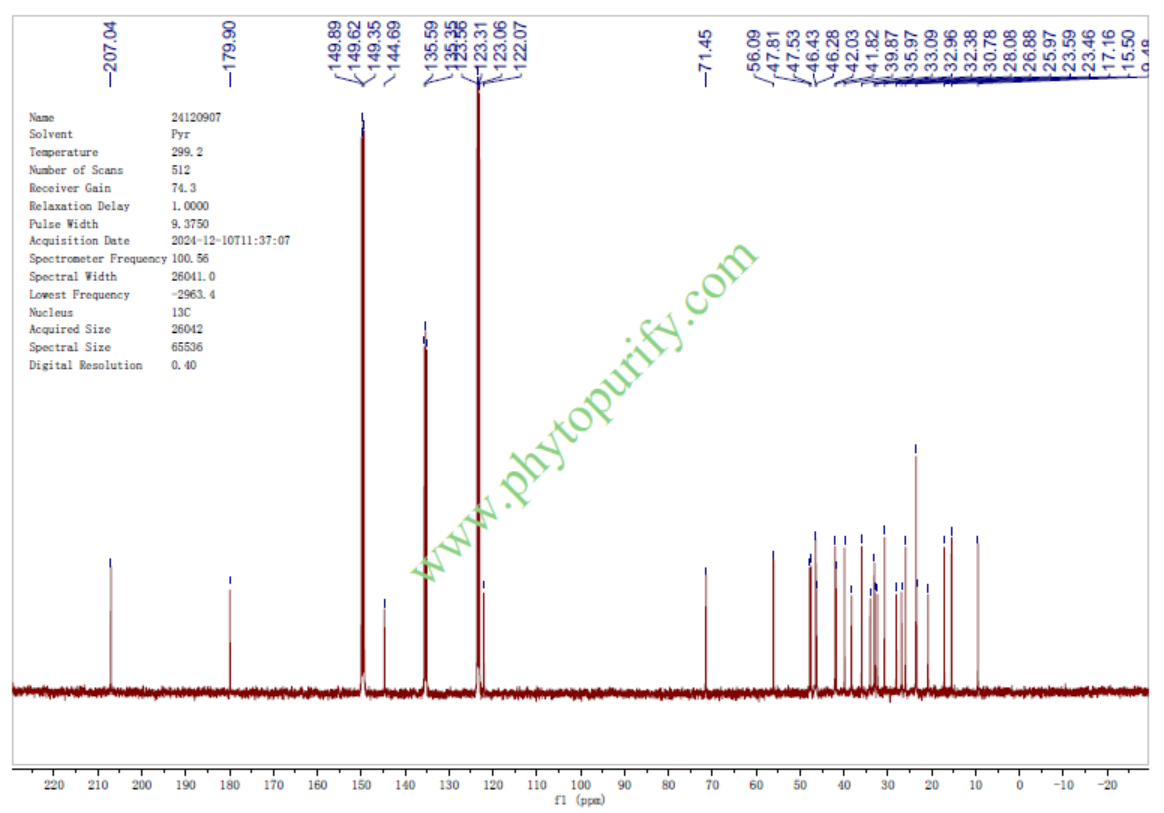
NMR of Gypsogenin
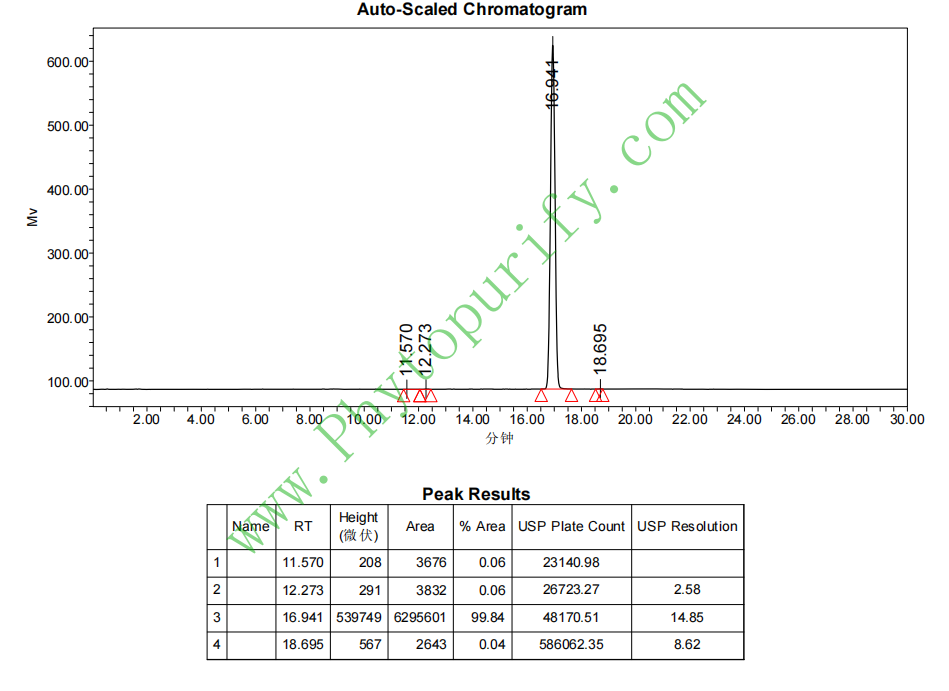
HPLC of Gypsogenin
Storage conditions:Short-term storage at 2~8℃, long-term storage at -20 ~ -80℃
74.6000
5.8190
4.0083
.0025
5.1677
3.1922
Low
92.1707
4.8536
No
No
No
No
No
No
0.0
No
No
Yes
No
Natural products, as an important source of drug discovery, play an irreplaceable role in the long history of human fight against diseases. Isolating and identifying active ingredients from traditional herbs, and elucidating their pharmacological mechanisms of action, is an important paradigm in modern medicinal chemistry and pharmacology research. Among numerous natural products with biological activity, triterpenoids have attracted much attention due to their structural diversity and extensive pharmacological activities. Gypsogenin, a pentacyclic triterpenoid saponin derived from Caryophyllaceae plants, has gradually become a research hotspot in the field of natural product pharmacology in recent years due to its unique biological activity spectrum and potential therapeutic value.
Caryophyllum sapogenin, also known as 3 β - hydroxy-23-oxo-oole-12-en-28-oic acid, is a typical pentacyclic triterpenoid of oleanane type. Its structural feature lies in the presence of an aldehyde group (- CHO) and a hydroxyl group (- OH) on the A ring. This unique combination of functional groups endows it with chemical properties and biological activity that distinguish it from other triterpenoid saponins such as oleanolic acid and ursolic acid. Early research mainly focused on its chemical properties as a hydrolysis product of saponins, but in the past two decades, with the deepening of its pharmacological activity, the sapogenin of Polygonatum sibiricum has shown various therapeutic potentials, especially in the fields of anti-tumor, neuroprotective, and antibacterial effects.
It is worth noting that Caryophyllum saponins have been identified as a selective mixed butyrylcholinesterase (BChE) inhibitor with an inhibition constant Ki value of 19.99 μ M. This discovery occupies a unique position in the treatment research of Alzheimer's disease (AD). Unlike traditional acetylcholinesterase (AChE) inhibitors, selective BChE inhibitors are believed to play a more important role in the late stages of AD with fewer side effects. In addition, Polygonatum sibiricum saponins exhibit significant cytotoxicity against various human cancer cell lines, including ovarian cancer, colon cancer, melanoma, and leukemia cells. Its mechanism of action involves cell cycle arrest and induction of apoptosis, and exerts anti-tumor effects by regulating multiple key signaling pathway molecules including BCL2, STAT3, and HIF1A. Meanwhile, its antibacterial activity against Gram positive bacteria such as Bacillus subtilis and Bacillus thuringiensis also suggests its potential application in the field of anti infection.
Given the significant activity of Polygonatum sibiricum saponins in multiple disease models and their structural advantages as key mother nuclei for semi synthetic anticancer drugs, a systematic review of its chemical properties, plant sources, pharmacological effects, molecular mechanisms, and pharmacological characteristics is of great significance for promoting its transformation from natural products to lead compounds and even candidate drugs. This article will provide a comprehensive and in-depth exposition on the research progress of sapogenins in Phyllostachys edulis, focusing on the aforementioned aspects.
Caryophyllum saponins belong to the pentacyclic triterpenoid class, and their core skeleton is of the Oleanane type. Its system name (IUPAC) is: (4aS, 6aR, 6aS, 6bR, 8aR, 10S, 12aR, 14bS) -10-hydroxy-2,2,6a, 6b, 9,9,12a-heptamethyl-15-oxo-1,3,4,5,6,6a, 7,8,8a, 10,11,12,13,14-b-tetradecahydropicene-4a-carboxylic acid. Structurally, its molecule consists of five fused rings: A, B, C, D, and E. The A ring has the characteristic 3 β - hydroxyl (- OH) and 23 aldehyde (- CHO) groups, while the E ring is connected to a carboxyl group (- COOH) at the 17 position. The coexistence of aldehyde and hydroxyl groups on the A ring, as well as the carboxyl group at C-28 position, constitute the key structural features that distinguish it from other triterpenes (such as oleanolic acid, which only has hydroxyl and carboxyl groups), and are also the main sites for its chemical modification and derivatization.
The molecular formula of Polygonatum sibiricum saponins is C ∝₀ H ₄₆ O ₄, with a molecular weight of 470.69 Da. Its CAS registration number is 639-14-5. In terms of physical and chemical properties, the compound appears as a white or off white crystalline powder with a certain melting point. Its lipophilicity is strong, with a LogP value of up to 5.819, indicating good solubility in non-polar solvents, while its solubility in water is extremely low (about 0.0025 mg/mL). This high lipophilicity is closely related to the rigid skeleton structure of its pentacyclic triterpenes. Its topological polar surface area (TPSA) is 74.60 Å ², which is slightly higher than the classical "Lipinski Five Rules" requirement of TPSA less than 140 Å ², but considering its large molecular weight, it is still within an acceptable range. It is worth noting that its poor water solubility is one of the main bottlenecks limiting its bioavailability and drug development.
From the perspective of chemical stability, under acidic or alkaline conditions, the glycosidic bonds (if present in the form of saponins) of Polygonatum sibiricum saponins are prone to hydrolysis. However, as the glycoside itself, its pentacyclic triterpenoid skeleton is relatively stable. However, the aldehyde group on the A ring has high chemical reactivity and is easily oxidized to carboxylic acids or undergoes condensation reactions under specific conditions. This characteristic is not only the structural basis for its biological activity, but also provides key sites for its structural modification. For example, by reducing aldehyde groups to hydroxymethyl or forming Schiff bases with amine compounds, a series of derivatives with different pharmacological activities can be synthesized.
The saponins of Caryophyllaceae are mainly derived from plants in the Caryophyllaceae family, with the most common source being the Caryophyllaceae genus(Gypsophila)Plants, such as Gypsophila paniculata(Starry Sky)Gypsophila oldhamiana(Xiacao) and so on. In addition, in the soapberry genus(Saponaria)Plants (such as Saponaria officinalis)This compound also exists in. These plants usually contain abundant triterpenoid saponins, and the saponins in Caryophyllum are one of the main glycosides released after acid hydrolysis or enzymatic hydrolysis. In plants, the saponins of Caryophyllum usually exist in the form of glycosides, which are linked to one or more sugar groups (such as glucose, galactose, arabinose, rhamnose, etc.) through a hydroxyl group at C-3 or a carboxyl group at C-28 to form single or double chain saponins. These natural saponins typically have stronger water solubility and surface activity, but the aglycones themselves exhibit stronger lipophilicity and different biological activity profiles.
The extraction of saponins from Polygonatum sibiricum usually follows the classic process of "extraction hydrolysis separation". Firstly, dry plant materials (usually roots or whole plants) are crushed and subjected to reflux extraction using polar solvents such as methanol or ethanol to obtain crude total saponin extract. Due to the high polarity of saponin components, water or aqueous alcohols can also be used for extraction. Subsequently, the crude extract of total saponins is subjected to heating hydrolysis under acidic conditions (such as using dilute sulfuric acid or hydrochloric acid) to break glycosidic bonds and release aglycones. After neutralization and filtration, the hydrolyzed mixture is extracted with organic solvents such as chloroform, ethyl acetate, or n-butanol to transfer the lipophilic aglycones from the aqueous phase to the organic phase. Finally, the crude extract was purified using column chromatography techniques such as silica gel column chromatography and ODS reverse phase column chromatography to obtain high-purity monomers of saponins from Polygonatum sibiricum. In modern separation techniques, high-speed countercurrent chromatography (HSCCC) and preparative high-performance liquid chromatography (Prep HPLC) are also used to efficiently and rapidly separate the compound.
In recent years, in order to overcome the disadvantages of high solvent consumption, cumbersome steps, and low yield in traditional extraction methods, some green extraction techniques have been explored and applied to the extraction of saponins from Polygonatum sibiricum. For example, ultrasound assisted extraction (UAE) and microwave-assisted extraction (MAE) can improve extraction efficiency and shorten time by disrupting cell wall structure, accelerating the dissolution of saponins. In addition, Enzyme Assisted Extraction (EAE) utilizes cellulase, pectinase, and other enzymes to degrade plant cell walls, which can increase the release rate of saponins under mild conditions and reduce the degradation of active ingredients. The application of these new technologies provides new ideas for the efficient and environmentally friendly preparation of saponins from Polygonatum sibiricum.
The pharmacological activity research of Polygonatum sibiricum saponins mainly focuses on three fields: anti-tumor, neuroprotective, and antibacterial. Its activity spectrum is wide and its mechanism of action is diverse.
The saponins from Polygonatum sibiricum exhibit significant cytotoxicity towards various human cancer cell lines, making it the most extensively studied direction in recent years. Research has shown that it has inhibitory effects on proliferation and induces death in various solid tumors and blood tumor cells, including ovarian cancer, colon cancer (such as HT-29, HCT-116), melanoma (such as A375), leukemia (such as K562, HL-60), as well as liver cancer, lung cancer, and others. The core mechanisms of its anti-tumor effect mainly include the following aspects:
Inducing cell apoptosis Caryophyllum saponins can induce tumor cell apoptosis through two pathways: endogenous (mitochondrial) and exogenous (death receptor). Specifically, it is manifested as: ① upregulating the expression of pro apoptotic protein Bax and downregulating the expression of anti apoptotic protein Bcl-2, leading to a decrease in mitochondrial membrane potential (Δ PSI m), releasing cytochrome c into the cytoplasm, thereby activating the cascade reaction of Caspase-9 and Caspase-3, ultimately leading to cell apoptosis. ② Activate the death receptor pathway, such as upregulating the expression of Fas and FasL, and activating Caspase-8. ③ Inhibit the phosphorylation of the STAT3 signaling pathway, thereby downregulating the expression of downstream target genes such as Survivor, Mcl-1, VEGF, etc., and relieving the inhibition of apoptosis.
cell cycle arrest Sapogenin from Polygonatum sibiricum can block tumor cells at specific cell cycle phases, thereby inhibiting their proliferation. Research has found that the blocking points may vary among different cancer cells. For example, in melanoma cells, it may cause G0/G1 phase arrest, accompanied by downregulation of Cyclin D1 and CDK4 expression; In some leukemia cells, it may induce G2/M phase arrest. This cycle arrest effect is closely related to regulating the expression of cell cycle checkpoint proteins such as p53 and p21.
Inhibit tumor invasion and metastasis Sapogenin from Polygonatum sibiricum can also inhibit the migration, invasion, and angiogenesis of tumor cells by suppressing the activity of matrix metalloproteinases (MMPs, especially MMP-2 and MMP-9), as well as downregulating the expression of HIF-1 α and VEGF, thereby exerting anti metastatic effects. In addition, its potential regulatory effect on ABCB1 (P-glycoprotein) suggests that it may have the potential to reverse tumor multidrug resistance.
The value of Polygonatum sibiricum saponins in Alzheimer's disease (AD) research is mainly reflected in their inhibitory effect on acetylcholinesterase. One of the pathological features of AD is the degeneration of cholinergic neurons and the decrease in acetylcholine (ACh) levels in the brain. One of the main drugs currently used in clinical treatment of AD is cholinesterase inhibitors, which increase the level of ACh in synaptic cleft and improve cognitive function by inhibiting AChE or BChE.
Research has shown that Polygonatum sibiricum saponins are a selective mixed BChE inhibitor (Ki=19.99 μ M), with much stronger inhibitory activity on BChE than on AChE. This selectivity has important clinical significance: ① In the late stage of AD, the activity of BChE will significantly increase, while the activity of AChE will decrease. Therefore, selective inhibition of BChE may be more effective in the treatment of late stage AD. ② Selective BChE inhibitors typically have fewer cholinergic side effects, such as gastrointestinal reactions. In addition, Polygonatum sibiricum saponins may also exert neuroprotective effects by reducing oxidative stress and neuroinflammatory responses in AD through their antioxidant and anti-inflammatory activities. Molecular docking studies have also shown that saponins from Caryophyllum can interact with the active sites of BChE, such as the catalytic triad Ser198, His438, Glu325, and acyl binding pocket, to form stable complexes.
Sapogenin from Polygonatum sibiricum exhibits direct inhibitory effects on certain bacteria. Research reports that it is effective against Gram positive bacteria such as Bacillus subtilis(Bacillus subtilis)Bacillus thuringiensis and Bacillus thuringiensis(Bacillus thuringiensis)Has significant antibacterial activity. Its antibacterial mechanism may be related to its surface activity as a sapogenin, which can damage the integrity of bacterial cell membranes and lead to the leakage of intracellular substances. In addition, it may also involve interference with key enzymes or metabolic pathways in bacteria. However, its antibacterial activity against Gram negative bacteria is usually weak, which may be related to the structural barrier of the outer membrane of Gram negative bacteria.
The pharmacological activity of Polygonatum sibiricum saponins is the result of multi-target and multi pathway synergistic effects. Based on existing research, its key mechanisms of action and molecular targets can be summarized as follows:
1. Direct target: butyrylcholinesterase (BChE)
As a selective mixed BChE inhibitor, the binding of Polygonatum sibiricum saponins to BChE is direct and reversible. Dynamics studies have shown that it can bind to both free enzymes and enzyme substrate complexes. Molecular simulation shows that the pentacyclic triterpenoid skeleton is embedded in the hydrophobic pocket of the active center of BChE, while the aldehyde and hydroxyl groups on the A ring form hydrogen bonds and hydrophobic interactions with key amino acid residues (such as Trp82, Phe329), thereby stably occupying the active site and preventing the entry and hydrolysis of substrates (such as butyrylcholine).
2. Anti tumor related targets and signaling pathways
- Apoptotic pathway Caryophyllum saponins downregulate the anti apoptotic protein BCL2 and upregulate the pro apoptotic protein BAX, disrupt mitochondrial membrane potential, and activate the Caspase cascade reaction. Meanwhile, it can also inhibit the phosphorylation of STAT3. STAT3 is a key transcription factor, and its sustained activation is closely related to the proliferation, survival, and drug resistance of various cancers. Inhibiting STAT3 signaling can downregulate the expression of its target genes such as Survivor (apoptosis inhibitory protein) and Cyclin D1 (cell cycle protein).
- Hypoxia and Angiogenesis Pathway Sapogenin from Polygonatum sibiricum can inhibit the expression and transcriptional activity of hypoxia inducible factor 1 alpha (HIF1A). HIF1A is a core regulatory factor for tumors to adapt to a low oxygen microenvironment, and its downregulation can reduce the secretion of downstream vascular endothelial growth factor (VEGF), thereby inhibiting tumor angiogenesis and cutting off the tumor's nutritional supply.
- Invasion and metastasis pathway By inhibiting the activity of matrix metalloproteinases MMP2 and MMP9, Polygonatum sibiricum saponins can reduce the degradation ability of tumor cells to extracellular matrix (ECM), thereby inhibiting their invasion and metastasis.
- Other targets Its potential regulatory effects on estrogen receptor beta (ESR2), tyrosinase (TYR), topoisomerase I (TOP1), and nuclear factor E2 related factor 2 (NFE2L2, Nrf2) also suggest that it may exert a comprehensive anti-tumor effect by affecting hormone signaling, oxidative stress response, and DNA replication processes. In addition, inhibition or regulation of ABCB1 (P-gp) may help overcome multidrug resistance in tumors.
3. Antibacterial mechanism
The antibacterial activity of Polygonatum sibiricum saponins mainly stems from their amphiphilic structure. Its hydrophobic triterpenoid skeleton can insert into the lipid bilayer of bacterial cell membranes, while polar hydroxyl and carboxyl groups interact with the polar head on the membrane surface, leading to membrane structure disorder, increased permeability, and ultimately bacterial lysis and death.
To promote the natural active molecule of Polygonatum sibiricum saponins into clinical candidate drugs, it is necessary to rigorously evaluate their drug like and pharmacokinetic properties (ADME).
1. Analysis of pharmacological parameters
According to Lipinski's "Rule of Five," there are some challenges with the saponin content of Polygonatum sibiricum: its molecular weight (470.69 Da) is slightly above the threshold of 500 Da; Its LogP value (5.819) is much higher than 5, indicating that its lipid solubility is too strong, which may lead to poor water solubility, poor absorption, and high protein binding rate; The number of hydrogen bond donors (- OH and - COOH, a total of 2) and hydrogen bond acceptors (- CHO and - COOH, a total of 4) comply with the rules. The TPSA is 74.60 Å ², which is less than 140 Å ², indicating its good membrane permeability potential. The Ames test result is 0.0, indicating that it does not have significant genetic toxicity. The hERG inhibition test result is negative, indicating a low risk of cardiac toxicity.
Overall, the biggest bottleneck of the medicinal properties of Polygonatum sibiricum saponins lies in its Extremely low water solubility(0.0025 mg/mL) and Excessive lipophilicity This will result in extremely low oral bioavailability, making it difficult to achieve effective therapeutic concentrations in the body.
2. Pharmacokinetic characteristics
At present, there are relatively few systematic studies on the pharmacokinetics of saponins in Polygonatum sibiricum in vivo, but reasonable inferences can be made based on its physicochemical properties:
- absorb Due to its extremely poor water solubility, its dissolution and absorption in the gastrointestinal tract will be very limited after oral administration. Although its high LogP value is beneficial for permeation through biological membranes, its high lipophilicity may also cause it to be encapsulated in food or bile micelles, or to bind non specifically to intestinal wall cell membranes, thereby hindering absorption. Therefore, its oral bioavailability is expected to be very low.
- distribution Once it enters the bloodstream, due to its high lipophilicity, Polygonatum sibiricum saponins are likely to bind highly to plasma proteins (such as albumin), resulting in low free drug concentrations. Its distribution volume may be large and tends to be distributed in lipid rich tissues such as liver and adipose tissue. Regarding the blood-brain barrier (BBB) penetration, existing data suggests that its penetration ability is relatively low, which is a disadvantageous factor for treating central nervous system diseases (such as AD), but has little impact on peripheral diseases (such as colon cancer).
- Metabolism As a pentacyclic triterpenoid, Polygonatum sibiricum saponins are mainly oxidized and metabolized in the liver through cytochrome P450 enzyme systems (such as CYP3A4). The aldehyde group on its A ring may also be oxidized to carboxylic acid by aldehyde dehydrogenase or reduced to alcohol by reductase. These metabolic reactions typically aim to increase their polarity and promote excretion.
- excretion Metabolites and small amounts of prototype drugs are mainly excreted through bile into the intestine and ultimately excreted with feces. Renal excretion (urine) may not be its primary clearance pathway.
3. Optimization strategy for drug properties
In view of the above issues, structural modification of saponins in Caryophyllum is the key to enhancing its medicinal properties. The main strategies include:
- Prodrug design Esterify the carboxyl group at C-28 or hydroxyl group at C-3 to prepare more water-soluble prodrugs (such as phosphate esters, amino acid esters, and semi amber esters), which release the active parent drug after enzymatic hydrolysis in vivo.
- salt formation Salting carboxyl groups with basic amino acids (such as lysine and arginine) or inorganic bases (such as sodium hydroxide) to improve water solubility.
- nano-formulation Using nano delivery systems such as liposomes, polymer micelles, nanocrystals, etc., to encapsulate Polygonatum sibiricum saponins, in order to improve their solubility and oral bioavailability, and achieve targeted delivery.
- Simplification and derivatization of structures Retain its core pharmacophores (such as pentacyclic triterpenoid skeleton, aldehyde group, carboxyl group), and search for lead compounds with better water solubility, higher activity, and lower toxicity by synthesizing a series of derivatives. For example, reducing aldehyde groups to hydroxymethyl or condensing with amines to form Schiff bases can alter their physicochemical properties.
As a natural product with multiple pharmacological activities, Polygonatum sibiricum saponins have broad clinical application prospects, but also face many challenges.
1. Anti tumor field
Given its significant activity against various cancer cells such as ovarian cancer, colon cancer, melanoma, and leukemia, the saponins of Polygonatum sibiricum or its derivatives are expected to be developed as novel anti-tumor drugs. Especially through its multi-target mode of action that simultaneously induces apoptosis, blocks cycles, inhibits angiogenesis and metastasis, it may be effective for tumors resistant to traditional chemotherapy drugs. Future research should focus on:
- In vivo efficacy verification Using various xenograft tumor models (PDX models) and in situ tumor models, systematically evaluate their anti-tumor efficacy and safety.
- combination therapy Explore its synergistic effects with commonly used clinical chemotherapy drugs such as cisplatin, paclitaxel, and 5-fluorouracil, as well as with immune checkpoint inhibitors such as PD-1/PD-L1 antibodies, in order to reduce chemotherapy dosage, alleviate toxic side effects, and overcome drug resistance.
- Targeted delivery Develop an intelligent nano drug delivery system targeting the tumor microenvironment (such as low pH, high expression of MMP) or specific tumor markers (such as CA125 in ovarian cancer) to achieve precise targeted therapy of Polygonatum sibiricum saponins.
2. Treatment of Alzheimer's disease
As a selective BChE inhibitor, Polygonatum sibiricum saponins have unique value in the treatment of Alzheimer's disease. However, its low BBB penetration is the main obstacle. Future research directions include:
- Design derivatives that can penetrate BBB By structural modification (such as introducing nitrogen-containing groups, reducing molecular weight or polarity) or utilizing carrier mediated transport systems (such as glucose transporters and transferrin receptors), the concentration in the brain can be increased.
- Multi-target targeting ligand Given the complexity of AD, design a "multi-target" molecule with multiple activities including BChE inhibition, antioxidant, anti A β aggregation, and anti neuroinflammation. The sapogenin of Polygonatum sibiricum itself already possesses some of these potentials, which can be further enhanced through reasonable modification.
3. Anti infection and other fields
Its antibacterial activity suggests that it can serve as a lead compound for the development of new antibacterial drugs, especially against resistant Gram positive bacteria. In addition, its anti-inflammatory and antioxidant activities are also worth exploring in chronic inflammatory diseases such as rheumatoid arthritis and inflammatory bowel disease.
4. Value as a synthetic mother nucleus
Due to its unique aldehyde and carboxyl reaction sites, the sapogenin of Polygonatum sibiricum is an ideal parent nucleus for synthesizing a series of novel anticancer compounds. Through semi synthetic methods, a diverse library of triterpenoid compounds can be constructed for high-throughput screening, with the potential to discover candidate drugs with stronger activity and better selectivity. This' natural product oriented diversity synthesis' strategy is an important pathway for future drug discovery.
Caryophyllum sapogenin, a pentacyclic triterpenoid sapogenin derived from Caryophyllaceae plants, has shown significant research value in the field of natural product pharmacology due to its unique chemical structure (coexistence of A-ring aldehyde and hydroxyl groups) and extensive pharmacological activity. It is not only a selective BChE inhibitor, providing a new chemical entity for the treatment of Alzheimer's disease, but also exhibits significant inhibitory activity against various malignant tumors such as ovarian cancer, colon cancer, melanoma, etc. by regulating multiple key molecular targets such as BCL2, STAT3, HIF1A, MMP2, and possessing antibacterial potential.
However, from natural active molecules to clinical drugs, Polygonatum sibiricum saponins still face severe challenges. Its extremely low water solubility and high lipophilicity result in low oral bioavailability, as well as weak blood-brain barrier penetration ability, which are the core bottlenecks restricting its drug development. Future research should focus on: ① systematically improving its pharmacokinetic properties through strategies such as prodrug design, nano formulations, or structural modifications; ② By utilizing modern molecular biology techniques such as CRISPR-Cas9 and proteomics, we aim to elucidate the precise molecular targets and signaling networks underlying its in vivo effects; ③ Validate its efficacy and safety in complex animal models that are closer to clinical practice, such as PDX models and transgenic AD mouse models; ④ Fully leverage its advantages as a synthetic mother nucleus, construct a structurally diverse derivative library through semi synthetic chemistry, in order to discover candidate drugs with higher activity and better drug properties.
In summary, Caryophyllum saponins are a natural product lead compound with great potential for development. Despite the numerous challenges ahead, through interdisciplinary research strategies, especially the collaborative efforts of medicinal chemistry, pharmacology, pharmacy, and systems biology, it is expected to overcome its inherent shortcomings and transform it into innovative drugs that can truly benefit humanity. The continuous and in-depth research on saponins in Caryophyllum will not only enrich our understanding of the biological activities of triterpenoids, but also provide new ideas and tools for tackling major human health problems such as cancer and neurodegenerative diseases.
