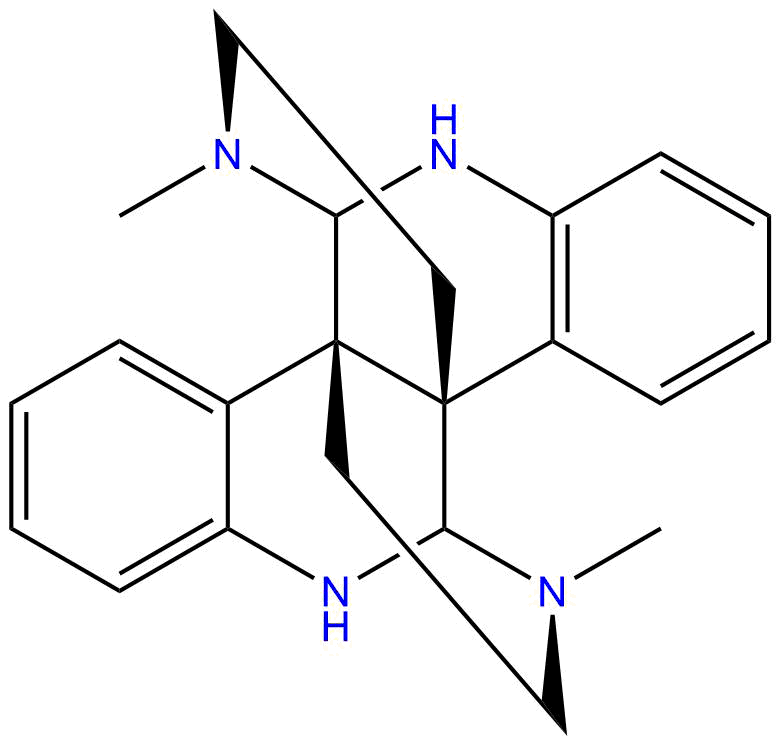


Product name: Calycanthine
Synonym name:
Catalogue No.: BP3891
Cas No.: 595-05-1
Formula: C22H26N4
Mol Weight: 346.478
Botanical Source:
Physical Description:
Type of Compound:
Purity: 95%~99%
Analysis Method: HPLC-DAD or/and HPLC-ELSD
Identification Method: Mass, NMR
Packing: Brown vial or HDPE plastic bottle
The product could be supplied from milligrams to grams
Inquire for bulk scale.
For Reference Standard and R&D, Not for Human Use Directly.
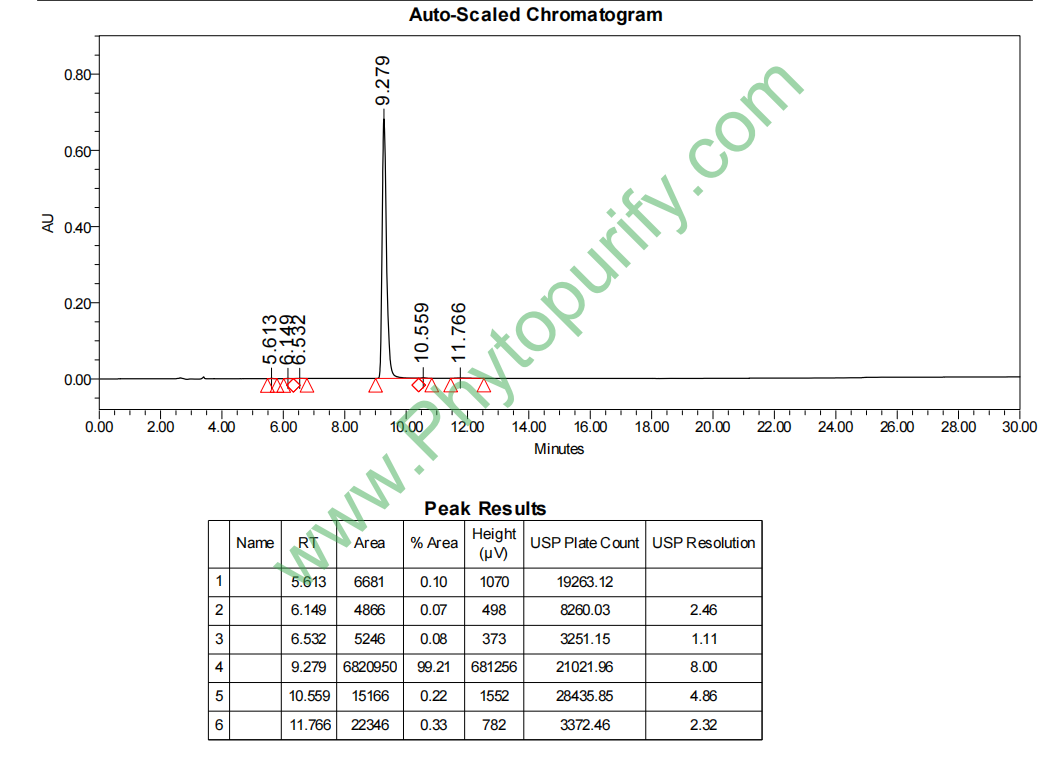
HPLC of Calycanthine
Storage conditions:Short-term storage at 2~8℃, long-term storage at -20 ~ -80℃
30.5400
2.6366
1.5323
.1412
3.6094
8.9058
High
69.9365
5.1873
No
Yes
No
Yes
No
No
1.2
Yes
No
Yes
Yes
Natural products, as an important source of drug discovery, play an indispensable role in the long history of human struggle against diseases. The isolation and identification of bioactive compounds from traditional herbs, and elucidation of their pharmacological mechanisms, are important paradigms in modern medicinal chemistry and pharmacology research. Among numerous natural products with diverse structures and unique activities, Calycanthine has attracted widespread attention from researchers due to its unique chemical skeleton and significant central nervous system toxicity. La Mei alkaloid originated from the wax plum family plants(Calycanthus It was isolated from the genus (spp.), hence its name, and later found in the family Rubiaceae under the genus Jiujie(Psychotria)Found in various plants. As a type of indole alkaloid, the chemical structure of camptothecin is highly symmetrical and complex, with two indole units within its molecule forming a rigid and chiral cage like skeleton through unique connections. This unique structure endows berberine with diverse biological activities, especially its strong effect on the central nervous system, making it a known central nervous system toxin that can induce tonic seizures and convulsions in experimental animals. However, it is precisely this toxicity that suggests that its target of action may have high specificity, providing unique tool molecules and lead compounds for neuroscience research and drug development. In recent years, with the deepening of research on berberine, in addition to its classic neurotoxicity, researchers have also found that it exhibits potential pharmacological activities in anti-inflammatory, anti-tumor, antibacterial and other aspects, especially its regulatory effect on multiple inflammatory signaling pathways, making it a hot molecule in natural product pharmacology research. This article aims to systematically review the chemical structure, physicochemical properties, plant sources, extraction methods, pharmacological activity, mechanism of action, pharmacological evaluation, and clinical application prospects of berberine, in order to provide comprehensive references for the in-depth research and development of this compound.
The chemical structure of colchicine is the basis of all its biological activities. From a chemical classification perspective, berberine belongs to the class of indole alkaloids, with a molecular formula of C ₂₂ H ₂₆ N ₄ and a molecular weight of 346.4780 Da. Its core structure is composed of two indole units derived from two tryptamines connected by a unique cyclobutane ring, forming a highly rigid cage like skeleton with C ₂ symmetry. Specifically, the C3 positions of two indole rings are bridged by an ethylene group (- CH ₂ - CH ₂ -), while the N1 positions of the two indole rings are also connected by an ethylene group, forming a polycyclic system consisting of two indole rings, two hexagonal rings, and a central butane ring. This unique "cage like" structure endows the molecule of camptothecin with a high degree of stereochemical complexity, with multiple chiral centers present. The naturally occurring wintersweet alkaloid has a specific absolute configuration, and its optical rotation is an important manifestation of its structural characteristics.
In terms of physicochemical properties, the LogP value of berberine is 2.6366, indicating its moderate lipid solubility, which is consistent with its ability to penetrate the blood-brain barrier. Its topological polar surface area (TPSA) is 30.5400 Å ², which is relatively low, further supporting its good membrane permeability and central nervous system exposure ability. The water solubility of berberine is poor, with a predicted value of 0.1412 mg/mL, which to some extent limits its development as a drug, but can be improved through salt formation or formulation techniques. As an alkaloid, berberine is weakly alkaline and can form salts with acids to enhance its water solubility. It is worth noting that the hERG inhibition prediction result of berberine is positive, indicating that it may have a risk of cardiac toxicity, which is a key negative factor in its pharmacological evaluation. In addition, the Ames test predicted a value of 1.2, indicating that it may have potential genetic toxicity and requires further experimental validation. These physicochemical properties and preliminary pharmacological parameters together outline the profile of berberine as a drug lead compound: a molecule with good membrane permeability and central targeting potential, but its water solubility, cardiotoxicity, and genetic toxicity risks are obstacles that need to be overcome in subsequent structural modifications and development.
Lamiaceae is not an exclusive product of a single plant, but has been found in various plants with distant relationships, reflecting its potential conservative ecological functions in the plant kingdom. Its most classic source is the Calycanthaceae plant, such as the wax plum(Chimonanthus praecox)Summer wax plum(Calycanthus floridus)Wait. In China, wax plum is not only an ornamental plant, but its flower bud (wintersweet) is also used in traditional medicine to treat heatstroke, cough, and other illnesses, and wintersweet alkaloids are considered one of its active ingredients, which may also be a source of its toxicity. In addition, in the Rubiaceae family, there are nine genera(Psychotria)In plants, such as Psychotria rostrata、Psychotria forsteriana Wait, we also isolated wintersweet alkaloids. The plants of the genus Jiujie are known for their rich alkaloid diversity, and the presence of colchicine further enriches the chemical taxonomic characteristics of this genus. Some plants in other families and genera, such as Fabaceae, have also been reported to contain camptothecin or its analogues.
The content of berberine in plants is usually low, and it often coexists with structurally similar alkaloids such as Chimonanthine and Folicanthin, which poses certain challenges for its isolation and purification. The traditional extraction method is mainly based on the acid-base properties of alkaloids. Usually, acidic aqueous solutions (such as dilute hydrochloric acid or dilute sulfuric acid) are used to soak or percolate plant powders, allowing alkaloids to be extracted in the form of salts. Then, alkalize the acidic extraction solution (such as adjusting the pH to 9-10 with ammonia or sodium hydroxide), and extract it with organic solvents (such as chloroform, dichloromethane, ether, etc.) to obtain the crude extract of total alkaloids. The subsequent separation and purification mainly rely on various chromatographic techniques. Classic separation methods include silica gel column chromatography, which uses solvent systems such as chloroform methanol or petroleum ether acetone in different ratios for gradient elution. Due to the similar polarity of colchicine and its analogues, repeated column chromatography or preparative thin-layer chromatography is often required to obtain pure products. In recent years, modern separation techniques such as high-performance liquid chromatography (HPLC) and high-speed countercurrent chromatography (HSCCC) have also been applied to the separation of wintersweet alkaloids, greatly improving separation efficiency and purity. For example, using a reverse phase C18 column with acetonitrile water (containing a small amount of trifluoroacetic acid or formic acid) as the mobile phase, efficient separation and quantitative analysis of camptothecin can be achieved. In addition, with the deepening of research on the biosynthesis pathway of camptothecin, the use of genetic engineering or synthetic biology methods for heterologous production of camptothecin in microorganisms has become a potential research direction, which is expected to solve the problem of limited natural resources.
The pharmacological activity research of berberine has undergone a transformation from classical toxicity observation to modern pharmacological exploration. Its most significant and earliest recognized activity is its strong effect on the central nervous system. Animal experiments have shown that intraperitoneal or intravenous injection of camptothecin can rapidly induce excitement, tremors, tonic seizures, and even death in experimental animals such as mice and rats. Its mechanism of action is related to inhibiting gamma aminobutyric acid (GABA) receptors or antagonizing glycine receptors, similar to the mode of action of Strychnine, but the specific targets may be different. This neurotoxicity makes it a classic tool drug for studying the mechanisms of seizures and epilepsy. However, it is precisely this strong biological activity that prompts researchers to explore whether it has other therapeutic potential at sub toxic doses.
In recent years, the anti-inflammatory activity of berberine has become a research focus. Multiple in vitro and in vivo experiments have confirmed that berberine can significantly inhibit inflammatory responses in various inflammatory models. In a macrophage model stimulated by lipopolysaccharide (LPS), berberine can dose dependently inhibit the production of pro-inflammatory cytokines such as tumor necrosis factor - α (TNF - α), interleukin-6 (IL-6), and nitric oxide (NO). In animal inflammation models, such as the carrageenan induced rat toe swelling model and the acetic acid-induced mouse peritoneal capillary permeability increase model, berberine has shown significant anti-inflammatory effects, and its efficacy is even comparable to classical nonsteroidal anti-inflammatory drugs (NSAIDs) in some models. In addition, berberine has been reported to have analgesic activity, which may be related to its anti-inflammatory effects and regulation of pain related ion channels such as TRPV1 and TRPA1.
In addition to its anti-inflammatory effect, berberine also exhibits certain anti-tumor activity. Studies have shown that chimnedrine can inhibit the proliferation of many tumor cell lines, such as HepG2, A549 and MCF-7. The mechanism may involve inducing cell cycle arrest and apoptosis. For example, it has been reported that berberine can inhibit tumor cell growth by activating the CASP1 (Caspase-1) - dependent pyroptosis pathway. In addition, berberine has been found to have antibacterial activity and exhibits inhibitory effects on certain Gram positive bacteria and fungi. These diverse pharmacological activities indicate that berberine is a natural product with multi-target action characteristics, and there may be a dose-dependent conversion relationship between its core neurotoxicity and its anti-inflammatory and anti-tumor activities, that is, it may exert therapeutic effects at low doses, while exhibiting toxicity at high doses.
The complex pharmacological activity of wintersweet alkaloids stems from their regulatory effects on multiple molecular targets. According to existing research, its mechanism of action mainly revolves around the central nervous system, inflammatory signaling pathways, and cell death programs.
In terms of the central nervous system, the convulsive effect of berberine is mainly related to the inhibition of the inhibitory neurotransmitter system. Early studies suggested that its mechanism of action is similar to that of strychnine, which competitively antagonizes glycine receptors (GlyR) in the spinal cord and brainstem, thereby relieving inhibition of motor neurons, leading to muscle rigidity and seizures. However, subsequent studies have found that berberine may also act on GABA_A receptors as a non competitive antagonist, reducing GABA mediated chloride ion influx and thus weakening central inhibition. In addition, it may also have a regulatory effect on voltage-gated sodium ion channels and calcium ion channels. The synergistic effect of these multiple targets leads to a strong and rapid neural excitation effect.
In terms of anti-inflammatory effects, the mechanism of action of berberine is more complex, involving multiple key signaling pathways. One of the core mechanisms is the inhibition of the nuclear factor kappa B (NF - κ B) signaling pathway. Lamiaceae can inhibit the activity of I κ B kinase (IKBKB, i.e. IKK β), prevent the phosphorylation and degradation of I κ B α, and thus inhibit the nuclear translocation and transcriptional activity of NF - κ B (RELA/p65 is its key subunit). NF - κ B is a core transcription factor that regulates the expression of numerous pro-inflammatory cytokines, including TNF - α, IL-6, inducible nitric oxide synthase (NOS2), and cyclooxygenase-2 (PTGS2, COX-2). Therefore, inhibiting the NF - κ B pathway is the key to the broad-spectrum anti-inflammatory effect of berberine. Meanwhile, it has been found that berberine can inhibit the phosphorylation and activation of signal transduction and transcription activator 3 (STAT3). STAT3 is also an important transcription factor that mediates cytokine signaling such as IL-6, and is involved in the occurrence and development of inflammation and tumors. In addition, the regulation of inflammasomes by berberine has also received much attention. Research has shown that berberine can activate CASP1, promote the maturation and secretion of IL-1 β and IL-18, and induce cell apoptosis. This effect may have significant implications in anti-tumor applications, but in certain acute inflammation models, excessive activation of CASP1 may exacerbate tissue damage. Therefore, the regulation of CASP1 by wintersweet alkaloids may be bidirectional, depending on cell type, stimulation conditions, and dosage. Finally, berberine can directly act on members of the transient receptor potential (TRP) channel family, such as TRPV1 and TRPA1. These channels are key molecules for perceiving pain, heat, and chemical stimuli. La Mei alkaloid may act as an agonist or antagonist of TRPV1, or regulate the activity of TRPA1, thereby affecting the transmission of pain signals, which is closely related to its analgesic activity. Meanwhile, TRPV1 and TRPA1 are widely expressed in immune cells and participate in the regulation of neurogenic inflammation. In summary, berberine forms a complex regulatory network by simultaneously acting on multiple key nodes such as IKBKB/NF - κ B, STAT3, CASP1, TRPV1/TRPA1, thereby achieving multidimensional regulation of inflammation, immunity, and pain.
A comprehensive evaluation of its pharmacological properties is required to convert wintersweet alkaloids from natural products into clinical drugs. Based on the provided pharmacological parameters, we can conduct a preliminary analysis of its drug development potential. The molecular weight of 346.5 Da conforms to the "Lipinski Five Rules" for small molecule drugs (MW<500), and LogP 2.64 is also within the ideal range (-0.4~5.6), indicating that it has good lipid water distribution balance, which is beneficial for oral absorption and membrane permeability. The TPSA is 30.54 Å ², far below the threshold of 140 Å ², indicating its good intestinal absorption and blood-brain barrier penetration ability. In fact, high blood-brain barrier penetration is the basis of its neurotoxicity, but it also provides the possibility for its development as a drug for central nervous system diseases such as pain, epilepsy, and neurodegenerative diseases.
However, several key negative parameters constitute the main obstacles to its pharmacological development. Firstly, poor water solubility (0.1412 mg/mL) is a common problem with many natural products, which may lead to low oral bioavailability. The solution strategy includes preparing hydrochloride salts or other pharmaceutically acceptable salts, or using formulation technologies such as nanocrystals, liposomes, cyclodextrin inclusion complexes, etc. Secondly, hERG inhibition positivity is a serious safety hazard. The hERG potassium channel is crucial for cardiac repolarization, and its inhibition can lead to prolonged QT interval, increasing the risk of developing tip twisting ventricular tachycardia or even sudden death. This is the main reason for the failure of many candidate drugs in preclinical or clinical stages. Therefore, the core challenge faced by medicinal chemists is to modify the structure of camptothecin to reduce its hERG affinity while preserving its pharmacological activity. Once again, a positive Ames test indicates potential genetic toxicity and may cause genetic mutations, which is also a "red light" signal in drug development. It is necessary to confirm through more comprehensive genetic toxicity tests (such as in vivo micronucleus test, chromosome aberration test) and explore the structural basis of its mutagenicity.
There are currently few systematic studies on the pharmacokinetic (ADME) properties of camptothecin. Based on its physicochemical properties, it can be inferred that its oral absorption may be good, but the first pass effect may be significant; Due to its high lipid solubility and low molecular weight, its distribution volume may be large and can be widely distributed in tissues, especially brain tissue; Metabolism may mainly occur through oxidation or demethylation reactions by the liver cytochrome P450 enzyme system; Excretion may occur in the form of metabolites through urine and bile. In the future, detailed in vivo pharmacokinetic studies are needed, including blood concentration time curves, tissue distribution, metabolite identification, and excretion pathway analysis under different administration routes, to comprehensively evaluate its in vivo fate.
Despite the significant challenges posed by the toxic characteristics of berberine for its drug development, its unique pharmacological activity spectrum, particularly the newly discovered anti-inflammatory and anti-tumor effects, still offers multiple possibilities for its clinical application prospects. Future research and development directions may focus on the following areas:
Research on Structural Optimization and Structure Performance Relationship This is the core strategy to overcome barriers to drug development. By systematically modifying the cage like skeleton of wintersweet alkaloids, such as introducing polar groups (such as hydroxyl and carboxyl groups) on the indole ring to enhance water solubility, or changing their stereoconfiguration to reduce hERG affinity and genotoxicity, while retaining or enhancing their anti-inflammatory and analgesic activities. Establishing a detailed structure-activity relationship (SAR) model to guide the synthesis of a series of structurally novel and toxicity reducing analogues of camptothecin is a top priority for future research.
Developed as anti-inflammatory and analgesic drugs Given its strong anti-inflammatory activity and its mechanism of action involving key pathways such as NF - κ B and STAT3, structurally optimized low toxicity derivatives are expected to be developed as novel drugs for the treatment of chronic inflammatory diseases (such as rheumatoid arthritis and inflammatory bowel disease) or neuropathic pain. Especially its regulatory effects on TRPV1 and TRPA1 give it unique advantages in the treatment of chronic pain.
As an anti-tumor lead compound The mechanism of inducing cell pyroptosis by activating CASP1 with berberine provides a new approach for anti-tumor therapy. Pyroptosis is a pro-inflammatory cell death mechanism that can activate anti-tumor immunity. Therefore, berberine or its derivatives may serve as a novel immunogenic cell death (ICD) inducer for cancer immunotherapy. Further research is needed on its anti-tumor spectrum, in vivo efficacy, and synergistic effects with existing chemotherapy or immunotherapy drugs.
Molecular tools for neuroscience research Even though berberine itself cannot be used as a drug, as a potent central neurotoxin and glycine/GABA receptor antagonist, it remains a valuable tool for studying seizures, epilepsy, pain, and neurotransmitter receptor function in the field of neuroscience. By utilizing its chemical framework, photo affinity probes or activity oriented molecular probes can be designed for the discovery of new drug targets.
Modern development based on traditional medicine Given that berberine is one of the effective ingredients in traditional herbs such as wintersweet, it can be used as a quality control marker to develop standardized extracts for the treatment of inflammation or pain, provided that its safety is ensured through rigorous toxicological evaluation. Alternatively, the strategy of "reducing toxicity and enhancing efficacy" can be adopted by combining wintersweet alkaloid with other herbal ingredients to reduce its toxicity and enhance its therapeutic effect.
La Mei alkaloid, a indole alkaloid derived from wax plum and nine knot plants, has left a profound mark in the history of natural product chemistry and pharmacology due to its unique cage like structure and significant central neurotoxicity. From being initially identified as a convulsive toxin to now being discovered to have multiple pharmacological activities such as anti-inflammatory, anti-tumor, and analgesic effects, the research process of berberine vividly illustrates the charm and challenges of natural product research - toxicity often coexists with activity, and the mission of science is to reveal the molecular mechanisms behind it and transform them on this basis. The current research has revealed a complex network in which berberine exerts its effects by regulating multiple targets such as IKBKB/NF - κ B, STAT3, CASP1, TRPV1/TRPA1, laying the foundation for its use as a multi-target drug lead compound. However, its drug defects such as poor water solubility, hERG inhibition, and genetic toxicity are like three major obstacles on the road ahead that urgently need to be overcome. The future research focus should be on in-depth structure-activity relationship studies and systematic structural optimization, in order to obtain higher activity, lower toxicity, and better pharmacokinetic properties of berberine derivatives. Meanwhile, exploring its anti-tumor immune regulatory mechanism and neuroprotective effects may also open up new application areas. The story of wintersweet alkaloid is far from over. It is gradually transforming from a dangerous toxin into a promising drug precursor, and its ultimate successful transformation will be the best proof of the wisdom and perseverance in the discovery of natural product drugs.
