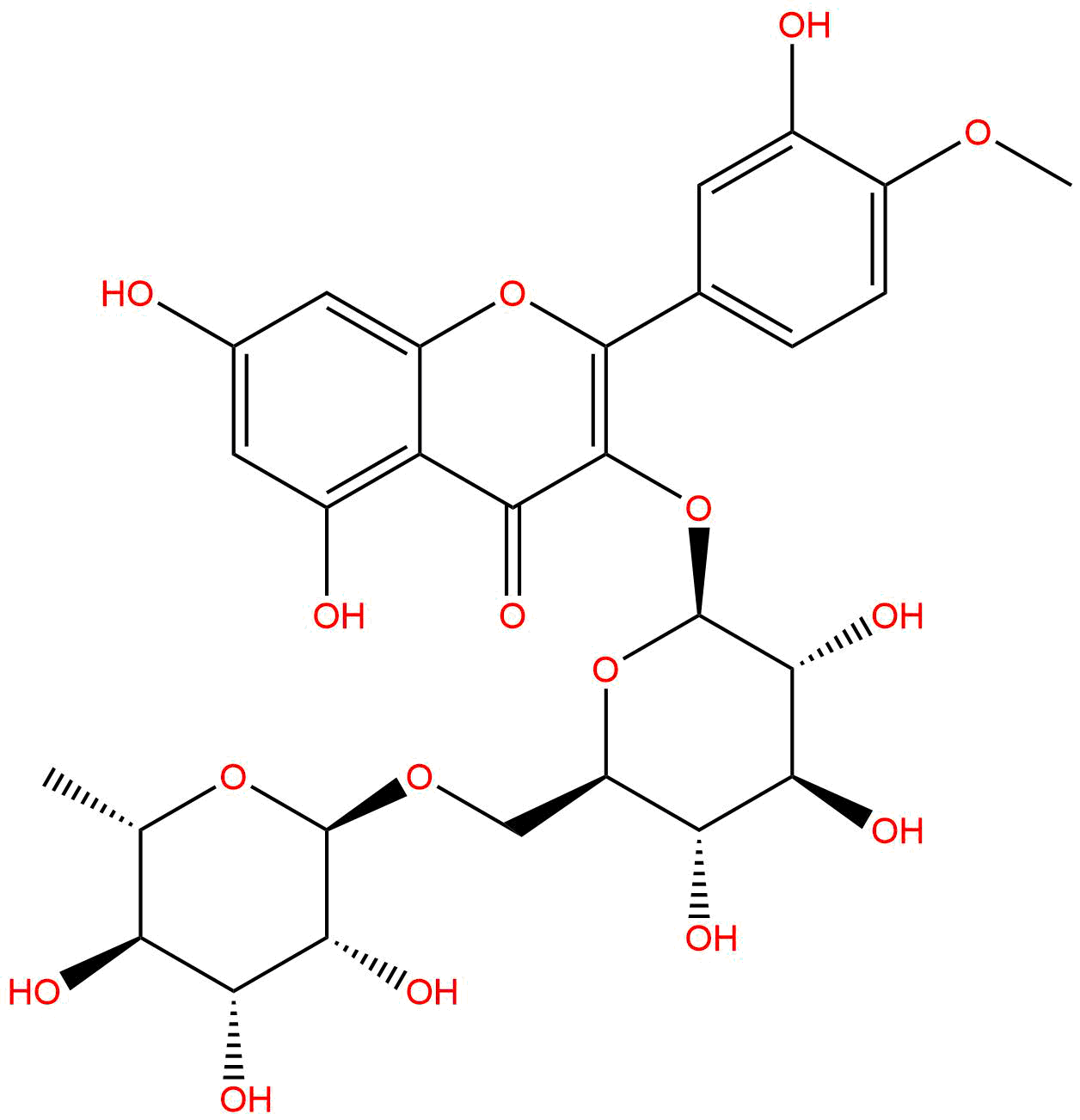


Product name: Tamarixetin-3-O-rutinoside
Synonym name: Tamarixetin-3-rutinoside
Catalogue No.: BP2317
Cas No.: 20550-05-4
Formula: C28H32O16
Mol Weight: 624.548
Botanical Source:
Type of Compound: Flavonoids
Purity: 95%~99%
Analysis Method: HPLC-DAD or/and HPLC-ELSD
Identification Method: Mass, NMR
Packing: Brown vial or HDPE plastic bottle
Storage: Store in a well closed container, protected from air and light. Put into refrigerate or freeze for long term storage.
Whenever possible, you should prepare and use solutions on the same day. However, if you need to make up stock solutions in advance, we recommend that you store the solution as aliquots in tightly sealed vials at -20℃. Generally, these will be useable for up to two weeks.
The product could be supplied from milligrams to grams
Inquire for bulk scale.
For Reference Standard and R&D, Not for Human Use Directly.
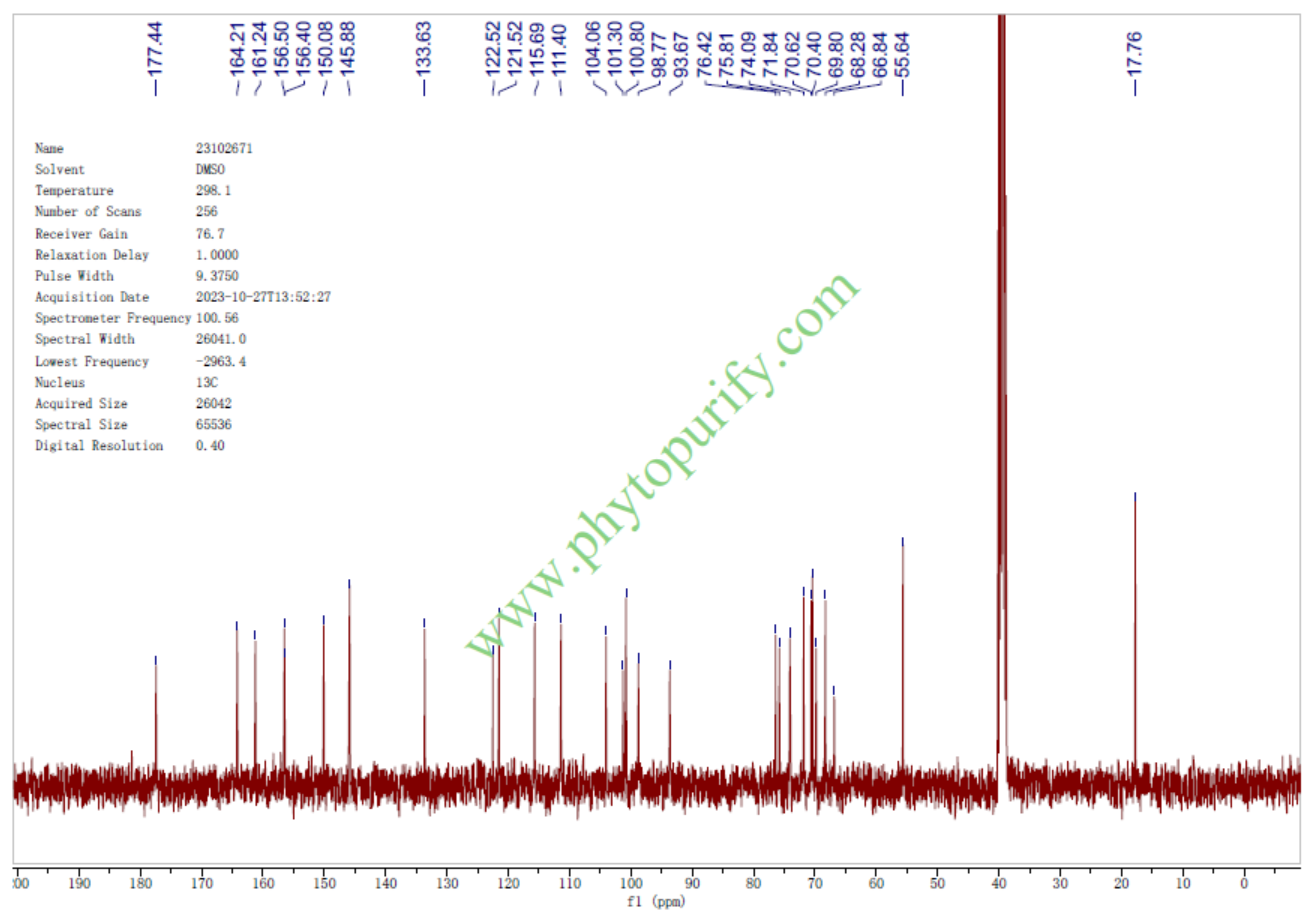
NMR of Tamarixetin-3-O-rutinoside
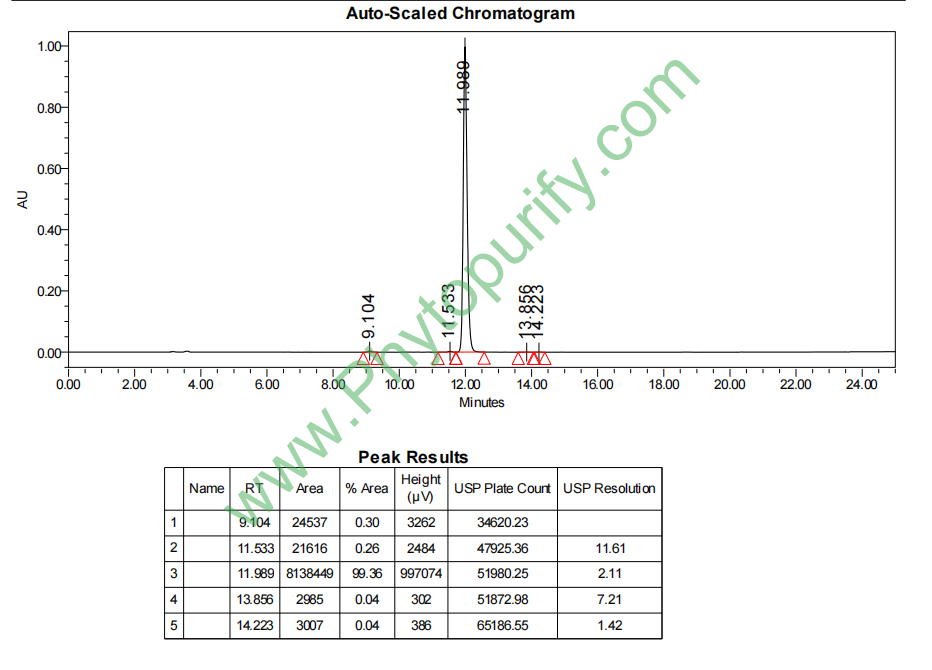
HPLC of Tamarixetin-3-O-rutinoside
Storage conditions:Short-term storage at 2~8℃, long-term storage at -20 ~ -80℃
258.4300
-.1884
-.3044
2.9455
.4621
.2074
Low
77.2291
4.7582
Yes
No
Yes
No
Yes
No
0.6
Yes
No
Yes
Yes
Natural products, as an important source of drug discovery, play an irreplaceable role in the long history of human fight against diseases. Flavonoids, as the most widely distributed class of secondary metabolites in nature, have attracted much attention due to their structural diversity and extensive biological activity. Tamarixetin-3-O-rutinoside, as a flavonol glycoside with unique structural characteristics, has gradually entered the field of researchers in recent years. This compound is composed of Tamarixetin (3 '- O-methylquercetin) and Rutinose (α - L-rhamnose - (1 → 6) - β - D-glucose) linked by glycosidic bonds. Its unique chemical structure endows it with biological characteristics distinct from the parent compound quercetin and other common flavonoid glycosides.
From the perspective of plant chemical taxonomy, mangiferin-3-rutinoside is mainly found in plants of the Tamaricaceae family, such as tamarisk(Tamarix chinensis)And Guanyin Willow(Tamarix ramosissima)In addition, it has also been found in certain medicinal plants such as Asteraceae and Fabaceae. In traditional medicine, plants of the genus Tamarix are often used to treat inflammation related diseases such as cough, asthma, rheumatoid arthritis, etc., which provides important clues and basis for modern pharmacological research. In recent years, with the advancement of separation and purification technology and activity screening methods, research on tamarisin-3-glucoside has gradually deepened, especially in terms of anti-inflammatory, antioxidant, and potential therapeutic value for respiratory diseases, showing remarkable prospects.
Of particular note is the predictive analysis based on network pharmacology and molecular docking technology, which shows a close association between mangiferin-3-rutinoside and asthma, a complex airway inflammatory disease. Its potential molecular targets cover AMPK(PRKAA1)、STAT3(STAT3)、ALOX5(ALOX5)、CASP1(CASP1)、TRPV1(TRPV1)、PLA2G2A(PLA2G2A)、ADORA2B(ADORA2B)、RELA(RELA) And multiple key signaling molecules such as PTGS1 (PTGS1). These targets involve multiple biological processes such as energy metabolism regulation, inflammatory signal transduction, arachidonic acid metabolism, cell apoptosis, and airway sensory nerve regulation, suggesting that the compound may exert its pharmacological effects through multi-target and multi pathway pathways. This article aims to provide a systematic review of the chemical structure, plant sources, extraction methods, pharmacological activities, mechanisms of action, pharmacological characteristics, and clinical application prospects of mangiferin-3-rutinoside, in order to provide comprehensive academic references for the in-depth research and development of this natural product.
The chemical structure of tamarixin-3-rutinoside belongs to flavonol glycosides, and its aglycone is tamarixetin, with the chemical name 3,5,7-trihydroxy-3 ', 4' - dimethoxyflavone. Compared with Quercetin, berberine introduces two methoxy groups (- OCH ∝) at the 3 'and 4' positions of the B ring, which significantly alters its molecular polarity and biological activity. On the 3rd hydroxyl group of the glycoside, a disaccharide unit called Rutinose is connected by a glycosidic bond. This disaccharide is composed of β - D-glucose and α - L-rhamnose, which are linked by an α (1 → 6) glycosidic bond. Therefore, the complete chemical name of the compound is tamarisin-3-O - α - L-rhamnosyl - (1 → 6) - β - D-glucoside, with CAS registration number 20550-05-4.
From the molecular formula, the molecular formula of tamarisin-3-glucoside is C ₂₈ H ∝₂ O ₁₆, with a molecular weight of 624.5480 g/mol. Its physicochemical properties exhibit typical characteristics of flavonoid glycosides. Firstly, its lipid water partition coefficient (LogP) is -0.1884, indicating that the compound has a slight tendency towards water solubility and belongs to a molecule with strong hydrophilicity. This characteristic is mainly attributed to multiple phenolic hydroxyl groups and a large number of hydroxyl groups in the sugar moiety of the molecule. Secondly, its polar surface area (TPSA) is as high as 258.4300 Å ², far exceeding the recommended upper limit of 140 Å ² for oral medications. This suggests that the compound may face poor transmembrane transport ability in vivo, especially difficulty in penetrating the blood-brain barrier. In fact, the drug efficacy evaluation clearly states that its blood-brain barrier penetration ability is "low", which is highly consistent with high TPSA values.
In terms of water solubility, the predicted water solubility value of this compound is 2.9455 mg/mL (approximately 4.7 mM), which belongs to the category of moderate water solubility. This characteristic enables it to maintain a certain dissolved state in physiological environments, which is conducive to interacting with cell surface receptors or extracellular enzymes. In addition, the risk assessment of hERG (human Ether - à - go Related Gene) potassium channel inhibition was negative, indicating that the compound has a low risk of cardiac toxicity. The predicted value of Ames test is 0.6, which is within the critical range, indicating a low potential genetic toxicity risk, but still needs to be verified through experiments. Overall, the physicochemical properties of mangiferin-3-rutinoside determine that its absorption, distribution, metabolism, and excretion (ADME) processes in the body will be significantly limited, especially with low oral bioavailability, which poses special requirements for its drug development strategy.
The distribution of mangiferin-3-rutinoside in nature has a certain selectivity, mainly enriched in plants of the tamarisk family. Tamarix genus(Tamarix)Plants, such as tamarisk(Tamarix chinensis)The hairy tamarisk(Tamarix hispida)Short spike tamarisk(Tamarix laxa)Waiting is the most important natural source of this compound. In addition, in Asteraceae plants such as Artemisia annua(Artemisia annua)And leguminous plants such as licorice(Glycyrrhiza uralensis)There are also a few reports in the middle. It is worth noting that the content of this compound varies significantly in different plants and is influenced by factors such as growth environment, harvest season, and plant location. Generally speaking, the content of tamarisk in flowers, leaves, and tender branches is relatively high, while the content in roots and stems is relatively low.
Researchers have developed various methods for the extraction of mangiferin-3-rutinoside, among which solvent extraction is the most classic and commonly used. Considering that the compound has moderate water solubility and some alcohol solubility, ethanol water mixed solvent is usually used as the extraction medium. Research has shown that 70% -80% ethanol aqueous solution can effectively destroy plant cell walls and promote the dissolution of target compounds at room temperature or under heating reflux conditions. During the extraction process, the solid-liquid ratio, extraction temperature, extraction time, and extraction frequency are key parameters that affect the extraction efficiency. The optimized process parameters are usually: material to liquid ratio of 1:10-1:20 (w/v), extraction temperature of 60-80 ℃, extraction for 1-2 hours each time, repeated 2-3 times. In order to improve extraction efficiency and selectivity, researchers have also attempted modern extraction techniques such as ultrasound assisted extraction (UAE) and microwave-assisted extraction (MAE). Ultrasound assisted extraction utilizes the cavitation effect to accelerate cell wall rupture, achieving high extraction rates in a short period of time (30-60 minutes) and operating at low temperatures, which is beneficial for protecting thermosensitive components. Microwave assisted extraction utilizes the rapid vibration of polar molecules in a microwave field to generate heat, achieving fast and efficient extraction. However, attention should be paid to controlling power and time to avoid local overheating and degradation of compounds.
The crude extract after extraction usually contains a large amount of impurities, including chlorophyll, wax, polysaccharides, proteins, and other flavonoids, thus requiring further separation and purification steps. Common purification methods include solvent extraction, macroporous adsorption resin column chromatography, polyamide column chromatography, and preparative high-performance liquid chromatography (Prep HPLC). Among them, macroporous adsorption resins (such as AB-8 and D101) are widely used for the preliminary purification of flavonoid glycosides due to their advantages of large adsorption capacity, mild desorption conditions, and reusability. By gradient elution (usually using an ethanol water system), the target compound can be enriched. Subsequently, polyamide column chromatography utilizes the hydrogen bonding between the phenolic hydroxyl and amide groups of flavonoids to achieve further separation. Finally, by using preparative HPLC with a reverse phase C18 chromatography column and acetonitrile water or methanol water as the mobile phase, the purity of tamaricarium-3-rutinoside monomer can reach over 95%. The establishment of the entire extraction and purification process provides a material basis for subsequent pharmacological activity research and drug evaluation.
In recent years, research on the pharmacological activities of mangiferin-3-rutinoside has gradually deepened, mainly focusing on anti-inflammatory, antioxidant, anti allergic, and protective effects against respiratory diseases. These studies not only validated the medicinal value of traditional Chinese medicine plants in the genus Tamarix, but also provided a scientific basis for the development of this compound as a novel lead compound.
anti-inflammatory activity It is one of the most prominent pharmacological effects of mangiferin-3-rutinoside. In vitro cell experiments have shown that the compound can significantly inhibit the production of nitric oxide (NO) and prostaglandin E ₂ (PGE ₂) in macrophages (such as RAW264.7 cells) induced by lipopolysaccharide (LPS), while downregulating the mRNA and protein expression levels of pro-inflammatory cytokines such as tumor necrosis factor - α (TNF - α), interleukin-6 (IL-6), and interleukin-1 β (IL-1 β). Its anti-inflammatory mechanism is closely related to the inhibition of the activation of the nuclear factor kappa B (NF - κ B) signaling pathway, specifically manifested by the inhibition of I κ B α phosphorylation and degradation, thereby preventing the nuclear translocation of p65 subunit (RELA). In addition, the compound can also inhibit the phosphorylation of p38 and JNK in the mitogen activated protein kinase (MAPK) pathway, further weakening the cascade amplification effect of inflammatory signals. It is worth noting that compared with the parent compound quercetin, tamarisin-3-glucoside exhibits certain differences in anti-inflammatory activity, which may be related to changes in molecular conformation and target affinity caused by B-cyclic methoxy substitution and glycosylation modification.
antioxidant activity It is a common characteristic of flavonoids, and tamarisin-3-glucoside also exhibits significant antioxidant capacity. The multiple phenolic hydroxyl groups in its molecular structure, especially the 5,7-dihydroxy group in the A ring and the 4 '- hydroxyl group in the B ring, can effectively scavenge free radicals such as 1,1-diphenyl-2-trinitrophenylhydrazine (DPPH) free radical, 2,2' - diazobis (3-ethylbenzothiazoline-6-sulfonic acid) free radical, and superoxide anion free radical. In addition, the compound can chelate transition metal ions (such as Fe ² ⁺, Cu ² ⁺) and inhibit the hydroxyl radicals generated by the Fenton reaction. In cell models, mangiferin-3-rutinoside can alleviate oxidative stress damage induced by hydrogen peroxide (H ₂ O ₂) or tert butyl hydroperoxide (t-BHP), increase the activity of intracellular superoxide dismutase (SOD), catalase (CAT), and glutathione peroxidase (GPx), and reduce the content of malondialdehyde (MDA). These results indicate that the compound exerts antioxidant effects through a dual mechanism of directly scavenging free radicals and enhancing the endogenous antioxidant defense system.
Antiallergic and anti asthmatic activity It is the most promising research direction for the application of mangiferin-3-rutinoside. Based on network pharmacology prediction, this compound has potential interactions with multiple targets related to asthma. Experimental studies have confirmed that mangiferin-3-rutinoside can inhibit degranulation of mast cells and reduce the release of histamine and trypsin. In a mouse model of asthma induced by ovalbumin (OVA), gavage administration of this compound significantly reduced airway hyperresponsiveness, decreased the number of eosinophils in bronchoalveolar lavage fluid (BALF), and inhibited the production of Th2 cytokines (such as IL-4, IL-5, IL-13). In addition, the compound can inhibit the proliferation of goblet cells and excessive secretion of mucus in the airway, reducing airway remodeling. These effects are closely related to their regulation of the STAT3 signaling pathway. STAT3, as a key transcription factor for Th2 cell differentiation and function, is closely related to the pathogenesis of asthma due to its overactivation. Lycopene-3-rutinoside can inhibit the phosphorylation of STAT3, thereby blocking the expression of downstream inflammatory genes.
Other pharmacological activities It also includes antiviral, anti-tumor, and cardiovascular protective effects. Preliminary studies have shown that the compound has a certain inhibitory effect on certain RNA viruses, such as influenza virus, which may be achieved by interfering with virus adsorption or replication processes. In terms of anti-tumor, tamarietin-3-rutoside shows cytotoxicity to a variety of cancer cell lines (such as HepG2, breast cancer MCF-7), and its mechanism involves inducing cell cycle arrest and apoptosis. However, these studies are still in their early stages and require more in vitro and in vivo experiments to validate.
The pharmacological activity of mangiferin-3-rutinoside is the result of its interaction with multiple molecular targets. Based on network pharmacology prediction and experimental verification, the potential mechanism of action of this compound in asthma treatment involves multiple signaling pathways and key proteins, forming a complex regulatory network.
AMPK signaling pathway AMPK (AMP activated protein kinase, encoded by the PRKAA1 gene) is a core sensor for cellular energy metabolism. In the pathological state of asthma, there is energy metabolism disorder in airway epithelial cells and inflammatory cells, and AMPK activity is usually inhibited. Lycopene-3-rutinoside can activate AMPK by phosphorylating its Thr172 site, enhancing its kinase activity. Activated AMPK reduces the synthesis of inflammatory proteins by inhibiting the mTOR signaling pathway; On the other hand, by promoting autophagy and clearing damaged organelles and protein aggregates, endoplasmic reticulum stress can be alleviated. In addition, AMPK activation can also inhibit the NF - κ B and STAT3 signaling pathways, thereby exerting anti-inflammatory effects. Therefore, AMPK may be a key upstream regulatory node for the anti asthma effect of mangiferin-3-rutinoside.
STAT3 signaling pathway STAT3 (Signal Transformer and Activitor of Transcription 3) is a core member of the JAK-STAT signaling pathway, playing a critical role in Th2 cell differentiation, eosinophil activation, and airway inflammation. The phosphorylation level of STAT3 in the airway tissue of asthma patients is significantly elevated. Lycopene-3-rutinoside can directly or indirectly inhibit the phosphorylation of STAT3, preventing its dimerization and translocation to the nucleus, thereby inhibiting the transcription of downstream target genes such as IL-4, IL-5, IL-13, CCL11, etc. This mechanism explains the inhibitory effect of the compound on Th2 type immune response and eosinophil infiltration.
Arachidonic acid metabolic pathway Lycopene-3-rutinoside has regulatory effects on multiple key enzymes in the arachidonic acid metabolism pathway. ALOX5 (5-lipoxygenase) is a key enzyme that catalyzes the production of leukotrienes from arachidonic acid, and leukotrienes (especially LTC ₄, LTD ₄, LTE ₄) are important spasmogenic and pro-inflammatory mediators in asthma. This compound can inhibit the activity of ALOX5 and reduce the synthesis of leukotrienes. Meanwhile, PLA2G2A (phospholipase A2 Group IIA) is responsible for releasing arachidonic acid from membrane phospholipids, which is the starting step of this pathway. Lycopene-3-rutinoside may reduce the substrate supply of arachidonic acid by inhibiting the activity of PLA2G2A. In addition, PTGS1 (cyclooxygenase-1) is also involved in the synthesis of prostaglandins, and moderate inhibition of PTGS1 by this compound may help regulate airway inflammation.
Inflammatory signal transduction pathway RELA (NF - κ B p65 subunit) is a core transcription factor in the classical NF - κ B signaling pathway. Tamarix tin-3-rutinoside inhibits the activity of I κ B kinase (IKK), preventing the phosphorylation and degradation of I κ B α, thereby causing RELA/p65 to remain in the cytoplasm and unable to enter the nucleus to initiate the transcription of pro-inflammatory genes such as TNF - α, IL-6, COX-2, iNOS. In addition, CASP1 (Caspase-1) is a key effector enzyme for inflammasome activation, responsible for cleaving pro-IL-1 β and pro-IL-18 into mature forms. This compound can inhibit the activity of CASP1, reduce the release of IL-1 β and IL-18, thereby alleviating the inflammatory response.
Sensory nerves and airway responsiveness regulation TRPV1 (Transient Receptor Potential Vanilloid 1) is a non selective cation channel expressed in sensory nerve endings, which can be activated by capsaicin, heat, acid, and endogenous inflammatory mediators. In asthma, excessive activation of TRPV1 leads to neurogenic inflammation and increased cough reflex. Tamaricarium-3-rutinoside may act as an antagonist of TRPV1, inhibiting its activity and thereby reducing airway hyperresponsiveness and cough symptoms. ADORA2B (adenosine A2B receptor) is a G protein coupled receptor that is upregulated in the airway epithelium and inflammatory cells of asthma patients. Adenosine promotes degranulation of mast cells and release of inflammatory mediators by activating ADORA2B. This compound may inhibit adenosine mediated inflammatory response by antagonizing ADORA2B.
In summary, mangiferin-3-rutinoside forms a synergistic network of multiple targets and pathways by simultaneously acting on AMPK, STAT3, ALOX5, CASP1, TRPV1, PLA2G2A, ADORA2B, RELA, and PTGS1. This "multi-target regulation" mode may have better efficacy and safety than single target drugs in the treatment of asthma, a complex disease.
The development of natural products into clinical drugs must undergo strict pharmacological evaluation. The medicinal properties of mangiferin-3-rutinoside exhibit significant advantages and challenges.
Pharmaceutical advantages Firstly, the hERG inhibition risk of this compound is "no", with an Ames test predicted value of 0.6 (low genotoxicity risk), indicating that it has a good safety basis and low risks of cardiac toxicity and mutagenicity. Secondly, its anti-inflammatory, antioxidant, and anti asthma activities are clear, and its mechanism of action involves multiple disease-related targets, which has the potential to be developed as a multi-target therapeutic drug. In addition, the compound is derived from traditional medicinal plants and has a certain folk medicinal basis, reducing development risks.
Drug Challenge The most prominent challenge lies in its pharmacokinetic properties. The LogP of this compound is -0.1884, with a high TPSA of 258.43 Å ² and moderate water solubility (2.9455 mg/mL). These physicochemical properties determine that its oral absorption will face significant challenges. The high polarity and high molecular weight (624.55 Da) make it difficult for it to passively diffuse through the intestinal epithelial cell membrane, and its oral bioavailability is expected to be extremely low. In addition, the blood-brain barrier penetration ability is "low", which, although not a fatal defect for peripheral diseases such as asthma, limits its application in central nervous system diseases. Another potential issue is that flavonoid glycosides are easily hydrolyzed by microbial enzymes (such as β - glucosidase, α - rhamnosidase) in the gut, producing the glycoside compound tamarisk, which is further metabolized (such as methylation, sulfation, glucuronidation). This means that after oral administration, the circulating substances in the body may mainly be metabolites rather than the prototype drug, and its pharmacological activity may be partially or entirely derived from metabolites.
Pharmacokinetic characteristics Based on its physical and chemical properties and studies of similar compounds, it can be inferred that the pharmacokinetic characteristics of mangiferin-3-rutinoside are as follows: in terms of absorption, oral absorption is poor, and the absolute bioavailability may be less than 5%; In terms of distribution, due to the high plasma protein binding rate (a common characteristic of flavonoids) and small distribution volume, it is mainly distributed in the blood and well perfused tissues; In terms of metabolism, the main metabolic pathways include hydrolysis and deglycosylation of gut microbiota to produce tamarisk, followed by phase II metabolism (methylation, sulfation, glucuronidation) in the liver and gut; In terms of excretion, it is mainly excreted in the form of metabolites through bile and urine. It is worth noting that inhalation administration may be an effective strategy to avoid the problem of low oral bioavailability. For asthma treatment, delivering drugs directly to the airway through nebulization inhalation can significantly increase lung drug concentration, reduce systemic exposure, and thus improve efficacy while reducing systemic side effects.
Formulation strategy To improve the pharmacological properties of mangiferin-3-rutinoside, the following formulation strategies can be considered: (1) liposome or nanoparticle encapsulation to enhance its water solubility and transmembrane ability; (2) Phospholipid complexes increase lipid solubility and promote oral absorption; (3) Pre drug design, such as introducing phosphate or amino acid ester groups to enhance water solubility or intestinal transporter affinity; (4) Development of inhaled formulations, such as dry powder inhalers or nebulized solutions, to achieve targeted delivery to the lungs.
As a natural flavonoid glycoside with multi-target regulatory ability, mangiferin-3-rutinoside has shown promising clinical application prospects in the treatment of asthma. Asthma is a highly heterogeneous chronic airway inflammatory disease. Although existing therapeutic drugs (such as inhaled corticosteroids, beta ₂ receptor agonists, leukotriene receptor antagonists) can effectively control symptoms, there are still problems such as poor response in some patients and significant side effects from long-term use. Therefore, the development of anti asthma drugs with new mechanisms and targets has important clinical significance.
The multi-target mode of action of mangiferin-3-rutinoside gives it unique advantages in the following aspects: firstly, by simultaneously inhibiting multiple inflammatory pathways such as STAT3, NF - κ B, and ALOX5, this compound may be effective for glucocorticoid resistant asthma patients. Corticosteroid resistance is a difficult point in clinical treatment, usually associated with sustained activation of NF - κ B and STAT3. Secondly, by regulating TRPV1 and ADORA2B, this compound may simultaneously improve airway hyperresponsiveness and cough symptoms, which is particularly important for patients with cough variant asthma and refractory cough. In addition, its AMPK activation may help improve energy metabolism disorders and mitochondrial dysfunction in asthma patients, intervening in disease progression from a metabolic perspective.
However, from laboratory research to clinical application, tamarisin-3-glucoside still faces many challenges. Firstly, it is necessary to establish stable and efficient synthetic or semi synthetic methods to address the issues of limited natural sources and high extraction costs. Chemical total synthesis or biocatalytic synthesis may be the future development direction. Secondly, it is necessary to conduct systematic pharmacokinetic studies to clarify the in vivo metabolic pathways, active metabolites, and tissue distribution characteristics. Especially, it is necessary to verify whether the retention time and local concentration of the drug in the lungs are sufficient to produce therapeutic effects after inhalation administration. Thirdly, a comprehensive toxicological evaluation is required, including acute toxicity, chronic toxicity, reproductive toxicity, and immunotoxicity, to ensure the safety of its clinical use. Fourthly, it is necessary to design a reasonable clinical trial plan, select appropriate patient populations (such as mild to moderate asthma, glucocorticoid resistant asthma, or cough variant asthma), and determine the appropriate administration route and dosage.
In addition to asthma, the potential application of tamarietin-3-rutoside in other inflammatory diseases (such as chronic obstructive pulmonary disease, allergic rhinitis, atopic dermatitis) and metabolic diseases (such as obesity, type 2 diabetes) is also worth exploring. Its AMPK activation and anti-inflammatory properties may also play beneficial roles in these diseases. In addition, the inhibitory effect of this compound on STAT3 suggests that it may have auxiliary value in tumor immunotherapy, but more research is needed to verify it.
As a natural flavonol glycoside with unique structural characteristics, the research value of mangiferin-3-rutinoside is gradually being recognized and discovered. This article provides a systematic review of the compound from the aspects of chemical structure, plant origin, pharmacological activity, mechanism of action, pharmacological evaluation, and clinical application prospects. This compound exhibits multiple pharmacological activities, including anti-inflammatory, antioxidant, anti allergic, and anti asthma effects, by acting on multiple molecular targets such as AMPK, STAT3, ALOX5, CASP1, TRPV1, PLA2G2A, ADORA2B, RELA, and PTGS1. It has potential application value in the field of asthma treatment.
However, the pharmaceutical challenges of this compound cannot be ignored, especially the low oral bioavailability and metabolic instability issues. Future research should focus on: (1) further elucidating its pharmacokinetic characteristics and active metabolites in vivo; (2) Develop suitable drug delivery systems (such as inhalation formulations) to improve local efficacy; (3) Explore its synergistic effect with existing anti asthma drugs; (4) Conduct a systematic preclinical toxicological evaluation. With the continuous deepening of research and the advancement of technology, tamarisin-3-glucoside is expected to move from the laboratory to clinical practice, providing new options for the treatment of asthma and other inflammatory diseases. Although the development of natural product drugs is full of challenges, it is precisely these molecules with unique structures and diverse activities that provide a continuous source of inspiration and material basis for modern drug discovery.
