| Catalog No | Package | Original Price | Price | Inventory | Quantity | Operating |
|---|---|---|---|---|---|---|
| BP5118-5mg | 5mg | $350.00 | Sign in |
|


Storage conditions:Short-term storage at 2~8℃, long-term storage at -20 ~ -80℃
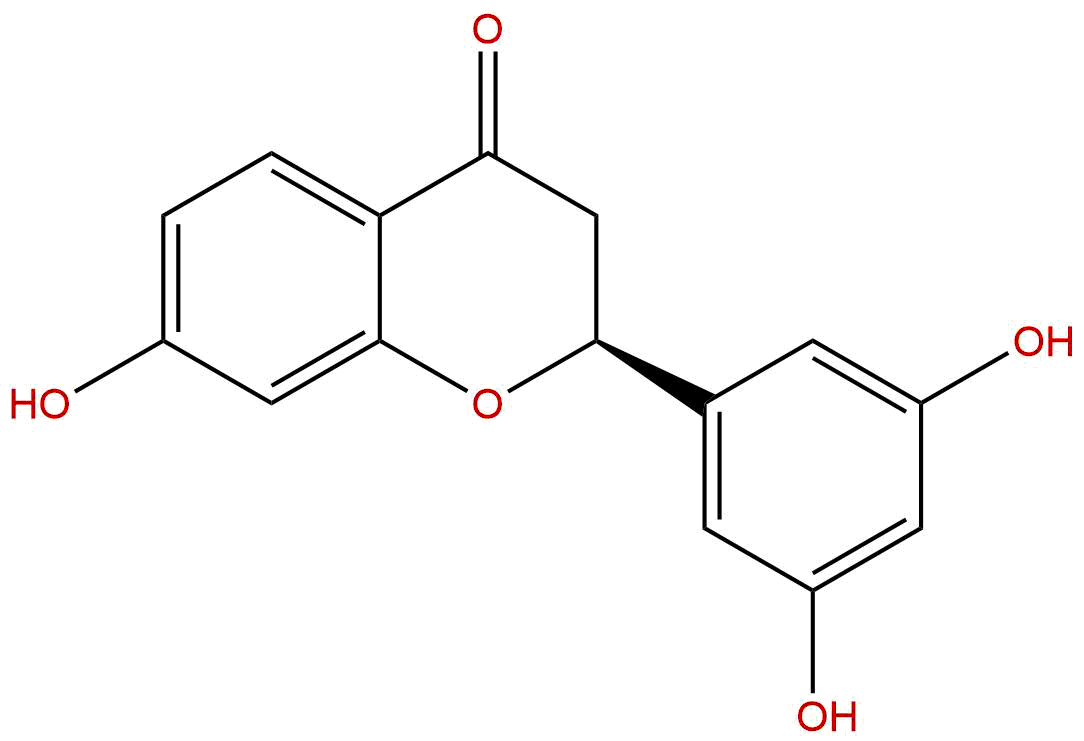
7,3 ', 5' - trihydroxyflavanone (CAS number: 847375-46-6), as a natural flavanone compound, has attracted much attention in recent years due to its significant biological activity. Flavonoids are widely present in various plants and have various pharmacological effects such as antioxidant, anti-inflammatory, antiviral, and anti-tumor properties. 7,3 ', 5' - trihydroxyflavanones exhibit excellent antiviral activity due to their unique trihydroxy structure, particularly in targeting various viral targets such as MPO, UL42, UL54, ICP27, TK, gD, CCR5, CXCR4, HIV1-PR, and INT. This article aims to provide a systematic review of the chemical structure and physicochemical properties, plant sources and extraction methods, pharmacological activity, mechanism of action, drug evaluation, and clinical application prospects of 7,3 ', 5' - trihydroxyflavanone, providing a theoretical basis and research direction for its subsequent research and drug development.
7,3 ', 5' - trihydroxyflavanones belong to flavanone compounds, with a molecular formula of C15H12O5 and a molecular weight of 272.2560. Its structural feature is the presence of hydroxyl groups at positions 7, 3 ', and 5' on the flavanone skeleton, forming a unique trihydroxy substitution pattern. This structure endows it with strong hydrophilicity and good free radical scavenging ability.
In terms of physicochemical properties, the LogP value of 7,3 ', 5' - trihydroxyflavanone is 1.9136, indicating its moderate lipid solubility, which is beneficial for its cell membrane penetration and bioavailability. The polar surface area (TPSA) is 86.99 Å ², indicating that its polarity is moderate and conducive to binding with biomolecule targets. The water solubility is 0.3356, which is not high but sufficient to support its dissolution and distribution in the body. The low permeability of the blood-brain barrier suggests limited distribution in the central nervous system. The hERG channel inhibition experiment showed a negative result, indicating a low risk of cardiac toxicity. The Ames mutagenicity test result is 0.0, indicating that its genetic toxicity risk is low and has a good safety basis.
7,3 ', 5' - trihydroxyflavanones are mainly found in various traditional medicinal and edible plants, especially in some flavonoid rich plants such as Rutaceae, Leguminosae, and Asteraceae. Specific plant species include but are not limited to certain citrus genera, flavonoid rich leguminous plants, and some wild herbaceous plants.
The extraction methods often use traditional solvent extraction combined with modern chromatographic separation techniques. The commonly used extraction solvents include a mixed solvent system of ethanol, methanol, and water, which utilizes ultrasound assisted extraction or reflux extraction to improve extraction efficiency. After concentration, the extract was purified and separated using silica gel column chromatography, high-performance liquid chromatography (HPLC), or reverse phase liquid chromatography (RP-HPLC) to obtain high-purity 7,3 ', 5' - trihydroxyflavanone. In recent years, supercritical CO2 extraction and membrane separation technologies have also been attempted to be applied to the extraction of this compound, aiming to improve yield and purity, and reduce solvent residue.
The pharmacological activity research of 7,3 ', 5' - trihydroxyflavanone mainly focuses on its antiviral effect, in addition to antioxidant, anti-inflammatory, and immune regulatory aspects.
Numerous in vitro and in vivo studies have shown that 7,3 ', 5' - trihydroxyflavanones exhibit inhibitory effects on various viruses, including DNA and RNA viruses. Its targets include single nucleotide peroxidase (MPO), herpes virus associated proteins UL42, UL54, ICP27, thymidine kinase (TK), viral glycoprotein D (gD), as well as HIV related targets CCR5, CXCR4, HIV1 protease (HIV1-PR), and integrase (INT). Research has shown that this compound can exert antiviral effects by inhibiting virus replication, blocking virus entry into host cells, and interfering with the function of viral proteins.
As a polyhydroxyflavanone, 7,3 ', 5' - trihydroxyflavanone has significant free radical scavenging ability, which can effectively reduce oxidative stress levels and alleviate tissue damage. In addition, its regulatory effect on inflammatory mediators has also been confirmed, which can inhibit the release of pro-inflammatory cytokines and alleviate inflammatory reactions.
Related studies have shown that 7,3 ', 5' - trihydroxyflavanone can regulate the function of immune cells, enhance the body's immune defense ability, and promote the establishment of antiviral immune responses.
The antiviral mechanisms of 7,3 ', 5' - trihydroxyflavones are diverse, mainly achieved through interactions with key viral proteins and host receptors.
MPO (myeloperoxidase)This enzyme plays an important role in host immune response, and 7,3 ', 5' - trihydroxyflavanone indirectly inhibits viral infection by regulating MPO activity, reducing oxidative damage.
UL42、UL54、ICP27、TK、gD These are key proteins of herpes virus, involved in viral DNA replication, transcriptional regulation, and viral assembly. 7,3 ', 5' - trihydroxyflavanone can bind to these proteins, block their function, and inhibit the viral life cycle.
CCR5、CXCR4 As the core receptor for HIV virus to enter host cells, 7,3 ', 5' - trihydroxyflavanone antagonizes these two receptors and blocks virus invasion.
HIV1-PR (protease) and INT (integrase)These two enzymes are key enzymes for HIV replication, and 7,3 ', 5' - trihydroxyflavanone blocks virus replication and gene integration by inhibiting its enzymatic activity.
Molecular docking and dynamic simulation studies further revealed the binding mode between the compound and the target protein, showing that its hydroxyl group stably binds through hydrogen bonding and hydrophobic interactions, effectively inhibiting target activity.
7,3 ', 5' - trihydroxyflavanones exhibit good potential for drug development. Its molecular weight is moderate (272.2560), and its LogP value (1.9136) conforms to Lipinski's rule, which is beneficial for oral absorption. The TPSA is 86.99 Å ², suitable for cell membrane permeation. Although the water solubility is limited (0.3356), the bioavailability can be improved through formulation optimization.
The low permeability of the blood-brain barrier suggests that it mainly acts on peripheral tissues, reducing the risk of central nervous system side effects. HERG channel inhibition was negative and Ames test showed no mutagenicity, indicating its high safety.
Pharmacokinetic studies have shown that 7,3 ', 5' - trihydroxyflavanone is absorbed rapidly after oral administration, with a moderate plasma half-life. It is mainly metabolized through the liver, and the metabolites have no significant toxicity. Its biotransformation involves glucuronic acid binding and sulfation, promoting excretion.
Given the multi-target effects and good safety of 7,3 ', 5' - trihydroxyflavanone in the field of antiviral drugs, it has broad prospects in the development of antiviral drugs. Especially in the treatment of herpes virus and HIV, as a novel small molecule inhibitor, 7,3 ', 5' - trihydroxyflavanone is expected to overcome the existing drug resistance problem and provide new treatment strategies.
In addition, its antioxidant and immune regulatory effects provide the possibility for adjuvant therapy of chronic viral infections and related inflammatory diseases. Future research should focus on its in vivo pharmacological evaluation, formulation development, and preclinical safety studies to promote its clinical translation.
Meanwhile, optimizing its water solubility and bioavailability through structural modification and drug design will further enhance its clinical application value. Combining modern drug delivery systems, such as nanocarriers and targeted drug delivery technology, is expected to achieve precise treatment.
7,3 ', 5' - trihydroxyflavanone, as a natural flavanone compound with unique structure and multiple biological activities, exhibits extensive antiviral potential and good drug properties. Its multi-target mechanism of action provides new ideas for the development of antiviral drugs. In the future, through in-depth pharmacological mechanism research, pharmacokinetic optimization, and preclinical studies, it is expected to become a new generation of safe and effective antiviral drugs. The continuous development of natural product pharmacology will lay a solid foundation for the clinical application of 7,3 ', 5' - trihydroxyflavanone and promote its widespread use in antiviral and related disease treatment.
