| Catalog No | Package | Original Price | Price | Inventory | Quantity | Operating |
|---|---|---|---|---|---|---|
| BP5104-5mg | 5mg | $250.00 | Sign in |
|


Storage conditions:Short-term storage at 2~8℃, long-term storage at -20 ~ -80℃
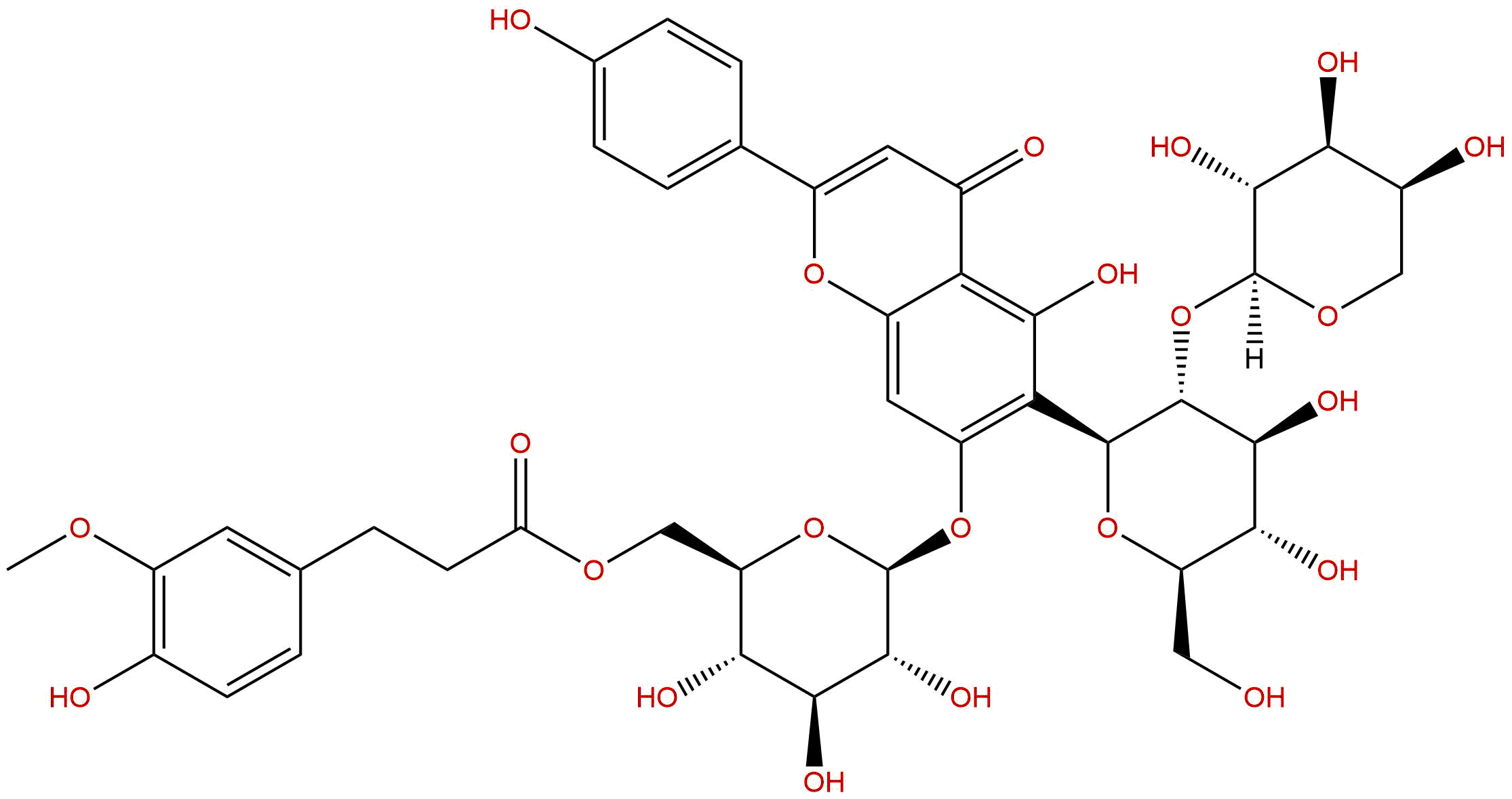
Vaccarin E, a natural C-flavonoid carbon glycoside isolated from the plant Vincetoxicum hispanica, has received widespread attention in recent years due to its significant biological activity and potential medicinal value. As a natural product, Wangbuliuxing flavonoid glycoside E exhibits excellent pharmacological activity in the field of cardiovascular protection, involving multiple key targets and signaling pathways, demonstrating its potential for application in the prevention and treatment of cardiovascular diseases. This article provides a systematic review of the chemical structure and physicochemical properties, plant sources and extraction methods, pharmacological activity, mechanism of action, pharmacological evaluation, and clinical application prospects of Wangbuliuxing flavonoid glycoside E. The aim is to provide theoretical basis and reference for further in-depth research and drug development.
Wangbuliuxing flavonoid glycoside E belongs to the C-flavonoid carbon glycoside class of natural products, with a complex molecular formula and a molecular weight of 904.8240. Its structural feature is that the flavonoid mother nucleus is connected to the sugar group through carbon bonds, which distinguishes it from common O-glycosides. The carbon glycosidic bond of C-glycosides endows it with high chemical and metabolic stability. The LogP value of Wangbuliuxing flavonoid glycoside E is -0.1574, indicating its strong hydrophilicity. Combined with its high polar surface area (TPSA of 354.6500), it shows good water solubility (1.5801), which is beneficial for its absorption and distribution in vivo. The low permeability of the blood-brain barrier suggests limited impact on the central nervous system and may reduce the risk of central toxicity. The hERG channel inhibition test result was negative, indicating a low risk of cardiac toxicity. The Ames mutagenicity test showed 0.0, indicating no significant mutagenicity and a good safety basis.
The main source of flavonoid glycoside E in Wang Buliuxing is Vinetoxicum Hispanica, a plant widely distributed along the Mediterranean coast. It is commonly used in traditional Chinese medicine for promoting blood circulation, removing blood stasis, reducing swelling, and relieving pain. The common methods for extracting flavonoid glycoside E from Wangbuliuxing include solvent extraction, ultrasound assisted extraction, and high-performance liquid chromatography (HPLC) separation and purification. Ethanol or methanol are usually used as extraction solvents, combined with ultrasound assistance to improve extraction efficiency. After concentration, separation, and chromatographic separation, the extract was subjected to structural identification and purity confirmation using mass spectrometry and nuclear magnetic resonance (NMR) techniques. In recent years, green extraction techniques such as supercritical fluid extraction and microwave-assisted extraction have also been attempted to be applied to the efficient extraction of flavonoid glycosides E from Platycodon grandiflorus, in order to improve yield and purity and reduce environmental impact.
The pharmacological activity research of Wangbuliuxing flavonoid glycoside E mainly focuses on its cardiovascular protective effect. Multiple in vitro and in vivo experiments have shown that this compound has anti-inflammatory, antioxidant, endothelial function improving, and blood lipid regulating effects. Its significant anti-inflammatory activity is manifested in inhibiting the expression of inflammatory factors such as ICAM1 and VCAM1, reducing the adhesion and inflammatory response of vascular endothelial cells. In terms of antioxidant properties, Wangbuliuxing flavonoid glycoside E can enhance the activity of nitric oxide synthase (NOS3) in endothelial cells, increase the production of nitric oxide (NO), and alleviate oxidative stress damage. In addition, the compound has an inhibitory effect on angiotensin converting enzyme (ACE), which helps regulate blood pressure and improve vascular function. Animal model studies showed that Semen vaccariae flavonoid glycoside E could significantly improve hypertension, atherosclerosis and myocardial ischemia-reperfusion injury, showing a good cardiovascular protection effect.
Wangbuliuxing flavonoid glycoside E exerts its cardiovascular protective effect through multi-target and multi pathway synergy. Its main targets include:
Overall, Wangbuliuxing flavonoid glycoside E exhibits a complex and multidimensional pharmacological mechanism by modulating the aforementioned targets, synergistically inhibiting inflammatory responses, improving endothelial function, regulating blood pressure, and myocardial protection.
From the perspective of medicinal properties, Wangbuliuxing flavonoid glycoside E has high water solubility and moderate molecular weight, which is conducive to absorption and distribution in the body. Its LogP value is close to neutral, indicating that it has a certain solubility in both aqueous and lipid phases, which is conducive to transmembrane transport. High polarity surface area (TPSA) may limit its oral bioavailability, but its stable C-glycosidic bond structure helps resist gastrointestinal enzymatic hydrolysis and improve in vivo stability. Low blood-brain barrier permeability reduces the risk of central nervous system side effects. The hERG channel has no inhibitory effect and reduces potential cardiac toxicity. A negative Ames test indicates a low risk of genetic toxicity.
In terms of pharmacokinetics, existing research is relatively limited. Preliminary in vitro metabolic experiments have shown that Wangbuliuxing flavonoid glycoside E is metabolically stable in liver microsomes and mainly excreted through the kidneys. Further research on in vivo absorption, distribution, metabolism, and excretion (ADME) is needed in the future to clarify its bioavailability, half-life, and metabolites, and optimize the dosing regimen.
Cardiovascular disease, as one of the leading causes of death worldwide, urgently requires safe and effective new therapeutic drugs. The flavonoid glycoside E of Semen Vaccariae shows broad clinical application potential with its multi target cardiovascular protection and good safety. Its role in anti inflammation, anti-oxidation, regulating blood pressure and improving vascular function provides a new idea for auxiliary treatment of hypertension, atherosclerosis, coronary heart disease, myocardial ischemia and other diseases.
Future research should focus on:
In addition, by combining the advantages of modern medicinal chemistry and natural product chemistry, optimizing the pharmacological and pharmacokinetic properties of Wangbuliuxing flavonoid glycoside E through structural modification and drug design, it is expected to develop new highly efficient and low toxicity cardiovascular protective drugs.
Wangbuliuxing flavonoid glycoside E, as a natural C-flavonoid carbon glycoside derived from Wangbuliuxing, has become a hot topic in natural product pharmacology research due to its unique chemical structure and significant cardiovascular protective activity. Its multi-target mechanism of action and good safety provide new drug candidate molecules for the prevention and treatment of cardiovascular diseases. Although the research on its pharmacokinetics and clinical application is still in its infancy, with the deepening of research, Wangbuliuxing flavonoid glycoside E is expected to become an important natural drug resource in the field of cardiovascular disease treatment. In the future, through interdisciplinary collaboration, promoting the transformation from basic research to clinical practice will greatly facilitate the application and development of natural products in modern medicine.
