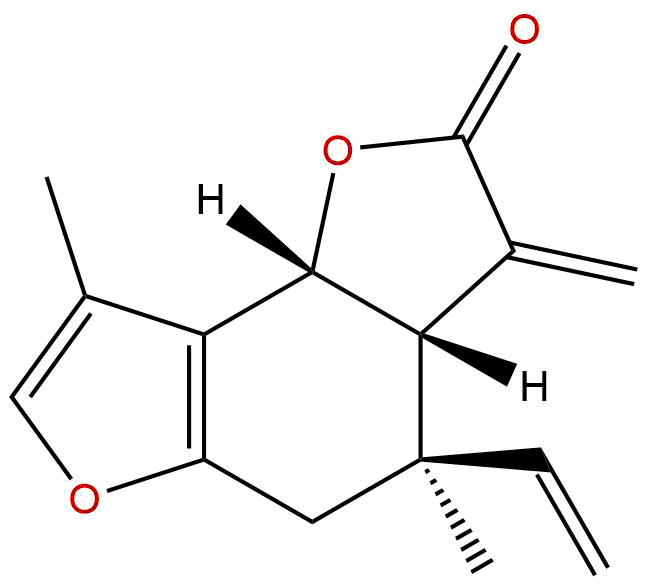


Product name: Isolinderalactone
Synonym name:
Catalogue No.: BP4965
Cas No.: 957-66-4
Formula: C15H16O3
Mol Weight: 244.29
Botanical Source:
Type of Compound: Sesquiterpenoids
Purity: 95%~99%
Analysis Method: HPLC-DAD or/and HPLC-ELSD
Identification Method: Mass, NMR
Packing: Brown vial or HDPE plastic bottle
Storage: Store in a well closed container, protected from air and light. Put into refrigerate or freeze for long term storage.
Whenever possible, you should prepare and use solutions on the same day. However, if you need to make up stock solutions in advance, we recommend that you store the solution as aliquots in tightly sealed vials at -20℃. Generally, these will be useable for up to two weeks.
The product could be supplied from milligrams to grams
Inquire for bulk scale.
For Reference Standard and R&D, Not for Human Use Directly.
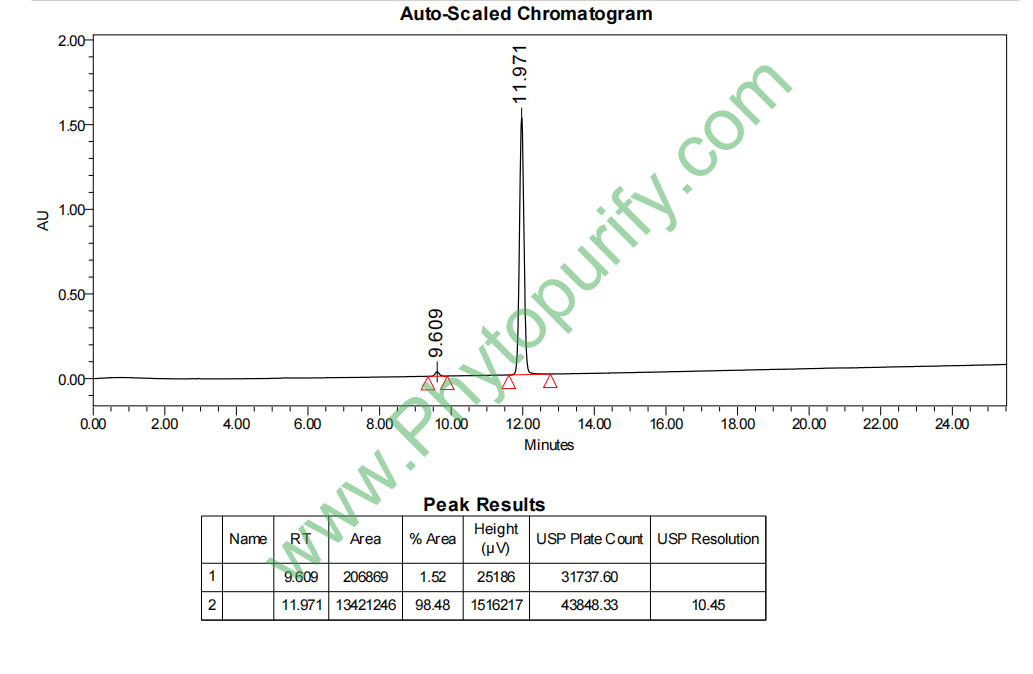
HPLC of Isolinderalactone
Storage conditions:Short-term storage at 2~8℃, long-term storage at -20 ~ -80℃
39.4400
2.8100
2.8099
.0691
6.1925
24.7943
High
76.9992
4.6848
No
No
No
No
Yes
Yes
0.0
Yes
Yes
Yes
Yes
Natural products, as an important source of drug discovery, play an irreplaceable role in the long struggle between humans and diseases. From ancient plant medicines to modern targeted drugs, the chemical diversity inherent in nature provides endless inspiration for the development of innovative drugs. Among numerous natural products with biological activity, sesquiterpenes have attracted much attention due to their structural diversity and extensive pharmacological activities. Isolinderalactone (CAS number: 957-66-4) is a traditional medicinal plant derived from the herb Ulva(Lindera aggregata)The sesquiterpene lactones have gradually entered the field of researchers in recent years, demonstrating various pharmacological potentials.
Isowuyao lactone was initially isolated and identified from the roots of the camphor plant Wuyao. Wuyao has a long history of application in traditional Chinese medicine, commonly used to treat chest and abdominal distension, shortness of breath, bladder deficiency and coldness. Modern pharmacological research has revealed that extracts of black medicinal herbs have various activities such as anti-inflammatory, analgesic, antibacterial, and anti-tumor effects, among which isowuyao lactone is considered one of its important active ingredients. With the deepening of research, the anti-cancer, anti-inflammatory, and neuroprotective effects of isoleuclide have gradually been revealed. Its mechanism of action involves the inhibition of the vascular endothelial growth factor (VEGF) and its receptor VEGFR2 signaling pathway, as well as the inhibition of proliferation and induction of apoptosis in various tumor cell lines, such as U-87 glioblastoma (GBM) cells and colorectal cancer (CRC) cells. In addition, isoflavones have shown dual regulatory effects on the NF - κ B and Nrf2 signaling pathways in inflammatory models, and have been shown to improve cognitive function in animal models of Alzheimer's disease (AD). These findings indicate that isoquercetin is a lead compound with multi-target and multi pathway action characteristics, and has potential research and development value in fields such as tumors, neurodegenerative diseases, and inflammatory diseases. This article aims to systematically review the chemical properties, plant sources, pharmacological activities, mechanisms of action, and pharmacological characteristics of isowuyao lactone, in order to provide comprehensive references for the subsequent research and development of this compound.
Isowuyao lactone belongs to the sesquiterpene lactone class, with a typical sesquiterpene skeleton and a gamma lactone ring in its chemical structure. According to its source and structural characteristics, it is classified as a gualane type sesquiterpene lactone. Its molecular formula is C ₁₅ H ₁₆ O3, and its molecular weight is 244.2900. Structurally, the core of isowuyao lactone is a tricyclic system consisting of 15 carbon atoms, which contains a five membered lactone ring that is a key pharmacophore for its various biological activities. The precise structure of the compound has been confirmed by spectroscopic methods such as nuclear magnetic resonance (NMR) and mass spectrometry (MS).
In terms of physical and chemical properties, isoquercetin exhibits a certain degree of lipophilicity. The calculated lipid water partition coefficient (LogP) is 2.8100, indicating that the compound has good solubility in a lipid soluble environment, which facilitates its penetration through biological membranes, including cell membranes and the blood-brain barrier. In fact, its blood-brain barrier penetration ability has been evaluated as' high ', which is crucial for its application in central nervous system diseases such as Alzheimer's disease. Its topological polar surface area (TPSA) is 39.4400 Å ², which is a relatively low value, further supporting its good membrane permeability and oral absorption potential. However, its water solubility is relatively poor, with a calculated water solubility value of 0.0691 mg/mL, which may limit its in vivo administration route and bioavailability. It is worth noting that the risk assessment of hERG inhibition is' no ', indicating a lower potential risk in terms of cardiac toxicity. The Ames test result is 0.0, indicating that the compound did not exhibit mutagenicity in the bacterial recovery mutation test, and the preliminary safety is good. These physicochemical properties and early safety data provide a favorable basis for the further development of isoquercetin as a candidate drug or lead compound, but the problem of poor water solubility may need to be improved through formulation methods such as nanoparticle, liposome, or prodrug design.
Isowuyao lactone is mainly derived from the Lauraceae genus of mountain pepper in the Lauraceae family(Lindera)Plants, the main source of which is black medicine(Lindera aggregata (Sims) Kosterm., Also known as Lindera strychnifolia). Wuyao is mainly distributed in the Yangtze River Basin and southern provinces of China, such as Zhejiang, Anhui, Jiangxi, Fujian, etc. Its dried root tubers are the authentic source of traditional Chinese medicine "Wuyao". In addition, plants of the same genus such as Lindera obtusiloba、Lindera benzoin It may also contain this ingredient, but the content is usually low.
The chemical components in black medicine are complex, including volatile oils, alkaloids, sesquiterpene lactones, flavonoids, etc. As one of the main sesquiterpene lactones, the extraction and separation of isowuyao lactone usually follow the classic process of natural product chemistry. Traditional extraction methods often use organic solvent soaking or reflux extraction. Given the lipophilic properties of isoquercetin, commonly used extraction solvents include ethanol, methanol, or their mixed solvents. For example, after crushing the dried black medicine roots, multiple extractions or percolation extractions can be carried out with 95% ethanol or methanol at room temperature or heating conditions. The extract was concentrated under reduced pressure to obtain the total extract.
The separation and purification of isoquercetin from the total extract usually requires the combination of multiple chromatographic techniques. Firstly, the total extract can be subjected to solvent distribution, such as extraction with petroleum ether, ethyl acetate, and n-butanol in sequence. Isocoumarin is mainly enriched in the ethyl acetate extraction site due to its equal polarity. Subsequently, the site can be preliminarily separated by silica gel column chromatography using gradient elution systems such as petroleum ether ethyl acetate or chloroform methanol. For further refining, Sephadex LH-20 gel column chromatography, reverse phase silica gel column chromatography (such as ODS) and preparative high-performance liquid chromatography (Pre HPLC) can be used. During the separation process, thin-layer chromatography (TLC) combined with ultraviolet detection or specific color reagents (such as vanillin sulfuric acid) are often used for tracking and monitoring. The final monomers of isowuyao lactone can be structurally identified by spectroscopic methods (NMR, MS), and their purity can be analyzed by high-performance liquid chromatography (HPLC), usually requiring a purity of over 98% for subsequent pharmacological research.
In recent years, in order to extract active ingredients from black medicine more efficiently and environmentally friendly, some modern extraction techniques have also been applied, such as ultrasound assisted extraction, microwave-assisted extraction, and supercritical fluid extraction. These technologies can shorten extraction time, improve extraction efficiency, and reduce the use of organic solvents. However, in laboratory research and industrial production, traditional ethanol reflux extraction combined with modern chromatographic separation technology is still the main means of obtaining high-purity isocoumarin.
The anti-tumor activity of isowuyao lactone is one of the most concerned research directions. Existing studies have shown that this compound exhibits significant proliferation inhibition and pro apoptotic effects on various types of tumor cells.
1. Effects on glioblastoma (GBM): Glioblastoma is the most common and invasive primary brain tumor in adults, with limited treatment options and extremely poor prognosis. Research has found that isoquercetin can significantly reduce the survival rate of U-87 GBM cells and induce their apoptosis. The mechanism may be related to the inhibition of VEGF expression and tyrosine phosphorylation of VEGFR2. The VEGF/VEGFR2 signaling pathway is a key driving factor for tumor angiogenesis. By blocking this pathway, isoleuclide can not only directly inhibit tumor cell growth, but also indirectly exert anti-cancer effects by inhibiting the formation of tumor neovascularization, which is particularly important for highly vascularized GBM.
2. The role of colorectal cancer (CRC): Colorectal cancer is a malignant tumor with the highest incidence rate and mortality in the world. Isocoumarin also exhibits strong cytotoxicity against various CRC cell lines, such as HCT116, HT-29, etc. Its mechanism of action involves multiple levels: firstly, it can induce G2/M phase cell cycle arrest in CRC cells, thereby preventing cell division and proliferation. Secondly, isoflavones can significantly increase the level of intracellular reactive oxygen species (ROS), and excessive ROS can disrupt mitochondrial membrane potential, triggering endogenous apoptosis pathways. In addition, the compound can activate the pJNK and p38 MAPK signaling pathways, which are typically closely associated with stress response and cell apoptosis. Overall, isoflavones induce apoptosis in CRC cells through a multi pronged approach, including inducing ROS bursts, activating the MAPK pathway, and blocking the cell cycle.
Inflammation is a common pathological basis for many diseases, including cancer, neurodegenerative diseases, and autoimmune diseases. Isowuyao lactone exhibits significant anti-inflammatory activity in both in vitro and in vivo models.
In the classic RAW264.7 macrophage inflammation model, isoleuclide can effectively block the inflammatory response induced by lipopolysaccharide (LPS). One of its key mechanisms is to inhibit the activation of the NF - κ B signaling pathway. NF - κ B is a core transcription factor that regulates the expression of various inflammatory factors (such as TNF - α, IL-6, IL-1 β) and chemokines. Isouridine inhibits the nuclear translocation of NF - κ B p65 subunit by blocking the phosphorylation and degradation of I κ B α, thereby reducing the production of downstream pro-inflammatory mediators. At the same time, isoquercetin can also activate the Nrf2-HMOX1 signaling pathway. Nrf2 is a key regulatory factor in the cellular antioxidant defense system, and its activation can induce the expression of a series of antioxidant enzymes (such as HMOX-1, NQO1), thereby enhancing the cell's ability to resist oxidative stress. Therefore, isoquercetin exerts a synergistic protective effect in the inflammatory microenvironment through a dual mechanism of "inhibiting the pro-inflammatory pathway (NF - κ B)" and "activating the antioxidant pathway (Nrf2)".
Given its excellent ability to penetrate the blood-brain barrier, the potential application of isoleuclide in neurological diseases has also attracted the interest of researchers. Especially its performance in the Alzheimer's disease (AD) model is encouraging.
In APP/PS1 double transgenic mice (a classic AD animal model), long-term administration of isoleuclide can significantly improve cognitive dysfunction in mice, which has been validated in behavioral tests such as Morris water maze. Its neuroprotective mechanism may be closely related to its anti-inflammatory and antioxidant activities. The pathological features of AD include deposition of β - amyloid protein (A β), excessive phosphorylation of tau protein, neuroinflammation, and oxidative stress. Isouridine may alleviate oxidative damage, protect neurons, improve synaptic plasticity, and ultimately alleviate cognitive decline by inhibiting A β - induced activation of microglia, reducing the release of neuroinflammatory factors, and activating the Nrf2 pathway. In addition, its anti anxiety activity may also be beneficial for the psychological and behavioral symptoms associated with AD.
In addition to the main activities mentioned above, isoquercetin has also been reported to have anti anxiety effects. Its anti anxiety effect may be related to regulating the monoamine neurotransmitter system, including MAOA, SLC6A4 (serotonin transporter), HTR2A (5-HT2A receptor), DRD2 (dopamine D2 receptor), HTR1A (5-HT1A receptor), as well as the GABAergic system (GABRA1, GABRB2, GABRG2) and BDNF. This indicates that isowuyao lactone may exert central nervous system regulatory effects through multi-target and multi pathway pathways.
The pharmacological activity of isowuyao lactone involves its interaction with multiple molecular targets, exhibiting characteristics of multi-target and multi pathway action. Its core mechanism of action can be summarized as follows:
1. Inhibit the VEGF/VEGFR2 signaling pathway: This is the key to its anti-tumor activity, especially its anti angiogenic activity. Isouridine can directly inhibit the expression of VEGF and block the tyrosine phosphorylation of VEGFR2, thereby inhibiting the activation of downstream survival and proliferation signaling pathways such as PI3K/Akt and MAPK/ERK, ultimately inhibiting tumor cell growth and neovascularization.
2. Inducing oxidative stress and MAPK pathway activation: In tumor cells, isoflavones can significantly increase intracellular ROS levels. High levels of ROS not only directly damage DNA, proteins, and lipids, but also act as second messengers to activate stress-related signaling pathways such as JNK and p38 MAPK. The activation of pJNK and p38 is usually associated with mitochondrial dysfunction and the initiation of caspase cascade reactions, ultimately leading to cell apoptosis. Meanwhile, the accumulation of ROS may also lead to the activation of cell cycle checkpoint kinases, thereby inducing G2/M phase cell cycle arrest.
3. Regulating the NF - κ B and Nrf2 signaling pathways: Under inflammatory and oxidative stress conditions, isoleuclide exhibits bidirectional regulatory effects on two key signaling pathways. On the one hand, it inhibits the activity of I κ B kinase (IKK), prevents the degradation of I κ B α, and thus suppresses the nuclear translocation and transcriptional activity of NF - κ B, reducing the expression of pro-inflammatory cytokines (such as TNF - α, IL-6) and adhesion molecules. On the other hand, it can activate Nrf2, promote the dissociation and translocation of Nrf2 from Keap1 into the nucleus, bind to antioxidant response elements (ARE), initiate the transcription of downstream antioxidant enzyme genes (such as HMOX-1, NQO1, GCLC), and enhance the cell's antioxidant defense ability. The synergistic effect of "anti-inflammatory" and "antioxidant promoting" is the core mechanism of its protective effect in various disease models.
4. Regulating the neurotransmitter system: Based on its anti anxiety activity, isoquercetin may regulate emotions by interacting with multiple receptors and transporters in the central nervous system. Its potential targets may include inhibiting the activity of monoamine oxidase A (MAOA) and reducing the degradation of monoamine neurotransmitters such as serotonin and dopamine; Inhibit serotonin transporter (SLC6A4) and increase serotonin concentration in synaptic cleft; And regulate the functions of 5-HT2A, 5-HT1A, dopamine D2 receptors, and GABA-A receptors. In addition, upregulating the expression of brain-derived neurotrophic factor (BDNF) may also be an important pathway for its anti anxiety and neuroprotective effects.
In summary, the mechanism network of action of isowuyao lactone is complex, and its effects in different disease models are the result of the combined effects of multiple mechanisms mentioned above. This multi-target characteristic gives it potential advantages in treating complex diseases such as cancer and neurodegenerative diseases, but also increases the complexity of its mechanism of action research.
The evaluation of drug properties is a crucial step in determining whether natural products can move from laboratory research to clinical applications. According to existing data, isowuyao lactone exhibits some favorable pharmacological characteristics, but also faces some challenges.
Beneficial features:
* Good membrane permeability: The lower molecular weight (244.29 Da) and moderate LogP value (2.81) comply with Lipinski's five rules, indicating good oral absorption and membrane permeability.
* High blood-brain barrier penetration: This is a huge advantage for developing drugs for central nervous system diseases such as AD and GBM.
* Low risk of cardiac toxicity: The risk of hERG inhibition is' no ', reducing the risk of serious arrhythmias such as QT interval prolongation.
* No genetic toxicity: The Ames test was negative, preliminarily ruling out the risk of mutagenicity.
* Multi target activity: This characteristic makes it possible to exert therapeutic effects by affecting multiple nodes in the disease network, and may reduce common resistance issues of single target drugs.
Challenges and shortcomings:
* Poor water solubility: The calculated water solubility value is only 0.0691 mg/mL, which belongs to insoluble compounds. Low water solubility can seriously affect the oral bioavailability of drugs and pose difficulties for the development of injectable formulations. This is the main obstacle that the compound faces in developing medicinal properties.
* Lack of pharmacokinetic data: At present, there are few detailed research reports on the absorption, distribution, metabolism, and excretion (ADME) process of isoquercetin in the body. For example, what is the specific oral bioavailability? What are the main metabolic pathways in the body? Are metabolites active or toxic? What is the half-life and clearance rate? These key parameters are not yet clear, which is an important bottleneck restricting their further development.
* Metabolic stability: The lactone ring in the structure of sesquiterpene lactones may be hydrolyzed by esterases in vivo, leading to metabolic inactivation. Its metabolic stability needs to be experimentally verified.
Future direction:
In order to improve the pharmacological properties of isoquercetin, future research should focus on the following aspects:
1. Pharmaceutical research: Develop suitable drug delivery systems, such as liposomes, nanoparticles, cyclodextrin inclusion complexes, or solid dispersions, to significantly improve their water solubility and oral bioavailability.
2. Pre drug design: By chemically modifying the hydroxyl or carboxyl groups in its structure, it can be designed as a prodrug to improve its solubility or metabolic stability.
3. Pharmacokinetic study of the system: Conduct comprehensive in vivo ADME research to clarify its metabolic pathways, pharmacokinetic parameters, and tissue distribution characteristics.
4. Structural optimization: Based on its mechanism of action and metabolic sites, structural modifications are carried out through medicinal chemical methods to search for derivatives with higher activity, better selectivity, and superior pharmacokinetic properties.
As a natural sesquiterpene lactone with multiple pharmacological activities, isowuyao lactone has broad clinical application prospects, especially in the following areas worthy of further exploration:
1. Tumor treatment: Given its significant inhibitory effect on GBM and CRC, isoleuclide is expected to become a candidate drug or adjuvant therapy for the treatment of these refractory tumors. Especially its anti angiogenic activity gives it the potential to be used in combination with existing anti VEGF drugs such as bevacizumab, which may synergistically inhibit tumor growth through different mechanisms. In addition, its regulation of ROS and MAPK pathways may also enable it to be combined with chemotherapy drugs or radiotherapy to enhance efficacy or overcome drug resistance.
2. Neurodegenerative diseases: The cognitive improvement effect of isowuyao lactone in AD models, as well as its excellent blood-brain barrier penetration ability, make it a highly promising lead compound for the treatment of AD and other neurodegenerative diseases such as Parkinson's disease. Its anti-inflammatory, antioxidant, and neurotrophic effects precisely target the multiple pathological features of AD. More research is needed in the future to validate its effectiveness in other AD models, such as 3xTg AD and 5xFAD mice, and explore its potential for combination with A β vaccines or tau protein targeted drugs.
3. Inflammatory diseases: The anti-inflammatory effect exerted through the NF - κ B/Nrf2 dual pathway makes it potentially applicable in the treatment of acute lung injury, inflammatory bowel disease, rheumatoid arthritis and other acute and chronic inflammatory diseases. Especially its effectiveness in acute lung injury models suggests that it may become a new drug candidate for the treatment of ARDS.
4. Mental illnesses: Its anti anxiety activity, combined with its regulatory effects on various neurotransmitter systems, suggests that it may be developed as a novel anti anxiety drug, especially suitable for anxiety patients with cognitive impairment or inflammatory background.
Outlook:
Despite its promising prospects, the clinical translation of isoquercetin still faces many challenges. The primary task is to address the issues of poor water solubility and unclear pharmacokinetics. Secondly, it is necessary to use more complex animal models of diseases (such as in situ tumor models and transgenic AD models) for more in-depth pharmacological evaluation and systematic assessment of their long-term toxicity. In addition, based on its multi-target characteristics, using systems biology and network pharmacology methods to comprehensively analyze its action network can help more accurately locate its indications and predict possible side effects. Finally, optimizing the structure through medicinal chemistry to obtain "me better" or "best in class" molecules with higher activity, better selectivity, and superior pharmacokinetic properties is a key step in promoting the clinical application of this compound.
As a sesquiterpene lactone derived from traditional Chinese medicine wuyao, isowuyao lactone has shown significant value in the field of natural product medicine research due to its unique chemical structure and multi effect pharmacological activity. It has shown potential in various aspects such as anti-tumor, anti-inflammatory, neuroprotective, and anti anxiety by inhibiting the VEGF/VEGFR2 signaling pathway, inducing ROS and MAPK activation, bidirectionally regulating the NF - κ B/Nrf2 pathway, and regulating the neurotransmitter system. Its excellent membrane permeability, high blood-brain barrier penetration ability, and preliminary safety evaluation have laid the foundation for its further development. However, poor water solubility and lack of pharmacokinetic data are the main bottlenecks it currently faces. Future research should focus on overcoming these obstacles through methods such as pharmacokinetics, prodrug design, and structural optimization, and using more advanced models to further elucidate their mechanisms of action and in vivo fate. With the continuous deepening of research, isoquercetin is expected to gradually develop from a promising lead compound into a new drug candidate molecule for the treatment of tumors, neurodegenerative diseases, and inflammatory diseases, making contributions to human health.
