| Catalog No | Package | Original Price | Price | Inventory | Quantity | Operating |
|---|---|---|---|---|---|---|
| BP4732-5mg | 5mg | $450.00 | Sign in |
|


Storage conditions:Short-term storage at 2~8℃, long-term storage at -20 ~ -80℃
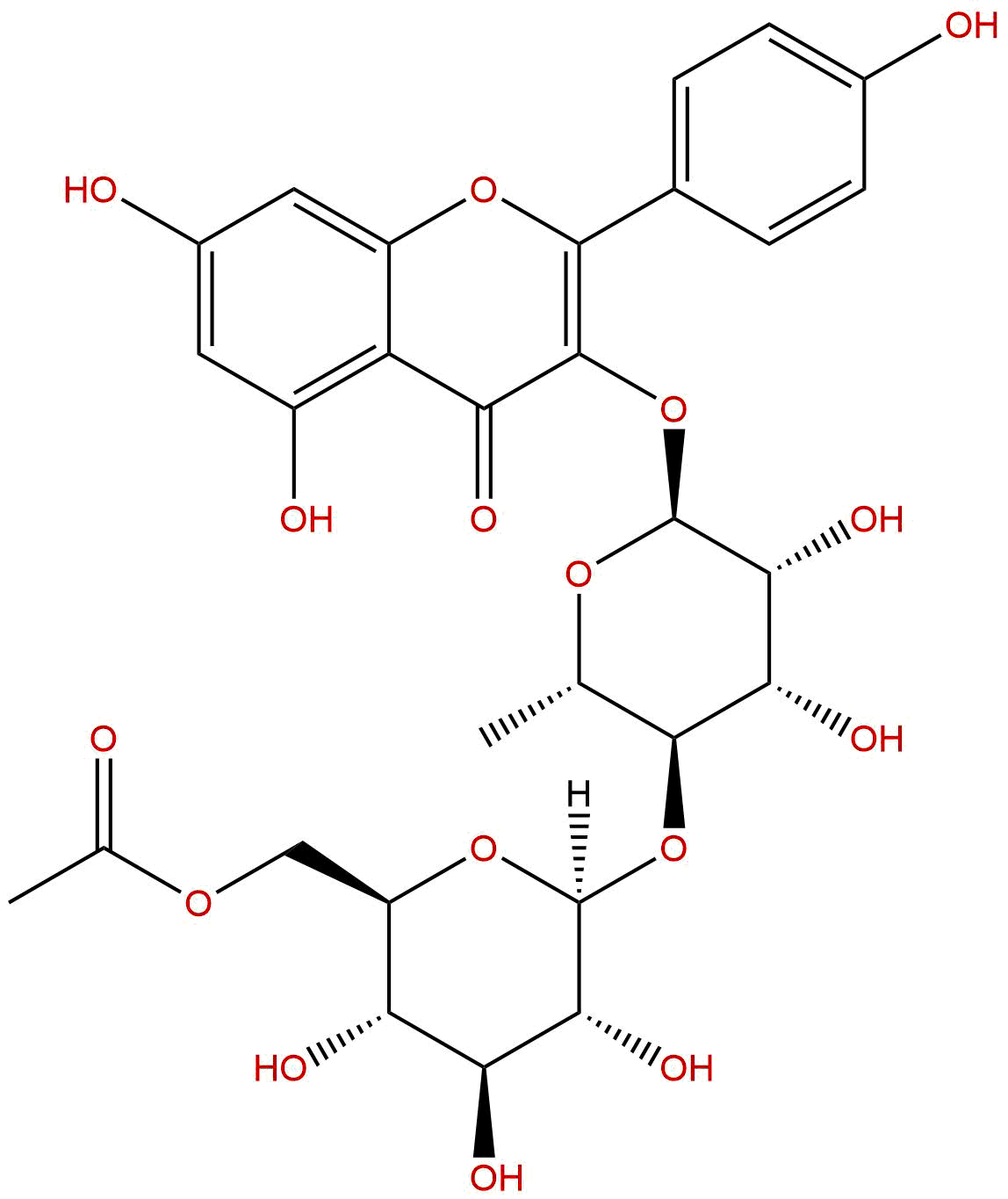
Multiflorin A (CAS number: 1350028-90-8) is an active natural product isolated from the traditional Chinese medicinal herb Pruni semen. As a compound with significant laxative activity, Rosin A not only exhibits unique advantages in regulating intestinal function, but also demonstrates the potential to inhibit intestinal glucose absorption and promote intestinal microbiota metabolism. In recent years, with the deepening of research on the pharmacological effects of natural products, the mechanism of action of Rosaroside A in various biological activity fields such as anti-inflammatory has gradually been revealed, becoming one of the hotspots in the development of natural medicines and functional food research.
This article aims to provide a systematic review of the chemical structure and physicochemical properties, plant sources, and extraction methods of Rosaroside A, with a focus on exploring its pharmacological activity and molecular mechanism of action. It evaluates its clinical translational potential based on drug parameters and looks forward to its future application prospects in disease prevention and treatment, providing theoretical basis and reference for scientific research and drug development in related fields.
The molecular formula of Rosin A is C30H36O16, with a molecular weight of 636.5590. Its structural characteristics are polyhydroxy glycosides containing abundant glycosidic groups, which endow it with high polarity and water solubility. The LogP value is 0.1336, indicating that it has strong hydrophilicity and is easily soluble in water (solubility is about 2.4856 mg/mL), which has certain advantages for the design of oral administration systems. Its topological polar surface area (TPSA) is as high as 255.2700 Å ², indicating that the molecule has a large number of polar groups, which may affect its cell membrane penetration ability and bioavailability.
The molecular structure of Rosin A contains multiple phenolic hydroxyl groups and glycosidic bonds, endowing it with strong biological activity and stability. The glycosidic portion in the structure not only affects its pharmacokinetic properties, but may also participate in specific binding with target proteins. In addition, Rose Glycoside A does not exhibit hERG channel inhibitory activity, and its Ames mutagenicity test is negative, indicating its high safety and good potential for drug development.
Rosin A is mainly derived from Pruni semen, a plant of the Rosaceae family and the genus Prunus. In traditional Chinese medicine, it is commonly used to promote blood circulation, remove blood stasis, lubricate the intestines, and relieve constipation. Peach kernels contain various active ingredients, among which rose glycoside A, as an important glycoside component, plays a significant pharmacological role.
The commonly used methods for extracting Rosin A include solvent extraction, column chromatography separation, and high-performance liquid chromatography (HPLC) purification. Generally, ethanol or methanol is used as the extraction solvent, and ultrasonic assisted extraction is used to improve the extraction efficiency. After concentration and solvent displacement, the extract is separated and purified using silica gel column chromatography or reverse phase C18 column chromatography. Finally, its purity and structure were confirmed through HPLC and mass spectrometry identification. In recent years, supercritical fluid extraction and membrane separation technologies have also been attempted to be applied to the efficient extraction of rosmarin A in order to achieve large-scale production.
The earliest pharmacological activity of Rosa rugosa was its laxative effect. Animal experiments have shown that Rose Glycoside A can promote intestinal peristalsis, increase the rate of intestinal contents excretion, and exhibit significant laxative effects. Its laxative mechanism is closely related to stimulating intestinal smooth muscle, regulating intestinal fluid secretion, and affecting the release of intestinal neurotransmitters. Compared to traditional laxatives, Rosin A has fewer side effects and is less likely to cause dependence, making it a promising candidate for clinical application.
Rosin A can significantly inhibit intestinal absorption of glucose and reduce postprandial blood glucose peak. Both in vitro simulated intestinal models and in vivo glucose tolerance experiments have confirmed its regulatory effect on glucose transporters. This characteristic makes it potentially valuable in the adjuvant treatment of diabetes and metabolic syndrome, especially for patients who need to control blood sugar levels.
In recent years, studies have found that Rosaroside A can promote the metabolic activity of beneficial bacteria in the gut and regulate the balance of gut microbiota. By promoting the production of short chain fatty acids (SCFAs), Rosin A indirectly regulates intestinal immune function and systemic metabolic status. This effect provides a new theoretical basis for its anti-inflammatory and metabolic disease prevention and treatment.
Rosin A exhibits good anti-inflammatory effects on various inflammatory models. It can significantly reduce the expression of inflammatory factors such as IL-6 and TNF - α, inhibit the activation of inflammatory signaling pathways, and alleviate tissue inflammatory responses. Related in vitro and in vivo experiments have shown that Rosangin A exerts its effects by regulating various inflammation related targets, providing new ideas for the treatment of inflammatory diseases.
The pharmacological mechanism of action of Rosin A involves multiple signaling pathways and molecular targets, mainly including:
The synergistic regulation of these targets results in multiple biological effects of Rose Glycoside A in anti-inflammatory, analgesic, and regulating intestinal function.
The pharmacological parameters of Rosin A indicate that it has good potential for drug development. The molecular weight is moderate (636.5590) and the LogP value is low (0.1336), indicating strong hydrophilicity and suitability for oral formulations. Although high TPSA (255.2700) may limit its cell membrane permeability, its target is mainly located in the intestinal tract, and low blood-brain barrier permeability reduces the risk of central nervous system side effects.
In terms of safety, Rosin A has no hERG channel inhibitory activity, reducing the risk of cardiac toxicity. The Ames mutagenicity test was negative, indicating a low risk of genetic toxicity. Good water solubility, conducive to formulation development and in vivo absorption.
At present, there is limited research on the pharmacokinetics of Rosin A. Preliminary data shows that its oral administration results in higher local concentrations in the intestine and lower systemic circulating concentrations, which is consistent with its pharmacological properties of mainly acting on the intestine. Further research on in vivo pharmacokinetics, tissue distribution, and metabolic pathways is needed in the future to improve its pharmacokinetic data.
Rose glycoside A, as a multifunctional natural product, has broad clinical application prospects. Its laxative activity makes it suitable for treating intestinal disorders such as constipation. The inhibition of intestinal glucose absorption provides a new adjuvant treatment option for patients with diabetes and metabolic syndrome. Promoting gut microbiota metabolism and anti-inflammatory effects provide potential intervention methods for the treatment of inflammatory bowel disease, chronic inflammation, and related metabolic diseases.
In the future, with the in-depth analysis of the mechanism of action of Rosin A and the improvement of pharmacokinetic data, its development in the fields of functional foods, intestinal disease drugs, and metabolic disease adjuvant therapy will be further accelerated. At the same time, by combining modern pharmaceutical formulation technologies such as nanocarriers and sustained-release formulations, it is expected to enhance their bioavailability and targeting, and broaden their clinical application scope.
In addition, the safety of Rosin A is good, providing a guarantee for long-term use, but systematic clinical trials are still needed to verify its effectiveness and safety, clarify indications and medication plans.
Rose glycoside A, as a natural glycoside compound derived from peach kernels, exhibits significant potential as a laxative, anti-inflammatory, and regulator of intestinal metabolism due to its unique chemical structure and multi-target pharmacological effects. Its good pharmacological parameters and safety have laid the foundation for clinical translation. In the future, through interdisciplinary research and in-depth elucidation of its mechanism of action and pharmacokinetic characteristics, it will help promote the clinical application of Rosin A and provide new natural drug options for the treatment of intestinal diseases and metabolic related diseases.
