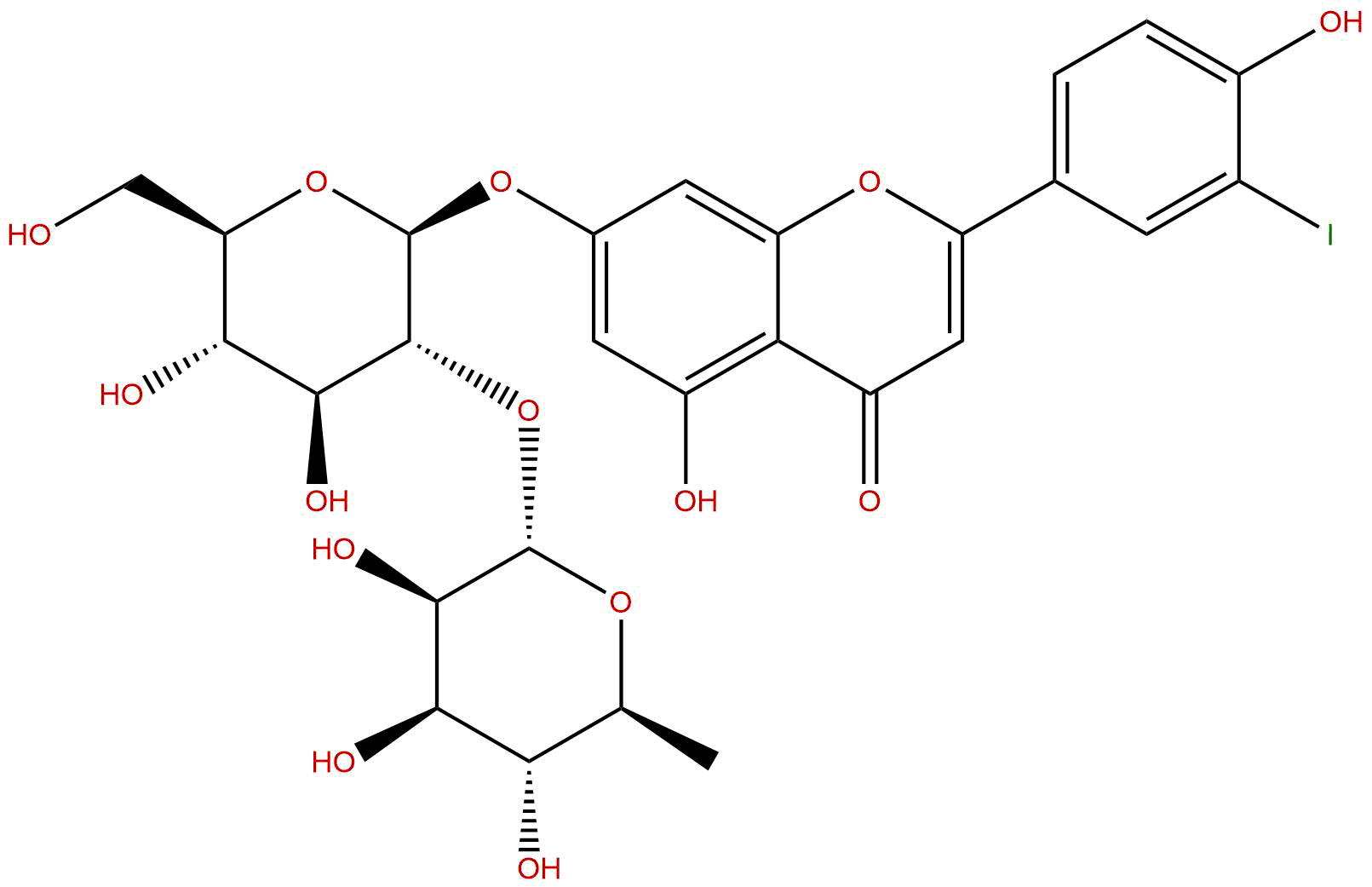


Product name: 3'-Iodo Rhoifolin
Synonym name:
Catalogue No.: BP2447
Cas No.:
Formula: C27H29IO14
Mol Weight: 704.419
Botanical Source:
Type of Compound: Flavonoids
Purity: 95%~99%
Analysis Method: HPLC-DAD or/and HPLC-ELSD
Identification Method: Mass, NMR
Packing: Brown vial or HDPE plastic bottle
Storage: Store in a well closed container, protected from air and light. Put into refrigerate or freeze for long term storage.
Whenever possible, you should prepare and use solutions on the same day. However, if you need to make up stock solutions in advance, we recommend that you store the solution as aliquots in tightly sealed vials at -20℃. Generally, these will be useable for up to two weeks.
The product could be supplied from milligrams to grams
Inquire for bulk scale.
For Reference Standard and R&D, Not for Human Use Directly.
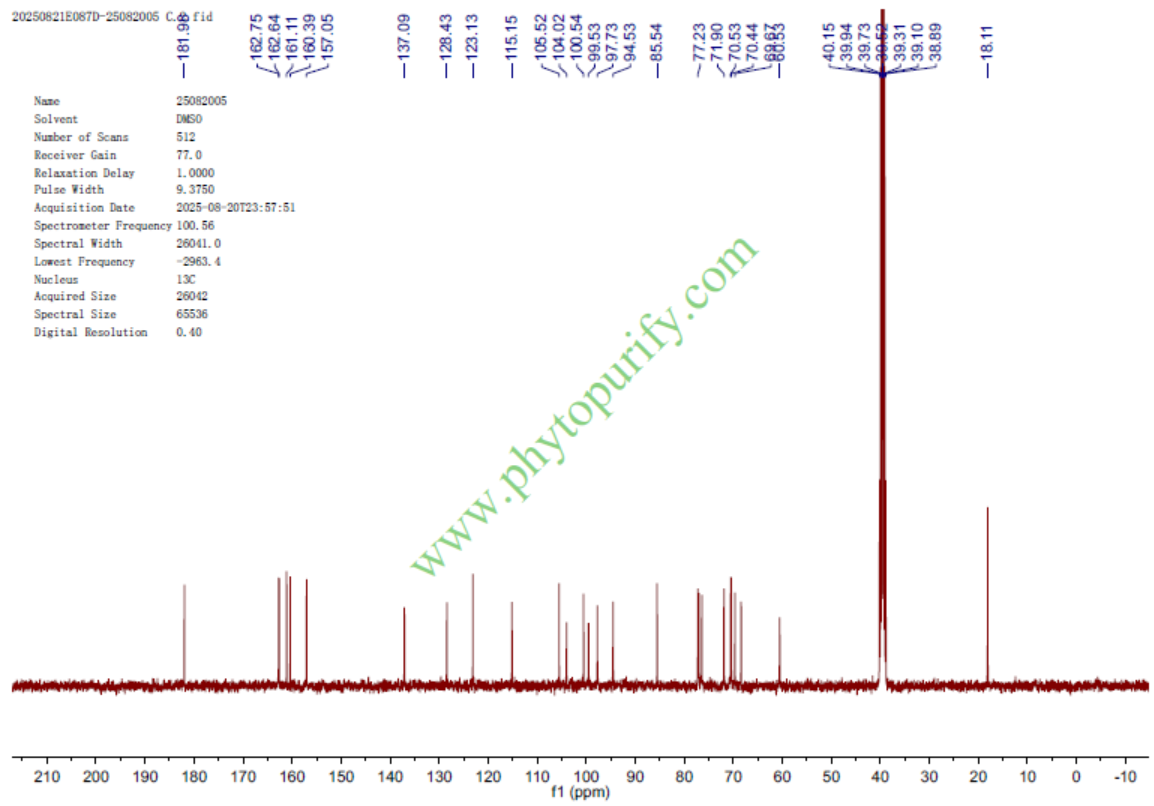
NMR of 3'-Iodo Rhoifolin
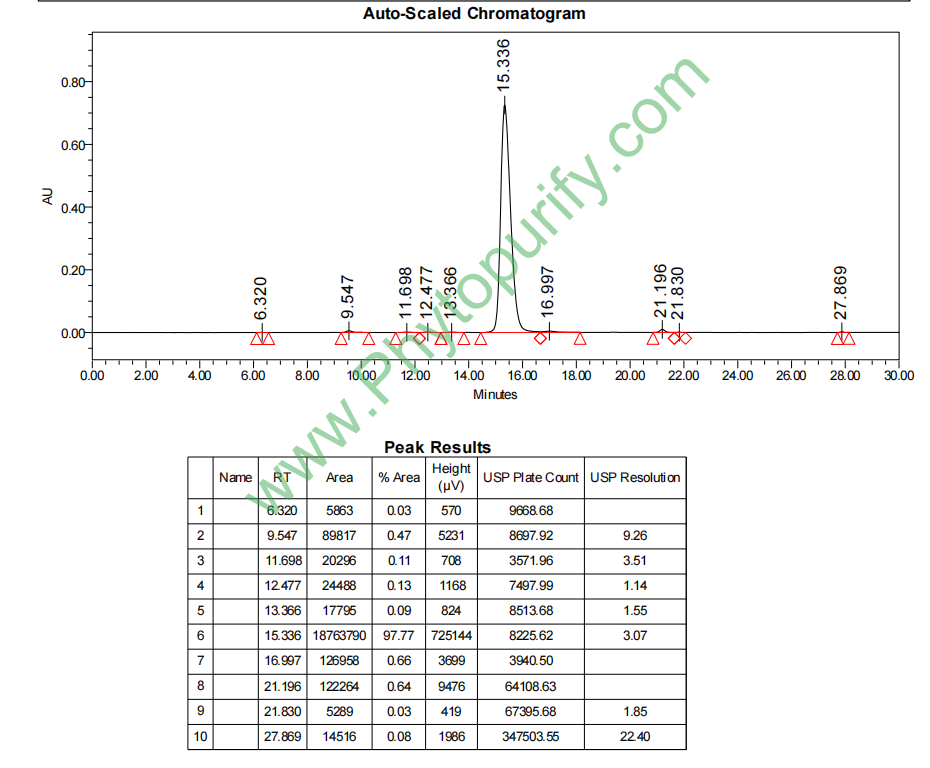
HPLC of 3'-Iodo Rhoifolin
Storage conditions:Short-term storage at 2~8℃, long-term storage at -20 ~ -80℃
186.4000
2.1000
1.8000
No
.8500
No
Negative
Natural products, as an important source of drug discovery, play an irreplaceable role in the long struggle between humans and diseases. Flavonoids, as the most widely distributed class of secondary metabolites in nature, have attracted much attention due to their structural diversity and extensive biological activity. Rhoifolin is a typical flavonoid glycoside, chemically named apigenin 7-O-neohesperidoside, widely present in various medicinal plants and possessing various pharmacological activities such as anti-inflammatory, antioxidant, anti-tumor, and hypoglycemic effects. However, natural products often face challenges in developing medicinal properties such as metabolic instability and low bioavailability. In order to optimize its pharmacological properties, structural modification has become an important strategy. Halogenation reaction, especially iodination reaction, is a commonly used modification method in medicinal chemistry. Introducing iodine atoms can significantly alter the electronic distribution, lipid solubility, spatial configuration, and interaction mode with biological targets of molecules, potentially enhancing their pharmacological activity, improving pharmacokinetic properties, or endowing them with new functions.
3 '- Iodo Rhoiflorin is a derivative obtained by selectively iodizing the 3' position of the B ring of natural wild lacquer glycoside in this context. Although the compound has not yet obtained an official CAS registration number and its research is still in the early stages of exploration, preliminary studies have shown its enormous potential as a lead compound or candidate drug. The introduction of iodine atoms, especially on the B ring located relatively far from the glycosidic bond, is expected to enhance its affinity for specific protein targets through halogen bonds, hydrophobic interactions, etc., without significantly changing the binding mode between the parent nucleus and the target. In addition, radioactive isotopes of iodine (such as ¹² ³ I, ¹² ⁵ I, ¹³ ¹ I) have a wide range of applications in biomedical imaging and radiation therapy, which makes 3 '- iodinated kaempferol not only a pharmacologically active molecule, but also a diagnostic and therapeutic integrated probe. This article will provide a systematic review of the chemical structure, plant sources (or synthesis strategies), pharmacological activity, mechanism of action, pharmacological evaluation, and clinical application prospects of 3 '- iodo-kaempferol, aiming to provide a comprehensive literature basis and scientific basis for the in-depth research and development of this novel flavonoid derivative.
The chemical structure of 3 '- iodinated wild lacquer glycoside is based on the classical flavonoid skeleton. Its parent nucleus is apigenin (5,7,4 '- trihydroxyflavone), which is connected to a neohesperidose (α - L-rhamnose - (1 → 2) - β - D-glucose) at position C-7 through a glycosidic bond. The key structural feature of this compound is that the hydrogen atom at the 3 'position (i.e. C-3') of the B ring of apigenin is replaced by an iodine atom (I). Therefore, its systematic naming can be described as: 5,7,4 '- trihydroxy-3' - iodofolavono-7-O - α - L-rhamnopyranosyl - (1 → 2) - β - D-glucopyranoside.
From the perspective of structural chemistry, the introduction of iodine atoms has a profound impact on the overall conformation and electronic properties of molecules. Iodine is the element with the largest atomic radius and relatively weak electronegativity (2.66) among halogens, but with extremely high polarizability. After its introduction:
1. Spatial hindrance effect The van der Waals radius of iodine atoms (approximately 0.198 nm) is significantly larger than that of hydrogen atoms, which may limit the free rotation of the B ring and cause the molecule to adopt a more rigid conformation, thereby affecting its compatibility with the binding pocket of the target protein.
2. electronic effect The electron withdrawing induction effect of iodine (- I effect) can reduce the electron cloud density of the B ring, especially affecting the electron distribution of adjacent and para positions (C-2 ', C-4', C-5 '). This may alter the molecule's ability to scavenge free radicals as an antioxidant, and may also affect its chelating ability with certain metal ions such as Fe ² ⁺ and Cu ² ⁺.
3. Halogen bond action Iodine atoms, due to their high polarization, can act as halogen bond donors and form highly directional and strong non covalent interactions with Lewis bases in proteins, such as carbonyl oxygen, hydroxyl oxygen, nitrogen atoms, or π - electron systems. This effect is increasingly valued in drug target recognition and is an important means of enhancing binding affinity and selectivity.
Considering that there is currently no complete physical and chemical data available for 3 '- iodo-kaempferol, the following reasonable predictions are made based on its structural characteristics and analogues (such as kaempferol and 3' - bromo derivatives):
At present, there is no literature reporting the isolation of 3 '- iodinated wild lacquer glycoside as a natural product from plants. Halogenated flavonoids that exist in nature are relatively rare and mostly chlorinated or brominated, with iodinated flavonoids being even rarer. Therefore, 3 '- iodosulfoside is mainly obtained through chemical synthesis or biocatalytic methods.
Chemical synthesis strategy:
1. Direct iodination method Using natural wild lacquer glycoside as raw material, electrophilic substitution of the B ring is carried out under the action of selective iodination reagent. Due to the high electron density of the 3 'position (relative to 4' - OH) in the B ring of flavonoids, it is prone to electrophilic substitution. Commonly used iodination reagents include: a combination of elemental iodine (I ₂) and oxidants (such as H ₂ O ₂, iodate HIO3, persulfate); N-iodosuccinimide (NIS); Or a combination of potassium iodide (KI) and oxidant. The reaction conditions need to be strictly controlled (such as temperature, pH, solvent) to avoid excessive iodination (such as the formation of 3 ', 5' - diiodo products) or hydrolysis of glycosidic bonds.
2. Indirect synthesis method Firstly, synthesize iodinated apigenin aglycone (3 '- iodinated apigenin), and then connect the new orange peel glycosyl group at position 7 through glycosylation reaction. This method involves multiple steps, but may be easier to control region selectivity.
Biocatalytic method:
Regional selective iodination of wild lacquer glycoside is achieved under mild conditions using halogenated enzymes such as flavin dependent halogenated enzymes and vanadium dependent halogenated peroxidases. This method has the advantages of being green, efficient, and highly selective, making it an ideal approach for synthesizing complex halogenated natural products in the future.
Due to the fact that the compound is currently mainly obtained through synthesis, its "extraction" process is actually the separation and purification of the synthesized product. The typical process flow is as follows:
The pharmacological activity research of 3 '- iodinated wild lacquer glycoside is still in its infancy, and there are relatively few public reports. Its activity is mainly speculated and preliminarily verified based on the known activity of the parent compound, wild lacquer glycoside, and the potential enhancing effect of iodine modification.
Wild lacquer glycoside has been proven to have significant anti-inflammatory activity, mainly by inhibiting the nuclear factor kappa B (NF - κ B) and mitogen activated protein kinase (MAPK) signaling pathways, reducing the expression of pro-inflammatory factors such as tumor necrosis factor - α (TNF - α), interleukin-6 (IL-6), and cyclooxygenase-2 (COX-2). Preliminary cell experiments (such as the RAW264.7 macrophage model stimulated by lipopolysaccharide LPS) have shown that the anti-inflammatory activity of 3 '- iodinated wild lacquer glycoside may be superior to that of wild lacquer glycoside. It is speculated that the mechanism is:
* Enhance target binding Iodine atoms form stronger interactions with specific amino acid residues (such as Cys, His, Tyr) of key kinases (such as I κ B kinase IKK) in the NF - κ B or MAPK pathways through halogen bonds, thereby more effectively inhibiting signal transduction.
* Improve cellular uptake Iodization increases the lipophilicity of molecules, which may promote their entry into cells through passive diffusion or carrier mediated pathways, thereby increasing intracellular drug concentration.
Flavonoids are famous antioxidants, and their activity mainly comes from the ortho dihydroxy group of the B ring (catechol structure). However, the 3 'hydroxyl group on the B ring of 3' - iodo-kaempferol was replaced by iodine, disrupting the classical catechol structure. This may lead to a decrease in its ability to directly scavenge free radicals such as DPPH and ABTS. However, its antioxidant activity may be manifested through other mechanisms:
* Indirect antioxidant Inducing the expression of downstream antioxidant enzymes such as heme oxygenase-1 HO-1 and quinone oxidoreductase NQO1 by activating the nuclear factor E2 related factor 2 (Nrf2)/antioxidant response element (ARE) pathway. Iodine atoms may enhance their binding with Keap1 protein, promoting the release and nuclear translocation of Nrf2.
* Metal ion chelation Although lacking the ortho dihydroxy group, the chelating sites formed by 5-OH and 4-carbonyl groups still exist, which can chelate transition metal ions (such as Fe ² ⁺, Cu ² ⁺), inhibit the Fenton reaction, and reduce the production of hydroxyl radicals. The electron withdrawing effect of iodine atoms may regulate the electron density of the chelating site, affecting the chelating ability.
Rhus verniciflorin can inhibit proliferation, induce apoptosis and inhibit migration of many kinds of cancer cells (such as liver cancer, breast cancer, lung cancer). The anti-tumor activity of 3 '- iodinated wild lacquer glycoside is one of the research hotspots. Preliminary studies showed that its cytotoxicity (IC ≮₀ value) to some cancer cell lines (such as MCF-7 breast cancer cells, HepG2 liver cancer cells) may be lower than that of wild vernicide, indicating that its anti proliferative activity is stronger. Potential mechanisms include:
* Inducing cell cycle arrest It is possible to block cells in the G0/G1 or G2/M phase by upregulating cyclin dependent kinase inhibitors such as p21/P27.
* Inducing apoptosis By activating the mitochondrial pathway (endogenous pathway), mitochondrial membrane potential is lost, cytochrome c is released, and Caspase-9 and Caspase-3 are activated. Iodine atoms may promote this process by enhancing interactions with Bcl-2 family proteins such as Bax and Bak.
* Inhibit angiogenesis Possible inhibition of tumor angiogenesis may be achieved by downregulating the expression of vascular endothelial growth factor (VEGF).
A deep understanding of the mechanism of action and molecular targets of 3 '- iodinated wild lacquer glycoside is key to its clinical application. At present, its mechanism research is mainly based on comparison with the parent compound and prediction through computer-aided drug design (CADD).
Compared with the parent compound, the mechanism of action of 3 '- iodinated naringin may exhibit the following characteristics:
* Multi target synergistic enhancement The introduction of iodine atoms may enhance their ability to act on multiple targets simultaneously, forming a more complex network regulation and resulting in stronger pharmacological effects.
* Selective improvement Through specific non covalent interactions such as halogen bonds, its selectivity towards certain targets may be higher than other homologous proteins, thereby reducing off target toxicity.
* The transformation of the mode of action In some cases, iodination may shift compounds from one mode of action (such as reversible inhibition) to another (such as irreversible inhibition or covalent modification), resulting in more lasting and powerful pharmacological effects.
Although there is no specific experimental data yet, based on its structure, a preliminary evaluation of its pharmacological properties can be conducted (following the "Lipinski Five Rules" variant):
* molecular weight Approximately 680 Da, far exceeding the threshold of 500 Da. This is usually considered a signal of poor oral bioavailability, as large molecules have difficulty penetrating intestinal epithelial cells.
* Hbond donor Containing multiple phenolic hydroxyl groups and hydroxyl groups on the sugar group, the number of hydrogen bond donors (>5) exceeds the threshold.
* Number of hydrogen bond acceptors The number of hydrogen bond acceptors (>10) for oxygen and iodine atoms far exceeds the threshold.
* Lipid water partition coefficient (LogP)Expected to be between 1.5-3.0, which may meet the requirements.
* Number of rotatable keys The large number of glycosidic bonds (>10) between glycosidic bonds and sugar rings may affect oral absorption.
Conclusion According to classical rules, the oral pharmacological properties of 3 '- iodinated wild lacquer glycoside are poor and belong to compounds that exceed the rules. However, this does not mean that it has no development value. Many successful natural medicines, such as paclitaxel and rapamycin, also violate these rules. Its development strategy should shift towards:
1. Non oral administration route Such as intravenous injection, transdermal administration, nasal administration, or pulmonary inhalation.
2. Prodrug design Modify phenolic hydroxyl groups (such as making phosphate esters, amino acid esters) to improve water solubility or lipid solubility, and convert them into active forms in vivo.
3. nano-formulation Using carrier technologies such as liposomes, polymer nanoparticles, and micelles to improve their solubility, stability, and targeted delivery ability.
Despite its broad prospects, the research on 3 '- iodo-kaempferol still faces many challenges:
1. Synthesis efficiency and cost The primary task is to develop efficient, low-cost, and highly selective synthetic processes. Especially for radioactive labeling, it is necessary to establish a fast and gentle labeling method.
2. Toxicity evaluation A comprehensive toxicology study must be conducted, including acute toxicity, long-term toxicity, genetic toxicity, reproductive toxicity, and potential thyroid toxicity caused by deiodination.
3. Pharmacokinetic optimization How to improve its pharmacokinetic properties through pharmaceutical methods or structural modifications is the key to achieving clinical applications.
4. target validation It is necessary to clarify the molecular targets that exert core pharmacological effects through various biochemical, cellular, and animal models, providing clear direction for subsequent optimization and clinical translation.
Future research directions:
* Study on Structure Activity Relationship Systematically synthesize a series of wild lacquer glycoside derivatives with different positions (2 ', 3', 5 ') of the B ring and different halogen (F, Cl, Br, I) substitutions, compare their activity differences, and elucidate the structure-activity relationship of halogen substitutions.
* Pharmacodynamic study in vivo Establish animal models for various diseases (such as tumor bearing mice and collagen induced arthritis rats), and systematically evaluate their in vivo pharmacological effects and biological distribution.
* Radioactive labeling and imaging research Develop efficient labeling methods for small animal PET/SPECT imaging to evaluate their targeting and kinetics in vivo.
* Nanoformulation development Design and prepare targeted nanoparticles loaded with 3 '- iodinated naringin to improve its therapeutic index and reduce systemic toxicity.
3 '- iodinated wild lacquer glycoside, as a natural flavonoid derivative obtained through structural modification, represents a typical case of the evolution from traditional natural products to precision drug molecules. By precisely introducing iodine atoms into the parent molecule, it is not only expected to enhance its inherent pharmacological activities such as anti-inflammatory and anti-tumor, but more importantly, it endows it with unique potential as a diagnostic and therapeutic integrated radioactive probe. Although its research is still in its early stages and faces multiple challenges such as synthesis, toxicology, and pharmacokinetics, its unique chemical structure and potential dual functions (treatment+diagnosis) undoubtedly open up new directions for the development of flavonoid drugs. Future research requires interdisciplinary integration of chemistry, biology, pharmacology, radiochemistry, and nanomedicine to systematically and deeply elucidate their mechanisms of action, optimize their drug properties, and ultimately transform them into clinical drugs or diagnostic reagents that can benefit patients. The exploration of 3 '- iodinated wild lacquer glycoside is not only a study of a specific compound, but also a profound practice on how to use chemical modification strategies to endow natural products with new life and functions.
