| Catalog No | Package | Original Price | Price | Inventory | Quantity | Operating |
|---|---|---|---|---|---|---|
| BP4484-10mg | 10mg | $250.00 | Sign in |
|


Storage conditions:Short-term storage at 2~8℃, long-term storage at -20 ~ -80℃
187.1200
.7453
-1.4945
1.2463
.6076
.1686
Low
86.5460
3.9233
Yes
No
No
No
Yes
No
0.6
Yes
No
Yes
No
Natural products, as an important source of drug discovery, have always played an irreplaceable role in the long struggle between humans and diseases. Flavonoids, as one of the most widely distributed polyphenolic secondary metabolites in nature, have attracted much attention due to their structural diversity and extensive biological activity. Among the numerous flavonoids, as a special flavonoid glycoside, glychionide A has gradually entered the researchers' field of vision in recent years. Its unique chemical structure and significant pharmacological activity, especially its therapeutic potential for pancreatic cancer, make it a research hotspot in the field of natural product pharmacology.
Glychionide A, also known as baicalin-7-O-glucuronide A, was first isolated from the plant Glycyrrhiza in the genus Glycyrrhiza(Glycyrrhiza glabra L. Separation and identification of roots. Licorice, as one of the most widely used medicinal herbs in traditional Chinese medicine, is known as the "old man of the country" and its medicinal history can be traced back thousands of years. Modern pharmacological research has confirmed that licorice and its active ingredients have various pharmacological effects such as anti-inflammatory, antiviral, anti ulcer, hepatoprotective, and immune regulation. As a unique flavonoid glycoside component in licorice, the discovery of Glychionide A not only enriches the chemical composition library of licorice, but also provides a new molecular entity for exploring its unique biological activity.
It is worth noting that Glychionide A belongs structurally to the glycoside derivative of norwogonin. Norkaempferol itself is a flavonoid glycoside with multiple biological activities, and the introduction of glucuronic acid groups not only changes the physicochemical properties of the molecule, but may also affect its bioavailability, targeting, and metabolic pathways. In recent years, more and more studies have focused on the anti-tumor activity of Glychionide A, especially its apoptosis promoting and autophagy inducing effects on pancreatic cancer cells, providing a new idea for the treatment of this refractory malignant tumor.
Pancreatic cancer is known as the "king of cancer". Its 5-year survival rate is less than 10% for a long time, mainly due to its hidden onset, difficulty in early diagnosis, strong invasion and high resistance to conventional radiotherapy and chemotherapy. Therefore, it is an urgent need for tumor pharmacology research to find new, efficient and low toxic anti pancreatic cancer drugs. The emergence of Glychionide A has injected new vitality into this field. This article will provide a systematic review of the research progress of Glychionide A from the aspects of chemical structure, plant origin, pharmacological activity, mechanism of action, medicinal evaluation, and clinical application prospects, in order to provide reference for the in-depth research and development of this natural product.
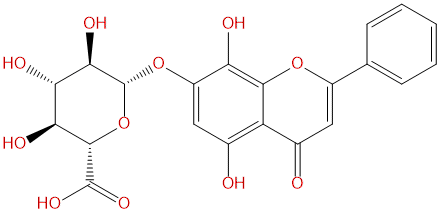
The chemical name of Glychionide A is demethylated baicalin-7-O-glucuronide, and its chemical structure is composed of a glycoside moiety and a glycosyl moiety connected by glycosidic bonds. The glycoside element is demethylated berberine (5,7,8-trihydroxyflavone), which is a relatively rare derivative of flavonoids with three phenolic hydroxyl groups. Specifically, the parent nucleus structure of baicalein is 2-phenylchromone, in which the C-5, C-7, and C-8 positions of the A ring are each substituted with a hydroxyl group, while the B ring has no substituent. This multi hydroxyl substitution mode endows the aglycone with strong antioxidant activity and metal ion chelating ability.
The sugar moiety is D-glucuronic acid, which is connected to the C-7 hydroxyl group of the nucleoside through a β - glycosidic bond. Glucuronic acid is a type of uronic acid with a carboxyl group (- COOH) at the C-6 position, which gives the entire molecule an acidic characteristic. The introduction of sugar groups not only increases the water solubility of molecules, but also affects the interaction mode between aglycones and biological targets through steric hindrance effects. In addition, the presence of glucuronide groups makes Glychionide A a potential "prodrug" molecule, which may release active aglycones through hydrolysis by gut microbiota or liver enzymes in the body.
According to the results of computational chemistry and experimental measurements, the main physicochemical properties of Glychionide A are as follows:
From the above parameters, it can be seen that Glychionide A has moderate to low lipid solubility (LogP<1), high polar surface area (>140 Å ²), and good water solubility. These properties determine that the compound is mainly distributed in the blood and extracellular fluid in the body, and is not easily able to penetrate the blood-brain barrier, which is consistent with its pharmacological activity mainly acting on peripheral tissues. The lower LogP value also suggests that the compound may mainly enter cells through passive diffusion or carrier mediated transport.
It is worth noting that the Ames test results showed a mutagenicity probability of 0.6, which is lower than the commonly considered positive threshold (usually 0.8-1.0), but its genetic toxicity risk still needs to be closely monitored in subsequent development. If hERG inhibitory activity is negative, it indicates that the compound has a low risk of causing QT interval prolongation in the heart, which is a favorable factor for drug safety evaluation.
Glychionide A is mainly derived from the Fabaceae genus of licorice(Glycyrrhiza)Plants, especially licorice(Glycyrrhiza glabra L. The roots and rhizomes of. Guangguo licorice, also known as Eurasian licorice or Spanish licorice, is widely distributed in Europe, western and central Asia, and coastal areas of the Mediterranean. It has also been introduced and cultivated in Xinjiang, Gansu and other places in China. In addition, plants of the same genus such as licorice with swollen fruit(G. inflata Batal. and Ural licorice(G. uralensis Fisch. may also contain this ingredient, but the content is usually low.
The medicinal parts of licorice are dry roots and rhizomes, which contain various chemical components, mainly including triterpenoid saponins (such as glycyrrhizic acid and glycyrrhetinic acid), flavonoids (such as glycyrrhizin, isoliquiritigenin, glycyrrhizin, etc.), coumarins, polysaccharides, and volatile oils. Glychionide A has a relatively low content in licorice and is a trace component. Its separation and purification require the use of modern chromatographic techniques.
The extraction of Glychionide A is usually carried out using solvent extraction combined with modern chromatographic separation techniques. The classic extraction process includes the following steps:
Raw material pretreatment Grind dried licorice roots to an appropriate particle size (usually 20-40 mesh) to increase extraction efficiency.
Solvent extraction The commonly used extraction solvent is an ethanol water mixed system (such as 50% -80% ethanol), and reflux extraction or ultrasound assisted extraction is used. The extraction temperature is controlled at 50-70 ℃, the extraction time is 1-3 hours, and the extraction is repeated 2-3 times. Some studies have also used methanol or ethyl acetate as extraction solvents, but the ethanol water system is more commonly used due to its high safety and low cost.
Preparation of crude extract Combine the extraction solutions, concentrate under reduced pressure until there is no alcohol flavor, and obtain the total extract of licorice. Disperse the extract in water and perform liquid-liquid extraction with petroleum ether, ethyl acetate, and n-butanol in sequence to obtain extraction sites of different polarities. Glychionide A is mainly enriched in the extraction sites of ethyl acetate and n-butanol.
chromatographic separation: Silica gel column chromatography, ODS reverse phase column chromatography, Sephadex LH-20 gel column chromatography and preparative high-performance liquid chromatography (prep HPLC) were used for systematic separation. Usually, crude separation is carried out using a silica gel column with chloroform methanol water gradient elution, followed by purification using a methanol water or acetonitrile water system on an ODS column, and finally high-purity monomer compounds are obtained through preparative HPLC.
Structural Identification Structural confirmation was performed using techniques such as ultraviolet spectroscopy (UV), infrared spectroscopy (IR), mass spectrometry (MS), and nuclear magnetic resonance spectroscopy (¹ H-NMR, ¹ ³ C-NMR, 2D-NMR). The characteristic spectral data of Glychionide A include: UV spectra with characteristic absorption of flavonoids at 260-280 nm and 320-350 nm; The [M-H] ⁻ ion peak can be seen in the mass spectrum at m/z 445; In the NMR spectrum, terminal proton signals (δ 5.0-5.5 ppm) and carboxyl carbon signals (δ 170-175 ppm) of glucuronic acid groups can be observed.
In recent years, with the development of new separation methods such as high-speed countercurrent chromatography (HSCCC) and molecular imprinting technology, the separation efficiency and purity of Glychionide A have been further improved. In addition, a quantitative analysis method based on ultra-high performance liquid chromatography-mass spectrometry (UPLC-MS/MS) has been established, which can be used for the determination of the content of this component in licorice samples from different sources.
Glychionide A's most interesting pharmacological activity is its inhibitory effect on pancreatic cancer cells. Pancreatic ductal adenocarcinoma (PANC-1) cell line, as a classic model for pancreatic cancer research, has been widely used to evaluate the anti-tumor effect of this compound. Research has shown that Glychionide A can inhibit the proliferation of PANC-1 cells in a concentration - and time-dependent manner, with a half maximal inhibitory concentration (IC ₅₀) ranging from 10-50 μ M, depending on experimental conditions and treatment time.
More importantly, Glychionide A can simultaneously induce apoptosis and autophagy in PANC-1 cells, which have a synergistic effect in tumor therapy. Apoptosis is a programmed cell death that activates members of the caspase family, leading to cell shrinkage, chromatin condensation, and DNA fragmentation. Autophagy is a cellular self digestion process that plays a dual role in tumor development: it can inhibit tumor growth in the early stages and promote tumor survival in the late stages. There is still controversy over whether Glychionide A-induced autophagy belongs to cell protective autophagy or lethal autophagy, but most studies tend to believe that its induced autophagy ultimately promotes cell death.
Inflammation is closely related to the occurrence and development of tumors, and chronic inflammation is considered to be an important inducement for a variety of cancers (including pancreatic cancer). Glychionide A also exhibits significant anti-inflammatory activity. In vitro experiments have shown that the compound can inhibit the production of pro-inflammatory cytokines in macrophages stimulated by lipopolysaccharide (LPS), including tumor necrosis factor - α (TNF - α), interleukin-6 (IL-6), and nitric oxide (NO). In addition, Glychionide A can inhibit the expression of cyclooxygenase-2 (COX-2) and inducible nitric oxide synthase (iNOS), thereby reducing the production of prostaglandin E ₂ (PGE ₂) and NO.
It is worth noting that the anti-inflammatory activity of Glychionide A may be inherently related to its anti-tumor effect. The chronic inflammatory state existing in the microenvironment of pancreatic cancer can promote the proliferation, invasion and drug resistance of tumor cells, while Glychionide A may indirectly weaken the survival advantage of tumors by inhibiting the inflammatory signal pathway.
In addition to anti-tumor and anti-inflammatory activities, Glychionide A also exhibits potential pharmacological effects such as antioxidant, antibacterial, and hepatoprotective effects. Its antioxidant activity is mainly attributed to the presence of multiple phenolic hydroxyl groups in the molecule, which can directly scavenge free radicals, chelate transition metal ions, and activate the endogenous antioxidant enzyme system. In terms of antibacterial activity, Glychionide A exhibits certain inhibitory effects on certain Gram positive bacteria (such as Staphylococcus aureus) and Gram negative bacteria (such as Escherichia coli), but its antibacterial spectrum and potency still need to be systematically evaluated.
The molecular mechanism of apoptosis induced by Glychionide A in pancreatic cancer cells involves cross regulation of multiple signal pathways. Research has shown that this compound can activate apoptosis through the mitochondrial pathway (endogenous pathway), manifested by the loss of mitochondrial membrane potential (Δ PSI m), release of cytochrome c into the cytoplasm, and activation of caspase-9 and caspase-3. Meanwhile, the death receptor pathway (exogenous pathway) may also be involved, as Glychionide A treatment upregulates the expression of Fas and FasL and activates caspase-8.
At the molecular target level, STAT3 (Signal Transduction and Transcription Activating Factor 3) is considered one of the key functional targets of Glyconide A. STAT3 is a transcription factor that is continuously activated in various tumor cells, promoting cell proliferation, inhibiting apoptosis, and enhancing angiogenesis. Glyconide A can inhibit the phosphorylation of STAT3 (Tyr705 site), thereby blocking its nuclear translocation and transcriptional activity. The downstream target genes of STAT3, including anti apoptotic proteins Bcl-2, Bcl xL, and survivor, show a decrease in their expression levels, while the expression of pro apoptotic proteins Bax and Bad is upregulated, ultimately leading to the initiation of mitochondrial pathway apoptosis.
In addition, RELA (NF - κ B p65 subunit) is also an important target of Glychionide A. NF - κ B is a core transcription factor in inflammation and tumorigenesis, and its activation can promote the expression of various pro-inflammatory factors and anti apoptotic proteins. Glyconide A inhibits the nuclear translocation and transcriptional activity of NF - κ B by suppressing the activity of I κ B kinase (IKK β/IKBKB), preventing the phosphorylation and degradation of I κ B α.
Glychionide A-induced autophagy involves the regulation of the expression of various autophagy related proteins. Research has found that this compound can upregulate the expression of Beclin-1 (BECN1) and microtubule associated protein light chain 3 (LC3-II), while downregulating the levels of p62/SQSTM1, which are typical markers of autophagic flow activation. In addition, the phosphorylation level of AMP activated protein kinase (AMPK) is elevated, while the activity of mammalian target protein of rapamycin (mTOR) is inhibited, suggesting that Glyconide A may activate autophagy through the AMPK mTOR signaling axis.
It is worth noting that there is a complex interaction between autophagy and apoptosis induced by Glychionide A. Under certain experimental conditions, the use of autophagy inhibitors (such as 3-methyladenine or chloroquine) can partially reverse the cytotoxicity of Glychionide A, suggesting that autophagy may be activated as a cellular protective mechanism. However, in other studies, inhibition of autophagy actually enhanced apoptosis, indicating that autophagy may promote cell death. This contradictory outcome may be related to cell type, processing concentration and time, as well as the intensity of autophagy, and further research is needed to clarify it.
The anti-inflammatory effect of Glychionide A involves multiple inflammation related targets. In addition to the STAT3 and NF - κ B pathways mentioned above, this compound can also directly inhibit the enzymatic activity of COX-1 (PTGS1) and COX-2, reducing the synthesis of prostaglandins. Meanwhile, inhibition of iNOS (NOS2) reduces the production of NO, which is both a signaling molecule and an effector molecule in inflammatory responses.
In addition, the regulatory effect of Glychionide A on transient receptor potential channels (TRP channels) is also worth paying attention to. TRPV1 and TRPA1 are two important nociceptors involved in the transmission of pain and inflammatory signals. Research has shown that certain flavonoids can regulate the activity of TRP channels, but the specific effects of Glychionide A on TRPV1 and TRPA1 still require experimental verification. Based on its chemical structure, it is speculated that this compound may act as an antagonist or modulator of TRP channels, thereby exerting analgesic and anti-inflammatory effects.
From the perspective of systems pharmacology, the mechanism of action of Glychionide A is not linear regulation of a single target, but involves network regulation of multiple targets and pathways. Its core functional network includes: ① inhibiting the STAT3 and NF - κ B signaling pathways, downregulating anti apoptotic proteins and pro-inflammatory factors; ② Activate mitochondrial apoptosis pathway and induce caspase cascade reaction; ③ Regulating the AMPK mTOR pathway and activating autophagy; ④ Directly inhibit inflammatory enzymes such as COX and iNOS. There is extensive cross-talk between these pathways, which collectively determine the ultimate pharmacological effects of Glychionide A.
Based on Lipinski's "Rule of Five" and Veber's rule, a preliminary evaluation of the pharmacological properties of Glychionide A is conducted
From the above parameters, it can be seen that Glychionide A meets the requirements of synthetic drugs in terms of molecular weight and lipophilicity, but the number of hydrogen bond donors/acceptors and polar surface area exceed the limitations of classical rules. This suggests that the compound may have a low oral bioavailability issue, mainly due to its high polarity and poor membrane permeability caused by its multi hydroxyl structure. However, it is worth noting that many successful natural medicines (such as paclitaxel, camptothecin, etc.) do not fully comply with the Lipinski rule, so these parameters are only for reference and cannot completely negate their potential as drugs.
At present, there is limited experimental data on the pharmacokinetics of Glychionide A in vivo. However, based on its chemical structure and related flavonoid glycosides, it can be inferred that its possible pharmacokinetic characteristics may be:
absorb After oral administration, the absorption of Glychionide A in the gastrointestinal tract may be poor, mainly due to its high polarity and high molecular weight. However, the gut microbiota may hydrolyze glycosidic bonds, releasing the aglycone demethylated baicalein, which has better membrane permeability. Therefore, Glychionide A may act as a prodrug and be absorbed after being converted into active aglycones in the intestine.
distribution Due to its low blood-brain barrier penetration, Glychionide A is mainly distributed in peripheral tissues. Its high protein binding rate (predicted>90%) may limit its free drug concentration, but it may also prolong its in vivo retention time.
Metabolism The liver and intestine are the main metabolic sites of Glychionide A. The metabolic pathways include: ① hydrolysis of glucuronide to produce demethylated baicalein; ② Further metabolism of aglycones, such as methylation, sulfation, or glucuronidation; ③ Direct phase II metabolism of parent compounds (such as sulfation). In addition, the gut microbiota also participates in its metabolic transformation.
excretion Mainly excreted through bile and urine. Due to its large molecular weight and high polarity, bile excretion may be the main pathway, and some metabolites can be reabsorbed through the enterohepatic circulation.
Preliminary safety evaluation shows that Glychionide A has a low risk of hERG inhibition, indicating a lower risk of cardiac toxicity. The Ames test result (0.6) is slightly below the positive threshold, but more comprehensive genetic toxicity evaluation is still needed, including in vivo micronucleus test and chromosome aberration test. In addition, the acute toxicity, subchronic toxicity, and reproductive toxicity data of this compound are still blank and need to be systematically supplemented in subsequent studies.
The treatment dilemma of pancreatic cancer lies in its high drug resistance and lack of effective targeted drugs. Glychionide A may overcome some drug resistance mechanisms by inducing apoptosis and autophagy simultaneously. In addition, its anti-inflammatory activity helps to improve the tumor microenvironment, which may enhance the efficacy of immunotherapy. Therefore, Glychionide A is expected to be used in the treatment of pancreatic cancer as a single therapy or combination therapy (combined with gemcitabine, paclitaxel and other chemotherapy drugs).
Based on its multi-target anti-inflammatory mechanism, Glychionide A has potential application value in chronic inflammatory diseases such as rheumatoid arthritis, inflammatory bowel disease, chronic hepatitis, etc. Its natural origin and relatively low toxicity make it a candidate molecule for developing novel anti-inflammatory drugs.
To address the issue of low oral bioavailability of Glychionide A, its pharmacokinetic properties can be improved through prodrug design, nanoformulation, or structural modification. For example, esterifying carboxyl groups can improve lipid solubility, or protecting phenolic hydroxyl groups can reduce first pass metabolism. In addition, based on its binding mode with targets such as STAT3 and NF - κ B, derivatives with higher affinity and selectivity can be developed through computer-aided drug design (CADD).
Although Glychionide A exhibits various pharmacological activities, its transformation from a natural product to a clinical drug still faces many challenges:
Source issue Licorice has low content and is difficult to produce on a large scale. The problem of raw material supply can be solved through chemical synthesis, biosynthesis, or plant cell culture techniques.
Pharmacokinetic optimization Low oral bioavailability is the main bottleneck. New drug delivery systems (such as liposomes, nanoparticles, phospholipid complexes, etc.) need to be developed or structurally modified.
safety evaluation A systematic preclinical safety evaluation is required, including genetic toxicity, reproductive toxicity, and long-term toxicity studies.
In depth study of mechanisms It is necessary to clarify the precise relationship between apoptosis and autophagy, as well as the molecular mechanisms of multi-target network regulation.
clinical translation A reasonable clinical trial plan needs to be designed to determine the optimal indications, dosing regimen, and efficacy evaluation indicators.
As a unique flavonoid glycoside in Glycyrrhiza uralensis Fisch, demethylwogonin-7-O-glucuronide A has attracted extensive attention in the field of natural product pharmacology due to its unique chemical structure and various pharmacological activities, especially its role in promoting apoptosis and autophagy of pancreatic cancer cells. This article provides a systematic review of the compound from the aspects of chemical structure, plant origin, pharmacological activity, mechanism of action, pharmacological evaluation, and clinical application prospects.
The research of Glychionide A not only enriches our understanding of the material basis of licorice efficacy, but also provides new candidate molecules for the treatment of refractory diseases such as pancreatic cancer. However, the road from laboratory discovery to clinical application is still long and challenging. Future research should focus on addressing its pharmacokinetic deficiencies, elucidating its precise molecular mechanisms, systematically evaluating its safety, and exploring reasonable structural optimization strategies. I believe that with further research, Glychionide A has the potential to become a successful example in the development of natural product drugs and contribute to human health.
Batch can search by a CAS number,one per line
