


Synonym name:
Catalogue No.: BP0128
Cas No.: 981-15-7
Formula: C20H24O7
Mol Weight: 376.405
Botanical Source: Ailanthus altissima and Ailanthus glandulosa
Purity: 95%~99%
Analysis Method: HPLC-DAD or/and HPLC-ELSD
Identification Method: Mass, NMR
Packing: Brown vial or HDPE plastic bottle
Can be supplied from milligrams to grams.
For Reference Standard and R&D, Not for Human Use Directly.
Inquire for bulk scale.
HPLC of Ailanthone
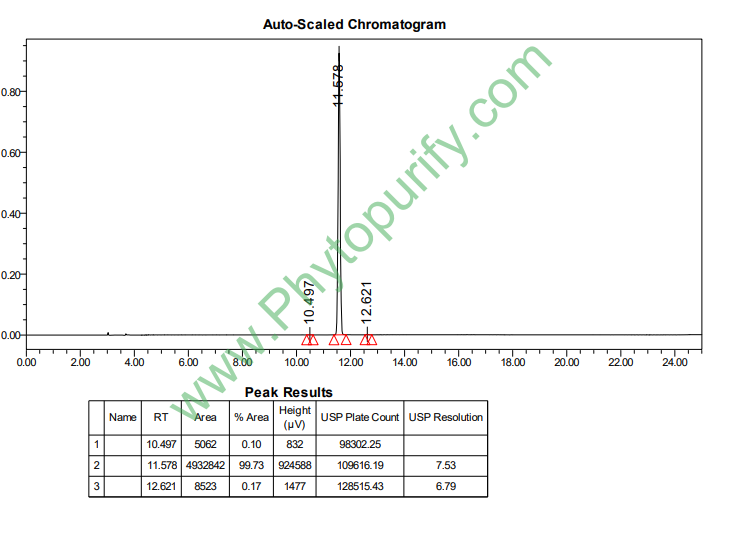
Storage conditions:Short-term storage at 2~8℃, long-term storage at -20 ~ -80℃
130.6300
.1500
-.2300
Low
No
No
No
Unknown
No
Unknown
No
Ailanthus ketone (CAS number: 981-15-7) is a natural triterpenoid compound derived from plants of the Ailanthus genus, which has attracted much attention due to its diverse biological activities and potential medicinal value. As a natural product, Ailanthus altissima ketone has a long history of application in traditional Chinese medicine. Modern pharmacological studies have shown that it has significant anti-inflammatory, anti HIV, anti malaria, anti allergic, anti ulcer, and antibacterial activities, especially in the treatment of hepatocellular carcinoma (HCC), showing strong anti-tumor activity. In addition, Ailanthus altissima ketone has been found to have androgen receptor (AR) inhibitory effects, demonstrating its potential application value in hormone related diseases. This article provides a systematic review of the chemical structure, plant origin, pharmacological activity, mechanism of action, pharmacological evaluation, and clinical application prospects of Ailanthus altissima ketone, aiming to provide theoretical basis and research direction for subsequent basic research and drug development.
Ailanthus altissima ketone belongs to the triterpenoid class, with a molecular formula of C24H32O5 and a molecular weight of 392.40. Its structural features include a multi ring skeleton and multiple oxygen-containing functional groups, endowing it with high chemical activity. The LogP value of Ailanthus altissima ketone is 0.15, indicating its moderate lipophilicity, which facilitates cell membrane penetration but is not overly hydrophobic. The polar surface area (TPSA) is 130.63 Å ², indicating that the molecule has a large number of polar groups and 7 hydrogen bond acceptors, suggesting that it can form strong hydrogen bonds when combined with biomolecules.
The physicochemical properties of Ailanthus altissima ketone determine its distribution and metabolic characteristics in the body. Its blood-brain barrier permeability is low, indicating limited direct impact on the central nervous system. The hepatotoxicity is not yet clear, and both cardiac toxicity and hERG channel inhibition experiments are negative, indicating its good safety. The results of Ames mutagenicity test are unknown and further research is needed to rule out potential genetic toxicity risks.
Ailanthus altissima mainly exists in plants of the Ailanthus genus (such as Ailanthus altissima) and is one of the important active ingredients in this genus. Stinky oak trees are widely distributed in some parts of Asia, especially in northern and central China where they are more common. Traditionally, the roots, bark, and leaves of the stinky oak tree have been used as traditional Chinese medicine, with functions such as clearing heat and detoxifying, anti-inflammatory and analgesic.
The common methods for extracting Ailanthus altissima ketone include solvent extraction, ultrasound assisted extraction, and liquid-liquid partitioning. Ethanol or methanol are usually used as extraction solvents to obtain crude extracts through reflux or ultrasound assisted extraction, followed by separation and purification using techniques such as silica gel column chromatography and high-performance liquid chromatography (HPLC). In recent years, with the advancement of separation technology, the extraction efficiency and purity of Ailanthus altissima ketone have been significantly improved, laying the foundation for its pharmacological research and application.
Ailanthus altissima ketone has significant anti-inflammatory effects. In vitro and in vivo experiments have shown that Ailanthus altissima ketone can inhibit the production of various inflammatory mediators, such as tumor necrosis factor - α (TNF - α), interleukin-6 (IL-6), and nitric oxide (NO). Its anti-inflammatory mechanism is closely related to regulating the nuclear factor kappa B (NF - κ B) signaling pathway, which can inhibit the activation of inflammatory signals and alleviate tissue inflammatory responses.
Ailanthus altissima ketone has been found to have anti human immunodeficiency virus (HIV) activity and can inhibit virus replication. Related studies have shown that Ailanthus altissima ketone interferes with key enzyme activities in the virus lifecycle, blocking virus replication and transmission, providing new ideas for the development of antiviral drugs.
As a natural anti malaria compound, Ailanthus altissima ketone has inhibitory effects on malaria parasites. In vitro experiments have shown that Ailanthus altissima ketone can effectively inhibit the growth of malaria parasites, demonstrating its potential as a candidate for antimalarial drugs.
Ailanthus altissima ketone has shown good effects in anti allergic reactions, as it can inhibit histamine release and degranulation of mast cells, reducing allergic symptoms. Meanwhile, Ailanthus altissima ketone has a protective effect on gastric mucosa, promoting ulcer healing and exhibiting anti ulcer activity.
Ailanthus altissima ketone exhibits inhibitory effects on various bacteria, especially strong antibacterial activity against Gram positive bacteria and some Gram negative bacteria. Its antibacterial mechanism may involve inhibition of cell wall synthesis and disruption of membrane function.
Ailanthus altissima ketone exhibits significant anti-tumor activity in the treatment of hepatocellular carcinoma (HCC). Both in vitro and in vivo experiments have confirmed that Ailanthus altissima ketone can inhibit the proliferation of Huh7 liver cancer cells by inducing cell cycle arrest and promoting apoptosis. Its anti-tumor effect involves the regulation of multiple signaling pathways, demonstrating good therapeutic potential.
Ailanthus altissima ketone has significant pre emergence herbicide activity, and its weed control effect is positively correlated with the concentration of Ailanthus altissima ketone. This activity provides the possibility for its application in the field of agriculture.
Ailanthus altissima ketone is an effective androgen receptor (AR) inhibitor that can inhibit intact AR and its continuously active splicing variants, with IC50 values of 69 nM and 309 nM, respectively. This characteristic makes it potentially useful in the treatment of hormone related diseases such as prostate cancer.
The multiple pharmacological effects of Ailanthus altissima ketone are attributed to its regulation of multiple molecular targets, particularly in endothelial dysfunction and tumor treatment. The relevant targets include:
Through multiple regulation of the aforementioned targets, Ailanthus altissima ketone has achieved multiple pharmacological effects including anti-inflammatory, anti-tumor, and improvement of endothelial function.
The molecular weight of Ailanthus altissima ketone is 392.4, which meets the requirement of Lipinski rule for molecular weight less than 500. Its LogP value is 0.15, indicating moderate lipophilicity, which is beneficial for the absorption and distribution of drugs in the body. The higher TPSA (130.63 Å ²) and hydrogen bond receptor count (7) suggest strong polarity, which may affect oral absorption rate, but also contribute to high affinity binding with the target.
The blood-brain barrier permeability of Ailanthus altissima ketone is low, reducing the risk of central nervous system toxicity. Both cardiac toxicity and hERG channel inhibition were negative, indicating good cardiovascular safety. However, data on hepatotoxicity and genotoxicity (Ames test) are still lacking and require further systematic evaluation.
At present, there is limited research on the pharmacokinetics of Ailanthus altissima ketone, and preliminary data suggests that its metabolism in vivo may involve the liver enzyme system, with certain first pass effects. Detailed in vivo absorption, distribution, metabolism, and excretion (ADME) studies are needed in the future to improve its pharmacokinetic characteristics and provide a basis for clinical applications.
Ailanthus altissima ketone has shown broad clinical application prospects in multiple disease fields due to its multi-target and multi mechanism pharmacological activities. Its anti-tumor effect is particularly prominent in hepatocellular carcinoma, and combined with its androgen receptor inhibitory activity, Ailanthus altissima ketone is expected to become a new therapeutic drug for tumors, especially hormone dependent tumors. In addition, the anti-inflammatory, antiviral and antibacterial properties of ailerone provide a possibility for its application in infectious diseases and immune regulation.
In the agricultural field, the herbicide activity of Ailanthus altissima ketone also has high application value, which can be used as a natural and environmentally friendly herbicide to replace traditional chemicals and reduce environmental pollution.
However, the pharmacological and safety properties of Ailanthus altissima ketone still need further verification. Future research should focus on its toxicological evaluation, pharmacokinetic optimization, and formulation development. Meanwhile, mechanism research based on its molecular targets will help guide clinical trial design and the development of precise treatment strategies.
As a multifunctional natural triterpenoid compound, Ailanthus altissima ketone has demonstrated unique advantages in anti-tumor, anti-inflammatory, antiviral, and agricultural weed control fields. Its complex mechanism of action and multi-target regulatory properties provide abundant materials for the pharmacological research of natural products. Although research on Ailanthus altissima ketone is still in its basic and preclinical stages, its excellent pharmacological activity and safety indicate its enormous potential in future drug development. The in-depth analysis of pharmacological mechanisms, optimization of drug properties, and clinical translation research will be the key to promoting the development of Ailanthus altissima ketone as a new therapeutic drug.
