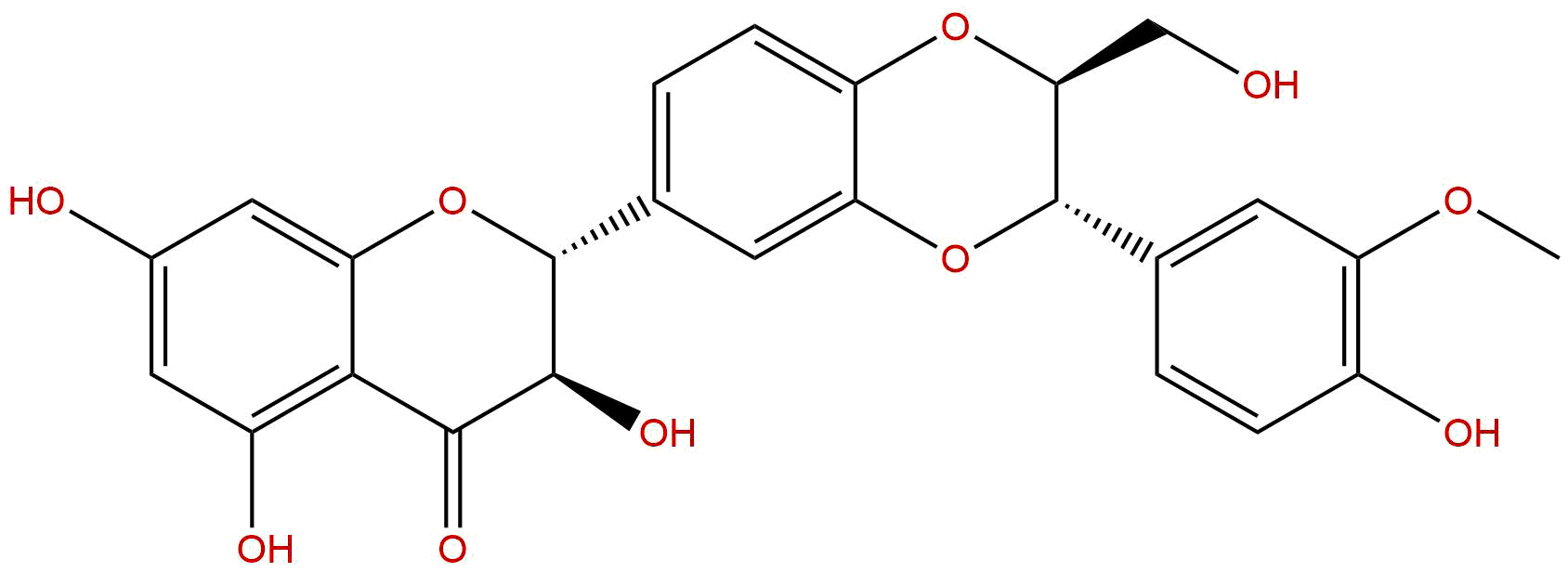


Product name: Silybin B
Synonym name: Silibinin B; Silybin a1
Catalogue No.: BP5111
Cas No.: 142797-34-0
Formula: C25H22O10
Mol Weight: 482.441
Botanical Source:
Type of Compound: Flavonoids
Purity: 95%~99%
Analysis Method: HPLC-DAD or/and HPLC-ELSD
Identification Method: Mass, NMR
Packing: Brown vial or HDPE plastic bottle
Storage: Store in a well closed container, protected from air and light. Put into refrigerate or freeze for long term storage.
Whenever possible, you should prepare and use solutions on the same day. However, if you need to make up stock solutions in advance, we recommend that you store the solution as aliquots in tightly sealed vials at -20℃. Generally, these will be useable for up to two weeks.
The product could be supplied from milligrams to grams
Inquire for bulk scale.
For Reference Standard and R&D, Not for Human Use Directly.
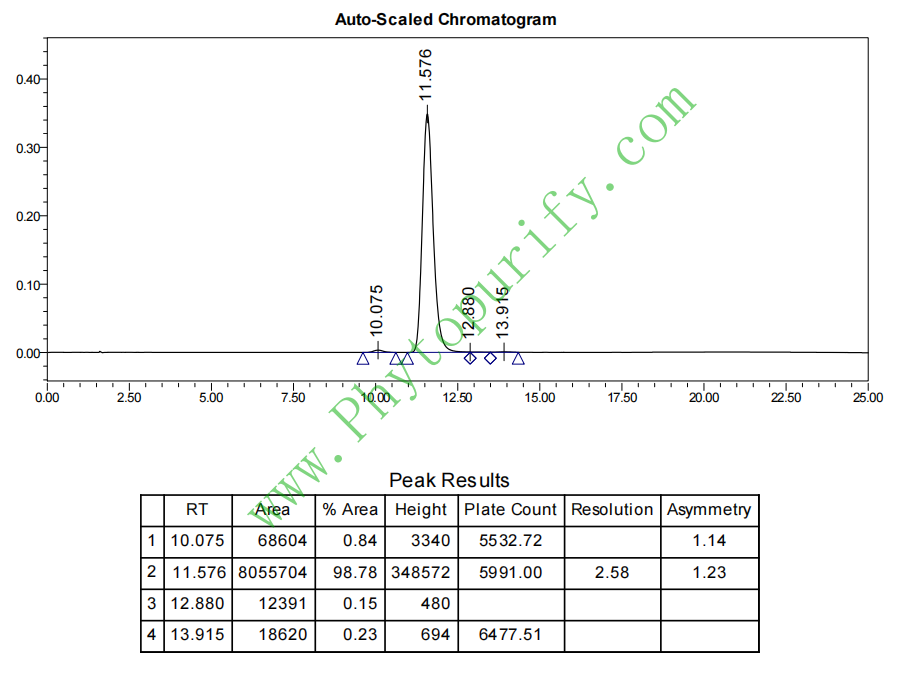
HPLC of Silybin B
Storage conditions:Short-term storage at 2~8℃, long-term storage at -20 ~ -80℃
155.1400
1.8485
1.7107
.2093
1.8204
.7008
Low
89.1051
3.9920
No
No
No
No
Yes
No
0.0
Yes
No
Yes
No
Silybin B, CAS number 142797-34-0, is an important flavonoid natural product in Silybum marianum and is one of the isomers of Silibinin. In recent years, with the deepening of research on neurodegenerative diseases and chemotherapy related neurotoxicity, silibinin B has gradually attracted attention due to its unique biological activity. It not only exhibits significant antioxidant and liver protective effects, but also has become a research hotspot in the field of neuroprotection due to its potential role in Alzheimer's disease (AD) - related inhibition of amyloid - β (A β) aggregation and DNA damage repair. In addition, silibinin B can activate the ATR (ataxia telangiectasia and Rad3 related) signaling pathway, regulate cell cycle and apoptosis, showing a relieving effect on the neurotoxicity induced by chemotherapy drug cisplatin. This article will provide a systematic review of the chemical structure, extraction methods, pharmacological activity, mechanism of action, pharmacological properties, and clinical application prospects of silibinin B, providing theoretical basis and research direction for the development of natural product pharmacology and neuroprotective drugs.
Silymarin B is one of the isomers of silymarin, with a chemical formula of C25H22O10 and a molecular weight of 482.4410. Its structure contains a typical flavonoid skeleton with multiple phenolic hydroxyl groups and benzene rings, endowing it with excellent antioxidant properties. The LogP value of Silymarin B is 1.8485, indicating its moderate lipid solubility, which is beneficial for membrane penetration. The polar surface area (TPSA) is 155.14 Å ², indicating its high polarity, which may affect its oral absorption and blood-brain barrier (BBB) permeability. Although silibinin B has a low blood-brain barrier permeability, it can still exert neuroprotective effects in vivo, suggesting that it may exert its effects through specific transport mechanisms or metabolites. The water solubility is 0.2093 mg/mL, which belongs to low water solubility compounds, indicating that the development of its formulation needs to consider solubility enhancement strategies. The negative result of hERG channel inhibition experiment indicates a low risk of cardiac toxicity. The Ames test result is 0.0, indicating no significant genotoxicity and good safety.
Silymarin B is mainly found in the fruit of Silymarin, a traditional medicinal plant. Its fruit contains abundant flavonoids, especially a mixture of Silymarin. Silymarin B, as an isomer of silymarin, has a relatively low content and usually coexists with silymarin A.
The common methods for extracting Silymarin B include:
Solvent extraction Using ethanol or methanol as extraction solvents, the flavonoids in milk thistle can be effectively dissolved through reflux or ultrasound assisted extraction.
Liquid liquid distribution Using solvents of different polarities (such as ethyl acetate and n-hexane) to separate the crude extract and improve the purity of the target component.
chromatographic separation Purification and separation of Silymarin B were achieved using techniques such as silica gel column chromatography and reverse phase high-performance liquid chromatography (RP-HPLC), combined with gradient elution.
Supercritical fluid extraction As a green extraction technology, supercritical CO2 extraction has gradually been applied to the extraction of silibinin B while maintaining the stability of active ingredients and improving extraction efficiency.
Modern extraction processes tend to combine multiple technologies to optimize extraction efficiency and purity, while reducing the use of organic solvents, in line with the principles of green chemistry.
The pharmacological activities of silibinin B include antioxidant, neuroprotective, anti-inflammatory, DNA repair activation, and liver protection, among others. The specific manifestations are as follows:
The abnormal aggregation of amyloid - β peptide to form neurotoxic plaques is the core pathological feature in the pathogenesis of Alzheimer's disease. Silymarin B has been shown to effectively inhibit the formation of A β - fibrils, promote the formation of amorphous aggregates, reduce the accumulation of toxic fibrous aggregates, and thus alleviate the toxic damage to nerve cells. In addition, silibinin B can penetrate the blood-brain barrier and directly act on the central nervous system, exerting neuroprotective effects.
Silymarin B promotes the cell's ability to repair DNA damage by activating the ATR mediated DNA damage repair pathway, especially in the cisplatin induced neurotoxicity model, significantly reducing neuronal DNA damage and apoptosis. It inhibits the JNK/p38 MAPK signaling pathway, blocks cell apoptosis signaling, and protects neuronal survival.
Silymarin B has strong antioxidant activity, which can clear free radicals and alleviate cell damage caused by oxidative stress. It enhances cellular antioxidant defense and protects nerve cells and liver cells from oxidative damage by regulating the intracellular antioxidant enzyme system (such as SOD1, SOD2, CAT, GPX1, etc.).
Silymarin B exhibits good activity in liver protection and can regulate various targets associated with liver injury, including matrix metalloproteinase 9 (MMP9), NAD (P) H quinone oxidoreductase 1 (NQO1), nuclear factor E2 related factor 2 (NRF2), heme oxygenase 1 (HMOX1), and transforming growth factor beta 1 (TGFB1). Reduce liver cell damage and promote liver function recovery through antioxidant, anti-inflammatory, and anti fibrotic mechanisms.
The multi-target mechanism of action of silibinin B is the basis for its diverse pharmacological activities, mainly involving the following aspects:
Silymarin B directly binds to A β peptide, blocking the formation of its β - folding structure and inhibiting the aggregation process of fibroblasts. This mechanism reduces the accumulation of neurotoxic A β fibers, alleviates neuroinflammation and oxidative stress.
ATR, as a key DNA damage sensing kinase in cells, regulates cell cycle checkpoints and DNA repair. Silymarin B activates ATR, promotes phosphorylation of downstream Chk1 kinase, enhances the cell's ability to repair DNA damage, prevents apoptosis caused by DNA breakage, and plays a protective role in cisplatin induced neurotoxicity.
The JNK and p38 MAPK signaling pathways play important roles in cellular stress response and apoptosis. Silymarin B inhibits the activation of these two pathways, reduces the expression of pro apoptotic factors, and alleviates neuronal apoptosis and inflammatory responses.
Silymarin B induces nuclear translocation of nuclear factor E2 related factor 2 (NRF2), activates the expression of downstream antioxidant enzyme genes (such as SOD1, SOD2, CAT, GPX1, HMOX1, etc.), enhances cellular antioxidant defense, and reduces oxidative stress damage.
Silymarin B reduces matrix degradation and inhibits liver fibrosis by regulating MMP9; Activate NQO1 and HMOX1 to promote detoxification and antioxidant reactions; Regulating TGFB1 signaling to alleviate liver inflammation and fibrosis.
The pharmacological parameters of Silymarin B indicate that it has certain potential for development:
In terms of pharmacokinetics, Silymarin B is absorbed slowly after oral administration, with limited bioavailability and widespread distribution in the body. It can penetrate the blood-brain barrier but has low efficiency. Its metabolism is mainly carried out through the liver enzyme system, and the activity and safety of metabolites need further research. The main excretion pathways are bile and urine.
In response to its pharmacokinetic limitations, modern pharmaceutical techniques such as nanocarriers, liposome encapsulation, and eutectic technology have been proposed to improve its bioavailability and brain targeting.
Silymarin B, as a multifunctional natural product, has broad clinical application potential, especially in the prevention and treatment of neurodegenerative diseases and chemotherapy related neurotoxicity, demonstrating unique advantages.
Based on its inhibition of A β aggregation and neuroprotective effects, silibinin B is expected to become a novel candidate drug for AD treatment. In the future, systematic preclinical efficacy evaluation and safety studies need to be conducted to clarify its role in improving cognitive function and delaying pathological progression.
Chemotherapy drugs such as cisplatin often cause neurotoxicity, limiting their clinical application. Silymarin B reduces neuronal damage by activating the ATR pathway and inhibiting apoptotic signals, providing a new strategy for chemotherapy combination therapy.
Silymarin B regulates liver antioxidant and anti fibrotic targets, has liver protective potential, and is suitable for adjuvant therapy of hepatitis, liver fibrosis, and drug-induced liver injury.
Silymarin B, as a natural flavonoid compound with multiple pharmacological activities, exhibits significant potential in neuroprotection, antioxidant, DNA damage repair, and liver protection. Its unique mechanism of action and good safety provide new ideas for the prevention and treatment of Alzheimer's disease and chemotherapy related neurotoxicity. However, there are still certain challenges in the development and pharmacokinetics of Silymarin B, which urgently need to be overcome through structural optimization and advanced pharmaceutical methods. In the future, combined with systematic preclinical and clinical research, silibinin B is expected to become an important breakthrough in the field of natural product pharmacology, bringing new hope for the treatment of related diseases.
