Introduction/Overview
Natural products, as an important source of drug discovery, have long played an irreplaceable role in human health maintenance and disease treatment. Flavonoids, as the most widely distributed class of secondary metabolites in nature, have attracted much attention due to their structural diversity and extensive biological activity. Among them, dihydroflavonoids and their glycoside derivatives constitute an important subclass, exhibiting multiple pharmacological potentials including antioxidant, anti-inflammatory, anti-tumor, neuroprotective, and cardiovascular protection. Among the numerous dihydroflavonoid glycosides, 4 '- methoxy-glycol-7-O - β - D-glucoside, as a relatively novel and structurally unique natural product, is gradually entering the field of researchers.
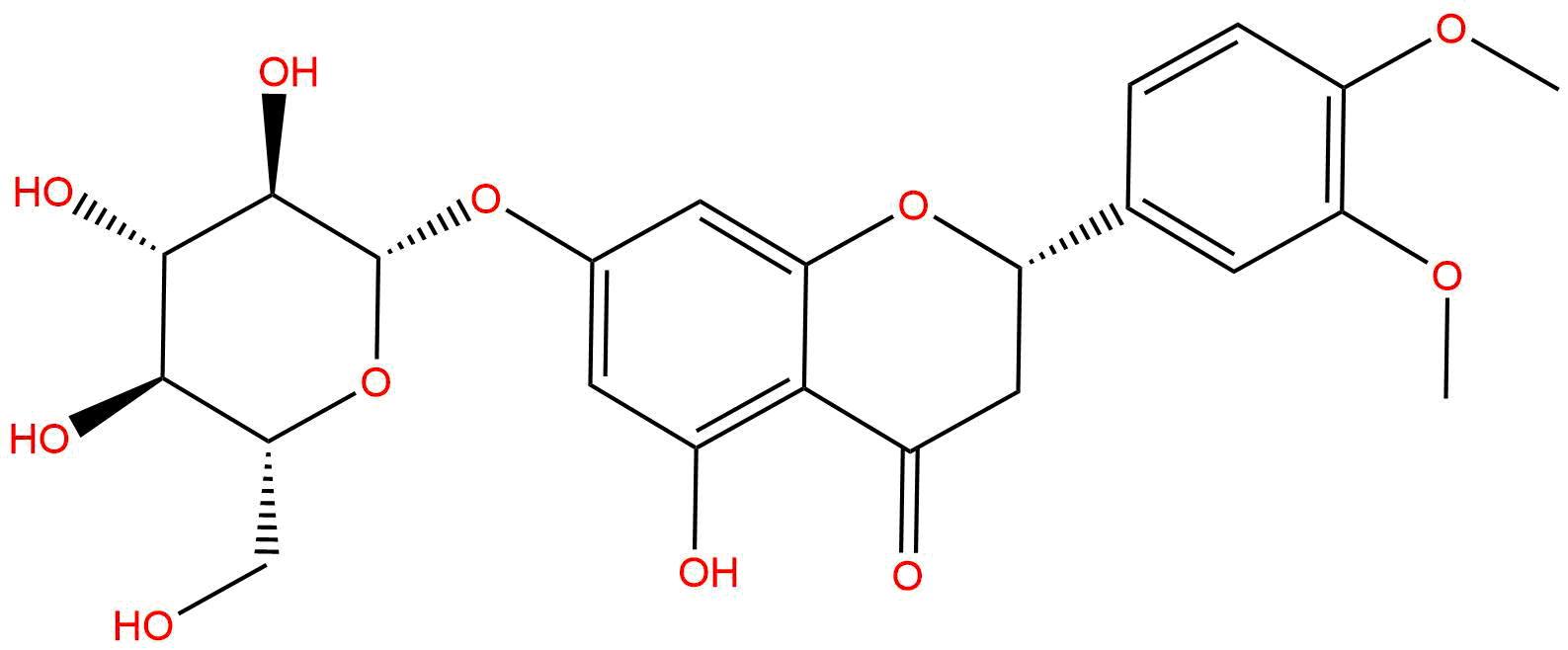
This compound belongs to the derivatives of Homoeriodictyol in terms of chemical structure. Its core skeleton is dihydroflavones, and a molecule of β - D-glucose is attached to the hydroxyl group at position 7, while methoxylation modification occurs at the hydroxyl group at position 4 '. This specific structural modification, especially the introduction and glycosylation of methoxy groups, not only changes the polarity, solubility, and spatial configuration of the molecule, but also profoundly affects its interaction mode with biological targets, thereby endowing it with a unique pharmacological activity spectrum that distinguishes it from the parent compound. Although the research history of 4 '- methoxy-high quercetin 7-O - β - D-glucoside is relatively short compared to some classic flavonoids such as quercetin and kaempferol, and public reports are relatively limited, existing studies have revealed its value in antioxidant, anti-inflammatory, and potential metabolic regulation.
From the perspective of natural product chemistry, this compound mainly exists in certain specific medicinal plants, and its extraction and separation often rely on modern chromatographic techniques. The analysis of its physicochemical properties, such as moderate lipid water partition coefficient (LogP 0.58) and high polar surface area (TPSA 164.37), suggests that it may have good water solubility but is not easily able to penetrate the blood-brain barrier, providing theoretical basis for its application in specific peripheral disease fields. The preliminary evaluation of drug properties shows that there is no significant risk of hERG inhibition or mutagenicity in Ames test, indicating a good safety window.
The purpose of this article is to systematically review and evaluate the current research status of 4 '- methoxy-glycol-7-O - β - D-glucoside. The article will start from the chemical structure and physicochemical properties, trace its plant origin and extraction process, focus on its discovered pharmacological activity and potential mechanism of action, and preliminarily evaluate its pharmacokinetic characteristics based on its pharmacological parameters. Finally, based on existing evidence, we will explore the prospects and challenges faced by this compound in clinical applications, in order to provide valuable references for further in-depth research and development.
Chemical structure and physicochemical properties
The chemical structure of 4 '- methoxy-glycol-7-O - β - D-glucoside is the basis of its biological activity. From a taxonomic perspective, it belongs to the dihydroflavonoid glycosides in the flavonoid class. Its parent nucleus Homoeriodictyol is itself a dihydroflavonoid, chemically named 3 ', 5,7-trihydroxy-4' - methoxydihydroflavonoid. The difference from Eriodictyol is that the hydroxyl group at the 4 'position of the B ring is replaced by a methoxy group. On this basis, the compound described in this article is connected to a molecule of β - D-glucopyranose through an O-glycosidic bond on the 7th hydroxyl group of the A ring. Therefore, its systematic naming clearly reveals its structural features: 4 '- methoxy - coumarin-7-O - β - D-glucoside.
The molecular formula of this compound is C ₂∝ H ₂₆ O ₁₁, with a molecular weight of 478.4500 Da. The key functional groups in its structure include the 4-carbonyl group (C=O) on the C ring of dihydroflavonoids, which is a crucial group for flavonoids to exhibit various biological activities; The introduction of the O - β - D-glucosyl group at position 7 of the A ring significantly increases the water solubility of the molecule and may affect its interaction with gut microbiota and metabolic pathways in vivo; The specific combination of adjacent hydroxyl and methoxy groups at the 3 'position (- OH) and 4' position (- OCH ∝) of the B ring is an important structural feature that distinguishes it from other dihydroflavones such as coumarin and hesperetin, which may endow it with unique antioxidant and enzyme inhibitory activities.
In terms of physical and chemical properties, based on computational chemistry and experimental data, the compound exhibits the following characteristics:
1. Lipophilicity and water solubility The calculated LogP value is 0.5796, indicating that the compound has lower lipophilicity and is more likely to be distributed in aqueous environments. This is consistent with the structural feature of the molecule containing multiple hydroxyl groups and one sugar group. The calculated value of its water solubility (LogS) is 3.2032, which is above average, providing favorable conditions for its dissolution, absorption, and transport in organisms. Good water solubility is one of the important prerequisites for the development of oral drugs.
2. Polar Surface Area The topological polar surface area (TPSA) is 164.37 Å ². This value is much higher than the threshold commonly believed to be required for passive cell membrane penetration (approximately 140 Å ²), and significantly higher than compounds that can penetrate the blood-brain barrier (typically<90 Å ²). High TPSA means that the molecule contains a large number of polar atoms (such as oxygen atoms), making it difficult to cross lipid rich cell membranes, especially the blood-brain barrier, through passive diffusion. This is highly consistent with the conclusion of "low blood-brain barrier permeability" in subsequent drug evaluation, suggesting that its main target of action may be located in peripheral tissues.
3. Stability As a glycoside compound, it may be relatively stable in acidic environments (such as gastric juice), but under the action of β - glucosidase produced by gut microbiota, glycosidic bonds are easily hydrolyzed, releasing the aglycone -4 '- methoxy - coumarin. This metabolic process is crucial for its in vivo activity, as aglycones typically have stronger lipophilicity and higher biological activity than glycosides. In addition, the phenolic hydroxyl groups in the molecule give it a certain degree of reducibility and are easily oxidized, which is also the chemical basis for its antioxidant activity.
In summary, the structural characteristics of 4 '- methoxy-glycophenol-7-O - β - D-glucoside determine its hydrophilicity and certain lipophilicity. Its high polarity makes it difficult to enter the central nervous system, while its good water solubility facilitates its distribution in the systemic circulation. These physicochemical properties have laid a solid chemical foundation for its subsequent pharmacological activity research and pharmacological evaluation.
Plant sources and extraction methods
4 '- Methoxy-glycol-7-O - β - D-glucoside is not a common component widely present in all plants, and its distribution has a certain specificity. According to existing literature reports, this compound is mainly isolated and identified from certain specific medicinal plants, with the most typical source being Asteraceae (Asteraceae) Plants, especially Artemisia and Inula genus Some species. For example, research has shown that Artemisia argyi or Artemisia verlotorum The compound was isolated from the middle. In addition, in Inula Nervosa It has also been found in plants. These plants are often used in traditional medicine to treat inflammation, infections, or digestive system diseases, providing ethnic botanical clues for exploring the pharmacological activity of this compound.
The process of extracting and separating the compound usually follows the classical paradigm of natural product chemistry, combined with modern chromatographic techniques. A typical extraction and separation scheme includes the following key steps:
-
Raw material pretreatment and extraction Crush dry plant materials (such as aboveground parts) and use solvent extraction method. Given that the compound has a certain degree of water solubility and contains phenolic hydroxyl groups, solvents with higher polarity are often used, such as methanol、ethanol Or its aqueous solution (such as 70% -95% ethanol) can be subjected to cold soaking, percolation, or heated reflux extraction. The alcohol extraction method can effectively dissolve the target compound while inhibiting enzyme activity and preventing component degradation. The extract was concentrated under reduced pressure to obtain the total extract.
-
Preliminary separation and enrichment The total extract is usually suspended in water and then subjected to liquid-liquid extraction using organic solvents of different polarities, such as petroleum ether, ethyl acetate, n-butanol, etc. Due to the low LogP value (0.58) and high polarity of 4 '- methoxy-glycol-7-O - β - D-glucoside, it is usually mainly enriched in N-butanol extraction layer Or in the water layer. The ethyl acetate layer may also contain some glycosides or slightly less polar flavonoids. Through this preliminary solvent allocation, the target compound can be effectively separated from a large amount of lipophilic impurities such as chlorophyll and wax.
-
Chromatographic Separation and Purification This is the core step in obtaining pure compounds. The enriched n-butanol extract or aqueous layer is first processed through Silica gel column chromatography Perform preliminary separation. Use gradient elution systems such as chloroform methanol water or ethyl acetate methanol water, and combine similar components based on thin layer chromatography (TLC) detection results. Due to the presence of sugar groups and high polarity of the compound, a higher proportion of methanol is usually required for elution on a silica gel column. Subsequently, for the components containing the target compound, further measures were taken Reverse phase column chromatography Refine (such as ODS C18). Using methanol water or acetonitrile water systems for gradient elution can more effectively achieve separation based on differences in compound hydrophobicity. Finally, through Preparation type high-performance liquid chromatography (Pre HPLC) Perform final purification to obtain high-purity monomeric compounds. The entire separation process requires real-time monitoring using techniques such as TLC, HPLC-UV, or HPLC-MS to accurately locate the target peak.
-
Structural Identification The isolated pure product needs to be structurally confirmed through spectroscopic methods. The main methods include nuclear magnetic resonance spectroscopy (NMR, including ¹ H-NMR, ¹ ³ C-NMR, DEPT, HSQC, HMBC, etc.), which is used to determine the connection positions and configurations of carbon hydrogen frameworks and sugars; High resolution mass spectrometry (HR-ESI-MS) is used to determine precise molecular weight and validate molecular formulas; And ultraviolet visible spectroscopy (UV) and infrared spectroscopy (IR) are used to assist in determining functional groups and skeleton types. By comparing with the spectral data of known compounds, it was ultimately determined that it is 4 '- methoxy-glycol-7-O - β - D-glucoside.
It is worth noting that due to the low content of this compound in plants, the extraction and separation process often requires a large amount of plant raw materials, and the steps are cumbersome and time-consuming. In recent years, some new extraction techniques, such as ultrasound assisted extraction and microwave-assisted extraction, have been attempted to improve extraction efficiency and shorten time. In addition, with a deeper understanding of the biosynthetic pathway, the heterologous production of this compound in microbial cell factories through synthetic biology methods may become a potential approach to solve its source problem in the future.
Pharmacological activity research
Although the research history of 4 '- methoxy-glycophenol-7-O - β - D-glucoside is not long, existing pharmacological activity studies have preliminarily revealed its biological potential in multiple aspects, mainly focusing on antioxidant, anti-inflammatory, and potential metabolic regulation fields.
1. Antioxidant activity
As a dihydroflavonoid compound, its molecular structure contains phenolic hydroxyl groups, which endow it with the ability to scavenge free radicals. Research has shown that 4 '- methoxy-glycol-7-O - β - D-glucoside exhibits activity in various in vitro antioxidant models. For example, in DPPH radical scavenging experiments, the compound was able to effectively reduce DPPH radicals. Although its activity may be weaker than some classic strong antioxidants such as vitamin C or quercetin, it still showed a dose-dependent scavenging effect. In addition, in ABTS ⁺ radical scavenging experiments and iron ion reduction ability (FRAP) measurements, the compound also exhibited certain antioxidant capabilities. Its antioxidant mechanism is mainly attributed to the 3 '- hydroxyl group on the B ring, which can act as a hydrogen atom donor and react with free radicals to form stable semiquinone radicals, thereby interrupting the chain reaction of free radicals. The presence of sugar groups may to some extent reduce the rate of direct reaction with free radicals, but it increases its water solubility, allowing it to function better in aqueous environments. This antioxidant activity is an important basis for its other pharmacological effects, such as anti-inflammatory and protection of cells from oxidative stress damage.
2. Anti inflammatory activity
Inflammation is the common pathological basis of many chronic diseases (such as cardiovascular diseases, diabetes, neurodegenerative diseases). Preliminary studies have shown that 4 '- methoxy-glucoside-7-O - β - D-glucoside has potential anti-inflammatory effects. In the inflammatory model of macrophages (such as RAW264.7 cells) stimulated by lipopolysaccharide (LPS), this compound can significantly inhibit the production of pro-inflammatory mediators such as nitric oxide (NO) and prostaglandin E2 (PGE2). The mechanism may be related to the inhibition of inducible nitric oxide synthase (iNOS) and cyclooxygenase-2 (COX-2) expression. In addition, it may also reduce the release of downstream pro-inflammatory cytokines such as tumor necrosis factor alpha (TNF - α), interleukin-6 (IL-6), and interleukin-1 β (IL-1 β) by inhibiting the activation of the nuclear factor kappa B (NF - κ B) signaling pathway. This multi-target anti-inflammatory mode of action demonstrates certain potential in the treatment of inflammation related diseases.
3. Other potential activities
In addition to antioxidant and anti-inflammatory properties, some studies also suggest that the compound may have other biological activities. For example, based on its structural similarity to certain known alpha glucosidase inhibitors (such as DNJ in mulberry leaves), preliminary studies have explored its inhibitory activity on alpha glucosidase. Alpha glucosidase is an enzyme located at the brush border of the small intestine, responsible for breaking down carbohydrates into monosaccharides. Inhibiting this enzyme can delay the absorption of glucose, thereby effectively controlling postprandial blood glucose levels. Although the specific data for this compound is not sufficient, the relevant research provides the possibility for its application in diabetes management. In addition, given its antioxidant and anti-inflammatory properties, this compound may also play a role in protecting liver cells from chemical damage (such as carbon tetrachloride induced liver injury) or myocardial cells from ischemia-reperfusion injury, but further experimental verification is needed.
Overall, current research on the pharmacological activity of 4 '- methoxy-glycol-7-O - β - D-glucoside is still in its early stages. The existing evidence mainly comes from in vitro experiments and lacks systematic in vivo pharmacological evaluation. Its activity intensity is usually lower than that of the parent compound Gaoshengcao phenol or some known potent flavonoids, but the pharmacokinetic advantages brought by glycosylation modification (such as better solubility and stability) may make it exhibit unique advantages in vivo. More in-depth research is needed in the future, especially using animal models to validate its in vivo efficacy and clarify its activity profile.
Mechanism of action and molecular targets
A deep understanding of the mechanism of action of 4 '- methoxy-glycol-7-O - β - D-glucoside is crucial for its clinical application. Based on its chemical structure and discovered pharmacological activity, its mechanism of action mainly involves the regulation of oxidative stress and inflammatory signaling pathways, and may involve interactions with specific enzymes and receptors.
1. Directly eliminate free radicals and chelate metal ions
This is its most direct antioxidant mechanism. The 3 '- hydroxyl group (phenolic hydroxyl group) in the molecule is the main active site, which can provide hydrogen atoms or electrons to reactive oxygen species (ROS) and reactive nitrogen species (RNS), converting them into stable products and interrupting the chain oxidation reaction triggered by free radicals. In addition, the 4-carbonyl and 5-hydroxy (if present) or ortho phenolic hydroxyl structures on the dihydroflavonoid skeleton endow it with the ability to chelate transition metal ions (such as Fe ² ⁺, Cu ² ⁺). These metal ions are catalysts for Fenton and Haber Weiss reactions, capable of producing highly active hydroxyl radicals. By chelating these metal ions, the compound can inhibit the generation of free radicals from the source. This dual mechanism of direct clearance and indirect inhibition constitutes the molecular basis of its antioxidant activity.
2. Regulating the antioxidant signaling pathway (Nrf2/ARE pathway)
In addition to direct effects, this compound may also exert indirect antioxidant effects by activating the intracellular antioxidant defense system. Nuclear factor E2 related factor 2 (Nrf2) is a key transcription factor that regulates cellular oxidative stress response. Under normal physiological conditions, Nrf2 binds to Kelch like ECH related protein 1 (Keap1) and is in an inhibited state. When stimulated by oxidative stress or electrophilic agents, Nrf2 dissociates from Keap1, translocates into the nucleus, binds to antioxidant response elements (ARE), and initiates the transcription of downstream antioxidant and detoxifying enzyme genes, such as heme oxygenase-1 (HO-1), quinone oxidoreductase 1 (NQO1), glutathione S-transferase (GST), etc. The phenolic hydroxyl group in 4 '- methoxy-glycol-7-O - β - D-glucoside can be oxidized to quinone intermediates, which can modify cysteine residues on Keap1, activate the Nrf2 signaling pathway, and enhance the overall antioxidant capacity of cells. This mechanism is particularly important for protecting cells from long-term, low-level oxidative stress damage.
3. Inhibit the inflammatory signaling pathway (NF - κ B/MAPK pathway)
Its anti-inflammatory activity is mainly achieved through the regulation of key inflammatory signaling pathways. Nuclear factor kappa B (NF - κ B) is the core transcription factor in inflammatory response. In resting cells, NF - κ B binds to the inhibitory protein I κ B and exists in an inactive form in the cytoplasm. When stimulated by inflammation such as LPS and TNF - α, I κ B kinase (IKK) is activated, phosphorylating I κ B, leading to its ubiquitination degradation and release of NF - κ B. NF - κ B immediately enters the nucleus and initiates the transcription of various pro-inflammatory genes, such as iNOS, COX-2, TNF - α, IL-6. Research has shown that 4 '- methoxy-glucoside-7-O - β - D-glucoside can inhibit the activity of IKK or directly inhibit the phosphorylation of I κ B, thereby blocking the nuclear translocation of NF - κ B and reducing the production of pro-inflammatory mediators. In addition, it may also inhibit the mitogen activated protein kinase (MAPK) pathway, including p38, JNK, and ERK, which are also involved in the synthesis and release of inflammatory factors. By simultaneously acting on the NF - κ B and MAPK pathways, this compound can inhibit inflammatory responses in multiple dimensions.
4. Potential enzyme inhibitory activity
Based on structure-activity relationship (SAR) analysis, this compound may have inhibitory effects on certain enzymes related to metabolism. For example, its structure is similar to that of flavonoid alpha glucosidase inhibitors, where the hydroxyl and methoxy groups on the B ring may competitively inhibit enzyme activity by forming hydrogen bonds and hydrophobic interactions with amino acid residues at the enzyme's active site. Similarly, it may also inhibit aldose reductase (AR), which plays a key role in the occurrence and development of complications of diabetes, such as cataract and neuropathy. In addition, as a flavonoid compound, it may also interact with certain kinases (such as PI3K, Akt) or receptors (such as adenosine receptors), but these hypotheses still need to be validated through experimental methods such as molecular docking, surface plasmon resonance (SPR), or cellular thermal transition analysis (CETSA).
In summary, the mechanism of action of 4 '- methoxy-glycol-7-O - β - D-glucoside is multi-target and multi pathway. It can act as a direct antioxidant, enhance endogenous defense by activating the Nrf2 pathway, and inhibit pro-inflammatory signaling pathways such as NF - κ B and MAPK. This "multi pronged" mode of action gives it unique advantages in treating complex diseases driven by oxidative stress and chronic inflammation, such as metabolic syndrome and cardiovascular disease. However, the current understanding of these mechanisms is mostly based on in vitro experiments and structural inference. The exact targets, binding modes, and details of signal network regulation in vivo still need to be further elucidated using advanced technologies such as gene knockout animal models, proteomics, and metabolomics.
Evaluation of drug properties and pharmacokinetics
The evaluation of drug properties is a crucial step in pushing a natural product from laboratory discovery to clinical use. It comprehensively evaluates the physicochemical properties, pharmacokinetic characteristics, safety, and exploitability of compounds. Based on its structural characteristics and existing computational prediction data, preliminary pharmacological analysis can be carried out for 4 '- methoxy-glycophenol-7-O - β - D-glucoside.
1. Analysis of drug properties
According to the classic Lipinski Five Rules, an orally active drug should typically meet the following criteria: molecular weight<500 LogP<5、 The number of hydrogen bond donors is less than 5, and the number of hydrogen bond acceptors is less than 10. The molecular weight of this compound is 478.45, which meets the requirement of<500; LogP is 0.58, much lower than 5; The number of hydrogen bond donors (phenolic hydroxyl groups and hydroxyl groups on sugars) is about 6-7, slightly higher than the threshold of 5; The number of hydrogen bond acceptors (oxygen atoms) is 11, slightly higher than the threshold of 10. Therefore, the compound slightly violates the "Five Rules" in terms of the number of hydrogen bond donors and acceptors, mainly due to the presence of multiple hydroxyl groups and one sugar group in its molecule. This deviation usually means that its oral absorption may be poor, but it is not absolute, and many successful natural medicines (such as some glycoside antibiotics) also violate this rule. Its high TPSA (164.37) further confirms its characteristics of high polarity and poor passive membrane permeability. Therefore, the oral bioavailability of this compound may be a challenge.
2. Prediction of pharmacokinetic characteristics
- absorb As mentioned earlier, due to its high polarity and high TPSA, this compound has a weaker ability to passively diffuse through small intestinal epithelial cells. Its absorption may mainly rely on active transport or passive cellular bypass pathways. In addition, as a glycoside, it may be hydrolyzed by microbial β - glucosidase in the intestine into aglycones (4 '- methoxy coumarin), which have higher lipophilicity and are more easily absorbed. Therefore, the systemic exposure after oral administration may be mainly composed of aglycones and their subsequent metabolites.
- distribution Due to its good water solubility, this compound may mainly bind to plasma proteins (such as albumin) in the blood or exist freely in the plasma. Its distribution volume may not be large, mainly distributed in extracellular fluid. The predicted result of low blood-brain barrier permeability (BBB Low) means that it is difficult for it to enter the central nervous system, which limits its application in brain diseases and avoids potential central neurotoxicity.
- Metabolism This compound undergoes extensive metabolism in the body. Firstly, glycosidic bonds may be hydrolyzed. Secondly, the phenolic hydroxyl group (3 '- OH) on the aglycone and the hydroxyl group on the sugar group are common sites of action for phase II metabolic enzymes such as UDP glucuronosyltransferase UGT and sulfotransferase SULT, forming glucuronic acid and sulfate complexes. In addition, methoxy groups may also undergo O-demethylation reactions. These metabolic processes typically lead to further increase in its water solubility, thereby promoting its excretion through urine and bile.
- excretion Metabolites are mainly excreted through two pathways: the kidneys (urine) and the liver (bile, excreted with feces). Due to its moderate molecular weight, bile excretion may account for a certain proportion.
3. Safety evaluation
The preliminary pharmacological data provides encouraging safety signals.HERG inhibition The predicted result is' no ', indicating that the compound is unlikely to block cardiac potassium ion channels at therapeutic concentrations, thereby reducing the risk of causing QT interval prolongation and fatal arrhythmias such as torsade cuspidata.Ames test The result is 0.0, which is a strong negative signal indicating that the compound did not show mutagenicity in the bacterial recovery mutation test, suggesting a low risk of genetic toxicity. These data provide important safety guarantees for its subsequent development as a lead compound. Of course, this is only a preliminary in vitro or computational prediction, and the true safety still needs to be comprehensively evaluated through systematic in vivo toxicology studies (such as acute toxicity, subchronic toxicity, reproductive toxicity, etc.).
4. Development Strategy
Considering its potential poor oral absorption, drug development strategies for this compound can consider the following approaches:
- Prodrug design Modify the phenolic hydroxyl groups in the molecule, such as preparing phosphate or amino acid ester prodrugs, to enhance their lipophilicity and oral absorption.
- Optimization of administration route Develop non oral routes of administration, such as transdermal, nasal, or injection administration, to bypass absorption barriers.
- nano-formulation Using nano delivery systems such as liposomes, nanoparticles, and micelles to encapsulate the compound, in order to improve its solubility, stability, and bioavailability.
- Regulation of gut microbiota By utilizing its characteristics as a glycoside and regulating the gut microbiota, it promotes its biotransformation in the intestine and enhances the production of active aglycones.
In summary, 4 '- methoxy-glycophenol-7-O - β - D-glucoside has certain pharmacological properties, but oral absorption is its main bottleneck for drug development. Its good preliminary safety (without hERG inhibition and Ames toxicity) is its advantage. Future development should focus on how to overcome its absorption barriers through formulation technology or structural modification, in order to fully exert its pharmacological activity.
Clinical application prospects and prospects
Based on the existing research foundation, 4 '- methoxy-glucoside-7-O - β - D-glucoside has shown potential clinical application prospects in multiple disease fields, but it also faces many challenges.
1. Potential application areas
- Metabolic diseases Its antioxidant and anti-inflammatory activities, as well as potential α - glucosidase inhibitory activity, make it potentially valuable in the prevention and treatment of type 2 diabetes and its complications (such as diabetes nephropathy, retinopathy). By improving insulin resistance, reducing postprandial blood glucose, and mitigating oxidative stress damage, this compound may become a beneficial adjuvant therapy. In addition, its potential regulatory effect on lipid metabolism is also worth exploring and may be used for the treatment of non-alcoholic fatty liver disease (NAFLD).
- Inflammatory diseases Its clear anti-inflammatory mechanism, especially the inhibition of the NF - κ B pathway, makes it potential for the treatment of chronic inflammatory diseases such as inflammatory bowel disease (IBD), rheumatoid arthritis, chronic bronchitis, etc. Local administration (such as enema therapy for IBD) may be an effective strategy to avoid its oral absorption issues.
- cardiovascular disease Atherosclerosis is essentially a chronic inflammatory and oxidative stress disease. This compound may play an anti atherosclerotic role by inhibiting the inflammatory reaction of vascular endothelial cells, reducing the formation of foam cells and the damage of antioxidant low-density lipoprotein (ox LDL). Its potential to protect myocardial cells from ischemia-reperfusion injury also deserves further investigation.
- Liver protection Its antioxidant activity makes it promising in protecting the liver from chemical toxins, alcohol, or drug-induced liver damage. By activating the Nrf2 pathway, the detoxification and antioxidant capacity of the liver can be enhanced, which may alleviate liver cell necrosis and fibrosis.
2. Challenges faced and future research directions
Despite its promising prospects, pushing this compound into clinical practice still faces serious challenges:
- Source and Production The compound has low content in natural plants, high extraction cost, and is difficult to meet the needs of large-scale production and preclinical research. Establishing efficient chemical synthesis routes or utilizing synthetic biology techniques to achieve heterologous production is an urgent problem that needs to be solved.
- Pharmacokinetic defects As mentioned earlier, low oral bioavailability is its biggest bottleneck. Future research should focus on developing novel drug delivery systems (such as nanoemulsions, phospholipid complexes) or designing prodrugs to significantly increase their in vivo exposure levels.
- Depth of mechanism of action At present, the understanding of its mechanism of action still remains at the level of macroscopic signaling pathways, lacking clear identification of direct molecular targets. Chemical biology methods such as activity-based proteomic analysis (ABPP) are needed to identify high affinity binding proteins and gain a more precise understanding of their mode of action.
- In vivo efficacy and safety Currently, there is a lack of systematic in vivo pharmacological evaluation, especially validation in animal disease models. Rigorous in vivo experiments are required to determine the effective dosage, dosing regimen, and treatment window. At the same time, a comprehensive toxicological evaluation must be conducted, including long-term toxicity, reproductive toxicity, and carcinogenicity studies.
- Study on Structure Activity Relationship In order to optimize the activity, a systematic structure-activity relationship study is needed for 4 '- methoxy-glucoside-7-O - β - D-glucoside. For example, changing the type and position of sugar groups, or modifying substituents on the B ring, in order to find derivatives with stronger activity and better pharmacokinetic properties.
3. Outlook
Looking ahead to the future, the research on 4 '- methoxy-glycol-7-O - β - D-glucoside will develop in a more in-depth and systematic direction. With the development of omics technologies (genomics, proteomics, metabolomics) and bioinformatics, their functional networks and targets will be more clearly delineated. Combining artificial intelligence assisted drug design is expected to quickly screen for better derivatives. At the same time, the development of green extraction technology and synthetic biology will solve its source problem. If it can successfully overcome the absorption barrier and show significant efficacy and good safety in animal models with one or two specific indications (such as diabetes or IBD), the compound is expected to become a promising lead compound, and even eventually develop into a new type of natural medicine.
Conclusion
4 '- Methoxy-glycophenol-7-O - β - D-glucoside, as a structurally unique dihydroflavonoid glycoside, is an emerging research object at the intersection of natural product chemistry and pharmacology. This article systematically reviews its chemical structure, physicochemical properties, plant origin, extraction process, pharmacological activity, mechanism of action, medicinal properties, and clinical application prospects. This compound exhibits unique properties distinct from its parent compound, particularly in antioxidant and anti-inflammatory activities, due to specific methoxy and glycosyl modifications in its molecule. Its mechanism of action involves direct clearance of free radicals, activation of the Nrf2 pathway, and inhibition of the NF - κ B/MAPK inflammatory signaling pathway. The preliminary drug efficacy evaluation revealed its good safety characteristics, but the low oral bioavailability is the main obstacle to its clinical translation.
Overall, research on this compound is still in the early stages of exploration, and the road from discovery to application is still long and challenging. However, its unique chemical structure and multifaceted biological activity potential make it a natural product treasure trove worth exploring in depth. Future research should focus on addressing its sources and pharmacokinetic bottlenecks, and utilizing modern biological techniques to elucidate its precise molecular targets and in vivo efficacy. We have reason to believe that with the continuous deepening of research, 4 '- methoxy-glycol-7-O - β - D-glucoside and its derivatives are expected to play an important role in drug development in metabolic diseases, inflammatory diseases, and other fields, contributing a natural force to human health.