| Catalog No | Package | Original Price | Price | Inventory | Quantity | Operating |
|---|---|---|---|---|---|---|
| BP4954-5mg | 5mg | $630.00 | Sign in |
|


Storage conditions:Short-term storage at 2~8℃, long-term storage at -20 ~ -80℃
208.7400
.0305
-.0676
1.9014
.7086
.3284
Low
77.2091
4.0938
Yes
No
Yes
No
Yes
No
0.6
Yes
No
Yes
No
Natural products, as an important source of drug discovery, play an irreplaceable role in the long history of human struggle against diseases. Flavonoids, as the most widely distributed class of polyphenolic secondary metabolites in nature, have attracted much attention due to their structural diversity and extensive biological activity. They are commonly found in fruits, vegetables, tea, and various medicinal plants, and are an important material basis for many traditional herbs to exert their medicinal effects. In recent years, with the continuous deepening of research on flavonoids, the pharmacological activity, mechanism of action, and pharmacological potential of their individual components are being revealed one by one.
Limocitrin 3-O - β - D-glucoside, as a specific flavonol glycoside compound, has a parent nucleus of Limocitrin and is connected to a molecule of β - D-glucose at the C-3 position. This compound is mainly found in citrus plants of the Rutaceae family, such as lemon and bergamot, and is one of the important active ingredients in citrus fruits. Although its name contains the word "lemon", it has unique research value in plant chemical taxonomy and pharmacological activity. Unlike the more common dihydroflavonol glycosides such as hesperidin and naringin, limoflavin-3-O - β - D-glucoside belongs to flavonol glycosides, and its structural characteristics determine its stronger antioxidant capacity and specific biological target affinity.
Modern pharmacological studies have shown that limoflavin-3-O - β - D-glucoside exhibits various biological activities, particularly in the field of anti allergic effects. Allergic diseases such as allergic rhinitis, bronchial asthma, atopic dermatitis, and food allergies have become global public health issues, affecting the quality of life of hundreds of millions of people. The commonly used anti allergic drugs in clinical practice, such as antihistamines and glucocorticoids, can effectively control symptoms, but often come with side effects such as drowsiness, metabolic disorders, and immune suppression, and have limited efficacy in some refractory cases. Therefore, the search for efficient and low toxicity new anti allergic lead compounds from natural products has become a hot topic in drug development. Lemon flavone-3-O - β - D-glucoside has shown great potential as a lead for novel anti allergic drugs due to its ability to multi-target regulate key links in allergic reactions, including inhibition of 5-lipoxygenase (ALOX5), antagonism of histamine H1 receptor (HRH1), regulation of Th2 cytokines (IL-4, IL-5, IL-13) release, and stabilization of mast cell membranes.
This article will provide a systematic review of the research progress on limoflavin-3-O - β - D-glucoside from the aspects of chemical structure and physicochemical properties, plant sources and extraction methods, pharmacological activity, mechanism of action, medicinal evaluation, and clinical application prospects, in order to provide scientific basis for the deep development and utilization of this natural product.
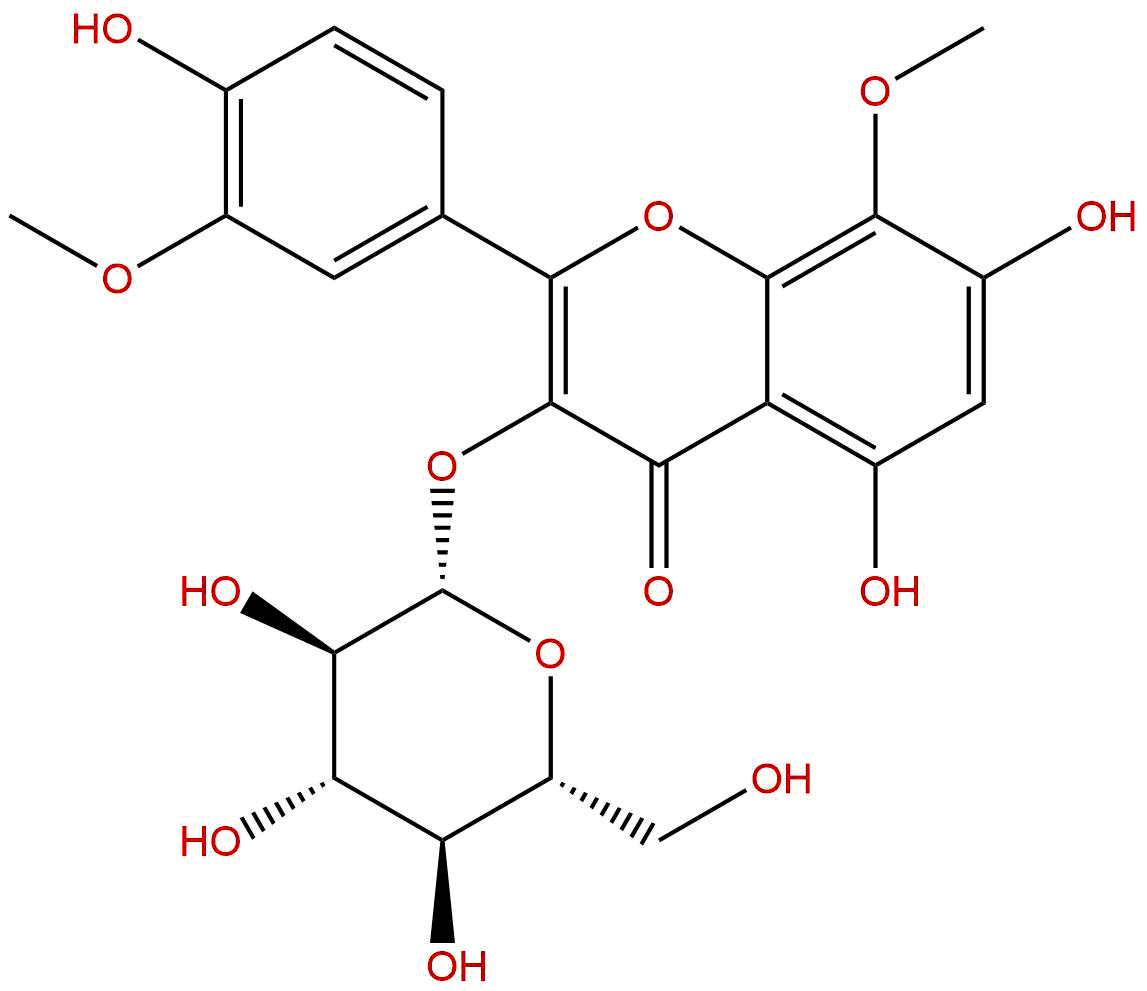
The chemical structure of limoflavin-3-O - β - D-glucoside belongs to the typical flavonol glycoside class. Its glycoside is Limocitrin, with a chemical name of 3 ', 5,7-trihydroxy-3,4' - dimethoxyflavone. The structural characteristics of lemon flavonoids are that they have 3 '- hydroxyl and 4' - methoxy substituents on the B ring, 5,7-dihydroxy substituents on the A ring, and a γ - pyranone structure on the C ring, with a sugar group attached at the C-3 position. In this compound, the sugar moiety is β - D-glucopyranose, which is connected to the C-3 hydroxyl group of the aglycone through an oxygen glycosidic bond, forming 3-O - β - D-glucoside. This glycosylation modification not only increases the water solubility of the compound, but also affects its absorption, distribution, metabolism, and excretion processes in vivo, as well as its interaction mode with biological targets.
From the perspective of physical and chemical properties, the compound is a yellow or light yellow powder with certain hygroscopicity. Its molecular formula is C ₂∝ H ₂₄₁∝, with a molecular weight of 508.4320 Da. This molecular weight falls within the typical range of flavonoid glycosides, ensuring target selectivity due to structural complexity while not completely losing the possibility of oral absorption due to excessive molecular weight. The LogP value of its lipid water partition coefficient is 0.0305, which is a very low value, indicating that the compound has extremely strong hydrophilicity. This is closely related to the presence of multiple phenolic hydroxyl groups in the molecule and multiple hydroxyl groups on the sugar group. High hydrophilicity means that the compound has good solubility in aquatic environments, but it also suggests that its transmembrane permeability may be poor, which poses a challenge to its oral bioavailability.
The topological polar surface area (TPSA) is 208.7400 Å ², which is much higher than the recommended upper limit of 140 Å ² for oral medications. The high TPSA value mainly comes from the large number of hydroxyl and ether oxygen atoms in the molecule, which further confirms its strong polarity and low membrane permeability. According to the Lipinski Five Rules, the TPSA value of this compound exceeds the standard, indicating that it may not be an ideal candidate for oral medication, but can be used as a candidate molecule for local or injection administration. Its water solubility value is 1.9014 (LogS), indicating good solubility in water, which provides convenience for the development of its formulation.
In terms of drug efficacy evaluation, computer simulation predictions show that the compound has a low ability to penetrate the blood-brain barrier (BBB low), which can to some extent avoid central nervous system related side effects. For anti allergic drugs, this is an advantageous feature because many first generation antihistamines can easily penetrate the blood-brain barrier and cause drowsiness. In addition, the prediction result of hERG inhibition is' no ', indicating that it has a low risk of causing cardiac QT interval prolongation and fatal arrhythmia, which is an important indicator in drug safety evaluation. The predicted value of Ames test is 0.6, which is generally considered negative (<0.5 is negative, 0.5-0.8 is the boundary value). This value is in the boundary region, indicating a low potential genetic toxicity risk, but still needs to be verified through experiments.
Lemon flavone-3-O - β - D-glucoside is mainly found in citrus fruits of the Rutaceae family(Citrus)In plants. Citrus plants are one of the most important fruit crops in the world, and their fruits, peels, flowers, and leaves are rich in flavonoids. Specifically, this compound is present in lemon(Citrus limon), bergamot(Citrus medica var. sarcodactylis)Grapefruit(Citrus paradisi)And it has been detected in some orange varieties. It is worth noting that the distribution of this compound in plants is tissue-specific, with higher levels in the skin (outer and middle skin) than in the flesh. This is because flavonoids are mainly used as photoprotectors and antibacterial substances in plants, concentrated in the epidermal tissue.
In addition to the citrus genus, sporadic reports of this compound have also been found in some other plant families, such as certain Asteraceae and leguminous plants, but the content is usually low and does not have industrial extraction value. Therefore, the processing byproduct of citrus fruits - the fruit peel - is the most economical and sustainable source for obtaining limoflavin-3-O - β - D-glucoside. The extraction of high value-added active ingredients from citrus peel residue generated by the food industry is in line with the concepts of green chemistry and circular economy.
In terms of extraction methods, due to the high polarity of the compound, traditional solvent extraction methods usually use a certain proportion of alcohol water mixed solvents. Common extraction solvents include methanol, ethanol, or their aqueous solutions. Considering food safety and the feasibility of industrial production, the ethanol water system is the most commonly used choice. Extraction process parameters such as ethanol concentration (usually 50% -80%), solid-liquid ratio, extraction temperature (usually 50-80 ℃), extraction time, and other factors have a significant impact on extraction efficiency. In order to improve extraction efficiency and selectivity, modern extraction techniques such as ultrasound assisted extraction, microwave-assisted extraction, enzyme assisted extraction, etc. have been successfully applied. The cavitation effect generated by ultrasound can damage plant cell walls, promote solvent permeation and solute diffusion; Microwave heating can rapidly raise the temperature of polar substances inside cells, leading to cell rupture and accelerating the release of target components.
After extraction, the crude extract contains a large amount of impurities such as sugars, pigments, and pectin, which need to be separated and purified. Common purification methods include:
1. Liquid-liquid extraction By using different polar solvents (such as petroleum ether, ethyl acetate, n-butanol) for fractional extraction, lemon flavone-3-O - β - D-glucoside can be enriched in n-butanol or ethyl acetate phase.
2. Macroporous adsorption resin column chromatography This is one of the most commonly used methods for separating flavonoid glycosides. By selecting appropriate types of resins (such as HPD-100, D101, AB-8, etc.) and utilizing adsorption and desorption principles, the target glycosides can be effectively separated from impurities such as sugars and inorganic salts.
3. Preparation type high-performance liquid chromatography For situations where high-purity monomeric compounds are required, preparative HPLC can be used, using a reverse phase C18 column and a methanol water or acetonitrile water system as the mobile phase for isocratic or gradient elution, to ultimately obtain citrate flavone-3-O - β - D-glucoside standard with a purity greater than 98%.
The pharmacological activity research of lemon flavone-3-O - β - D-glucoside mainly focuses on anti allergic, anti-inflammatory, and antioxidant aspects, among which the anti allergic activity research is the most systematic and in-depth.
1. Anti allergic activity
Allergic reactions, especially type I hypersensitivity reactions, involve antigen cross-linking of high affinity IgE receptors (Fc ε RI) on the surface of mast cells and eosinophils, leading to cell degranulation and release of pre - and newly synthesized inflammatory mediators such as histamine, leukotrienes, and prostaglandin D2, which in turn trigger a series of clinical symptoms. Lemon flavone-3-O - β - D-glucoside exhibits intervention effects in multiple stages.
In vitro experiments have shown that the compound can significantly inhibit the degranulation process of mast cells, such as RBL-2H3 cell lines or primary cultured peritoneal mast cells. Under antigen stimulation, the release rate of β - hexosaminase in drug treated cells was significantly reduced, which is the gold standard for evaluating degranulation of mast cells. Meanwhile, the release of histamine also showed a dose-dependent decrease. In addition, the compound can also inhibit non IgE mediated mast cell activation induced by calcium ionophore A23187 or compound 48/80, suggesting that its target may be located upstream or in a common pathway of cell signal transduction.
At the cytokine level, lemon flavone-3-O - β - D-glucoside can significantly inhibit the production of Th2 cytokines IL-4, IL-5, and IL-13. These cytokines are the core drivers of allergic inflammation, with IL-4 and IL-13 promoting the conversion of B cells to IgE categories, while IL-5 is responsible for the recruitment and activation of eosinophils. By downregulating the expression of these cytokines, this compound can fundamentally inhibit the cascade amplification effect of allergic inflammation.
Animal model studies further validated its in vivo anti allergic effect. In a mouse model of allergic asthma induced by ovalbumin (OVA), oral or intraperitoneal injection of lemon flavone-3-O - β - D-glucoside can significantly reduce the total number of inflammatory cells and the proportion of eosinophils in bronchoalveolar lavage fluid, alleviate airway hyperresponsiveness, and lower serum OVA specific IgE levels. In the Passive Skin Allergic Reaction (PCA) model, this compound can also effectively inhibit dye exudation, demonstrating activity against Type I hypersensitivity reactions.
2. Anti inflammatory activity
In addition to its anti allergic properties, this compound also exhibits broad-spectrum anti-inflammatory activity. In a macrophage model stimulated by lipopolysaccharides (LPS), limoflavin-3-O - β - D-glucoside can inhibit the production of nitric oxide (NO) and prostaglandin E2 (PGE2), which is related to its downregulation of inducible nitric oxide synthase (iNOS) and cyclooxygenase-2 (COX-2) expression. Meanwhile, it can also inhibit the release of pro-inflammatory cytokines such as TNF - α and IL-6. These effects suggest that it also has potential value in the treatment of non infectious inflammatory diseases.
3. Antioxidant activity
As a polyphenolic compound, lemon flavone-3-O - β - D-glucoside has strong free radical scavenging ability. The ortho dihydroxy group in its molecular structure (although the 3 '- OH and 4' - OCH3 on the B ring are not ortho dihydroxy, the 5,7-dihydroxy group on the A ring and the 3-OH group on the C ring together form a strong antioxidant active center). The DPPH radical scavenging experiment, ABTS radical scavenging experiment, and iron ion reduction ability (FRAP) experiment all confirmed its antioxidant activity. Antioxidant activity is one of the important foundations for its anti-inflammatory and anti allergic effects, as oxidative stress is an important triggering and amplifying factor for inflammation and allergic reactions.
The anti allergic mechanism of lemon flavone-3-O - β - D-glucoside is the result of multi-target and multi pathway synergistic effects, which has the potential advantage of mild onset and minimal side effects compared to single target chemical drugs. Based on existing research, its molecular mechanism can be summarized as follows:
1. Inhibit the ALOX5 (5-lipoxygenase) pathway
ALOX5 is a key enzyme in the arachidonic acid metabolism pathway, catalyzing the production of leukotriene A4 (LTA4) from arachidonic acid, which is then converted into leukotrienes C4, D4, E4 (cysteinyl leukotrienes) and leukotriene B4 with potent spasmogenic and chemotactic effects. Leukotrienes are a key mediator in asthma and allergic rhinitis. Computer molecular docking and enzyme activity experiments have shown that lemon flavone-3-O - β - D-glucoside can directly bind to the active site of ALOX5, competitively inhibiting its enzyme activity. This explains why it can effectively reduce the production of leukotrienes, thereby alleviating airway smooth muscle spasms and inflammatory cell infiltration.
2. Antagonism against HRH1 (histamine H1 receptor)
Histamine is one of the earliest and most widely released mediators in allergic reactions, mainly causing vasodilation, increased permeability, smooth muscle contraction, and itching by binding to H1 receptors on target cells. This compound is predicted to be an antagonist of HRH1. Although its antagonistic effect may not be as strong as classical antihistamines such as loratadine and cetirizine, as a natural product, its multi-target action can synergistically enhance anti allergic effects while potentially avoiding the side effects of a single potent antagonist.
3. Regulating Th2 type immune response
This compound downregulates the gene transcription of IL-4, IL-5, and IL-13 by inhibiting the phosphorylation of signal transduction and transcription activator 6 (STAT6). STAT6 is a key transcription factor downstream of IL-4 and IL-13 receptors, and its activation is necessary for Th2 cell differentiation and IgE class switching. In addition, it can also inhibit the expression of thymic stromal lymphopoietin (TSLP). TSLP is a cytokine derived from epithelial cells and serves as the "main switch" for initiating Th2 type inflammation. By inhibiting TSLP, this compound can suppress the initiation of allergic inflammation from the source.
4. Stabilize mast cell membrane and inhibit Fc ε RI signaling
This compound can inhibit downstream signaling cascade reactions triggered by Fc ε RI cross-linking, including activation of Syk kinase, Lyn kinase, as well as activation of PLC γ, PI3K/Akt, and MAPK (such as ERK, JNK, p38) pathways. By intervening in these early signaling events, calcium influx and cytoskeleton rearrangement were ultimately suppressed, thereby preventing degranulation of mast cells. In addition, it may directly interact with the cell membrane, increasing its stability and reducing its brittleness.
5. Antagonism against TBXA2R (thromboxane A2 receptor)
Thromboxane A2 (TXA2) is mainly produced by activated mast cells and platelets, and is a potent bronchoconstrictor and platelet aggregator. The compound has an antagonistic effect on TBXA2R, which helps to further alleviate airway spasms and may improve microcirculation disorders in allergic inflammation.
In summary, lemon flavone-3-O - β - D-glucoside achieves comprehensive intervention in allergic reactions from initiation (TSLP, Fc ε RI), amplification (Th2 cytokines, IgE) to effector (histamine, leukotriene release) stages by simultaneously acting on multiple inflammatory mediator receptors/enzymes such as ALOX5, HRH1, TBXA2R, as well as regulating key signaling pathways such as STAT6 and Fc ε RI.
Although lemon flavone-3-O - β - D-glucoside has shown remarkable anti allergic activity in vitro and in vivo pharmacological studies, its pharmacological properties, especially oral bioavailability, are the main bottleneck restricting its clinical translation.
1. Absorption and bioavailability
As mentioned earlier, the LogP of this compound is extremely low (0.0305) and the TPSA is extremely high (208.74 Å ²), which determines its limited ability to cross the membrane of small intestinal epithelial cells. After oral administration, most drugs may not be absorbed through passive diffusion. In addition, as a glycoside, it may be hydrolyzed by β - glucosidase produced by gut microbiota in the intestine, releasing the glycoside limonin. Glycosides have relatively high lipid solubility and may be more easily absorbed, but they themselves undergo rapid phase II metabolism (glucuronidation, sulfation) in the body, resulting in low systemic exposure. Therefore, the oral absolute bioavailability of limoflavin-3-O - β - D-glucoside is expected to be very low.
2. Distribution
Due to its high polarity and low fat solubility, the distribution volume of this compound in the body may be relatively small, mainly distributed in the extracellular fluid. The binding rate with plasma proteins remains to be experimentally determined. Low BBB permeability is an advantage that can avoid central side effects.
3. Metabolism
The metabolism of this compound mainly occurs at two levels: one is the hydrolysis of glycosidic bonds to generate aglycones; The second is the II binding reaction between aglycones and prototype drugs. The liver and intestines are its main metabolic sites. CYP450 enzyme mediated phase I oxidative metabolism may not be its main metabolic pathway, as polyphenol hydroxyl structures are more prone to direct binding reactions.
4. Excretion
Due to its good water solubility, this compound and its metabolites (such as glucuronic acid conjugates and sulfuric acid conjugates) are likely to be primarily excreted through the kidneys in the form of urine. Bile excretion may also be an important pathway.
5. Security
The preliminary toxicity prediction (hERG negative, Ames boundary value) indicates a low safety risk. However, the in vivo toxicology research of the system, including acute toxicity, long-term toxicity, reproductive toxicity, etc., is still blank and is a key data that must be completed for future development.
Strategies for improving drug properties
Given its inherent low oral bioavailability, future drug development strategies should focus on:
- Structural modification Design prodrugs for sugar or glycoside moieties, such as introducing ester or phosphate groups, to improve lipid solubility and allow them to be interpreted by enzymes in vivo to release the original drug.
- Innovation in drug delivery routes: Develop non oral routes of administration, such as transdermal drug delivery systems (for atopic dermatitis), nasal sprays (for allergic rhinitis), inhaled preparations (for asthma), or injections. These pathways can bypass the first pass effect of the liver and directly act on target organs, increasing local drug concentrations while reducing systemic exposure.
- Nanoformulation technology Encapsulate the compound using carriers such as liposomes, polymer nanoparticles, and solid lipid nanoparticles to enhance its solubility and membrane permeability, achieving sustained release or targeted delivery.
Lemon flavone-3-O - β - D-glucoside, as a natural flavonol glycoside with multi-target anti allergic activity, has broad clinical application prospects, but also faces many challenges.
1. Local treatment of allergic diseases
Based on its high polarity and low oral bioavailability, the most direct clinical application direction is to develop it as a topical drug formulation. For example:
- atopic dermatitis Developed into ointment or cream, directly applied to the affected area of the skin. Its anti-inflammatory, antioxidant, and antihistamine releasing effects are expected to alleviate symptoms such as itching, erythema, and exudation, and long-term use may be safer than glucocorticoids.
- allergic rhinitis: Developed into nasal spray. The drug can directly act on the nasal mucosa, inhibit degranulation of mast cells and release of inflammatory mediators, and quickly relieve nasal congestion, runny nose, and sneezing.
- bronchial asthma Develop into inhalation solutions or dry powder inhalers. Directly acting on the airway, inhibiting leukotriene synthesis and airway hyperresponsiveness, may become a supplement or alternative to leukotriene receptor antagonists such as montelukast.
2. Functional foods and dietary supplements
Although oral bioavailability is low, the active metabolites produced through gut microbiota metabolism, such as aglycones and their conjugates, may still exert certain systemic health effects. Therefore, this compound can be used as an ingredient in functional foods or dietary supplements for daily health care and to assist in improving allergic constitution. The standardization of citrus fruit extracts into health products containing a certain amount of limoflavin-3-O - β - D-glucoside has a certain market foundation.
3. Optimize the structure as a lead compound
The novel skeleton and multi-target mechanism of action of this compound provide excellent lead compounds for medicinal chemists. Through systematic structure-activity relationship studies, it is possible to replace or modify the sugar moiety while retaining its core pharmacophores (such as the flavonoid nucleus, specific hydroxyl and methoxy groups), or directly design and synthesize a series of derivatives with better pharmacokinetic properties starting from the aglycone.
Future research directions
Lemon flavone-3-O - β - D-glucoside is a natural flavonol glycoside with significant anti allergic activity in citrus plants. It exhibits unique advantages in inhibiting mast cell degranulation, antagonizing inflammatory mediators, and regulating Th2 immune responses through a multi-target and multi pathway synergistic mechanism. Although its inherent physicochemical properties (high polarity, low fat solubility) result in poor oral bioavailability, this does not prevent it from exerting therapeutic effects through local administration routes (such as skin, nasal cavity, inhalation) or serving as a lead compound for structural optimization.
Today, with the increasing emphasis on the development concepts of "returning to nature" and "multi-target drugs", we are deeply exploring the pharmacological potential of limoflavin-3-O - β - D-glucoside. Combining modern formulation technology and medicinal chemistry methods, it is expected to provide a new option for the treatment of allergic diseases that originates from nature, has novel mechanisms, and high safety. Future research should focus on overcoming the bottleneck of drug development, promoting its transition from laboratory research to clinical application, and ultimately benefiting a large number of allergic disease patients.
Batch can search by a CAS number,one per line
