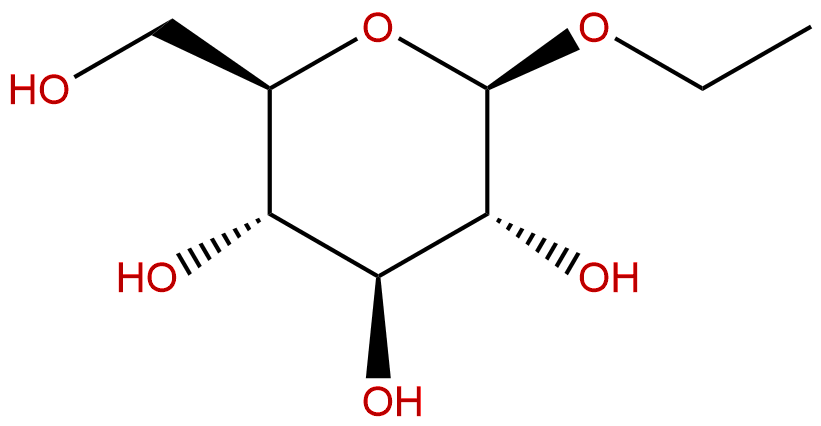


Product name: Ethyl glucoside
Synonym name:
Catalogue No.: SBP01740
Cas No.: 3198-49-0
Formula: C8H16O6
Mol Weight: 208.21
Botanical Source:
Physical Description: Powder
Type of Compound: Saccharides
Purity: 95%~99%
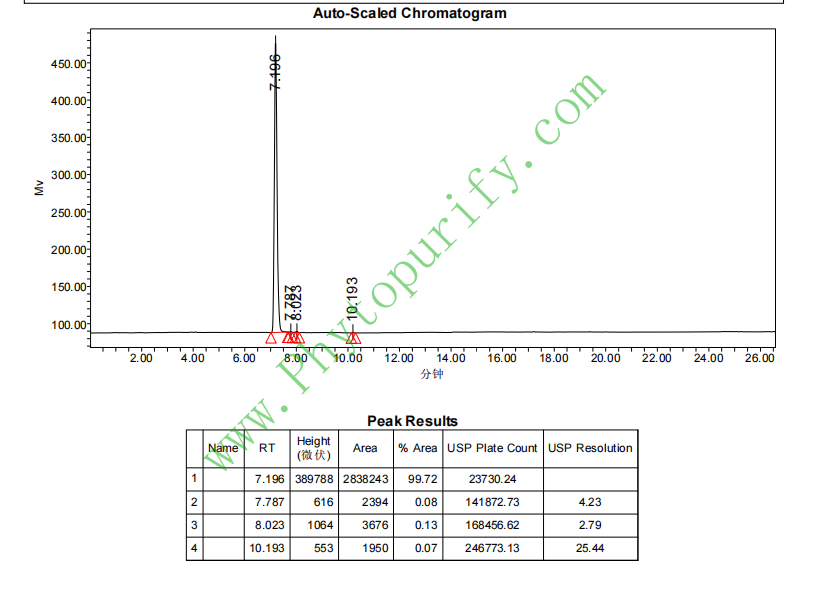
Analysis Method: HPLC-DAD or/and HPLC-ELSD
Identification Method: Mass, NMR
Packing: Brown vial or HDPE plastic bottle
The product could be supplied from milligrams to grams. Inquire for bulk scale.
We provide solution to improve the water-solubility of compounds, thereby facilitating the variety of activity tests and clinic uses.
For Reference Standard and R&D, Not for Human Use Directly.
HPLC of Ethyl glucoside
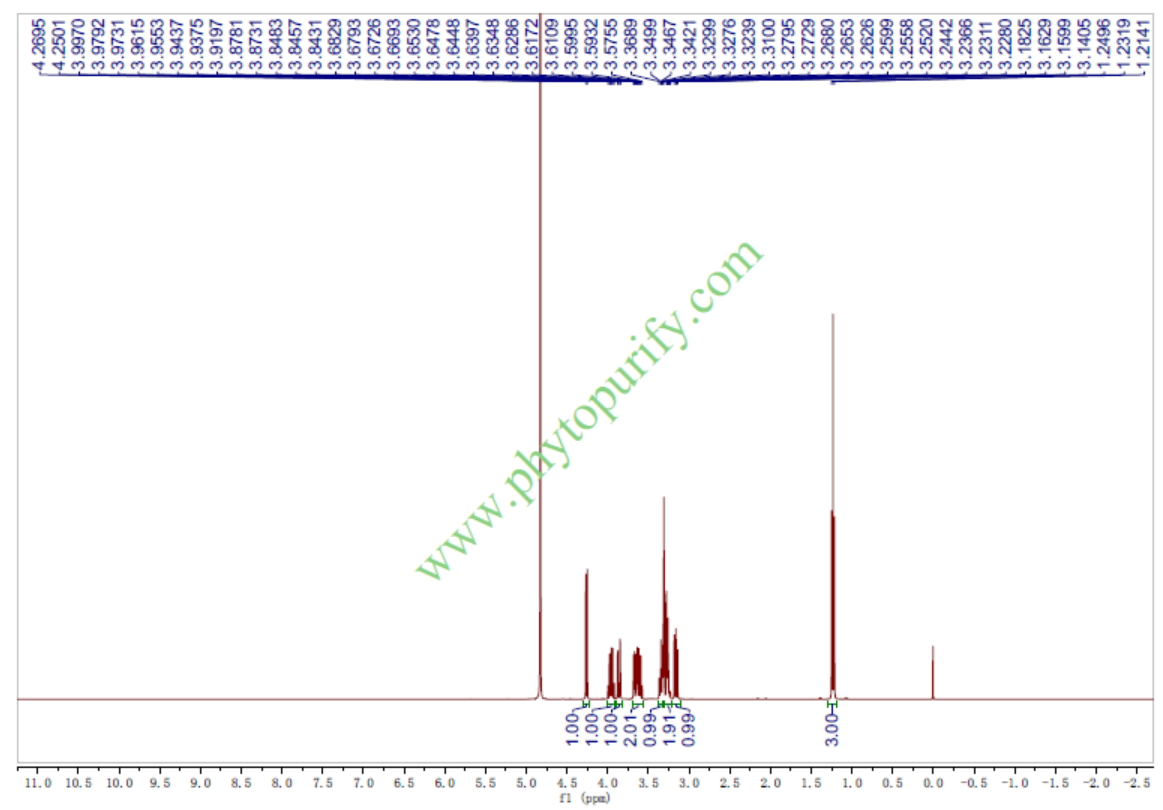
HNMR of Ethyl glucoside
Storage conditions:Short-term storage at 2~8℃, long-term storage at -20 ~ -80℃
99.3800
-1.4790
-1.4784
151.3616
.5470
.4232
Low
11.8377
3.5033
Yes
No
No
No
No
No
0.0
Yes
Yes
Yes
Yes
Natural products, as an important source of drug discovery, play an irreplaceable role in human health. Glycoside compounds, as an important component of natural products, are widely present in plants, microorganisms, and marine organisms, and have the characteristics of structural diversity and wide biological activity. Ethyl glucoside (CAS number: 3198-49-0), also known as ethyl β - D-glucopyranose, is a relatively simple alkyl glycoside compound. Despite its seemingly simple molecular structure, ethyl glucoside has unique research value and application potential in the fields of natural product chemistry, medicinal chemistry, and food science.
Ethyl glucoside was first discovered in fermentation products and subsequently identified as a naturally occurring secondary metabolite in various plants. As an ethyl derivative of glucose, this compound retains the hydrophilic characteristics of the glucose backbone, while endowing it with unique physicochemical properties and biological activity through the introduction of ethyl groups. In recent years, with the deepening of research in glycochemistry and glycobiology, the biological activities of ethyl glucoside and its derivatives in antioxidant, anti-inflammatory, neuroprotective, and metabolic regulation have gradually been revealed, attracting widespread attention from academia and industry.
From the perspective of medicinal chemistry, ethyl glucoside has ideal medicinal properties. Its molecular weight is 208.21 Da, which falls within the molecular weight range of small molecule drugs; The LogP value is -1.48, indicating strong hydrophilicity; The topological polar surface area (TPSA) is 99.38 Å ², indicating its good oral absorption potential. More importantly, the preliminary safety evaluation showed that the compound does not have hERG inhibitory activity, and the Ames test result was negative, indicating a low risk of genetic toxicity. These characteristics make ethyl glucoside a natural product lead compound worthy of further investigation.
This article will provide a systematic review of the research progress of ethyl glucoside from multiple dimensions, including chemical structure, plant origin, pharmacological activity, mechanism of action, pharmacological evaluation, and clinical application prospects. The aim is to provide comprehensive academic references for the in-depth research and development of this compound.
The chemical structure of ethyl glucoside is composed of D-glucose units connected to ethyl through β - glycosidic bonds. Specifically, the anomeric carbon (C1) of glucose forms a glycosidic bond with the hydroxyl group of ethanol in a β configuration, resulting in the formation of ethyl β - D-glucopyranoside. The molecular formula of this compound is C ₈ H ₁₆ O ₆, with a molecular weight of 208.21 g/mol.
From a stereochemical perspective, the glucose unit of ethyl glucoside adopts a pyran ring conformation (⁴ C ₁ chair conformation), with all hydroxyl groups in the flat bond position, which endows the molecule with high thermodynamic stability. The configuration of β - glycosidic bonds places the ethyl group above the glucose ring, and this spatial arrangement has a significant impact on the biological activity of the molecule. It is worth noting that ethyl glucoside exists in two isomers, alpha and beta, but the beta configuration is mainly present in natural sources, which is currently the most extensively studied form.
The physicochemical properties of ethyl glucoside provide important basis for its drug development. The LogP value of this compound is -1.48, indicating its significant water solubility characteristics, which are closely related to the presence of multiple hydroxyl groups in the molecule. High water solubility is beneficial for the dissolution and absorption of drugs in the body, but it may also affect their ability to penetrate biofilms. The topologically polar surface area (TPSA) is 99.38 Å ², which is within the acceptable range for oral drugs (usually considered to be less than 140 Å ²), indicating that it may have good oral bioavailability.
In terms of solubility, the solubility of ethyl glucoside in water is as high as 151.36 mg/mL, which gives it a significant advantage in formulation development. High water solubility means that the compound can be administered through various routes, including oral administration, intravenous injection, etc. In addition, the compound also has good solubility in polar organic solvents such as ethanol and methanol, which provides convenience for its extraction, separation, and purification.
The structural identification of ethyl glucoside is usually carried out using nuclear magnetic resonance spectroscopy (NMR) and mass spectrometry (MS) techniques. In the ¹ H NMR spectrum, the anomeric proton signal of glucose units appears in the δ 4.2-4.5 ppm region, with a coupling constant (J ₁, ₂) of approximately 7-8 Hz. This characteristic signal can be used to confirm the configuration of β - glycosidic bonds. The methylene proton signal of the ethyl group appears at δ 3.5-3.8 ppm, while the methyl proton signal appears at δ 1.1-1.3 ppm. In the ¹ ³ C NMR spectrum, the chemical shift of the heteroatom carbon (C1) is usually between δ 102-105 ppm, which is a characteristic signal of glycoside compounds. In mass spectrometry analysis, the molecular ion peak [M+H] ⁺ of ethyl glucoside appears at m/z 209.1, while characteristic fragments such as glucose fragment ions (m/z 163.1) and ethyl fragment ions (m/z 45.0) can be observed.
Ethyl glucoside is widely distributed in nature and has been found in various plants and fermentation products. In the plant kingdom, this compound mainly exists in plant families such as Rosaceae, Fabaceae, and Asteraceae. Specifically, the presence of ethyl glucoside has been detected in fruits such as apples (Malus domestica), pears (Pyrus communis), and strawberries (Fragaria × ananassa). In addition, it has also been found in medicinal plants such as Panax ginseng and Astragalus membranaceus. It is worth noting that the content of ethyl glucoside in plants is usually low and belongs to trace secondary metabolites.
In terms of fermentation products, ethyl glucoside is an important byproduct in the process of alcohol fermentation. The content of ethyl glucoside in fermented beverages such as wine, beer, and sake can reach milligrams. The formation mechanism mainly involves the catalytic condensation reaction of glucose and ethanol by glucosidase produced by yeast during fermentation. This discovery not only reveals the microbial source of ethyl glucoside, but also provides important clues for its biosynthesis research.
The extraction of ethyl glucoside is usually carried out using solvent extraction method. Due to its good water solubility, water or water ethanol mixed solvents are commonly used extraction media. For plant materials, the following extraction process is generally used: dry and crushed plant materials are soaked and extracted with a 70-80% ethanol aqueous solution at room temperature or under heating conditions, and the extraction time is usually 12-24 hours. After vacuum concentration, the extraction solution is preliminarily purified using liquid-liquid extraction method, and commonly used extraction solvents include ethyl acetate, n-butanol, etc.
Further separation and purification require the use of chromatographic techniques. Silica gel column chromatography is a commonly used preliminary separation method, which uses a chloroform methanol water system for gradient elution. For components with high polarity, reverse phase silica gel column chromatography (such as ODS column) can be used to separate them using a methanol water system. High performance liquid chromatography (HPLC) is a key technology for obtaining high-purity ethyl glucoside. Common chromatographic conditions include: C18 reverse phase chromatography column, mobile phase of acetonitrile water or methanol water system, and detection wavelength of 200-210 nm.
In recent years, modern separation techniques such as high-speed countercurrent chromatography (HSCCC) and preparative liquid chromatography have also been applied to the purification of ethyl glucoside, which have the advantages of high separation efficiency and good sample recovery rate. It is worth noting that due to the low content of ethyl glucoside in plants, multiple purification steps are usually required to obtain samples of sufficient purity for activity studies.
In addition to natural extraction, ethyl glucoside can also be obtained through chemical synthesis or enzymatic synthesis. Chemical synthesis usually adopts the Koenigs Knorr reaction, using acetyl protected glucose bromide as the donor, reacting with ethanol under the catalysis of silver or mercury salts, and then removing the protecting group to obtain the target product. This method has a high yield, but requires the use of heavy metal catalysts and organic solvents, which poses environmental pollution issues.
Enzymatic synthesis method has the advantages of mild reaction conditions, high selectivity, and environmental friendliness. β - glucosidase can catalyze the transglycosylation reaction between glucose and ethanol to produce ethyl glucoside. Common enzyme sources include almond β - glucosidase, yeast β - glucosidase, etc. The reaction conditions are usually pH 5.0-6.0, temperature 30-50 ℃, glucose concentration 0.5-2.0 M, and ethanol concentration 10-30% (v/v). The yield of enzymatic synthesis is greatly affected by reaction conditions, and it is necessary to optimize parameters such as enzyme concentration, substrate ratio, and reaction time.
The antioxidant activity of ethyl glucoside is one of its most concerned biological activities. Multiple in vitro studies have shown that this compound has the ability to scavenge free radicals. In DPPH radical scavenging experiments, ethyl glucoside exhibited concentration dependent scavenging activity, with an IC50 value ranging from 0.5-2.0 mM. In addition, in ABTS ⁺ radical scavenging experiments and iron ion reduction ability (FRAP) measurements, ethyl glucoside also showed certain antioxidant capacity.
It is worth noting that the antioxidant activity of ethyl glucoside is closely related to its structure. Multiple hydroxyl groups on the glucose backbone can serve as hydrogen atom donors, neutralizing free radicals. Meanwhile, the introduction of ethyl groups may regulate their antioxidant activity by affecting the spatial conformation and electronic distribution of the molecule. Compared with the parent compound glucose, the antioxidant activity of ethyl glucoside is enhanced, which may be related to the electron donating effect of the ethyl group.
At the cellular level, ethyl glucoside can protect cells from oxidative stress damage. Research has shown that this compound can reduce the levels of reactive oxygen species (ROS) induced by hydrogen peroxide (H ₂ O ₂), increase the activity of superoxide dismutase (SOD) and glutathione peroxidase (GSH Px), and reduce the production of lipid peroxidation product malondialdehyde (MDA). These results indicate that ethyl glucoside may exert antioxidant effects through two mechanisms: direct clearance of free radicals and enhancement of endogenous antioxidant defense system.
The anti-inflammatory activity of ethyl glucoside has been validated in various inflammatory models. In a macrophage model stimulated by lipopolysaccharide (LPS), ethyl glucoside can significantly inhibit the production of pro-inflammatory cytokines such as tumor necrosis factor - α (TNF - α), interleukin-1 β (IL-1 β), and interleukin-6 (IL-6). Meanwhile, the compound can also reduce the release of nitric oxide (NO) and prostaglandin E ₂ (PGE ₂), which is closely related to the downregulation of inducible nitric oxide synthase (iNOS) and cyclooxygenase-2 (COX-2) expression.
In animal models, ethyl glucoside exhibits inhibitory effects on both acute and chronic inflammation. In the carrageenan induced rat paw swelling model, oral or intraperitoneal injection of ethyl glucoside can significantly reduce inflammatory response, and its effect is comparable to the positive control drug indomethacin. In adjuvant induced arthritis models, long-term administration of ethyl glucoside can alleviate joint swelling, reduce inflammatory cell infiltration, and decrease the degree of cartilage destruction.
In recent years, the neuroprotective activity of ethyl glucoside has attracted the attention of researchers. In neural cell culture models, this compound can protect neurons from glutamate excitotoxicity, oxidative stress, and ischemia-reperfusion injury. Specifically, ethyl glucoside can reduce neuronal apoptosis rate, maintain mitochondrial membrane potential, decrease the release of cytochrome c, and activate caspase-3.
In Alzheimer's disease models, ethyl glucoside has shown potential to improve cognitive function. Research has shown that this compound can inhibit the aggregation and fibrosis of β - amyloid protein (A β), reducing A β - induced neurotoxicity. In addition, ethyl glucoside can regulate the expression of synaptic plasticity related proteins, such as brain-derived neurotrophic factor (BDNF) and synapsin I, thereby improving synaptic function.
The regulatory effect of ethyl glucoside on glucose and lipid metabolism is also one of its important pharmacological activities. In a cell model of insulin resistance, this compound can improve insulin signaling and enhance glucose uptake capacity. Research has shown that ethyl glucoside can activate the AMP activated protein kinase (AMPK) signaling pathway, promote membrane translocation of glucose transporter 4 (GLUT4), and increase cell utilization of glucose.
In animal models, ethyl glucoside has an improving effect on metabolic disorders induced by high-fat diet. Long term administration of ethyl glucoside can lower fasting blood glucose and insulin levels, improve insulin sensitivity, and reduce liver fat accumulation. These effects may be related to the regulation of lipid metabolism related genes expression by ethyl glucoside, including peroxisome proliferator activated receptor alpha (PPAR alpha) and steroid regulatory element binding protein 1c (SREBP-1c).
The pharmacological activity of ethyl glucoside involves the regulation of multiple signaling pathways. In terms of anti-inflammatory effects, this compound mainly exerts its effects by inhibiting the nuclear factor kappa B (NF - κ B) signaling pathway. Research has shown that ethyl glucoside can inhibit the phosphorylation and degradation of I κ B α, prevent the nuclear translocation of NF - κ B p65 subunit, and thus downregulate the expression of pro-inflammatory genes. In addition, the compound can also inhibit the mitogen activated protein kinase (MAPK) signaling pathway, including phosphorylation of p38 MAPK, JNK, and ERK1/2.
In terms of antioxidant activity, ethyl glucoside can enhance cellular antioxidant defense ability by activating the nuclear factor E2 related factor 2 (Nrf2) signaling pathway. This compound can promote nuclear translocation of Nrf2 and increase gene expression driven by antioxidant response elements (ARE), such as heme oxygenase-1 (HO-1), quinone oxidoreductase 1 (NQO1), and glutathione S-transferase (GST).
In terms of neuroprotective effects, ethyl glucoside can regulate the PI3K/Akt and Wnt/β - catenin signaling pathways. This compound can activate PI3K/Akt signaling, inhibit the activity of glycogen synthase kinase-3 β (GSK-3 β), and reduce the excessive phosphorylation of tau protein. Meanwhile, ethyl glucoside can also stabilize β - catenin, promote its nuclear translocation, and upregulate the expression of anti apoptotic gene Bcl-2.
Although the molecular targets of ethyl glucoside have not been fully elucidated, previous studies suggest that it may interact with various proteins. Surface plasmon resonance (SPR) and molecular docking studies have shown that ethyl glucoside can bind to the p65 subunit of NF - κ B, interfering with its binding ability to DNA. In addition, the compound may directly interact with the gamma subunit of AMPK, activating the AMPK signaling pathway.
It is worth noting that ethyl glucoside, as a glycoside compound, deserves attention for its interaction with sugar binding proteins (lectins). Research has shown that ethyl glucoside can bind to certain C-type lectin receptors and regulate the function of immune cells. In addition, the compound may also affect the activity of glucose transporters (GLUTs), thereby regulating cellular uptake and utilization of glucose.
The study on the structure-activity relationship of ethyl glucoside shows that its biological activity is closely related to the configuration of glycosidic bonds, the presence of ethyl groups, and the integrity of the glucose skeleton. Compared with α - ethyl glucoside, the isomers of β - configuration exhibit stronger biological activity, which may be related to the fact that β - glycosidic bonds are more favorable for hydrogen bonding interactions with target proteins.
The ethyl group plays a crucial role in the activity. Compared with the parent compound glucose, the antioxidant and anti-inflammatory activities of ethyl glucoside are significantly enhanced, indicating that the introduction of ethyl groups is beneficial for improving biological activity. However, when the ethyl group is replaced by a longer alkyl chain, the activity may change, indicating that the chain length and steric hindrance of the ethyl group have a significant impact on activity.
The pharmacological parameters of ethyl glucoside show that it has good potential for drug development. The molecular weight is 208.21 Da, which meets the requirement of Lipinski's five rules for molecular weight less than 500. The LogP value is -1.48, which is lower than the optimal range for traditional oral medications (LogP 0-3), but high water solubility may be beneficial for drug dissolution and absorption. The TPSA is 99.38 Å ², below the threshold of 140 Å ², indicating that it may have good oral absorption characteristics.
In terms of safety, ethyl glucoside exhibits low toxicity risk. The hERG inhibition test result is negative, indicating a low risk of cardiac toxicity. The Ames test result is 0.0, indicating that the compound does not have genetic toxicity. These preliminary safety evaluation results provide important guarantees for the further development of ethyl glucoside.
At present, research on the pharmacokinetics of ethyl glucoside is relatively limited, but preliminary information has been provided by existing studies. After oral administration, ethyl glucoside can be absorbed in the gastrointestinal tract, but its high water solubility may limit absorption. Research has shown that the oral bioavailability of this compound may be low, consistent with the characteristics of many polar compounds.
In terms of distribution in the body, ethyl glucoside is mainly distributed in the extracellular fluid. Due to the low permeability of the blood-brain barrier, the distribution of this compound in the central nervous system may be limited. This feature not only limits its application in the treatment of neurological diseases, but also reduces the risk of central nervous system toxicity.
In terms of metabolism, ethyl glucoside may be metabolized by the gut microbiota to produce glucose and ethanol. In addition, glycosidases in the liver may also be involved in its metabolism. Further research is needed on the conversion and excretion pathways of metabolites.
Given the high water solubility and potential bioavailability of ethyl glucoside, special attention needs to be paid to formulation development strategies. Prodrug design is one of the effective strategies to improve the oral bioavailability of this type of compound. By esterification or etherification modification of the hydroxyl group of ethyl glucoside, its lipophilicity can be improved and intestinal absorption can be promoted. In addition, nanoformulation technologies such as liposomes, nanoemulsions, and polymer nanoparticles can also be used to enhance the oral bioavailability and targeting of the compound.
Based on the pharmacological activity of ethyl glucoside, it has potential application value in multiple therapeutic fields. In terms of inflammatory diseases, this compound can be used to treat diseases such as rheumatoid arthritis, inflammatory bowel disease, and dermatitis. Its anti-inflammatory mechanism is clear and safe, and it is expected to be developed as a new type of anti-inflammatory drug.
In terms of metabolic diseases, the role of ethyl glucoside in reducing blood sugar and improving insulin sensitivity makes it have potential application value in the treatment of type 2 diabetes. Compared with existing hypoglycemic drugs, ethyl glucoside may have better safety characteristics, especially suitable for long-term use.
In terms of neurodegenerative diseases, the neuroprotective and cognitive improving effects of ethyl glucoside suggest its potential applications in diseases such as Alzheimer's and Parkinson's disease. However, due to the low permeability of the blood-brain barrier, improving the distribution of this compound in the central nervous system is a key issue that needs to be addressed.
In addition to drug development, ethyl glucoside also has good application prospects as a functional food ingredient. This compound naturally exists in fruits and fermented foods, with high safety, and is suitable as a dietary supplement or functional food additive. Its antioxidant and anti-inflammatory activities help prevent chronic diseases and improve overall health status.
In the food industry, ethyl glucoside can be used as a natural sweetener or flavor enhancer. Compared to sucrose, ethyl glucoside has a lower sweetness but better stability, making it suitable for use in special dietary foods and functional beverages.
Despite the multifaceted research value of ethyl glucoside, its development still faces several challenges. Firstly, pharmacokinetic studies are not yet sufficient, especially in terms of key parameters such as oral bioavailability, metabolic pathways, and excretion patterns that need to be systematically elucidated. Secondly, the mechanism of action and molecular targets need to be further confirmed to guide structural optimization and activity improvement. In addition, the development of large-scale production methods is also key to promoting their industrial application.
Future research directions should include conducting systematic pharmacokinetic and toxicological studies to evaluate the safety of long-term medication; Using medicinal chemical methods for structural modification to enhance activity and selectivity; Develop efficient and environmentally friendly synthesis or biotransformation methods to reduce production costs; Explore synergistic effects with other drugs and develop compound formulations.
Ethyl glucoside, as a structurally simple natural glycoside compound, has demonstrated remarkable pharmacological activity and potential for drug development. The multifunctional biological activity of this compound provides new ideas for the treatment of various diseases, ranging from antioxidant and anti-inflammatory to neuroprotective and metabolic regulation. Its excellent safety features and ideal physicochemical properties further enhance its value as a drug lead.
However, we should also be aware that research on ethyl glucoside is still in its early stages, and there is still a long way to go from laboratory discovery to clinical application. The optimization of pharmacokinetic properties, in-depth elucidation of the mechanism of action, and systematic preclinical and clinical research are all obstacles that must be overcome to promote the clinical application of this compound.
Looking ahead to the future, with the cross fusion of glycochemistry, glycobiology, and medicinal chemistry, research on ethyl glucoside and its derivatives will continue to deepen. We have reason to believe that this naturally occurring simple glycoside has the potential to become a new drug or functional food ingredient for treating inflammation, metabolism, and neurodegenerative diseases in the future, contributing to human health.
