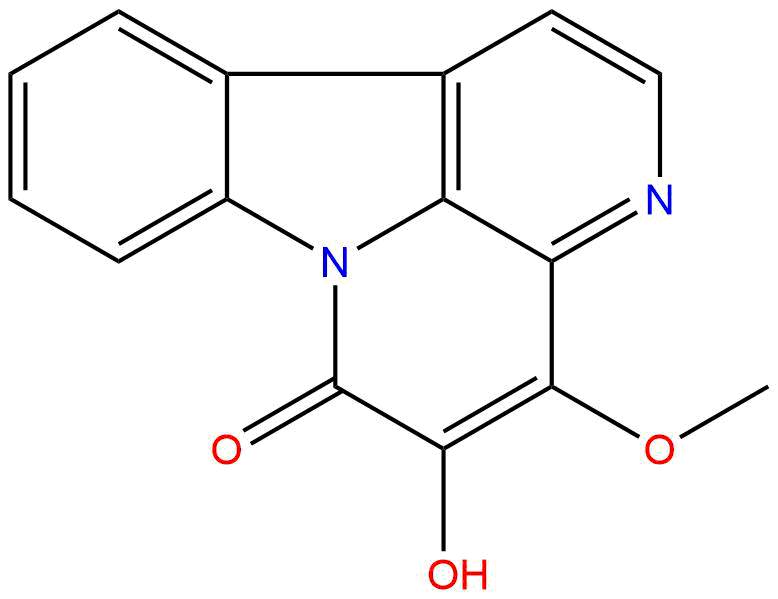
5-Hydroxy-4-methoxycanthin-6-one: A Systematic Review from Natural Products to antimalarial Drug Candidates
Introduction/Overview
Malaria, as a type of malaria caused by malaria parasites(Plasmodium The insect borne infectious diseases caused by spp. have long been a major challenge in the global public health field. According to the latest report from the World Health Organization (WHO), despite significant progress in malaria prevention and control over the past two decades, there are still approximately 249 million cases of malaria in 2022, resulting in over 600000 deaths, with children under the age of five accounting for the vast majority of deaths in Africa. What is even more worrying is that the continued spread of resistance to antimalarial drugs is seriously weakening the effectiveness of existing treatment options. Since the emergence of chloroquine resistance in the 1960s, resistance to sulfadoxine pyrimethamine, mefloquine, and even artemisinin based drugs has been reported successively, especially in Southeast Asia and some parts of Africa. The spread of artemisinin partial resistance (ART-R) has posed a substantial threat to the global malaria elimination plan.
In this context, finding antimalarial lead compounds with novel mechanisms of action from natural products has become an important strategy for drug development. Natural products, with their unique chemical skeletons and diverse biological activities, have played an irreplaceable role in the history of antimalarial drug discovery - from quinine in cinchona bark to artemisinin in Artemisia annua, all derived from natural gifts. 5-hydroxy-4-methoxycanthin-6-one (CAS number: 18110-86-6) is a highly anticipated natural β - carboline alkaloid. This compound was initially isolated from plants in the Simaroubacheae family, and its unique chemical structure endows it with a wide range of pharmacological activities, particularly demonstrating significant potential in the field of anti malaria. In recent years, with the deepening of research on the mechanism and pharmacological properties of bitter wood ketone alkaloids against malaria, this compound and its derivatives are gradually moving from laboratory research to preclinical evaluation, providing new hope for the development of a new generation of antimalarial drugs.
Chemical structure and physicochemical properties
Kudshinone alkaloids belong to the β - carboline alkaloid class, and their core skeleton is the indolo pyridine ring system (pyrido [3,4-b] indole). Specifically, the chemical structure of bitter ketone base can be described as 5-hydroxy-4-methoxy-6-oxy - β - carboline, with a molecular formula of C ₁₅ H ₁₀ N ₂ O3 and a molecular weight of 266.2560 g/mol. From the structural characteristics, the compound is connected to a methoxy group (- OCH ∝) at the C-4 position of the β - carboline parent nucleus, a hydroxyl group (- OH) at the C-5 position, and a carbonyl group (C=O) at the C-6 position, forming an α, β - unsaturated ketone structural unit. This unique substitution pattern endows bitter ketone alkaloids with chemical properties and biological activity that distinguish them from other β - carboline alkaloids.
In terms of physicochemical properties, the oil-water partition coefficient (LogP) of bitter ketone base is 2.1589, indicating its moderate lipophilicity, which is beneficial for its transmembrane transport and interaction with the hydrophobic region of the target protein. Its topological polar surface area (TPSA) is 63.8300 Å ², which meets the general requirements for oral medication (usually TPSA<140 Å ²), indicating that it may have good oral absorption potential. However, the water solubility data (0.0091 mg/mL) showed that the compound had low solubility in water, which may be one of the challenges facing its formulation development and in vivo bioavailability. It is worth noting that berberine exhibits high blood-brain barrier (BBB) penetration ability, which may have special significance for the treatment of cerebral malaria, as cerebral malaria is one of the most serious complications of malaria and requires drugs to effectively enter the central nervous system to exert their effects.
From the perspective of structure-activity relationship (SAR) analysis, the planar aromatic system of β - carboline parent nucleus is conducive to π - π stacking and hydrophobic interactions with target proteins, while the hydroxyl group at C-5 and the methoxy group at C-4 may participate in hydrogen bonding formation, affecting the binding mode with the target. The carbonyl group at position C-6 serves as a hydrogen bond acceptor and also plays a crucial role in molecular recognition. In addition, the alpha, beta unsaturated ketone units in this structure may act as Michael addition receptors, covalently modifying with biological nucleophiles, which may be one of the important chemical bases for its antimalarial activity.
Plant sources and extraction methods
Kudshinone mainly comes from plants in the Simaroubacheae family, which are widely distributed in tropical and subtropical regions, including Asia, Africa, and the Americas. Among them, KuMu(Picrasma quassioides)And its closely related species are the main natural sources of bitter ketone alkaloids. Bitterwood has been used in traditional Chinese medicine for hundreds of years, and its xylem is commonly used to treat diseases such as fever, dysentery, and gastrointestinal infections. It is also recorded as an antimalarial drug in folk medicine. In addition, bitter wood ketone alkaloids are also present in Brucea elata(Brucea javanica)、Quassia amara Among the bitter wood plants, these plants are also used in traditional medicine to treat malaria and parasitic infections.
From a plant chemistry perspective, the biosynthetic pathway of bitter ketone alkaloids in plants involves the construction of a tryptophan derived β - carboline skeleton, followed by modification steps such as hydroxylation, methylation, and oxidation to form the final structure. There are significant differences in the content of quercetin in different plant species, different production areas, different harvesting seasons, and different tissue parts (such as roots, stems, leaves, bark). Research has shown that the content of quercetin in the root and stem bark of bitter wood is usually higher, while the content in the leaves and fruits is relatively lower.
In terms of extraction methods, the classic extraction process usually includes the following steps: first, dry plant materials are crushed, and organic solvents (such as methanol, ethanol, or chloroform) are used for cold soaking or hot reflux extraction. Due to its lipophilicity, bitter ketone alkaloids have high extraction efficiency using medium polar solvents such as chloroform and ethyl acetate. In recent years, modern extraction techniques such as ultrasound assisted extraction (UAE) and microwave-assisted extraction (MAE) have been applied to the extraction of quercetin, significantly improving extraction efficiency and shortening extraction time. For example, using 70% ethanol as the extraction solvent and extracting for 30 minutes under the conditions of ultrasonic power of 300 W and temperature of 50 ° C, the extraction rate of bitter ketone alkali can be increased by 2-3 times compared to the traditional cold soaking method.
The crude extract after extraction needs to undergo systematic separation and purification steps. Common separation methods include silica gel column chromatography, Sephadex LH-20 gel column chromatography, preparative high-performance liquid chromatography (prep HPLC), etc. Due to its characteristic absorption under ultraviolet light (usually at 254 nm and 365 nm), thin layer chromatography (TLC) and high-performance liquid chromatography (HPLC) can be used for its detection and quantitative analysis. In terms of structural identification, nuclear magnetic resonance spectroscopy (NMR, including ¹ H-NMR, ¹ ³ C-NMR, HMBC, HSQC, etc.) and high-resolution mass spectrometry (HR-MS) are the main methods for determining the chemical structure of bitter ketone alkaloids. In its typical ¹ H-NMR spectrum, the proton signal of the C-4 methoxy group appears at δ 3.9-4.1 ppm (single peak), the proton signal of the C-5 hydroxyl group appears at δ 9.5-10.5 ppm (broad peak), and the proton signal of the aromatic region is distributed in the range of δ 7.0-8.5 ppm, showing a characteristic coupling mode of the β - carboline skeleton.
Pharmacological activity research
Antimalarial activity
The antimalarial activity of bitter wood ketone alkaloids is its most concerned pharmacological characteristic. In vitro anti malaria experiments have shown that berberine exhibits significant inhibitory activity against various strains of malaria parasites. For chloroquine sensitive strains (such as P. falciparum 3D7 strains) and chloroquine resistant strains (such as P. falciparum Dd2 strain, K1 strain), the half maximal inhibitory concentration (IC ₅₀) of bitter ketone alkaloids is usually in the range of 0.1-1.0 μ M, showing activity levels comparable to chloroquine. It is worth noting that berberine is also effective against drug-resistant strains, suggesting that its mechanism of action may be different from chloroquine, which provides a potential solution to overcome resistance to existing antimalarial drugs.
In the in vivo anti malaria model, berberine also showed encouraging therapeutic effects. In P. berghei In the malaria model of infected mice, intraperitoneal injection of berberine (10-50 mg/kg/day) can significantly reduce the level of parasitic infections and prolong the survival time of mice. Some studies have also observed the protective effect of berberine on cerebral malaria models, which may be related to its high blood-brain barrier penetration ability. However, the in vivo antimalarial activity of bitter wood ketone alkaloids is greatly affected by the administration route and dosage form, and the low oral bioavailability limits its clinical application potential, which has become a key direction for subsequent drug chemical modification.
Other pharmacological activities
In addition to its antimalarial activity, berberine also exhibits various other pharmacological effects. In terms of anti-tumor, the alkaloid of tartarin shows cytotoxicity to a variety of cancer cell lines (such as HepG2, A549 and MCF-7 of breast cancer), and the IC ₀ value is usually within the range of 5-20 μ M. Its anti-tumor mechanism involves inducing cell cycle arrest, activating apoptotic signaling pathways, and inhibiting tumor cell migration and invasion. In addition, berberine also exhibits anti-inflammatory activity and can inhibit the production of pro-inflammatory factors (such as TNF - α, IL-6, NO) in macrophages stimulated by lipopolysaccharide (LPS), which may be related to its regulation of NF - κ B and MAPK signaling pathways.
In terms of antibacterial and antiviral properties, bitter wood ketone alkaloids exhibit certain inhibitory activity against bacteria such as Staphylococcus aureus and Escherichia coli, as well as influenza virus, dengue virus, etc. These multiple pharmacological effects suggest that berberine may be a natural product with multi-target characteristics, but its selective toxicity (i.e. toxicity to host cells) needs to be given special attention in the drug development process.
Mechanism of action and molecular targets
The anti malarial mechanism of bitter ketone alkaloids involves multiple molecular targets and signaling pathways, which are closely related to their complex chemical structure. At present, the targets that have been extensively studied include the following categories:
Plasmodium transporter protein target
The transmembrane transporters of malaria parasites play a crucial role in drug uptake, efflux, and resistance formation. Kudocarpine has been reported to interact with various malaria parasite transporters, including:
- PfCRT(P. falciparum chloroquine resistance transporter)PfCRT is a transporter protein located on the digestive vesicle membrane, and its mutation is the main molecular basis of chloroquine resistance. Research has shown that berberine may overcome chloroquine resistance by inhibiting PfCRT function or altering its substrate specificity.
- PfMDR1(P. falciparum multidrug resistance protein 1)As a homolog of P-glycoprotein, PfMDR1 is involved in the efflux of multiple drugs. Kudshinone alkaloids may act as substrates or inhibitors of PfMDR1, affecting the accumulation of drugs in malaria parasites.
- PfATP6(P. falciparum sarco/endoplasmic reticulum Ca²⁺-ATPase)PfATP6 is one of the targets of artemisinin based drugs. The inhibitory activity of berberine on PfATP6 suggests that it may exert anti malarial effects by interfering with the calcium homeostasis of malaria parasites.
Folate metabolism pathway targets
The folate metabolism of malaria parasites is an important target for antimalarial drugs such as ethambutol and sulfonamide drugs. Kudshinone alkaloids have been reported to inhibit PfDHFR(P. falciparum dihydrofolate reductase)The activity and IC ₅₀ value are in the micromolar range. PfDHFR is a key enzyme in folate metabolism, catalyzing the reduction of dihydrofolate to tetrahydrofolate, which participates in nucleic acid synthesis. The inhibition of PfDHFR by berberine may be related to the structural similarity between its β - carboline skeleton and folate analogues.
Protein kinase targets
The protein kinase of Plasmodium plays an important role in cell cycle regulation, signal transduction, and stress response. Kudshinone alkaloids have been reported to inhibit PfPK(P. falciparum protein kinase)The activity includes some kinases related to the cell cycle. In addition,PfCK(P. falciparum casein kinase)and PfPKB(P. falciparum protein kinase B)It is also considered a potential target of bitter ketone alkaloids. Inhibition of these kinases can lead to cell cycle arrest and growth inhibition in malaria parasites.
Autophagy pathway targets
PfATG8(P. falciparum autophagy-related protein 8)It is a key protein in the autophagy process of malaria parasites, involved in parasite development and stress adaptation. In recent years, studies have found that berberine can interfere with the lipidation process of PfATG8 or interact with ATG8, thereby inhibiting the autophagy pathway of malaria parasites. This discovery provides a new perspective on the antimalarial mechanism of berberine, as autophagy plays a protective role in response to nutritional deficiencies and drug stress in malaria parasites.
Cytochrome B target
PfCYTb(P. falciparum cytochrome b)It is a component of mitochondrial electron transport chain complex III and a target of the antimalarial drug atovaquone. The inhibitory activity of berberine on PfCYTb suggests that it may exert anti malarial effects by interfering with the mitochondrial function of malaria parasites. However, compared with atorvastatin, the inhibitory activity of piclone on PfCYTb is relatively weak, and further structural optimization may be needed.
In summary, the anti malarial mechanism of bitter wood ketone alkaloids exhibits multi-target characteristics. This multi-target mode of action is beneficial for reducing the risk of drug resistance, but also increases the complexity of mechanism research. In the future, it is necessary to further confirm its direct target using techniques such as chemical proteomics and thermal stability analysis (CETSA).
Evaluation of drug properties and pharmacokinetics
Analysis of drug properties parameters
Based on computational predictions and experimental data, the pharmacological parameters of bitter ketone alkaloids are as follows:
- Molecular weight (266.2560 Da)Compliant with Lipinski's five rules (MW<500 Da), beneficial for oral absorption.
- LogP(2.1589)Within the ideal range (1-3), with moderate lipophilicity.
- TPSA(63.8300 Ų)Below 140 Å ² indicates good oral absorption and membrane permeability.
- Water solubility (0.0091 mg/mL)Low solubility may limit oral bioavailability and require improvement in formulation strategies.
- High blood-brain barrier penetrability Beneficial for treating cerebral malaria, but may also increase the risk of central nervous system toxicity.
- HERG inhibition (No)Low risk of cardiac toxicity is a favorable safety feature.
- Ames test (1.8)Suggesting potential genetic toxicity risks that require further evaluation.
Pharmacokinetic characteristics
At present, there is relatively limited systematic research on the pharmacokinetics of bitter ketone alkaloids, but some data are available for reference. In animal models, berberine shows moderate clearance and distribution volume after intravenous administration, with a half-life of approximately 2-4 hours. After oral administration, its absolute bioavailability is relatively low (usually<10%), mainly attributed to poor water solubility and first pass metabolic effects. Metabolic studies have shown that berberine is mainly oxidized and metabolized in the liver through the cytochrome P450 enzyme system (especially CYP3A4 and CYP2D6), producing hydroxylated or demethylated metabolites. These metabolites may retain some biological activity, but their antimalarial efficacy is usually lower than that of the parent compound.
In terms of distribution, berberine is widely distributed in various tissues, especially at higher concentrations in the liver, lungs, and kidneys. Its high blood-brain barrier penetration ability enables it to reach effective concentrations in brain tissue, which is of great significance for the treatment of cerebral malaria. The main excretion pathway is bile excretion, with some being excreted through the kidneys in their original form or as metabolites.
safety evaluation
Preliminary toxicity studies have shown that berberine is more toxic to normal cells (such as human liver cell L02 and human umbilical vein endothelial cell HUVEC) in vitro than to malaria parasites, with a selectivity index (SI, i.e. IC ₅₀ normal cells/IC ₅₀ malaria parasite) of about 5-20, indicating the presence of certain cytotoxicity. In animal models, the acute toxic dose (LD ₅₀) of berberine is approximately 100-200 mg/kg (intraperitoneal injection), while no significant weight loss or organ toxicity was observed at therapeutic doses (10-50 mg/kg). However, long-term toxicity studies are not yet sufficient, and more data is needed to support its safety evaluation.
Clinical application prospects and prospects
Potential as a lead compound for antimalarial treatment
The unique chemical framework and multi-target mechanism of action of bitter wood ketone base make it an ideal lead compound for the development of new antimalarial drugs. Compared with existing antimalarial drugs, berberine has the following advantages: firstly, it is effective against chloroquine resistant strains and artemisinin partially resistant strains, and is expected to overcome the existing resistance problem; Secondly, its high blood-brain barrier penetration ability makes it uniquely valuable in the treatment of cerebral malaria; Thirdly, the multi-target mode of action may slow down the rate of drug resistance development.
However, the clinical application of bitter wood ketone alkaloids still faces several challenges: low oral bioavailability, poor water solubility, potential genetic toxicity, and selective toxicity issues. Regarding these issues, future research directions include:
-
Structural optimization and derivative design By chemically modifying the parent nucleus of bitter ketone alkaloids, such as introducing hydrophilic groups (such as phosphate esters and amino acid esters) to enhance water solubility, or improving oral bioavailability through prodrug strategies. Meanwhile, by studying the structure-activity relationship, we aim to enhance the selective toxicity towards malaria parasites and reduce the toxicity towards host cells.
-
Formulation development Using nanotechnology (such as liposomes, polymer nanoparticles, solid lipid nanoparticles) or cyclodextrin inclusion technology to improve the solubility and bioavailability of bitter ketone alkaloids. In addition, develop formulations suitable for injection administration to meet the treatment needs of severe malaria patients.
-
Combination therapy strategy The combination of bitter wood ketone alkaloids with existing antimalarial drugs (such as artemisinin derivatives, chloroquine, ethambutol, etc.) may produce synergistic effects, reduce the dosage and toxicity of each drug, and delay the development of drug resistance.
-
Target validation and mechanism research Using CRISPR-Cas9 gene editing technology, chemical proteomics, and other methods, further confirm the direct target of bitter wood ketone alkaloids, providing a molecular basis for structural optimization.
Other potential application areas
In addition to antimalarial effects, the anti-tumor activity of berberine is also worthy of attention. Given its multi-target characteristics, bitter ketone alkaloids may be developed as anti-tumor lead compounds, especially in the treatment of solid tumors such as liver cancer and lung cancer. In addition, its anti-inflammatory and antibacterial activities also indicate its potential application in infectious diseases and inflammatory diseases.
Challenges and Countermeasures Faced
Despite its broad prospects, the clinical translation of bitter ketone alkaloids still faces many challenges. Firstly, natural product sources are limited, and large-scale production requires the development of fully synthetic or semi synthetic routes. At present, research has reported the total synthesis method of bitter wood ketone base, but the yield and cost still need to be optimized. Secondly, its potential genetic toxicity risks need to be confirmed and evaluated through more comprehensive genetic toxicity tests, such as in vivo micronucleus tests and comet assays. Finally, intellectual property protection and commercialization paths also need to be laid out in advance.
Conclusion
As a β - carboline alkaloid derived from plants in the Sapindaceae family, bitter ketone alkaloids have shown significant value in the development of new antimalarial drugs due to their unique chemical structure and multi-target anti malarial mechanism. From a chemical structure perspective, its moderate lipophilicity, high blood-brain barrier penetration ability, and modifiable functional groups provide a good foundation for its drug chemical modification. From the perspective of pharmacological activity, its effectiveness against drug-resistant malaria strains, potential therapeutic effects on cerebral malaria, and multi-target mode of action make it one of the candidate molecules to address the current crisis of antimalarial drug resistance.
However, the road from natural products to clinical drugs is still long. The problems of poor water solubility, low oral bioavailability, selective toxicity, and potential genetic toxicity of bitter ketone alkaloids need to be addressed through systematic pharmacological, pharmaceutical, and toxicological research. In the future, with the deepening of structural optimization, formulation development, and mechanism research, berberine and its derivatives are expected to provide new treatment options for global malaria prevention and control. At the same time, the research process of this natural product once again proves that nature is still an inexhaustible treasure trove for drug discovery, and modern medicinal chemistry technology is a key bridge for transforming natural products into clinical drugs.
In today's increasingly severe global resistance to antimalarial drugs, the study of berberine not only has important scientific significance, but also carries the realistic expectation of improving the health of millions of malaria patients. We hope that in the near future, this natural product derived from traditional medicinal plants will be able to benefit human health through the baptism of modern drug development.