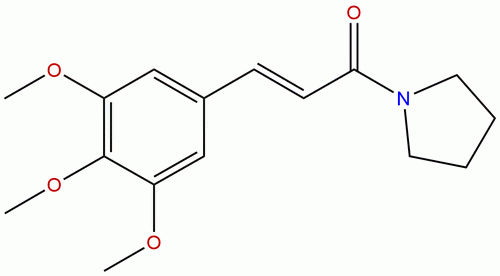


Product name: PiperlotineC
Synonym name: Piperlotine C
Catalogue No.: SBP03063
Cas No.: 886989-88-4
Formula: C16H21NO4
Mol Weight: 291.347
Botanical Source:
Physical Description:
Type of Compound: Alkaloids
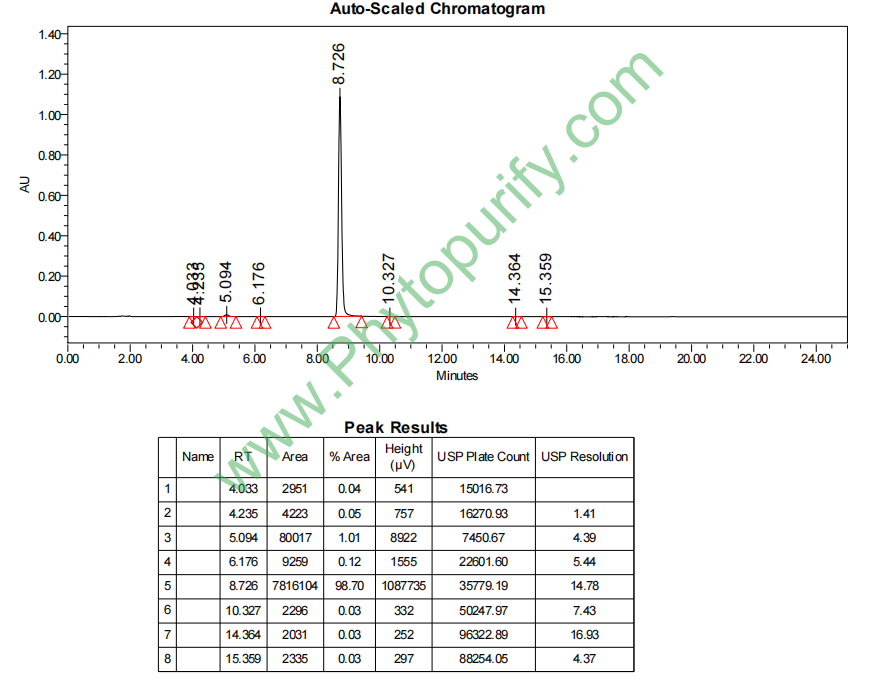
Purity: 95%~99%
Analysis Method: HPLC-DAD or/and HPLC-ELSD
Identification Method: Mass, NMR
Packing: Brown vial or HDPE plastic bottle
The product could be supplied from milligrams to grams
Inquire for bulk scale.
For Reference Standard and R&D, Not for Human Use Directly.
HPLC of Piperlotine C
Storage conditions:Short-term storage at 2~8℃, long-term storage at -20 ~ -80℃
61.9400
1.9700
1.9700
Low
No
No
No
Unknown
No
Unknown
As an important resource for drug discovery, natural products show unique biological activities in many fields such as anti malaria, anti inflammation, anti-cancer, anti diabetes and neurodegenerative diseases. Piperlotine C (CAS number: 886989-88-4) is a natural product derived from pepper plants and has received widespread attention in recent years due to its multi-target and multifunctional pharmacological properties. This compound has potential therapeutic value in anti malaria, inflammatory diseases, cancer, diabetes, neurodegenerative diseases and other pathological conditions, and has good pharmaceutical parameters, laying a solid foundation for its further drug development.
This article provides a systematic review of the chemical structure and physicochemical properties, plant sources and extraction methods, pharmacological activity and mechanism of action, pharmacological evaluation and pharmacokinetic characteristics of Piperlotine C. Combining current research progress, it explores its clinical application prospects and development directions, aiming to provide scientific references for the pharmacological research and drug development of this natural product.
The molecular formula of Piperlotine C is C17H19NO4, with a molecular weight of 291.34. Its structural features include a heterocyclic skeleton containing nitrogen atoms, combined with multiple hydroxyl and methoxy groups, giving it a certain degree of polarity and hydrophilicity. The LogP value is 1.97, indicating that it has moderate lipid solubility, which is beneficial for cell membrane penetration but not excessively hydrophobic, suitable for the in vivo distribution of drug molecules. The TPSA (topological polar surface area) is 61.94 Å ² and the number of hydrogen bond acceptors is 5, indicating its good affinity for binding with biomolecules.
It is worth noting that Piperlotine C has a lower ability to penetrate the blood-brain barrier, suggesting that its role in the central nervous system may be limited, but it also reduces the risk of central side effects. Its liver toxicity, cardiac toxicity, and hERG channel inhibition are all negative, showing good safety characteristics. The results of Ames mutagenicity test are not yet clear, and further research is needed to supplement them.
Piperlotine C is mainly distributed in Piperaceae plants, especially in the rhizomes and leaves of certain Piper genus plants. This type of plant is widely distributed in tropical and subtropical regions and has traditionally been used in various folk therapies. It has antibacterial, anti-inflammatory, and antiparasitic effects.
The common methods for extracting Piperlotine C include solvent extraction and chromatographic separation. Generally, ethanol or methanol is used as the extraction solvent, and crude extracts are extracted through ultrasound assisted extraction or reflux extraction techniques. Subsequently, separation and purification were carried out using methods such as silica gel column chromatography and reverse phase high-performance liquid chromatography (RP-HPLC). The purified Piperlotine C was structurally identified using techniques such as nuclear magnetic resonance (NMR), mass spectrometry (MS), and infrared spectroscopy (IR).
In recent years, with the development of green chemistry, new technologies such as supercritical fluid extraction (SFE) and microwave-assisted extraction have gradually been applied to the extraction of Piperlotine C, improving extraction efficiency and purity, reducing the use of organic solvents, and meeting the requirements of sustainable development.
Piperlotine C exhibits significant activity in the field of anti malaria, targeting multiple key targets of Plasmodium falciparum, including PFCRT (Plasmodium chloroquine resistance transporter), PFMDR1 (multidrug resistance protein 1), PFDHFR (dihydrofolate reductase), PFK13 (serine/threonine protein kinase), PFATP6 (calcium ATPase), PFCYTBC (cytochrome b complex), etc. By inhibiting these targets, Piperlotine C can interfere with the metabolism and drug resistance mechanisms of malaria parasites, reducing their survival rate.
In vitro experiments have shown that Piperlotine C has a lower half maximal inhibitory concentration (IC_50) against Plasmodium strains and is equally effective against multidrug-resistant strains, suggesting its potential to overcome the resistance problem of existing antimalarial drugs. In vivo model studies have also shown that the compound can significantly reduce the parasitic load of malaria infected mice, demonstrating good therapeutic potential.
Inflammatory response is the common pathological basis of various diseases, and Piperlotine C exerts anti-inflammatory effects by regulating multiple inflammation related targets. Its main targets include cyclooxygenase-2 (PTGS2), nuclear factor kappa B (NFKB1), tumor necrosis factor alpha (TNF), interleukin-6 (IL6), and phospholipase A2 (PLA2G2A). Piperlotine C can inhibit the overexpression of PTGS2, reduce the production of prostaglandins, and alleviate inflammatory symptoms. By inhibiting the NFKB signaling pathway, reducing the release of pro-inflammatory factors such as TNF and IL6, regulating immune responses, and alleviating tissue damage.
Cell and animal model studies have shown that Piperlotine C exhibits significant anti-inflammatory effects in disease models such as arthritis, inflammatory bowel disease, and skin inflammation, with minimal side effects and good clinical application potential.
Piperlotine C exhibits inhibitory effects on tumor cell proliferation and induces apoptosis in various cancer models. Its targets include epidermal growth factor receptor (EGFR), vascular endothelial growth factor receptor 2 (VEGFR2), phosphatidylinositol 3-kinase (PIK3CA), mitogen activated protein kinase (MAPK1), and anti apoptotic protein BCL2.
By inhibiting the EGFR and VEGFR2 signaling pathways, Piperlotine C blocks tumor cell proliferation and angiogenesis, inhibiting tumor growth and metastasis. It regulates the PI3K/AKT and MAPK signaling pathways, promotes tumor cell apoptosis, and enhances the sensitivity of chemotherapy drugs. Both in vitro cell experiments and in vivo tumor models have confirmed its anti-tumor activity, demonstrating its potential as an anticancer adjuvant drug.
In diabetes and related metabolic disorders, Piperlotine C improves insulin signal transduction and glucose metabolism by regulating insulin receptor (INSR), glucose transporter 4 (SLC2A4), AMP activated protein kinase (PRKAA1), protein tyrosine phosphatase 1B (PTPN1) and peroxisome proliferator activated receptor gamma (PPARG) and other targets.
This compound can promote SLC2A4 mediated glucose uptake, activate the AMPK pathway, enhance energy metabolism, inhibit PTPN1 activity, and improve insulin resistance. At the same time, the regulation of PPAR γ activity contributes to the balance of lipid metabolism and reduces the complications of diabetes. Animal model studies have shown that Piperlotine C can effectively reduce blood glucose levels and improve pancreatic beta cell function.
Piperlotine C exhibits neuroprotective effects in neurodegenerative disease models such as Alzheimer's disease and Parkinson's disease. Its target proteins include beta amyloid precursor protein (APP), alpha synuclein (SNCA), acetylcholinesterase (ACHE), glutamate receptor (GRIN1), and superoxide dismutase (SOD1).
This compound can inhibit abnormal processing of APP, reduce β - amyloid deposition, and decrease neurotoxicity. By regulating the aggregation of SNCA, Parkinson's disease-related neurological damage can be alleviated. Inhibit ACHE activity, enhance cholinergic nerve conduction, and improve cognitive function. At the same time, regulating GRIN1 mediated excitatory neurotransmission reduces excitotoxicity, enhances SOD1 activity, and alleviates oxidative stress damage.
The multi-target mechanism of Piperlotine C reflects its complex biological activity network as a natural product. It exerts a wide range of pharmacological effects by directly binding or regulating multiple key proteins, affecting cell signaling, metabolism, and immune response.
In terms of anti malaria, Piperlotine C interferes with the function of malaria parasite membrane proteins and metabolic enzymes, inhibiting the survival and reproduction of parasites. The anti-inflammatory effect is mainly achieved by inhibiting the PTGS2 and NFKB signaling pathways, reducing the release of pro-inflammatory factors, and alleviating inflammatory reactions. The anti-cancer mechanism involves inhibiting tumor cell growth factor receptors and downstream signaling pathways, inducing cell apoptosis. The anti diabetes effect can improve insulin sensitivity by regulating insulin signal and energy metabolism pathway. The neuroprotective effect depends on regulating the expression and activity of neurotoxic proteins, reducing oxidative stress and neuroinflammation.
Molecular docking and dynamic simulation studies support the high affinity binding of Piperlotine C to the aforementioned targets, indicating the molecular basis of its mechanism of action and providing a theoretical basis for subsequent structural optimization and drug design.
Piperlotine C has superior pharmacological parameters. Its molecular weight is moderate, and both LogP value and TPSA comply with Lipinski's rules, indicating good oral bioavailability potential. The moderate number of hydrogen bond receptors is conducive to stable binding with target proteins. Low blood-brain barrier permeability reduces the risk of central nervous system toxicity.
In terms of safety, Piperlotine C showed no hepatotoxicity, cardiotoxicity, or hERG channel inhibition, demonstrating a good safety window. Although the mutagenicity of Ames is not yet clear, existing data supports its preliminary safety.
Pharmacokinetic studies have shown that Piperlotine C is well absorbed and widely distributed in the body, but its penetration through the blood-brain barrier is limited. Its metabolic pathway is mainly through the liver enzyme system, and the metabolites need further identification. The main excretion pathway is renal excretion, with a moderate half-life, suitable for daily administration.
In the future, more systematic pharmacokinetic and toxicological studies are needed to clarify its in vivo metabolic characteristics and long-term safety, providing support for clinical development.
Based on the extensive pharmacological activity and good safety demonstrated by Piperlotine C in various disease models, this compound has the potential to become a novel multifunctional drug. It is particularly prominent in the field of anti malaria and has the potential to serve as a new therapeutic candidate for drug-resistant malaria. The anti-inflammatory and anticancer activities provide possibilities for its application in the treatment of chronic inflammation and tumors.
In addition, the role of Piperlotine C in diabetes and neurodegenerative diseases has opened up a new direction for the treatment of metabolic and neurological diseases. Its multi-target characteristics help to comprehensively regulate complex pathological processes and overcome the limitations of single target drugs.
Future research should focus on preclinical pharmacological and toxicological evaluation, formulation development, and clinical trial design. Optimizing pharmacokinetic properties through structural modification, improving targeting and bioavailability, and promoting its clinical translation. At the same time, by combining modern drug screening and molecular biology techniques, we can deeply analyze its mechanism of action and promote precision medicine.
Piperlotine C, as a natural product with multiple biological activities, shows its extensive application potential in anti malaria, anti-inflammatory, anti-cancer, anti diabetes, neurodegenerative diseases and other fields. Its excellent pharmacological parameters and safety features have laid a solid foundation for drug development. In the future, through systematic pharmacological mechanism research and preclinical evaluation, Piperlotine C is expected to become a new candidate drug for multi-target therapy, promoting progress in natural product pharmacology and new drug development.
