| Catalog No | Package | Original Price | Price | Inventory | Quantity | Operating |
|---|---|---|---|---|---|---|
| SBP01585-5mg | 5mg | $350.00 | Sign in |
|


Storage conditions:Short-term storage at 2~8℃, long-term storage at -20 ~ -80℃
181.8000
3.3831
2.3465
.0033
1.3164
8.8268
Low
92.2640
3.0336
Yes
No
No
No
Yes
Yes
0.6
Yes
Yes
Yes
No
Natural products, as an important source of drug discovery, play an irreplaceable role in the long struggle between humans and diseases. Among them, flavonoids have attracted much attention due to their widespread presence in the plant kingdom, diverse structures, and rich biological activities. Flavonoids are not only the main active ingredients in many medicinal plants, but also important functional components in daily diet. Their various pharmacological activities such as antioxidant, anti-inflammatory, anti-tumor, neuroprotective, etc. have been extensively studied and confirmed. In recent years, with the continuous deepening of research on flavonoids, their oligomers, especially flavonoids, have gradually become a hot topic in natural product chemistry and pharmacology research due to their unique chemical structure and potential biological activity beyond monomeric flavonoids.
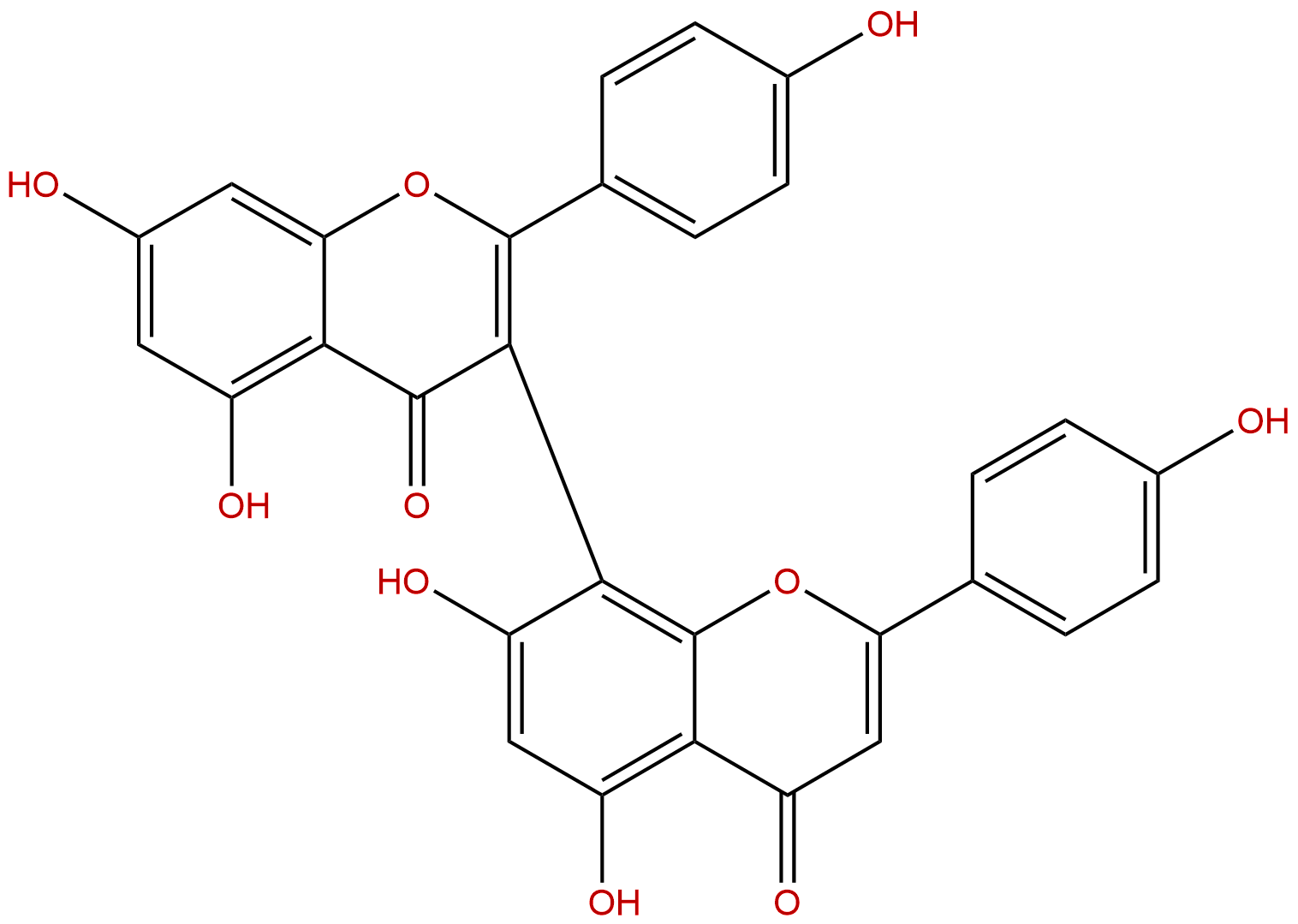
I3, II8 '- Biapigenin, also known as 4', 4 '', 5,5 ', 7,7' '- hexahydroxy-3,8' '- dihydroflavone, is a typical flavonoid compound. Its structure is composed of two molecules of apigenin connected by a carbon carbon bond between the C-3 and C-8 '' positions, and it belongs to one of the isomers of biapignin. This compound exhibits physicochemical and biological properties different from monomeric apigenin due to its unique dual flavonoid skeleton and the presence of multiple phenolic hydroxyl groups. Early research mainly focused on its distribution and content in plants, but in the past decade, with the in-depth elucidation of the pathogenesis of neurodegenerative diseases and the urgent need for multi-target, low toxicity drugs, the neuroprotective activity and mechanism of action of I3, II8 bis apigenin have received widespread attention from the international academic community.
Neurodegenerative diseases, such as Alzheimer's disease (AD) and Parkinson's disease (PD), have complex pathological processes involving deposition of beta amyloid protein (A β), excessive phosphorylation of tau protein, oxidative stress, neuroinflammation, mitochondrial dysfunction, and neuronal apoptosis. Single target drugs often struggle to achieve ideal clinical efficacy. Therefore, natural products with multi-directional pharmacological characteristics that can simultaneously act on multiple key targets in the disease network are considered ideal candidates for developing novel neuroprotective agents. I3, II8 bis apigenin is such a highly promising compound. Existing research has shown that it can exert multiple neuroprotective effects such as antioxidant, anti apoptotic, anti-inflammatory, and promoting A β clearance by regulating multiple targets closely related to AD pathology, including BCL2, APP, BACE1, MAPT, NFE2L2, SIRT1, MAPK1, CASP9, GSK3B, etc.
This article aims to provide a comprehensive and systematic review of the research status of I3, II8 bis apigenin, covering its chemical structure and physicochemical properties, plant sources and extraction methods, pharmacological activity, mechanism of action and molecular targets, pharmacological evaluation and pharmacokinetic properties. It also looks forward to its clinical application prospects and future research directions, in order to provide scientific basis for the in-depth development and utilization of this natural product.
The chemical structure of I3, II8 bis apigenin (3,8 '' - Biapigenin) is the basis for all its biological activities. From its name, it can be seen that it is composed of two molecules of apigenin (5,7,4 '- trihydroxyflavone) connected in a specific way. Specifically, the C-3 position of one apigenin unit (referred to as unit I) is connected to the C-8 '' position of another apigenin unit (referred to as unit II) through a carbon carbon single bond, forming a non planar, spatially hindered 'clamp' or 'V-shaped' structure. This connection method makes the entire molecule highly rigid, and at the same time, there can be a certain degree of twisting between the two flavonoid mother nuclei, which affects their interaction with biomolecules.
The molecular formula of this compound is C30H18O10, with a molecular weight of 538.4640 g/mol. It contains six phenolic hydroxyl groups in its structure, located at positions 4 ', 5, 7, 4' ', 5' ', and 7' ', respectively. These phenolic hydroxyl groups are not only the main contributing groups to its strong antioxidant activity, but also the key sites for its derivatization reactions such as glycosylation and methylation. The abundant phenolic hydroxyl groups endow the molecule with excellent metal ion chelation ability, which may be related to its inhibition of metal ion mediated oxidative stress and A β aggregation.
In terms of physical and chemical properties, I3, II8 bis apigenin exhibits typical characteristics of flavonoids, but also has uniqueness due to its dimeric structure. Its lipid water partition coefficient (LogP) is 3.3831, indicating that it has a certain degree of lipophilicity and can penetrate biological membranes to a certain extent. However, its topological polar surface area (TPSA) is as high as 181.8000 Å ², far exceeding the recommended upper limit of 140 Å ² in traditional oral medication "rules". A high TPSA value usually means that the molecule has more hydrogen bond donors and acceptors, which is beneficial for forming hydrogen bonds with target proteins, but also significantly reduces its passive transmembrane diffusion ability, especially its ability to pass through the blood-brain barrier (BBB). In fact, existing pharmacological parameter evaluations show that its blood-brain barrier permeability is "low", which may be one of the main challenges it faces as a central nervous system (CNS) drug development. In addition, the water solubility of the compound is extremely poor, only 0.0033 mg/mL, which greatly limits its bioavailability. In terms of safety, preliminary assessment shows that it does not have hERG channel inhibitory activity (no), reducing the risk of cardiac toxicity. The Ames test result is 0.6, indicating a potential genetic toxicity risk, but this requires more rigorous in vitro and in vivo experiments for verification.
I3, II8- Bisapigenin is not widely present in all plants, and its distribution exhibits clear species specificity. At present, it is known that it mainly exists in a few families of plants, among which the most famous source is the Hypericum plant in the Clusiaceae family. Especially Hypericum perforatum L., commonly known as St. John's wort, as a famous antidepressant herb, its aboveground part contains various active ingredients. I3, II8- apigenin is one of the important flavonoids, often coexisting with Hypericin, Pseudo Hypericin, and other flavonoids. In addition, the presence of this compound has also been found in plants of the Selaginella genus in the Selaginellaceae family, such as Selaginella tamariscina and Selaginella pulvinata. Selaginella plants are renowned for their strong recovery ability and rich content of flavonoids, making them another important resource for studying the chemistry and pharmacology of flavonoids.
The extraction of I3, II8 bis apigenin from plant materials usually follows the classic process of natural product chemistry. Due to the moderate polarity of the compound and the presence of multiple phenolic hydroxyl groups, organic solvents with higher polarity are usually used for extraction. Common extraction solvents include methanol, ethanol, or their aqueous solutions. To improve extraction efficiency, methods such as ultrasound assisted extraction, microwave-assisted extraction, or heating reflux can be used. For example, for dry powder of Hypericum perforatum or Juniperus, 70% -95% ethanol or methanol is often used for soaking or reflux extraction at room temperature or under heating conditions. After filtration and vacuum concentration of the extract, crude extract is obtained.
Due to the complex composition of plant crude extracts, the separation and purification of target compounds require the combination of multiple chromatographic techniques. Liquid liquid extraction is a commonly used method for preliminary separation. By using solvents of different polarities (such as petroleum ether, ethyl acetate, n-butanol, etc.) to distribute the crude extract, I3, II8 bis apigenin can be enriched in the extraction sites of moderately polar ethyl acetate or n-butanol. Subsequently, the main purification method was column chromatography. Silica gel column chromatography is the most classic method, which uses solvent systems such as chloroform methanol or dichloromethane methanol for gradient elution. For components with similar structures that are difficult to separate, polyamide column chromatography exhibits excellent separation performance due to its special adsorption effect on phenolic hydroxyl compounds. In addition, Sephadex LH-20 gel column chromatography is also commonly used in the final refining step to separate according to the molecular size. In recent years, high-speed countercurrent chromatography (HSCCC) and preparative high-performance liquid chromatography (Pre HPLC) technologies have been increasingly applied to the large-scale preparation of this compound due to their high efficiency and speed. Finally, the isolated compounds were structurally identified using spectroscopic methods such as nuclear magnetic resonance (NMR) and mass spectrometry (MS).
The pharmacological activity research of I3, II8 bis apigenin mainly focuses on its protective effect on the central nervous system, especially in the treatment potential of neurodegenerative diseases such as Alzheimer's disease. Its active mechanism involves multiple pathological processes, reflecting the advantages of natural multi-target compounds.
1. Antioxidant and anti apoptotic activity
Oxidative stress is an early and core event in neurodegenerative diseases. I3, II8- Bisapigenin contains six phenolic hydroxyl groups and is an efficient free radical scavenger. In vitro experiments have shown that it can directly scavenge 1,1-diphenyl-2-trinitrophenylhydrazine (DPPH) free radicals, 2,2 '- diazobis (3-ethylbenzothiazoline-6-sulfonic acid) cationic free radicals, and hydroxyl free radicals, and exhibits strong reducing ability. In cell models, this compound can significantly reduce the levels of reactive oxygen species (ROS) in nerve cells (such as SH-SY5Y cells and PC12 cells) induced by A β or hydrogen peroxide (H ₂ O ₂), alleviating oxidative damage. More importantly, it can protect neurons from cell death induced by A β toxicity by upregulating the expression of anti apoptotic protein BCL2, while downregulating the levels of pro apoptotic protein BAX and activated CASP9, inhibiting the mitochondrial mediated endogenous apoptosis pathway. This dual effect of antioxidant and anti apoptotic is an important basis for its neuroprotective activity.
2. Anti A β neurotoxic effects
The abnormal production, aggregation, and deposition of A β are one of the core hypotheses underlying the pathogenesis of AD. I3, II8- Diapigenin intervenes in the pathological process of A β at multiple levels. Firstly, it can inhibit the activity of β - secretase 1 (BACE1). BACE1 is a key rate limiting enzyme that cleaves amyloid precursor protein (APP) to generate A β. By inhibiting BACE1, this compound can reduce the production of A β. Secondly, it can directly bind to A β monomers or oligomers, inhibiting their transformation into more toxic fibrous aggregates and potentially promoting the depolymerization of formed A β fibers. In addition, studies have shown that this compound may promote the clearance of intracellular A β by activating autophagy or the ubiquitin proteasome system. By reducing the production of A β, inhibiting its aggregation, and promoting its clearance, I3, II8 bis apigenin can effectively alleviate the deposition of A β in the brain and the cascade toxic reactions it triggers.
3. Overphosphorylation of anti tau protein
The excessive phosphorylation of tau protein leads to the formation of neurofibrillary tangles (NFTs), which is another major pathological feature of AD. I3, II8 bis apigenin can regulate multiple signaling pathways related to tau phosphorylation. Among them, glycogen synthase kinase-3 β (GSK3B) is one of the key kinases that catalyze the excessive phosphorylation of tau protein. Research has shown that this compound can inactivate the Ser9 site of GSK3B by activating the protein kinase B (Akt) pathway, thereby inhibiting the excessive phosphorylation of tau protein. In addition, it may further affect the phosphorylation status of tau protein by regulating the activity of kinases such as mitogen activated protein kinase 1 (MAPK1, ERK2). By inhibiting abnormal modifications of tau protein, this compound is expected to maintain the stability of microtubule structure and protect the normal function of neuronal cytoskeleton.
4. Anti neuroinflammatory effect
Neuroinflammation plays a role in exacerbating the progression of neurodegenerative diseases such as AD. I3, II8 double apigenin showed significant anti-inflammatory activity. In a model of microglia (such as BV-2 cells) stimulated by lipopolysaccharide (LPS) or A β, this compound can inhibit excessive activation of microglia, reduce the release of pro-inflammatory cytokines such as tumor necrosis factor - α (TNF - α), interleukin-1 β (IL-1 β), and interleukin-6 (IL-6), and decrease the expression of inducible nitric oxide synthase (iNOS) and cyclooxygenase-2 (COX-2), thereby reducing the production of inflammatory mediators such as nitric oxide (NO) and prostaglandin E2 (PGE2). Its anti-inflammatory mechanism may be related to the inhibition of the activation of nuclear factor kappa B (NF - κ B) and MAPK signaling pathways. By inhibiting neuroinflammation, this compound can create a microenvironment that is more conducive to neuronal survival.
5. Activate SIRT1 and NFE2L2 pathways
Silencing information regulatory factor 1 (SIRT1) is an NAD ⁺ - dependent deacetylase that plays a critical role in energy metabolism, stress resistance, and aging regulation. Nuclear factor E2 related factor 2 (NFE2L2, also known as NRF2) is the main transcription factor of the cellular antioxidant defense system. Research has shown that I3, II8 bis apigenin can activate SIRT1, which may improve mitochondrial function by deacetylating and activating downstream targets such as peroxisome proliferator activated receptor gamma co activator factor-1 alpha (PGC-1 alpha). At the same time, the compound can also activate the NFE2L2 signaling pathway, promote its nuclear translocation, thereby upregulating the expression of a series of antioxidant enzymes (such as heme oxygenase-1 HO-1, quinone oxidoreductase 1 NQO1) and phase II detoxifying enzymes, enhancing the cell's defense against oxidative stress. The activation of SIRT1 and NFE2L2 pathways together form an important molecular basis for the cell protective effects of I3, II8 bis apigenin.
Based on existing research, the neuroprotective effect of I3, II8 bis apigenin is not derived from a single target, but is achieved through a complex, multi-target, and multi pathway network regulatory mechanism. The key molecular targets and pathways of action can be summarized as follows:
These targets do not exist in isolation, but are interrelated and cross talk with each other. For example, oxidative stress can activate both apoptotic and inflammatory pathways, while activation of SIRT1 and NFE2L2 can simultaneously counteract oxidative stress, inflammation, and apoptosis. I3, II8 bis apigenin exerts its comprehensive neuroprotective effect by acting on multiple key nodes in this complex network. This multi-target mode of action is its core advantage over single target chemical drugs and is more in line with the pathophysiological characteristics of complex diseases such as AD.
Although I3, II8 bis apigenin has shown encouraging pharmacological activity in vitro and in vivo models, its drug like and pharmacokinetic (PK) properties are key limiting factors for its ultimate clinical application.
1. Evaluation of drug properties
As mentioned earlier, the molecular weight (538.46 Da) and TPSA (181.80 Å ²) of the compound exceed the limits of Lipinski's "Five Rules" (MW<500, TPSA<140), indicating significant obstacles in oral absorption and membrane permeability. Its extremely low water solubility (0.0033 mg/mL) is the biggest weakness, which will lead to poor dissolution and low bioavailability after oral administration. The LogP value (3.38) is moderate, indicating that it has a certain lipophilicity, but high TPSA and intramolecular hydrogen bonds may limit its effective interaction with lipid bilayers. In addition, the positive indication of Ames test (0.6) requires high vigilance, and its safety risks must be confirmed through more comprehensive genetic toxicity tests (such as in vivo micronucleus test, comet assay). These parameters collectively indicate that I3, II8 bis apigenin itself is not an ideal drug molecule, and its structure needs to be reasonably modified or advanced drug delivery systems need to be used to overcome these deficiencies.
2. Pharmacodynamics
At present, there are relatively limited reports on the PK characteristics of I3, II8 bis apigenin in vivo, but existing studies have revealed the challenges it faces.
- absorb After oral administration, due to its poor water solubility, absorption may be very limited and incomplete. It may undergo extensive phase I and phase II metabolism in the intestine, such as glucuronidation and sulfation, further reducing the bioavailability of its prototype drug.
- distribution Its high plasma protein binding rate is possible. The most crucial issue is Low blood-brain barrier permeability Its high TPSA and molecular weight make it difficult to cross the BBB through passive diffusion. Although it cannot be ruled out that it may enter brain tissue through carrier mediated transport (such as organic anion transport peptide OATP), overall, its concentration in the brain may be much lower than in peripheral blood, which poses a huge challenge to its ability to exert CNS targeted neuroprotective effects. Many studies have observed neuroprotective effects in vivo, which may be partially attributed to their active metabolites or indirectly achieved through regulating the interaction between the peripheral and central nervous systems (such as the gut brain axis).
- Metabolism and excretion The liver and intestines are its main metabolic sites. Phenolic hydroxyl is its main metabolic site, generating various binding metabolites. These metabolites may be excreted through bile or urine.
3. Strategies for improving drug properties
Given the aforementioned challenges, future research must focus on improving the pharmacological properties of I3, II8- bis apigenin. Feasible strategies include:
- Prodrug design Esterification or etherification modification of its phenolic hydroxyl group, such as introducing phosphate esters, amino acid esters, or polyethylene glycol (PEG) groups, to increase water solubility, improve stability, or enhance membrane permeability. Design prodrugs that can release prototype drugs under the action of specific enzymes in the body, such as alkaline phosphatase.
- Nano drug delivery system Using carriers such as liposomes, polymer nanoparticles, solid lipid nanoparticles, or phospholipid complexes to encapsulate the compound. These systems can significantly improve their water solubility, protect them from metabolism, prolong circulation time, and achieve active targeted delivery through surface modifications (such as connecting transferrin receptor antibodies), increasing drug concentration in the brain.
- structural optimization On the basis of preserving its core active skeleton, a series of structurally similar compounds were synthesized through medicinal chemical methods to explore structure-activity relationships (SAR) and search for derivatives with smaller molecular weight, lower TPSA, better water solubility, and stronger activity.
I3, II8- Bisapigenin, as a natural flavonoid with multi-target neuroprotective activity, has broad clinical application prospects, but the road ahead is winding. Its main potential application directions are concentrated in the following areas:
However, in order to achieve the above clinical applications, future research must overcome the following key bottlenecks and focus on the following directions:
I3, II8- Bisapigenin, as a structurally unique natural flavonoid, provides a highly promising lead compound for the treatment of complex neurodegenerative diseases such as Alzheimer's disease due to its multi-target neuroprotective activity, particularly its comprehensive effects on anti A β, anti tau, antioxidant, anti-inflammatory, and anti apoptotic properties. Its mechanism of action involves multiple key targets such as BCL2, BACE1, GSK3B, NFE2L2, SIRT1, etc., reflecting the unique advantages of multi-directional pharmacology of natural products.
However, this compound also faces typical challenges in the development of candidate drugs, especially its extremely poor water solubility and low blood-brain barrier permeability, which severely restrict its pharmacological properties. The focus of future research must shift from simple activity discovery to addressing these pharmacokinetic bottlenecks. Through strategies such as prodrug design, nano delivery systems, or structural optimization, it is expected to overcome these obstacles and translate the potential of this natural product into true clinical value. The in-depth study of I3, II8 bis apigenin not only contributes to the development of novel neuroprotective drugs, but also provides valuable examples for understanding the structure-activity relationship of natural flavonoids and drug development strategies. Despite the numerous challenges ahead, its unique chemical space and outstanding pharmacological activity make it a gem worth continuously exploring in the field of drug discovery for neurodegenerative diseases.
Batch can search by a CAS number,one per line
