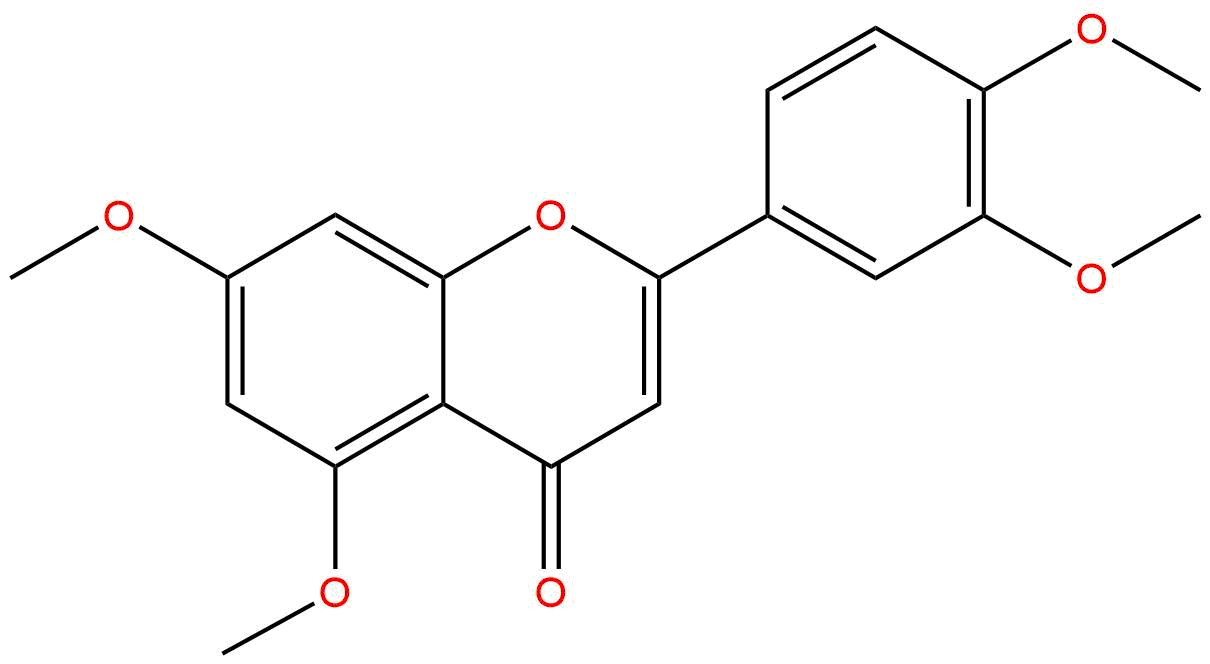


Product name: 5,7,3',4'-Tetramethoxyflavone
Synonym name: Luteolin tetramethylether; Tetramethylluteolin;Tetramethoxyluteolin
Catalogue No.: BP4209
Cas No.: 855-97-0
Formula: C19H18O6
Mol Weight: 342.347
Botanical Source:
Type of Compound: Flavonoids
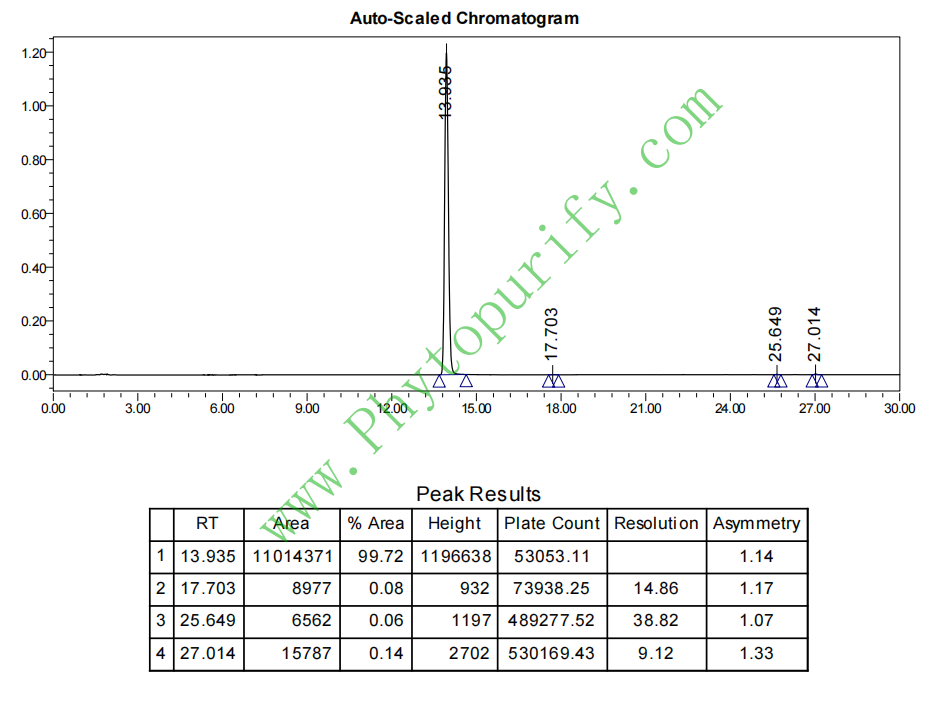
Purity: 95%~99%
Analysis Method: HPLC-DAD or/and HPLC-ELSD
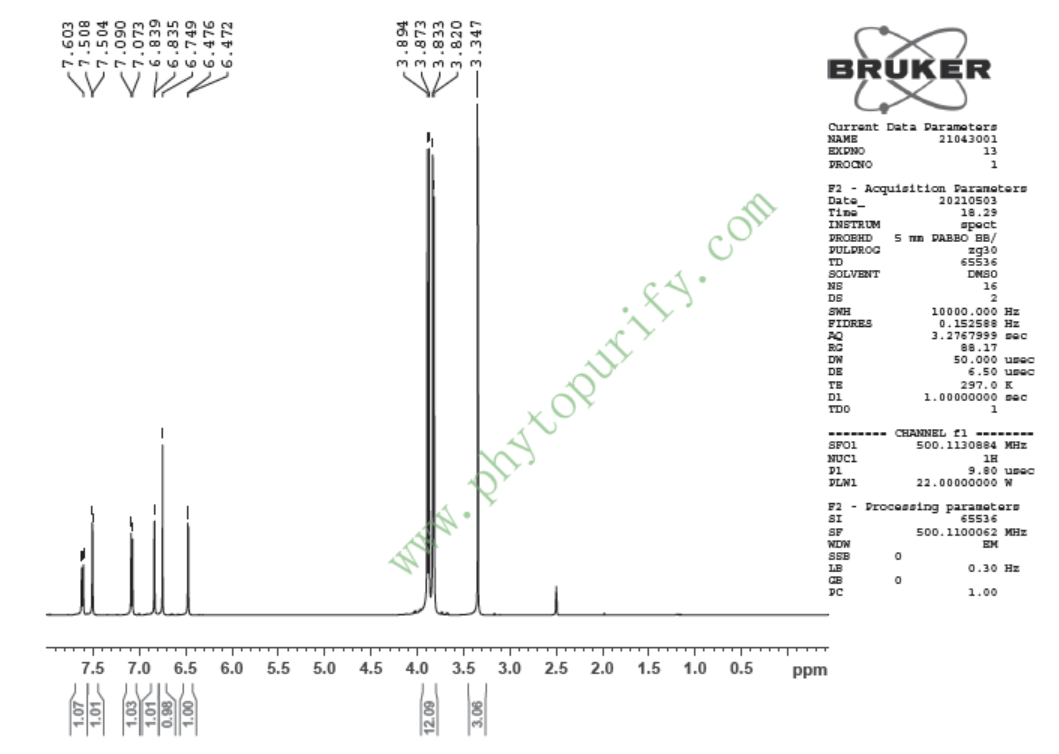
Identification Method: Mass, NMR
Packing: Brown vial or HDPE plastic bottle
Storage: Store in a well closed container, protected from air and light. Put into refrigerate or freeze for long term storage.
Whenever possible, you should prepare and use solutions on the same day. However, if you need to make up stock solutions in advance, we recommend that you store the solution as aliquots in tightly sealed vials at -20℃. Generally, these will be useable for up to two weeks.
The product could be supplied from milligrams to grams
Inquire for bulk scale.
For Reference Standard and R&D, Not for Human Use Directly.
HPLC of 5,7,3',4'-Tetramethoxyflavone
HNMR of 5,7,3',4'-Tetramethoxyflavone
Storage conditions:Short-term storage at 2~8℃, long-term storage at -20 ~ -80℃
67.1300
2.9812
2.9812
.0028
3.3079
46.8561
High
88.1854
2.1097
Yes
No
Yes
No
Yes
No
0.9
No
Yes
Yes
Yes
Oleander Tetramethoxyflavone (5,7,3 ', 4' - Tetramethoxyflavone, CAS number: 855-97-0) is a naturally occurring methoxylated flavonoid compound widely distributed in various Chinese medicinal herbs and plants. As a derivative of flavonoids, luteolin methyl ether has attracted widespread attention in the field of natural product pharmacology in recent years due to its unique chemical structure and biological activity. Its significant antioxidant activity and interactions with multiple key molecular targets make it potentially valuable for the prevention and treatment of oxidative stress-related diseases. This article aims to systematically review the chemical structure, plant origin, pharmacological activity, mechanism of action, and pharmacological evaluation of luteolin tetramethyl ether, and explore its potential clinical applications and development directions in the future.
Osmanthus fragrans methyl ether belongs to the methoxy derivatives of flavonoids, and its chemical structure is based on the flavonoid skeleton, with four methoxy substituents at positions 5, 7, and 3 ', 4'. The molecular formula is C19H18O6 and the molecular weight is 342.3470. Its structural characteristics endow the molecule with unique physicochemical properties:
In summary, the physicochemical properties of luteolin tetramethyl ether demonstrate its good membrane permeability and safety in vivo, but its poor water solubility may limit its oral absorption and bioavailability, which needs to be improved through formulation optimization or structural modification.
Oleander methyl ether is mainly found in the genus Lonicera spp., flavonoids rich traditional Chinese medicinal materials, and certain aromatic plants. Common plant sources include:
The extraction method usually uses organic solvent extraction combined with chromatographic separation technology:
In recent years, green extraction techniques such as supercritical CO2 extraction and deep eutectic solvent assisted extraction have gradually been applied to the extraction of such compounds, aiming to improve extraction efficiency and reduce environmental pollution.
The pharmacological activity research of luteolin tetramethyl ether mainly focuses on its antioxidant effect, but its biological activity range is constantly expanding.
As a natural flavonoid methoxy derivative, luteolin tetramethyl ether exhibits significant free radical scavenging ability. In vitro experiments have shown that it can effectively scavenge DPPH radicals, superoxide anions, and hydroxyl radicals, and alleviate oxidative stress damage. Its antioxidant activity is closely related to the electron supply ability of multiple methoxy groups in its structure.
Oxidative stress is closely related to inflammation, and luteolin tetramethyl ether indirectly inhibits the release of inflammatory mediators by regulating the redox state. Some studies have shown that it can inhibit the expression of inflammatory factors such as TNF - α and IL-6, and alleviate inflammatory reactions.
In various cell models, luteolin tetramethyl ether enhances intracellular antioxidant enzyme activity, protects cells from oxidative damage, and promotes cell survival. Its protective effect on nerve cells and myocardial cells is particularly significant, indicating its potential applications in neurodegenerative diseases and cardiovascular diseases.
Preliminary studies have also found that luteolin tetramethyl ether has certain anti-tumor activity, which can inhibit tumor cell proliferation by regulating the cell cycle and inducing apoptosis. In addition, its regulatory effect on certain enzyme activities also provides a basis for its multi-target pharmacological mechanism.
The biological activity of luteolin tetramethyl ether is closely related to its regulation of various key molecular targets, especially in the antioxidant pathway where its mechanism of action is relatively clear.
In addition to the antioxidant pathway, luteolin tetramethyl ether may also exert anti-inflammatory and cell protective effects by regulating cellular signaling pathways such as NF - κ B and MAPK. In addition, its methoxy structure may affect its binding affinity with enzyme proteins, regulate enzyme activity, and gene expression.
The pharmacological analysis of luteolin tetramethyl ether is based on its physicochemical properties and in vivo behavior, and its potential as a candidate drug is comprehensively evaluated.
At present, there is limited research on the metabolic pathway of luteolin tetramethyl ether, and it is speculated that it may be metabolized by the liver cytochrome P450 enzyme system, producing metabolites such as methoxydemethylation. The activity and toxicity of metabolites need further evaluation.
The low water solubility limits its oral bioavailability, and in the future, its solubility and absorption can be improved through technologies such as nano formulations, liposome encapsulation, and solid dispersions. Meanwhile, structural modification to enhance polarity or introduce hydrophilic groups is also an effective strategy to improve its pharmacokinetic performance.
Based on the significant antioxidant and cell protective effects of luteolin tetramethyl ether, it has potential clinical application value in various oxidative stress-related diseases:
Future research should focus on:
As a natural flavonoid methoxy derivative with unique structure and multiple biological activities, luteolin tetramethyl ether exhibits excellent antioxidant, anti-inflammatory, and cell protective effects. It enhances cellular antioxidant defense by regulating key molecular targets such as NRF2, providing new ideas for the prevention and treatment of oxidative stress-related diseases. Although its low water solubility limits its pharmacokinetic performance, it is expected to overcome this bottleneck through modern pharmaceutical formulation technology and structural optimization. In the future, combined with systematic pharmacological research and preclinical evaluation, luteolin tetramethyl ether is expected to become an important candidate molecule for natural product drug development, promoting the application and development of natural flavonoids in modern medicine.
