Introduction/Overview
Allergic diseases, such as allergic rhinitis, asthma, atopic dermatitis, etc., have become a global public health issue, with complex pathogenesis involving abnormal activation of multiple immune cells, inflammatory mediators, and signaling pathways. Although existing drugs such as antihistamines, glucocorticoids, leukotriene receptor antagonists, etc. can effectively control symptoms, long-term use may bring side effects, and some patients may have poor efficacy. Therefore, searching for efficient and low toxicity new anti allergic lead compounds from natural products has always been an important direction in drug development. Apigenin triacetate (CAS: 3316-46-9), as an acetylated derivative of the flavonoid compound apigenin, has attracted attention in recent years due to its unique source and significant anti allergic activity. Unlike apigenin, which is widely present in various fruits and vegetables, apigenin triacetate was initially reported as a secondary metabolite of Fusarium graminearum, providing a new perspective on its biosynthetic pathway and potential microbial sources. Research has shown that its anti allergic effect involves the regulation of multiple key targets and pathways, demonstrating the potential for multi-target intervention. This article aims to systematically review the chemical structure, sources, pharmacological activities, mechanisms of action, and medicinal properties of apigenin triacetate, in order to provide comprehensive scientific references for the in-depth research and development of this compound.
Chemical structure and physicochemical properties
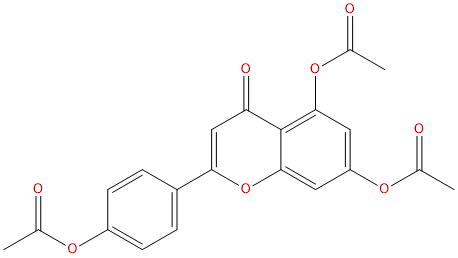
The chemical name of apigenin triacetate is 5,7-dihydroxy-2- (4-hydroxyphenyl) -4H benzopyran-4-one triacetate, which is an ester derivative formed by the acetylation of all three phenolic hydroxyl groups (located at positions 5 and 7 of the A ring and 4 'of the B ring) in the apigenin molecule. Its molecular formula is C21H16O9 and its molecular weight is 396.3510 g/mol.
Compared with apigenin, acetylation modification significantly altered its physicochemical properties. Firstly, acetylation masks the polar phenolic hydroxyl groups, leading to a significant increase in their lipophilicity. The calculated lipid water partition coefficient (LogP) is 2.5907, indicating that it has good lipophilicity, which is beneficial for its penetration into the cell membrane. Secondly, its topological polar surface area (TPSA) is 109.1100 Å ², which is slightly lower than that of apigenin, but still retains certain polarity characteristics. The water solubility data shows that its solubility is extremely low (about 0.0019 mg/mL), which suggests that in the development of formulations, it may be necessary to improve its solubility and bioavailability through techniques such as salt formation, cyclodextrin inclusion, or nanoformulation. It is worth noting that its predicted blood-brain barrier permeability is "high", suggesting that it may have central nervous system activity or potential risk of central side effects, which needs attention in its subsequent development. Preliminary pharmacological risk assessment shows that it does not inhibit hERG potassium channels (hERG inhibition: No), indicating a low potential risk of arrhythmia; The Ames test result is 0.6 (usually considered positive if>1.5), indicating a low risk of mutagenicity, but further genetic toxicity experiments are needed to confirm.
Plant sources and extraction methods
Celery extract triacetate is not a traditional plant derived flavonoid. Its first report originated from the metabolites of the plant pathogenic fungus Fusarium graminearum. Fusarium graminearum is the main pathogen causing Fusarium head blight in grains such as wheat and corn, and can produce various mycotoxins and secondary metabolites. Research has found that apigenin triacetate is one of the metabolites produced by this fungus under specific cultivation conditions. Interestingly, studies have shown that treating Fusarium graminearum with chitosan can downregulate the biosynthesis of apigenin triacetate. Chitosan, as a natural biological stimulant, may inhibit the production of certain secondary metabolites, including apigenin triacetate, by interfering with the integrity of fungal cell membranes or regulating their metabolic pathways. This phenomenon not only provides clues for understanding the regulation of fungal secondary metabolism, but may also provide ideas for controlling the production of this compound or fungal virulence through biotechnological means.
Although the natural direct source is relatively unique, the chemical synthesis pathway of apigenin triacetate is clear and relatively mature. It is mainly prepared by selective acetylation of widely existing apigenin through chemical or enzymatic methods. Chemical synthesis usually starts from apigenin and reacts with acetic anhydride or acetyl chloride in the presence of alkaline catalysts such as pyridine and triethylamine. By controlling the reaction conditions (such as temperature, reagent ratio, reaction time), high yields of triacetylation products can be achieved. Enzymatic synthesis utilizes biocatalysts such as lipase for region selective acetylation under mild conditions, which has the advantages of being environmentally friendly and producing fewer by-products, but the cost is relatively high. At present, apigenin triacetate used for pharmacological research is mainly obtained through chemical synthesis, which ensures a stable supply of research materials.
Pharmacological activity research
Current research mainly focuses on the anti allergic activity of apigenin triacetate, which has been validated in multiple experimental models.
1. Anti allergic activity:
Research has shown that apigenin triacetate exhibits stronger anti allergic effects than apigenin in both in vitro and in vivo models. In vitro experiments have shown that it can effectively inhibit the degranulation reaction of mast cells and eosinophils, and reduce the release of inflammatory mediators such as histamine and β - glucosidase. In the mast cell activation model induced by compound 48/80 or antigen, the inhibitory effect of apigenin triacetate is significant. In in vivo experiments, it can dose dependently alleviate allergic symptoms such as increased vascular permeability, airway hyperresponsiveness, pulmonary inflammatory cell infiltration (especially eosinophils), elevated levels of Th2 cytokines, and skin redness and swelling in passive skin allergic reaction (PCA) models, ovalbumin induced allergic asthma mouse models, and allergic contact dermatitis models.
2. Anti inflammatory activity:
Allergic reactions are essentially a special inflammatory process. In addition to its specific anti allergic effect, apigenin triacetate also exhibits broad-spectrum anti-inflammatory potential. It can inhibit the production of nitric oxide (NO), prostaglandin E2 (PGE2), as well as pro-inflammatory factors such as tumor necrosis factor - α (TNF - α) and interleukin-6 (IL-6) in macrophages induced by lipopolysaccharide (LPS). Its anti-inflammatory mechanism may be related to the inhibition of the activation of nuclear factor kappa B (NF - κ B) and mitogen activated protein kinase (MAPK) signaling pathways.
3. Potential other activities:
As a derivative of apigenin, apigenin triacetate may inherit or enhance some of the biological activities of apigenin, such as antioxidant, anti-tumor, neuroprotective, etc. However, there is currently limited specialized research on this derivative in these fields. Its high lipid solubility and blood-brain barrier permeability make it worth exploring in the application of central nervous system diseases such as neuroinflammation and Alzheimer's disease.
Mechanism of action and molecular targets
The anti allergic effect of apigenin triacetate is not achieved through a single target, but exhibits the characteristics of multi-target and multi pathway intervention, mainly involving the regulation of the early and effector phases of allergic inflammatory cascade reactions.
1. Inhibition of mast cell/eosinophil activation and mediator release:
This is an early key step in its anti allergic effect. Target analysis suggests that it may be achieved through:
- Inhibition of FCER1A signaling pathway High affinity IgE receptor (Fc ε RI) cross-linking is a core event in mast cell activation. Celery extract triacetate may interfere with the activity of tyrosine kinases such as Syk and Lyn downstream of Fc ε RI, thereby inhibiting calcium ion influx and subsequent degranulation processes.
- Antagonism between HRH1 and TBXA2R Histamine receptor 1 (HRH1) and thromboxane A2 receptor (TBXA2R) are important allergen receptors. Celery extract triacetate may act as an antagonist to block smooth muscle contraction, vasodilation, and other effects induced by histamine and thromboxane A2.
2. Regulating the metabolism of lipid inflammatory mediators:
- Inhibition of ALOX5 (5-lipoxygenase)ALOX5 is the rate limiting enzyme that catalyzes the production of leukotrienes (LTs) from arachidonic acid. Leukotrienes (such as LTB4, LTC4, LTD4) are potent pro-inflammatory and bronchoconstrictive mediators. The inhibition of ALOX5 by apigenin triacetate can effectively reduce the production of leukotrienes, which may be an important mechanism for alleviating airway spasms and inflammation.
3. Regulating Th2 immune shift and cytokine network:
Allergic diseases are characterized by a predominance of Th2 type immune response.
- Inhibition of IL-4, IL-5, IL-13 production and signal transduction These Th2 cytokines play a central role in IgE class switching, eosinophil activation and recruitment, mucus secretion, and airway remodeling. Celery extract triacetate can reduce the expression levels of these cytokines.
- Interference with STAT6 pathway IL-4 and IL-13 exert biological effects by activating the transcription factor STAT6. Celery extract triacetate may inhibit phosphorylation or nuclear translocation of STAT6, block Th2 differentiation and downstream gene expression.
- Downregulation of TSLP (thymic stromal lymphopoietin)TSLP is an epithelial cell-derived alarm protein that plays an upstream critical role in initiating and maintaining Th2 type allergic reactions. Inhibiting TSLP expression can alleviate allergic inflammation from the source.
4. Possibility of epigenetic regulation:
There are studies suggesting that apigenin and its derivatives may regulate gene expression by inhibiting histone deacetylase (HDAC) or affecting DNA methylation. The acetyl group of apigenin triacetate may act as a "pseudo substrate" or affect cellular acetylation metabolism through other means, which adds a new dimension of epigenetic regulation to its mechanism of action and requires further research.
In summary, apigenin triacetate forms a three-dimensional anti allergic network that inhibits mediator release, blocks mediator effects, and regulates immune balance by acting on membrane receptors and enzymes such as ALOX5, HRH1, FCER1A, as well as signaling molecules such as STAT6 and cytokines.
Evaluation of drug properties and pharmacokinetics
Based on its physicochemical parameters and preliminary biological activity data, a preliminary evaluation of the pharmacological properties of apigenin triacetate is conducted
Advantage:
1. Significant activity It has shown better anti allergic activity than apigenin in multiple models and has the potential to become a lead compound.
2. Multi-target effect Targeting multiple stages of allergic reactions may result in synergistic effects and reduce the risk of drug resistance.
3. Preliminary safety warning is good No hERG inhibition warning, Ames test preliminary negative, laying the foundation for subsequent development.
4. Metabolized prodrug potential The possibility of using it as a prodrug for apigenin is worth exploring. Acetyl groups may be hydrolyzed by esterases in the body, gradually releasing apigenin and mono/di acetylated intermediates, resulting in more persistent or differentiated pharmacological effects.
Challenges and unknowns:
1. Poor water solubility The extremely low water solubility is the primary pharmaceutical challenge faced by its oral administration, which may seriously affect its absorption and bioavailability.
2. Lack of pharmacokinetic (PK) data Currently, there are very few systematic studies publicly available on its absorption, distribution, metabolism, and excretion (ADME). Its high LogP and high blood-brain barrier permeability prediction suggest that it may have good oral absorption and tissue distribution, but the specific peak time, half-life, plasma protein binding rate, and main metabolic pathways (whether through hydrolysis, glucuronidation, sulfation, etc.) are unknown.
3. Metabolic stability As an ester compound, whether it is rapidly hydrolyzed into apigenin by widely present esterases in the gastrointestinal tract and blood is the key to determining whether it acts in its prototype or metabolite form. If the hydrolysis is too fast, its unique pharmacological advantages may be lost.
4. Potential central penetrability High BBB permeability is a double-edged sword. Unnecessary brain entry may increase the risk of central side effects in the treatment of peripheral allergic diseases; But if used for central nervous system related diseases (such as neuroinflammation), it becomes advantageous.
5. In vivo pharmacological validation needs to be strengthened Existing in vivo studies mostly focus on observing symptoms and inflammatory indicators, lacking direct evidence for their regulation of the aforementioned molecular targets in living tissues.
The future optimization strategy for drug properties should include: ① developing suitable dosage forms, such as nanocrystals, liposomes, and solid dispersions, to improve solubility and dissolution rate; ② Conduct systematic preclinical ADME/PK studies to clarify their in vivo fate; ③ Explore its design as a prodrug, optimize its metabolic stability, and control its hydrolysis rate.
Clinical application prospects and prospects
Celery extract triacetate has shown unique application prospects in the field of anti allergic therapy, but its conversion path is still full of challenges and opportunities.
Potential application directions:
1. New multi-target anti allergic drugs For moderate to severe allergic asthma, refractory allergic rhinitis, chronic urticaria, etc., their multi-target characteristics may provide new options for patients with poor efficacy of existing single target drugs, or they can be combined with existing drugs to reduce dosage and minimize side effects.
2. Local drug preparation Considering its poor water solubility but good fat solubility, the development of topical preparations such as creams and gels for atopic dermatitis and allergic contact dermatitis can avoid oral absorption difficulties and directly act on the target site.
3. Neuroinflammatory related diseases Its high BBB permeability and anti-inflammatory potential make it worthy of attention in drug development for diseases such as Alzheimer's disease, multiple sclerosis, and post-stroke neuropathy.
4. As a chemical probe Can be used for studying the relationship between esterase activity, acetylation metabolism, and immune regulation, as well as for systems biology research on multi-target intervention in allergic networks.
Future research prospects:
1. Deepening the mechanism of action It is necessary to use techniques such as gene knockout, reporter genes, eutectic structures (if available), and chemical proteomics to accurately verify the direct interaction sites and modes with targets such as ALOX5 and STAT6.
2. Systems pharmacology research Combining network pharmacology, transcriptomics, and proteomics analysis, comprehensively map its intracellular and extracellular signal network.
3. Pre drug design and structural optimization Using it as the mother nucleus, structural modifications are carried out (such as introducing different acyl groups, synthesizing phosphate prodrugs to improve water solubility, designing targeted delivery systems) to improve PK/PD properties, enhance selectivity and efficacy.
4. Preclinical development After clarifying the PK and preliminary toxicological characteristics, efficacy validation needs to be conducted in animal models that are closer to human diseases (such as humanized mouse models), and standardized GLP toxicological evaluation needs to be completed.
5. Source and biosynthesis Exploring the gene clusters involved in fungal production pathways, or potentially achieving efficient and green biomanufacturing in engineering microorganisms through synthetic biology methods.
Conclusion
Celery extract triacetate, as a flavonoid derivative derived from fungal metabolism, has become an attractive research object in the field of natural product medicinal chemistry due to its multi-target anti allergic activity and unique physicochemical properties. It is not only a bridge connecting plant chemistry and microbial metabolism, but also provides valuable lead structures for the development of new anti allergic drugs. The current research has preliminarily outlined its pharmacological profile and action network, but its complete pharmacokinetic characteristics, precise molecular mechanism of action, and ultimate clinical translational potential still require deeper and more systematic scientific exploration. Overcoming the bottleneck of drug formation such as poor water solubility and optimizing it through modern medicinal chemistry and pharmacy methods is the key to promoting its transition from laboratory to clinical application. In the future, with the deepening of interdisciplinary research, apigenin triacetate is expected to demonstrate its unique value in the treatment of allergic diseases and even a wider range of inflammatory diseases.