Introduction/Overview
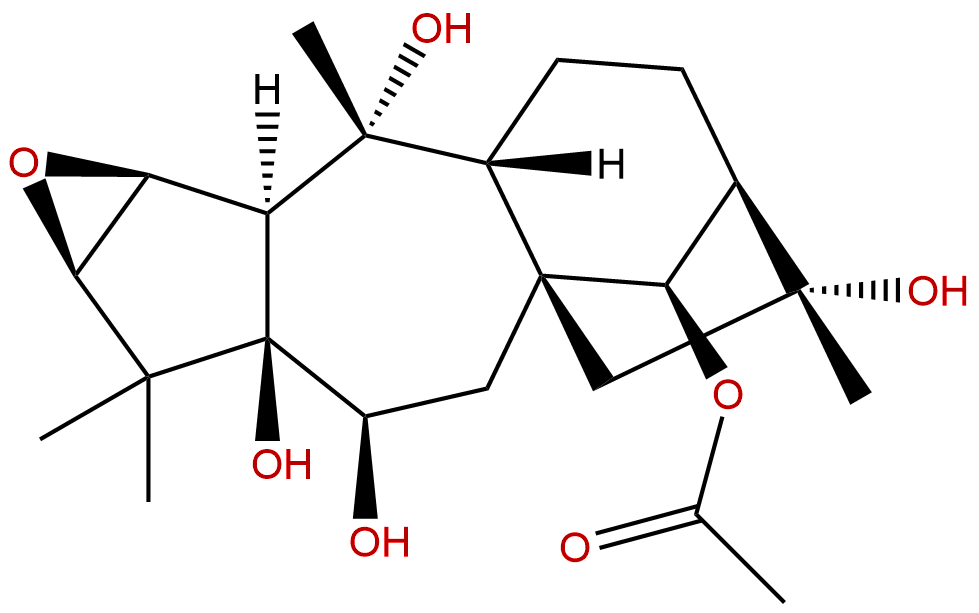
Natural products have long been an important treasure trove for innovative drug discovery, among which diterpenes have attracted much attention due to their complex and diverse chemical structures and extensive biological activities. Rhodojaponen V, CAS number 37720-86-8, is a significant bioactive grayanane type diterpenoid compound isolated from Ericaceae plants. This compound is mainly derived from plants such as Rhododendron molle (Blume) G. Don, which have traditionally been used in folk medicine but need to be treated with caution due to their toxicity. Modern pharmacological research has revealed that the toxin V from sheep flowers exhibits strong anti-tumor potential and has become a hot topic molecule in the research of natural anti-tumor drugs. Its mechanism of action involves inducing cell apoptosis, inhibiting cell proliferation, invasion and metastasis, and exerts its effects by acting on multiple key targets such as MCL1, BCL2, STAT3, MMP2, TOP1, HIF1A, TOP2A, MAPK1, ESR1, CYP19A1, etc. This article aims to provide a systematic review of the chemical structure, plant origin, pharmacological activity, mechanism of action, pharmacological evaluation, and clinical application prospects of sheep flower toxin V, in order to provide comprehensive scientific references for the in-depth research and development of this compound.
Chemical structure and physicochemical properties
The molecular formula of Naoyanghua toxin V is C20H30O8, with a molecular weight of 410.5070. Its core skeleton is a grayanane type tetracyclic diterpenoid, which is a typical structural feature of toxic diterpenoid components in Rhododendron plants. This structure consists of five fused rings (A/B/C/D/E rings), where ring A is a six membered ring, rings B, C, and D are usually five or six membered rings, and ring E is an oxygen-containing five membered lactone ring, which is crucial for its biological activity. There are multiple hydroxyl and epoxy groups in the molecule, and these polar functional groups determine some of its physicochemical properties.
From the perspective of pharmacological parameters, the calculated lipid water partition coefficient (LogP) of the toxin V in the sheep flower is 0.9449, indicating that it has moderate lipophilicity but not high hydrophobicity. Its topological polar surface area (TPSA) is 119.7500 Å ², reflecting the presence of multiple hydrogen bond donors and acceptors in the molecule, which affects its membrane permeability. The predicted value of water solubility is 0.6838 mg/mL, indicating that it has a certain degree of water solubility, which may be attributed to multiple hydroxyl groups in the molecule. These properties collectively determine its dissolution and diffusion characteristics in neutral environments. It is worth noting that the prediction shows a lower ability to cross the blood-brain barrier, suggesting that its direct effect on central nervous system related tumors may be limited, but it may also reduce the potential risk of neurotoxicity. In addition, preliminary toxicity predictions showed no hERG potassium channel inhibitory activity and Ames test mutagenicity (predicted value of 0.0), providing preliminary positive signals for its safety assessment, but further experimental verification is needed.
Plant sources and extraction methods
The main source of toxin V from Rhododendron is Rhododendron plants in the family Ericaceae, especially Rhododendron molle (Blume) G. Don, commonly known as Rhododendron or Rhododendron. This plant is widely distributed in the Yangtze River Basin and southern regions of China. Its flowers, leaves, and roots all contain various toxic diterpenes, among which the toxin V from the sheep flower is one of the important active ingredients. In addition, the presence of this compound or its analogues has also been found in other plants of the same genus, such as R. simsii.
Organic solvent extraction is commonly used to extract the toxin V from plant materials. The common process is as follows: first, the dried Rhododendron flowers or leaves are crushed, and then extracted by cold soaking or heating reflux with polar organic solvents such as methanol, ethanol, or acetone. The extract is concentrated under reduced pressure to obtain a crude extract. Subsequently, segmented extraction was performed using solvents such as petroleum ether, ethyl acetate, n-butanol, etc., and it was found that the toxin V was mainly enriched in the ethyl acetate fraction. Further purification relies on various chromatographic techniques, including silica gel column chromatography, reverse phase silica gel (such as ODS) column chromatography, and high-performance liquid chromatography (HPLC) preparation. Silica gel column chromatography often uses chloroform methanol or petroleum ether ethyl acetate gradient elution, while HPLC often uses methanol water or acetonitrile water systems for final purification to obtain high-purity monomer compounds. In recent years, modern technologies such as supercritical fluid extraction have also been explored to improve extraction efficiency and reduce the use of organic solvents.
Pharmacological activity research
A large number of in vitro and in vivo studies have confirmed that the toxin V from sheep flowers has broad and significant anti-tumor activity, which is its core pharmacological effect.
1. In vitro anti-tumor activity:
Naoyanghua toxin V exhibits strong proliferation inhibition and cytotoxic effects on various human tumor cell lines, with IC50 values typically in the micromolar or even nanomolar range. The cell types covered by the study include but are not limited to:
- Breast cancer: It has a strong inhibitory effect on cell lines such as MCF-7 and MDA-MB-231.
- liver cancer: Has significant cytotoxicity towards HepG2, SMMC-7721 and other cell lines.
- Lung cancer: It has an inhibitory effect on the growth of cell lines such as A549 and NCI-H460.
- Colon cancer: Effective for cell lines such as HT-29 and HCT-116.
- oophoroma: Sensitive to cell lines such as SKOV-3 and A2780.
- leukemia: It also has activity against blood system tumor cells such as HL-60 and K562.
Its function is not limited to inhibiting cell proliferation, but also significantly inducing apoptosis of tumor cells, leading to cell cycle arrest (commonly in G2/M phase), and inhibiting cell migration and invasion ability.
2. In vivo anti-tumor activity:
In nude mice transplanted tumor models (such as breast cancer, liver cancer and lung cancer), the abdominal injection or intragastric administration of rhododendron toxin V can significantly inhibit the growth of tumor in a dose-dependent manner. The experiment observed a reduction in tumor volume and weight, as well as upregulation of apoptosis related protein expression. Some studies have also shown that it can inhibit lung metastasis of tumors. These in vivo experiments provide direct evidence for its anti-tumor efficacy.
3. Other pharmacological activities:
In addition to anti-tumor effects, limited research suggests that the toxin V from Rhododendron may also have analgesic and anti-inflammatory activities, which is partially consistent with the traditional use of Rhododendron plants. However, its strength and mechanism are far less deeply studied than its anti-tumor effects.
Mechanism of action and molecular targets
The anti-tumor effect of Naoyanghua toxin V involves multiple targets and pathways, and its mechanism is complex and interrelated. It can be mainly summarized as follows:
1. Inducing cell apoptosis: This is one of its most core mechanisms of action. Naoyanghua toxin V can induce apoptosis through the mitochondrial pathway and endoplasmic reticulum stress pathway.
- Targeting Bcl-2 family proteins: It can downregulate the expression of anti apoptotic proteins Bcl-2 and Mcl-1, while possibly upregulating the expression of pro apoptotic proteins such as Bax, leading to a decrease in mitochondrial membrane potential, release of cytochrome C, and activation of caspase cascade reaction, ultimately resulting in cell apoptosis.
- Affects the pathway of death receptors: It may activate caspase-8 by regulating signals such as Fas/FasL.
2. Inhibit cell proliferation and cycle arrest: Naoyanghua toxin V can block tumor cells in the G2/M phase of the cell cycle. The mechanism may be related to interference with the expression and activity of cell cycle proteins (such as Cyclin B1) and cyclin dependent kinase (CDK1), as well as interference with microtubule polymerization.
3. Inhibit tumor invasion and metastasis:
- Inhibition of matrix metalloproteinases (MMPs): It can significantly downregulate the expression and activity of MMP-2 and MMP-9. MMP-2 is a key enzyme that degrades the extracellular matrix (ECM) and basement membrane, and inhibition of its activity can effectively hinder the invasion and metastasis of tumor cells.
- Regulating HIF-1 α signal: Under hypoxic conditions, hypoxia inducible factor-1 alpha (HIF-1 alpha) is stably expressed in tumor cells, promoting angiogenesis and metastasis. Naoyanghua toxin V can inhibit the accumulation or transcriptional activity of HIF-1 α, thereby weakening the adaptability and invasiveness of tumors.
4. Interference with cellular signaling pathways:
- Inhibition of JAK/STAT3 pathway: STAT3 is an important oncogenic transcription factor. Naoyanghua toxin V can inhibit the phosphorylation (activation) of STAT3, prevent its nuclear translocation and transcription of downstream target genes (such as Bcl-2, Mcl-1, Cyclin D1), thereby inhibiting proliferation and promoting apoptosis.
- Regulating the MAPK/ERK pathway: The regulation of the MAPK1 (ERK2) signaling pathway is one of its points of action. This pathway is involved in cell proliferation and survival, and its inhibition contributes to anti-tumor effects.
- Affects estrogen signaling: By acting on estrogen receptor α (ESR1) and aromatase (CYP19A1), rhododendron toxin V may interfere with the growth signal of estrogen dependent tumors (such as some breast cancer).
5. Inhibit topoisomerase activity: Preliminary studies suggest that it may trigger cell death by inhibiting the activity of topoisomerase I (TOP1) and topoisomerase II alpha (TOP2A), leading to irreversible DNA damage during DNA replication and transcription processes.
In summary, through the multi-target and networked mechanism of action mentioned above, the toxin V from sheep flowers synergistically exerts anti-tumor effects, which partially explains its effectiveness on various tumor cells.
Evaluation of drug properties and pharmacokinetics
Although the in vitro activity of sheep flower toxin V is significant, its drug like and pharmacokinetic (PK) properties are the key factors determining its successful development as a drug.
1. Preliminary evaluation of drug properties:
Based on its physicochemical parameters (molecular weight 410.5, LogP~0.94, TPSA~119.8), the toxin V from the sheep flower basically conforms to Lipinski's "five rules", indicating its potential for oral absorption. Moderate LogP and a certain TPSA imply that it may have balanced permeability and solubility. However, the multiple hydroxyl groups and lactone rings in its structure may make it susceptible to phase II metabolism (such as glucuronidation) in vivo, leading to rapid clearance. The prediction of low blood-brain barrier permeability limits its application in the treatment of brain tumors, but it may be beneficial in reducing central side effects. The negative prediction of hERG inhibition and Ames mutagenicity is a favorable factor, but it must be confirmed through rigorous experimental toxicology studies.
2. Current status of pharmacokinetic research:
At present, there are relatively few reports on the pharmacokinetic studies of the toxin V system in sheep flowers, which is still a weak link in its development process. Limited animal (rat) pharmacokinetic studies have shown that:
- Absorption: After oral administration, the absorption rate is moderate and the bioavailability may not be high, possibly due to first pass effects and intestinal metabolism.
- Distribution: Widely distributed in the body, but specific tissue distribution data is lacking. The predicted low blood-brain barrier permeability may affect its concentration in brain tissue.
- Metabolism: As a diterpenoid compound, it may undergo extensive phase I (oxidation, reduction) and phase II (binding) metabolism in the liver. The CYP450 enzyme system, especially CYP3A4, may be involved in its metabolism. Its inhibition of CYP19A1 (aromatase) suggests that it may affect endogenous hormone metabolism.
- Excretion: The prototype drug and its metabolites may be mainly excreted through bile and kidneys.
In the future, modern analytical techniques such as LC-MS/MS need to be used to conduct comprehensive ADME (absorption, distribution, metabolism, excretion) research, clarify its kinetic characteristics, main metabolites, and enzymatic basis in different species.
3. Toxicity and Safety:
The rhododendron itself has strong toxicity, and its main toxic component is this type of diterpenoid. Therefore, the treatment window (the range between effective dose and toxic dose) of sheep flower toxin V is a key issue that needs to be evaluated. Preclinical safety evaluation of acute toxicity, subchronic toxicity, reproductive toxicity, and other factors is an essential step towards clinical application. How to reduce toxicity while maintaining activity through structural modification is an important issue faced by medicinal chemists.
Clinical application prospects and prospects
As a natural lead compound with multi-target anti-tumor activity, the application prospect of Naoyanghua toxin V is broad, but it is also full of challenges.
1. Development strategy:
- Directly developed as a new anti-tumor drug: Developed as a single component drug, it is suitable for tumors that are resistant to existing chemotherapy drugs or have specific target abnormalities. Pre clinical studies and clinical trials (phases I-III) of the system need to be completed.
- Combination therapy: Given its unique multi-target mechanism, when used in combination with existing chemotherapy drugs (such as paclitaxel and cisplatin) or targeted drugs, it may produce synergistic effects, reduce individual dosages, minimize toxic side effects, and overcome drug resistance. This is a more feasible strategy in the short term.
- As a prodrug or new dosage form development: To address potential solubility, stability, or toxicity issues, the pharmacokinetic properties can be improved by preparing prodrugs (such as esterification modification) or developing novel drug delivery systems (such as nanoparticles, liposomes, polymer micelles) to enhance targeting and reduce systemic toxicity.
2. Potential indications:
Based on its target of action, Naoyanghua toxin V may have therapeutic potential for the following types of tumors:
-Hormone dependent breast cancer (by targeting ESR1, CYP19A1).
-Hematological tumors (such as certain lymphomas and leukemia) and solid tumors with high expression of Bcl-2/Mgl-1.
-Tumors with abnormal activation of STAT3 signaling pathway (such as head and neck cancer, multiple myeloma).
-Highly invasive and metastatic tumors (by inhibiting MMP-2 and HIF-1 α).
3. Challenges and future directions:
- Toxicity issue: Balancing its potent anti-tumor activity with potential toxicity is the biggest challenge. A detailed toxicological study is required to determine the safe dose range.
- Pharmacokinetic optimization: It is necessary to thoroughly elucidate its ADME characteristics and possibly optimize them through reasonable structural modifications.
- Deep analysis of the mechanism of action: Although multiple targets are known, the precise mapping of their core functional targets and network regulation still needs to be further developed, especially through the use of chemical biology methods such as chemical proteomics to search for direct functional targets.
- Synthetic Biology Acquisition: The low content and complex extraction and separation in plants limit large-scale supply. The fundamental approach to solving the raw material problem is to elucidate its biosynthetic pathway and utilize synthetic biology techniques for heterologous synthesis in microorganisms.
Conclusion
Naoyanghua toxin V is a highly valuable grayanane type diterpenoid compound discovered from the traditional toxic plant Rhododendron simsii. Its significant in vitro and in vivo anti-tumor activity, as well as its unique mechanism of acting on multiple key tumor related targets such as MCL1, BCL2, STAT3, MMP2, TOP1, HIF1A, make it an attractive lead molecule in the field of anti-tumor drug development. Although there are still many challenges in drug formulation, systemic pharmacokinetics, and toxicity, these challenges are also the focus of future research. Through in-depth mechanism research, rational structural optimization, innovative dosage form design, and rigorous preclinical and clinical evaluation, it is expected that Naoyanghua toxin V will transform from a plant toxic ingredient into a new, efficient, multi-target anti-tumor candidate drug, or provide new weapons for combination therapy, ultimately bringing new hope to cancer patients. Continuous and in-depth research on it will not only contribute to the development of new drugs, but also further enrich our scientific understanding of the complex biological effects of natural products.