Introduction/Overview
As an important component of traditional Chinese medicine, Aconitum plants have a long history of clinical application, especially known for their analgesic and anti-inflammatory effects. However, its significant toxicity, especially cardiac toxicity and neurotoxicity, greatly limits its further development and safe application. Aconitum alkaloids are the main active components of Aconitum plants, with complex and diverse structures. Their pharmacological activity and toxicity coexist, making them a hot and difficult topic in natural product chemistry and pharmacology research. In recent years, with the deepening of separation and purification technology and molecular pharmacology research, a series of structurally novel, uniquely active, and relatively low toxic aconite alkaloids have been discovered, providing valuable resources for the search for new lead compounds. Benzoylheteratisine (CAS: 99759-48-5) is one of them. As a type of C20 diterpenoid aconitine, benzoyl isoaconitine exhibits pharmacological characteristics different from classical highly toxic aconitines such as aconitine and neoaconitine. Its outstanding neuroprotective activity and regulatory effect on voltage-gated sodium channels make it potentially valuable for the treatment of neurological diseases, especially epilepsy and neuropathic pain. This article aims to systematically review the chemical structure, plant origin, pharmacological activity, mechanism of action, medicinal properties, and clinical application prospects of benzoyl isoaconitine, in order to provide comprehensive academic references for the in-depth research and development of this compound.
Chemical structure and physicochemical properties
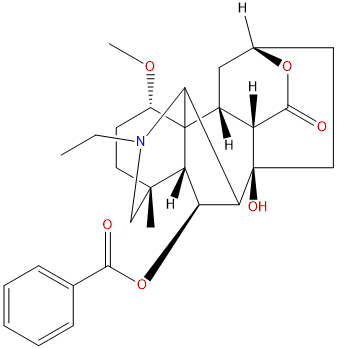
Benzoyl isoaconitine is a C20 diterpenoid aconitine alkaloid belonging to the heteratisine type. Its molecular formula is C28H37NO7 and its molecular weight is 495.6160. Its core structure is a highly modified hetidine skeleton, characterized by a benzoyl oxygen group (- OCOPh) connected to the C-6 position, which is also the origin of its name "benzoyl isoaconitine". The introduction of this benzoyl group has a critical impact on its physicochemical properties and biological activity.
From the analysis of physical and chemical properties, the lipid water partition coefficient (LogP) of this compound is 3.2645, indicating its moderate lipophilicity, which is beneficial for its penetration of cell membranes but may also affect its water solubility. Its topological polar surface area (TPSA) is 85.3000 Å ², which is relatively moderate. The calculated water solubility is relatively low, about 0.0439 mg/mL, indicating that solubilization strategies may need to be considered in formulation development. It is worth noting that its predicted blood-brain barrier permeability is "high", which is highly consistent with its observed central nervous system activity (such as antiepileptic and neuroprotective effects), indicating that the compound can effectively enter brain tissue and exert its pharmacological effects. In addition, preliminary pharmacological risk assessment showed that it has no inhibitory activity on hERG potassium channels (hERG inhibition: no), which reduces its potential risk of inducing QT interval prolongation and apical torsion type ventricular tachycardia. The Ames test result is 0.6, indicating a low risk of mutagenicity and providing preliminary support for further safety evaluation.
Plant sources and extraction methods
Benzoyl isoaconitine is mainly derived from plants of the Aconitum genus in the Ranunculaceae family. There have been literature reports on the plant Aconitum heterophyllum belonging to the same genus(Aconitum heterophyllum (Wall.) and some Delphinium Separated from the species. Although Aconitum carmichaelii has been used in traditional medicine, its toxicity is relatively low compared to other Aconitum plants, which is related to the types of alkaloids it contains. Benzoyl Aconitum carmichaelii alkaloids are one of its representative components.
Its extraction and separation usually follow the conventional process of natural product chemistry. Firstly, the dried plant rhizomes and other parts are crushed and subjected to cold soaking or reflux extraction using polar organic solvents such as methanol, ethanol, or chloroform methanol mixture. The extract was concentrated under reduced pressure to obtain a total alkaloid extract. Subsequently, using the acid water extraction method, the extract was treated with a dilute acid water solution to dissolve the alkaloids into salts in the aqueous phase and separate them from non alkaline components; Re alkalize the aqueous phase to free the alkaloids, and then extract them with organic solvents (such as chloroform and dichloromethane) to obtain the total alkaloid fraction. The further purification of benzoyl isoaconitine mainly relies on column chromatography technology, often using silica gel column chromatography with gradient elution using solvent systems such as chloroform methanol or petroleum ether ethyl acetate in different ratios. Monitor and collect target fractions using thin-layer chromatography (TLC) or high-performance liquid chromatography (HPLC). Ultimately, high-purity benzoyl isoaconitine monomers can be obtained through methods such as preparative HPLC or recrystallization. Modern separation techniques such as high-speed countercurrent chromatography (HSCCC) can also be used for efficient preparation and separation of such alkaloids.
Pharmacological activity research
The pharmacological activity research of benzoyl isoaconitine mainly focuses on its regulatory effect on the nervous system, demonstrating multifaceted potential.
-
Neuroprotection and antiepileptic activity This is the most highly anticipated activity of benzoyl isoaconitine. Research has shown that this compound can effectively counteract the effects of tetrodotoxin (a potent sodium channel blocker) in certain models, suggesting that it regulates sodium channel function through a mechanism different from tetrodotoxin. In the epilepsy research model, benzoyl isoaconitine has a significant inhibitory effect on epileptic like burst discharges induced by hippocampal slices, which can reduce the frequency and amplitude of discharges. This is directly related to its subsequently revealed sodium channel blocking effect, which stabilizes over excited neuronal membrane potentials and suppresses the spread of abnormal discharges.
-
Analgesic activity As a derivative of aconitine, analgesia is a modern interpretation of its traditional efficacy. Although there are relatively limited reports on detailed analgesic models directly targeting benzoyl isoaconitine, based on its mechanism of action (such as regulating sodium channels, affecting neurotransmitter release) and potential association with multiple analgesic related targets (see the following section), it is considered to have the potential to be developed as a new type of analgesic, especially for neuropathic pain that is insensitive to or prone to tolerance to traditional opioid drugs.
-
Regulation of cellular ion homeostasis This compound can inhibit the abnormal increase of sodium ion concentration ([Na+] i) and calcium ion concentration ([Ca2+] i) in neurons caused by various excitatory stimuli. Intracellular calcium overload is a key link in neuronal excitotoxicity and apoptosis. Benzoyl isoaconitine indirectly reduces the activation of voltage-gated calcium channels and the reverse operation of sodium calcium exchangers by blocking sodium influx, thereby alleviating calcium overload, which constitutes the core cellular basis of its neuroprotective effect.
-
Inhibition of glutamate release Glutamate is the most important excitatory neurotransmitter in the central nervous system, and its excessive release is closely related to various pathological processes such as epilepsy, cerebral ischemia, and neuropathic pain. Benzoyl isoaconitine has been shown to inhibit depolarization or stimulus induced release of glutamate from nerve endings. This effect may be partially attributed to its sodium channel blocking effect, as inhibition of action potentials reduces calcium influx and subsequent vesicle release.
Mechanism of action and molecular targets
The multiple pharmacological activities of benzoyl isoaconitine stem from its regulatory effects on multiple molecular targets, with ion channel regulation being the most prominent.
-
Voltage gated sodium channel blockers (VGSCs)This is currently recognized as the main molecular mechanism by which benzoyl isoaconitine exerts neuroprotective and antiepileptic effects. Similar to classic local anesthetics or antiepileptic drugs such as phenytoin sodium, it can block VGSCs in a use dependent and voltage dependent manner, preferentially inhibiting high-frequency, sustained firing neurons, with minimal impact on normal physiological electrical activity. This characteristic gives it a therapeutic advantage in treating pathological neuronal overexcitement (such as epilepsy, neuropathic pain), which may reduce central side effects such as sedation.
-
Potential association with analgesic related target networks Although direct integration with experimental data is still needed, based on its biological activity characteristics and chemical structure, benzoyl isoaconitine may indirectly affect multiple analgesic related targets through complex networks
- Transient receptor potential channel May regulate the activity of TRPV1 (capsaicin receptor) and TRPA1 (mustard oil receptor), which are key sensors involved in pain signal transmission, especially inflammatory pain and neuropathic pain.
- Endogenous cannabinoid system and opioid system May indirectly affect the signaling pathways of CNR1 (cannabinoid CB1 receptor) and opioid receptors (OPRM1, OPRD1, OPRK1). Aconitine compounds have traditionally been used for analgesia, and their effects may be partially related to these endogenous analgesic systems.
- Monoamine neurotransmitter system By regulating the function of SLC6A4 (5-hydroxytryptamine transporter), it may affect the neurotransmission of 5-hydroxytryptamine, which plays an important role in pain modulation and emotion regulation.
- Dopamine system The potential impact on DRD2 (dopamine D2 receptor) may be associated with its analgesic and potentially antipsychotic like effects.
- Cyclooxygenase Although the direct interaction with PTGS1/PTGS2 (COX-1/COX-2) is unclear, its anti-inflammatory and analgesic effects may be partially achieved by affecting the synthesis pathway of prostaglandins.
-
Indirect regulation of calcium homeostasis As mentioned earlier, its inhibitory effect on the increase of [Ca2+] i is mainly achieved by blocking sodium channels, reducing action potential dependent calcium influx, and may also involve indirect regulation of intracellular calcium release channels (such as Ryanodine receptors) or plasma membrane calcium pumps.
Evaluation of drug properties and pharmacokinetics
Based on calculations and limited experimental data, benzoyl isoaconitine has shown certain potential as a drug, but there are also challenges.
-
Advantage:
- Good brain permeability The predicted high blood-brain barrier permeability is its key advantage as a lead compound for central nervous system drugs, ensuring that it can reach its target of action.
- Relatively safe cardiac toxicity warning The absence of hERG inhibitory activity is a positive signal that reduces the early risk of severe cardiac toxicity in clinical development.
- Lower risk of genetic toxicity The preliminary Ames test result was negative, laying the foundation for its safety.
-
Challenges and unknowns:
- Poor water solubility Low water solubility (0.0439 mg/mL) may affect its oral bioavailability and the development of injectable formulations, which may need to be optimized through techniques such as salt formation, prodrug design, or nanoformulation in the future.
- Lack of pharmacokinetic data At present, there is almost no systematic research on the in vivo absorption, distribution, metabolism, and excretion (ADME) of benzoyl isoaconitine. Key parameters such as oral bioavailability, plasma protein binding rate, major metabolic organs, metabolites and their activities, elimination half-life, etc. urgently need to be clarified. Aconitum alkaloids are often metabolized by liver CYP450 enzymes, and their specific metabolic enzyme subtypes and the risk of drug interactions need to be evaluated.
- Potential toxicity Although it has a low risk of cardiac toxicity and belongs to the relatively low toxicity Heteratisine type, its comprehensive acute and chronic toxicity, organ specific toxicity (such as neurotoxicity, hepatotoxicity, nephrotoxicity) still needs to be confirmed through standardized preclinical toxicology studies.
- Structural complexity The fully synthetic route may be lengthy and yield low, and large-scale supply may rely on plant extraction or semi synthesis, requiring solutions to resource sustainability and quality control issues.
Clinical application prospects and prospects
The unique pharmacological mechanism of benzoyl isoaconitine has brought its application prospects in multiple therapeutic fields.
-
Neurological disorders:
- epilepsy As a sodium channel blocker with usage dependence, it is a promising lead compound for the development of novel antiepileptic drugs, particularly for the treatment of refractory partial epileptic seizures.
- neuropathic pain Sodium channels (especially Nav1.3, Nav1.7, Nav1.8 subtypes) play a central role in the occurrence and development of neuropathic pain. The sodium channel blocking effect of benzoyl isobaconitine and its inhibition of glutamate release make it of exploratory value in the treatment of diabetes peripheral neuralgia, post herpetic neuralgia, etc.
- Cerebral ischemia/stroke Its neuroprotective effects, including inhibition of glutamate excitotoxicity and calcium overload, suggest that it may have a protective effect in cerebral ischemia-reperfusion injury.
-
pain management In addition to neuropathic pain, it may exert therapeutic effects on inflammatory and mixed pain through multi-target mechanisms involving TRP channels, opioid/cannabinoid systems, etc., or serve as an adjunct or alternative to opioid drugs to reduce addiction and tolerance.
-
Future research directions:
- Deep analysis of mechanism It is necessary to use techniques such as electrophysiology, molecular docking, gene knockout/overexpression to accurately elucidate its selectivity for different sodium channel subtypes and verify its direct interaction with potential targets such as TRPV1 and CNR1.
- structural optimization Based on its pharmacophore, systematic structure-activity relationship research and structural modification are conducted with the aim of enhancing activity, selectivity, improving water solubility and pharmacokinetic properties, while reducing potential toxicity.
- Preclinical development Carry out standardized in vivo pharmacological evaluations as soon as possible (in various animal models of epilepsy and pain), and systematically complete ADME and preclinical toxicology studies to provide decision-making basis for whether to proceed to clinical trials.
- Formulation research Develop a new oral or injectable drug delivery system suitable for its low water solubility.
Conclusion
Benzoyl isoaconitine, as a structurally unique aconitine alkaloid, breaks through people's inherent understanding of the high toxicity of traditional aconitine and exhibits significant neuroprotective, antiepileptic, and potential analgesic activities. Its mechanism of action mainly stems from the use dependent blockade of voltage-gated sodium channels, which in turn regulates calcium homeostasis and glutamate release, and may involve a broader network of pain related targets. Although it has shown good brain permeability and low risk of cardiac toxicity in drug development, its poor water solubility and blank systematic pharmacokinetic studies are the main obstacles to its clinical application. In the future, through interdisciplinary collaboration, the molecular details of its action will be deeply revealed, reasonable structural optimization and formulation innovation will be carried out, and systematic preclinical evaluation will be completed. Benzoyl isoaconitine is expected to develop from a unique natural product into a new drug lead compound for the treatment of major neurological diseases such as epilepsy and neuropathic pain, providing another example for the development of modern innovative drugs derived from traditional Chinese medicine.