| Catalog No | Package | Original Price | Price | Inventory | Quantity | Operating |
|---|---|---|---|---|---|---|
| BP5130-5mg | 5mg | $420.00 | Sign in |
|


Storage conditions:Short-term storage at 2~8℃, long-term storage at -20 ~ -80℃
Liver fibrosis is a common pathological process in the progression of various chronic liver diseases, characterized by abnormal deposition of extracellular matrix (ECM) in the liver cells, which may eventually develop into cirrhosis or even hepatocellular carcinoma. The current treatment options for liver fibrosis are limited, and there are certain side effects and poor efficacy issues. Therefore, finding efficient and safe natural products for anti liver fibrosis has become an important direction for drug development. Dihydroxylin A-7-O - β - D-glucuronide (hereinafter referred to as "Dihydroxylin A-7-O - β - D-glucuronide"), as an emerging natural product compound, has gradually attracted the attention of researchers due to its good biological activity and superior pharmacological parameters.
This review systematically summarizes the chemical structure and physicochemical properties, plant sources, and extraction methods of dihydroquercetin A glycoside, with a focus on its pharmacological activity and mechanism of action against liver fibrosis. Combined with the research progress of molecular targets, it explores its pharmacological evaluation and pharmacokinetic characteristics. Finally, it looks forward to its clinical application potential and future research directions, aiming to provide theoretical basis and research reference for the drug development and clinical translation of this compound.
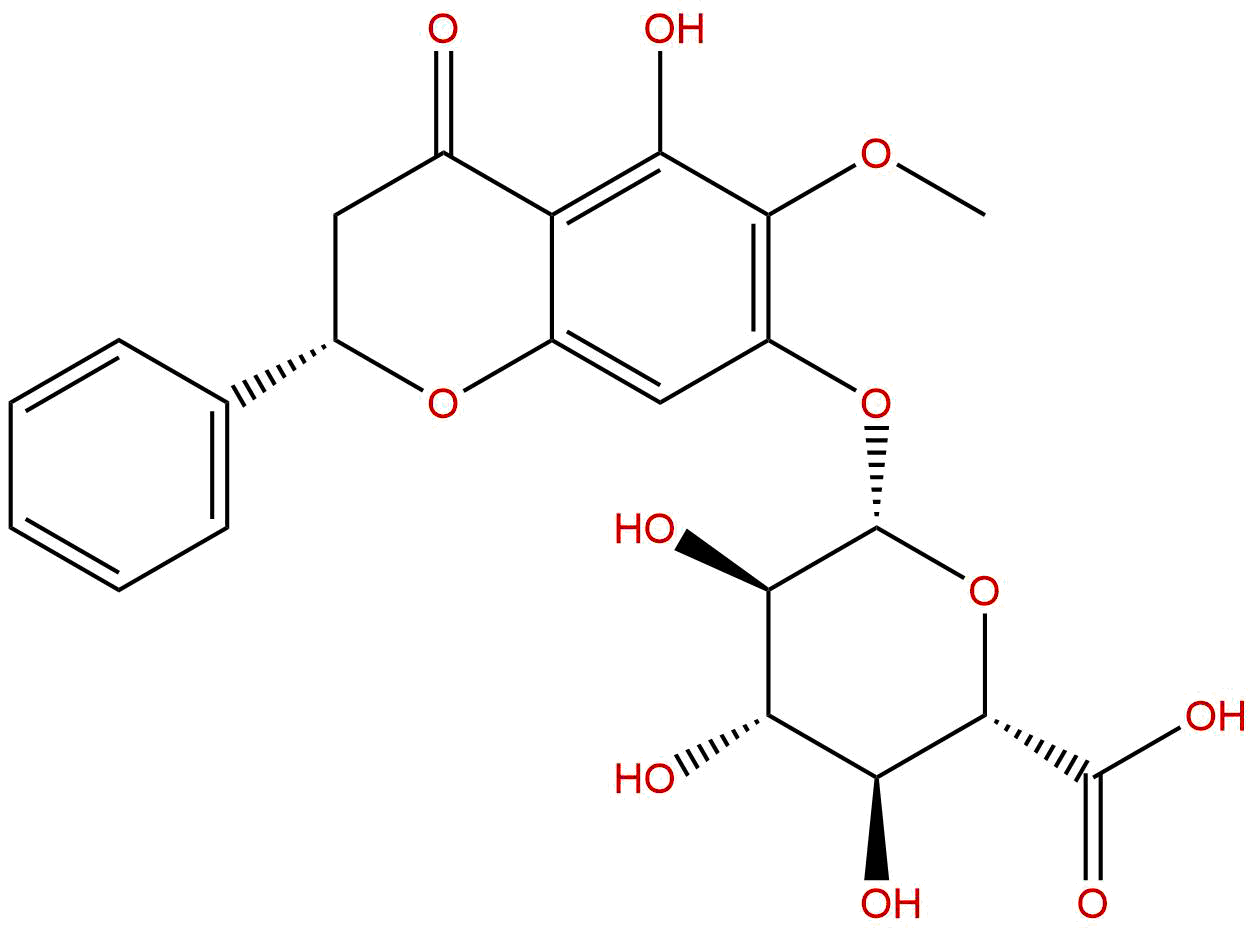
Dihydroquercetin A glycoside is a glucuronide derivative of flavonoids, with a molecular formula of C22H26O11 and a molecular weight of 462.4070. Its core structure is dihydroquercetin A, which is a dihydroflavonoid skeleton modified by β - D-glucuronidation of the 7-hydroxyl group. This structure endows it with high polarity and water solubility, with a TPSA (topological polar surface area) of 172.2100, indicating its good hydrophilicity.
In terms of physical and chemical properties, the LogP of dihydroquercetin A glycoside is 0.8136, indicating its low lipophilicity. Its water solubility score is 2.7308, indicating its good solubility in water. The low permeability of the blood-brain barrier suggests that its effects are mainly limited to peripheral tissues, reducing potential side effects in the central nervous system. The hERG channel inhibition test result was negative, and the Ames mutagenicity test result was 0.0, indicating that the compound has high safety and low genetic toxicity risk.
Structurally, the introduction of glucuronide not only improves the water solubility and bioavailability of the compound, but may also enhance its biological activity by increasing its binding affinity with target proteins. This type of structure is commonly found in natural flavonoid drugs and is closely related to various biological activities.
Dihydrolignan A glycoside is mainly present in the traditional Chinese medicine plant Oxytropis falcata Bunge and its related plants. Wooden butterflies are leguminous plants widely distributed in northwest China and the Qinghai Tibet Plateau. They are traditionally used in traditional Chinese medicine for clearing heat, detoxifying, anti-inflammatory, and pain relief.
The extraction method usually uses ethanol or methanol as solvents, and obtains crude extracts through reflux extraction or ultrasound assisted extraction. Subsequently, separation and purification were carried out using liquid-liquid distribution, silica gel column chromatography, reverse phase high performance liquid chromatography (RP-HPLC) and other techniques, ultimately obtaining high-purity dihydroquercetin A glycoside. The optimization of extraction process mainly focuses on solvent concentration, time, temperature, and purification conditions to improve yield and purity.
Modern separation techniques such as high-performance liquid chromatography-mass spectrometry (HPLC-MS) and nuclear magnetic resonance (NMR) are widely used for the structural identification and content determination of this compound. In addition, the study of biosynthetic pathways has provided a theoretical basis for artificial synthesis and semi synthesis, promoting the large-scale production of this compound.
The pharmacological activity research of dihydroquercetin A glycoside mainly focuses on its anti liver fibrosis effect. The occurrence of liver fibrosis involves various pathological processes such as activation of hepatic stellate cells (HSCs), excessive deposition of ECM, and inflammatory response. Both in vitro and in vivo experiments have shown that dihydroquercetin A glycoside can significantly inhibit the activation and proliferation of HSCs, reduce the expression of collagen (COL1A1) and alpha smooth muscle actin (ACTA2), and thus alleviate the degree of liver fibrosis.
In animal models, dihydroquercetin A glycoside significantly reduces the expression of fibrosis markers such as matrix metalloproteinase 2 (MMP2), transforming growth factor beta 1 (TGFB1), and tissue inhibitory factor 1 (TIMP1) in liver tissue when administered orally or by injection. In addition, the compound exhibits anti-inflammatory and antioxidant activities, further protecting liver cells from damage.
Compared with other flavonoids, the special glycoside modification of dihydroquercetin A glycoside may enhance its targeting and stability, and improve its efficacy. Its low toxicity and good safety make it a potential candidate drug for anti liver fibrosis.
The anti fibrotic mechanism of dihydrolignan A glycoside mainly involves the following key molecular targets:
MMP2 (Matrix Metalloproteinase 2)
MMP2 plays an important role in ECM degradation, and its activity imbalance leads to abnormal accumulation of fibrous tissue. Dihydroquercetin A glycoside promotes the degradation of fibrous tissue and alleviates liver fibrosis by regulating the expression and activity of MMP2.
TGFB1 (Transforming Growth Factor β 1)
TGFB1 is the core regulatory factor of liver fibrosis, which can activate HSC and promote collagen synthesis. This compound inhibits the TGFB1 signaling pathway, blocking the activation and fibrosis process of HSCs.
ACTA2 (alpha smooth muscle actin)
ACTA2 is a marker protein for HSC activation, and dihydroquercetin A glycoside downregulates its expression, inhibiting the myofibroblast like phenotype transformation of HSC.
COL1A1 (type I collagen alpha 1 chain)
COL1A1 is the main component of fibrotic ECM, and dihydroquercetin A glycoside significantly reduces its synthesis and decreases fibrous tissue deposition.
TIMP1 (tissue inhibitory factor 1)
TIMP1 inhibits MMP activity and promotes fibrosis. This compound regulates the balance between TIMP1 and MMP2, restoring ECM dynamic homeostasis.
Molecular mechanism studies have shown that dihydrokaempferol A glycoside regulates fibrosis related gene expression by inhibiting the TGFB1/Smad signaling pathway, while reducing oxidative stress and inflammatory response, and synergistically exerting anti fibrotic effects. In addition, its regulation of inflammatory signaling pathways such as NF - κ B and MAPK has been confirmed, which helps to inhibit chronic liver inflammation.
From the perspective of pharmacological parameters, dihydroquercetin A glycoside exhibits superior drug properties. Its molecular weight is 462.4070, which meets the basic requirements of Lipinski rule. The LogP value is 0.8136, indicating moderate lipid solubility, which is beneficial for in vivo distribution and cell membrane penetration. The high TPSA value (172.2100) suggests strong polarity, which may affect oral absorption, but also contributes to water solubility and targeting.
Low blood-brain barrier permeability reduces the risk of central nervous system side effects. The hERG channel inhibition test was negative, indicating a low risk of cardiac toxicity. The Ames test result is 0, indicating no significant genetic toxicity.
Preliminary pharmacokinetic studies have shown that the bioavailability of dihydroquercetin A glycoside is moderate after oral administration, with a short plasma half-life, suggesting the need to optimize the dosing regimen to maintain effective blood drug concentrations. Its glucuronide structure may be rapidly cleared through the metabolic pathway mediated by glucuronosyltransferase, and in the future, in vivo stability can be improved through structural modification or formulation optimization.
In addition, in vivo distribution studies have shown that the compound is mainly enriched in the liver, which is consistent with its therapeutic target for anti liver fibrosis and demonstrates good tissue targeting.
Given the significant activity and good safety demonstrated by dihydroquercetin A glycoside in anti liver fibrosis, its clinical application prospects are broad. Future research should focus on the following aspects:
Preclinical safety evaluation
Systematic toxicology research, including acute toxicity, subchronic toxicity, and genotoxicity assessment, provides safety guarantees for clinical trials.
Pharmacodynamics and Formulation Optimization
By conducting pharmacokinetic studies to clarify its absorption, distribution, metabolism, and excretion characteristics, combined with technologies such as nano formulations and sustained-release formulations, the bioavailability and efficacy can be improved.
In depth analysis of the mechanism
By utilizing multi omics techniques and molecular biology methods, we can further reveal its functional network and potential new targets, promoting the development of precise treatment strategies.
Combination therapy strategy
Explore the synergistic effects with existing anti liver fibrosis drugs or anti-inflammatory drugs to enhance treatment efficacy, reduce drug dosage and side effects.
Clinical trial design
Conduct multicenter, randomized, double-blind clinical trials to verify its efficacy and safety, and provide scientific basis for its market launch.
In addition, the potential applications of dihydroquercetin A glycoside in anti-inflammatory, antioxidant, and other chronic diseases are also worth paying attention to, expanding its medicinal value.
Dihydrolignan A 7-O - β - D-glucuronide, as a natural product with unique structure and significant anti liver fibrosis activity, has shown good potential and safety as a drug. It exerts anti fibrotic effects by regulating key targets such as MMP2, TGFB1, ACTA2, COL1A1, and TIMP1, inhibiting hepatic stellate cell activation and ECM deposition. In the future, with the deepening of pharmacokinetic and mechanistic research, as well as the advancement of preclinical and clinical trials, dihydroquercetin A glycoside is expected to become a new natural drug for the treatment of liver fibrosis, bringing new treatment options for patients with chronic liver disease.
In summary, the study of dihydroquercetin A glycoside not only enriches the reservoir of natural products for anti liver fibrosis drugs, but also provides new ideas and strategies for the treatment of related diseases, with important scientific value and application prospects.
