Ageconyflavone B: Research progress and prospects for drug efficacy of a multi-target antiviral natural product
Introduction/Overview
Natural products, as an important source of drug discovery, play an irreplaceable role in the long history of human fight against diseases. Flavonoids, as the most widely distributed class of secondary metabolites in nature, have attracted much attention due to their structural diversity and extensive biological activity. Among numerous flavonoids, Ageconyflavone B, a natural flavonoid with unique structural characteristics, has gradually entered the field of researchers in recent years due to its significant antiviral activity.
Shenghong Cirsium Flavonoids B were originally derived from the Asteraceae plant Shenghong Cirsium(Ageratum conyzoides L. The plant has a long history of application in traditional medical systems and is commonly used to treat various diseases such as fever, inflammation, and infections. With the development of modern separation technology and activity screening technology, researchers have discovered various bioactive flavonoids from Cirsium grandiflorum. Among them, Cirsium grandiflorum flavonoid B has attracted widespread attention for its unique chemical structure and multi-target antiviral mechanism.
From a chemical classification perspective, Shenghongjihuang B belongs to the family of Polyoxyflavones (PMFs), which contain multiple methoxy substituents in their molecular structure. This structural feature endows it with physicochemical properties and biological activity that are different from ordinary hydroxy flavonoids. Compared with traditional hydroxyflavones, polymethoxyflavones usually have better membrane permeability and metabolic stability, which provides favorable conditions for their use as lead compounds in drug development.
In recent years, with the continuous threat of viral diseases, especially the emergence of new and recurrent viral infections, the search for new antiviral drugs has become an urgent need in the global public health field. Shenghong Jijin B exhibits broad-spectrum activity in the field of antiviral activity, with its targets covering multiple key stages of the virus life cycle and co factors of host cells. This multi-target characteristic gives it a unique advantage in dealing with virus drug resistance. This article will provide a systematic review of the research progress on flavonoids B from the aspects of chemical structure, plant origin, pharmacological activity, mechanism of action, and pharmacological evaluation, in order to provide reference for the in-depth research and development of this compound.
Chemical structure and physicochemical properties
Chemical structural characteristics
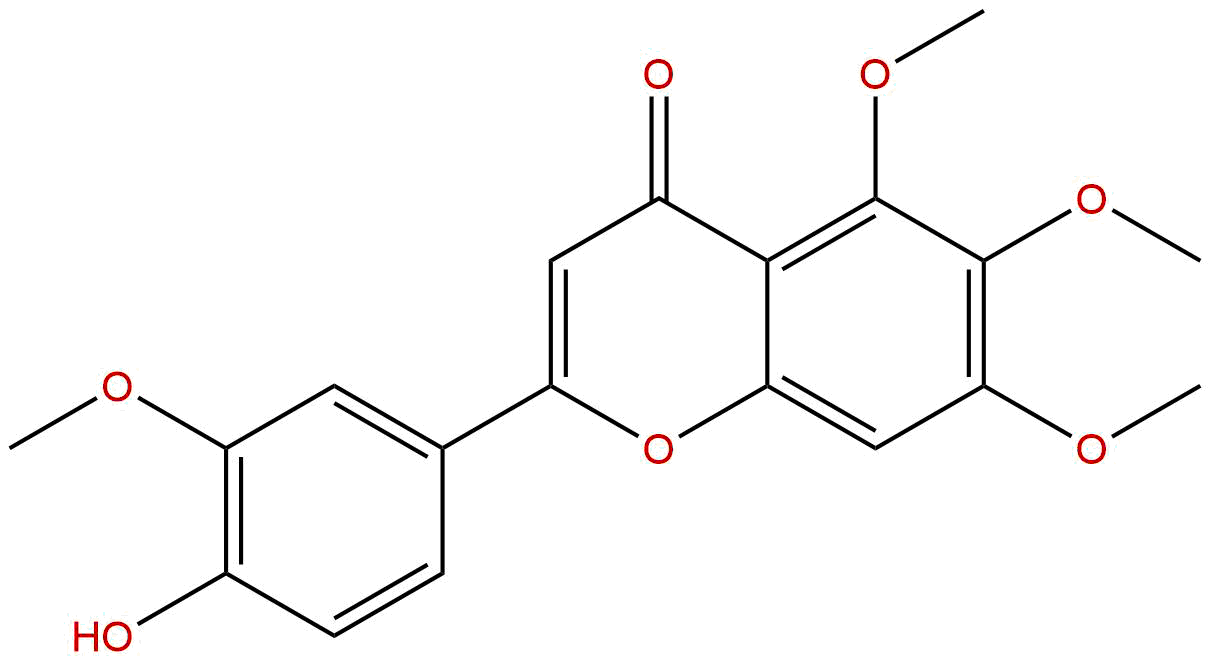
The chemical name of Ageconyflavone B is 5,6,7,8,3 ', 4' - Hexamethoxyflavone, with a molecular formula of C ₁₉ H ₁₈ O ₈ and a molecular weight of 358.3460 g/mol. Structurally, this compound belongs to the fully methoxylated derivative of the flavonoid parent nucleus, with a core structure of 2-phenylchromen-4-one. All replaceable hydroxyl groups on the A and B rings are replaced by methoxy groups (- OCH ∝).
Specifically, the A ring of Shenghong Jijin B is connected to one methoxy group at positions C-5, C-6, C-7, and C-8, while the B ring is connected to one methoxy group at positions C-3 'and C-4'. This highly methoxylated structural feature is relatively rare in nature, endowing the compound with unique chemical properties. Compared with common hydroxyflavonoids, the introduction of methoxy groups significantly changes the electronic distribution, polarity, and spatial configuration of the molecule, thereby affecting its interaction mode with biological targets.
It is worth noting that the A ring of the flavonoid B in the red thistle exhibits a fully substituted pattern (C-5 to C-8 positions are all substituted), which is a unique structure among flavonoids. The complete substitution of the A ring limits the conformational flexibility of the molecule in this region, which may help to form a more rigid molecular conformation, thereby facilitating binding with specific target proteins. In addition, the substitution pattern of 3 ', 4' - dimethoxy groups on the B ring is similar to many bioactive flavonoids, and this structural unit is considered a key pharmacophore for interacting with various enzymes and receptors.
Physical and chemical property parameters
According to the results of computational chemistry and experimental measurements, the physicochemical property parameters of flavonoids B from Cirsium grandiflorum are as follows:
Lipid water partition coefficient (LogP): 2.5510. This value indicates that the flavonoids B in Shenghong Cirsium have moderate lipid solubility and meet the requirement of LogP less than 5 in Lipinski's "Five Rules". Moderate lipophilicity facilitates the absorption and distribution of compounds in the body, while avoiding non-specific binding and toxicity issues caused by excessive lipophilicity.
Topological Polarity Surface Area (TPSA): 87.3600 Å ². TPSA is an important parameter for evaluating the membrane permeability and oral bioavailability of compounds. The TPSA value of Shenghong Jijin B is slightly higher than the ideal range for oral medication (usually considered to be less than 60-70 Å ²), but still within an acceptable range. The higher TPSA mainly comes from multiple oxygen atoms in the molecule, which may affect its passive diffusion ability to some extent, but it may also be compensated by active transport mediated by transporters.
Water solubility:0.0062 mg/mL。 The water solubility of this compound is low, which is consistent with its multi methoxy structural characteristics. Low water solubility is a common problem with flavonoids and one of the main obstacles limiting their clinical application. The low water solubility of Shenghong Jijin B suggests the need to consider solubilization strategies in formulation development, such as using cyclodextrin inclusion, liposome encapsulation, or nanocrystal technology.
Blood-brain barrier penetrability: High. This parameter indicates that flavonoids B from Cirsium grandiflorum have the potential to penetrate the blood-brain barrier, which is of great significance for the treatment of central nervous system viral infections. However, high blood-brain barrier penetration may also pose a risk of central nervous system toxicity, which needs to be addressed in subsequent research.
HERG inhibition: Negative. HERG potassium channel inhibition is an important indicator of drug cardiac toxicity, and Shenghongjihuang B showed a negative result in this test, indicating a low risk of causing QT interval prolongation and arrhythmia, which is a favorable safety feature.
Ames test: 0.6. The Ames test is used to evaluate the mutagenicity of compounds, and the results are expressed as the induced recovery mutation rate. The Ames test value of Shenghongji flavonoids B is 0.6, which is generally considered negative if it is below 2.0, indicating that the compound did not exhibit significant genetic toxicity under the testing conditions.
Based on the above parameters, Shenghong Jijin B exhibits certain advantages in drug development, such as moderate lipid solubility, good cardiac safety, and no genetic toxicity. However, there are also challenges that need to be overcome, such as poor water solubility. These physicochemical properties provide important references for subsequent drug design and formulation development.
Plant sources and extraction methods
Main plant sources
The main plant source of flavonoids B in Cirsium grandiflorum is Asteraceae, which belongs to the genus Cirsium grandiflorum(Ageratum)Plants win over red thistle(Ageratum conyzoides L.), This plant, commonly known as Houttuynia cordata, Salty Shrimp Flower, Stinky Grass, etc., is an annual herbaceous plant native to tropical America. It is now widely distributed in tropical and subtropical regions around the world, including southern provinces in China. Shenghong Cirsium is widely used in traditional medicine as a whole herb. It has the effects of clearing heat and detoxifying, anti-inflammatory and hemostatic, dispelling wind and dampness, and is commonly used to treat diseases such as cold and fever, sore throat, eczema, and traumatic bleeding.
Apart from the red thistle, other plants in this genus include Ageratum houstonianum Mill. (Bear ear grass) has also been reported to contain flavonoids B from Cirsium grandiflorum, but the content is usually lower than that of Cirsium grandiflorum. It is worth noting that the content of flavonoids B in plants is influenced by various factors, including growth environment, harvest season, plant location, genetic variation, etc. Research has shown that the content of this compound in the aboveground parts (stems and leaves) of the red thistle is higher than in the roots, and reaches its peak before and after the flowering period.
extraction process
The extraction of flavonoids B from Shenghong Cirsium is usually carried out using organic solvent extraction method, and an appropriate solvent system is selected based on its lipid solubility characteristics. The classic extraction process includes the following steps:
Raw material pretreatment Fresh or dried whole thistle grass is crushed and sieved through a 40-60 mesh sieve to obtain a uniform plant powder. The drying temperature is usually controlled at 40-50 ° C to avoid degradation of thermosensitive components.
Solvent extraction Common extraction solvents include methanol, ethanol, ethyl acetate, or their mixed solvents. Among them, 70-80% ethanol aqueous solution is widely used due to its high extraction efficiency and good safety. The extraction method can be cold soaking (room temperature soaking for 24-48 hours), hot reflux extraction (60-80 ° C, 2-4 hours), or ultrasound assisted extraction (30-60 minutes). Ultrasonic assisted extraction has the advantages of short extraction time and high efficiency due to its ability to destroy cell wall structure and promote solute release.
Concentration and preliminary separation The extract is concentrated under reduced pressure to obtain a paste, and then liquid-liquid extraction is carried out sequentially using solvents of different polarities (such as petroleum ether, chloroform, ethyl acetate, n-butanol) to achieve preliminary component separation. Shenghong Cirsium flavonoids B are mainly enriched in the ethyl acetate extraction site.
Chromatographic separation and purification The active site obtained from preliminary separation was further purified by column chromatography. Common chromatographic methods include silica gel column chromatography (eluted with chloroform methanol or petroleum ether acetone gradient), Sephadex LH-20 gel column chromatography (eluted with methanol or chloroform methanol) and preparative HPLC. Among them, preparative HPLC has become the preferred method for obtaining high-purity Shenghongjihuang B due to its high separation efficiency and good reproducibility.
Content determination method
The content determination of flavonoids B in Shenghong Cirsium is mainly carried out by high performance liquid chromatography (HPLC), combined with ultraviolet detector (detection wavelength is usually 254 nm or 330 nm) or mass spectrometer detector. The chromatographic conditions are generally: C18 reverse phase chromatography column (such as Zorbax SB-C18, 4.6 × 250 mm, 5 μ m), mobile phase is acetonitrile water or methanol water system, and gradient elution program is used. This method has high sensitivity and strong specificity, and can be used for quality control of medicinal materials, optimization of extraction processes, and pharmacokinetic research.
In recent years, the application of ultra-high performance liquid chromatography tandem mass spectrometry (UPLC-MS/MS) technology has further improved the sensitivity and selectivity of detection, making it possible to quantitatively analyze Deshenghongjijin B in complex biological samples and providing technical support for its in vivo process research.
Pharmacological activity research
Antiviral activity
The most notable pharmacological activity of Shenghong Jijin B is its broad-spectrum antiviral effect. Existing research has confirmed that the compound exhibits inhibitory activity against various DNA and RNA viruses, covering virus species that pose a significant threat to human health.
Antiherpesvirus activity Shenghongjijin B has a significant inhibitory effect on herpes simplex virus type 1 (HSV-1) and type 2 (HSV-2). In vitro experiments have shown that the compound can inhibit virus replication in Vero cells, with a half maximal inhibitory concentration (IC ₅₀) at the micromolar level. More importantly, Shenghong Jijin B is also effective against acyclovir resistant strains, indicating that its mechanism of action is different from nucleoside analogues, and may exert its effect by targeting different stages of virus replication.
Anti Cytomegalovirus Activity Human cytomegalovirus (HCMV) is an important pathogen that causes severe infections in immunocompromised patients. Research has shown that Shenghong Jijin B can inhibit the replication of HCMV in MRC-5 cells, targeting viral DNA polymerase (UL54) and helper protein UL42. This dual targeting mechanism may reduce the development of viral drug resistance.
Anti HIV activity Shenghongjijin B also exhibits inhibitory activity against human immunodeficiency virus (HIV). Research has found that this compound can inhibit the replication of HIV-1 in MT-4 cells, and its mechanism of action involves multiple steps: on the one hand, it can inhibit the activity of HIV reverse transcriptase (RT); On the other hand, it can also interfere with the process of virus entry into host cells by blocking the CCR5 and CXCR4 co receptors to inhibit virus cell fusion. This multi-target action characteristic makes Shenghongjijin B potentially valuable in the development of anti HIV drugs.
Antiviral activity against other viruses Preliminary studies have also shown that Shenghongjijin B exhibits certain inhibitory activity against respiratory syncytial virus (RSV), influenza virus, dengue virus, etc., but its specific mechanism of action and in vivo effects still need further research.
Other pharmacological activities
In addition to its antiviral effect, Shenghong Jijin B also exhibits various other pharmacological activities, which may have a synergistic effect with its antiviral effect:
anti-inflammatory activity Shenghongjihuang B can inhibit the production of pro-inflammatory factors (such as TNF - α, IL-6, IL-1 β) in macrophages induced by lipopolysaccharide (LPS), and its mechanism may be related to the inhibition of NF - κ B signaling pathway and MAPK phosphorylation. The anti-inflammatory activity is of great significance in reducing the inflammatory response and tissue damage caused by viral infection.
antioxidant activity As a multi methoxy flavonoid, Shenghongjihuang B has a certain free radical scavenging ability and can reduce oxidative stress levels. This activity may help protect cells from oxidative damage caused by viral infection.
Immune regulatory activity Research has shown that Shenghong Jijin B can regulate the natural immune response, enhance the production and signaling of interferon (IFN), and thus enhance the antiviral status of host cells. This immune regulatory effect may synergize with its direct antiviral activity, exerting a more effective antiviral effect.
Mechanism of action and molecular targets
Multi target mode of action
The antiviral effect of Shenghong Jijin B exhibits typical multi-target characteristics, with its targets covering multiple key steps in the virus lifecycle and co factors of host cells. This multi-target mode of action not only endows the compound with broad-spectrum antiviral activity, but also reduces the possibility of the virus developing drug resistance.
Virus target
MPO(Myeloperoxidase)Although MPO is primarily considered an enzyme in the host immune system, recent studies have found that certain viruses can hijack MPO activity to promote self replication. Shenghongjijin B may interfere with virus replication by inhibiting MPO activity, but its specific mechanism still needs further clarification.
UL42 and UL54 These two proteins are key factors in the replication process of human cytomegalovirus (HCMV). UL54 is the catalytic subunit of viral DNA polymerase, responsible for the synthesis of viral DNA; UL42 is a DNA polymerase helper protein that enhances the binding ability of polymerase to DNA templates and improves the process of DNA synthesis. Shenghong Jijin B can simultaneously target UL42 and UL54, inhibiting viral replication by interfering with the assembly and function of viral DNA replication complexes.
ICP27 ICP27 is a multifunctional regulatory protein of herpes simplex virus (HSV), involved in multiple processes such as viral gene expression, mRNA processing, and host cell shutdown. Shenghong Jijin B may interfere with the gene expression and replication of HSV by binding to ICP27 and inhibiting its function.
TK(Thymidine Kinase)Thymidine kinase is a key enzyme in viral nucleotide metabolism, responsible for phosphorylating thymidine to thymidine acid, providing raw materials for viral DNA synthesis. Shenghong Jijin B can inhibit the TK activity of HSV, thereby blocking the supply of raw materials for viral DNA synthesis. It is worth noting that this target has a different mechanism of action from nucleoside analogues such as acyclovir, and therefore remains effective against acyclovir resistant strains.
gD(Glycoprotein D)GD is one of the main glycoproteins on the HSV envelope, responsible for virus recognition and attachment to host cells. Shenghong Jijin B may interfere with the fusion process between the virus and the host cell membrane by binding to gD protein, thereby preventing the virus from entering the cell.
CCR5 and CXCR4 These two chemokine receptors are key co receptors for HIV to enter host cells. CCR5 mainly mediates the entry of R5 HIV strain, while CXCR4 mainly mediates the entry of X4 HIV strain. Shenghong Jijin B can simultaneously block CCR5 and CXCR4, thereby inhibiting the entry of different HIV strains with different sexual preferences, demonstrating broad-spectrum anti HIV activity.
HIV1-PR (HIV-1 protease)HIV-1 protease is an essential enzyme in the maturation process of viruses, responsible for cleaving viral precursor proteins into functional proteins. Shenghong Jijin B can inhibit the activity of HIV-1 protease, thereby preventing the maturation of viral particles and the production of infectious viruses.
INT(Integrase)Integrate enzyme is a key enzyme in HIV that integrates viral DNA into the host genome. Shenghong Jijin B can inhibit the activity of integrase, thereby blocking the integration process of the viral genome and preventing the virus from establishing sustained infection.
Molecular mechanism analysis
At the molecular level, the interaction between Shenghongjihuang B and the target protein mainly depends on the hydrophobic interaction and π - π stacking provided by its multi methoxy structure. Molecular docking studies have shown that the flavonoid core of the compound can be embedded into the hydrophobic pocket of the target protein, while the methoxy group forms hydrogen bonds and van der Waals forces with surrounding amino acid residues. This multiple non covalent interaction mode enables Deshenghongjijin B to bind to multiple target proteins, exhibiting multi-target interaction characteristics.
It is worth noting that Shenghong Jijin B exhibits activity against both host cell targets (such as CCR5, CXCR4) and viral targets (such as UL54, HIV1-PR). This "dual pronged" mode of action may produce synergistic antiviral effects while reducing the development of viral resistance. However, the effect on host targets may also bring potential side effects, which need to be evaluated in subsequent studies.
Evaluation of drug properties and pharmacokinetics
Comprehensive evaluation of drug properties
Based on the aforementioned physical and chemical property parameters and preliminary pharmacological activity data, a comprehensive evaluation of the pharmacological properties of Shenghongjihuang B is conducted
Advantage aspects:
1. Moderate molecular weight (358.35 Da), in accordance with Lipinski rule
2. Moderate lipid solubility (LogP 2.55), beneficial for membrane permeability
3. No hERG inhibitory activity, good cardiac safety
4. Ames test negative, no genetic toxicity
5. Multi target mechanism of action, broad-spectrum antiviral activity, low risk of drug resistance
6. It has the potential to penetrate the blood-brain barrier and can be used for central nervous system viral infections
Challenge aspect:
1. Extremely low water solubility (0.0062 mg/mL), affecting oral bioavailability
2. High TPSA (87.36 Å ²) may limit passive diffusion
3. Multimethoxy structures may face metabolic stability issues
4. High blood-brain barrier penetration may pose a risk of central nervous system toxicity
5. The effects on host targets (CCR5, CXCR4) may cause immune regulatory related side effects
Pharmacokinetic characteristics
The pharmacokinetic research on flavonoids B from Cirsium grandiflorum is still relatively limited, but based on its structural characteristics and studies of similar compounds, it can be inferred that its in vivo process:
absorb The oral absorption of Shenghongji flavonoids B may be poor, mainly due to its low water solubility. However, multi methoxy flavonoids typically have better intestinal permeability than hydroxy flavonoids, partly because methoxy groups reduce the interaction between molecules and the intestinal mucus layer. In addition, the compound may be absorbed through the lymphatic system, bypassing the liver's first pass effect.
distribution Due to its moderate lipid solubility and high blood-brain barrier penetration, Cirsium flavonoids B may be widely distributed in the body, especially in brain tissue. The plasma protein binding rate may be high, which can affect its free drug concentration and efficacy.
Metabolism The metabolism of multi methoxyflavonoids mainly involves demethylation, glucuronidation, and sulfation reactions. The liver and intestines are the main metabolic organs, and cytochrome P450 enzymes (especially CYP1A2, CYP3A4) and sulfotransferases may be involved in their metabolism. The demethylation metabolites may retain or enhance biological activity, which is worth noting.
excretion Shenghong Cirsium flavonoids B and its metabolites are mainly excreted through bile and urine. Due to its moderate molecular weight, some prototype drugs may be excreted through renal filtration, but most may be excreted in the form of metabolites.
Structural optimization strategy
The following structural optimization strategies can be considered to address the pharmacological issues of flavonoids B in Shenghong Cirsium:
- Improve water solubility Introducing polar groups (such as phosphate esters, amino acid esters) or preparing prodrugs to improve water solubility without significantly affecting activity
- Improve metabolic stability Introducing fluorine atoms or other metabolic blocking groups at easily metabolized sites
- Reduce blood-brain barrier penetration Limiting brain distribution by increasing polar surface area or introducing P-glycoprotein substrate features
- Improve selectivity Enhancing selectivity towards viral targets through structural modifications and reducing the impact on host targets
Clinical application prospects and prospects
Potential therapeutic areas
Based on the antiviral activity and multi-target mechanism of Shenghongjijin B, it has potential application value in the following therapeutic fields:
Herpesvirus infection For HSV-1/2 infection, especially for acyclovir resistant strains, Shenghongjihuang B provides a new treatment option. Its multi-target mechanism of action may reduce the development of drug resistance, making it suitable for long-term treatment and prevention of recurrence.
Cytomegalovirus infection For HCMV infection in patients with low immune function (such as organ transplant recipients and AIDS patients), silymarin B may be used as an alternative or supplementary treatment for existing drugs (such as ganciclovir and foscarnet sodium).
HIV infection The multi-target anti HIV activity (inhibition of entry, reverse transcription, integration, maturation) of Shenghong Jijin B endows it with the potential to be developed as a multi-target anti HIV drug, which may be used in combination antiretroviral therapy (cART) regimens.
Central nervous system viral infection Its high blood-brain barrier penetration makes it particularly suitable for treating central nervous system infections such as viral encephalitis and meningitis.
challenges faced
Despite its broad prospects, the clinical development of Shenghong Jijin B still faces many challenges:
- Pharmacokinetic optimization Low water solubility and potential metabolic instability need to be addressed through formulation techniques or structural modifications
- Toxicity evaluation Systematic toxicology research is needed, especially in terms of long-term toxicity, reproductive toxicity, and central nervous system toxicity
- Selective optimization The effect on host targets may cause immune regulation related side effects, and its clinical significance needs to be evaluated
- large-scale synthesis Establish efficient and economical chemical or biological synthesis methods to meet the needs of clinical research
- clinical validation Strict clinical trials are needed to verify its safety and effectiveness
Future research directions
Future research should focus on the following directions:
- In depth mechanism research Using structural biology, chemical biology, and other methods to elucidate the interaction patterns between flavonoids B from Cirsium grandiflorum and various target proteins
- Research on Structure Activity Relationship Systematic study on the influence of methoxy substitution mode on activity and drug formation, guiding structural optimization
- Formulation development Developing nano formulations, liposomes, cyclodextrin inclusion complexes, etc. to improve bioavailability
- Combination therapy research Exploring synergistic effects with existing antiviral drugs and optimizing treatment plans
- Pharmacodynamic study in vivo Establish a suitable animal model to verify the antiviral effect in vivo
- Metabolomics research Comprehensively characterize its metabolites, evaluate their activity and toxicity
Conclusion
Shenghong Jijin B, as a traditional medicinal plant derived multi methoxy flavonoid, has shown important research value in the field of natural product drug development due to its unique chemical structure and multi-target antiviral mechanism. This compound exhibits inhibitory activity against various viruses (including HSV, HCMV, HIV, etc.), and its targets cover multiple key stages of the virus lifecycle as well as co factors of host cells. This multi-target feature gives it a unique advantage in dealing with viral drug resistance.
From the perspective of medicinal properties, Shenghongjihuang B has favorable characteristics such as moderate molecular weight, suitable lipid solubility, good cardiac safety, and no genetic toxicity. However, it also faces challenges such as poor water solubility and unknown metabolic stability. Future research needs to further elucidate its mechanism of action, improve its pharmacokinetic properties through structural optimization and formulation techniques, and promote its clinical translation.
The research process of Shenghong Jijin B reflects the classic path from traditional medicinal plants to modern drug discovery, and also demonstrates the potential of natural products in responding to new and recurrent viral infections. With the deepening of research, this natural flavonoid compound is expected to provide new lead molecules for the development of antiviral drugs and contribute to human health. However, there is still a long way to go from laboratory discoveries to clinical applications, which requires collaborative efforts from multidisciplinary researchers such as chemistry, biology, pharmacology, and pharmacy.