| Catalog No | Package | Original Price | Price | Inventory | Quantity | Operating |
|---|---|---|---|---|---|---|
| BP5089-5mg | 5mg | $490.00 | Sign in |
|


Storage conditions:Short-term storage at 2~8℃, long-term storage at -20 ~ -80℃
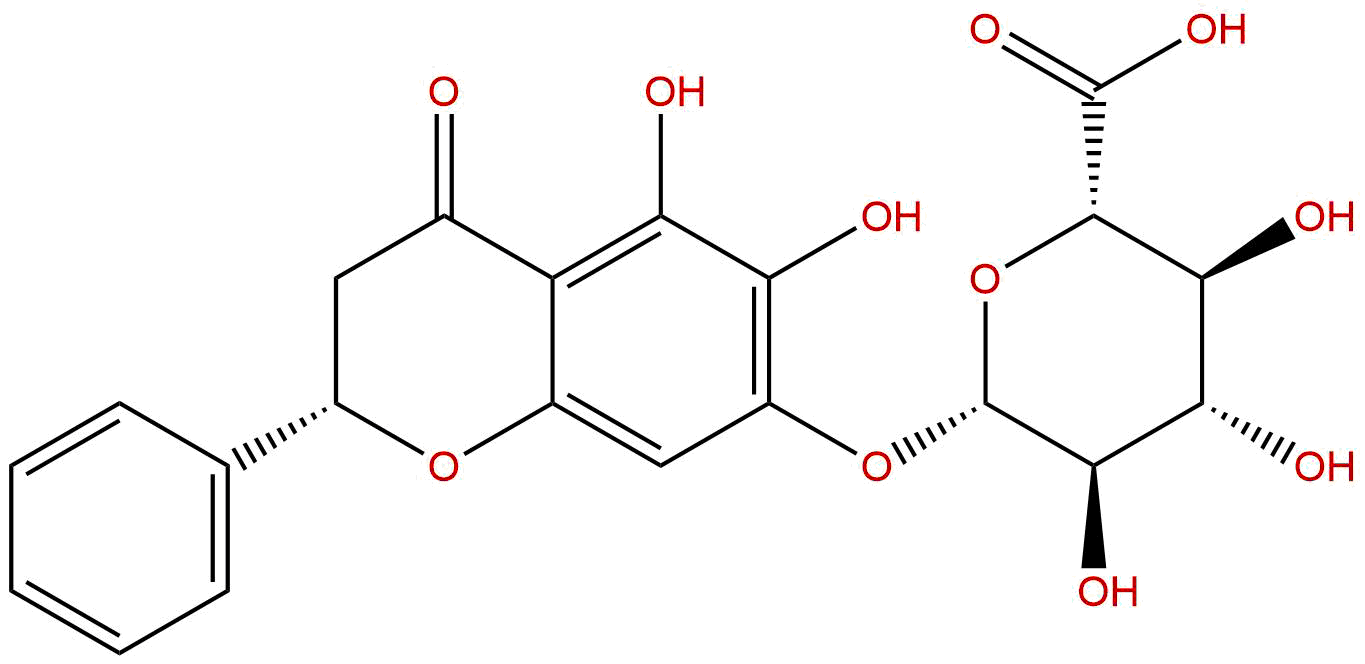
Dihydrobaicalin (CAS number: 56226-98-3) is an important natural flavonoid glycoside, mainly derived from Scutellaria baicalensis(Scutellaria lateriflora L. Separated from it. Scutellaria baicalensis, as a traditional Chinese medicinal herb, has attracted much attention due to its rich flavonoid compounds and extensive pharmacological activities. Dihydrobaicalin, as one of the active ingredients in Scutellaria baicalensis, has shown significant potential in the treatment of various diseases such as liver fibrosis in recent years. Liver fibrosis is a key pathological process in the progression of various chronic liver diseases to cirrhosis or even liver cancer, and its pathological mechanism is complex, involving multiple cytokines and signaling pathways. Given the limited availability of effective drugs for liver fibrosis in clinical practice, natural products, especially flavonoids, have become a research hotspot due to their multi-target regulation and low toxicity side effects. This article will systematically review the chemical structure and physicochemical properties, plant sources and extraction methods, pharmacological activity and mechanism of action, pharmacological evaluation and pharmacokinetic characteristics of dihydrobaicalin, and finally explore its clinical application prospects and future development directions.
Dihydrobaicalin is a flavonoid glycoside with a molecular formula of C21H20O11 and a molecular weight of 448.38. Its structural feature is a dihydroderivative of the flavonoid parent nucleus, with a glycosidic moiety attached. Specifically, the flavonoid structure of dihydrobaicalin contains multiple hydroxyl groups, endowing it with good hydrophilicity and biological activity. In terms of physical and chemical properties, its LogP value is 0.7313, indicating that it has moderate lipid solubility, which is conducive to cell membrane penetration but not too hydrophobic. The polar surface area (TPSA) is 183.21 Å ², indicating strong polarity that facilitates interactions with biomolecules such as proteins. The water solubility test value is 2.7816, indicating that it has good solubility in water and is suitable for oral administration. The low permeability of the blood-brain barrier suggests a lower risk of central nervous system side effects. The hERG channel inhibition test was negative, indicating a low risk of cardiac toxicity. The Ames mutagenicity test result is 0.0, indicating extremely low genotoxicity risk and good safety.
Dihydrobaicalin mainly comes from plants of the Scutellaria genus, especially Scutellaria lateriflora L., This plant is widely used in traditional medicine for clearing heat, detoxifying, anti-inflammatory, and treating liver diseases. Scutellaria baicalensis is rich in flavonoids, and dihydrobaicalin is an important component of it. Although its content is not as high as major components such as baicalin, its unique biological activity makes it a research focus.
The extraction method usually uses solvent extraction combined with chromatographic separation technology. Common extraction processes include:
In recent years, new technologies such as supercritical fluid extraction and microwave-assisted extraction have also been applied to improve extraction efficiency and purity, reduce the use of organic solvents, and comply with the principles of green chemistry.
Dihydrobaicalin has shown significant activity in various pharmacological effects, especially in the field of anti liver fibrosis, with abundant research achievements. Liver fibrosis is a response of the liver to chronic injury, characterized by abnormal deposition of extracellular matrix (ECM), leading to liver dysfunction. Dihydrobaicalin regulates the process of liver fibrosis through multiple targets and pathways, and its specific pharmacological activities include:
Anti hepatic fibrosis effect
Animal models and cell experiments have shown that dihydrobaicalin can significantly inhibit the activation of hepatic stellate cells (HSCs), reduce collagen (COL1A1) deposition, and improve liver tissue structure. Its mechanism of action involves regulating the balance of matrix metalloproteinase 2 (MMP2) and its inhibitor TIMP1, promoting ECM degradation, and inhibiting fibrosis progression.
anti-inflammatory effect
Dihydrobaicalin can inhibit the expression of pro-inflammatory cytokines such as transforming growth factor beta 1 (TGFB1), alleviate liver inflammation, and block the inflammatory initiation process of liver fibrosis.
Antioxidant effect
Its multi hydroxyl structure endows it with excellent free radical scavenging ability, reduces oxidative stress damage to liver cells, and protects liver function.
Antitumor potential
Preliminary studies have shown that dihydrobaicalin has inhibitory effects on proliferation and induces apoptosis in certain liver cancer cells, suggesting its potential role in intervening in the transformation of liver fibrosis to liver cancer.
In addition, there have been some research reports on the neuroprotective and antibacterial effects of dihydrobaicalin, but the relevant mechanisms still need further clarification.
The anti fibrotic effect of dihydrobaicalin involves multiple molecular targets, mainly including:
MMP2 (Matrix Metalloproteinase 2)
MMP2 is an important enzyme for ECM degradation, and dihydrobaicalin promotes the remodeling of fibrotic tissues and reduces collagen deposition by regulating the expression and activity of MMP2.
TGFB1 (Transforming Growth Factor β 1)
TGFB1 is a key pro fibrotic factor in liver fibrosis, which can activate hepatic stellate cells and promote collagen synthesis. Dihydrobaicalin inhibits the TGFB1 signaling pathway and blocks fibrosis signal transduction.
ACTA2 (alpha smooth muscle actin)
ACTA2 is a marker of activated hepatic stellate cells, and dihydrobaicalin reduces fibrosis by downregulating ACTA2 expression, inhibiting the myofibroblast phenotype of HSCs.
COL1A1 (type I collagen alpha 1 chain)
COL1A1 is the main collagen component in fibrotic tissues, and dihydrobaicalin inhibits its gene expression and reduces collagen deposition.
TIMP1 (tissue inhibitor of matrix metalloproteinase 1)
TIMP1 inhibits MMPs activity and promotes ECM accumulation. Dihydrobaicalin regulates TIMP1 expression, restores MMPs/TIMPs balance, and promotes fibrous tissue degradation.
Through the synergistic regulation of the above targets, dihydrobaicalin effectively blocks the occurrence and development of liver fibrosis. In addition, its anti-inflammatory and antioxidant effects further assist in improving the liver microenvironment and promoting liver cell repair.
Medicinal properties are important indicators for evaluating the potential for natural product development. The molecular weight of dihydrobaicalin is 448.38, which meets the requirements for molecular weight in Lipinski's rule. Its LogP value of 0.7313 indicates moderate lipid solubility, which is beneficial for drug absorption and distribution. The high TPSA value (183.21 Å ²) suggests strong polarity, which may affect cell membrane penetration but also facilitate binding to water-soluble targets.
Good water solubility, suitable for the development of oral preparations. Low blood-brain barrier permeability reduces the risk of central nervous system side effects. The hERG channel inhibition experiment was negative, indicating a low risk of cardiac toxicity. The Ames test result is 0, indicating no significant genotoxicity and high safety.
In terms of pharmacokinetics, existing research is relatively limited. Preliminary in vivo experiments suggest that dihydrobaicalin is well absorbed after oral administration, but its bioavailability is limited by the hydrolysis and metabolism of glycoside structure. It may be converted into active or inactive metabolites through enzymatic metabolism in the liver. In the future, it is necessary to conduct systematic pharmacokinetic studies in vivo, including absorption, distribution, metabolism, excretion (ADME) characteristics and drug interaction assessments.
Liver fibrosis, as a common pathological basis of various chronic liver diseases, lacks specific therapeutic drugs. Dihydrobaicalin, with its multi-target regulation and good safety, has good clinical application potential. In the future, its clinical translation can be approached from the following aspects:
New drug development
By optimizing the structure and improving the formulation, its bioavailability and targeting can be enhanced, and oral or injectable formulations can be developed to meet clinical needs.
Combination therapy strategy
Combined use with existing anti fibrotic or hepatoprotective drugs to achieve synergistic effects, improve efficacy, and reduce monotherapy dosage and side effects.
Indications expansion
Explore its potential in other fibrotic diseases (such as pulmonary fibrosis, renal fibrosis) and adjuvant therapy for liver cancer, in addition to liver fibrosis.
clinical trial
Conduct preclinical safety evaluation and phase I/II clinical trials of the system to verify its effectiveness and safety, and promote clinical application.
Deepening mechanism research
Using modern molecular biology techniques to further elucidate its mechanism of action and target network, guiding precise medication.
Dihydrobaicalin, as an important flavonoid glycoside compound in Scutellaria baicalensis, has become a research hotspot in the field of natural product pharmacology due to its significant anti liver fibrosis activity and good safety. The mechanism of multi-target and multi pathway regulation of liver fibrosis process provides a theoretical basis and practical basis for the development of new anti fibrotic drugs. Although research on its pharmacokinetics and clinical applications is still in its infancy, with the continuous advancement of extraction and purification technology, drug design, and clinical research, dihydrobaicalin is expected to become an important candidate drug for the treatment of liver fibrosis and related diseases. Future research should focus on improving its bioavailability, clarifying its mechanism of action and safety evaluation, promoting its clinical application, and bringing new treatment options for liver disease patients.
