Introduction/Overview
Natural products, as an important source of drug discovery, play an irreplaceable role in the long struggle between humans and diseases. Flavonoids, as a widely present class of secondary metabolites in nature, have attracted much attention due to their structural diversity and extensive biological activity. Among them, Naringenin, also known as 4 ', 5,7-trihydroxyflavanone, is one of the most abundant flavanone compounds in citrus fruits. Numerous studies have confirmed that naringin has various pharmacological activities such as antioxidant, anti-inflammatory, anti-tumor, antiviral, liver and heart protection. However, natural flavonoids generally have defects such as poor water solubility, low bioavailability, and unstable metabolism, which seriously restrict their further clinical development and application.
In order to overcome these limitations, structural modification of natural flavonoids, especially the introduction of specific functional groups through esterification, etherification, and other means, has become an important strategy to improve their pharmacological properties and enhance or alter their biological activity. Naringenin-7,4 '- diacetate (NDA) is an important compound derived from this idea. This compound is obtained by acetylation modification of the phenolic hydroxyl groups at positions 7 and 4 'in naringin molecules. This structural modification not only changes the physicochemical properties of the original compound, such as lipophilicity, but may also have a profound impact on its interaction mode with biological targets.
Existing studies have shown that NDA not only retains the anti-inflammatory and antioxidant activities of the parent compound naringin, but also exhibits superior efficacy in certain aspects. What is particularly noteworthy is that NDA exhibits significant anti dengue virus (DENV) activity, which opens up new directions for its development in the field of antiviral drugs. Given the ongoing prevalence of dengue fever worldwide and the lack of specific therapeutic drugs, the discovery of NDA has significant potential value. This article aims to systematically review the chemical structure, physicochemical properties, plant sources, extraction methods, pharmacological activity, mechanism of action, drug evaluation, and clinical application prospects of NDA, in order to provide comprehensive references for the in-depth research and development of this natural product derivative.
Chemical structure and physicochemical properties
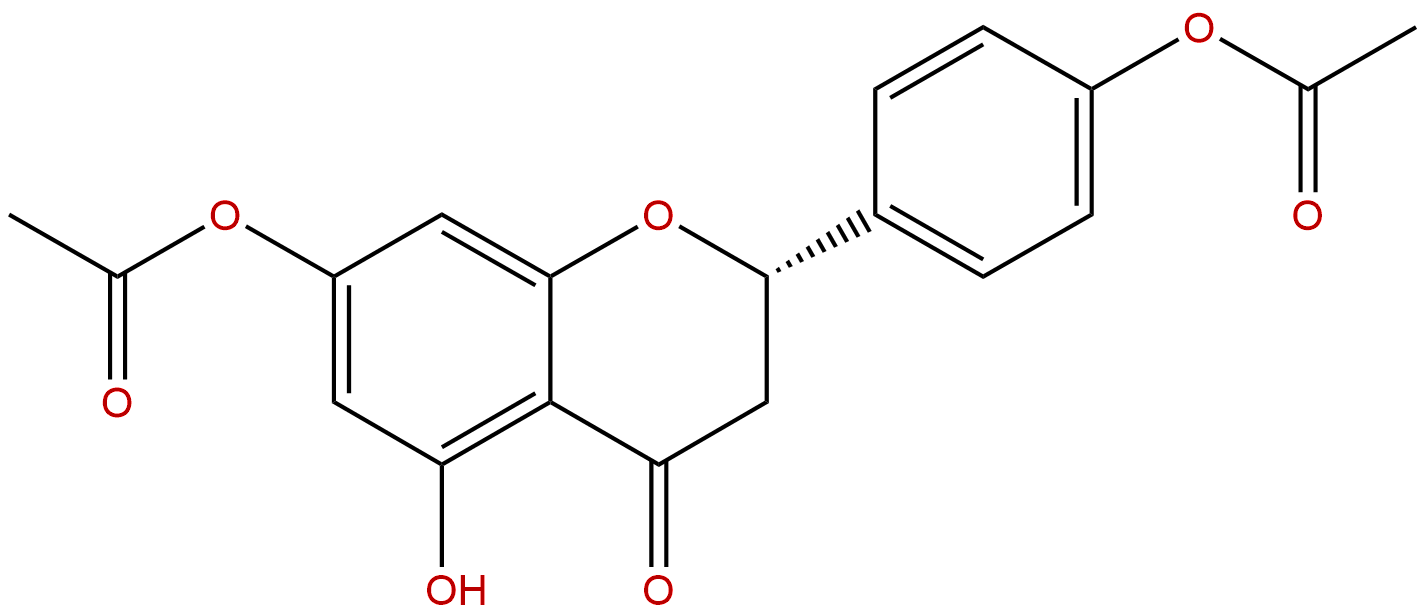
Naringenin-7,4 '- diacetate, English name Naringenin 4', 7-diacetate, CAS registration number 18196-13-9. Its chemical structure is based on naringin (4 ', 5,7-trihydroxyflavanone), where the hydroxyl groups (- OH) at the C-7 and C-4' positions are esterified with acetyl groups (- COOH ∝) to form two acetate groups. Its molecular formula is C ₁₉ H ₁₆ O ₇, and its molecular weight is 356.3300 g/mol. Structurally, NDA still retains the parent core structure of the flavanone, consisting of a dihydropyran ring (C ring) connected to an A ring and a B ring. The C-5 position on the A ring still retains a free hydroxyl group, while the C-7 hydroxyl group is acetylated; The hydroxyl group at C-4 'position on the B ring is also acetylated.
The physicochemical properties are the key factors determining the pharmacological properties of compounds. The lipid water partition coefficient (LogP) of NDA is 2.8750, which is higher than that of the parent naringin (LogP is about 2.4-2.7), indicating that acetylation modification significantly enhances its lipid solubility. This change is beneficial for its ability to cross biofilms and may improve its cellular uptake and oral absorption. Its topological polar surface area (TPSA) is 99.1300 Å ², which is slightly higher than the ideal range for oral drugs (usually<140 Å ²), but still at an acceptable level, indicating its potential for oral absorption. NDA contains 7 hydrogen bond acceptors (mainly from carbonyl and ether oxygen atoms), but the number of hydrogen bond donors is reduced due to the protection of two phenolic hydroxyl groups, which also helps to enhance its membrane permeability. Its water solubility is 0.1193 mg/mL, making it a poorly soluble compound, similar to most flavonoids. It is worth noting that the blood-brain barrier (BBB) penetration ability of NDA was evaluated as "low", indicating that its pharmacological effects may mainly be concentrated in peripheral tissues, which can to some extent avoid central nervous system related side effects. In addition, according to existing data, the hepatotoxicity and cardiotoxicity of NDA are not yet clear (unknown), but the hERG inhibition test results are negative, indicating a low risk of causing QT interval prolongation in the heart. The Ames test result is 0.0, indicating that it has no significant mutagenicity under standard testing conditions and preliminary safety is good.
Plant sources and extraction methods
Naringin-7,4 '- diacetate is not a common natural product widely found in nature, but rather a semi synthetic derivative of naringin. Although there are literature reports that trace amounts of acetylated flavanones may exist in certain plants, the main source of NDA is obtained through chemical synthesis or biotransformation methods. Its synthesis usually starts from natural naringin and undergoes selective acetylation reaction with acetic anhydride or acetyl chloride in the presence of alkaline catalysts such as pyridine and triethylamine. By controlling the reaction conditions (such as temperature, time, and feed ratio), the main product obtained is 7,4 '- diacetylation, which may be accompanied by monoacetylation or full acetylation by-products. Purification methods such as column chromatography are required for purification.
However, if we explore its potential sources from a phytochemical perspective, the citrus genus(Citrus Plants are undoubtedly the most abundant natural source of naringin. Naringin is highly present in the skin, flesh, and juice of fruits such as grapefruit, lime, and orange, typically in the form of glycosides (such as naringin). Naringin can be hydrolyzed into naringin in the human intestine or by specific enzymes such as naringinase. Therefore, theoretically, NDA can be efficiently prepared from plant materials rich in naringin through chemical derivatization.
The extraction of NDA itself is usually not directly carried out from plants, but adopts a strategy of "extraction first, synthesis later". The specific process is as follows:
1. Raw material pretreatment Select the immature peel or white pulp layer of citrus fruits (such as grapefruit) rich in naringin, dry and crush them.
2. Extraction of naringin from pomelo peel Using solvent extraction method, commonly used solvents include hot water, methanol, ethanol, or their aqueous solutions. To improve extraction efficiency, ultrasound, microwave, or enzymatic hydrolysis techniques can be used as auxiliary methods.
3. Preparation of Naringin Hydrolyze the extracted naringin. Acid hydrolysis (such as hydrochloric acid) or enzymatic hydrolysis (such as naringinase, cellulase) can be achieved. Enzymatic hydrolysis conditions are mild and the product purity is high, making it a better choice.
4. Acetylation synthesis Dissolve the purified naringin in anhydrous pyridine or dichloromethane, add excess acetic anhydride, and stir the reaction at room temperature or under heating conditions. The reaction process can be monitored by thin layer chromatography (TLC).
5. Separation and purification After the reaction is complete, the solvent is removed by vacuum distillation, and the residue is separated by silica gel column chromatography or preparative high-performance liquid chromatography (Prep HPLC) to obtain high-purity NDA. Its structure can be confirmed by nuclear magnetic resonance (NMR) and mass spectrometry (MS).
Pharmacological activity research
1. Antioxidant activity
Antioxidant activity is one of the core pharmacological activities of NDA. Oxidative stress is considered a common pathological basis for various chronic diseases, such as cardiovascular disease, neurodegenerative diseases, cancer, and aging. The antioxidant activity of NDA is mainly achieved through the following mechanisms:
* Directly eliminate free radicals The hydroxyl group retained at the C-5 position in NDA molecule and the conjugated system of the flavanone core enable it to effectively scavenge various free radicals, such as 1,1-diphenyl-2-trinitrophenylhydrazine (DPPH) free radical, 2,2 '- diazo-bis-3-ethylbenzothiazoline-6-sulfonic acid (ABTS) cationic free radical, superoxide anion, and hydroxyl free radical. Research has shown that the antioxidant capacity of NDA is even stronger than that of the parent naringin in some systems, which may be related to its enhanced lipid solubility making it easier to enter the lipid bilayer of the cell membrane, thereby more effectively capturing free radicals in the lipid peroxidation chain reaction.
* Chelate transition metal ions The chelating site formed by the C-5 hydroxyl group and C-4 carbonyl group of NDA can chelate transition metal ions such as iron ions (Fe ² ⁺/Fe ³ ⁺) and copper ions (Cu ² ⁺), thereby inhibiting free radical generation reactions catalyzed by metal ions such as Fenton reaction and reducing oxidative damage from the source.
* Activate endogenous antioxidant defense system This is a more persistent and important pathway for NDA to exert antioxidant effects. NDA can promote the expression of a range of antioxidant enzymes, including superoxide dismutase (SOD1, SOD2), catalase (CAT), glutathione peroxidase 1 (GPX1), and heme oxygenase 1 (HMOX1), by activating the nuclear factor E2 related factor 2 (NFE2L2/NRF2) signaling pathway. These enzymes together constitute the "main force" of the body's resistance to oxidative stress.
2. Anti inflammatory activity
Inflammation is the body's defense response to injury and infection, but excessive or persistent inflammation can lead to tissue damage and disease. NDA exhibits significant anti-inflammatory activity, and its mechanism of action involves multiple levels:
* Inhibit the production of inflammatory mediators and cytokines NDA can inhibit the production of nitric oxide (NO) and prostaglandin E2 (PGE2) in macrophages induced by lipopolysaccharide (LPS) or other inflammatory stimuli, which is related to its inhibition of the expression of inducible nitric oxide synthase (iNOS) and cyclooxygenase-2 (COX-2). Meanwhile, NDA can significantly reduce the levels of pro-inflammatory cytokines such as tumor necrosis factor - α (TNF - α), interleukin-1 β (IL-1 β), and interleukin-6 (IL-6).
* Regulating key inflammatory signaling pathways The anti-inflammatory effect of NDA is closely related to its regulation of the nuclear factor kappa B (NF - κ B) and mitogen activated protein kinase (MAPK) signaling pathways. It can inhibit the phosphorylation and degradation of I κ B α, thereby preventing the nuclear translocation of NF - κ B and downregulating the expression of its downstream target genes. In addition, NDA can also inhibit the phosphorylation of p38 MAPK, JNK, and ERK1/2, blocking the cascade amplification of inflammatory signals.
* Regulating the activity of matrix metalloproteinases (MMPs)MMPs play a crucial role in tissue remodeling and inflammation processes. NDA can inhibit the expression and activity of MMP1 (interstitial collagenase) and MMP3 (matrix metalloproteinase). Overexpression of MMP1 is associated with skin photoaging, arthritis, and other diseases; MMP3 is involved in the pathological processes of various inflammatory diseases. The regulation of MMPs by NDA is an important component of its anti-inflammatory activity.
3. Antiviral activity
One of the most notable pharmacological activities of NDA is its anti dengue virus (DENV) effect. Dengue fever is a mosquito borne infectious disease caused by four serotypes (DENV-1 to -4) of dengue virus. Hundreds of millions of people worldwide are infected each year, and severe cases can develop into dengue hemorrhagic fever or dengue shock syndrome. Currently, there are no specific antiviral drugs available. Research has found that NDA can effectively inhibit the replication of DENV. Its mechanism of action may involve:
* Inhibit virus entry into host cells NDA may interfere with the binding of virus envelope proteins to host cell surface receptors (such as DC-SIGN, heparan sulfate, etc.), thereby preventing virus adsorption and entry into cells.
* Inhibit virus replication NDA may target non structural proteins of viruses (such as NS5 RNA dependent RNA polymerase, NS3 protease/helicase) or host factors, thereby inhibiting viral RNA replication and protein synthesis. The specific targets need further clarification.
* Regulating host immune response The anti-inflammatory and antioxidant properties of NDA may help alleviate the "cytokine storm" and oxidative stress damage caused by DENV infection, thereby improving disease prognosis.
4. Other activities
In addition to the aforementioned activities, NDA may also have other pharmacological effects, such as anti-tumor activity (by inducing cell apoptosis, inhibiting cell cycle and migration), neuroprotective activity (by antioxidant and anti-inflammatory mechanisms), and regulating glucose and lipid metabolism. However, research in these areas is still insufficient and requires further exploration.
Mechanism of action and molecular targets
The pharmacological activity of NDA is the result of its interaction with multiple molecular targets. Based on existing research, its core mechanism of action can be summarized as follows:
-
Activation of NRF2/ARE signaling pathway This is the core mechanism by which NDA exerts antioxidant and cell protective effects. NDA or its metabolites may modify key cysteine residues on Kelch like ECH associated protein 1 (Keap1), causing Keap1 to dissociate from NRF2, stabilizing NRF2 and translocating it into the nucleus. In the nucleus, NRF2 binds to antioxidant response elements (ARE), initiating the transcription of a series of phase II detoxifying enzymes and antioxidant enzyme genes, including SOD1、SOD2、CAT、GPX1、HMOX1 Wait. These enzymes work together to effectively eliminate reactive oxygen species (ROS) and maintain intracellular redox balance.
-
Inhibition of NF - κ B signaling pathway This is the main mechanism of NDA's anti-inflammatory effect. NDA inhibits the activity of I κ B kinase (IKK), prevents the phosphorylation and ubiquitination degradation of I κ B α, and locks NF - κ B (p50/p65 heterodimer) in the cytoplasm, preventing it from entering the nucleus to initiate the transcription of pro-inflammatory genes. Therefore, downstream pro-inflammatory cytokines (TNF - α, IL-1 β, IL-6), chemokines, adhesion molecules, and MMP1、MMP3 The expression of effector molecules is inhibited.
-
Regulation of MAPK signaling pathway NDA can inhibit the phosphorylation of p38 MAPK, JNK, and ERK1/2 induced by LPS and other stimuli. The activation of these kinases is closely related to the production of inflammatory factors and cellular stress responses. By blocking the MAPK pathway, NDA further weakens the transmission of inflammatory signals.
-
Interaction with Tyrosinase (TYR)TYR is a key rate limiting enzyme in the process of melanin synthesis. The inhibitory effect of NDA on TYR is the basis for its potential whitening activity. NDA may competitively or non competitively inhibit the activity of TYR by chelating copper ions in its active center or by hydrophobic interactions with enzyme proteins.
-
Antiviral targets The specific molecular targets of NDA against DENV are still under investigation. Possible targets include enzymes of the virus itself (such as NS5 polymerase, NS3 protease) or important proteins involved in the virus lifecycle in host cells (such as endoplasmic reticulum related proteins, autophagy pathway proteins). Its multi-target nature may make it less likely to develop drug resistance.
Evaluation of drug properties and pharmacokinetics
The evaluation of drug properties is a bridge connecting basic research and clinical translation. Based on the provided parameters and existing literature, conduct a preliminary evaluation of the pharmacological properties of NDA.
- drug-likeness The molecular weight (356.33) and LogP (2.875) of NDA both conform to Lipinski's "five rules" (molecular weight<500, LogP<5), indicating its good drug like properties. TPSA (99.13) is also within an acceptable range. The number of hydrogen bond acceptors is 7, slightly higher than the requirement of<10 in the "Five Rules", but still within an acceptable range. Overall, NDA meets the basic chemical characteristics of oral medications.
- Water solubility and permeability The poor water solubility of NDA (0.1193 mg/mL) is one of the main challenges in its development as an oral drug. However, its high lipid solubility (LogP 2.875) indicates good membrane permeability. The characteristic of "low solubility and high permeability" may limit its bioavailability due to the dissolution rate. The use of solid dispersion, nanocrystals, liposomes, cyclodextrin inclusion complexes and other formulation technologies is an effective strategy to improve its oral bioavailability.
- Metabolic stability Acetylation modification is usually aimed at improving metabolic stability. Phenolic hydroxyl groups are the main sites for the glucuronidation and sulfation binding reactions of flavonoids. By acetylation to protect the hydroxyl groups at positions 7 and 4 ', theoretically it can delay their first pass metabolism and prolong their half-life in the body. However, NDA itself may also be hydrolyzed by esterases in the body, releasing naringin again. Therefore, NDA may be a prodrug, and its in vivo efficacy may be the result of the combined action of NDA prototype and naringin. This "prodrug" strategy has potential advantages in improving the oral bioavailability of naringin.
- safety The preliminary safety evaluation results are encouraging. The hERG inhibition risk is low, and the Ames test is negative, indicating no significant genetic or cardiac toxicity risk. However, its hepatotoxicity and cardiotoxicity are not yet clear, and systematic in vitro and in vivo toxicological studies are needed, including acute toxicity, subchronic toxicity, reproductive and developmental toxicity, etc., to comprehensively evaluate its safety.
- pharmacokinetics Currently, there is very limited in vivo pharmacokinetic data available for NDA. It can be inferred that after oral administration, NDA is partially absorbed in the gastrointestinal tract and partially hydrolyzed by esterases. The NDA and/or its hydrolyzed product naringin absorbed into the body are mainly distributed in blood rich tissues such as the liver and kidneys. Due to the low penetration of BBB, the distribution of the central nervous system is limited. Metabolic pathways may include ester bond hydrolysis, glucuronidation and sulfation of the C-5 hydroxyl group, as well as oxidation of the A and B rings. The main excretion pathways may be urine and bile.
Clinical application prospects and prospects
Naringin-7,4 '- diacetate, as a structurally optimized natural product derivative, has shown broad application prospects, especially in the following areas that deserve special attention:
-
Development of antiviral drugs Given the clear inhibitory activity of NDA against DENV and the urgent global demand for safe and effective anti dengue drugs, NDA or its analogues are expected to be developed as anti DENV candidate drugs. Future research should focus on: ① elucidating the precise molecular mechanisms and targets of its anti DENV activity; ② Validate its in vivo antiviral efficacy and pharmacokinetic properties in animal models; ③ Explore its activity spectrum against other yellow viruses such as Zika virus and West Nile virus; ④ Conduct structure-activity relationship (SAR) studies to identify derivatives with stronger activity and higher selectivity.
-
Treatment of anti-inflammatory and antioxidant related diseases The strong anti-inflammatory and antioxidant activity of NDA makes it potential for treating various chronic inflammation and oxidative stress-related diseases. For example, NDA may play a therapeutic or adjuvant role in nonalcoholic fatty liver disease (NAFLD), atherosclerosis, complications of diabetes, neurodegenerative diseases (such as Alzheimer's disease, Parkinson's disease), skin photoaging and other fields. Although its low BBB penetration limits its application in CNS diseases, it also means that its peripheral effects may be more specific and have fewer side effects.
-
As a functional food or dietary supplement Considering that NDA originates from naringin in citrus fruits, its safety is relatively high. Through rational formulation development and improved bioavailability, NDA has the potential to be developed as a novel functional food ingredient or dietary supplement for daily health care, combating oxidative stress and chronic low-grade inflammation, thereby preventing various chronic diseases.
-
Future research directions:
- In depth mechanism research Using omics techniques such as transcriptomics, proteomics, and metabolomics to systematically reveal the molecular targets and regulatory networks of NDA.
- Pharmacokinetic study of the system Establish a sensitive biological sample analysis method to comprehensively study the absorption, distribution, metabolism, and excretion (ADME) process of NDA in animal bodies, and clarify whether it functions as a prodrug.
- Pharmaceutical research Develop new formulations that can significantly improve the oral bioavailability of NDA, such as self microemulsifying drug delivery systems (SMEDS), phospholipid complexes, nanosuspensions, etc.
- structural optimization Based on the NDA core, further chemical modifications are carried out, such as introducing other functional groups (such as methyl, halogen, phosphate groups), in order to obtain a new generation of derivatives with stronger activity, higher selectivity, and more stable metabolism.
- safety evaluation According to the Good Laboratory Practice (GLP) requirements for non clinical drug research, complete a comprehensive toxicological evaluation to lay the foundation for clinical trials.
Conclusion
Naringin-7,4 '- diacetate is a successful example of rational structural modification of natural flavanone naringin. Through simple acetylation, not only have the physicochemical properties and potential pharmacokinetic properties of the parent compound been improved, but their anti-inflammatory and antioxidant activities have also been retained or even enhanced, endowing them with unique anti dengue virus activity. Although research on NDA is still in its early stages and its in vivo efficacy, pharmacokinetics, and safety data are not yet complete, its multiple pharmacological activities and good drug like properties make it a highly promising lead compound for development. In the future, with in-depth analysis of its mechanism of action, clarification of pharmacokinetic characteristics, and breakthroughs in formulation technology, NDA is expected to play an important role in the treatment and prevention of antiviral, anti-inflammatory, antioxidant and other related diseases, providing new ideas and examples for the development of innovative drugs from natural products. The conversion from naringin to NDA once again confirms the core concept of "structure determines function" in medicinal chemistry, and highlights the enormous value of natural product structural modification in innovative drug discovery.