| Catalog No | Package | Original Price | Price | Inventory | Quantity | Operating |
|---|---|---|---|---|---|---|
| SBP03157-5mg | 5mg | $196.00 | Sign in |
|


Product name: Przewaquinone A
Synonym name:
Catalogue No.: SBP03157
Cas No.: 76843-23-7
Formula: C19H18O4
Mol Weight: 310.349
Botanical Source:
Physical Description: Red powder
Type of Compound: Diterpenoids
Purity: 95%~99%
Analysis Method: HPLC-DAD or/and HPLC-ELSD
Identification Method: Mass, NMR
Packing: Brown vial or HDPE plastic bottle
The product could be supplied from milligrams to grams. Inquire for bulk scale.
We provide solution to improve the water-solubility of compounds, thereby facilitating the variety of activity tests and clinic uses.
For Reference Standard and R&D, Not for Human Use Directly.
Storage conditions:Short-term storage at 2~8℃, long-term storage at -20 ~ -80℃
67.5100
3.2643
3.2641
.0024
3.4170
18.5249
High
90.6513
3.0624
Yes
No
No
No
Yes
Yes
0.9
Yes
No
No
Yes
Natural products, as an important source of drug discovery, play an irreplaceable role in the long history of human struggle against diseases. China has a long tradition of medicinal plant applications, among which Salvia miltiorrhiza(Salvia miltiorrhiza Bunge, as a representative traditional Chinese medicine for promoting blood circulation and removing blood stasis, has attracted much attention for its active ingredient, tanshinones, due to its significant cardiovascular protective effects. However, the Salvia genus has a wide variety of plant species, and there are differences in the chemical composition spectrum of different species, which provides a broad space for discovering lead compounds with novel structures and unique activities. Przewaquinone A, as a lipophilic diterpenoid quinone compound, is a natural product that stands out from this exploration. Its unique chemical structure, specific plant origin, and preliminarily revealed potent vasodilatory activity make it a worthwhile subject for further research in the fields of natural product pharmacology and cardiovascular drug development.
The discovery of Zitanshinone A originated from the study of the Tibetan medicine "Zidanshen"(Salvia przewalskii Maxim's systematic chemistry research. Unlike widely used Danshen, Purple Danshen is mainly distributed in high-altitude areas such as the Qinghai Tibet Plateau in China, and its unique growth environment may have nurtured special secondary metabolites. The first isolation and structural identification of purple tanshinone A not only enriches the chemical composition library of Salvia plants, but also indicates its potential application value in the treatment of cardiovascular diseases due to its effective inhibitory effect on vascular constriction. Cardiovascular disease (CVD) is the leading cause of death worldwide. Its pathophysiological mechanism is complex, involving vascular dysfunction, atherosclerosis, myocardial ischemia reperfusion injury and other links. Although existing therapeutic drugs can effectively control symptoms, there are still limitations such as drug resistance, side effects, and insufficient regulation of complex pathological networks. Therefore, the search for natural active molecules with new mechanisms of action, high selectivity, and low toxicity is an important direction in the current development of cardiovascular drugs. The emergence of purple tanshinone A has injected new vitality into this field.
This article aims to provide a comprehensive and systematic review of the current research status of purple tanshinone A. We will start with its chemical structure and physicochemical properties to elucidate its unique molecular characteristics; Trace its plant origin and summarize existing extraction and separation methods; Focus on sorting out its pharmacological activities in cardiovascular protection and other aspects; Thoroughly explore its potential mechanisms of action and molecular targets; Evaluate its potential and challenges as a drug candidate molecule based on its pharmacological parameters; Finally, looking forward to its clinical application prospects and proposing key directions for future research. Through the writing of this article, it is expected to provide a clear academic reference for scholars engaged in natural product chemistry, pharmacology, and cardiovascular disease research, and to stimulate more in-depth and systematic research on purple tanshinone A.
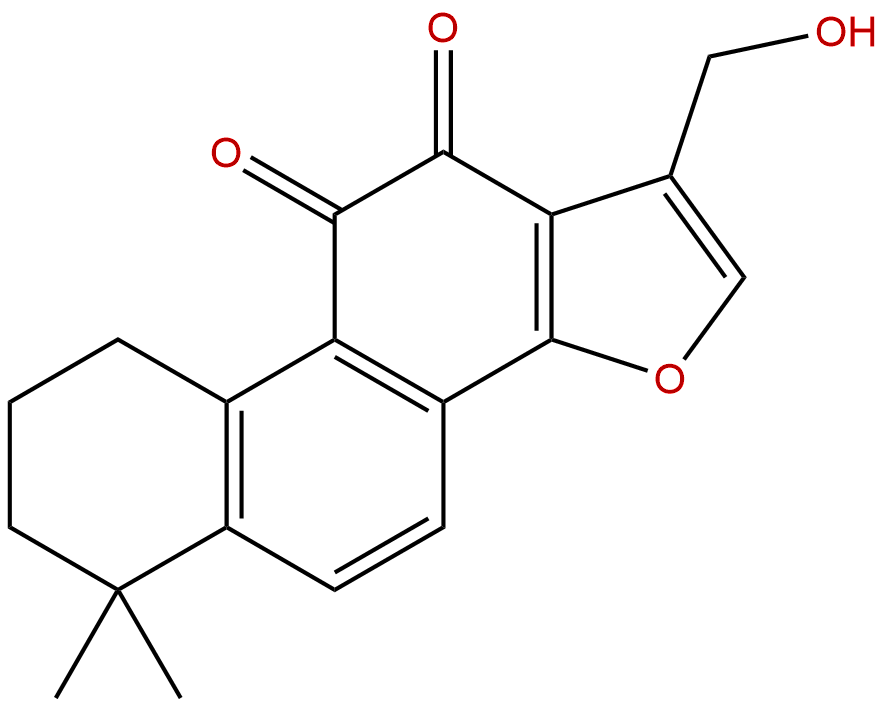
Przewaquinone A belongs to the diterpenoid quinone class, with a core skeleton of Abietane diterpenes and containing ortho - or para quinone structural units. The precise chemical structure is the foundation for understanding its biological activity and physicochemical properties. According to existing literature reports, the molecular formula of purple tanshinone A is C ₁₉ H ₁₈ O ₄, with a molecular weight of 310.3490 g/mol. Its structural feature is a highly conjugated phenanthrenequinone nucleus with specific substituents on the A and C rings. Specifically, its structure is typically described as 1,2,6,7,9,9-hexahydro-1,6,6-trimethyl-pheno [1,2-b] furan-10,11-dione, or similar nomenclature. This dense furan ring structure is a characteristic feature of tanshinone compounds and is crucial for their biological activity. Purple tanshinone A and tanshinone IIA have similar structures, but there may be slight differences in the degree of oxidation or substituents of the A ring, which determines their unique pharmacological properties.
From the perspective of physicochemical properties, purple tanshinone A exhibits typical lipophilic small molecule characteristics. The calculated oil-water partition coefficient (LogP) is 3.2643, indicating that it has strong lipid solubility and is easy to penetrate biofilms, which is consistent with its description as a lipophilic diterpenoid quinone. A higher fat solubility also suggests that it may have good oral absorption potential, but it may also bring about poor water solubility issues. Its topological polar surface area (TPSA) is 67.5100 Å ², which is at a moderate level. Molecules with TPSA less than 140 Å ² are generally considered to have good oral bioavailability, while molecules with TPSA less than 60-70 Å ² are more likely to penetrate the blood-brain barrier. The TPSA value of purple tanshinone A is precisely in this critical region, suggesting that it may have central nervous system activity. In fact, its blood-brain barrier penetration has been evaluated as' high ', which provides the possibility for its treatment in cardiovascular diseases (such as hypertension related neurogenic inflammation) or cerebrovascular diseases that may involve central nervous system regulation. However, the extremely low water solubility data (0.0024 mg/mL) poses a significant challenge for its formulation development and in vivo pharmacokinetic studies. Low water solubility may lead to incomplete oral absorption, low bioavailability, and increased risk of drug crystallization or precipitation in the body.
In terms of stability, as a quinone compound, tanshinone A may be sensitive to light, heat, and oxidation conditions. The quinone structural unit in its molecule is a potential redox active center, which may participate in electron transfer or redox reactions in vivo. This is not only the basis for its pharmacological effects, but also may lead to metabolic instability or the production of toxic metabolites. In addition, its hERG inhibition assessment result is' no ', which is a positive signal indicating that it has a low risk of causing cardiac QT interval prolongation and fatal arrhythmias (apical torsion transition ventricular tachycardia) at therapeutic concentrations, which is a crucial safety indicator for cardiovascular drugs. The Ames test result is 0.9, which is usually considered negative or weakly positive if the value is less than 2, indicating that purple tanshinone A may not have significant genetic toxicity, but this requires more comprehensive in vitro and in vivo genetic toxicity tests to confirm. In summary, purple tanshinone A has a good foundation as a lead compound, but its extremely low water solubility and potential metabolic instability are key obstacles that must be overcome in subsequent development.
The discovery of purple tanshinone A and purple tanshinone(Salvia przewalskii Maxim. is closely connected. Salvia miltiorrhiza, also known as Salvia kansai, is a perennial herb of Salvia genus in Labiatae, which is mainly distributed in the plateau areas of Gansu, Qinghai, Sichuan, Yunnan and Xizang, with an altitude of 2500-4000 meters. As a Tibetan medicine and folk herb, purple Danshen is commonly used in traditional medicine to treat cardiovascular diseases, hepatitis, and inflammation. Medicinal Danshen(S. miltiorrhiza)Compared to others, the chemical composition spectrum of Salvia miltiorrhiza has both similarities and unique characteristics. Zitanshinone A was initially isolated from the roots and rhizomes of Salvia miltiorrhiza, and so far, literature has reported that it only exists in Salvia miltiorrhiza and has not been found in other Salvia plants, making it one of the characteristic components of Salvia miltiorrhiza. This species-specific distribution not only increases the scarcity of its sources, but also highlights the importance of studying high-altitude plant resources for discovering novel natural products.
The extraction method of purple tanshinone A is mainly based on its lipophilic diterpenoid quinone properties. The classic extraction process usually includes the following steps: first, the dried roots and rhizomes of Salvia miltiorrhiza are crushed, and high to medium polarity organic solvents are used for percolation or reflux extraction. Common solvents include ethanol, methanol, or their mixed solvents. In order to improve extraction efficiency, acidic solvents (such as ethanol containing a small amount of hydrochloric acid) are sometimes used to destroy cell walls and promote the dissolution of quinone compounds. After filtration and vacuum concentration of the extract, the total extract is obtained. Subsequently, the total extract was preliminarily separated using liquid-liquid extraction method, usually using solvents of different polarities such as petroleum ether, ethyl acetate, and n-butanol for sequential extraction. Purple tanshinone A was enriched in the moderately polar ethyl acetate extraction site or the lipophilic petroleum ether extraction site.
Further separation and purification rely on various chromatographic techniques. Silica gel column chromatography is the most commonly used method, which uses solvent systems such as petroleum ether ethyl acetate or chloroform methanol for gradient elution. Due to its specific polarity, purple tanshinone A will be eluted at a specific elution ratio. In addition, Sephadex LH-20 gel column chromatography is also commonly used for separation, and its molecular sieve effect can effectively remove pigments and impurities to achieve further purification. For structurally very similar analogues, high-performance liquid chromatography (HPLC) or preparative thin layer chromatography (PTLC) are key methods for obtaining high-purity tanshinone A. In HPLC separation, a C18 reverse phase chromatography column is commonly used, with acetonitrile water or methanol water as the mobile phase, to achieve baseline separation of the target compound by optimizing the gradient program. The entire separation process requires real-time monitoring using thin-layer chromatography (TLC) or HPLC-UV/mass spectrometry (MS) detection techniques to accurately determine the flow fraction of the target component.
It is worth noting that the content of purple tanshinone A in plants is usually low, and its separation process is easily interfered by a large number of coexisting structural analogues (such as tanshinone IIA, cryptotanshinone, etc.). Therefore, developing efficient and highly selective extraction and purification processes is the key to ensuring their subsequent research supply. In recent years, some new extraction techniques, such as supercritical fluid extraction (SFE), microwave-assisted extraction (MAE), and ultrasound assisted extraction (UAE), have also been attempted for the extraction of tanshinone compounds. These techniques have the advantages of short extraction time, low solvent dosage, and high extraction efficiency, and may also be applied to the large-scale preparation of tanshinone A in the future. However, current laboratory research still mainly relies on traditional solvent extraction combined with multi-step chromatographic separation methods. Given that tanshinone A only originates from Salvia miltiorrhiza and its wild resources are limited, achieving its sustainable supply through plant tissue culture, hairy root culture, or chemical synthesis methods will be an important direction that needs to be explored in the future.
The pharmacological activity research of purple tanshinone A is still in its early stages, but existing research results have preliminarily revealed its significant potential in cardiovascular protection, especially its potent vasodilation activity. In addition, based on its structural characteristics and preliminary screening, other potential pharmacological activities are also worth paying attention to.
Cardiovascular protective activity This is the core pharmacological activity of salvianolic acid ketone A. Research has shown that purple tanshinone A can effectively inhibit ex vivo vasoconstriction induced by various vasoconstrictors such as epinephrine, potassium chloride, angiotensin II, etc. Its mechanism of action may involve multiple levels. Firstly, it may directly act on vascular smooth muscle cells by blocking voltage dependent calcium channels (VDCC) or receptor operated calcium channels (ROCC), inhibiting the influx of extracellular calcium ions, thereby reducing intracellular calcium ion concentration and leading to vasodilation. Secondly, it may promote the synthesis and release of nitric oxide (NO) by activating vascular endothelial cells. NO is the most important endogenous vasodilator in the body, which activates soluble guanylate cyclase (sGC) in smooth muscle cells, increases levels of cyclic guanosine monophosphate (cGMP), and ultimately causes vasodilation. Purple tanshinone A may exert this effect by upregulating the expression or activity of endothelial nitric oxide synthase (eNOS). In addition, its antioxidant activity may also be involved. Oxidative stress is an important factor leading to endothelial dysfunction and vascular constriction. As a quinone compound, tanshinone A may protect endothelial cells from oxidative damage by clearing reactive oxygen species (ROS) or enhancing endogenous antioxidant enzyme activity, thereby maintaining normal vasodilation function. This multi-target and multi pathway vasodilation mechanism has potential advantages in the treatment of vasospastic diseases such as hypertension and angina.
Anti inflammatory and antioxidant activity Inflammation and oxidative stress are the core pathological processes in the occurrence and development of cardiovascular diseases. The quinone structure of purple tanshinone A endows it with potential redox activity. Preliminary in vitro experiments may demonstrate its ability to scavenge DPPH free radicals, ABTS free radicals, and inhibit lipid peroxidation. In cell models, it may exert anti-inflammatory effects by inhibiting the activation of the nuclear factor kappa B (NF - κ B) signaling pathway, downregulating the expression of pro-inflammatory cytokines (such as TNF - α, IL-6, IL-1 β) and adhesion molecules (such as ICAM-1, VCAM-1). This anti-inflammatory activity is of great significance in inhibiting the formation and progression of atherosclerotic plaque.
Anti apoptotic and cell protective activity In the myocardial ischemia-reperfusion injury model, apoptosis of myocardial cells is an important cause of deterioration of cardiac function. Purple tanshinone A may protect cardiomyocytes by regulating the expression of apoptosis related proteins. For example, it may upregulate the expression of anti apoptotic protein Bcl-2 and downregulate the expression of pro apoptotic protein Bax, thereby inhibiting the mitochondrial mediated apoptosis pathway. In addition, it may also improve the energy metabolism of myocardial cells and enhance their tolerance to ischemia and hypoxia by activating the AMPK signaling pathway.
Other potential activities Given its excellent blood-brain barrier penetration, the potential of tanshinone A in neurological diseases is also worth exploring. For example, it may play a role in the prevention and treatment of Alzheimer's disease by inhibiting the activity of BACE1 (β - secretase 1) and reducing the production of β - amyloid protein (A β). In addition, its anti-inflammatory and antioxidant activities may also have a protective effect on neurodegenerative diseases. Preliminary computer simulation or in vitro screening may also suggest that it can inhibit the proliferation of some tumor cell lines, or improve metabolic diseases (such as diabetes), but these need further experimental verification.
Overall, the pharmacological activity research of purple tanshinone A mainly focuses on the field of cardiovascular protection, especially its potent vasodilatory effect. However, current research mostly remains at the level of ex vivo organs and cells, lacking systematic in vivo pharmacological evaluation. Future research needs to use animal models such as hypertension, atherosclerosis and myocardial ischemia to comprehensively evaluate their in vivo efficacy, dose effect relationship and long-term drug safety.
The pharmacological activity of salvianolic acid A is multifaceted, and its mechanism of action involves a complex signal network and multiple molecular targets. Based on existing research and computer-aided prediction, we can preliminarily outline its mechanism of action, in which targets such as AMPK, BCL2, TLR4, STAT3 play key roles.
AMPK (PRKAA1) signaling pathway AMPK (AMP activated protein kinase) is a core sensor for cellular energy metabolism. Purple tanshinone A may exert multiple cardiovascular protective effects by activating AMPK. Activated AMPK can promote glucose uptake and fatty acid oxidation, improving energy supply during myocardial ischemia; Meanwhile, activation of AMPK can inhibit the mTOR pathway, induce autophagy, clear damaged organelles and proteins, and protect myocardial cells from ischemia-reperfusion injury; In addition, AMPK can promote NO production and mediate vasodilation by phosphorylating eNOS. Therefore, AMPK may be a key upstream target for the cardioprotective and vasodilatory effects of salvianolic acid A.
BCL2 family and apoptosis regulation BCL2 (B-cell lymphoma 2) is a key anti apoptotic protein. Purple tanshinone A may maintain the stability of mitochondrial membrane potential, inhibit the release of cytochrome c, and block the mitochondrial apoptosis pathway by upregulating the expression of BCL2 and downregulating the expression of pro apoptotic protein BAX. This mechanism is crucial for protecting myocardial cells and endothelial cells from various damage stimuli (such as hypoxia, oxidative stress, inflammatory factors) induced apoptosis.
TLR4 (Toll like receptor 4) and inflammatory response TLR4 is a key receptor that mediates innate immune and inflammatory responses. In cardiovascular disease, TLR4 can be activated by various endogenous ligands such as heat shock protein and fibrinogen, initiating downstream NF - κ B and MAPK signaling pathways, leading to the production of a large number of inflammatory factors. Purple tanshinone A may inhibit the activation of TLR4 by directly binding to TLR4 or its co receptor MD2, thereby blocking downstream inflammatory cascade reactions. This may be one of the core mechanisms of its anti-inflammatory effect, and has potential value for inhibiting inflammatory reaction in atherosclerotic plaque and stabilizing plaque.
STAT3 (Signal Transduction and Transcription Activating Factor 3)STAT3 is a multifunctional transcription factor involved in various processes such as cell proliferation, differentiation, apoptosis, and inflammation. In the cardiovascular system, the activation of STAT3 has a dual role: on the one hand, in myocardial ischemic preconditioning, the activation of STAT3 can protect the myocardium; On the other hand, sustained STAT3 activation is associated with myocardial hypertrophy, fibrosis, and inflammation. The regulatory effect of purple tanshinone A on STAT3 may be context dependent. It may alleviate angiotensin II induced myocardial hypertrophy and fibrosis by inhibiting the JAK/STAT3 pathway; It may also activate STAT3 under specific conditions to exert cellular protective effects.
Other potential targets:
In summary, the mechanism of action of salvianolic acid A exhibits typical "multi-target, multi pathway" characteristics. It does not act on a single target, but exerts its comprehensive cardiovascular protective effect by regulating a network consisting of multiple nodes such as energy metabolism (AMPK), cell apoptosis (BCL2), inflammation (TLR4/STAT3), etc. This mode of action is its advantage, but it also poses challenges for accurately deciphering its pharmacological mechanisms. Future research needs to combine techniques such as molecular docking, surface plasmon resonance (SPR), and drug affinity responsive target stability (DARTS) to directly verify their binding to key target proteins, and use gene knockout or knockdown models to confirm the necessity of specific targets in mediating their pharmacological effects at the cellular and animal levels.
A systematic evaluation of drug likeness is necessary to promote purple tanshinone A from a natural active molecule to clinical candidate drugs. This includes a comprehensive consideration of its physicochemical properties, pharmacokinetic (ADME) characteristics, and toxicological features.
Physical and chemical properties and drug like properties As mentioned earlier, the molecular weight (310.35 Da) and LogP (3.26) of Zitanshinone A both conform to Lipinski's "Five Rules" (molecular weight<500, LogP<5), indicating that it has the basic characteristics of an oral medication. TPSA (67.51 Å ²) is also within a reasonable range. However, its water solubility (0.0024 mg/mL) is extremely poor, which seriously violates the requirements of the "Five Rules" regarding water solubility (usually considered to be better if the water solubility is>0.1 mg/mL). The extremely low water solubility is the biggest weakness of its medicinal properties. This will lead to incomplete oral absorption, low bioavailability, and may cause issues such as food effects and significant individual differences. In addition, high crystallinity may further exacerbate dissolution issues. Therefore, improving the solubility and dissolution rate of salvianolic acid A is the primary task of formulation development. Feasible strategies include: preparing salts (if the molecule contains ionizable groups), using solid dispersion techniques, nanocrystal formulations, liposomes or cyclodextrin inclusion complexes, etc.
Pharmacokinetic (ADME) prediction and challenges:
* absorb Although LogP indicates good membrane permeability, its extremely low water solubility will severely limit its dissolution and absorption in the gastrointestinal tract. It is expected that its oral bioavailability will be very low. In addition, it has high lipophilicity and may be easily absorbed by the lymphatic system, bypassing the first pass effect of the liver, but this contribution is usually limited. The efflux of P-glycoprotein (P-gp) may also affect its absorption.
* distribution High LogP and high blood-brain barrier penetration indicate that tanshinone A is widely distributed in the body, especially prone to accumulate in lipid rich tissues such as the brain and adipose tissue. Its apparent distribution volume (Vd) may be relatively large. The plasma protein binding rate is expected to be high (>99%), which will affect its free drug concentration and efficacy.
* Metabolism As a diterpenoid quinone compound, tanshinone A is mainly oxidized and metabolized in the liver through the cytochrome P450 enzyme system (especially CYP3A4, CYP2C9, etc.). The furan ring and quinone structure in its molecule are potential metabolic sites that may undergo reactions such as epoxidation, hydroxylation, and reduction. Quinone structures may also be reduced to hydroquinones, which are easily bound to glucuronic acid or sulfuric acid to form water-soluble complexes that are excreted from the body. Importantly, quinone intermediates may have reactivity and can bind to glutathione (GSH) or covalently modify proteins, which may be a potential cause of their hepatotoxicity or specific reactions. Therefore, it is necessary to comprehensively identify its metabolic pathways and metabolites, and evaluate the activity and toxicity of metabolites.
* excretion Purple tanshinone A and its metabolites are mainly excreted through bile and feces. Due to its high molecular weight and lipophilicity, bile excretion may be its main clearance pathway. The contribution of renal excretion may be relatively small, as its prototype drug and primary metabolites have poor water solubility and are not easily filtered through the glomerulus.
Toxicological assessment The preliminary toxicological indicators are relatively optimistic. HERG inhibition has a low risk ("no") and reduces the risk of cardiac toxicity. The Ames test result is 0.9, indicating a low risk of genetic toxicity. However, this is far from sufficient to support its security. More comprehensive toxicology studies must be conducted, including:
* acute toxicity Determine its median lethal dose (LD50).
* Subchronic/Chronic Toxicity Conduct 28 day or 90 day repeated dose toxicity tests in rodents and non rodents to observe their effects on various organ systems, particularly the liver, kidneys, heart, and nervous system.
* Genotoxicity Conduct in vitro chromosomal aberration test, in vivo micronucleus test, etc.
* Reproductive and developmental toxicity Evaluate its impact on fertility and fetal development.
* Phototoxicity Given that its quinone structure may absorb ultraviolet radiation, its phototoxicity potential needs to be evaluated.
Summary Purple tanshinone A has certain medicinal properties, but its extremely low water solubility and potential metabolic instability are the main obstacles to its development. Its pharmacokinetic characteristics are expected to be poor oral absorption, widespread distribution, rapid metabolism, and mainly excreted through bile. The preliminary toxicological risk is low, but it is far from meeting clinical requirements. Future optimization of drug properties should focus on: 1) improving water solubility through prodrug design or formulation technology; 2) Improve metabolic stability while maintaining activity through structural modifications, such as introducing polar groups; 3) Conduct in vitro and in vivo ADME and toxicological evaluations of the system.
The unique pharmacological activity and preliminary safety characteristics of purple tanshinone A have shown promising prospects for its clinical application in multiple disease fields, but at the same time, it also faces many challenges.
Main clinical application prospects:
1. cardiovascular disease This is the most direct and promising application field of purple tanshinone A. Its potent vasodilatory activity makes it promising for development as a treatment Hypertension Especially new drugs for refractory hypertension or hypertension with vascular spasm. Compared with existing calcium channel blockers such as nifedipine, tanshinone A may exert its antihypertensive effect through a more complex multi-target mechanism (such as simultaneous activation of the NO pathway, anti-inflammatory, and antioxidant effects), which may bring additional target organ protection benefits. In addition, in Atherosclerosis In the prevention and treatment of plaques, its anti-inflammatory, antioxidant, and inhibitory activities on vascular smooth muscle cell proliferation may help delay plaque progression and stabilize plaques. In Myocardial ischemia-reperfusion injury and heart failure In the treatment, its anti apoptotic and energy metabolism improving effects may protect myocardial cells and improve heart function.
Cerebrovascular disease Due to its excellent blood-brain barrier penetration, purple tanshinone A has unique advantages in the field of cerebrovascular diseases. It may be used for treatment Ischemic stroke By dilating cerebral blood vessels, improving cerebral blood flow, inhibiting neuroinflammation and oxidative stress, it exerts neuroprotective effects. In addition, its inhibitory activity on BACE1 makes it Alzheimer disease It has shown potential in prevention and treatment, and may become a candidate molecule with dual effects of vascular protection and anti amyloid protein deposition.
Metabolic diseases By inhibiting PTPN1 and activating AMPK, purple tanshinone A may improve insulin resistance, which is beneficial for Type 2 diabetes And its cardiovascular complications have potential therapeutic value.
Challenges faced and future research directions:
1. Source and Supply Zitanshinone A only comes from Zidanshen, and its content is low, with limited natural resources. The future must address its sustainable supply issues.Chemical Total Synthesis or semi-synthetic This is the fundamental approach that requires the development of efficient and economical synthetic routes.biosynthesis The use of genetically engineered microbial or plant cell factories is also a promising direction.
Optimization of drug properties The extremely low water solubility and potential metabolic instability are the core bottlenecks. Future research priorities should include:
In depth mechanism research It is necessary to use modern molecular biology techniques (such as CRISPR gene editing, proteomics, metabolomics) and biophysical methods (such as surface plasmon resonance, X-ray crystallography) to accurately elucidate the binding mode and downstream signal network of its direct targets (especially AMPK, TLR4, etc.). This helps to understand the molecular basis of its pleiotropic pharmacological effects and guide more precise structural optimization.
In vivo pharmacological and toxicological evaluation of the system: It is necessary to carry out strict pharmacodynamic verification and establish a pharmacokinetic pharmacodynamic (PK/PD) relationship model in a variety of animal models highly related to human diseases (such as spontaneously hypertensive rats, ApoE -/- atherosclerotic mice, myocardial ischemia-reperfusion rat models). At the same time, comprehensive toxicological evaluations must be conducted in accordance with the guidelines for preclinical research of new drugs, especially long-term toxicity, reproductive toxicity, and carcinogenicity tests.
Clinical translational research After completing sufficient preclinical studies, rigorous Phase I, II, and III clinical trials need to be designed to evaluate their safety, tolerability, pharmacokinetic characteristics, and initial efficacy in humans.
prospect As a natural active molecule derived from high-altitude characteristic plants, purple tanshinone A's unique chemical structure and pharmacological activity make it a highly valuable lead compound for research. Although the road from laboratory discovery to clinical application is long and challenging, through interdisciplinary collaborative efforts - integrating natural product chemistry, medicinal chemistry, pharmacology, pharmacy, toxicology, and clinical medicine - tanshinone A and its derivatives are expected to become a new weapon for treating cardiovascular diseases and related metabolic disorders in the future. In depth research on it may not only bring new treatment options for patients, but also provide valuable examples for discovering innovative drugs from traditional ethnic medicines.
Purple tanshinone A, a lipophilic diterpenoid quinone derived from the unique plant purple tanshinone in the Qinghai Tibet Plateau, has emerged in the field of natural product pharmacology due to its unique chemical structure and preliminary revealed potent vasodilation activity. This article systematically reviews its chemical structure and physicochemical properties, plant sources and extraction methods, pharmacological activity, mechanism of action, evaluation of drug properties, and clinical application prospects. Research shows that purple tanshinone A exerts multiple cardiovascular protective effects such as vasodilation, anti-inflammatory, antioxidant and anti apoptosis by regulating multiple key targets such as AMPK, BCL2, TLR4 and STAT3, and shows great potential to treat diseases such as hypertension, atherosclerosis and myocardial ischemia. Its excellent blood-brain barrier penetration further expands its application prospects to the fields of cerebrovascular diseases and neurodegenerative diseases.
However, the research on purple tanshinone A is still in its early stages, and the road from natural active molecules to clinical candidate drugs is still long and arduous. Its extremely low water solubility, potential metabolic instability, limited natural resources, and unclear in vivo pharmacological and toxicological characteristics are the main challenges currently faced. Future research must focus on breaking through the bottleneck of drug development through medicinal chemistry and advanced formulation technologies; Deeply elucidate its mechanism of action using modern biological techniques; Systematically validate its in vivo efficacy and safety in various animal models; And explore chemical synthesis or biosynthetic pathways to ensure sustainable supply.
In summary, purple tanshinone A is a highly promising natural lead compound. In depth exploration and systematic research on it are not only expected to provide new candidate drugs for the prevention and treatment of cardiovascular diseases, but also deepen our understanding of the multi-target regulation of complex disease networks by natural products. We look forward to the near future, through the collaborative efforts of multidisciplinary scientists, where tanshinone A can make a leap from laboratory to clinical use, ultimately benefiting a wide range of patients.
Batch can search by a CAS number,one per line
