Introduction/Overview
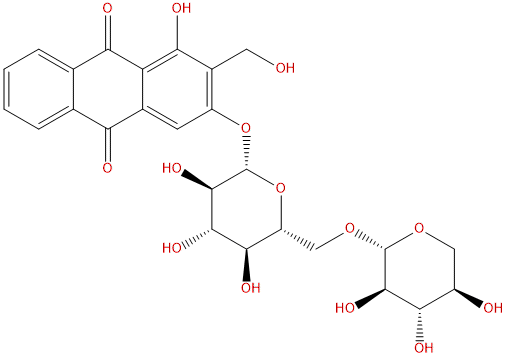
Lucidin 3-O-Primeweroside (CAS number: 29706-59-0) is a natural anthraquinone compound derived from plants of the Rubia genus. As an important active ingredient in madder, glossy ting-3-O-cherry glycoside has attracted widespread attention in pharmacology and natural product chemistry in recent years due to its unique chemical structure and diverse biological activities. This compound not only exhibits the potential to induce mutations in bacteria and mammalian cells, but also demonstrates multi-target regulation in anti-tumor research, involving multiple key signaling pathways and molecular targets such as MCL1, BCL2, STAT3, etc.
The purpose of this article is to systematically review the chemical structure and physicochemical properties, plant sources and extraction methods, pharmacological activity and mechanism of action of Glossatine-3-O-Cherry Grass Glycoside, and to explore its potential value as an anti-tumor drug based on its pharmacological parameters. The clinical application prospects of Glossatine-3-O-Cherry Grass Glycoside are also discussed, providing theoretical basis and reference for research in related fields.
Chemical structure and physicochemical properties
Guangze Ting-3-O-Sakura Glycoside belongs to the anthraquinone glycoside class, with a molecular formula of C27H32O13 and a molecular weight of 564.4960. The core of its structure is the anthraquinone mother nucleus, which forms an O-glycosidic bond with primeverose (a disaccharide) through a 3-hydroxyl group, endowing it with high polarity and water solubility. The LogP value of this compound is -0.2246, indicating its strong hydrophilicity and a polar surface area (TPSA) of up to 232.9 Å ², suggesting that it has certain limitations in cell membrane permeability.
In terms of physicochemical properties, Guangze Ting-3-O-Sakura Glycoside has good water solubility (4.6669 mg/mL), which is beneficial for its absorption and distribution in vivo. Its blood-brain barrier permeability is low, suggesting that the compound is difficult to enter the central nervous system and may reduce the risk of neurological related toxic side effects. The hERG channel inhibition experiment showed a negative result, indicating a low risk of cardiac toxicity. The Ames test showed a mutagenic index of 1.5, indicating that it has certain mutagenic potential and its safety needs to be carefully evaluated during drug development.
Plant sources and extraction methods
Glossin-3-O-Sakura glycosides are mainly found in Rubia spp. plants, especially in the rhizomes of Rubia cordifolia L. As a traditional Chinese medicinal herb, madder has a long history and is widely used for promoting blood circulation, removing blood stasis, anti-inflammatory and analgesic treatments. Its rich anthraquinone components are the material basis of its pharmacological activity.
The commonly used methods for extracting glossy ting-3-O-primrose glycosides include solvent extraction and column chromatography separation. Generally, ethanol or methanol is used as the extraction solvent, and the extraction efficiency is improved by reflux extraction or ultrasound assisted extraction. After concentration, the extract was purified using techniques such as silica gel column chromatography and reverse phase high performance liquid chromatography (RP-HPLC). In recent years, the application of supercritical CO ₂ extraction and membrane separation technology has also provided new ideas for efficient extraction and purification.
The optimization of the extraction process not only improved the yield and purity of Guangze Ting-3-O-Sakura Glycoside, but also laid the foundation for its subsequent pharmacological research and drug development.
Pharmacological activity research
Mutagenic activity
Guangze Ting-3-O-Sakura Glycoside was first studied for its ability to induce mutations in bacteria and mammalian cells. In vitro genotoxicity tests such as Ames assay have shown that the compound can induce a certain degree of genetic mutations, indicating its potential risks in genetic toxicology. However, this mutagenicity also provides a possible mechanistic basis for its anti-tumor activity.
Antitumor activity
A large number of in vitro and in vivo studies have shown that Guangze Ting-3-O-Sakura Glycoside has significant anti-tumor activity. Its targets cover multiple key biological pathways of tumor cells, demonstrating multi-target and multi mechanism anti-cancer potential.
-
Induction of cell apoptosis Promote tumor cell apoptosis by regulating the expression of BCL2 family proteins such as MCL1 and BCL2. BCL2 family proteins are key factors in regulating cell apoptosis, and Glossatine-3-O-Cherry Grass Glycoside enhances cell apoptosis signaling by downregulating the expression of anti apoptotic proteins.
-
Signal transduction inhibition Inhibit the activity of signaling pathways such as STAT3 and MAPK1, and block the proliferation and survival signals of tumor cells. STAT3, as a carcinogenic signaling molecule in various tumors, its inhibition helps to suppress tumor growth and metastasis.
-
Matrix metalloproteinase inhibition Inhibit the activity of MMP2 and reduce the invasion and metastasis ability of tumor cells. MMP2 plays a crucial role in the degradation of extracellular matrix in tumor cells, and its inhibition helps to block tumor spread.
-
Topoisomerase inhibition Affects the enzyme activity of TOP1 and TOP2A, interferes with DNA replication and transcription processes, leading to tumor cell growth arrest. Topoisomerase is an important target for anti-tumor drugs, and the mechanism of action of glossy ting-3-O-cherry grass glycosides is similar to that of various classical chemotherapy drugs.
-
Regulation of hypoxia inducible factors Regulating HIF1A expression, inhibiting the adaptability of tumor cells in hypoxic environments, and blocking tumor angiogenesis.
-
Hormone receptor regulation It has a regulatory effect on ESR1 (estrogen receptor) and CYP19A1 (aromatase), which may affect the growth of hormone dependent tumors.
In summary, Guangze Ting-3-O-Sakura Glycoside exhibits broad-spectrum anti-tumor potential through multi-target synergistic effects, covering multiple aspects such as cell cycle regulation, apoptosis induction, signal transduction inhibition, and tumor microenvironment regulation.
Mechanism of action and molecular targets
The anti-tumor mechanism of Guangze Ting-3-O-Sakura Glycoside is complex, involving the regulation of multiple signaling pathways and key molecular targets:
-
MCL1 and BCL2 regulation
MCL1 and BCL2 are both anti apoptotic proteins that maintain the survival of tumor cells. Guangze Ting-3-O-Sakura Glycoside disrupts the anti apoptotic barrier in cells and promotes cell apoptosis by downregulating its expression or function.
-
STAT3 signaling pathway inhibition
STAT3 is a transcription factor involved in cell proliferation, immune escape, and tumor progression. This compound inhibits the phosphorylation and nuclear translocation of STAT3, blocks its transcriptional activity, and suppresses tumor cell proliferation and survival.
-
MMP2 activity inhibition
MMP2 mediates extracellular matrix degradation, promoting tumor invasion and metastasis. Guangze Ting-3-O-Sakura Glycoside reduces the migration ability of tumor cells by inhibiting MMP2 expression or enzyme activity.
-
TOP1 and TOP2A topoisomerase inhibition
Topoisomerase plays a crucial role in DNA supercoiling regulation. This compound inhibits TOP1 and TOP2A, interferes with DNA replication and transcription, induces DNA damage and cell cycle arrest.
-
HIF1A regulation
HIF1A is an hypoxia inducible factor that promotes tumor adaptation to hypoxic environments and angiogenesis. Guangze Ting-3-O-Sakura Glycoside inhibits the expression of HIF1A and blocks the hypoxic adaptation mechanism of tumors.
-
The impact of MAPK1 signaling pathway
MAPK1 is involved in cell proliferation and differentiation signaling. This compound interferes with the activity of MAPK1 and inhibits the proliferation of tumor cells.
-
Hormone receptor and aromatase regulation
By regulating ESR1 and CYP19A1, glossistin-3-O-primrose glycoside may affect the growth of hormone dependent tumors, providing potential strategies for the treatment of hormone related tumors such as breast cancer.
Molecular docking and cell experiments both support the above mechanism, demonstrating that Glossatine-3-O-Cherry Grass Glycoside can synergistically regulate the biological behavior of tumor cells through multiple targets, demonstrating its potential as a multifunctional anti-cancer drug.
Evaluation of drug properties and pharmacokinetics
The pharmacological analysis of Guangze Ting-3-O-Sakura Glycoside shows that it has certain advantages and challenges:
-
Molecular weight and polarity
The molecular weight of 564.4960 is slightly higher than the ideal range of traditional small molecule drugs, and the TPSA value (232.9 Å ²) is relatively large, indicating poor cell membrane permeability, which may limit oral absorption and bioavailability.
-
Hydrophilicity and solubility
LogP is -0.2246, with good water solubility, which is beneficial for formulation development and in vivo distribution, but may affect cell membrane penetration.
-
Blood-brain barrier permeability
Low blood-brain barrier permeability reduces the risk of central nervous system toxicity, but limits its application in central nervous system diseases such as brain tumors.
-
safety indicator
HERG channel inhibition is negative, indicating a low risk of cardiac toxicity. The Ames test mutation index is 1.5, indicating a certain risk of mutation and the need to strengthen safety assessment during drug development.
-
pharmacokinetics
At present, there is limited in vivo pharmacokinetic data on Guangze Ting-3-O-Sakura Glycoside. Its high polarity and glycosidic structure may lead to limited intestinal absorption and be easily hydrolyzed by intestinal microbiota enzymes. In the future, strategies such as structural modification or nanocarriers are needed to improve its bioavailability and in vivo stability.
Overall, although the pharmacological properties of Guangze Ting-3-O-Sakura Glycoside have certain limitations, its unique multi-target anti-tumor activity and low risk of cardiac toxicity provide a good foundation for its drug development.
Clinical application prospects and prospects
Guangze Ting-3-O-Sakura Glycoside, as a natural anthraquinone glycoside, has demonstrated broad clinical application potential due to its multi-target anti-tumor activity. Future research and development directions can focus on the following aspects:
-
Development of anti-tumor drugs
Combined with its regulatory effects on key targets such as MCL1, BCL2, STAT3, etc., Guangze Ting-3-O-Sakura Glycoside is expected to become a lead compound for novel anti-tumor drugs. By optimizing its structure to enhance its cell membrane permeability and bioavailability, combined with modern drug delivery systems such as liposomes and nanoparticles, its therapeutic efficacy can be further strengthened.
-
Combination therapy strategy
Due to its multi-target mechanism of action, Glossatine-3-O-Cherry Grass Glycoside can be used in combination with existing chemotherapy drugs or targeted drugs to exert synergistic anti-cancer effects, reduce the risk of drug resistance, and improve treatment efficacy.
-
Security optimization
Induced mutation is the main safety hazard in its development process, which requires in vivo and in vitro toxicological evaluation and structural modification to reduce genotoxicity and ensure the safety of clinical applications.
-
Indications expansion
In addition to traditional solid tumors, it is expected to play a role in the treatment of hormone dependent tumors (such as breast cancer and prostate cancer) due to its regulatory potential on hormone receptors and aromatase.
-
Strengthening pharmacokinetic research
The pharmacokinetic and metabolic studies of the system will provide scientific basis for dosage form design and administration regimens, promoting their clinical translation.
Overall, as a typical representative of natural product drug development, Guangze Ting-3-O-Sakura Glycoside presents both challenges and opportunities in terms of efficacy and safety. In the future, through interdisciplinary collaboration, combining chemical modification, pharmaceutical innovation, and clinical evaluation, it is expected to achieve its transformation from laboratory to clinical use.
Conclusion
As an important natural anthraquinone compound in madder, Guangze Ting-3-O-Sakura Glycoside has demonstrated broad pharmacological research and drug development prospects due to its unique chemical structure and multi-target anti-tumor activity. It effectively inhibits the proliferation, invasion, and metastasis of tumor cells by regulating multiple key pathways such as cell apoptosis, signal transduction, matrix degradation, and hormone receptors.
Although there are certain limitations to its pharmacological properties, such as poor cell membrane permeability and mutagenic risks caused by high polarity, the development of modern drug design and delivery technologies provides the possibility to overcome these challenges. In the future, in-depth pharmacokinetics, safety evaluation, and preclinical studies will be the key to promoting the clinical translation of glossitine-3-O-sakura glycosides.
In summary, Guangze Ting-3-O-Sakura Glycoside not only enriches the research field of natural product anti-tumor drugs, but also provides important chemical and biological basis for the development of multi-target anti-cancer new drugs, which is worthy of continuous attention and in-depth exploration in the fields of natural product pharmacology and anti-tumor drug development.