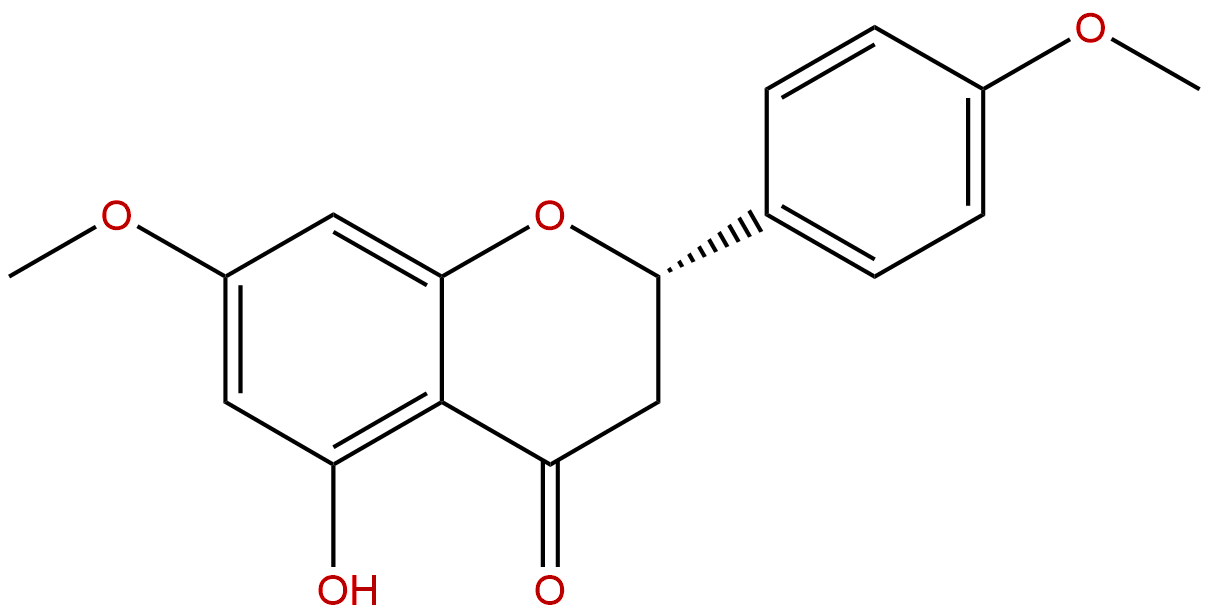


Product name: 4',7-Di-O-methylnaringenin
Synonym name: Sakuranetin 4′-methyl ether; Naringenin 4′,7-dimethyl ether; (S)-5-Hydroxy-7,4'-dimethoxyflavanone
Catalogue No.: BP3027
Cas No.: 29424-96-2
Formula: C17H16O5
Mol Weight: 300.31
Botanical Source:
Physical Description: Powder
Type of Compound: Flavonoids
Purity: 95%~99%
Analysis Method: HPLC-DAD or/and HPLC-ELSD
Identification Method: Mass, NMR
Packing: Brown vial or HDPE plastic bottle
The product could be supplied from milligrams to grams. Inquire for bulk scale.
We provide solution to improve the water-solubility of compounds, thereby facilitating the variety of activity tests and clinic uses.
For Reference Standard and R&D, Not for Human Use Directly.
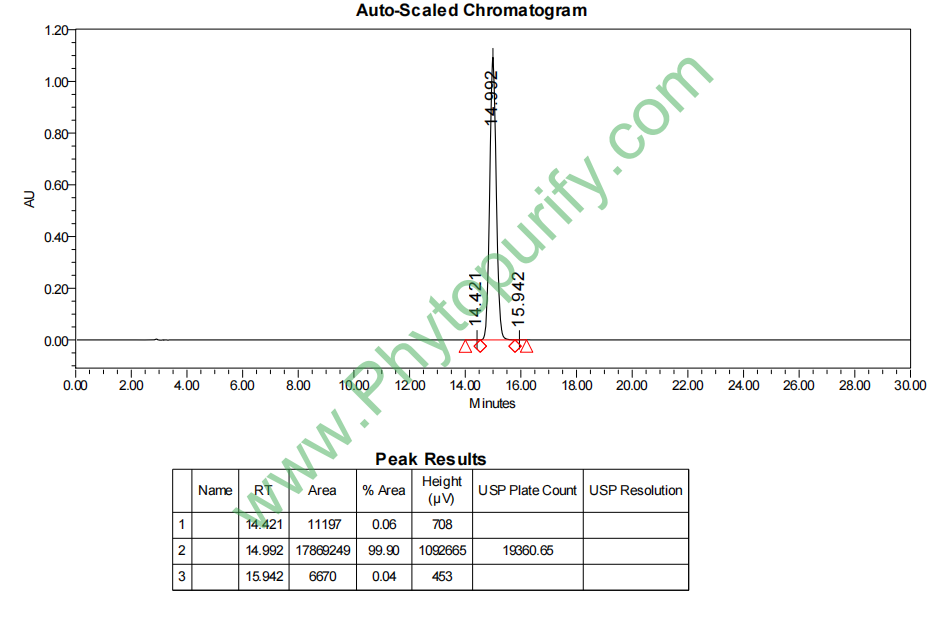
HPLC of 4',7-Di-O-methylnaringenin
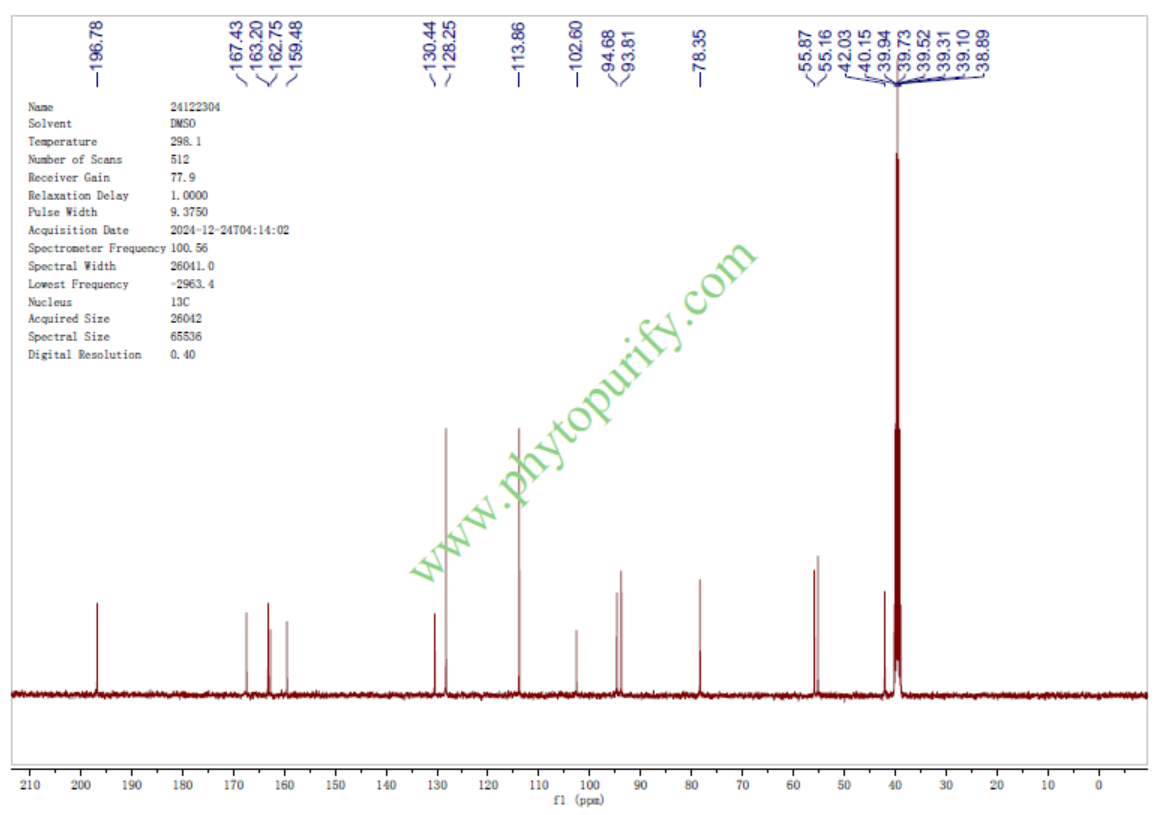
NMR of 4',7-Di-O-methylnaringenin
Storage conditions:Short-term storage at 2~8℃, long-term storage at -20 ~ -80℃
64.9900
3.1130
3.0393
.1376
5.7496
25.8021
High
89.5849
2.6212
No
No
Yes
No
Yes
No
0.6
No
No
No
No
Flavonoids are a class of secondary metabolites of C6-C3-C6 flavonoids that are widely present in nature and have attracted much attention for their diverse biological activities. Naringenin, as a representative member, has been widely studied for its anti-inflammatory, antioxidant, anti-tumor, and metabolic regulatory effects. However, naringin itself has limitations such as low oral bioavailability and fast metabolism, which prompts researchers to explore its structural modifications in depth in order to obtain candidate molecules with better activity and medicinal properties. 4 ', 7-Di-O-methylnaringenin (CAS: 29424-96-2), also known as (2S) -5-hydroxy-4', 7-dimethoxyflavanone, is a key derivative that stands out in this context. Compared with the parent naringin, the two phenolic hydroxyl groups on its A and B rings are replaced by methoxy groups. This structural modification not only significantly changes its physicochemical properties, but also may profoundly affect its interaction mode with biological targets. In recent years, with a deeper understanding of the pathogenesis of eye diseases such as retinopathy, especially the recognition of core pathological processes such as oxidative stress, inflammatory response, neovascularization, and photoreceptor cell apoptosis, the search for drugs that can intervene in these processes with multiple targets has become a research hotspot. 4 ', 7-dimethylnaringin is gradually becoming a promising research object in the fields of natural product pharmacology and ophthalmic drug development due to its unique chemical structure and preliminary potential for regulating targets related to retinal lesions. This article aims to provide a systematic review of the chemical properties, plant sources, pharmacological activities, mechanisms of action, and pharmacological properties of this compound, and to explore its potential applications in the treatment of diseases such as retinopathy.
4 ', 7-dimethylnaringin is a (S) - configured flavanone compound, systematically named (2S) -5-hydroxy-4', 7-dimethoxyflavanone. Its molecular formula is C17H16O5 and its molecular weight is 300.3100 g/mol. From a chemical structure perspective, it retains the basic skeleton of flavanone compounds: a benzodihydropyran-4-one (chromone) core. Its structural features are: (1) the C-2 position is the chiral center of the S configuration, which is crucial for its stereoselective binding to specific targets; (2) The C-7 hydroxyl group of ring A is replaced by methoxy (- OCH3); (3) The C-4 'hydroxyl group of the B ring is also replaced by a methoxy group; (4) The C-5 position of the A ring retains a free phenolic hydroxyl group. This selective methylation modification strategy is a commonly used approach in optimizing the structure of natural products.
The above structure determines its key physicochemical properties. Firstly, the introduction of two methoxy groups significantly enhances the lipid solubility of the molecule. The calculated lipid water partition coefficient (LogP) is 3.1130, indicating that the compound has moderate lipophilicity, which facilitates its penetration into cell membranes. The topologically polar surface area (TPSA) is 64.99 Å ², which is relatively small and further supports its good membrane permeability. The water solubility parameter is 0.1376, which belongs to the category of slight solubility. This is a common problem faced by most flavonoid derivatives and a challenge that needs to be overcome in formulation development. It is worth noting that based on its physicochemical parameters, this compound has a high potential for blood-brain barrier penetration, which suggests that it may have therapeutic value for diseases related to the central nervous system and retina (as an extension of the brain). In addition, preliminary pharmacological risk assessment shows that the hERG inhibition risk is "no", and the Ames test result is 0.6 (usually considered negative if<1.0), indicating low risks of cardiac and genetic toxicity and preliminary safety basis for further development.
4 ', 7-dimethylnaringin is not a widely present flavanone, it is mainly isolated and identified as a secondary metabolite of specific plants. The literature reports that its main plant sources include the roots and stem bark of certain citrus plants, as well as some Asteraceae and leguminous plants. For example, in traditional medicinal plants wild chrysanthemum In certain varieties of Chrysanthemum indicum, and Licorice genus The presence of this compound or its glycoside form has been detected in some parts of plants. In addition, in some Pine genus It has also been found in resin or heartwood extracts of plants. It often coexists with other flavanone compounds such as naringin and naringenin, and is a product of O-methylation modification at specific positions in its biosynthetic pathway.
Extracting 4 ', 7-dimethylnaringin from plant materials usually follows the conventional process of natural product chemistry. Firstly, polar organic solvents such as methanol, ethanol, or acetone are used to extract or reflux the dried and crushed plant tissues. Due to the moderate polarity of the target compound, 70% -80% ethanol aqueous solution is a commonly used extraction solvent, which can achieve a balance between extraction efficiency and impurity control. After vacuum concentration, the crude extract is preliminarily enriched using its flavonoid properties. For example, polyamide column chromatography or macroporous adsorption resins (such as AB-8, D101) are used for separation, and gradient elution is performed with water and different concentrations of ethanol. The target compound usually appears in the elution site of medium to high concentration ethanol.
Further purification relies on various chromatographic techniques. Silica gel column chromatography is a classic method that uses petroleum ether ethyl acetate or chloroform methanol systems for gradient elution. More efficient separation often uses reverse phase chromatography techniques, such as ODS (C18) reverse phase column chromatography, with methanol water or acetonitrile water as the mobile phase. Prepa HPLC is currently the most effective method for obtaining high-purity monomers, typically using a C18 chromatographic column and monitoring at 280-290 nm wavelength with a UV detector. In addition, modern separation techniques such as high-speed countercurrent chromatography (HSCCC) have also been applied to the preparation and separation of such compounds due to their advantages of irreversible adsorption and high recovery rate. Structural identification involves the comprehensive use of techniques such as nuclear magnetic resonance (NMR, including 1H-NMR, 13C-NMR, 2D-NMR), mass spectrometry (MS), infrared spectroscopy (IR), and circular dichroism (CD). In particular, CD spectrum can be used to confirm the absolute configuration of the C-2 position as S-type.
Although the pharmacological activity research of 4 ', 7-dimethylnaringin is not as extensive as naringin, it has shown unique and remarkable biological effects, especially in eye disease related models where its activity has attracted much attention.
1. Anti retinal lesion activity: This is currently the most concentrated area of research on this compound. In a variety of experimental retinopathy models, including hyperoxia induced retinopathy of prematurity, streptozotocin induced retinopathy of diabetes and laser induced choroidal neovascularization, 4 ', 7-dimethylnaringin showed significant protective effects. It can alleviate abnormal proliferation and leakage of retinal blood vessels, inhibit the formation of pathological neovascularization, and protect retinal ganglion cells and photoreceptor cells from damage. Its effect is comparable to or has synergistic potential with positive control drugs (such as anti VEGF antibodies).
2. Anti inflammatory and immune regulatory activity: This compound has strong anti-inflammatory effects. In macrophage (such as RAW264.7) and microglial cell models stimulated by lipopolysaccharide (LPS) or cytokines, it can dose dependently inhibit the production of nitric oxide (NO), prostaglandin E2 (PGE2), and various pro-inflammatory cytokines (such as TNF - α, IL-6, IL-1 β). Its anti-inflammatory efficacy is superior to unmethylated naringin in some models, suggesting that the introduction of methoxy groups may enhance its interaction with key proteins in the inflammatory signaling pathway.
3. Antioxidant and anti apoptotic activity: The retained C-5 phenolic hydroxyl group enables it to still possess the ability to scavenge free radicals. In models of retinal pigment epithelial (RPE) and photoreceptor cell damage induced by hydrogen peroxide (H2O2) or blue light, 4 ', 7-dimethylnaringin can effectively reduce intracellular reactive oxygen species (ROS) levels, enhance the activity of endogenous antioxidant enzymes such as superoxide dismutase (SOD) and glutathione peroxidase (GSH Px), and inhibit mitochondrial pathway apoptosis to maintain cell viability.
4. Neuroprotective activity: Thanks to its high blood-brain barrier permeability potential, it has also shown protective effects in neurological disease models. Research suggests that it has a relieving effect on neuronal toxicity induced by β - amyloid protein, glutamate excitotoxicity, and cerebral ischemia-reperfusion injury, which may be related to the inhibition of neuroinflammation and oxidative stress.
5. Other activities: Preliminary studies also suggest that the compound may have antibacterial, antiviral, and mild estrogen like activity, but further research is needed in these areas.
The pharmacological effects of 4 ', 7-dimethylnaringin, especially its protective effect against retinal lesions, are achieved through multi-target and multi pathway synergistic regulation. Its mechanism of action is closely centered around the core pathological processes of retinal lesions.
1. Regulating the signaling pathways of hypoxia and angiogenesis: Hypoxia inducible factor-1 alpha (HIF1A) is a core transcription factor that cells respond to hypoxia, and its overactivation is key to driving pathological neovascularization. Research has shown that 4 ', 7-dimethylnaringin can inhibit the protein stability and transcriptional activity of HIF1A, thereby downregulating the expression of its downstream target genes, one of the most critical targets of which is vascular endothelial growth factor A (VEGFA). VEGFA strongly promotes endothelial cell proliferation, migration, and increased vascular permeability by binding to its receptors such as FLT1/VEGFR1 and KDR/VEGFR2. This compound can directly or indirectly (by inhibiting HIF1A) reduce the expression and secretion of VEGFA, and may interfere with the binding of VEGF to its receptors, thereby inhibiting abnormal angiogenesis. At the same time, it can also inhibit the expression of other angiogenic factors such as platelet-derived growth factor B (PDGFB), forming a multi-level anti angiogenic effect.
2. Inhibit the nuclear factor kappa B inflammatory pathway: Nuclear factor kappa B (NF - κ B, composed of subunits such as NFKB1) is the "master switch" of inflammatory response. In retinal lesions, sustained activation of the NF - κ B pathway leads to the release of a large number of pro-inflammatory cytokines such as IL1B, TNF - α, IL-6, exacerbating tissue damage. 4 ', 7-dimethylnaringin has been shown to inhibit the phosphorylation and degradation of I κ B α, prevent the nuclear translocation of NF - κ B p65 subunit, and thus inhibit the production of inflammatory mediators such as IL1B at the transcriptional level, breaking the vicious cycle of inflammation.
3. Protecting the visual cycle and photoreceptor function: Retinopathy is often accompanied by degeneration and death of photoreceptor cells. The target of this compound involves key links in the visual cycle. RPE65 is a key enzyme involved in retinal pigment epithelial cell regeneration and is crucial for maintaining the visual cycle. ABCA4 is a transport protein located on the membrane of photoreceptor cells, responsible for clearing toxic retinal derivatives. Its functional defects can lead to lipofuscin deposition and cell damage. RHO (rhodopsin) is a visual pigment in rod cells. Research has shown that 4 ', 7-dimethylnaringin may maintain the normal function of RPE65, reduce the functional load of ABCA4, and protect RHO from photooxidative damage through antioxidant and anti-inflammatory effects, thereby maintaining the overall health and function of photoreceptor cells.
4. Comprehensive effect: In summary, 4 ', 7-dimethylnaringin forms a three-dimensional network of action from inhibiting pathological driving factors (hypoxia, inflammation) to protecting end effector cells (photoreceptors) by simultaneously targeting key signaling axes such as HIF1A-VEGF and NF - κ B-IL1B, and protecting retinal functional proteins such as RPE65, ABCA4, and RHO. This multi-target characteristic makes it possible to overcome the limitations of current single target drugs (such as anti VEGF monoclonal antibodies), such as decreased efficacy, repeated injections, and insufficient neuroprotection.
Although 4 ', 7-dimethylnaringin has shown good activity in vitro and animal models, its potential as a drug still requires systematic pharmacological evaluation.
Absorption, distribution, metabolism, excretion (ADME):
* Absorption: Its moderate LogP value and small TPSA indicate good intestinal permeability, and oral absorption is expected. However, poor water solubility may limit its dissolution rate in gastrointestinal fluids, becoming the main limiting factor for oral bioavailability. It is necessary to use preparation techniques such as nanocrystals, solid dispersions, phospholipid complexes, or cyclodextrin inclusion complexes to improve their solubility.
* Distribution: The predicted high blood-brain barrier permeability is one of its major advantages, which means that drugs can effectively distribute to target tissues such as the retina and central nervous system. Animal pharmacokinetic studies (to be improved) need to verify their actual distribution concentration in intraocular tissues such as vitreous, retina, and choroid.
* Metabolism: As a derivative of flavanone, its metabolism may mainly occur in the liver. The free hydroxyl group at position C-5 is the main metabolic site, which may undergo glucuronidation and sulfation binding reactions. The two methoxy groups are relatively stable in the body, but it cannot be ruled out that demethylation may occur and be converted back into naringin or other metabolites. Detailed in vitro liver microsomal metabolism research and in vivo metabolite identification are required.
* Excretion: It is speculated that its metabolites are mainly excreted through the kidneys and bile.
Pharmacokinetic challenges and optimization:
At present, there is a lack of research data on the pharmacokinetics of the 4 ', 7-dimethylnaringin system. Based on the experience of similar compounds, their oral absolute bioavailability may not be high. Future research needs to clarify its pharmacokinetic parameters in animals such as rats and dogs, such as peak time (Tmax), peak concentration (Cmax), half-life (t1/2), and area under the drug time curve (AUC). For eye diseases, local administration (such as eye drops, intraocular implants, nanoparticle eye delivery systems) may be a more direct strategy that can bypass systemic absorption barriers, improve intraocular bioavailability, and reduce systemic side effects.
Preliminary safety evaluation:
The existing preliminary data (hERG inhibition negative, Ames test negative) provide early positive signals for its safety. However, a comprehensive preclinical safety evaluation is still needed, including acute toxicity, long-term repeated administration toxicity, reproductive toxicity, and more in-depth toxicokinetics studies.
4 ', 7-dimethylnaringin has shown unique potential in the treatment of retinal diseases.
1. Localization in the treatment of retinal lesions:
* Adjuvant/Combination Therapy: At present, intravitreal injection of anti VEGF drugs is the standard treatment for wet age-related macular degeneration (wAMD), diabetes macular edema (DME), etc., but there are problems such as drug resistance, high frequency injection burden and inability to completely solve neurodegenerative diseases. The multi-target mechanism of 4 ', 7-dimethylnaringin, particularly its anti-inflammatory, antioxidant, and neuroprotective effects, makes it an ideal candidate for combined use with anti VEGF therapy. It may enhance anti angiogenic efficacy, reduce injection frequency, and directly protect retinal neurons, achieving the dual goals of "vascular protection" and "neuroprotection".
* Early intervention and treatment of dry AMD: There is currently a lack of effective therapies for dry AMD without neovascularization. Its core pathology includes oxidative stress, inflammation, and dysfunction of RPE cells. The antioxidant (protecting RPE and photoreceptors), anti-inflammatory (inhibiting NF - κ B/IL1B), and protective effects on visual cycle proteins such as RPE65 of this compound precisely target these early events, and are expected to delay the transition from dry AMD to wet AMD or delay disease progression.
* Other retinal diseases: In diabetes retinopathy, retinal vein occlusion, retinopathy of prematurity and other diseases, its multi-channel inhibition also has therapeutic value.
2. Formulation development strategy:
Given its poor water solubility and potential systemic metabolic issues, it is crucial to develop novel ocular drug delivery systems. Research directions include:
* Nano delivery system: Prepare liposomes, nanoparticles, micelles, etc. to improve their corneal penetration and intraocular retention time.
* Long acting sustained-release formulation: Develop biodegradable intraocular implants or microspheres that can be administered once every few months, greatly improving patient compliance.
* Pre medication strategy: Modify its C-5 hydroxyl group to prepare a more water-soluble prodrug, which can be used as an active ingredient in intraocular enzyme interpretation.
3. Future research directions:
* In depth mechanism research: Using techniques such as molecular docking and surface plasmon resonance (SPR), accurately elucidate the direct interaction sites and modes with key targets such as HIF1A and NF - κ B.
* Preclinical development: Complete the pharmacological (validated in animal models closer to human diseases), pharmacokinetic, and toxicological studies of the system, and provide a complete data package for its clinical trial application (IND).
* Structural optimization: Using it as a lead compound, conduct more in-depth structure-activity relationship research, and through the synthesis of derivative libraries, search for a new generation of molecules with stronger activity, better solubility, and more stable metabolism.
* Exploring new indications: Based on its neuroprotective and anti-inflammatory properties, explore its potential applications in neurodegenerative and inflammatory diseases such as Alzheimer's disease, Parkinson's disease, and multiple sclerosis.
4 ', 7-dimethylnaringin, as a structural modifier of naringin, has been ingeniously methylated to significantly improve its lipid solubility and potential membrane permeability while retaining some beneficial pharmacological activities, and to derive new multi-target properties targeting key pathological processes in retinal lesions. It is like a multi toothed key that can simultaneously act on multiple keyholes such as HIF1A-VEGF mediated angiogenesis, NF - κ B-IL1B driven inflammatory response, and RPE65/ABCA4/CHO related visual function maintenance, demonstrating comprehensive therapeutic potential beyond single target drugs. Despite challenges in drug formulation, particularly in solubility and systemic pharmacokinetics, these obstacles are expected to be overcome through the empowerment of modern medicinal chemistry and novel drug delivery systems. Finding inspiration from natural products and optimizing and developing them rationally is an important way to innovate drug research and development. The study of 4 ', 7-dimethylnaringin not only provides new candidate molecules and combination therapy strategies for the treatment of refractory eye diseases such as retinopathy, but also provides valuable examples for us to understand the structure-activity relationship of flavanone compounds and their role in regulating complex disease networks. With the continuous deepening and expansion of subsequent research, this natural derivative is expected to move from the laboratory to clinical practice, bringing new hope to billions of eye disease patients worldwide.
