| Catalog No | Package | Original Price | Price | Inventory | Quantity | Operating |
|---|---|---|---|---|---|---|
| BP5065-5mg | 5mg | $750.00 | Sign in |
|


Storage conditions:Short-term storage at 2~8℃, long-term storage at -20 ~ -80℃
91.2900
2.4989
1.8731
.1065
5.0772
19.0369
Low
90.3314
3.4244
Yes
No
Yes
No
Yes
No
0.6
No
Yes
No
No
Natural products, as an important source of drug discovery, play an irreplaceable role in the long history of human fight against diseases. Especially in the field of neurological diseases, searching for lead compounds with novel structures and unique mechanisms of action from traditional medicinal plants has always been a hot topic in medicinal chemistry and pharmacology research. Ophiopogon japonicus(Ophiopogon japonicus (L. f.) Ker-Gawl.), As a commonly used traditional Chinese medicine that nourishes yin, moistens the lungs, benefits the stomach, and generates fluids, its chemical composition and pharmacological activity have long been widely studied. Ophiopogon japonicus is rich in various active ingredients, including steroidal saponins, high isoflavones, polysaccharides, etc. Among them, high isoflavones have become a research focus due to their unique chemical structure and significant biological activities, such as anti-inflammatory, antioxidant, and anti myocardial ischemia effects.
Ophiopogonone D (OPD) is a representative high isoflavone compound isolated and identified from Ophiopogon japonicus in recent years. Its unique chemical skeleton, which has a C6-C3-C6 parent nucleus but a different connection position between the B and C rings than classical flavonoids, endows it with the potential for biological activity that distinguishes it from other flavonoids. With the deepening of modern pharmacological research, the various pharmacological activities of OPD have gradually been revealed, especially in the field of antidepressant, showing remarkable potential. Depression, as a highly prevalent and disabling mental disorder, has a complex pathogenesis involving multiple links such as the monoamine neurotransmitter system, neurotrophic factors, neuroinflammation, and dysfunction of the hypothalamic pituitary adrenal (HPA) axis. Traditional monoamine antidepressants have limitations such as slow onset, multiple side effects, and limited treatment efficacy. Therefore, exploring candidate antidepressant compounds with multiple targets and new mechanisms has important clinical significance. The emergence of OPD provides a new molecular entity and research direction for the development of novel antidepressant drugs. This article aims to systematically review the chemical structure, physicochemical properties, plant sources, extraction methods, pharmacological activity, mechanism of action, pharmacological evaluation, and clinical application prospects of Ophiopogon flavanone D, in order to provide comprehensive references for the in-depth research and development of this compound.
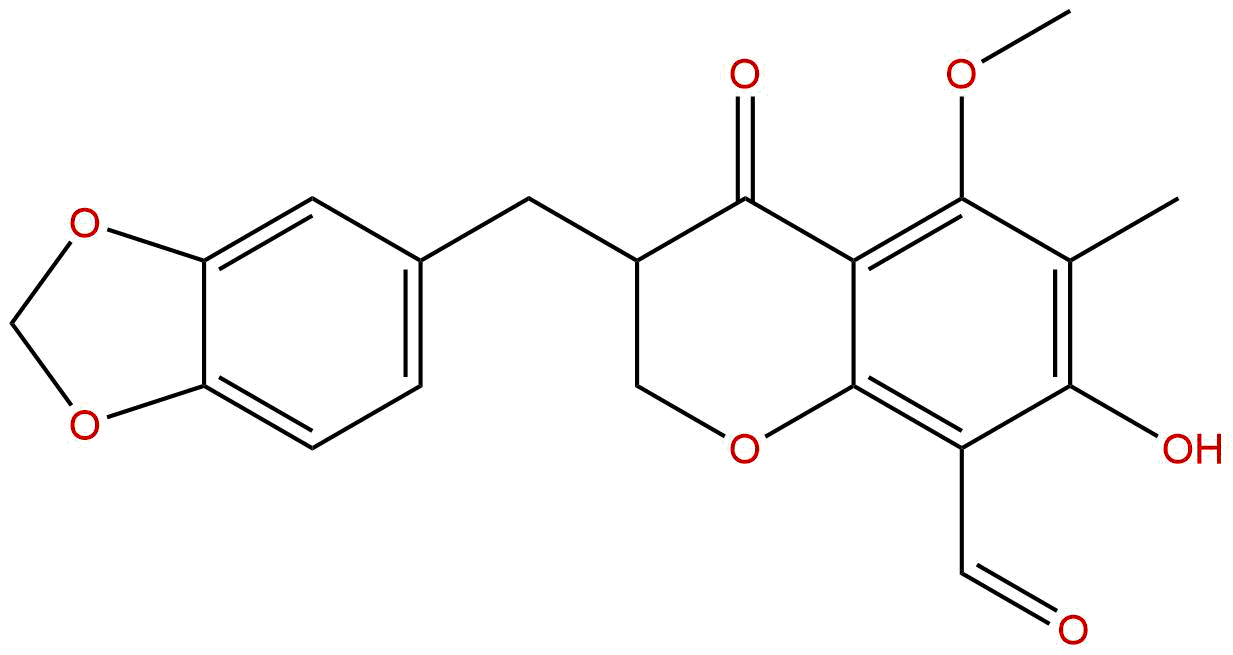
Ophiopogonone D is a highly isoflavonoid compound. Homoisoflavones are a type of special flavonoid compound with relatively limited distribution in the natural world. Their basic skeleton is different from classical flavonoids (2-phenylchromenone), manifested as the B ring connected to the C-3 position of the C ring instead of the C-2 position, forming a structure of 3-benzylchromenone. According to the degree of oxidation of the C-ring, high isoflavones can be further divided into subtypes such as high isoflavones, high isoflavones, and high isoflavones. The chemical structure of OPD belongs to high isoflavones, and its parent nucleus is 3-benzyl-4-chromatone. Specifically, its structural features include: the A ring usually contains phenolic hydroxyl or methoxy substituents, the B ring is a substituted benzene ring, and the C ring is a dihydrochromone structure.
According to existing data, the molecular formula of OPD is C19H18O8, with a molecular weight of 370.3570. There are multiple phenolic hydroxyl and methoxy groups in its structure, which are crucial for its physicochemical properties and biological activity. Phenolic hydroxyl groups endow molecules with certain polarity and the ability to form hydrogen bonds, making them key functional groups for antioxidant activity and potential sites for their interactions with biological targets such as enzymes and receptors. Methoxy groups affect the lipophilicity and metabolic stability of molecules.
In terms of physicochemical properties, the lipid water partition coefficient (LogP) of OPD is 2.4989, indicating its moderate lipophilicity, which facilitates its crossing of biofilms but may also affect its solubility in aqueous environments. Its topological polar surface area (TPSA) is 91.2900 Å ², which reflects the total surface area of polar atoms (such as oxygen and nitrogen) and their connected hydrogen atoms in the molecule. Generally, molecules with TPSA less than 140 Å ² are considered to have good oral absorption potential, and the TPSA value of OPD meets this standard, indicating that it has a certain oral bioavailability potential. The water solubility data (0.1065 mg/mL) indicates that OPD has a low solubility in water, which may be a limiting factor for its pharmacokinetic properties in vivo. It is worth noting that the blood-brain barrier (BBB) permeability is evaluated as "low", which is a key challenge to overcome for a candidate compound aimed at developing central nervous system (CNS) active drugs. Low BBB permeability means that OPD may require structural modifications or special drug delivery systems to effectively enter the brain parenchyma and exert antidepressant effects. In addition, hERG inhibition was predicted as' no ', indicating a lower risk of inducing QT interval prolongation in the heart, which is a positive pharmacological indicator. The Ames test result is 0.6, indicating a low potential genetic toxicity risk, but more comprehensive toxicological evaluation is still needed.
Ophiopogon flavanone D is mainly derived from the plant Ophiopogon in the family Liliaceae, belonging to the genus Spartina(Ophiopogon japonicus)The root tubers. Ophiopogon japonicus, as a traditional Chinese medicinal herb, is widely used in East Asian countries such as China, Japan, and South Korea. Except for Ophiopogon japonicus, other plants of the Carex genus such as Hubei Ophiopogon japonicus(Liriope spicata var. prolifera)It may also contain OPD, but the content may vary depending on factors such as variety, place of origin, and harvesting time. The chemical composition of Ophiopogon japonicus is complex, and high isoflavones are one of its main active ingredient groups. Currently, dozens of high isoflavones have been isolated and identified from Ophiopogon japonicus, among which OPD is a representative one.
Extracting and isolating OPD from Ophiopogon japonicus usually follows the classic process of natural product chemistry, which mainly includes the following steps:
Raw material pretreatment and extraction Dry Ophiopogon japonicus root tubers are crushed and extracted using solvent extraction method. Due to OPD being a moderately polar compound, commonly used extraction solvents include ethanol, methanol, or their aqueous solutions. To improve extraction efficiency, techniques such as heating reflux extraction, ultrasound assisted extraction, or microwave-assisted extraction can be used. Usually, 70% -95% ethanol solution is used for multiple extractions, and the extracts are combined and concentrated under reduced pressure to obtain the total extract.
Preliminary separation and enrichment After dispersing the total extract in water, liquid-liquid extraction is carried out sequentially using organic solvents of different polarities (such as petroleum ether, ethyl acetate, n-butanol). OPD is usually enriched in the ethyl acetate extraction site due to its polarity. This part is rich in high isoflavones and is the target component for further isolation.
Chromatographic Separation and Purification This is a crucial step in obtaining high-purity OPD. Common chromatographic techniques include:
During the entire extraction and separation process, thin-layer chromatography (TLC) or high-performance liquid chromatography (HPLC) is often used for tracking and detection to determine the fraction in which the target compound is located. Finally, the isolated compound was structurally identified using spectroscopic techniques such as nuclear magnetic resonance spectroscopy (NMR) and mass spectrometry (MS), confirming its identity as Ophiopogon flavanone D. Due to the relatively low content of OPD in Ophiopogon japonicus, the extraction and separation process usually requires multiple steps and yields are not high. In recent years, with the advancement of chromatographic technology, new technologies such as high-speed countercurrent chromatography (HSCCC) have also been applied to the separation of high isoflavones, which is expected to improve separation efficiency and purity.
The pharmacological activity research of Ophiopogon flavanone D is still in its infancy, but existing studies have revealed its potential roles in multiple disease models, with antidepressant activity being the most prominent research direction.
The core symptoms of depression include persistent low mood, decreased interest, lack of pleasure, cognitive impairment, and possible suicidal tendencies. Current research has preliminarily confirmed the antidepressant potential of OPD. In classic animal behavior models such as the mouse tail suspension test (TST) and mouse forced swimming test (FST), OPD administration can significantly shorten the immobility time of mice, indicating its ability to rapidly alleviate depressive like behavior. This effect has been validated in dose-dependent studies. Compared with positive control drugs such as fluoxetine, OPD exhibits comparable antidepressant efficacy and may have a faster onset rate in some models. In addition, in a chronic unpredictable mild stress (CUMS) - induced depression rat model, long-term administration of OPD can effectively reverse stress-induced depression like behaviors such as weight loss, reduced sugar preference (reflecting loss of pleasure), and reduced activity in open field experiments, further confirming its antidepressant effect under chronic stress conditions.
In addition to its antidepressant effect, OPD may also have other biological activities based on the structural characteristics of its high flavonoid mother nucleus:
- antioxidant activity High isoflavones usually have strong free radical scavenging ability. The phenolic hydroxyl group in the OPD structure is the key to its antioxidant activity. In vitro experiments have shown that OPD can effectively scavenge DPPH free radicals, ABTS cationic free radicals, and inhibit lipid peroxidation. This antioxidant activity may be related to its neuroprotective effect, as oxidative stress is one of the important pathological mechanisms of neurological and psychiatric disorders such as depression.
- anti-inflammatory activity Neuroinflammation plays an important role in the onset of depression. OPD may exert anti-inflammatory effects by inhibiting the excessive activation of microglia and reducing the release of pro-inflammatory cytokines such as TNF - α, IL-6, IL-1 β, thereby improving depressive symptoms. Related research is currently underway.
- Neuroprotective activity In vitro cell models, OPD may have a protective effect against neuronal damage induced by glutamate, hydrogen peroxide, and other factors. The mechanism may be related to inhibiting cell apoptosis and regulating levels of neurotrophic factors.
The mechanism of antidepressant effect of Ophiopogon flavanone D is multi-target and multi pathway, which is consistent with the complex pathophysiological characteristics of depression. Based on existing research, its mechanism of action mainly involves the following aspects:
The classic monoamine hypothesis suggests that the occurrence of depression is related to low levels of monoamine neurotransmitters such as serotonin (5-HT), norepinephrine (NE), and dopamine (DA) in the brain. The mechanism of action of OPD is closely related to this classical pathway.
- Inhibition of monoamine oxidase (MAO)Monoamine oxidase (MAO-A and MAO-B) is a key enzyme for degrading monoamine neurotransmitters. OPD has been shown to inhibit the activity of MAO-A and MAO-B. By inhibiting MAO, OPD can reduce the degradation of 5-HT, NE, and DA in synaptic cleft, thereby increasing the effective concentration of these neurotransmitters and exerting antidepressant effects. This dual inhibition mode (MAO-A and MAO-B) may bring more comprehensive therapeutic effects.
- Regulating 5-hydroxytryptamine transporter (SERT/SLC6A4)SERT is responsible for reuptake of 5-HT from synaptic cleft to presynaptic neurons and is a target of many antidepressants, such as SSRIs. OPD may increase the availability of 5-HT in synaptic cleft by inhibiting SERT activity and reducing 5-HT reuptake.
- Exciting 5-HT1A receptor (HTR1A)The 5-HT1A receptor is an important subtype of the 5-HT receptor family, located presynaptic and postsynaptic. Pre synaptic 5-HT1A receptor activation can negatively feedback inhibit 5-HT release, while post synaptic 5-HT1A receptor activation mediates antidepressant effects. The effect of OPD on HTR1A may be complex, but preliminary studies suggest that it may act as a partial agonist or regulate the function of this receptor through other means, ultimately helping to improve mood.
The neurotrophication hypothesis suggests that depression is accompanied by decreased expression of brain-derived neurotrophic factor (BDNF), hippocampal neuron atrophy, and impaired synaptic plasticity. OPD can reverse these pathological changes.
- Upregulation of BDNF expression BDNF is a key neurotrophic factor that promotes neuronal survival, growth, and synaptic plasticity. In the CUMS depression model, OPD treatment significantly increased the expression levels of BDNF in the hippocampus and prefrontal cortex.
- Activate CREB signaling pathway CAMP response element binding protein (CREB) is an important transcription factor for BDNF gene transcription. OPD may enhance the transcription and expression of BDNF by activating upstream signaling pathways such as cAMP/PKA or CaMK, promoting the phosphorylation of CREB (p-CREB). The activation of this signaling axis is considered one of the core mechanisms by which antidepressants exert long-term therapeutic effects and promote neural plasticity.
In summary, OPD forms a synergistic network by inhibiting MAO-A/B, SERT, COMT, stimulating HTR1A, regulating GABRA1, and activating multiple targets and signaling pathways such as CREB-BDNF pathway and inhibiting GSK3B, thereby exerting its antidepressant effect. This multi-target mode of action is an important feature that distinguishes it from traditional single target antidepressants.
To develop Ophiopogon flavanone D as a clinical drug, a comprehensive evaluation of its pharmacological properties is required. At present, research data on the pharmacokinetics of OPD is relatively limited, but based on its physicochemical properties and preliminary ADME (absorption, distribution, metabolism, excretion) predictions, a preliminary evaluation of its pharmacological properties can be conducted.
Ophiopogon flavanone D, as a natural product with multi-target antidepressant activity, has shown promising clinical application prospects, but also faces many challenges.
Prospect:
1. Lead compounds of novel antidepressant drugs The unique multi-target mechanism of OPD (inhibition of MAO-A/B, SERT, COMT, regulation of HTR1A and GABRA1, activation of CREB-BDNF pathway, inhibition of GSK3B) distinguishes it from traditional monoamine antidepressants. This "multi-target drug" strategy is expected to overcome the problems of slow onset, multiple side effects, and treatment resistance of traditional drugs. Especially its regulation of the GSK3B and BDNF pathways may lead to faster onset of action and better improvement in neuroplasticity.
2. Potential for treating comorbidities of depression Depression is often comorbid with anxiety, cognitive impairment, chronic pain, and other conditions. The regulatory effect of OPD on GABAA receptors may help alleviate anxiety symptoms; The inhibitory effects on COMT and GSK3B may improve cognitive function. Therefore, OPD may have comprehensive therapeutic advantages for depression and its comorbidities.
3. Examples of Modern Development of Natural Medicines Based on the long-term use history of traditional Chinese medicine Ophiopogon japonicus, OPD as its active ingredient has a good safety foundation. Developing it into a modern medicine is in line with the trend of modernizing traditional Chinese medicine and innovating natural medicines.
Challenges and Prospects:
1. Overcoming BBB permeability This is the biggest challenge faced by OPD development. Future research should focus on:
- Structural modification Introducing functional groups that can enhance BBB permeability (such as increasing lipid solubility or designing prodrugs) through medicinal chemical methods while maintaining or enhancing activity.
- Nano drug delivery system Develop nanocarriers that can target the brain, such as poly (lactic acid glycolic acid) copolymer (PLGA) nanoparticles, liposomes, solid lipid nanoparticles, etc., to efficiently deliver OPD into the brain.
- nasal delivery Utilizing the nasal brain pathway, bypassing the BBB, to achieve direct delivery of drugs to the brain.
2. Improve bioavailability To address its poor water solubility and potential metabolic instability, it is necessary to improve its oral bioavailability through formulation methods (such as solid dispersions, self microemulsifying drug delivery systems) or structural modifications.
3. In depth study on the mechanism of action Although multiple targets have been identified, the synergistic network between these targets, detailed regulatory mechanisms of downstream signaling pathways, and the existence of other key targets still require further molecular biology, chemical biology, and systems biology research to elucidate.
4. Pharmacokinetic and toxicological studies of the system Comprehensive in vivo pharmacokinetic studies are needed to clarify its absorption, distribution, metabolism, and excretion characteristics in animal bodies. At the same time, strict long-term toxicological evaluation must be conducted to ensure its safety.
5. Clinical translational research After completing sufficient preclinical research, rigorous clinical trials need to be designed to validate its efficacy and safety in patients with depression.
Ophiopogon flavanone D, as a highly isoflavonoid compound derived from traditional Chinese medicine Ophiopogon japonicus, has attracted widespread attention from researchers due to its unique chemical structure and multi-target pharmacological activity, especially its significant potential in the field of antidepressant treatment. It exhibits a different mode of action from traditional antidepressants by regulating the monoamine neurotransmitter system, neurotrophic factor signaling pathway, and multiple key targets such as GSK3B, providing valuable molecular templates for the development of novel, efficient, and low toxicity CNS drugs.
However, the road from laboratory discovery to clinical application of OPD is still long and challenging. Its low water solubility, low BBB permeability, and potential metabolic instability are the core bottlenecks that constrain its drug development. Future research must focus on overcoming these obstacles through drug chemical modification and advanced drug delivery technologies. At the same time, in-depth analysis of its mechanism of action and comprehensive safety evaluation are also indispensable.
Despite the numerous challenges ahead, the research on Ophiopogon flavanone D undoubtedly opens up new horizons for the application of natural products in the development of drugs for neurological and psychiatric disorders. It is not only a bridge connecting the wisdom of traditional Chinese medicine with modern pharmaceutical science, but also a hopeful star for precision treatment of complex diseases such as depression in the future. With the interdisciplinary integration and continuous advancement of technology, we have reason to believe that Ophiopogon flavanone D and its derivatives have the potential to bring new treatment options for depression patients worldwide in the future.
Batch can search by a CAS number,one per line
