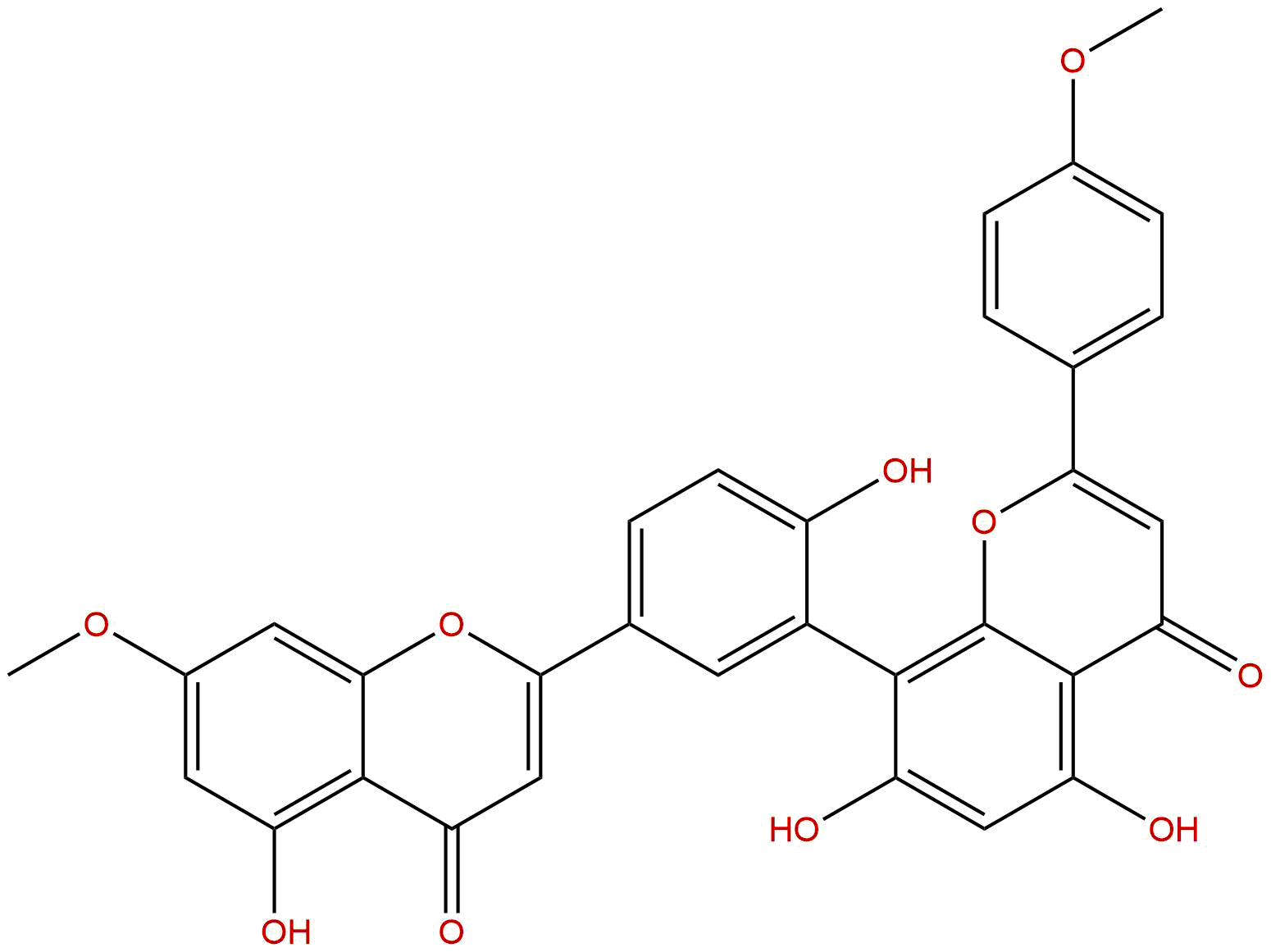


Product name: Podocarpusflavone B
Synonym name: Putraflavone;4''',7-Di-O -methylamentoflavone
Catalogue No.: BP2325
Cas No.: 23624-21-7
Formula: C32H22O10
Mol Weight: 566.518
Botanical Source:
Type of Compound: Biflavones
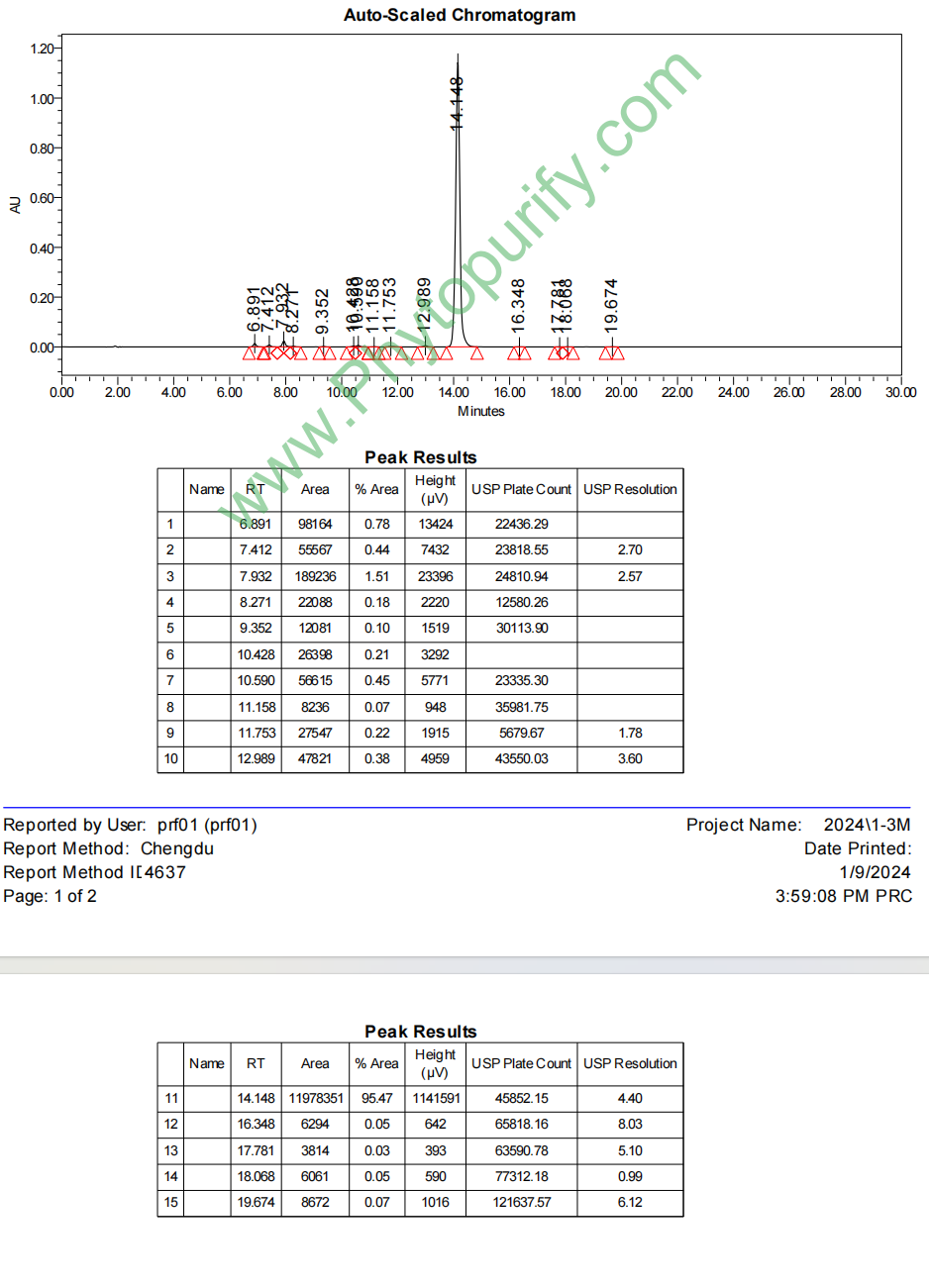
Purity: 95%~99%
Analysis Method: HPLC-DAD or/and HPLC-ELSD
Identification Method: Mass, NMR
Packing: Brown vial or HDPE plastic bottle
Storage: Store in a well closed container, protected from air and light. Put into refrigerate or freeze for long term storage.
Whenever possible, you should prepare and use solutions on the same day. However, if you need to make up stock solutions in advance, we recommend that you store the solution as aliquots in tightly sealed vials at -20℃. Generally, these will be useable for up to two weeks.
The product could be supplied from milligrams to grams
Inquire for bulk scale.
For Reference Standard and R&D, Not for Human Use Directly.
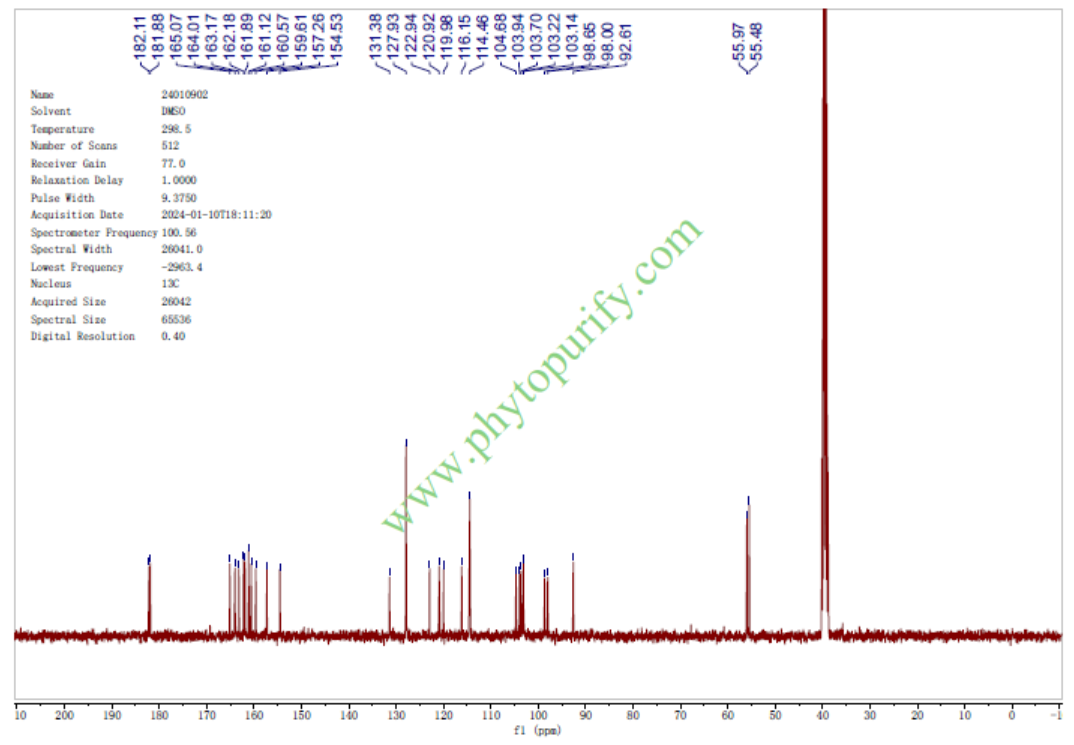
NMR of Podocarpusflavone B
HPLC of Podocarpusflavone B
Storage conditions:Short-term storage at 2~8℃, long-term storage at -20 ~ -80℃
159.8000
4.3280
3.8063
.0016
2.0122
13.8989
Low
93.0371
2.9635
Yes
No
No
No
Yes
No
0.6
No
Yes
Yes
No
Natural products, as an important source of drug discovery, play an irreplaceable role in the long history of human struggle against diseases. Especially polyphenolic compounds derived from plants have attracted much attention due to their structural diversity and wide range of biological activities. Among numerous natural polyphenols, Biflavonoids are a type of dimer composed of two flavonoid units connected by C-C or C-O-C bonds. Their unique chemical structure and significant pharmacological activity make them a hot topic in natural product chemistry and pharmacology research.
Podocarpus flavone B (PFB for short) is a plant from Arhat(Podocarpus macrophyllus)Typical flavonoids isolated from the middle. Since its first discovery, PFB has attracted scientific interest due to its complex molecular structure and potential biological effects. Early research mainly focused on its significance as a plant chemical taxonomic marker and its basic antioxidant activity. However, with the advancement of modern pharmacology and molecular biology techniques, the biological connotation of PFB has been continuously explored, especially in the fields of neurodegenerative diseases, tumors, and metabolic diseases, where its intervention potential has been demonstrated, gradually transforming it from a "secondary metabolite of plants" to a "lead compound" with important research value.
In recent years, the global trend of aging population has intensified, and neurodegenerative diseases represented by Alzheimer's Disease (AD) have brought a heavy burden to society and families. The pathogenesis of AD is extremely complex, involving multiple links such as β - amyloid (A β) deposition, excessive phosphorylation of Tau protein, neuroinflammation, oxidative stress, mitochondrial dysfunction, and energy metabolism disorders. Despite repeated setbacks in drug development targeting single targets such as BACE1 and A β, multi-target and multi pathway intervention strategies are considered the key to overcoming AD. PFB, with its multi-target binding ability endowed by its dual flavonoid skeleton, particularly its regulatory effect on AD related targets such as AMPK, BACE1, APP, etc., demonstrates great potential as an anti AD candidate molecule. This article aims to systematically review the chemical properties, plant sources, pharmacological activities, mechanisms of action, and pharmacological evaluation of bamboo and cypress flavonoids B, in order to provide comprehensive scientific basis for the further development and utilization of this compound.
The chemical structure of bamboo and cypress flavonoids B is the cornerstone of their biological functions. From a taxonomic perspective, PFB belongs to the "Amentoflavone" analogue of the flavonoids in the class of compounds. Its basic skeleton is composed of two flavonoid mother nuclei connected by C-C bonds. Specifically, the structural feature of PFB is that its two flavonoid units are connected through C-3 'and C-8' 'sites (3', 8 '' - flavonoids), which is different from the common C-8 and C-3 'connection method and gives it a unique spatial conformation.
From a chemical composition perspective, the molecular formula of PFB is C ∝₂ H ₂ O ₁₀, with a molecular weight of 566.5180 g/mol. Its structure contains multiple phenolic hydroxyl groups (- OH), which are not only the reason for its acidic characteristics, but also the active groups that act as potent antioxidants and metal ion chelating agents. In addition, the abundant conjugated system in the molecule enables strong absorption in the ultraviolet region, which is also the basis for detecting and quantifying it using high-performance liquid chromatography (HPLC).
In terms of physicochemical properties, PFB exhibits typical lipid soluble polyphenol characteristics. Its oil-water partition coefficient (LogP) is 4.3280, indicating that the compound has strong lipophilicity and is easy to penetrate biofilms, but this also results in extremely low solubility in water (water solubility is only 0.0016 mg/mL). This low water solubility is a common challenge faced by natural flavonoids and a key bottleneck that restricts their in vivo bioavailability. The polar surface area (TPSA) is 159.8000 Å ², which is slightly higher than the recommended upper limit of 140 Å ² for oral medications, indicating the possibility of intestinal permeability disorders. It is worth noting that although PFB has a high LogP, its blood-brain barrier (BBB) penetration is evaluated as "low". This conclusion may seem contradictory, but it actually reflects the complexity of BBB penetration - it not only depends on lipophilicity, but also on molecular weight, the number of hydrogen bond donors/acceptors, and the efflux of transporters. PFB has a relatively large molecular weight (>500 Da) and contains multiple phenolic hydroxyl groups (strong hydrogen bond donors), which collectively limit its ability to freely pass through BBB. However, low BBB penetration does not necessarily mean it is ineffective in the nervous system, as in pathological conditions such as AD, BBB integrity is compromised and permeability increases. Additionally, PFB may indirectly affect central nervous system function by acting on peripheral targets such as AMPK.
The first and most important source of Bambusa biflavone B is Arhat pine plant Bambusa(Podocarpus macrophyllus). Zhubai is an evergreen tree widely distributed south of the Yangtze River in China, Japan, and Southeast Asia. Its branches and leaves are often used in traditional folk medicine to treat rheumatism, rheumatism, pain, and bleeding. Besides bamboo cypress, PFB also exists in other plants of the same genus, such as Podocarpus nagi(Bamboo Cypress Variety) and some species of Juniperus genus(Selaginella)In plants, but the content is usually low.
In terms of distribution within the plant body, PFB is mainly enriched in the leaves and stem bark of bamboo and cypress. Research has shown that the total content of flavonoids in bamboo and cypress leaves is relatively high, with PFB being one of the main components. The content is influenced by various factors, including plant growth season, geographical environment, harvesting time, and extraction method. Usually, the PFB content in leaves harvested in autumn is relatively high.
The extraction process is a key step in obtaining high-purity PFB. Due to the lipophilic characteristics of PFB, traditional extraction methods often use organic solvent extraction. The specific process usually includes: crushing dried bamboo and cypress leaves, using high concentration ethanol (such as 95% ethanol) or methanol for cold soaking or hot reflux extraction. After the extraction solution is concentrated under reduced pressure, the total extract is obtained. Subsequently, the extract was preliminarily separated using liquid-liquid extraction methods (such as sequential extraction with petroleum ether, ethyl acetate, and n-butanol), with PFB typically enriched in the ethyl acetate extraction layer.
Further purification requires reliance on modern chromatographic techniques. Column chromatography is the most commonly used method, with commonly used stationary phases including silica gel, polyamide, and Sephadex LH-20. Silica gel column chromatography often uses chloroform methanol or dichloromethane methanol gradient elution systems; Polyamide column chromatography utilizes its hydrogen bonding adsorption with phenolic hydroxyl groups to effectively separate flavonoids. For isomers with extremely similar structures, high-performance liquid chromatography (HPLC) or preparative liquid chromatography (Prep HPLC) is a necessary means to obtain high-purity (>98%) PFB. In recent years, with the promotion of green chemistry concepts, some new extraction techniques such as ultrasound assisted extraction (UAE) and microwave-assisted extraction (MAE) have also been applied to the extraction of bamboo and cypress flavonoids. These methods have the advantages of short extraction time, low solvent dosage, and high efficiency.
The pharmacological activity research of bamboo and cypress flavonoids B has evolved from early crude extract activity tracking to the current pure compound molecular level. Its activity spectrum covers multiple aspects such as antioxidant, anti-inflammatory, neuroprotective, anti-tumor, and metabolic regulation.
1. Antioxidant and anti-inflammatory activities
As a polyphenolic compound, PFB exhibits strong free radical scavenging ability. In vitro chemical experiments have shown that PFB can effectively scavenge DPPH free radicals and ABTS cationic free radicals, and has significant reducing power. Its antioxidant mechanism is mainly attributed to the hydrogen atoms provided by multiple phenolic hydroxyl groups in the molecule, which can quench reactive oxygen species (ROS) and reactive nitrogen species (RNS). In cell models, PFB can inhibit the production of nitric oxide (NO) and prostaglandin E2 (PGE2) in RAW264.7 macrophages induced by lipopolysaccharide (LPS), and downregulate the expression of inducible nitric oxide synthase (iNOS) and cyclooxygenase-2 (COX-2). This anti-inflammatory activity is closely related to its inhibition of the activation of the nuclear factor kappa B (NF - κ B) signaling pathway.
2. Neuroprotective activity
The protective effect of PFB in neurodegenerative disease models is one of its most notable activities. In AD related cell models, PFB can significantly alleviate the neurotoxicity induced by A β - ₁₋₄₂ oligomers, reduce intracellular ROS levels, and inhibit cell apoptosis. In addition, PFB has been found to promote non amyloid protein generation pathways by enhancing the activity of α - secretase (ADAM10) and reducing the process of APP being cleaved by β - secretase (BACE1) to produce A β. In animal behavior experiments, oral or intraperitoneal injection of PFB can improve the learning and memory abilities of APP/PS1 transgenic AD model mice and reduce the deposition of A β plaques in the brain.
3. Antitumor activity
PFB inhibited the proliferation of many tumor cell lines, including human liver cancer cells (HepG2), breast cancer cells (MCF-7), lung cancer cells (A549) and colon cancer cells (HT-29). Its mechanism of action involves inducing cell cycle arrest (such as G0/G1 phase arrest) and promoting apoptosis. Research has shown that PFB can upregulate the expression of pro apoptotic protein Bax and downregulate the expression of anti apoptotic proteins Bcl-2 and Mcl-1, thereby activating the mitochondrial apoptosis pathway. In addition, PFB can also block energy metabolism and protein synthesis in tumor cells by inhibiting the PI3K/Akt/mTOR signaling pathway.
4. Metabolic regulatory activity
PFB also shows intervention potential in metabolic diseases. By activating AMP activated protein kinase (AMPK), PFB can promote glucose uptake and fatty acid oxidation, improving insulin resistance. In the 3T3-L1 preadipocyte differentiation model, PFB can inhibit adipocyte differentiation and reduce lipid accumulation. These findings suggest that PFB may have therapeutic value for type 2 diabetes and obesity.
The pharmacological activity of bamboo and cypress flavonoids B is the result of multi-target and multi pathway synergistic effects. By combining the provided target information, we can delve into its molecular mechanisms in Alzheimer's disease.
1. Regulating energy metabolism and autophagy: Activation of AMPK
AMPK (PRKAA1) is a core sensor for cellular energy homeostasis. In AD, brain energy metabolism disorders are an early event. PFB has been confirmed to be an agonist of AMPK. Activated AMPK can phosphorylate downstream substrates such as acetyl CoA carboxylase (ACC) and mTOR. On the one hand, AMPK activation can inhibit mTOR, thereby relieving the inhibition of autophagy and promoting autophagic degradation of misfolded proteins (such as A β and Tau aggregates) in cells. On the other hand, AMPK activation can improve mitochondrial biosynthesis and increase neuronal energy supply. Therefore, PFB achieves dual effects of "garbage cleaning" and "energy supply" by activating AMPK.
2. Inhibition of A β production: regulation of BACE1 and APP
BACE1 (β - secretase 1) is the rate limiting enzyme for A β production. PFB can directly or indirectly inhibit the activity of BACE1. Research has shown that PFB can competitively inhibit the cleavage of APP by binding to the active site of BACE1. In addition, PFB can also activate AMPK, alter the transport and processing processes of APP, and promote its conversion to the non amyloid protein pathway (α - secretase pathway). This dual regulation of APP processing gives PFB a significant advantage in reducing A β production.
3. Regulating cell apoptosis and survival: Bcl-2 family and Notch signaling
Neuronal apoptosis is a characteristic pathological change in the late stage of Alzheimer's disease. PFB exerts anti apoptotic effects by regulating the balance of Bcl-2 family proteins (Bcl-2, Mcl-1). Under stress conditions, PFB can upregulate the expression of anti apoptotic protein Bcl-2 and downregulate pro apoptotic protein Mcl-1 (in neurons, Mcl-1 usually has a pro survival effect, but its role is complex in some pathological states), thereby stabilizing mitochondrial membrane potential, preventing cytochrome c release and caspase cascade activation.
In addition, the Notch1 signaling pathway is crucial in neural development and synaptic plasticity. The regulation of Notch1 by PFB may affect the proliferation and differentiation of neural stem cells, as well as the synaptic function of mature neurons. In AD, abnormally activated Notch signaling may exacerbate neuroinflammation, and PFB may exert a protective effect by moderately inhibiting the Notch pathway.
4. Regulating cholesterol metabolism and immunity: ABCA1 and IDO1
ABCA1 is a key protein involved in cholesterol reverse transport, responsible for transporting intracellular cholesterol to apolipoprotein A-I (ApoA-I), forming high-density lipoprotein (HDL). In the brain, ABCA1 is involved in the lipidation of ApoE, and the lipidation status of ApoE directly affects the clearance of A β. Upregulation of ABCA1 expression by PFB can promote the clearance of A β glial cells and reduce their deposition in brain tissue.
IDO1 is the rate limiting enzyme in tryptophan metabolism, which is induced to be expressed in neuroinflammation, leading to activation of the canine urea pathway and the production of neurotoxic metabolites such as quinoline acid. The inhibitory effect of PFB on IDO1 may alleviate the neuroinflammatory environment in AD by reducing the production of neurotoxic metabolites.
5. Nuclear receptors and gene transcription: involvement of RARA
RARA (retinoic acid receptor alpha) is a member of the nuclear receptor superfamily, involved in neural differentiation, synaptic plasticity, and cognitive function. The retinoic acid signaling pathway is impaired in AD. PFB may act as a regulator of RARA, restoring retinoic acid signaling and promoting the expression of neurotrophic factors and synthesis of synaptic proteins.
In summary, PFB exerts its anti AD effect through a complex molecular network (AMPK-BACE1-APP-Bel-2/Notch1-AABCA1-IDO1-RARA), and this multi-target synergistic mechanism is its core advantage over single target drugs.
Although bamboo and cypress flavonoids B have exciting pharmacological activities, their drug affinity is the key to determining whether they can ultimately become clinical drugs.
1. Physical and chemical properties and drug like properties
According to the Lipinski Five Rules, PFB has obvious "violations": molecular weight (566.5 Da) exceeding 500; LogP (4.33) exceeds 5 (although not exceeding, close to the upper limit); The number of hydrogen bond donors (phenolic hydroxyl groups) is relatively high (usually exceeding 5). These characteristics suggest that the oral bioavailability of PFB may be low. In addition, the high TPSA (159.8 Å ²) suggests that its intestinal permeability may be poor. The Ames test result is 0.6, indicating a potential genetic toxicity risk and further in vivo mutagenicity assessment is needed. The hERG inhibition test is negative, which is a positive signal indicating a lower risk of causing QT interval prolongation in the heart.
2. Pharmacokinetic challenges
The main pharmacokinetic challenges faced by PFB are Low water solubility and Low bioavailability After oral administration, PFB is difficult to dissolve in the gastrointestinal tract, leading to limited absorption. Even if partially absorbed, as a polyphenolic compound, it is highly susceptible to phase II metabolism (glucuronidation, sulfation) in the intestinal wall and liver, resulting in significant first pass effects and extremely low concentrations of the active ingredient entering the systemic circulation. In addition, its assessed "low" BBB penetration also limits its ability to directly act on central targets.
3. Improvement strategy
In response to the above issues, modern medicinal chemistry and pharmacy provide various solutions:
- Prodrug design Modify the phenolic hydroxyl group of PFB (such as phosphorylation, amino acid esterification) to improve its water solubility, and convert it into the original drug through enzymatic hydrolysis in vivo.
- nano-formulation Using liposome, polymer nanoparticle, solid lipid nanoparticle (SLN) or nanocrystal technology to encapsulate PFB, improve its solubility and stability, prolong circulation time, and possibly achieve brain targeted delivery through surface modification (such as polysorbate 80).
- structural optimization Simplify or modify PFB molecules while retaining the core pharmacophore, reducing their molecular weight and hydrogen bond donors, and improving their drug properties. For example, synthesizing small molecule flavonoids with similar activity.
Bamboo and cypress flavonoids B, as a natural product with multi-target activity, have shown broad application prospects in the following fields:
Multi target intervention for Alzheimer's disease
Given the complexity of AD, the "one drug, multiple targets" characteristic of PFB makes it an ideal candidate drug. It can inhibit the generation of A β (BACE1), promote the clearance of A β (ABCA1), improve energy metabolism (AMPK), and inhibit neuroinflammation (IDO1, NF - κ B). In the future, PFB or its derivatives are expected to be developed as a disease modifying therapy (DMT) for early or mid stage AD.
2. Anti tumor adjuvant therapy
The regulatory effect of PFB on Mcl-1 and Bcl-2 may make it an adjuvant drug to overcome tumor drug resistance. Especially for hematological malignancies that rely on Mcl-1 for survival, such as multiple myeloma, PFB may have unique therapeutic value.
3. Comprehensive management of metabolic syndrome
By activating AMPK, PFB is expected to be used to treat type 2 diabetes, non-alcoholic fatty liver disease (NAFLD) and obesity. Its natural origin also conforms to the current trend of "green medicine" and "dietary therapy".
Outlook and Challenges:
Despite the bright prospects, the clinical translation of PFB still faces significant challenges. The primary task is to address its pharmacokinetic deficiencies. Future research priorities should include:
1. In depth pharmacokinetic research Establish a sensitive LC-MS/MS detection method to comprehensively study the absorption, distribution, metabolism, and excretion (ADME) characteristics of PFB and its metabolites in vivo.
2. Development of a new delivery system Key breakthrough of BBB barrier to achieve effective drug concentration in the brain.
3. safety evaluation Conduct long-term toxicity studies on the system, especially for in-depth evaluation of genetic toxicity indicated by Ames tests.
4. Structure Activity Relationship (SAR) Study Systematically synthesize a series of PFB derivatives, clarify the contribution of each phenolic hydroxyl group and connection mode to activity, and search for candidate molecules with stronger activity and better drug properties.
Bamboo and cypress flavonoids B, derived from the ancient plant bamboo and cypress, showcase the unique charm of natural products in the treatment of complex diseases with its exquisite chemical structure and rich biological connotations. The research process of PFB, from basic antioxidant to precise AMPK-BACE1-ABCA1 multi-target regulation, is a microcosm of the natural product pharmacology's transition from "extensive screening" to "precise mechanism". Despite its inherent shortcomings in drug development, advances in modern medicinal chemistry and nanotechnology provide powerful weapons to address these obstacles. We have reason to believe that with further research, bamboo and cypress flavonoids B or their optimized derivatives have the potential to bring new hope for the treatment of refractory diseases such as Alzheimer's disease in the future, continuing the glorious chapter of natural products in human health.
