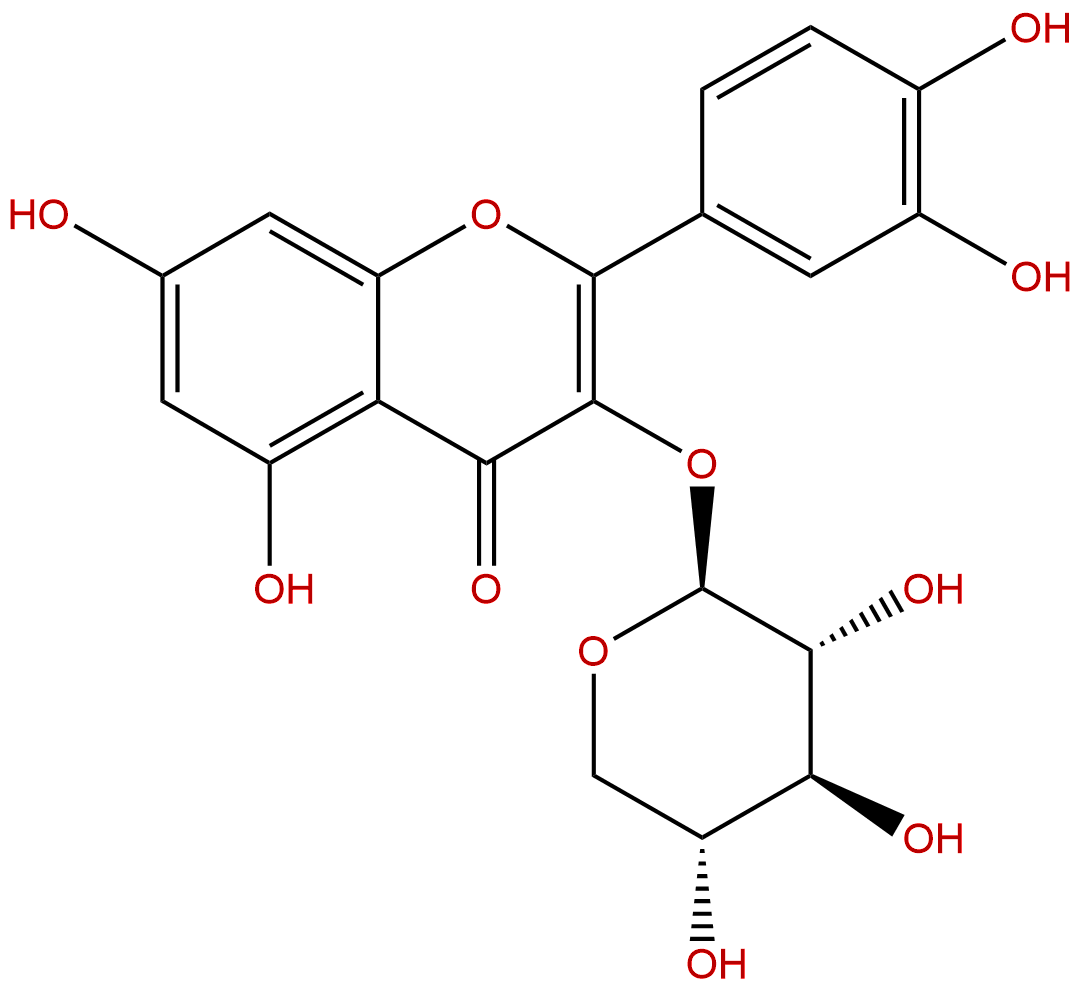


Product name: Quercetin 3-O-β-D-xylopyranoside
Synonym name:
Catalogue No.: BP3340
Cas No.: 549-32-6
Formula: C20H18O11
Mol Weight: 434.353
Botanical Source:
Physical Description: Yellow powder
Type of Compound: Flavonoids
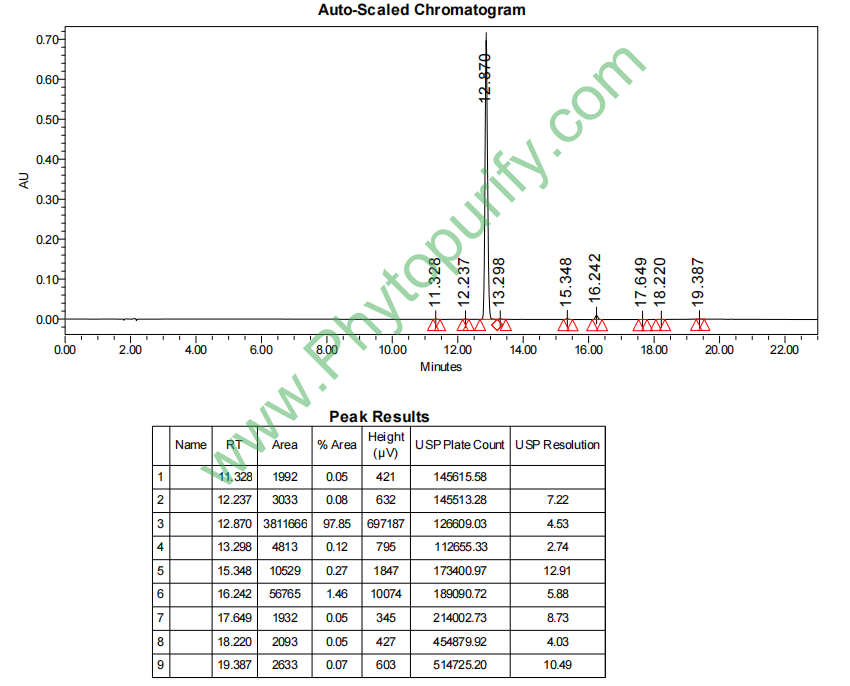
Purity: 95%~99%
Analysis Method: HPLC-DAD or/and HPLC-ELSD
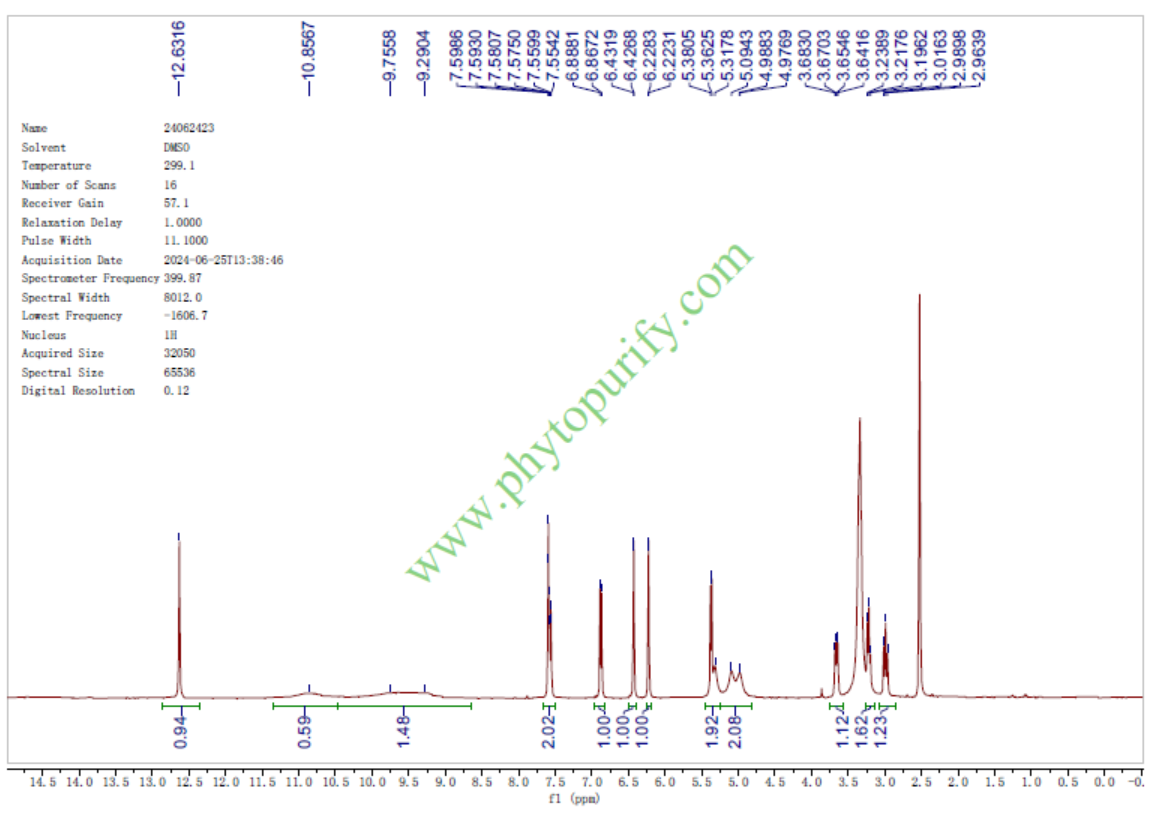
Identification Method: Mass, NMR
Packing: Brown vial or HDPE plastic bottle
The product could be supplied from milligrams to grams. Inquire for bulk scale.
We provide solution to improve the water-solubility of compounds, thereby facilitating the variety of activity tests and clinic uses.
For Reference Standard and R&D, Not for Human Use Directly.
HPLC of Quercetin 3-O-β-D-xylopyranoside
HNMR of Quercetin 3-O-β-D-xylopyranoside
Storage conditions:Short-term storage at 2~8℃, long-term storage at -20 ~ -80℃
190.2800
.4784
.2224
.7123
.5510
.5165
Low
78.5420
3.9305
Yes
No
Yes
No
Yes
No
1.2
Yes
No
Yes
Yes
Flavonoids, as one of the most widely distributed plant secondary metabolites in nature, have long been of great concern due to their extensive biological activities. Quercetin, as a typical representative of flavonol compounds, has been extensively studied for its anti-inflammatory, antioxidant, and anti-tumor pharmacological effects. However, quercetin itself has drug defects such as poor water solubility and low oral bioavailability, which limits its clinical application. Nature has ingeniously generated various quercetin glycoside derivatives through glycosylation modification, which often exhibit unique advantages in improving solubility, enhancing stability, and regulating biological activity. Quercetin 3-O - β - D-xylopyroside (Q3X) is one of the important monoglycosides.
Q3X, CAS number 549-32-6, is an O-glycoside formed by the glycosidic bond between the hydroxyl group at position 3 of the C-ring of quercetin and the β - D-xylopyranose group. Compared with common glucosides or rhamnoides, the xylose groups connected to it have special structures and properties, which may bring differentiated biological effects. This compound was originally derived from the leguminous plant Mimosa pudica(Mimosa pudica L. It was isolated and subsequently discovered in various other medicinal plants. In recent years, with the advancement of natural product separation and identification technology and the deepening of molecular pharmacology research, Q3X has surpassed the unique pharmacological activity of its parent nucleus quercetin, especially in its potential for antioxidant and related disease intervention, gradually becoming a research hotspot. This article aims to systematically review the chemical properties, plant sources, pharmacological activities, mechanisms of action, medicinal properties, and clinical application prospects of Q3X, in order to provide comprehensive scientific references for the in-depth research and development of this compound.
The molecular formula of Quercetin-3-O - β - D-xyloside is C20H18O11, with a molecular weight of 434.35 g/mol. Its core structure is the classic 2-phenylchromatone-4-one skeleton, also known as the quercetin mother nucleus. Quercetin itself is a pentahydroxyflavonoid, with two phenolic hydroxyl groups at positions 5,7-on its A ring, two adjacent phenolic hydroxyl groups at positions 3 ', 4' - on its B ring, and one alcohol hydroxyl group at position 3 on its C ring. The structural feature of Q3X is that the hydroxyl group at position 3 of its C-ring forms a glycosidic bond with a molecule of β - D-xylopyranose.
Xylose is a five carbon aldose (pentose), and its pyran ring form is connected to quercetin in a β configuration in Q3X. Compared with common six carbon sugar glucosides, the xylose group lacks a - CH2OH group, resulting in smaller molecules and slightly different hydrophilicity. This structural modification has a decisive impact on the physicochemical properties of the compound. The calculated lipid water partition coefficient (LogP) is 0.4784, indicating that the compound has moderate lipophilicity, but compared to quercetin (LogP of approximately 1.5-2.0), its hydrophilicity is significantly enhanced. The topologically polar surface area (TPSA) is as high as 190.28 Å ², mainly attributed to the numerous hydrogen bond acceptors (oxygen atoms) in the molecule. The theoretical water solubility value is 0.7123, which confirms that its solubility in water is better than that of quercetin. These physicochemical parameters suggest that Q3X may have better fluid solubility and formulation processing performance.
The presence of glycosidic bonds also affects the chemical stability of compounds. 3-glycosylation protects the hydroxyl group at that position, which may alter the sensitivity of the molecule to oxidative degradation. At the same time, as a glycoside, it is easily hydrolyzed by glycosidases in the intestine and blood in the body, which may generate secondary glycosides, which is one of the key characteristics of its pharmacokinetic behavior.
Q3X is not universally present in the plant kingdom, but has been identified in multiple families of plants, demonstrating a certain degree of distribution specificity.
1. Main plant sources:
* Fabaceae (Fabaceae)It is the earliest and most famous source. Mimosa plant(Mimosa pudica L. The whole grass or leaves of Q3X are classic raw materials for isolation. In addition, in some Astragalus species(Astragalus)It has also been detected in plants.
* Other families and genera Research reports that it is found in the Primulaceae family (such as Forsythia suspensa)Hypericum perforatum)It exists in some plants such as Asteraceae and Rosaceae, and often coexists with other flavonoid glycosides.
A large number of in vitro and in vivo studies have shown that Q3X inherits some of the biological activities of quercetin and exhibits new characteristics due to its unique glycosylation modification. Its core pharmacological activity revolves around strong antioxidant effects and extends to multiple related fields.
Core antioxidant activity The antioxidant capacity of Q3X is its most prominent characteristic. The phenolic hydroxyl group in its molecule (especially the ortho dihydroxy group in the B ring) is an active group that provides electrons and can effectively scavenge free radicals such as DPPH radicals, ABTS ⁺ radicals, superoxide anions (O ₂⁻ •), and hydroxyl radicals (• OH). Research has shown that its ability to scavenge free radicals is comparable to or even stronger than quercetin in certain systems, which may be related to the introduction of sugar groups that alter the electron distribution of molecules and their reactivity with free radicals. In cell models, Q3X can significantly reduce the levels of reactive oxygen species (ROS) induced by hydrogen peroxide (H ₂ O ₂), lipopolysaccharide (LPS), or other stimuli, protecting cells from oxidative stress damage.
anti-inflammatory effect Oxidative stress is closely linked to inflammatory response. Q3X indirectly exerts anti-inflammatory effects through its antioxidant properties. Research has shown that it can inhibit the excessive production of nitric oxide (NO) and prostaglandin E2 (PGE2) in macrophages (such as RAW264.7) stimulated by lipopolysaccharide (LPS), and downregulate the expression of inducible nitric oxide synthase (iNOS) and cyclooxygenase-2 (COX-2). In addition, it also has inhibitory effects on the secretion of various pro-inflammatory cytokines such as TNF - α, IL-1 β, IL-6.
Skin protection and anti photoaging Based on its antioxidant and anti-inflammatory properties, Q3X has attracted much attention in dermatopharmacology. Research has shown that it can inhibit the activity of tyrosinase (TYR), suggesting its potential whitening effect. More importantly, in the UV induced skin photoaging model, Q3X can inhibit the overexpression of matrix metalloproteinases (such as MMP-1, MMP-3) by clearing ROS. MMPs are key enzymes that degrade collagen and elastin in the dermis of the skin, and their activity is activated by UV through the ROS pathway. Therefore, Q3X has the potential to be applied in functional cosmetics and topical medications for the skin by protecting the extracellular matrix and delaying photoaging through antioxidant inhibition of the MMPs pathway.
Neuroprotective potential Although its blood-brain barrier permeability is low, some studies suggest that it may have a protective effect on neurodegenerative disease-related models. In neuronal injury models induced by oxidative stress or β - amyloid protein, Q3X can increase cell survival rate and reduce apoptosis. The mechanism may be related to the activation of the intracellular antioxidant defense system.
Other potential activities: Preliminary research also suggests that Q3X may have anti diabetes (by protecting pancreatic beta cells from oxidative damage), cardiovascular protection (by reducing endothelial cell oxidative damage) and other activities, but research in these fields is still in its infancy and needs more evidence to support.
The pharmacological effects of Q3X are not simply the direct quenching of free radicals, but involve a complex regulatory network with multiple targets and pathways. Its core mechanism revolves around regulating cellular redox balance.
Direct antioxidant and enzyme inhibition:
Activate endogenous antioxidant defense system - NRF2/ARE pathway This is the core molecular mechanism by which Q3X exerts cell protective effects. Nuclear factor E2 related factor 2 (NRF2, encoded by NFE2L2 gene) is a key transcription factor that regulates cellular antioxidant stress response. At rest, NRF2 binds to the cytoplasmic chaperone protein Keap1 and is degraded by ubiquitination. When subjected to oxidative stress or certain compounds (such as Q3X), NRF2 dissociates from Keap1, translocates to the nucleus, binds to antioxidant response elements (ARE), and initiates the transcriptional expression of downstream phase II detoxifying enzymes and antioxidant proteins.
Inhibition of inflammatory signaling pathway The anti-inflammatory effect of Q3X is closely related to its inhibition of classic pro-inflammatory signaling pathways such as NF - κ B and MAPK. It can inhibit the degradation of I κ B α and nuclear translocation of NF - κ B p65 subunit, thereby blocking the transcriptional activity of NF - κ B and reducing the expression of iNOS, COX-2, and various inflammatory cytokines. Meanwhile, it can also inhibit the phosphorylation activation of kinases such as JNK and p38 MAPK.
Inhibition of extracellular matrix degradation In the skin photoaging model, Q3X inhibits UV induced activation of AP-1 transcription factor through the aforementioned antioxidant and anti-inflammatory mechanisms, thereby downregulating the transcription and expression of its target genes MMP-1 and MMP-3, thereby protecting collagen and maintaining skin structural integrity.
In summary, the mechanism of action of Q3X is a three-dimensional network that involves direct antioxidant activity, activation of endogenous defense, and regulation of downstream inflammation and matrix metabolic pathways. NRF2 is a key hub molecule that plays a core protective role.
Although Q3X exhibits excellent activity in vitro, it still needs to cross the threshold of drug development to become a drug. Based on computational parameters and limited experimental data, a preliminary evaluation of its pharmacological properties can be conducted.
Preliminary analysis of the five principles of generic drugs:
Key pharmacological parameters:
Pharmacokinetic prediction and challenges:
At present, there is a severe lack of research data on the pharmacokinetics of the Q3X system, which is a gap that must be filled in future translational studies.
Based on its unique pharmacological activity and relatively good safety prediction, Q3X has potential application value in multiple fields.
Dermatology and cosmetics field This is currently the most promising direction for direct application.
Adjuvant treatment for chronic inflammatory diseases: In view of its anti-inflammatory and antioxidant effects, Q3X or plant extracts containing Q3X may be used as dietary supplements or auxiliary drugs to manage chronic low-grade inflammatory diseases such as arthritis, atherosclerosis, metabolic syndrome, etc. Further animal models and clinical studies are needed for validation.
Prevention of neurodegenerative diseases Although BBB has poor permeability, its metabolite quercetin may be able to pass through BBB. In addition, after modification through pharmaceutical methods such as targeted delivery with nanocarriers, it may be used for preventive intervention research in diseases such as Alzheimer's disease and Parkinson's disease.
Challenges faced and future research directions:
Quercetin-3-O - β - D-xyloside, as a naturally occurring quercetin xyloside, exhibits enhanced hydrophilicity and unique biological effects due to its unique chemical structure, while inheriting the broad-spectrum biological activity of quercetin. Its strong antioxidant capacity, especially by activating the NRF2/ARE pathway to enhance the core mechanism of cellular defense system, provides a solid scientific basis for its application in oxidative stress-related diseases, especially skin photoaging and chronic inflammation. Despite facing common challenges such as oral bioavailability and blood-brain barrier permeability in drug development, its good water solubility, predicted low cardiac toxicity, and genetic toxicity have laid a safe foundation for its development. In the future, through in-depth pharmacological mechanism research, systematic pharmacokinetic evaluation, and advanced formulation technology and structural modification strategies, Quercetin-3-O - β - D-xyloside is expected to gradually move from a potential natural product molecule to clinical applications, providing important candidate substances for the development of new antioxidant, anti-inflammatory, skin protective drugs or functional products.
