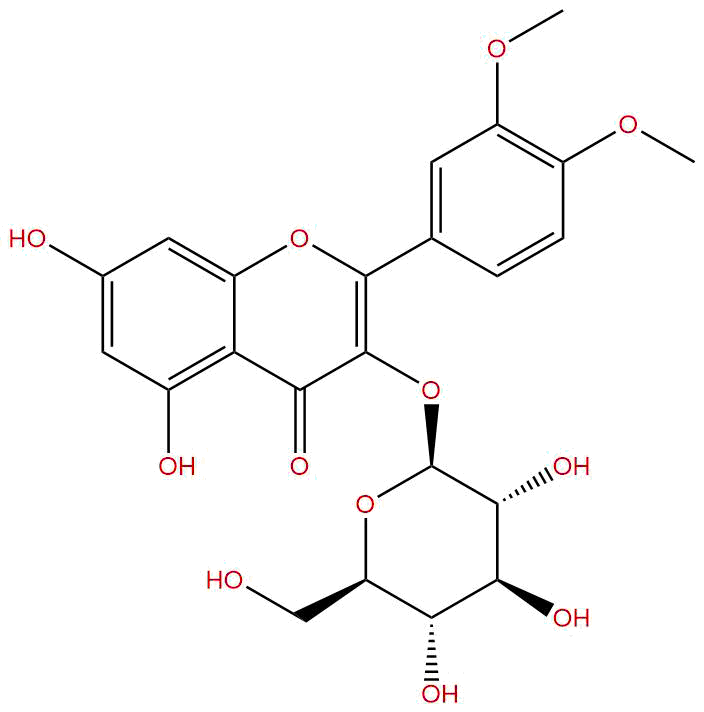


Product name: 3'-MethoxyTamarixin
Synonym name:
Catalogue No.: BP2366
Cas No.: 127982-19-8
Formula: C23H24O12
Mol Weight: 492.433
Botanical Source:
Type of Compound: Flavonoids
Purity: 95%~99%
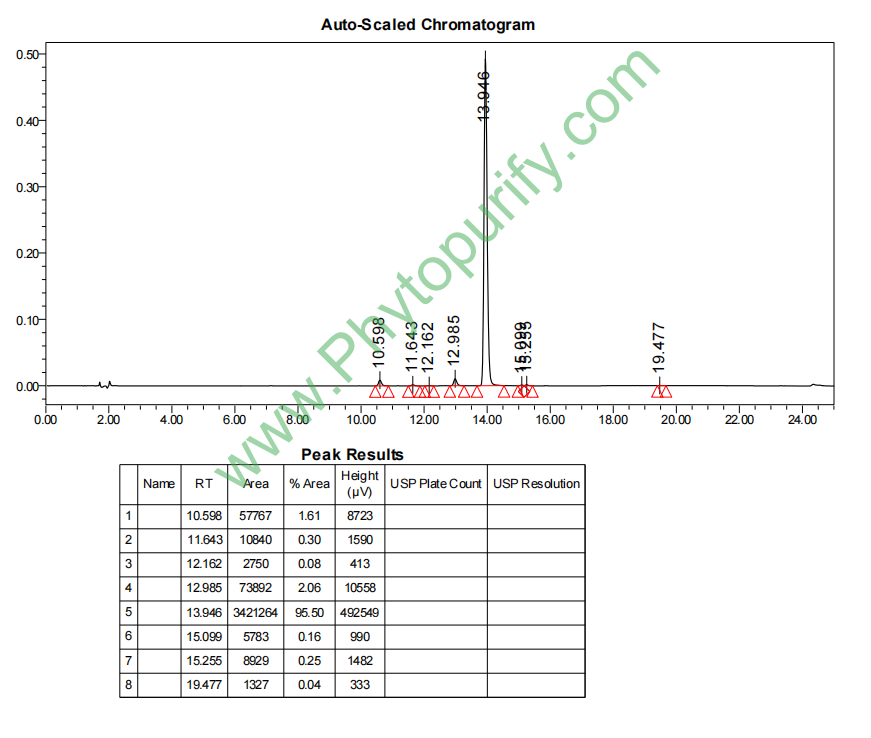
Analysis Method: HPLC-DAD or/and HPLC-ELSD
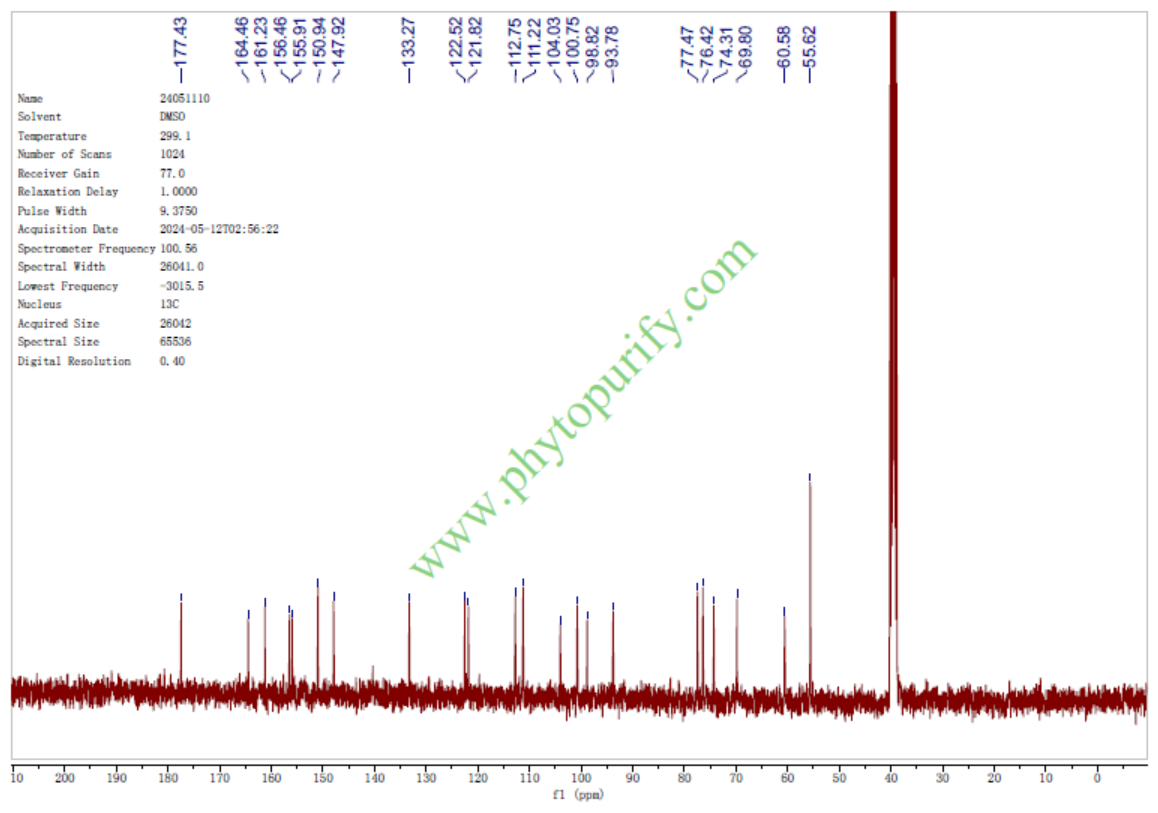
Identification Method: Mass, NMR
Packing: Brown vial or HDPE plastic bottle
Storage: Store in a well closed container, protected from air and light. Put into refrigerate or freeze for long term storage.
Whenever possible, you should prepare and use solutions on the same day. However, if you need to make up stock solutions in advance, we recommend that you store the solution as aliquots in tightly sealed vials at -20℃. Generally, these will be useable for up to two weeks.
The product could be supplied from milligrams to grams
Inquire for bulk scale.
For Reference Standard and R&D, Not for Human Use Directly.
HPLC of 3'-MethoxyTamarixin
NMR of 3'-MethoxyTamarixin
Storage conditions:Short-term storage at 2~8℃, long-term storage at -20 ~ -80℃
188.5100
.2951
.1426
1.7628
.4670
.2372
Low
79.4950
3.8854
Yes
No
Yes
No
Yes
No
0.6
Yes
No
Yes
Yes
Natural products, as an important source of drug discovery, play an irreplaceable role in the long history of human fight against diseases. Flavonoids, as one of the main categories of secondary metabolites in plants, have attracted much attention due to their structural diversity and wide range of biological activities. Tamarixin and its derivatives are from the genus Tamarix(Tamarix A class of characteristic flavonoid glycosides isolated from plants with unique chemical structures and significant pharmacological activities. 3 '- MethoxyTamarixin-3-O-glucoside (CAS number: 127982-19-8), as an important member of the tamarisk family, contains an additional methoxy substituent in its molecular structure. This structural modification endows the compound with biologically active characteristics distinct from the parent molecule.
In recent years, with the advancement of separation and purification technology and the improvement of biological activity screening systems, 3 '- methoxy kaempferol-3-O-glucoside has gradually entered the field of researchers. Preliminary studies have shown that the compound has multiple pharmacological activities such as antioxidant, anti-inflammatory, anti-tumor, and neuroprotective effects, and its mechanism of action involves the regulation of multiple signaling pathways. However, like many natural flavonoid glycosides, the systematic pharmacological research of this compound is still in its infancy, and its pharmacokinetic properties, in vivo metabolic pathways, and clinical application potential still need to be further explored. This article aims to provide a systematic review of the chemical properties, plant sources, pharmacological activities, mechanisms of action, and pharmacological evaluation of 3 '- methoxy kaempferol-3-O-glucoside, in order to provide scientific basis for the further development and utilization of this natural product.
3 '- Methoxytamarixin-3-O-glucoside belongs to the flavonol glycoside class, with its aglycone being 3' - Methoxytamarixetin and its sugar moiety being β - D-glucose. Structurally, the compound is based on the flavonoid core (2-phenylchromenone) as the basic skeleton, and is connected to a glucose group at the 3rd position of the C ring through an O-glycosidic bond. Compared with Tamarixin, 3 '- methoxy Tamarixin-3-O-glucoside has an additional methoxy (- OCH ∝) substituent at the 3' position of the B ring, which significantly affects its molecular polarity and biological activity.
Specifically, the chemical structural characteristics of the compound include the presence of two hydroxyl groups (- OH) at positions 5 and 7 of the A ring, which endow it with strong antioxidant activity; The 3 'position of the B ring is methoxy and the 4' position is hydroxyl, forming a typical ortho methoxyphenol structural unit; The 3rd position of the C ring is connected to glucose through a glycosidic bond, increasing the water solubility of the molecule. This structural combination enables 3 '- methoxy tamarinoflavone-3-O-glucoside to possess both the lipid solubility of flavonoid glycosides and the water solubility of glycosides, which is beneficial for its distribution and metabolism in organisms.
According to computational chemistry and experimental data, the molecular formula of 3 '- methoxy kaempferol-3-O-glucoside is C ₂∝ H ₂₄₁₂, with a molecular weight of 492.4330 Da. Its oil-water partition coefficient (LogP) is 0.2951, indicating that the compound has moderate lipophilicity and theoretically can cross biofilms through dynamic diffusion. The topological polar surface area (TPSA) is 188.5100 Å ², which is higher than the recommended upper limit of 140 Å ² for oral medications, indicating the possibility of oral absorption disorders. The water solubility parameter is 1.7628 (LogS), which belongs to a moderately water-soluble compound, consistent with the presence of multiple hydroxyl and sugar groups in its molecular structure.
It is worth noting that the compound's blood-brain barrier (BBB) penetration ability is predicted to be "low", which is closely related to its higher TPSA and molecular weight. For drugs that require action in the central nervous system, low BBB penetration may be a limiting factor, but for peripheral target related disease treatment, this characteristic may actually reduce the risk of central nervous system side effects. In addition, hERG inhibition was predicted as' no ', indicating that the compound has good potential in terms of cardiac safety. The Ames test result is 0.6, indicating a low risk of mutagenicity, but this data still needs to be validated through standardized genotoxicity experiments.
3 '- Methoxymangiferin-3-O-glucoside is mainly found in the Tamaricaceae family and the genus Tamaricaceae(Tamarix)In plants. There are over 90 species of plants in the genus Tamarix worldwide, mainly distributed in arid and semi-arid regions of Eurasia, and widely distributed in saline alkali land in northwest, north, and coastal areas of China. Research has shown that this compound is detected in various species of tamarisk plants, including but not limited to:Tamarix aphylla(Willow without leaves)Tamarix gallica(French tamarisk)Tamarix ramosissima(Multi branch tamarisk) and Tamarix chinensis(Chinese tamarisk). In addition, the presence of this compound has also been found in some species of other families and genera such as Salicaceae, but the content is usually low.
As a traditional medicinal plant, the genus Tamarix has a long history of application in traditional Chinese medicine, Tibetan medicine, and Uyghur medicine. It is commonly used to treat diseases such as rheumatism, itching, hepatitis, and colds. Modern plant chemistry research has confirmed that plants in the genus Tamarix are rich in flavonoids, phenolic acids, tannins, and triterpenoids, among which flavonoid glycosides are one of their main active substances. The content of 3 '- methoxy kaempferol-3-O-glucoside in tamarisk plants varies significantly depending on species, growth environment, harvest season, and location. Generally speaking, the content of this compound is higher in flowers and leaves than in stems and roots, and the accumulation of this compound is relatively higher in samples harvested in spring.
Currently, solvent extraction, ultrasound assisted extraction, and microwave-assisted extraction are mainly used for the extraction of 3 '- methoxy kaempferol-3-O-glucoside. Traditional solvent extraction methods typically use methanol, ethanol, or methanol water mixed solvents as extraction media, with a solid-liquid ratio of 1:10-1:20 (w/v), and multiple extractions are performed at room temperature or heating conditions (40-60 ° C). Due to the presence of multiple phenolic hydroxyl groups in the compound molecule, appropriate acidification of the extraction solvent (such as adding 0.1% hydrochloric acid or formic acid) can help improve the extraction efficiency. Ultrasound assisted extraction can significantly shorten the extraction time, usually achieving the same extraction rate as conventional extraction for 24 hours within 30-60 minutes, and can reduce the amount of solvent used. Microwave assisted extraction utilizes the penetrability and selective heating effect of microwaves to further improve the dissolution efficiency of the target compound, but it is important to control the temperature to avoid degradation of thermosensitive components.
The crude extract after extraction needs to undergo a series of purification steps to obtain high-purity 3 '- methoxykaempferol-3-O-glucoside. Common purification methods include liquid-liquid extraction (such as petroleum ether defatting, ethyl acetate enrichment of flavonoids), macroporous adsorption resin column chromatography (such as HPD-100, D101 resins), polyamide column chromatography, silica gel column chromatography, and preparative high-performance liquid chromatography (Prep HPLC). Among them, the combination of macroporous adsorption resin and gradient elution (ethanol water system) is a commonly used preliminary purification method in industrial production, which can effectively remove water-soluble impurities such as sugars and proteins. For laboratory scale fine separation, reverse phase C18 column chromatography or preparative HPLC are commonly used, with acetonitrile water (containing 0.1% formic acid) as the mobile phase for isocratic or gradient elution, to obtain the target compound with a purity of over 98%.
It is worth noting that due to the similar structure of flavonoid glycosides in plants of the genus Tamarix, there are certain challenges in separating 3 '- methoxy tamarin-3-O-glucoside from its homologs (such as tamarin-3-O-glucoside, isorhamnetin-3-O-glucoside, etc.). The use of high-performance liquid chromatography-mass spectrometry (HPLC-MS) technology for online monitoring and structural identification is crucial for ensuring the purity and structural accuracy of the target compound.
The antioxidant activity of 3 '- methoxymangiferin-3-O-glucoside is one of its most closely studied pharmacological properties. The multiple phenolic hydroxyl groups in the molecular structure of this compound (especially the 5,7-dihydroxy group in the A ring and the 4 '- hydroxyl group in the B ring) can effectively scavenge free radicals, chelate transition metal ions, and thus inhibit lipid peroxidation and protein oxidative damage. In vitro chemical experiments showed that the compound exhibited significant scavenging ability against DPPH free radicals, ABTS cationic free radicals, and superoxide anion free radicals. Its half maximal scavenging concentration (EC ₅₀) was in the range of 10-50 μ M, which was comparable or slightly better than the positive controls vitamin C and quercetin.
At the cellular level, 3 '- methoxymangiferin-3-O-glucoside can significantly reduce intracellular reactive oxygen species (ROS) levels after treatment with oxidative stress inducers such as H ₂ O ₂ and tert butyl hydroperoxide, increase the activity of superoxide dismutase (SOD), glutathione peroxidase (GPx), and catalase (CAT), and increase the content of reduced glutathione (GSH). It is worth noting that the compound has a better protective effect on normal cells than on tumor cells, and this selective antioxidant property may be related to its ability to regulate the Nrf2/ARE signaling pathway.
Inflammatory reaction is the common pathological basis of many diseases, including cardiovascular diseases, diabetes, neurodegenerative diseases and cancer. 3 '- Methoxymangiferin-3-O-glucoside exhibits significant anti-inflammatory activity in various inflammatory models. In the macrophage RAW264.7 model stimulated by lipopolysaccharide (LPS), this compound can dose dependently inhibit the production of nitric oxide (NO) and prostaglandin E ₂ (PGE ₂), while reducing the secretion levels of pro-inflammatory cytokines such as tumor necrosis factor - α (TNF - α), interleukin-1 β (IL-1 β), and interleukin-6 (IL-6).
Further mechanistic studies have shown that the anti-inflammatory effect of this compound is closely related to its inhibition of the activation of the nuclear factor kappa B (NF - κ B) signaling pathway. Specifically, 3 '- methoxykaempferol-3-O-glucoside can inhibit the phosphorylation and degradation of I κ B α, prevent the translocation of NF - κ B p65 subunit to the nucleus, and downregulate the expression of inflammation related genes such as cyclooxygenase-2 (COX-2) and inducible nitric oxide synthase (iNOS). In addition, the compound can indirectly exert anti-inflammatory effects by activating the Nrf2/HO-1 pathway, enhancing the antioxidant defense ability of cells.
3 '- Methoxymangiferin-3-O-glucoside exhibits inhibitory effects on proliferation and induces apoptosis in various tumor cell lines. Studies have shown that this compound has cytotoxicity to human hepatoma cell HepG2, human breast cancer cell MCF-7, human colon cancer cell HT-29 and human lung cancer cell A549, and its half inhibitory concentration (IC ≮₀) is generally within the range of 20-80 μ M. It is worth noting that the toxicity of this compound to normal liver cells L-02 and normal lung fibroblasts WI-38 is significantly lower than its toxicity to tumor cells, indicating its selective anti-tumor activity.
In terms of its mechanism of action, 3 '- methoxy kaempferol-3-O-glucoside exerts anti-tumor effects through multiple pathways. Firstly, the compound is capable of inducing tumor cell cycle arrest, primarily by blocking cells in the G ₂/M phase, which is associated with downregulation of Cyclin B1 and cyclin dependent kinase 1 (CDK1) expression. Secondly, the compound induces cell apoptosis by activating the mitochondrial apoptosis pathway, manifested as a decrease in mitochondrial membrane potential (Δ PSI m), release of cytochrome c into the cytoplasm, activation of caspase-9 and caspase-3, and an increase in Bax/Bcl-2 ratio. In addition, the compound can also inhibit the migration and invasion ability of tumor cells, which may be related to its downregulation of the expression of matrix metalloproteinase-2 (MMP-2) and MMP-9.
Given the low BBB penetration of 3 '- methoxy kaempferol-3-O-glucoside, its neuroprotective effect is mainly exerted under pathological conditions of peripheral nervous system or BBB damage. However, some in vitro studies still suggest that the compound may have potential neuroprotective activity. In the glutamate induced PC12 cell injury model, this compound can alleviate cytotoxicity, reduce intracellular calcium ion concentration, inhibit caspase-3 activation, and decrease lactate dehydrogenase (LDH) release. In the SH-SY5Y cell injury model induced by β - amyloid protein (A β), this compound can reduce the aggregation of A β, lower oxidative stress levels, and inhibit the excessive phosphorylation of tau protein.
These findings suggest that although 3 '- methoxykaempferol-3-O-glucoside is difficult to pass through the intact BBB, it may still enter the central nervous system to exert protective effects in pathological states of BBB damage, such as cerebral ischemia and early Alzheimer's disease. In addition, its protective role in the peripheral nervous system, such as its repairing effect on sciatic nerve injury, also deserves further exploration.
In addition to the main activities mentioned above, 3 '- methoxy kaempferol-3-O-glucoside also exhibits various other pharmacological effects. In terms of cardiovascular system, this compound can inhibit the activity of angiotensin-converting enzyme (ACE), reduce the oxidative stress level of vascular endothelial cells, and inhibit platelet aggregation, suggesting its potential for anti hypertension and anti thrombosis. In terms of metabolic diseases, this compound can promote insulin sensitivity, inhibit the activity of α - glucosidase, reduce postprandial blood glucose level, and may improve type 2 diabetes and its complications. In addition, preliminary studies have shown that the compound also has certain antibacterial (especially against Staphylococcus aureus and Candida albicans) and hepatoprotective activities.
The pharmacological activity of 3 '- methoxy kaempferol-3-O-glucoside exhibits typical multi-target and multi pathway action characteristics. This characteristic is partly due to the non-specific interactions between flavonoids and various biomolecules, including enzymes, receptors, transcription factors, and ion channels. On the other hand, it is also related to the formation of multiple non covalent bonds (hydrogen bonds, π - π stacking, hydrophobic interactions) with different targets by multiple functional groups (phenolic hydroxyl, methoxy, glycosylation) in their molecular structure.
NF - κ B signaling pathway NF - κ B is a core transcription factor in inflammation and immune response. 3 '- Methoxymangiferin-3-O-glucoside inhibits the activity of I κ B kinase (IKK), prevents the phosphorylation and degradation of I κ B α, and thus retains the NF - κ B p65/p50 dimer in the cytoplasm, inhibiting its nuclear translocation and transcription of downstream pro-inflammatory genes. This mechanism is the main molecular basis for the anti-inflammatory activity of the compound.
Nrf2/ARE signaling pathway Nuclear factor E2 related factor 2 (Nrf2) is a key regulatory factor in the cellular antioxidant defense system. 3 '- Methoxymangiferin-3-O-glucoside can promote the dissociation of Nrf2 and Keap1, stabilize Nrf2 and translocate it into the nucleus, bind with antioxidant response elements (ARE), and initiate the expression of downstream antioxidant enzymes (such as HO-1, NQO1, GST) and detoxifying enzymes. The activation of this pathway not only directly enhances the antioxidant capacity of cells, but also indirectly inhibits the inflammatory response mediated by NF - κ B, forming a synergistic effect of anti-inflammatory and antioxidant.
Mitochondrial apoptosis pathway In tumor cells, 3 '- methoxykaempferol-3-O-glucoside promotes the opening of mitochondrial permeability transition pores (mPTP) by reducing mitochondrial membrane potential, leading to the release of cytochrome c and apoptosis inducing factor (AIF) from mitochondria into the cytoplasm. The released cytochrome c forms apoptotic bodies with Apaf-1 and caspase-9 precursors, activating caspase-9 and subsequently activating downstream caspase-3 and caspase-7, ultimately leading to cell apoptosis. This compound can also upregulate the expression of pro apoptotic protein Bax and downregulate the expression of anti apoptotic protein Bcl-2, further amplifying the apoptotic signal.
PI3K/Akt/mTOR pathway The PI3K/Akt/mTOR signaling pathway plays a critical role in cell proliferation, survival, and metabolism. Research has shown that 3 '- methoxykaempferol-3-O-glucoside can inhibit Akt phosphorylation, reduce mTOR activity, and thus inhibit protein synthesis and cell cycle progression in tumor cells. The inhibition of this pathway is also related to the induction of autophagy, suggesting that this compound may exert anti-tumor effects by regulating the balance between autophagy and apoptosis.
Based on techniques such as molecular docking, surface plasmon resonance (SPR), and biological layer interference (BLI), researchers have preliminarily identified several potential molecular targets of 3 '- methoxy kaempferol-3-O-glucoside. These targets include COX-2 (binding constant Kd of approximately 5.2 μ M), iNOS, ACE, alpha glucosidase, xanthine oxidase, tyrosine kinases (such as EGFR, VEGFR2), and histone deacetylase (HDAC). However, the in vivo correlation of these targets and the specific mode of binding of the compound to the targets (competitive, non competitive, or mixed inhibition) still need to be confirmed through enzyme kinetics analysis and eutectic structure analysis.
It is worth noting that the sugar moiety of the compound has a significant impact on its binding to the target. Compared with glycosides, glycosylation increases the water solubility of molecules and reduces membrane permeability, but it may also enhance binding affinity by forming additional hydrogen bonds between glycosides and polar amino acid residues on the surface of target proteins. In addition, the presence of sugar groups may affect the metabolic stability of the compound and prolong its duration of action in vivo.
Based on computational chemistry and early experimental data, the pharmacological properties of 3 '- methoxykaempferol-3-O-glucoside show significant advantages and disadvantages. From a favorable perspective, the LogP of this compound is 0.2951, which meets the requirement of LogP<5 in Lipinski's five rules, indicating its reasonable lipophilicity; The molecular weight is 492.4330 Da, slightly higher than the threshold of 500 Da, but still within an acceptable range; The hERG inhibition risk is low, and the Ames test is negative, indicating a low risk of cardiac toxicity and genetic toxicity. In addition, there are no obvious reactive groups (such as aldehyde and epoxy groups) in the molecule of this compound, and its chemical stability is good.
However, the TPSA of this compound is as high as 188.5100 Å ², far exceeding the recommended upper limit of 140 Å ² for oral medications, indicating that its oral absorption may be poor. High TPSA means that there are more polar atoms (oxygen, nitrogen) and hydrogen bond donors/acceptors in the molecule, making it difficult for them to cross the intestinal epithelial cell membrane through passive diffusion. In addition, the compound contains multiple phenolic hydroxyl groups, which may undergo first pass metabolism (such as glucuronidation and sulfation) in the intestine, further reducing its oral bioavailability.
At present, there is insufficient systematic research on the pharmacokinetics of 3 '- methoxyquercetin 3-O-glucoside in vivo. However, based on known data of similar flavonoid glycosides (such as quercetin 3-O-glucoside and kaempferol-3-O-glucoside), their pharmacokinetic characteristics can be reasonably inferred.
absorb After oral administration, the absorption of this compound in the intestine may be limited. Its high polarity and high molecular weight limit the ability of passive diffusion through intestinal epithelial cells. However, β - glucosidase in the intestine may hydrolyze it into aglycones (3 '- methoxyquercetin), which have higher lipid solubility and are more easily absorbed. In addition, the compound may also be absorbed through active transport mediated by intestinal transporters such as sodium dependent glucose transporter SGLT1, but the contribution of this pathway still needs experimental verification.
distribution After absorption into the bloodstream, the compound and its metabolites mainly bind to serum albumin. Due to the low BBB penetration, the distribution of this compound in the central nervous system is limited, mainly distributed in peripheral tissues such as the liver, kidneys, lungs, and intestines. Its apparent distribution volume (Vd) is expected to be small, indicating a low tissue binding rate.
Metabolism The metabolism of this compound in the body mainly occurs in the liver and intestines. The metabolic pathways include: hydrolysis of glycosidic bonds (generating glycosides), methylation (O-methylation of phenolic hydroxyl groups), glucuronidation and sulfation (binding reactions of phenolic hydroxyl groups), and reduction and ring opening of the C-ring. Among them, glucuronic acid conjugates and sulfate conjugates are the main metabolites excreted through urine and bile.
excretion The compound and its metabolites are mainly excreted into the intestine through bile, partially excreted in feces, and a small amount excreted in urine through the kidneys. Due to the presence of enterohepatic circulation, the half-life of this compound in vivo may be prolonged, but the specific value needs to be determined through pharmacokinetic experiments after intravenous administration.
To address the issue of low oral bioavailability of 3 '- methoxyquercetin 3-O-glucoside, the following formulation strategies can be considered: 1) nano formulations (such as liposomes, polymer nanoparticles, solid lipid nanoparticles) to enhance its solubility and intestinal permeability; 2) Phytosome technology enhances its lipid solubility; 3) Pre drug design, such as esterification modification of phenolic hydroxyl groups to increase membrane permeability, and release of active matrix after enzymatic hydrolysis in vivo; 4) Combined with absorption enhancers such as surfactants and bile salts, it increases the permeability between intestinal epithelial cells.
From the perspective of structural optimization, it is possible to consider modifying the sugar moiety of the compound, such as introducing methylation or acetylation groups to reduce polarity; Or replace it with other sugar groups (such as xylose, xylose) to alter its interactions with transporters and metabolic enzymes. In addition, modifications to the B-cyclic methoxy and hydroxyl groups may also affect their activity and metabolic stability.
Based on existing pharmacological activity data, 3 '- methoxykaempferol-3-O-glucoside has potential clinical application prospects in the following disease areas:
Inflammatory diseases The anti-inflammatory activity of this compound makes it possible for the treatment of chronic inflammatory diseases such as rheumatoid arthritis, inflammatory bowel disease (Crohn's disease, ulcerative colitis), and chronic obstructive pulmonary disease (COPD). Its multi-target action characteristics (simultaneous inhibition of NF - κ B and activation of Nrf2) may have better efficacy and lower resistance risk than single target drugs.
Metabolic diseases The inhibitory effect of this compound on α - glucosidase and insulin sensitizing effect suggest that it may be used as an adjunctive treatment drug for type 2 diabetes. In addition, its antioxidant and anti-inflammatory activities may have protective effects on diabetes complications (such as diabetes nephropathy, diabetes retinopathy).
neoadjuvant therapy Although the efficacy of this compound as an anti-tumor drug alone is limited, its selective cytotoxicity and protective effect on normal cells make it a potential adjuvant drug for chemotherapy, used to alleviate the toxic side effects of chemotherapy drugs (such as hepatotoxicity and nephrotoxicity) or enhance the sensitivity of chemotherapy drugs.
Oxidative stress-related diseases: The strong antioxidant activity of this compound may be used to prevent and treat oxidative stress related diseases, such as atherosclerosis, non-alcoholic fatty liver disease (NAFLD) and neurodegenerative diseases (in the case of BBB damage).
Despite the multifaceted pharmacological activities exhibited by 3 '- methoxy kaempferol-3-O-glucoside, its translation from laboratory research to clinical application still faces many challenges
Pharmacokinetic bottleneck The main problem faced by this compound is its low oral bioavailability. Future research should focus on developing efficient delivery systems or improving their absorption properties through structural modifications. At the same time, it is necessary to conduct systematic pharmacokinetic studies in vivo to clarify the overall picture of its absorption, distribution, metabolism, and excretion.
Target validation and selectivity At present, the understanding of the molecular target of this compound is still relatively preliminary, and most research remains at the cellular and molecular levels. In the future, it is necessary to use gene knockout/knock in animal models, chemical proteomics and other technologies to validate key targets at the in vivo level and evaluate their selectivity towards targets, in order to reduce the risk of off target effects.
Toxicity evaluation Although the preliminary Ames test and hERG inhibition prediction results are optimistic, systematic acute and chronic toxicity experiments are still needed, including toxicity evaluations of the liver, kidneys, heart, and reproductive system, as well as drug drug interactions.
Study on Structure Activity Relationship At present, there is no systematic research on the structure-activity relationship of this compound. In the future, a series of structurally similar compounds should be synthesized to systematically investigate the effects of sugar type, substituent position, and type on their activity, selectivity, and pharmacokinetic properties, providing guidance for structural optimization.
clinical translation After completing sufficient preclinical research, a reasonable clinical trial protocol should be designed. Firstly, tolerance and pharmacokinetic studies should be conducted in healthy volunteers, followed by preliminary efficacy exploration in the target patient population. Given that this compound may serve as an adjuvant therapy, clinical trial design should consider its combination with existing standard treatment regimens.
As a natural flavonoid glycoside derived from plants of the tamarisk genus, 3 '- methoxy tamarinotin-3-O-glucoside has become a research hotspot in the field of natural product pharmacology due to its unique chemical structure and multifaceted pharmacological activities. This compound exerts biological effects such as antioxidant, anti-inflammatory, anti-tumor, and neuroprotective effects by regulating multiple signaling pathways including NF - κ B, Nrf2/ARE, mitochondrial apoptosis, and PI3K/Akt/mTOR. Its pharmacological evaluation shows that the compound has a low risk of hERG inhibition and genetic toxicity, but its low oral bioavailability is the main obstacle to its clinical translation.
Looking ahead to the future, with the in-depth analysis of the pharmacological mechanism of action of 3 '- methoxy kaempferol-3-O-glucoside, as well as the continuous development of formulation technology and structural optimization strategies, this compound is expected to demonstrate clinical application value in the fields of inflammatory diseases, metabolic diseases, and tumor adjuvant therapy. However, the path from natural products to innovative drugs is full of challenges, requiring collaborative efforts from multidisciplinary researchers such as pharmacology, medicinal chemistry, pharmacy, and clinical medicine. We have reason to believe that with the continuous advancement of research, 3 '- methoxykaempferol-3-O-glucoside and its derivatives will occupy a place in future drug development and contribute to human health.
