Introduction/Overview
Natural products, as an important source of drug discovery, play an irreplaceable role in the long history of human struggle against diseases. Flavonoids, as a widely present class of secondary metabolites in nature, have attracted much attention for their diverse chemical structures and extensive biological activities. They not only constitute the core active ingredients of many traditional herbs, but also have great potential as lead compound libraries in modern drug development. Among numerous flavonoids, polymethoxyflavones (PMFs) have gradually become a research hotspot due to their unique chemical properties and significant pharmacological activities. This type of compound mainly exists in citrus plants, but is also widely distributed in other families and genera. Its structural feature is that multiple hydroxyl groups on the flavonoid mother nucleus are replaced by methoxy groups. This structural modification significantly affects its physicochemical properties, bioavailability, and biological activity.
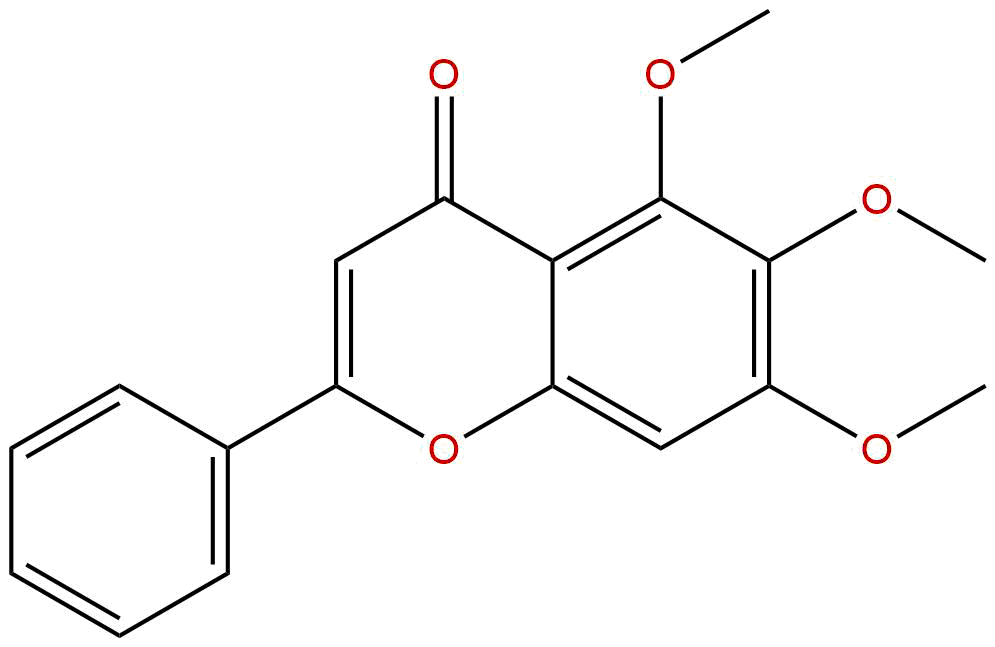
5,6,7-Trimethoxyflavone (TMF), as an important member of the multi methoxyflavone family, has a chemical structure in which the hydroxyl groups on the 5th, 6th, and 7th carbon atoms of the flavonoid nucleus are replaced by methoxy groups (- OCH ∝). From a biosynthetic perspective, TMF is a 5,6,7-trimethyl ether derivative of the classic flavonoid compound Baicalein. Baicalin is a traditional Chinese medicine called Huangqin(Scutellaria baicalensis One of the main active ingredients of Georgi, known for its various pharmacological effects such as anti-inflammatory, antioxidant, and antiviral effects. TMF, as its methylated product, not only retains some of the activity of the parent compound, but also exhibits some unique and even superior biological characteristics due to the introduction of methoxy groups. TMF originally originated from the plant Purple Pearl(Callicarpa It was isolated from spp. and subsequent studies confirmed its presence in various plants. Early research revealed its significant antiviral activity, particularly its inhibitory effect on herpes simplex virus type 1 (HSV-1), making it a prominent figure in the field of antiviral drug development.
With the deepening of research, the pharmacological activity spectrum of TMF continues to expand. In addition to antiviral effects, increasing evidence suggests that TMF has potential applications in various fields such as antiplatelet aggregation, anti-inflammatory, antioxidant, anti-tumor, and neuroprotection. Especially its role in antiplatelet aggregation involves multiple key targets, such as cyclooxygenase (PTGS1/COX-1, PTGS2/COX-2), integrin α IIb β 3 (ITGA2B/ITGB3), P2Y12 receptor (P2RY12/P2Y12), thromboxane A2 receptor (TBXA2R), and phosphodiesterase 3A (PDE3A), forming a complex regulatory network, suggesting that it may become a novel candidate molecule for antithrombotic therapy. This review aims to systematically review the research progress of 5,6,7-trimethoxyflavone, starting from its chemical structure and physicochemical properties, and deeply explore its plant origin, extraction methods, pharmacological activity, mechanism of action, medicinal characteristics, and clinical application prospects, in order to provide comprehensive scientific basis for the in-depth research and future development of this natural product.
Chemical structure and physicochemical properties
The chemical essence of 5,6,7-trimethoxyflavone belongs to the flavonoid class, and its core skeleton is composed of two benzene rings (A ring and B ring) connected by an oxygen-containing pyran ring (C ring). Its precise chemical structural feature is that a methoxy group (- OCH ∝) is attached to each carbon atom at positions 5, 6, and 7 of the A ring, while there is no substituent on the B ring. According to the naming convention of flavonoids, their systematic name is 5,6,7-trimethoxy-2-phenyl-4H-1-benzopyran-4-one. Its molecular formula is C ₁₈ H ₁₆ O ₅, and its CAS registration number is 973-67-1. Compared with the parent compound baicalein (5,6,7-trihydroxyflavone), the three phenolic hydroxyl groups of TMF are completely methylated, and this structural modification has a decisive impact on its physicochemical properties.
In terms of physical and chemical properties, the molecular weight of TMF is 312.32 g/mol. Its lipid water partition coefficient (LogP) is 2.9985, indicating that the compound has moderate to high lipophilicity and is easy to penetrate biological membranes. This characteristic is highly consistent with its prediction of high blood-brain barrier (BBB) permeability, suggesting that TMF has the potential to act on central nervous system targets. The topological polar surface area (TPSA) is 57.90 Å ², which is lower than the threshold for passive transport across the blood-brain barrier (approximately 60-70 Å ²), further supporting its good central nervous system permeability. However, high lipophilicity also brings a significant challenge - poor water solubility. The data shows that the water solubility of TMF is only 0.0015 mg/mL (about 4.8 μ M), which belongs to the category of extremely low solubility. Low water solubility is a common challenge for many multi methoxy flavonoids, which severely limits the oral absorption, bioavailability, and in vivo delivery efficiency of drugs, and is one of the key bottlenecks in drug development.
In addition, regarding its stability, TMF, as a flavonoid compound, is relatively stable under acidic conditions, but may undergo ring opening degradation in strongly alkaline environments. Its stability to light and heat is average, and long-term exposure may lead to structural changes. It is worth noting that the Ames test result in the drug properties parameter is 0.9, which usually indicates that the compound presents a positive or weakly positive result in the standard bacterial recovery mutation test, suggesting that it may have potential genetic toxicity. Although this value is close to the critical value, more comprehensive genetic toxicology evaluations are still needed in subsequent drug development. The prediction result of hERG inhibition is' no ', indicating that TMF has a low risk in terms of cardiac safety and is less likely to cause serious cardiac side effects such as QT interval prolongation. Overall, the chemical structure of TMF determines its dual characteristics of high membrane permeability and low water solubility, which is both an advantage for its pharmacological effects and a major obstacle to its clinical translation.
Plant sources and extraction methods
5,6,7-trimethoxyflavone is not a specific plant specific ingredient, but a natural product distributed in various plants. One of the earliest sources discovered and reported was the genus Purple Pearl in the family Lamiaceae(Callicarpa)Plants. The discovery of TMF has provided some chemical and pharmacological explanations for these traditional uses. In addition to the Purple Pearl genus, TMF also exists in plants of other families and genera, such as the Rutaceae citrus genus(Citrus)Plants, especially those with abundant content in their skin. The peel of citrus fruits is an enriched site for various methoxyflavones, such as nobiletin and tangeretin, and TMF is often detected as a trace component in them. In addition, TMF has also been reported in certain plants such as Asteraceae and Fabaceae. The diversity of its plant sources suggests that TMF may play an important ecological role in the plant kingdom, such as resisting pathogenic microorganisms or protecting against ultraviolet radiation.
Due to the low content of TMF in plants and its strong lipophilicity, traditional extraction methods often require the use of organic solvents. Currently, the most commonly used extraction method is solvent extraction. According to the principle of "similar solubility", it is crucial to choose organic solvents with high solubility for TMF. Common solvents include methanol, ethanol, ethyl acetate, chloroform, or their mixed solvents. For example, using ethanol water (such as 70% or 95% ethanol) system for reflux extraction or cold soaking extraction can effectively dissolve TMF from plant materials. In order to improve extraction efficiency and selectivity, modern extraction techniques have also been widely applied. Ultrasonic assisted extraction (UAE) utilizes the cavitation effect of ultrasound to destroy plant cell walls, accelerate solute release, and achieve higher extraction rates in a shorter period of time. Microwave assisted extraction (MAE) utilizes the body heating effect of microwaves to rapidly increase the temperature and pressure inside cells, thereby promoting the rapid dissolution of active ingredients. These technologies have the advantages of time-saving, low solvent consumption, and high extraction rate compared to traditional methods.
After extraction, the crude extract obtained has complex components and requires further separation and purification steps to obtain high-purity TMF. Common separation methods include liquid-liquid extraction, column chromatography, and preparative high-performance liquid chromatography (Prep HPLC). Liquid liquid extraction typically uses solvents of different polarities (such as petroleum ether, ethyl acetate, n-butanol) to grade crude extracts and enrich TMF in the moderately polar ethyl acetate fraction. Column chromatography is the core purification method, and commonly used stationary phases include silica gel, polyamide, Sephadex LH-20, etc. Silica gel column chromatography often uses gradient elution (such as petroleum ether ethyl acetate or chloroform methanol systems) to achieve separation based on the difference in polarity between TMF and other components. Polyamide column chromatography utilizes its ability to form hydrogen bonds with flavonoids, resulting in good separation of flavonoid glycosides and aglycones. Sephadex LH-20 gel column chromatography is mainly used for separation according to molecular size, and is often used for the final refining step. Finally, TMF monomer compounds with a purity of over 98% can be obtained by preparative HPLC using a reverse phase C18 column and acetonitrile water or methanol water mobile phase system. The design of the entire extraction and separation process needs to comprehensively consider cost, efficiency, environmental protection, and the purity requirements of the target product.
Pharmacological activity research
In recent years, significant progress has been made in the pharmacological activity research of 5,6,7-trimethoxyflavone, revealing its potential therapeutic value in multiple disease models. Its activity spectrum is extensive, covering multiple aspects such as antiviral, antiplatelet aggregation, anti-inflammatory, antioxidant, anti-tumor, and neuroprotective effects.
Antiviral activity One of the earliest reported pharmacological activities of TMF is its antiviral effect. Research has confirmed that TMF has a significant inhibitory effect on herpes simplex virus type 1 (HSV-1). HSV-1 is a common DNA virus that can cause diseases such as oral herpes, keratitis, and even encephalitis. The anti HSV-1 mechanism of TMF may involve multiple steps, including direct inactivation of virus particles, inhibition of virus adsorption and penetration into host cells, and interference with virus DNA replication and protein synthesis. In addition, some studies suggest that TMF may have certain inhibitory activity against other viruses such as enterovirus 71 (EV71) and influenza virus, but its specific effects and mechanisms still need further verification.
Antiplatelet aggregation activity This is one of the most closely studied areas in current TMF research. Platelets play a central role in the occurrence and development of cardiovascular diseases such as hemostasis, thrombosis and atherosclerosis. Multiple in vitro and in vivo experiments have shown that TMF can effectively inhibit platelet aggregation induced by various inducers such as arachidonic acid, ADP, collagen, and thrombin. Its strength of action is even better than the classic antiplatelet drug aspirin. The antiplatelet effect of TMF is not achieved through a single pathway, but acts on multiple key targets, forming a complex regulatory network. For example, it can inhibit the activity of cyclooxygenase-1 (COX-1) and cyclooxygenase-2 (COX-2), thereby reducing the production of thromboxane A ₂ (TXA ₂); At the same time, it can also antagonize the P2Y12 receptor on the surface of platelets and block ADP mediated signaling; In addition, the regulation of integrin α IIb β 3 (GPIIb/IIIa) receptors, phosphodiesterase (PDE), and thromboxane A2 receptor (TP receptor) is also involved in its antiplatelet effect. This multi-target mode of action endows TMF with unique advantages, which may reduce the risk of common resistance and side effects of single target drugs.
Anti inflammatory and antioxidant activity Inflammation and oxidative stress are common pathological foundations of many chronic diseases. Research has shown that TMF exhibits good anti-inflammatory effects in various inflammatory models. It can significantly inhibit the production of nitric oxide (NO), prostaglandin E ₂ (PGE ₂), and various pro-inflammatory cytokines (such as TNF - α, IL-1 β, IL-6) induced by lipopolysaccharide (LPS) in macrophages. The mechanism may be related to the inhibition of key inflammatory signaling pathways such as nuclear factor kappa B (NF - κ B) and mitogen activated protein kinase (MAPK) activation. At the same time, TMF also exhibits certain antioxidant capacity, which can directly eliminate free radicals (such as DPPH free radicals, ABTS cationic free radicals) and enhance the activity of endogenous antioxidant enzymes (such as superoxide dismutase SOD, glutathione peroxidase GSH Px) in cells, thereby reducing oxidative damage.
Antitumor activity More and more evidence suggests that TMF has inhibitory effects on proliferation and induces apoptosis in various cancer cell lines. For example, in cancer cell lines such as liver cancer, colon cancer, breast cancer, and lung cancer, TMF can play an anti-tumor effect by blocking cell cycle (such as G0/G1 phase or G2/M phase block), activating mitochondrial apoptosis pathway (up regulating Bax, down regulating Bcl-2, and releasing cytochrome c), and inhibiting PI3K/Akt/mTOR and other survival promoting signaling pathways. In addition, TMF has been found to reverse multidrug resistance (MDR) in tumor cells, which may be related to its ability to inhibit drug efflux pumps such as P-glycoprotein (P-gp), thereby increasing the accumulation of chemotherapy drugs in cells.
Neuroprotective activity Given the excellent blood-brain barrier permeability of TMF, its potential application in neurodegenerative diseases such as Alzheimer's disease and Parkinson's disease has attracted the interest of researchers. Preliminary studies have shown that TMF can protect neurons from toxic damage induced by β - amyloid protein (A β), inhibit excessive phosphorylation of tau protein, and alleviate oxidative stress and neuroinflammatory responses. These findings suggest that TMF may be a potential neuroprotective agent, but its specific efficacy and safety in vivo still need to be further evaluated through animal models and clinical trials.
Mechanism of action and molecular targets
The pharmacological diversity of 5,6,7-trimethoxyflavonoids is rooted in their complex interactions with multiple biomolecule targets. A deep understanding of its mechanism of action is crucial for developing it into clinical drugs. The following will focus on its key molecular targets and signaling pathways in antiplatelet aggregation and anti-inflammatory effects.
Molecular mechanism of antiplatelet aggregation The antiplatelet effect of TMF is one of its most prominent pharmacological properties, and its mechanism involves a multi-target synergistic network.
1. Arachidonic acid (AA) metabolic pathway TMF is an inhibitor of cyclooxygenase (COX). It can inhibit both constitutive expression of COX-1 and inducible expression of COX-2. COX is a key enzyme involved in AA metabolism to produce prostaglandin H ₂ (PGH ₂), which subsequently generates the potent platelet aggregation inducer TXA ₂ under the action of thromboxane A ₂ synthase. By inhibiting COX activity, TMF significantly reduced the generation of TXA ₂, thereby inhibiting platelet aggregation induced by AA and low concentration collagen. This is similar to the mechanism of action of aspirin, but the inhibition of COX-2 by TMF may bring additional anti-inflammatory benefits.
2. ADP receptor signaling pathway ADP is an important amplification signal for platelet aggregation, mainly acting through the P2Y1 and P2Y12 receptors on the surface of platelets. Among them, the P2Y12 receptor is a key target for antiplatelet drugs such as clopidogrel. Research has shown that TMF can directly antagonize P2Y12 receptors, block ADP binding, and subsequently inhibit downstream phosphatidylinositol 3-kinase (PI3K)/protein kinase B (Akt) signaling pathways, ultimately inhibiting platelet aggregation and granule release. This direct receptor antagonism makes its antiplatelet effect independent of upstream TXA ₂ production.
3. Integrin α IIb β 3 (GPIIb/IIIa) receptor Integrin α IIb β 3 is the ultimate common pathway for platelet aggregation. Various activation signals ultimately lead to conformational changes in the receptor, which then bind to fibrinogen and mediate cross-linking between platelets. TMF has been found to inhibit the activation of integrin α IIb β 3, reduce its binding to fibrinogen, and directly block the final step of platelet aggregation.
4. Other targets TMF can also inhibit the activity of phosphodiesterase (PDE), especially PDE3A, and increase the level of cAMP in platelets. CAMP is a potent inhibitor of platelet activation, and its elevated levels can inhibit multiple activation pathways. In addition, TMF can also antagonize the thromboxane A ₂ receptor (TP receptor) and directly block the signaling of TXA ₂. This simultaneous intervention on multiple key nodes enables TMF to have a powerful and comprehensive antiplatelet aggregation effect, and may overcome the "resistance" phenomenon of single target drugs such as aspirin or clopidogrel.
Molecular mechanism of anti-inflammatory effect The anti-inflammatory activity of TMF is mainly achieved by regulating key inflammatory signaling pathways.
1. NF - κ B signaling pathway NF - κ B is the core transcription factor of inflammatory response. In the resting state, NF - κ B binds to its inhibitory protein I κ B α and exists in an inactive form in the cytoplasm. When stimulated by inflammation such as LPS and TNF - α, I κ B kinase (IKK) is activated, phosphorylating I κ B α, leading to its ubiquitination degradation, releasing NF - κ B into the nucleus, and initiating the transcription of various pro-inflammatory genes (such as iNOS, COX-2, TNF - α, IL-6). TMF can inhibit the activity of IKK, prevent the phosphorylation and degradation of I κ B α, thereby trapping NF - κ B in the cytoplasm and effectively suppressing the production of inflammatory mediators.
2. MAPK signaling pathway The MAPK family, including ERK, JNK, and p38 MAPK, also plays important roles in inflammatory responses. After being activated by upstream signals, these kinases can phosphorylate and activate various transcription factors, promoting the expression of inflammatory genes. Research has shown that TMF can inhibit LPS induced phosphorylation of JNK and p38 MAPK, thereby weakening inflammatory signaling.
3. NLRP3 inflammasome NLRP3 inflammasome is a multi protein complex, and its activation can lead to the activation of caspase-1, thereby promoting the maturation and secretion of IL-1 β and IL-18, and inducing cell apoptosis. Preliminary evidence suggests that TMF may exert anti-inflammatory effects by inhibiting the assembly and activation of NLRP3 inflammasomes by suppressing the production of reactive oxygen species (ROS) or interfering with potassium ion efflux.
In summary, TMF achieves antiplatelet aggregation by acting on multiple targets such as COX, P2Y12 receptor, integrin α IIb β 3, PDE, TP receptor, etc; By inhibiting the NF - κ B and MAPK signaling pathways, as well as NLRP3 inflammasome, anti-inflammatory effects are exerted. This multi-target and multi pathway mode of action is the molecular basis for its broad and powerful pharmacological activity.
Evaluation of drug properties and pharmacokinetics
The evaluation of drug properties is crucial in converting natural products with good in vitro activity into clinically usable drugs. Although 5,6,7-trimethoxyflavone has outstanding pharmacological activity, its pharmacological properties face significant challenges, mainly focused on solubility and pharmacokinetic properties.
Analysis of drug properties parameters According to the provided parameters, the molecular weight of TMF (312.32 Da) conforms to the "Lipinski Five Rules" (<500 Da), and LogP (2.9985) is also within the ideal range (<5), indicating its good membrane permeability. The low TPSA (57.90 Å ²) indicates a strong ability for oral absorption and penetration of the blood-brain barrier. HERG inhibition prediction is negative, which is a positive signal indicating a lower risk of cardiac toxicity. However, the Ames test result was 0.9, which is a highly alert signal indicating that the compound or its metabolites may have potential mutagenicity and must undergo rigorous genetic toxicology evaluation in subsequent development. The most critical obstacle is its extremely low water solubility (0.0015 mg/mL), which seriously violates the requirement for water solubility in the Lipinski Five Rules (it is generally believed that solubility>0.1 mg/mL is beneficial for oral absorption). Low water solubility directly leads to low oral bioavailability, making it difficult to achieve effective therapeutic concentrations in vivo.
Pharmacokinetic characteristics At present, there is insufficient systematic research on the pharmacokinetics of TMF in vivo, but based on its physicochemical properties and the metabolic characteristics of related analogues (such as chenpi extract and huangqin extract), its general outline can be inferred.
1. absorb Due to extremely poor water solubility, the oral absorption of TMF will be very limited and there will be significant individual differences. Although its high lipophilicity facilitates the penetration of lipid bilayers through the intestinal epithelial cell membrane, the dissolution rate is the rate limiting step of absorption. After absorption, TMF may mainly be transported through the lymphatic system, bypassing the first pass effect of the liver.
2. distribution TMF has high lipophilicity and low TPSA, indicating that it has a large apparent distribution volume (Vd) and can be widely distributed in tissues throughout the body, especially effectively penetrating the blood-brain barrier and entering the central nervous system. It may also highly bind to plasma proteins, especially albumin.
3. Metabolism As a multi methoxyflavonoid, the metabolism of TMF mainly occurs in the liver. Its metabolic pathways mainly include:O-demethylation Under the catalysis of cytochrome P450 enzymes (mainly CYP1A2, CYP2C9, CYP3A4, etc.), methoxy (- OCH ∝) is converted to hydroxyl (- OH), producing baicalein or other mono/di hydroxylated metabolites. These metabolites may retain or enhance the pharmacological activity of the parent compound.Glucuronidation and sulfation The phenolic hydroxyl groups generated by demethylation, as well as other hydroxyl groups that may exist, will further bind with glucuronic acid or sulfuric acid to form more water-soluble complexes, which are easier to excrete from urine and bile.Other reactions Oxidation reactions of the A or C ring may also occur.
4. excretion TMF and its metabolites are mainly excreted through bile and urine. Due to its large molecular weight and strong lipophilicity, bile excretion may be its main clearance pathway, and there is a possibility of enterohepatic circulation, thereby prolonging its retention time in the body.
Strategies for improving drug properties Given the low solubility and potential genetic toxicity of TMF, its pharmacological improvement is a key direction for future research. Possible strategies include:
- Formulation technology Modern formulation technologies such as solid dispersions, nanocrystals, liposomes, cyclodextrin inclusion complexes, and phospholipid complexes can significantly improve the solubility and dissolution rate of TMF, thereby enhancing its oral bioavailability.
- Prodrug design Introducing water-soluble groups (such as phosphate esters, amino acid esters, succinic acid esters, etc.) into the phenolic hydroxyl group of TMF (obtained by demethylation) or other sites of the flavonoid core to make prodrugs. The active parent drug is released from the prodrug after enzymatic or chemical hydrolysis in the body, which can effectively solve the problems of solubility and absorption.
- Structural modification On the basis of maintaining the core pharmacophore, reasonable structural modifications are made to the B or A ring of TMF, introducing polar groups (such as hydroxyl, carboxyl, amino, etc.) to improve water solubility and reduce potential genetic toxicity without significantly affecting activity.
- Genetic toxicity assessment A standard combination of in vitro and in vivo genetic toxicity tests (such as Ames test, in vitro micronucleus test, in vivo bone marrow micronucleus test, etc.) must be conducted to determine its genetic toxicity risk. If it is confirmed that there is a risk, it needs to be eliminated or reduced through structural modification.
Clinical application prospects and prospects
5,6,7-trimethoxyflavone, with its unique chemical structure and various pharmacological activities, has shown promising clinical application prospects in multiple therapeutic fields, especially in the fields of cardiovascular and cerebrovascular diseases and viral infections.
In the field of cardiovascular and cerebrovascular diseases This is the most promising application direction of TMF. Its powerful and multi-target antiplatelet aggregation effect makes it a promising candidate for development as a new type of antithrombotic drug. Compared with existing first-line antiplatelet drugs such as aspirin and clopidogrel, the potential advantages of TMF are:
1. Multi target synergistic effect Simultaneously acting on multiple targets such as COX, P2Y12 receptor, integrin α IIb β 3, theoretically can provide more comprehensive and potent antiplatelet effects, and may reduce the incidence of single target drug resistance.
2. Simultaneously possessing anti-inflammatory effects Atherosclerosis is essentially a chronic inflammatory disease. The anti-inflammatory activity of TMF (inhibiting NF - κ B and MAPK pathways) may bring additional vascular protection benefits for TMF, which not only inhibits thrombosis, but also delays the progression of atherosclerosis.
3. Potential neuroprotective effects For patients with ischemic stroke, the high blood-brain barrier permeability of TMF enables it to exert neuroprotective effects in cerebral ischemia-reperfusion injury, which may make it an ideal drug with dual functions of antithrombotic and neuroprotective.
Antiviral field The anti-HSV-1 activity of TMF provides a possibility for its treatment of herpes virus infections such as oral herpes, genital herpes, and herpetic keratitis. Especially for virus strains that develop resistance to existing antiviral drugs such as acyclovir, TMF may serve as an alternative or complementary treatment option. In addition, its potential broad-spectrum antiviral activity also deserves further exploration.
Anti tumor field The anti-tumor activity of TMF, especially its ability to reverse multidrug resistance, makes it a promising adjuvant drug for tumor chemotherapy. By inhibiting efflux pumps such as P-gp, TMF can increase the concentration of traditional chemotherapy drugs in drug-resistant tumor cells and restore their sensitivity. In addition, its direct cytotoxic effect and ability to induce apoptosis also make it potential as a direct anti-tumor drug, especially for certain specific types of cancer.
Future research directions and challenges:
Despite its broad prospects, the clinical translation of TMF still faces significant challenges, and future research should focus on the following areas:
1. Resolve the bottleneck of drug development This is the top priority in all research. A significant amount of effort must be invested in developing effective formulation technologies (such as nano formulations, solid dispersions) or designing rational prodrugs to significantly improve the water solubility and oral bioavailability of TMF.
2. Systematic pharmacokinetic study A comprehensive in vivo pharmacokinetic study is required, including absorption, distribution, metabolism, and excretion (ADME) characteristics, particularly to clarify the main metabolites and their activities, as well as the presence of enterohepatic circulation.
3. toxicological evaluation Given the potential positive signal of Ames test, strict and GLP compliant long-term toxicology studies must be conducted, including genetic toxicity, reproductive toxicity, carcinogenicity, etc., to comprehensively evaluate its safety.
4. In depth elucidation of the mechanism of action Using modern molecular biology techniques such as CRISPR-Cas9 gene editing, proteomics, and metabolomics, we aim to more accurately identify the direct targets of TMF and elucidate its synergistic mechanism of multi-target action.
5. Study on Structure Activity Relationship Systematically synthesize a series of TMF analogs and study the effects of different substituents (such as B-ring substitution and methoxy position changes) on their activity, selectivity, and drug formation, providing guidance for discovering better candidate compounds.
6. In vivo efficacy verification Validate the in vivo efficacy and safety of TMF and its optimized formulations in various animal models highly correlated with human diseases, such as arterial thrombosis models, stroke models, HSV-1 infection models, and tumor xenograft models.
Conclusion
5,6,7-trimethoxyflavone, as a multi methoxy derivative of baicalein, is an active molecule that combines the charm of traditional natural products with the potential for modern drug development. It is widely present in various plants such as purple pearls and citrus, and its unique chemical structure endows it with biological characteristics of high lipophilicity, good membrane permeability, and multi-target action. From the initial discovery of anti-HSV-1 activity to the highly anticipated antiplatelet aggregation effect in recent years, the pharmacological activity spectrum of TMF has been continuously expanded and deepened. It exhibits a unique advantage in the prevention and treatment of cardiovascular and cerebrovascular diseases by inhibiting COX, antagonizing P2Y12 receptors, and blocking the activation of integrin α IIb β 3 through multiple mechanisms, demonstrating antiplatelet effects comparable to or even surpassing the classical drug aspirin. At the same time, it has anti-inflammatory, antioxidant, and potential neuroprotective effects.
However, the path to clinical translation of TMF is not smooth. Its extremely low water solubility is the primary bottleneck restricting its drug development, and the potential positive signal of Ames test also casts a shadow over its safety. Future research must confront these challenges by overcoming their solubility and potential genetic toxicity issues through innovative formulation techniques, rational prodrug design, or fine structural modifications. Meanwhile, in-depth elucidation of its in vivo pharmacokinetic behavior, long-term toxicological characteristics, and molecular mechanisms of action will be the cornerstone for promoting its clinical application.
In summary, 5,6,7-trimethoxyflavone is a natural product lead compound with great research value and development potential. Despite the numerous challenges ahead, through interdisciplinary collaborative efforts, especially the deep integration of medicinal chemistry, pharmacy, pharmacology, and toxicology, it is expected to transform it from a "star molecule in the laboratory" into a truly beneficial clinical drug for patients, especially in major disease fields such as antithrombotic and antiviral. In depth research on TMF may not only lead to the emergence of a new class of multi-target therapeutic drugs, but also provide valuable experience and examples for mining modern drugs from traditional natural products.