Introduction/Overview
Natural products, as an important source of drug discovery, play an irreplaceable role in the long history of human struggle against diseases. Flavonoids, as the most widely distributed class of secondary metabolites in nature, have attracted much attention due to their structural diversity and extensive biological activity. Kaempferol and its glycoside derivatives are important members of flavonoids, and extensive research has shown that they have various pharmacological activities such as antioxidant, anti-inflammatory, anti-tumor, cardiovascular protection, and neuroprotection. However, naturally occurring flavonoid glycosides have complex structures, and their glycosylation modification patterns (such as the type, position, and number of sugars) and further acylation modifications often have a decisive impact on their physicochemical properties, bioavailability, and specific biological activities.
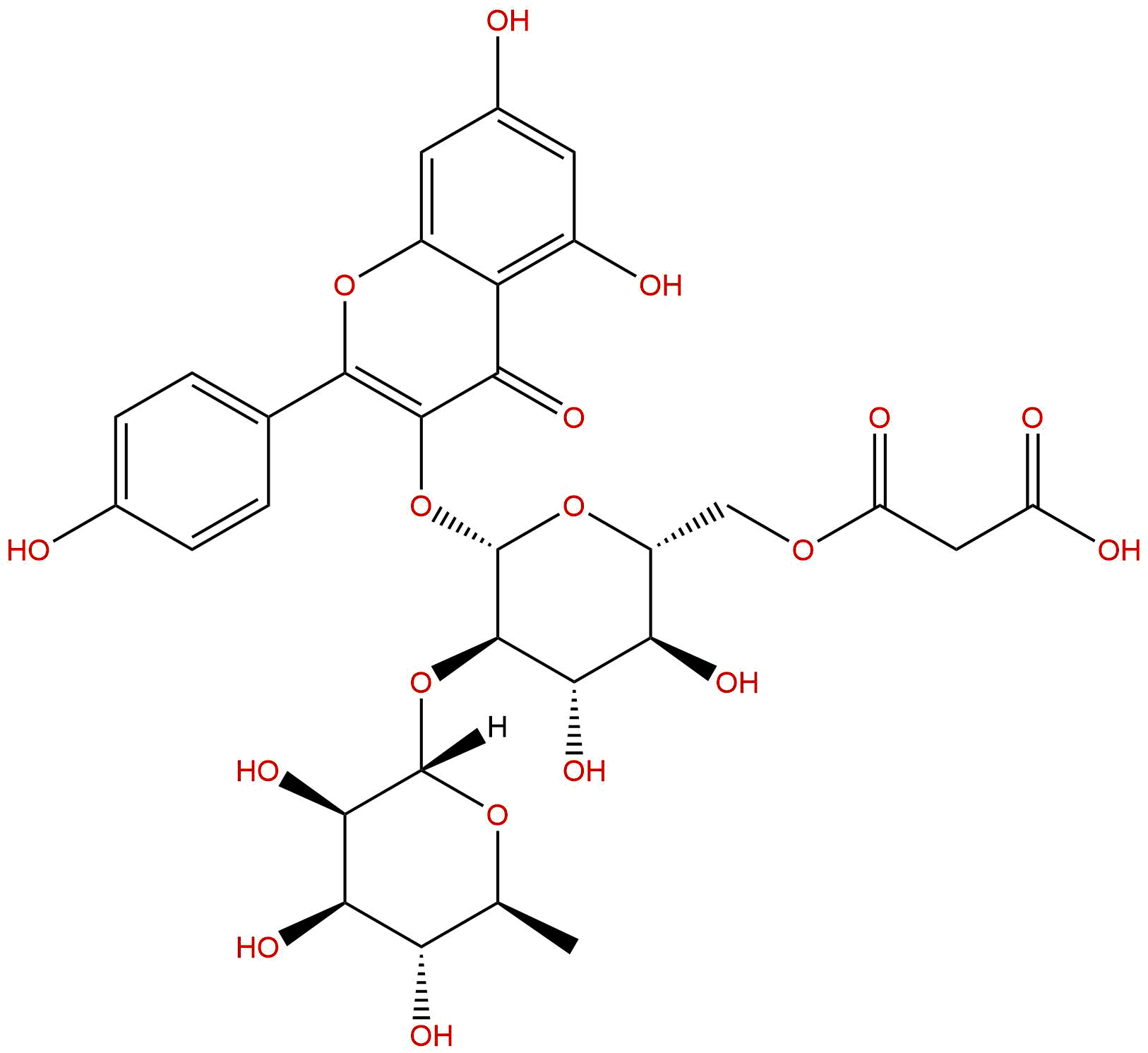
Kaempferol 3-O - (2 "- O - α - rhamnosyl-6" - O-propanediol) - β - glucoside (KRMG) is a structurally unique acylated flavonoid glycoside. Its core structure is kaempferol, which is connected to a glucose group modified by double substitution at the 3rd hydroxyl group: the 2 "hydroxyl group of glucose is connected to an α - L-rhamnose group to form a disaccharide chain; The 6 "hydroxyl group of glucose is esterified by a malonyl group. This fine structure, which contains both disaccharideization and terminal malonyl modification, is relatively rare in nature, endowing KRMG with unique chemical stability and potential specific biological activity. In recent years, with the advancement of separation and identification techniques, KRMG has been discovered in various medicinal plants and has gradually become a new hotspot in natural product pharmacology research. This article aims to systematically review the chemical structure, plant origin, pharmacological activity, mechanism of action, and pharmacological evaluation of KRMG, in order to provide comprehensive scientific basis for the further development and utilization of this compound.
Chemical structure and physicochemical properties
Chemical structure analysis
The chemical full name of KRMG is Kaempferol 3-O - (2 "- O - α - rhamnosyl-6" - O-malonyl) - β - glucoside, with a molecular formula of C ∝₀ H ∝₂ O ₁ and a molecular weight of 680.5680 Da. Structurally, KRMG belongs to the class of flavonols, with its parent nucleus being kaempferol (3,5,7,4 '- tetrahydroxyflavone). The 3rd hydroxyl group of kaempferol is a key site for glycosylation, and the connected sugar chain is composed of a β - D-glucoside. The 2 "hydroxyl group of the glucoside is further linked to an alpha-L-l-carrying rhamnosyl group via a 1 → 2 glycosidic bond, forming a variant of the sophorose structure. More importantly, the 6 "hydroxyl group of the glucoside is modified by a malonyl ester bond. Therefore, the complete structure of KRMG can be considered as: kaempferol-3-O - β - D-glucose - (2 → 1) - α - L-rhamnose-6 ″ - O-malonic acid monoester.
This structural feature makes it unique in the flavonoid glycoside family. The presence of malonyl groups not only increases the polarity and acidity of molecules, but may also affect their interactions with biomolecules such as proteins and enzymes. Meanwhile, the spatial configuration of disaccharide chains also provides specific three-dimensional structures for molecules, which may be closely related to their targeted binding ability.
Physicochemical properties
Based on computational chemistry and experimental data, KRMG exhibits typical strong polarity flavonoid glycoside characteristics. Its lipid water partition coefficient (LogP) is -0.2720, indicating that the compound has good hydrophilicity and is not easily able to penetrate the lipid bilayer of biological membranes. The topologically polar surface area (TPSA) is as high as 292.5700 Å ², far exceeding the recommended upper limit of 140 Å ² for oral medications, further confirming its strong polarity and poor membrane permeability. The predicted value of water solubility is 3.6661 mg/mL, indicating good water solubility, which provides convenience for its dissolution and distribution in biological fluids, but also limits its transmembrane absorption. In addition, the calculation prediction shows that its blood-brain barrier (BBB) permeability is low, indicating that it is not easy to enter the central nervous system, which may limit its application in the treatment of neurodegenerative diseases to some extent, but may also reduce central nervous system related side effects. The prediction of hERG inhibition is' no ', indicating a lower risk of inducing QT interval prolongation and arrhythmia in the heart. The Ames test result is 0.0, indicating that the compound has no mutagenicity in the bacterial recovery mutation test and preliminarily demonstrates good genetic toxicity safety.
Plant sources and extraction methods
Plant-based
KRMG, as a secondary metabolite, mainly exists in certain medicinal and edible plants. Although its distribution is not as widespread as kaempferol-3-O-rutinoside (rutin) or kaempferol-3-O-glucoside, it has been identified in plants of multiple families and genera. The main sources of plants include:
- Brassicaceae plants Some types of mustard greens (such as Brassica juncea) and cabbage (Brassica oleracea) have been reported to contain KRMG. These plants are common vegetables in daily diet, suggesting that KRMG may have potential impacts on human health through dietary intake.
- Leguminous plants KRMG has also been isolated from some leguminous plants, especially certain medicinal plants of the Astragalus genus. As a traditional Qi tonifying medicine, the research on the active ingredients of Huangqi has always been a hot topic, and the discovery of KRMG has enriched its pharmacological substance basis.
- Rosaceae plants KRMG has also been detected in berry fruits such as Fragaria × ananassa. Berries are rich in various flavonoids, and KRMG is one of the structurally complex components.
- Other plants In addition, there are sporadic reports in certain plants such as Asteraceae and Lamiaceae. It is worth noting that the content of KRMG is usually low and often coexists with other structurally similar flavonoid glycosides, which poses certain challenges to its specific separation.
Extraction and Separation Methods
Due to the strong polarity and thermal instability of KRMG (especially the ester bond of malonyl group is easily hydrolyzed under high temperature or alkaline conditions), its extraction and separation require a gentle and efficient method.
Extract The most commonly used extraction solvents are aqueous alcohols, such as methanol water or ethanol water mixed solvents (usually with an alcohol concentration of 50% -80%), which use the principle of "similar solubility" to dissolve polar flavonoid glycosides from plant materials. To improve extraction efficiency, ultrasound assisted extraction or microwave-assisted extraction techniques are often used, which can accelerate cell wall rupture and component release at lower temperatures, reducing the degradation of target compounds. After the extraction solution is concentrated under reduced pressure, it undergoes preliminary degreasing and impurity removal treatment.
Separation and Purification Due to the structural similarity between KRMG and other flavonoid glycosides such as kaempferol-3-O-sophoroside and kaempferol-3-O-glucoside, conventional silica gel column chromatography is difficult to achieve effective separation. Modern separation strategies typically use a combination of multi-step chromatography methods:
- Macroporous adsorption resin column chromatography As the first step of rough separation, using different concentrations of ethanol water gradient elution can enrich flavonoid glycosides and remove a large amount of impurities such as sugars and tannins.
- Polyamide column chromatography Polyamide has a special adsorption effect on flavonoids, which can effectively separate flavonoid glycosides with different degrees of glycosylation through hydrogen bonding adsorption and gradient elution using solvents of different polarities (such as water, methanol, ethanol, etc.).
- Preparation type high-performance liquid chromatography This is a key step in obtaining high-purity KRMG. Usually, a reverse phase C18 chromatographic column is used, with acidic water acetonitrile or acidic water methanol system as the mobile phase (such as 0.1% formic acid water acetonitrile). Through isocratic or gradient elution, combined with a UV detector (usually detected at 254-365 nm), baseline separation of KRMG from other analogues can be achieved. Due to the presence of malonyl groups, the retention time of KRMG on the reverse phase column is usually slightly longer than its non acylated counterpart (such as kaempferol-3-O-sophoroside).
Throughout the entire extraction and separation process, it is crucial to control the pH value (usually maintained in an acidic environment such as pH 3-4) and temperature (low-temperature operation) to prevent hydrolysis of malonyl groups and breakage of glycosidic bonds.
Pharmacological activity research
Although the research history of KRMG is relatively short, existing in vitro and in vivo experimental evidence has revealed its multifaceted pharmacological potential, mainly focused on antioxidant, anti-inflammatory, anti-tumor, and metabolic regulation fields.
antioxidant activity
As a flavonoid compound, KRMG inherits the powerful free radical scavenging ability of the parent compound kaempferol. The multiple phenolic hydroxyl groups in its molecular structure (especially the ortho dihydroxy group in the B ring and the resorcinol structure in the A ring) are key functional groups that provide hydrogen atoms, quench reactive oxygen species (ROS), and reactive nitrogen species (RNS). Research has shown that KRMG exhibits significant scavenging activity in in vitro antioxidant models such as DPPH and ABTS, with IC ₅₀ values typically lower than those of its non acylated or monoglycoside analogues, suggesting that the introduction of malonyl groups may enhance its antioxidant efficacy. A possible explanation is that the carboxyl anion of malonyl can stabilize phenoxide free radicals through resonance, thereby prolonging the free radical scavenging chain reaction. In addition, KRMG can chelate transition metal ions (such as Fe ² ⁺, Cu ² ⁺), inhibit hydroxyl radicals generated by Fenton reaction, and thus exert indirect antioxidant effects.
anti-inflammatory activity
Inflammation is the common pathological basis of various chronic diseases. KRMG has shown good anti-inflammatory effects in cell models. In the lipopolysaccharide (LPS) - stimulated macrophage model (such as RAW264.7 cells), KRMG can significantly inhibit the production of pro-inflammatory mediators such as nitric oxide (NO) and prostaglandin E ₂ (PGE ₂). The mechanism is related to the downregulation of protein expression levels of inducible nitric oxide synthase (iNOS) and cyclooxygenase-2 (COX-2). Meanwhile, KRMG can also reduce the secretion of key pro-inflammatory cytokines such as tumor necrosis factor - α (TNF - α), interleukin-6 (IL-6), and interleukin-1 β (IL-1 β). These effects are mainly attributed to their inhibition of the nuclear factor kappa B (NF - κ B) signaling pathway, which inhibits the nuclear translocation of the p65 subunit by blocking the phosphorylation and degradation of I κ B α, ultimately blocking the inflammatory cascade.
Antitumor activity
The anti-tumor potential of KRMG has been preliminarily validated in various cancer cell lines. Research shows that KRMG has a proliferation inhibitory effect on breast cancer cells (such as MCF-7, MDA-MB-231), liver cancer cells (such as HepG2) and colon cancer cells (such as HT-29). Its mechanism of action involves multiple aspects:
- Inducing cell cycle arrest KRMG can block cancer cells in the G ₀/G ₁ phase or G ₂/M phase, which is related to downregulation of the expression of cyclin D1, cyclin B1, and cyclin dependent kinases (CDK4, CDK2).
- Inducing cell apoptosis KRMG can activate the mitochondrial apoptosis pathway, manifested by a decrease in mitochondrial membrane potential (Δ PSI m), release of cytochrome c into the cytoplasm, and activation of Caspase-9 and Caspase-3, ultimately leading to DNA fragmentation. At the same time, it can upregulate the expression of pro apoptotic protein Bax and downregulate the expression of anti apoptotic protein Bcl-2.
- Inhibit angiogenesis In an in vitro angiogenesis model, KRMG showed the ability to inhibit the proliferation, migration, and tubular formation of human umbilical vein endothelial cells (HUVECs), which may be related to its downregulation of the expression of vascular endothelial growth factor (VEGF) and its receptor (VEGFR2).
It is worth noting that KRMG usually has low toxicity to normal cells and exhibits certain selective anti-tumor activity, making it a potential chemotherapy sensitizer or adjuvant therapy candidate.
Other activities
Preliminary studies also suggest that KRMG may have other biological activities. For example, in the metabolic disease model, KRMG may play an anti diabetes role by activating AMP activated protein kinase (AMPK) signaling pathway, improving insulin resistance and promoting glucose uptake. In addition, based on its antioxidant and anti-inflammatory properties, KRMG has also shown a protective effect against oxidative damage to nerve cells in vitro experiments, suggesting its potential application value in neurodegenerative diseases, although its low BBB permeability is a challenge.
Mechanism of action and molecular targets
The pharmacological activity of KRMG is not caused by a single mechanism, but by the synergistic effect of multiple targets and pathways. A deep understanding of its molecular mechanism is key to translating it into therapeutic drugs.
Regulation of key signaling pathways
- NF - κ B pathway This is one of the core pathways through which KRMG exerts anti-inflammatory and anti-tumor effects. KRMG inhibits the activity of I κ B kinase (IKK), preventing the phosphorylation and ubiquitination degradation of I κ B α, resulting in the retention of NF - κ B dimers (p50/p65) in the cytoplasm, preventing them from entering the nucleus to initiate the transcription of pro-inflammatory genes (such as iNOS, COX-2, TNF - α, IL-6) and anti apoptotic genes (such as Bcl-2, survivor).
- MAPK pathway The mitogen activated protein kinase (MAPK) family, including ERK, JNK, and p38, plays a critical role in cell proliferation, differentiation, and apoptosis. The effect of KRMG on the MAPK pathway is cell and stimulus dependent. In inflammatory models, it typically inhibits LPS induced phosphorylation of p38 and JNK; In some cancer cells, it may induce apoptosis by continuously activating JNK or p38.
- PI3K/Akt/mTOR pathway This pathway is a key regulator of cell growth and survival. KRMG has been shown to inhibit the activity of phosphatidylinositol 3-kinase (PI3K), leading to a decrease in downstream Akt phosphorylation levels and subsequently inhibiting the activation of downstream effector molecules such as mTOR and p70S6K. This helps explain its role in inducing autophagy and apoptosis in cancer cells.
- Nrf2/ARE pathway As the main regulator of cellular antioxidant defense, nuclear factor E2 related factor 2 (Nrf2) plays an important role in the antioxidant function of KRMG. KRMG can promote the dissociation of Nrf2 and Keap1, causing their nuclear translocation and binding to antioxidant response elements (ARE), upregulating the expression of a series of phase II detoxifying enzymes and antioxidant enzymes (such as HO-1, NQO1, SOD, CAT), thereby enhancing the cell's ability to resist oxidative stress.
Potential molecular targets
Although direct target research is not yet sufficient, based on structure-activity relationships and molecular docking simulations, it can be inferred that KRMG may have direct target effects:
- Kinases KRMG may directly inhibit the activity of certain protein kinases, such as PI3K, IKK β, and certain members of the MAPK family, by competitively binding with ATP. Its polyphenolic structure enables it to form hydrogen bonds and π - π stacking with amino acid residues in the ATP binding pocket of the kinase catalytic domain.
- transcription factor In addition to indirectly regulating the activity of NF - κ B and Nrf2, KRMG may also directly interact with the DNA binding domains of these transcription factors, affecting their binding to DNA.
- receptor KRMG may act as a ligand or antagonist for certain cell surface receptors, such as VEGFR and epidermal growth factor receptor (EGFR), thereby affecting downstream signaling.
- enzymes KRMG also has a direct inhibitory effect on enzymes such as COX-2, iNOS, and xanthine oxidase (XO), which is directly related to its anti-inflammatory and antioxidant activities.
In the future, advanced technologies such as affinity chromatography, drug affinity response target stability (DARTS), and cell thermal transition analysis (CETSA), combined with gene knockout/knock in models, will be needed to accurately identify the direct targets of KRMG.
Evaluation of drug properties and pharmacokinetics
Drugability assessment
Drug efficacy evaluation is a bridge connecting active compounds with clinical candidate drugs. According to Lipinski's "Five Rules" (Ro5), the molecular weight of KRMG (680.57 Da) exceeds 500, LogP (-0.27) is less than 5, TPSA (292.57 Å ²) is much larger than 140 Å ², and there are numerous hydrogen bond donors (phenolic and sugar hydroxyl groups) and acceptors, seriously violating Ro5. This suggests that the oral bioavailability of KRMG may be extremely low, making it a typical 'non drug like' molecule. However, many successful drugs in natural products, such as cyclosporine A and paclitaxel, also violate Ro5, indicating the need for non-traditional administration routes or drug delivery systems for these molecules.
Its good water solubility (3.67 mg/mL) is an advantage, which is beneficial for the development of injectable formulations. The low BBB permeability and absence of hERG inhibition risk provide preliminary guarantees for its safety. A negative Ames test also reduces the risk of genetic toxicity. Overall, the development of KRMG as an oral drug is extremely difficult, but it still has potential as a candidate for injectable or topical drugs (such as skin and eye), or as a lead compound for structural modification.
Pharmacokinetic characteristics
At present, there are few direct research reports on the pharmacokinetics of KRMG in vivo, but reasonable inferences can be made based on its structural characteristics and related analogues (such as kaempferol-3-O-rutinoside and malonylflavonoid glycoside).
- absorb After oral administration, the absorption of KRMG in the gastrointestinal tract is extremely poor. Its high polarity and high molecular weight make it difficult to passively diffuse through intestinal epithelial cells. It is likely to be mainly metabolized by gut microbiota in the small intestine. The β - glucosidase and rhamnosidase produced by the gut microbiota gradually hydrolyze glycosidic bonds, first removing the rhamnose and malonyl groups to produce kaempferol-3-O-glucoside, which is ultimately hydrolyzed into the glycoside kaempferol. Therefore, after oral administration of KRMG, the main metabolites detected in the bloodstream may be its metabolites (such as kaempferol and kaempferol-3-O-glucuronide/sulfate complexes), rather than the prototype drug.
- distribution Due to its strong hydrophilicity, the KRMG prototype is mainly distributed in plasma and extracellular fluid, and its binding rate to plasma proteins may be low. Its tissue distribution may be limited to organs with high blood flow and rich transporters such as the liver, kidneys, and intestines. Low BBB permeability limits its entry into the brain parenchyma.
- Metabolism The metabolism of KRMG mainly occurs in the intestine and liver. The gut microbiota is responsible for the hydrolysis of glycosidic bonds, while phase II metabolic enzymes in the liver (such as UDP glucuronosyltransferase UGT and sulfotransferase SULT) undergo extensive binding reactions on the generated glycoside kaempferol, producing glucuronide and sulfate ester complexes, which are its main forms of existence in plasma and urine. Propyl groups may be hydrolyzed by esterases in the body.
- excretion Metabolites are mainly excreted through bile and urine. Due to its large molecular weight and high polarity, bile excretion may be its main clearance pathway, and metabolites are excreted from the body with feces. A small amount of bound substance is excreted in urine through glomerular filtration.
In summary, the oral bioavailability of KRMG's prototype drug is extremely low, and its pharmacological activity in vivo is likely mainly mediated by its metabolites, especially kaempferol and its II complex. This suggests that future pharmacological research needs to focus on the activity of its metabolites and consider using non oral administration routes (such as intravenous injection, intraperitoneal injection) to study the direct effects of the prototype drug.
Clinical application prospects and prospects
Although research on KRMG is still in its early stages, its unique chemical structure and multifaceted pharmacological activities provide a blueprint for its clinical application prospects.
Potential application areas
- Anti inflammatory and immune regulation Based on its strong anti-inflammatory activity, KRMG or its plant extracts rich in KRMG are expected to be developed as adjuvant therapeutic drugs for the treatment of chronic inflammatory diseases such as inflammatory bowel disease, rheumatoid arthritis, and dermatitis. Its low oral bioavailability may actually become an advantage for local use, such as in the development of topical preparations for the treatment of oral ulcers, skin inflammation, or psoriasis.
- neoadjuvant therapy The inhibitory effect of KRMG on various cancer cells and its low normal cytotoxicity make it a candidate for chemotherapy sensitizers. It can be used in combination with conventional chemotherapy drugs such as cisplatin and doxorubicin to reverse tumor cell resistance and enhance chemotherapy efficacy by inhibiting the NF - κ B pathway. In addition, as an angiogenesis inhibitor, it also has potential in anti-tumor metastasis.
- Management of metabolic diseases The antioxidant and anti-inflammatory properties of KRMG, as well as its preliminary AMPK activation, suggest that it may play a role in improving metabolic syndromes such as insulin resistance, non-alcoholic fatty liver disease (NAFLD), and obesity. Developing it as a dietary supplement or functional food ingredient is a possible application direction.
- Cardiovascular protection By inhibiting oxidative stress and inflammatory reaction, KRMG may help to alleviate the occurrence and development of cardiovascular diseases such as atherosclerosis, myocardial ischemia reperfusion injury, etc.
Challenges faced and future research directions
- The issue of bioavailability This is the biggest bottleneck faced by KRMG development. Future research should focus on strategies to improve its bioavailability, including:
- Drug delivery system Develop novel delivery systems such as liposomes, nanoparticles, phospholipid complexes, and cyclodextrin inclusion complexes to protect KRMG from gastrointestinal degradation and promote its transmembrane absorption.
- Prodrug design Modify the hydroxyl group on the malonyl or sugar group, such as introducing ester or phosphate groups, to increase its lipophilicity and release the prototype drug after enzymatic hydrolysis in vivo.
- Innovation in drug delivery routes Explore non oral routes such as transdermal administration, nasal administration, and pulmonary inhalation to bypass first pass effects.
- Deepening of action targets and mechanisms Modern chemical biology techniques are needed to systematically identify the direct protein targets of KRMG and elucidate its structure-activity relationship. Especially to distinguish the active contributions of prototype drugs from metabolites such as resveratrol.
- In vivo efficacy and safety evaluation: It is necessary to systematically evaluate the in vivo efficacy of KRMG (especially by non oral administration) in a variety of animal disease models (such as colitis model, tumor xenotransplantation model, diabetes model). At the same time, conduct comprehensive preclinical safety evaluations for long-term toxicity, reproductive toxicity, and other factors.
- Resources and Synthesis Due to the low content of KRMG in plants, natural extraction costs are high. In the future, it is necessary to develop efficient chemical total synthesis or biosynthetic methods (such as using engineering microorganisms) to obtain sufficient compounds for research and development.
Conclusion
Kaempferol 3-O - (2 "- O - α - rhamnosyl-6" - O-malonyl) - β - glucoside, as a structurally unique acylated flavonoid glycoside, combines dual modifications of disaccharide chains and malonyl groups in its molecule, endowing it with chemical and biological properties beyond ordinary flavonoid glycosides. Existing research has preliminarily revealed its significant potential in antioxidant, anti-inflammatory, anti-tumor, and metabolic regulation, and its mechanism of action involves fine regulation of multiple key signaling pathways such as NF - κ B, MAPK, PI3K/Akt, and Nrf2. However, the compound also faces challenges posed by its typical "non drug like" characteristics, particularly its extremely low oral bioavailability, which severely limits its clinical translation.
In the future, KRMG research should not only focus on discovering new activities, but should shift towards in-depth exploration guided by solving core problems. Through innovative drug delivery technologies, prodrug design strategies, and a thorough understanding of its metabolic fate in vivo, it is expected to overcome its pharmacokinetic barriers. At the same time, combining chemical biology methods to precisely target its molecular targets will provide a blueprint for the design of new drugs based on its structure. The research process of KRMG is a microcosm of the intersection of natural product chemistry and pharmacology. It not only showcases the ingenuity and wisdom of natural molecular structures, but also tests humanity's determination and creativity to transform them into effective medicines for treating diseases. With the continuous deepening of research, KRMG and its derivatives are expected to occupy a place in future precision medicine and natural medicine development.